Assent: Don't just say Yes!-
Presented by Matt Harrington
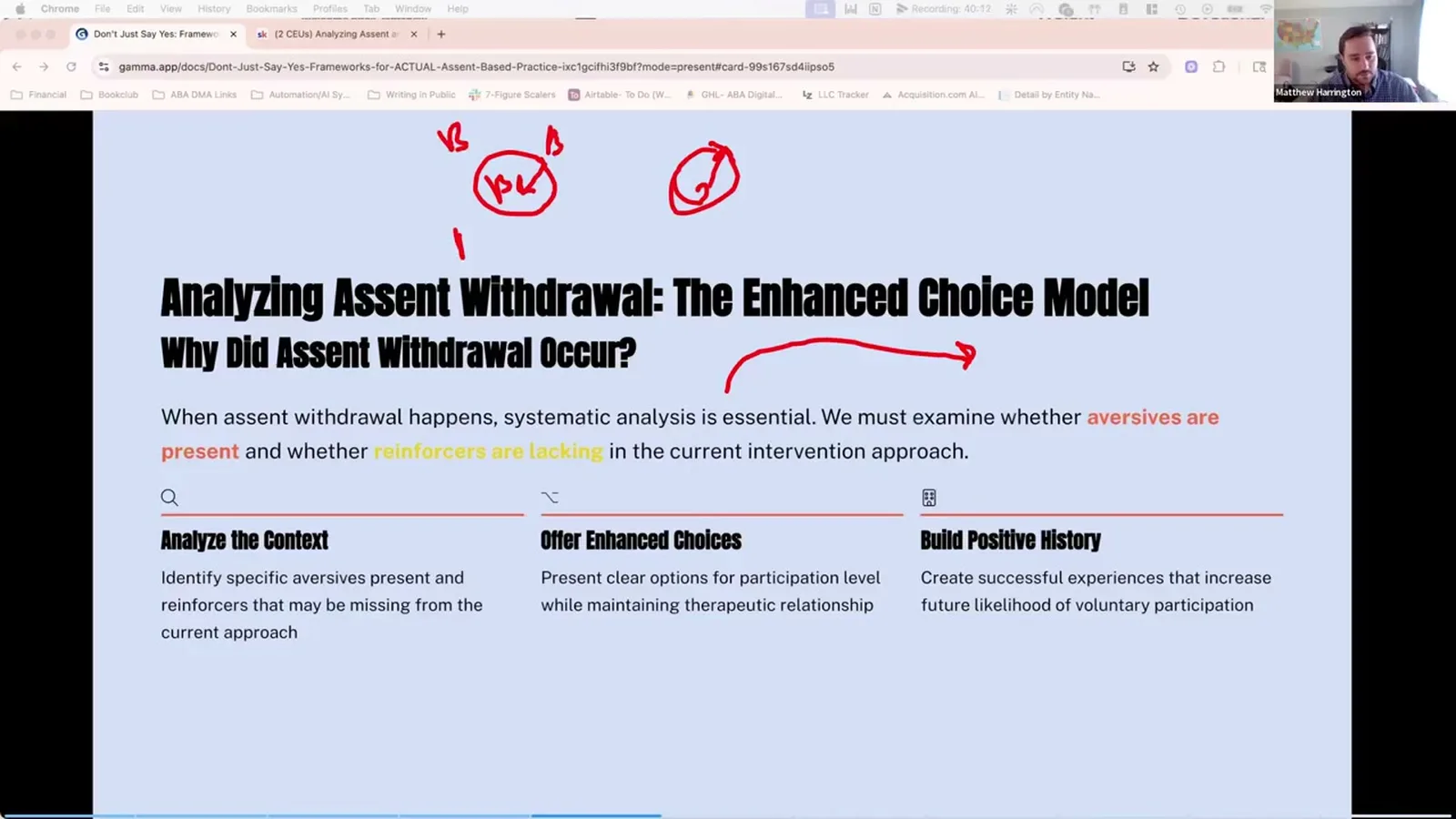
This practical session moves beyond “assent withdrawn → back off” and into what to do next. Attendees learn a simple decision process for responding to assent withdrawal: quickly analyze what’s worth moving away from vs. toward, modify the environment, and re-present with altered conditions. Using an intuitive “shrink the bad / grow the good” framework (a matching-law lens), the talk shows how to rebalance contingencies by (a) reducing aversives (duration, difficulty, sensory load, task formatting) and (b) increasing appetitives (embedded preferences, interest alignment, values linkage, richer schedules). The session integrates skill acquisition—toleration, communication, and cooperation repertoires—to make tough contexts easier, and uses response-class thinking to shape severe withdrawal into safer, earlier precursors. Concrete guardrails (e.g., “3 withdrawals → call the BCBA,” faster pivots when risk is high), enhanced-choice arrangements, and school/caregiver buy-in tactics (show-then-tell) round out a fully operational, dataable approach to assent-based care.
Register free & watch nowCancel any time. Cert delivered to your inbox the moment you pass the quiz.
Learner ratings
from 47 learners
96% would recommend this CEU to other professionals in their field (24 responses)
“Helped develop my understanding of assent and how some mistakes can be made by repeating the cycle!”
— Lorenzo R.“The concept of assent endurance was interesting and a valuable goal.”
— Tracie G.“I liked how real Matt was with the topic pointing out how some clinicians apply assent and how that is not a healthy way of application for the child. I love the examples of application and discussion of how assent is many things including intense shaping.”
— Samantha B.“good reminder of being practical not reactive with assent”
— Morgan M.“Great presentation. I'd love more, including how to work with staff to encourage assent based practice.”
— Eimear M.
About this CEU
This practical session moves beyond “assent withdrawn → back off” and into what to do next. Attendees learn a simple decision process for responding to assent withdrawal: quickly analyze what’s worth moving away from vs. toward, modify the environment, and re-present with altered conditions. Using an intuitive “shrink the bad / grow the good” framework (a matching-law lens), the talk shows how to rebalance contingencies by (a) reducing aversives (duration, difficulty, sensory load, task formatting) and (b) increasing appetitives (embedded preferences, interest alignment, values linkage, richer schedules). The session integrates skill acquisition—toleration, communication, and cooperation repertoires—to make tough contexts easier, and uses response-class thinking to shape severe withdrawal into safer, earlier precursors. Concrete guardrails (e.g., “3 withdrawals → call the BCBA,” faster pivots when risk is high), enhanced-choice arrangements, and school/caregiver buy-in tactics (show-then-tell) round out a fully operational, dataable approach to assent-based care.
From the talk
What was covered
After assent withdrawal (signs a learner wants out), the real work starts. Analyze why, shrink the aversives (the unpleasant parts), grow the payoff, and teach the missing skills.
- Treat backing off as step one only: the real work is changing something before you re-present the task.
- Pick a change criterion now, such as three withdrawals, then the plan changes and the BCBA gets called.
- At every withdrawal, ask one question first: what here is worth moving away from?
- Shrink the aversives you actually control: time, number of steps, noise, materials, and task format.
- When the bad cannot shrink, grow the good by tying the task to what the learner already wants.
- Teach the skill that makes the hard thing easy, and shape severe withdrawal down into safer, earlier signals.
Assent and Consent Are Not the Same Thing
Consent (a one time informed yes) happens once. A doctor explains the test, lists the risks, and you sign. That single yes covers the work that follows. Assent (ongoing, live agreement to continue) works differently. It is a moving yes. A learner can give it, then pull it back, again and again.
That means assent withdrawal shows up in small ways, not just big ones. In the doctor example, it is turning your head away from the swab. It is blocking the hand. It is pushing the stick away or slapping it down. All of these say stop.
This is also why assent withdrawal is not the same as escape maintained behavior (behavior that gets someone out). Withdrawal does not name a function (the reason behind the behavior) for you. It only tells you the current setup is worth moving away from. Assent matters most in ABA because our sessions run long. A yes at the start of the day is not a yes at hour seven.
My five-year-old is not the same five-year-old at 8am to 3.30pm.
From the talk — Matt Harrington
The Loop That Changes Nothing
Here is the loop most teams run. Set up the room. Present the trial. The learner withdraws. The clinician backs off. Wait five minutes for calm, then present the same trial again. Nothing in that loop changes the arrangement. So the numbers do not move. If you get withdrawal half the time today, you get it half the time next month.
Sometimes the rate does drop, and that looks like success. Look closer at what taught it. The learner slowly figured out that the hard thing comes, then it ends, then something else happens. That is toleration learned by accident. The skill was real, but nobody planned it, nobody measured it, and nobody can repeat it with the next goal.
The fix is one extra step in the loop. After withdrawal, change the arrangement, then re-present. Change here means the whole intervention, not just the furniture. The task, the room, the materials, and the order are all on the table. So is the rate of reinforcement (how often the good stuff arrives).
Everyone talks about ascent withdrawal means back off, ascent withdrawal means back off.
From the talk — Matt Harrington
Set a Change Criterion Before the Session Starts
How many times do you re-present the same trial before you change it? Matt found he used two or three tops when he ran the session himself. Then he checked what his RBTs were doing under his own instruction. He had told them to wait for calm and try again. They were running six to ten rounds, sometimes more, because nobody had given them a stopping number.
That gap built two very different contingencies (rules linking behavior to what happens next). He became the person who listened and changed things. The RBT became the person who kept presenting the same task. His clients loved him, and aversion stacked onto the staff. The repair was a written rule for everyone, himself included: three withdrawals, then stop and call the BCBA. The next decision has real nuance in it, so the analyst should be in that decision.
Severity moves the number. Risk also decides how fast you pivot. When you do change, shaping (rewarding small steps toward a goal) gives you clean dials: step size and success criteria. Move from one second to three instead of one to fifteen. Require three clean data points instead of five. Put the rule on paper so the whole team pivots the same way.
A loose guideline, very loose, is that the more severe the behavior was, the faster I would modify my intervention.
From the talk — Matt Harrington
Shrink the Bad and Grow the Good
Picture two bubbles. One holds everything about the task worth moving away from. The other holds everything worth moving toward. Take discrete trial teaching (short, repeated teaching trials) at a table. The bad bubble is crowded: it is boring, the seat is cold, no tablet, the cards are dull. The good bubble holds one item, a reward after ten correct answers. Under the matching law (behavior follows the better payoff), nobody should be shocked when the learner leaves.
So you get three moves. Shrink the bad bubble. Grow the good one. Or do both, which is usually the right answer. Shrinking is often boring and cheap. Write with a highlighter instead of a pencil. Do one worksheet instead of ten. Run one minute instead of fifteen. Cut the noise. Cut the wait.
One student needed to ride the school bus. Class was already a good place, so arriving was a reinforcer (something that makes behavior repeat). The ride itself was loaded with sensory load he could not filter. The team added noise canceling headphones and a tablet. They moved his stop so the ride dropped from an hour to ten minutes. Then they paired him with the bus aide until that person was a friend. Bad bubble down, good bubble up.
What we didn't do was try and put him on the bus three months straight in a row and get successful 50% of the time because he was too tired to fight us.
From the talk — Matt Harrington
When the Bad Will Not Shrink, Grow the Good
Some tasks stay unpleasant no matter what you do. Matt uses his own laundry as the test case. He can play music. He can put on a show. He still does not like laundry, and he never will. Stripping every hard thing out of a life is not a plan you would apply to yourself. So it is not a plan for your clients either. What he changes instead is the other bubble. He focuses on how good it feels to be done, and to have it off his wife's plate.
The same move works with learners. One highly verbal teen refused personal hygiene, and almost none of the aversives could be removed. So the conversation turned to values. What did he want out of the year? Friends. Hygiene and social skills were then tied to that goal. They became the list of things you do to show up well for people. The bad bubble stayed the same size. The good bubble got much bigger.
With younger learners this usually means riding a current interest. A learner who will not count at the whiteboard may happily count dinosaur eggs on a screen. A tablet based trial app can keep the cards, the prompts, and the schedule identical while the cold chair disappears. The enhanced choice model (letting a learner choose to work, wait, or leave) runs on the same math. If participating carries heavy bad and thin good, learners will hang out instead.
So in the enhanced choice model, it's all about evening out the amounts of bad and good across conditions.
From the talk — Matt Harrington
Ask What Is Worth Moving Away From
The whole framework runs on one question asked the moment you see withdrawal. What in this room is worth moving away from? Run the list out loud. Is it the noise? The smell? The amount of work? The difficulty of the work? The person presenting it? Something else they would rather be doing? Each answer points at a different fix, and guessing wrong wastes weeks.
That question replaces a full antecedent (what happens right before) review you do not have time for mid session. It also keeps the team honest. If nobody can name what the learner is escaping, nobody should be re-presenting the trial.
Set your target correctly too. You are not shaping a learner who is thrilled to do hard work. The goal is a shrug. A flat sure, fine, I will write my name. Matt points at his own behavior for the standard. He did not bounce down the stairs excited to run this webinar. He had his materials ready and nothing bad waiting, so he showed up. That quiet yes is the signal you are ready to grow the step.
It is, sure, let's go for it.
From the talk — Matt Harrington
Skills Are What Make Hard Things Smaller
Sometimes you cannot shrink the bad any further and cannot grow the good any bigger. That is the point where skill acquisition (teaching a new skill) takes over. Teach a skill, and the same unchanged task gets easier. Nothing in the room moved. The learner now has a history of finishing that task, so the bad bubble shrinks on its own. Skateboarding is the everyday version. It is miserable until you can do it, and then you want to do it.
This reframes classic school referrals. A fifth grader has behavior right before reading block. What is worth moving away from is not the chair. It is being the one who cannot read while everyone else reads. The answer is intensive reading instruction, not a thicker behavior plan. Same with peers at lunch. Do not pay tokens for talking to a classmate. Teach the skill so talking stops being aversive, then let it run.
Toleration training (learning to sit with hard things) works on shaping steps you write down. One second, five, fifteen, forty five. One hard item, then three, then ten. If the end goal is ten hard items, drop to one and climb. Over time this generalizes (it starts working in new situations too). It is the same reason you and I can wait five minutes or forty five without much thought.
It is the skill that makes the sucky things less sucky.
From the talk — Matt Harrington
Response Classes and Getting the Team On Board
Some learners have no safe way to say no. They go straight to head banging or biting, with nothing in between. Do not aim for a polite no thank you as the next step. Aim one notch down the response class (behaviors that share one job). Head banging to lighter head banging. Then biting. Then screaming no. Then saying no. Then a head shake. You are building the precursor (smaller behavior that comes first) that the team can actually respond to.
Adults need a plan too. Telling a caregiver that ten years of a different approach was wrong lands hard. It feels like ten wasted years, even when nobody says that. So pair every step back with a visible path forward. Here is where we drop to, here is next week, here is the week after. What most caregivers want is forward momentum. Name each small win out loud and buy-in grows with it.
School teams need the same handling with less of your time. Paraprofessionals are with that student all day while you may get two hours a week. Culture of discipline does not move because you explained assent. Take fifteen minutes of your observation, ask to lead, knock the aversives down hard, and let them watch it work. Then track it. Watch assent and withdrawal rates, treatment fidelity (how well the plan is run), and progress toward the quality of life goal.
But you have to show and then you have to tell.
From the talk — Matt Harrington
Common questions
What is the difference between assent and consent in ABA?▾
Consent is a single informed yes, given once, that covers the work that follows. Assent is ongoing agreement that a learner can give or pull back at any moment. ABA sessions run much longer than most other therapy sessions. A yes at 8am tells you very little about 3pm. That is why assent has to be checked and recorded across the whole session.
How many times should I re-present a task before changing it?▾
Matt lands on three withdrawals, then stop and call the BCBA. The exact number matters less than having one and writing it down. Staff without a number will run six to ten rounds. Pivot faster when the risk is higher. If the risk includes something like head banging or self biting, move faster than the usual three round rule.
Does assent based care mean saying yes to everything?▾
No, and that misread is the field's own fault for talking about theory more than practice. Assent based care does not remove every hard thing from a learner's day. It means you stop presenting the same unchanged trial and start changing the arrangement between attempts. That is more clinical work, not less.
What do I do when I cannot make the task any less aversive?▾
Grow the other side. Tie the task to something the learner already wants. That could be friendships, a current interest, or a goal they named themselves. If that still is not enough, teach the skill that makes the task easy. A task you can do stops being aversive. Nothing in the environment has to change for that to work.
How do I get a caregiver who wants to push through to try this?▾
Show first, then explain. Take part of your observation, run it yourself, shrink the aversives hard, and let them see progress in real time. When you propose a step back, show the mapped path forward with dates attached. What caregivers usually want is forward momentum, so call out every small win as it happens.
About the speaker
Matt Harrington has been running CEUs in the online ABA space for more than four years. He says he has issued over 5,000 of them, a large share on assent and compassionate care. He runs the Behaviorist Book Club along with an ABA marketing agency. That agency, he says, is how he got to talk with clinics across the country about how assent is actually practiced. In this session he draws on his own supervision work. He covers setting re-presentation limits with RBTs, building values based hygiene plans, and shaping bus riding and toleration goals step by step.
This summary was generated from the recording’s transcript and reviewed for accuracy. Quotes are taken word for word from the talk.
What you'll learn
- 1Learning Objectives
- 2By the end of this CEU, participants will be able to:
- 3Differentiate assent (ongoing, dynamic agreement) from consent (one-time, informed authorization) and list at least three observable indicators of assent withdrawal beyond overt escape.
- 4Apply a stepwise response to assent withdrawal: pause and ensure safety, analyze antecedents and reinforcers, modify the arrangement, and re-present—rather than repeating unchanged trials.
- 5Use the “shrink the bad / grow the good” heuristic to rebalance contingencies, naming ≥3 ways to reduce aversives (e.g., shorten duration, simplify steps, sensory accommodations) and ≥3 ways to increase appetitives (e.g., embed interests, values linkage, denser reinforcement).
- 6Set and communicate clear change criteria (e.g., after 2–3 withdrawals or any high-risk precursor, pivot plans; escalate sooner when severity risk is higher) so BCBAs/RBTs act consistently.
- 7Design toleration and cooperation shaping plans (define step size, success criteria, progression rate) that build durable assent rather than relying on accidental exposure.
- 8Implement response-class strategies to shape from severe behavior to safer assent-withdrawal precursors and to discriminate precursors from crisis behaviors.
- 9Arrange enhanced-choice contexts that equalize available reinforcement for “participate” vs. “hang out,” biasing allocation toward learning without coercion.
- 10Plan caregiver/school team buy-in using show-then-tell demonstrations, values-aligned outcomes, and simple written protocols that specify who changes what, when, and how.
- 11Document and evaluate assent-based care by tracking assent provision/withdrawal rates, treatment fidelity, and progress toward quality-of-life goals—not just behavior reduction.
Concepts in this CEU
Related talks
Talks that cover the same concepts
Analyzing Assent and Taking Data
The Behaviorist Bookclub
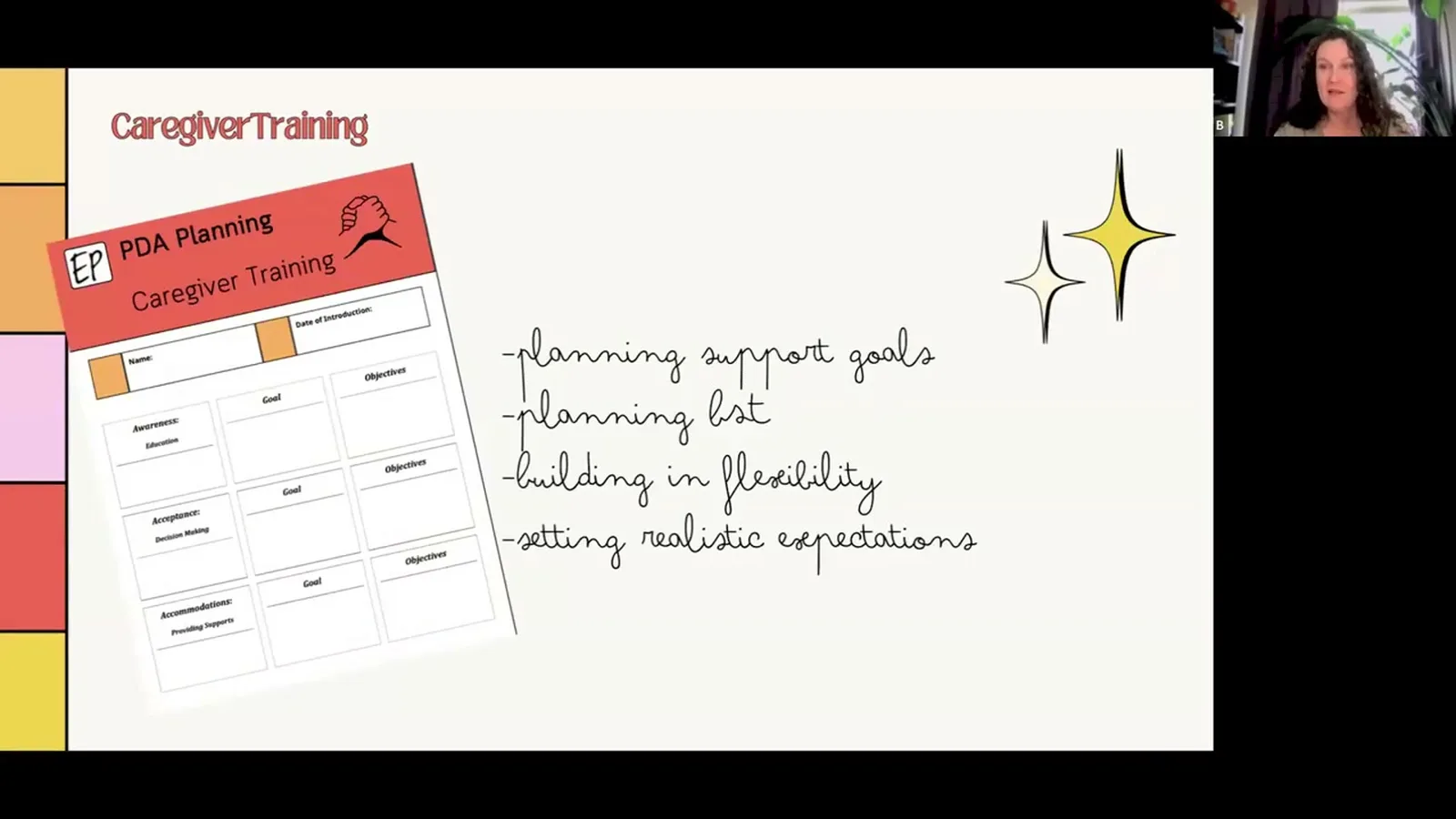
PDA Caregivers, Complex Profiles, Replacement Behaviors, and Being Trauma Informed
The Behaviorist Bookclub
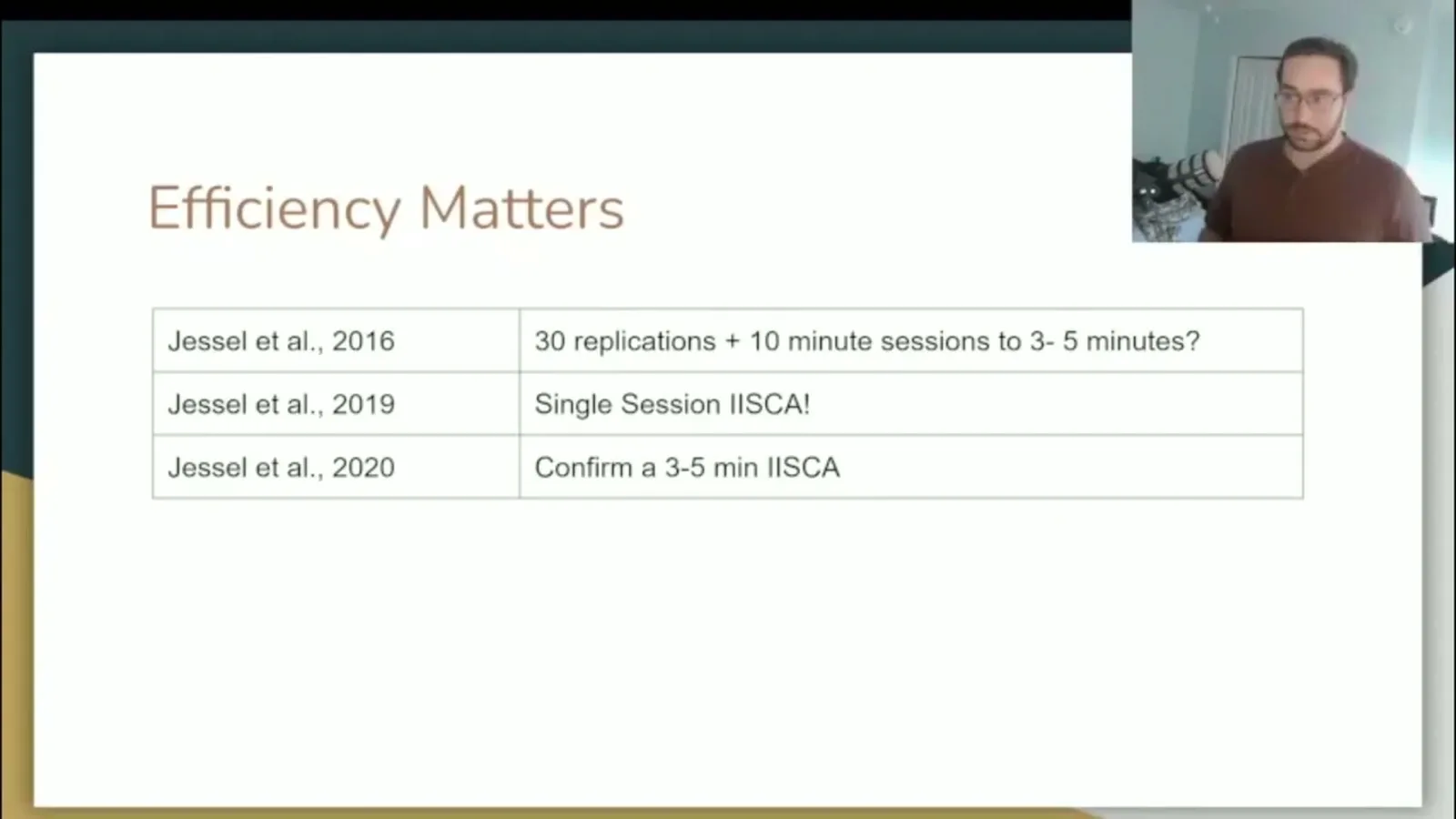
12 days of PFA & SBT
The Behaviorist Bookclub
The Math Behind Behavior Reduction
The Behaviorist Bookclub

Beyond Compliance: What Assent-Based ABA Looks Like in Real Life
Dani Elle Mentorship and Consulting
Compliance to Commitment: Seven Habits of the Highly Effective Caregiver Trainer
The Behaviorist Bookclub
More from The Behaviorist Bookclub

Empowering Autonomy and Self-Management in ADHD Learners
The Behaviorist Bookclub
Shaping Behavior Change when ADHD is in the Picture
The Behaviorist Bookclub
From Hours to Competence: Assessing and Developing Supervisee Skills
The Behaviorist Bookclub
OpenCEU is supported by advertising from third-party sponsors. Sponsors are clearly labeled, have no influence over course content, instructors, or CEU decisions, and never appear on certificates. The BACB does not sponsor, approve, or endorse OpenCEU sponsors or their products.