Empowering Autonomy and Self-Management in ADHD Learners
Presented by Nicole Stewart, BCBA

Cancel any time. Cert delivered to your inbox the moment you pass the quiz.
Learner ratings
from 190 learners
100% would recommend this CEU to other professionals in their field (190 responses)
“This was interesting and useful”
— Kofoworola O.“good”
— Dahan S.
About this CEU
Many individuals with ADHD want to do well and thrive when they feel capable, respected, and in control of their own success. This workshop shifts the focus from behavior change alone to the role of autonomy, self-management, and self-esteem in long-term outcomes. Participants will explore how supporting choice-making, independence, and problem-solving can strengthen engagement and persistence, and how building confidence can be a powerful driver of behavior change. Emphasis is placed on helping learners feel successful, not just compliant.
From the talk
What was covered
How autonomy, choice, and self-esteem shape behavior plans for ADHD learners, and why delayed rewards so often fall flat.
- Treat delay as a design problem: pay effort right away, then stretch the wait on purpose.
- Count the cues a routine really needs before you call it independent.
- Offer choices that change something real, like order or timing, not just which prize.
- Use a changing criterion chart so the learner helps set the next goal.
- Teach self-advocacy scripts when everyone is calm, not in the middle of a hard moment.
- Reward effort and the review step, so mistakes stop feeling like rejection.
Why Autonomy Belongs in an ADHD Behavior Plan
Nicole Stewart opens with a question, not a slide. Think of the last time you felt proud. She asks the room to hold that feeling for the hour. Then she gets honest about the term itself. Pride is not on the ABA list of unconditioned reinforcers (rewards that need no training). Other fields treat pride and connection as survival tools. Her point holds either way, because pride still works as a reward.
What makes pride useful is that nobody has to hand it over. It is intrinsic motivation (the good feeling from inside). A learner can feel it with no token board and no adult nearby. That is why she built a whole session around it.
The frame for the talk follows from there. Most plans are written to get compliance. She wants plans that build capability instead. Autonomy (real say over your own day) does not come easy to ADHD learners. Neither does self-management (running your own behavior plan). She also ties the topic to the ethics code. ADHD is a medical diagnosis, so learning about it keeps you in scope.
pride is something that I really want to focus on and those internal feelings and things that make you feel good
From the talk — Nicole Stewart, BCBA
The Dopamine Transfer Deficit: Why Delayed Rewards Fall Flat
Dopamine (a brain chemical tied to reward) sits at the center of the ADHD story. The research has not settled the exact problem yet. Either the brain does not take dopamine in as usual, or there is not enough of it. What is clear is that the reward system responds in its own way.
She walked through a brain scan study of 31 women with a range of ADHD traits. They played a fast reaction game with three outcomes. You could win money, avoid losing money, or hear neutral praise. Researchers watched the reward region while people waited to find out. The more ADHD traits a person reported, the less that region lit up. The pattern held across all three kinds of reward. Note what was measured: the wait, not the payoff.
That study built on a 2008 theory paper by Tripp and Wickens. They named it the dopamine transfer deficit (the brain skips reward anticipation). In a typical brain, the cue that predicts a reward gets paired with it. Dopamine then fires early, during the wait. In an ADHD brain, that pairing does not happen on its own. The theory also predicts faster extinction (what happens when rewards stop).
The lesson for practice is blunt. Delay does not just weaken a reward. It removes the chemical reason to keep going. Behavior that pays out right now wins. Daydreaming pays now. Arguing pays now. Waiting for a later good job from the teacher pays nothing at all.
anticipation has to get paired as reinforcing in order to release dopamine prior to receiving the reward
From the talk — Nicole Stewart, BCBA
Rejection Sensitivity Turns Trying Into a Risk
Rejection sensitivity (big pain from small slights) is the second piece. Early research points to a body response, not just a mood. She cited a small study of five college students with ADHD. All five reported real physical feelings when they were turned down. Five students is a start, not a conclusion. Some people pull back from the feeling, and some mask it, which is tiring work.
Neutral events get read as threats. A friend cancels for a dentist visit. The learner hears something much bigger: they hate me, and I am unlovable. The feeling that follows is physical and punishing. Now apply that to skill building. If trying and failing sets off that feeling, the safest move is to stop trying.
The coercion research lands in the same place. She cited work by Danforth and Diller on harsh parent and child cycles. Defiant behavior got learned and kept going through dopamine pathways. Arguing pays. Being told what to do can feel like rejection. Both forces push the learner the same way.
Her answer is not lower standards. It is scaffolding (support you plan to remove later) that creates safe chances to try. Reward effort rather than perfect work. If being wrong hurts that much, trying has to be worth more than avoiding.
So any tactics that smell of coercion can lead to defiance, which then gets reinforced.
From the talk — Nicole Stewart, BCBA
Self-Esteem in Behavioral Terms, and Its Link to Independence
She does not wave off the word self-esteem. Skinner described the self as a class of responses (a pattern of behavior over time). That gives behavior analysts a way in. Read that way, self-esteem is a history of reward around self-evaluation and self-report. That history can be thin, mixed, or harsh. In plain words: how you talk about you, and how that talk gets treated.
Two lines of research back the concern. One large review compared untreated ADHD, treated ADHD, and no ADHD. It looked across childhood and adulthood. Untreated ADHD was tied to worse self-esteem and worse social outcomes. Treatment improved most of those outcomes. A second study used the Rosenberg Self-Esteem Scale (a standard self-esteem questionnaire) with adults and found lower scores. More severe symptoms tracked with lower self-esteem. Self-esteem also acted as a mediator (a link in the chain) to depression, social anxiety, and suicidal thinking.
The useful part is the loop. Independence and self-esteem move together, so raising one tends to raise the other. Negative beliefs run the loop backward. They lead to avoidance and to putting things off. Avoidance is what keeps the belief alive. The learner never gets the proof that they can do it.
So if you work on increasing independence, you also start to increase self-esteem.
From the talk — Nicole Stewart, BCBA
Where a Standard ABA Plan Can Backfire With ADHD
She asked the room what could go wrong with the usual model. The chat answered well, and her own list lined up. Her first risk is how we use rewards. Token economies (points traded for a prize) built for compliance are hard to fade. They are also hard to carry into new settings. The common reflex when a learner refuses is to add another reward. That can backfire.
The second risk is prompt dependency (waiting for a cue first). She sees this all the time with ADHD families. A child can get ready for school, with three alarms and a checklist. A parent still has to call out the time every few minutes. The routine works, but only if the setup is perfect. That is not independence.
The third risk is more refusal, not less. When the reward is weak and the task feels too hard, shutting down is safer. She described a student who suddenly stopped wanting the iPad. Getting the work wrong was the bigger risk. The fourth risk is how fast the skill drops. Pull the support and the behavior fades faster than with other learners. Reinforcement thinning (giving rewards less often) hits the same wall.
so how are we empowering our learners, right?
From the talk — Nicole Stewart, BCBA
Meaningful Choice: Autonomy You Can Put in a Plan
Choice is her first strategy, and most of us use it already. She cited a study where people could opt into treatment, sit with possible rewards, or leave. More of them opted into treatment. They engaged more once there, and they interfered less. A choice gives structure and a small piece of autonomy at once.
Choices have to mean something to the learner. Choice for the sake of choice does not count. She offers timing choices: the hard worksheet now, or in ten minutes with a timer. She offers order choices: shower, teeth, and medicine in any sequence. She offers setting choices, like table or floor. She also asks what happens once the must-dos are done.
Two traps show up a lot. The first is the fake choice, and parents fall into it constantly. Come with us or stay home alone is not a real option. A kid will call that bluff. Offer something real instead: pick a snack for the car, or pick your shoes. The second trap is letting the learner pick the reward and calling it enough. Choosing the iPad does not make the work any easier.
Do you want them to do it in that order? Or do you want them to do it without an argument?
From the talk — Nicole Stewart, BCBA
Changing Criterion Design: Raise the Bar, Fade the Reward
Her second strategy is the changing criterion design (raise the goal in small steps). It lets you use extrinsic rewards (rewards other people hand out) without getting stuck on them. The current goal stays visible, and the learner helps set it. Goal setting itself becomes part of the payoff. Novelty helps too, since a new target beats the same old chart.
She showed a morning chart she used at home a few years back. Each day got a rating from one to five, and the baseline average was about 2.3. The first goal was modest, with a weekend treat outing for hitting it. Then the target moved to a 3.0 average, and later to 3.5. Once the higher level held, the outing moved to every other week, then once a month.
The chart does a second job, too. It puts one bad morning next to a row of good ones. That view takes some sting out of a failure. The same design works for problem behavior and for new skills. Start with one chore and a reminder, then one chore alone, then two. Run it on a task analysis (steps broken down in order), on duration, or on number of responses. It fades more cleanly than thinning a schedule.
you're starting slowly and you start where the child is capable and then you're gradually increasing expectations
From the talk — Nicole Stewart, BCBA
Skills to Teach: Communication, Problem Solving, and Starting
The last three targets are skills, starting with functional communication training (teaching words that work). Some ADHD traits are not going away. Attention can improve, but it stays a weak spot. Time blindness (trouble sensing how time is passing) can improve, but it stays too. Words for your own state buy acceptance instead of a fight. They also cut rejection sensitivity, because nobody has to guess.
Timing matters as much as the script. Teach it when everyone is calm, not during the hard moment. She warned that naming a child's feelings mid-meltdown can land as criticism. Her ladder runs from tolerance, to noticing your states, to telling them apart, to saying them out loud. She practiced one request with a student who needed gum to focus. They rehearsed until it sounded like a request, not a demand. It worked, and the learner handled it alone.
Problem solving comes next, and she calls it a behavioral cusp (one skill opens many doors). You get frustration tolerance, persistence, and generalization (using a skill in new places) from one target. She teaches it with low stakes games, including hidden picture books. The puzzle is not the point. The language for pushing through frustration is the point.
Task initiation (getting started on a task) closes the talk. The steps are simple: name the goal, say why it matters, make a plan, do it, then check it. Keep the goal small and safe: learn to use the drill, not hang the shelf perfectly. The check step turns a mistake into data, not proof that you are bad at things. Rewards also spread across the steps, so the work pays before the outcome arrives.
Instead of necessarily teaching them how to meet everyone, every single need, you're teaching them to say like, I have this need or I'm having this issue in a more effective way.
From the talk — Nicole Stewart, BCBA
Common questions
Why do reward systems stop working for kids with ADHD?▾
Two things happen. The brain gets used to the same reward, so it stops firing dopamine for it. And because anticipation does not pay off, any delay or thinner schedule drains the value fast. That is why a plan built only on points often collapses the moment you fade it.
What is the dopamine transfer deficit?▾
It is a theory named by Tripp and Wickens in 2008. In most brains, the cue that predicts a reward starts firing dopamine before the reward arrives. In ADHD brains, that pairing does not happen on its own. The result is weak delayed reinforcement and faster loss of behavior when rewards stop.
How do I offer choice without losing the session?▾
Offer choices inside the boundary you actually mean. Timing, order, place, and what comes after the work are all real options. Avoid the fake choice, where one answer is the only one you will accept. If the learner picks the option you cannot allow, the problem was the choice you offered.
What if choice making overwhelms the learner?▾
Then do not use it yet. Nicole Stewart said a visual can help some learners who freeze up on decisions. If choice is genuinely overwhelming, the learner may not be ready for it. Build the other skills first and come back to choice later.
Is self-esteem a real behavioral target?▾
She frames it in behavioral terms rather than dropping the word. Skinner described the self as a class of responses. Self-esteem then becomes a history of reward around how you describe yourself. You do not target the feeling directly. You build independence, and self-esteem tends to follow.
About the speaker
Nicole Stewart, BCBA has worked in the field for 20 years and across many different settings. She takes a neurobiological and trauma informed view of ABA, starting with how a learner's brain and body work before choosing a treatment. This talk was the third session in her ADHD series, and she also has a podcast called Reinforcing Conversations.
This summary was generated from the recording’s transcript and reviewed for accuracy. Quotes are taken word for word from the talk.
What you'll learn
- 11. Describe how autonomy, self-management, and self-esteem influence behavior change in learners with ADHD. 2. Identify behavioral targets that promote independence, choice-making, and self-regulation. 3. Incorporate autonomy-supportive strategies into behavioral intervention planning to support generalization and maintenance of skills.
Concepts in this CEU
Course materials
Related talks
Talks that cover the same concepts
Shaping Behavior Change when ADHD is in the Picture
The Behaviorist Bookclub
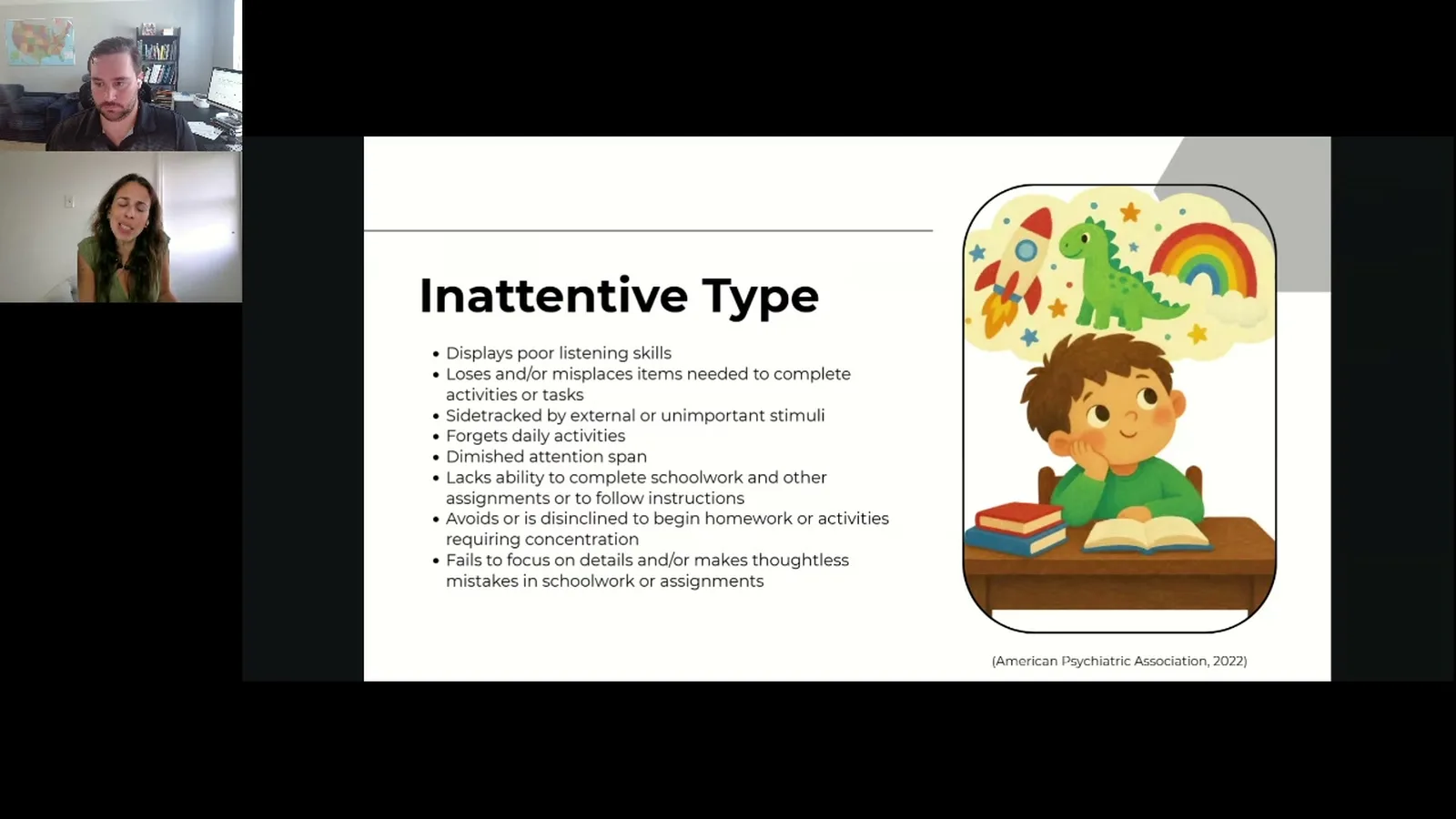
Reframing Behavior through an ADHD Lens
The Behaviorist Bookclub
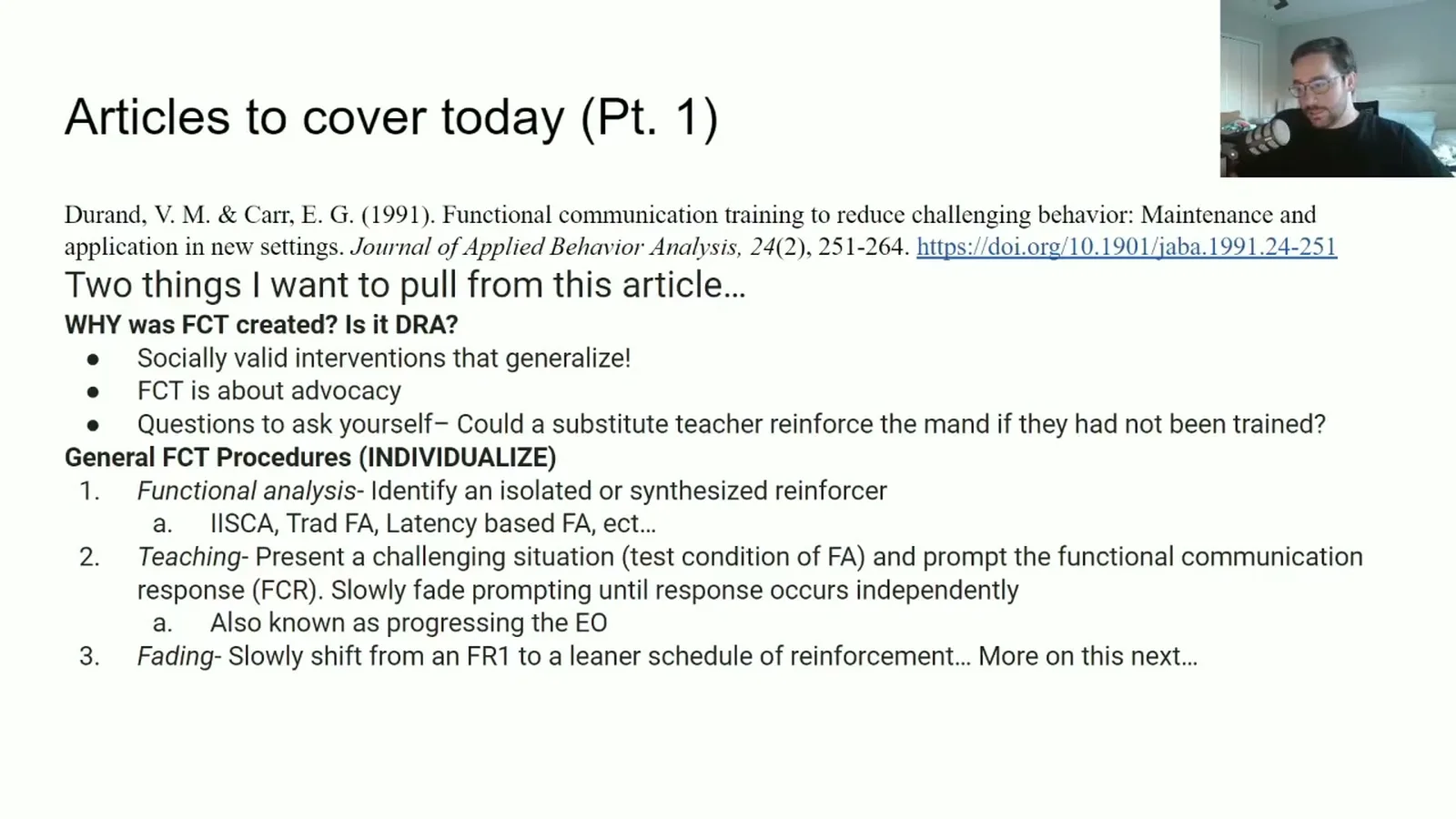
5 Days of Manding Mastery
The Behaviorist Bookclub
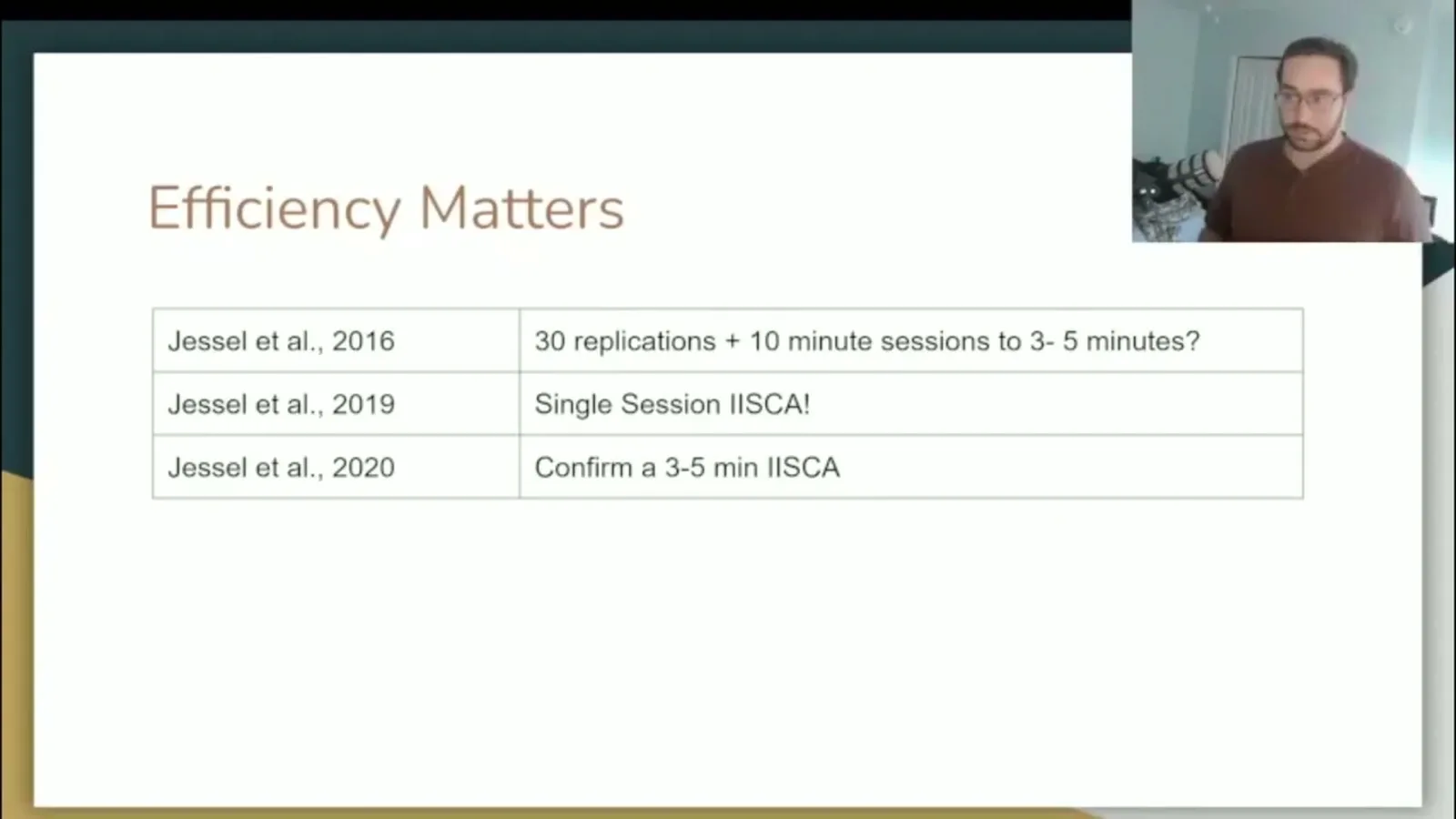
12 days of PFA & SBT
The Behaviorist Bookclub

Teaching RBTs to Think Clinically: Training In-the-Moment Decision Making
Copper Consulting Group

From Research to the Applied Setting: Breaking Down the Three-Legged Stool of "Evidence Based Practice"
Copper Consulting Group
More from The Behaviorist Bookclub
From Hours to Competence: Assessing and Developing Supervisee Skills
The Behaviorist Bookclub
Reflective Supervision and Provider Outcomes in ABA
The Behaviorist Bookclub
Getting the Right Answer Isn’t Enough: Establishing Speaker–Listener Repertoires for Complex Learning
The Behaviorist Bookclub
OpenCEU is supported by advertising from third-party sponsors. Sponsors are clearly labeled, have no influence over course content, instructors, or CEU decisions, and never appear on certificates. The BACB does not sponsor, approve, or endorse OpenCEU sponsors or their products.