Caregiver Buy-In in ABA: How to Build Real Trust
Caregiver buy-in is not all-or-nothing. Learn how BCBAs earn parent and staff trust, reset a tense baseline, and stack small wins that build momentum.
Key takeaway
Caregiver buy-in means a parent or staff member trusts your plan enough to follow it. It is the willingness to try what you recommend, even when it feels new or hard.
Compliance to Commitment: Seven Habits of the Highly Effective Caregiver Trainer
Free learning path on this topic
Your 4 Ethics CEUs, Done
Four ethics CEUs in three courses, all free. Start with Matt Harrington's assent and data course, then ethical guardrails in behavior reduction, then cultural considerations in clinical practice. Every course carries ethics credit, so this path covers the BACB requirement with nothing to buy.
Experts who cover this
3 recordings on openceu cover caregiver buy-in.
- Featured talk1 CEU
Compliance to Commitment: Seven Habits of the Highly Effective Caregiver Trainer
Matt HarringtonThe Behaviorist Bookclub
The presenter reframes caregiver buy-in as a continuous scale from mistrust to full trust rather than a binary state, and argues the first clinical job is…
- 1.50 CEUs
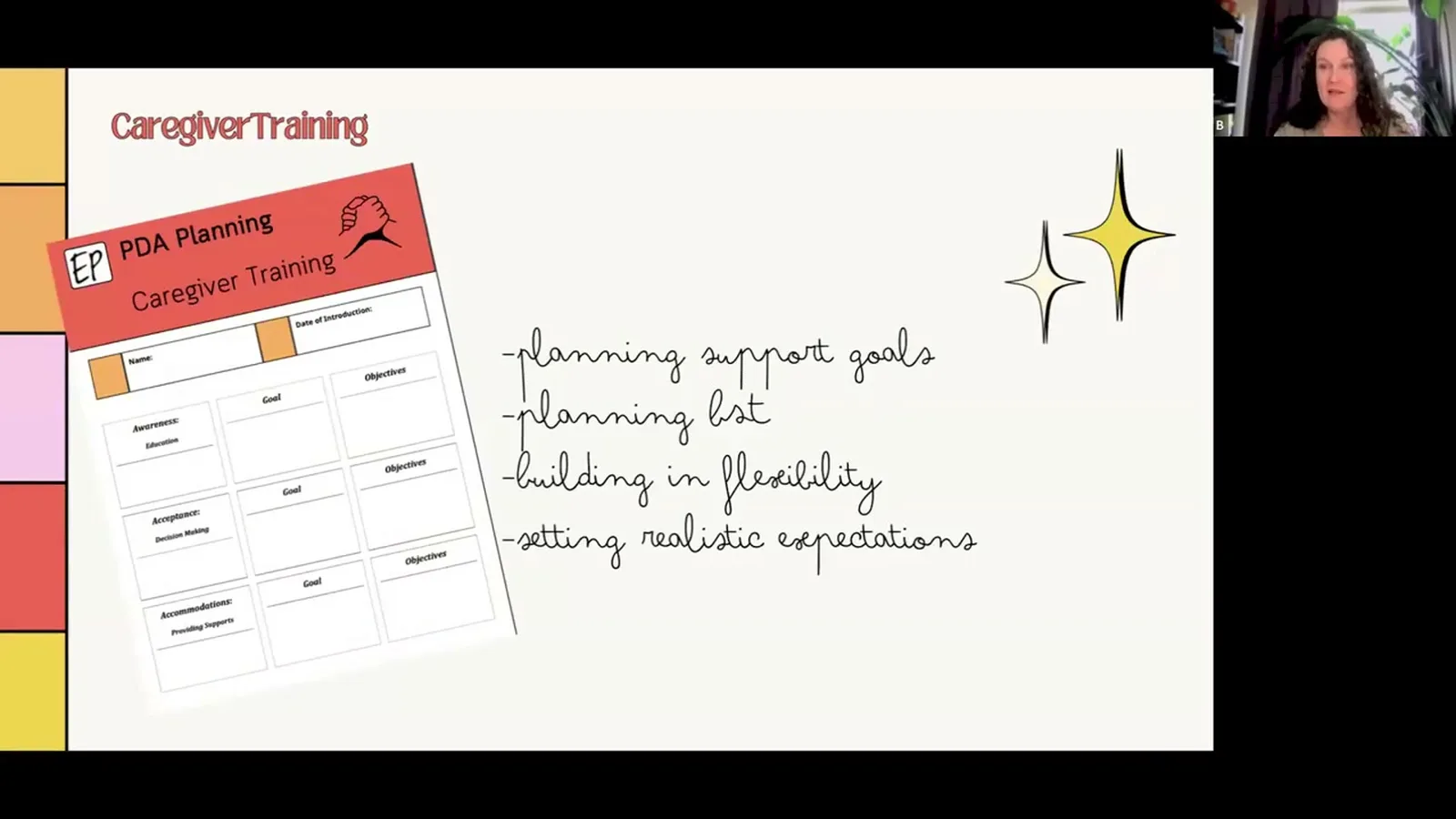
PDA Caregivers, Complex Profiles, Replacement Behaviors, and Being Trauma Informed
B. Kuerine GrayThe Behaviorist Bookclub
Gray describes a bottom-up strategy for getting caregiver and staff buy-in: resetting an escalated caregiver's baseline, staying goal-focused instead of…
- 1 CEU
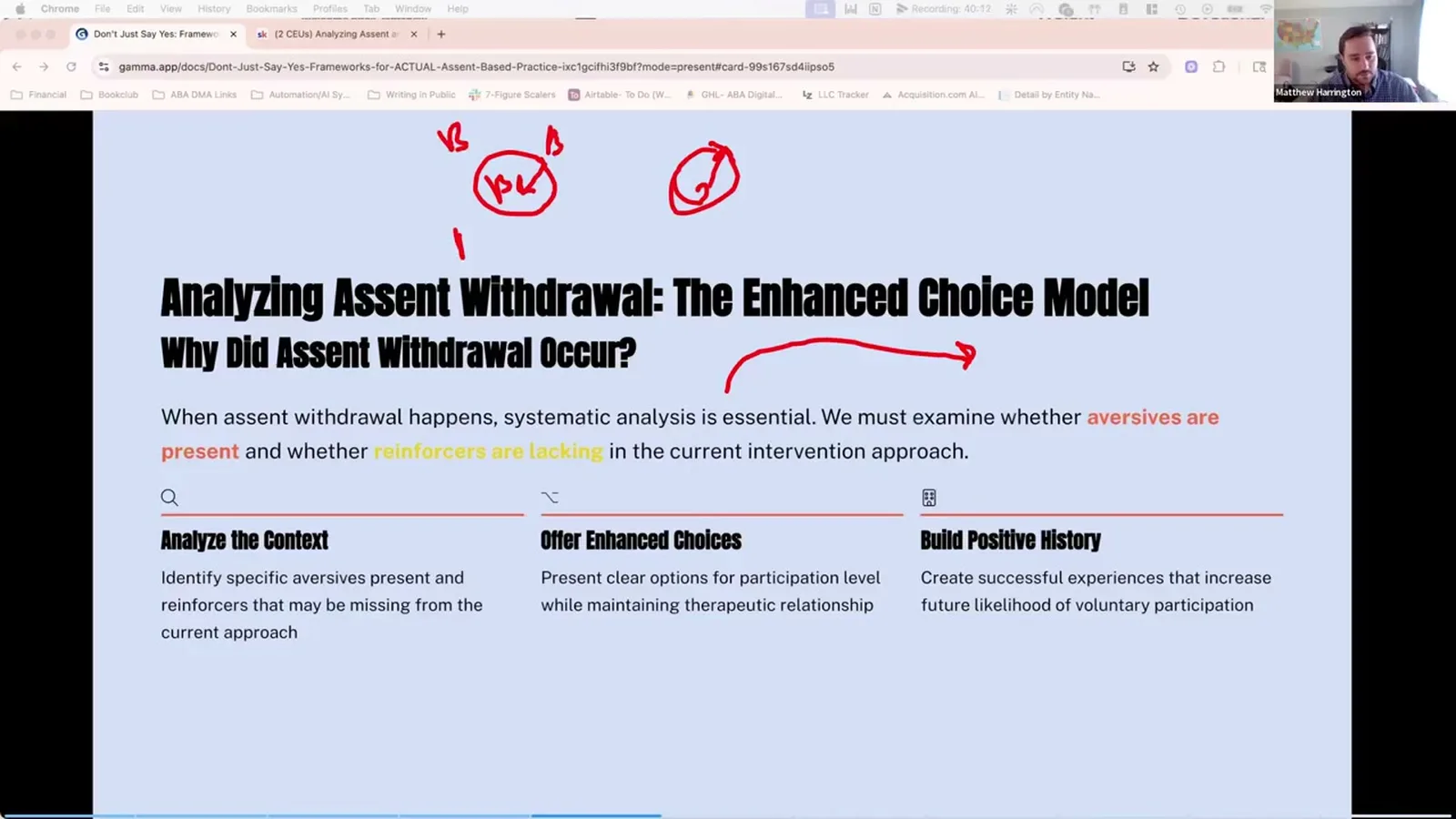
Assent: Don't just say Yes!-
Matt HarringtonThe Behaviorist Bookclub
Discussed in the Q&A as the key to getting caregivers and paraprofessionals on board with a new, assent-based approach after years of a different method, by…
On this page · 7 sections▾
Caregiver buy-in means a parent or staff member trusts your plan enough to follow it. It is the willingness to try what you recommend, even when it feels new or hard. Without it, the best-written program sits unused at home and at school.
This matters because ABA works only when it happens between sessions too. BCBAs, RBTs, teachers, and parents all shape the child's day. When caregivers commit, skills carry over. When they stay guarded, progress stalls no matter how strong the clinical plan looks.
Buy-in is a scale, not a yes or no#
Many clinicians treat buy-in as a switch that is on or off. That view sets you up to fail. Matt Harrington asks teams to stop treating buy-in as a fixed, all-or-nothing trade. He wants us to see trust as a range instead.
Picture a line from zero to one. Zero is neutral, and one is full trust. Most families land somewhere in the middle when they start.
So I want us to reframe this idea of the parents were already bought in as instead a scale, right? We have zero, which is completely neutral. We have one, which is totally bought in. From the talk — Matt Harrington
Your first job is to assess where a caregiver actually sits. Then you pick goals that match that spot. Assigning a hard goal to a cautious parent breaks trust fast.
Start by expecting caution#
New caregivers rarely trust a stranger with their child's future. That reaction is normal and healthy. Harrington reminds teams not to take it personally.
Most parents are cautious. Most caregivers are cynical. Most folks who enter ABA services are not ready to jump directly in and trust this random 20 to 40 year old with their entire child's future. From the talk — Matt Harrington
Knowing this changes how you show up. You stop pushing for instant agreement. You focus on earning one small piece of trust at a time.
Reset the baseline before you teach#
 Advertisement
Some caregivers arrive already upset from past failures. Pushing new content on top of that stress backfires. B. Kuerine Gray starts by calming the moment first.
one of the things that I found most helpful in getting parent buy-in is to reset their baseline... we can try to pinpoint what was the goal and what happened. Let's go through this together. From the talk — B. Kuerine Gray
This move shifts you from expert lecturing to shared problem solving. You name the goal, look at what happened, and plan the next step together. The caregiver feels like a partner, not a student.
There is a real reason people cling to old habits. Gray points out that the less someone understands a new method, the more they fall back on what already works. Old habits die hard because new things feel risky. Stress sends people right back to the familiar.
So make the new approach feel safe and small. Lower the risk, and buy-in becomes easier to earn. A caregiver who understands the plan is far less likely to retreat to old routines.
Aim for momentum, not the big goal#
Caregivers often carry one giant goal in their heads. But that is not really what keeps them going. Harrington says what they want is progress they can feel.
what the parent is really striving for is not, in most cases, it's not, you know, some pie in the sky goal that they've been trying to hit for 10 years and they haven't hit. What they really want is forward momentum. From the talk — Matt Harrington
So point out small wins as they happen. Each visible gain builds trust for the next step. Momentum, not perfection, is what holds a family in the work.
This also changes how you set goals. You pick targets the family can reach soon. A quick success does more for trust than a distant dream. Once momentum starts, bigger goals feel possible again.
Build buy-in from the bottom up#
Buy-in is not only about parents. Staff and teams need it too. Gray recommends starting with the people closest to the child.
look who's spending the most amount of time with the kid, probably their paraprofessional... and then work with them, and then get their buy-in, and have them be your supporter as you go one level up to the teacher, and then get their buy-in, and then go one level up to the special ed director From the talk — B. Kuerine Gray
Each level you win becomes support for the next. The paraprofessional backs you with the teacher. The teacher backs you with the director.
When a method is new, showing beats telling. Let people see it work before you explain the theory. Harrington learned this the hard way. His only reliable way to win over staff who were not yet on board was showing first, then telling. A small visible result opens the door that a lecture cannot. Once a skeptic sees the child do better, the words finally land and the buy-in follows.
What the research says#
Buy-in shapes even highly technical work like toilet training. One review argues that skipping the planning phase leads to intrusive, poorly fitted programs and shaky caregiver buy-in. The authors call for careful attention to caregiver collaboration and the choice to participate before training starts (Hollins et al., 2025).
The broader lesson is that family outcomes deserve real focus. Parent-mediated programs only last when the parent stays committed over time. That commitment grows when we track goals that families actually value, not just child skills.
FAQ#
How do I get caregiver buy-in when a parent seems resistant?
Start by resetting the baseline and lowering the stress in the room. Look at one recent goal together and plan the next small step. Resistance often fades once the parent feels heard and safe.
Why do parents drop ABA strategies at home?
New methods feel risky, so stress pushes people back to old habits. Make each strategy small and easy to try. Point out quick wins so the parent feels forward momentum.
Is caregiver buy-in the same as compliance?
No. Compliance is following along once. Buy-in is real trust and commitment that lasts between sessions. The goal is to move a caregiver up the trust scale, not just get a single yes.
Complex profiles need this same patient approach, as shown in PDA Caregivers, Complex Profiles, Replacement Behaviors, and Being Trauma Informed. Buy-in also drives assent-based care, a theme in Assent: Don't just say Yes!.
 Advertisement
Turn this topic into a CEU
You just studied this. Now get credit for it.
Watch Compliance to Commitment: Seven Habits of the Highly Effective Caregiver Trainer with Matt Harrington and earn 1 free BCBA CEU. Detailed certificate, delivered the moment you finish.
Keep going with a free learning path
Your 4 Ethics CEUs, Done
Four ethics CEUs in three courses, all free. Start with Matt Harrington's assent and data course, then ethical guardrails in behavior reduction, then cultural considerations in clinical practice. Every course carries ethics credit, so this path covers the BACB requirement with nothing to buy.