Quality of Life in ABA: The Goal Beyond Zero Behavior
Quality of life is the real goal of ABA, not just fewer problem behaviors. Learn how experts define it, measure it, and build it into services.
Key takeaway
Quality of life is the real goal of good ABA. It is more than fewer problem behaviors. It is a life the person actually enjoys.
Ethically Scaling an ABA Company
Free learning path on this topic
Your 4 Ethics CEUs, Done
Four ethics CEUs in three courses, all free. Start with Matt Harrington's assent and data course, then ethical guardrails in behavior reduction, then cultural considerations in clinical practice. Every course carries ethics credit, so this path covers the BACB requirement with nothing to buy.
Experts who cover this
5 recordings on openceu cover quality of life aba.
- Featured talk1 Ethics CEU
Ethically Scaling an ABA Company
Matt Harrington and 3 Pie SquaredThe Behaviorist Bookclub
Used to argue that supervision percentage and parent-training counts mean nothing if the family still can't do everyday activities together, like going to…
- 1 CEU
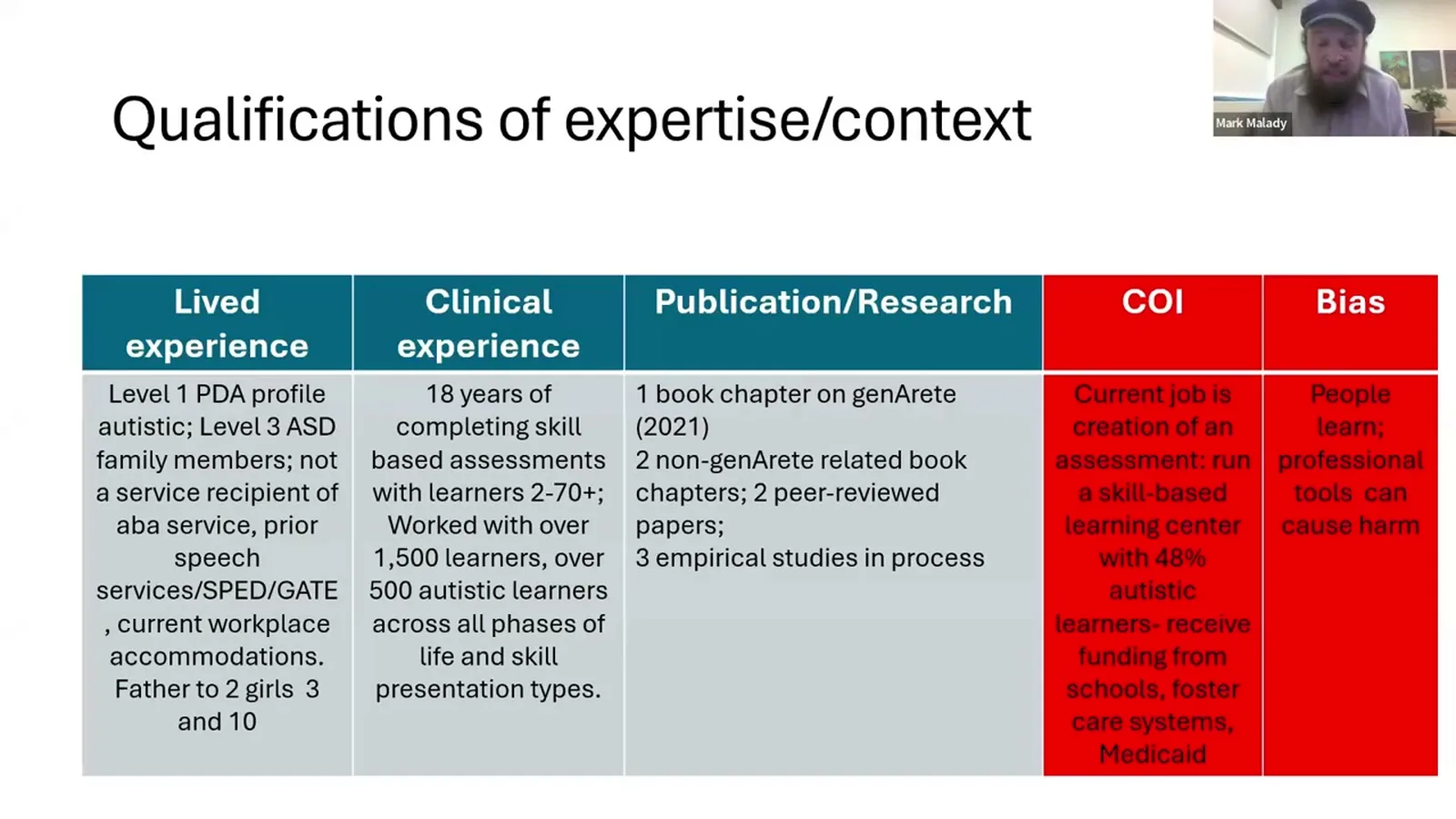
genArete: Milestone based comparison criteria in Skill Assessment
Mark MaladyThe Behaviorist Bookclub
Presented as the source of benchmark milestones: quality-of-life instruments and recurring family/learner surveys (asking what meaningful thing happened in the…
- 1 CEU
Generate: Learner Centered Skill Assessments
Mark MaladyThe Behaviorist Bookclub
Cited as a related, growing category of assessment for people with intellectual disabilities; a March 2026 study surveying practitioners on how they assess…
- 1 CEU
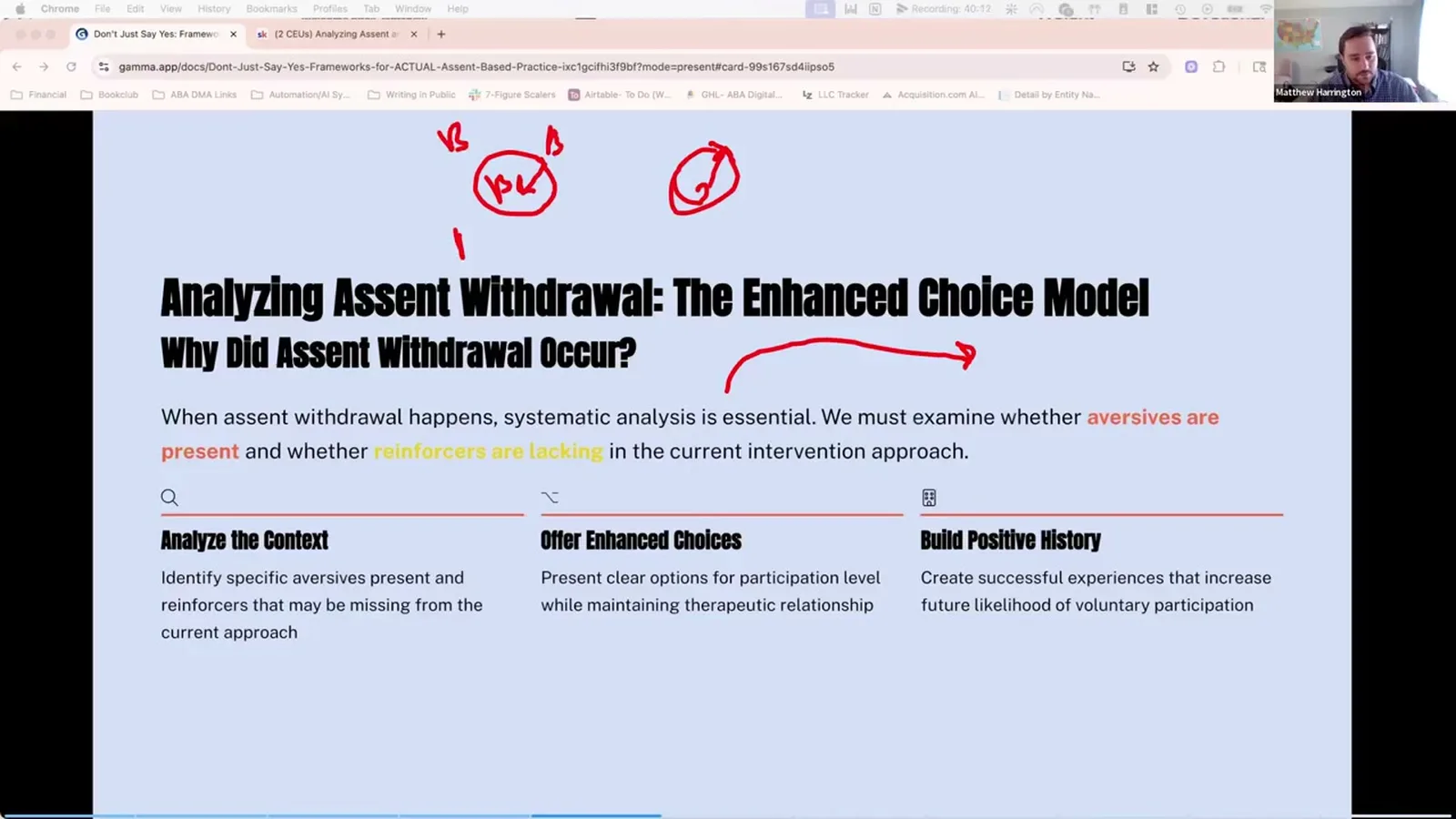
Assent: Don't just say Yes!-
Matt HarringtonThe Behaviorist Bookclub
The presenter argues that reducing challenging behavior alone (getting a client to 'zero') is not a sufficient endpoint; skill acquisition paired with…
- 1 CEU
genArete: Learner-Centered Skill Assessment
Mark MaladyThe Behaviorist Bookclub
Mark cites a March 2026 article surveying practitioners on how they assess quality of life and comparing that to existing instruments, finding good alignment…


On this page · 8 sections▾
Quality of life is the real goal of good ABA. It is more than fewer problem behaviors. It is a life the person actually enjoys. It is skills, choice, and moments that matter.
This matters to BCBAs, RBTs, teachers, and families. It keeps the focus on what counts. A calm session is not the finish line. A better life is the finish line.
More than zero behavior#
Many plans aim to stop challenging behavior. That is a start, not an ending. A child with zero problem behavior may still be stuck. They may lack the skills to live and connect.
Matt Harrington describes the real target. He says do not stop at no problem behavior.
get a kid from point A, not to point B, which may be no challenging moments, no problem behavior, but ultimately all the way to the actual quality of life goal that we're working towards. From the talk — Matt Harrington
He puts numbers on the idea to make it clear.
we want to get them from negative five to 100. And 100 is a quality of life increase. 100 is that thing that really moves the needle. From the talk — Matt Harrington
Point B is just neutral. It is the absence of a problem. Quality of life is the positive goal past that. It is the part that truly changes a life.
Define quality for your setting#
Quality of life sounds nice but stays vague. It needs a concrete meaning for each family. Harrington gives a plain test for it. Can the family live everyday life together?
If you're not improving the family's quality of life, it doesn't matter if you're keeping your 10%, you know, supervision or 15% supervision or you're doing X amount of parent training. you know, if they can't go to Walmart together as a family, you're not meeting your expectations and this is not quality of services. From the talk — Matt Harrington
Metrics like supervision hours miss the point. A trip to Walmart as a family means more. That is a real, checkable goal. Stephen pushes the team to name their own version.
what is quality? What is quality within your company? From the talk — Stephen
Every program should answer that question. Write down what a better life looks like. Then aim your services at that picture.
Assent makes it real#
 Advertisement
You cannot force a good life on someone. Quality of life grows with the person's say. Assent means the learner agrees to take part. It is their willing yes to the work.
Skill building and assent go together. You teach real skills the person can use. You also honor their choices along the way. Together, these push quality of life up.
This shifts how a session feels. The learner is a partner, not a subject. Their comfort and choice guide the plan. That respect is part of the outcome, not a barrier to it.
Measure what matters#
You cannot improve what you do not measure. Quality of life needs its own data, not just behavior counts. New tools now make this easier. They track things like choice, comfort, and joy.
Mark Malady sees this shift growing in the field.
We are also seeing an increase in related assessment instruments being developed, used and normalized, such as quality of life for people with intellectual disabilities. From the talk — Mark Malady
He also ties these tools to how a team runs its data. A big part of the work is choosing a quality of life instrument. Then you fold its data into your whole data system. Quality of life sits right beside skill data.
So pick a tool and use it often. Let it sit next to your skill data. Quality of life then becomes a number you track. You can review it and act on it. Some good tools are free and open for anyone to use.
You can see how this feeds goal setting in genArete: Milestone based comparison criteria in Skill Assessment.
Ask the family what matters#
Quality of life is personal, so ask the family. What would a good day look like for them? What have they always wanted to do together? Their answers become your real goals.
Mark Malady points to simple survey questions for this. One is asking what meaningful thing happened lately. Families and learners can answer that in their own words. Those answers show progress that a behavior chart misses.
So build these questions into your routine. Ask them again every few months. Watch how the answers change over time. That trend tells you if life is truly getting better.
Whose quality of life counts#
Quality of life is not only about the child. The whole family feels the weight of care. Parents get tired. Siblings need attention too. A good plan lifts the family, not just one person.
That is why the Walmart test is so useful. It measures the family living life together. A child may gain skills while the family still struggles. Real quality of life includes everyone in the home.
Staff wellbeing matters here as well. Burned-out teams cannot raise anyone's quality of life. Ethical programs care for their people too. Healthy staff make better care possible.
What the research says#
Researchers are building ways to measure quality of life directly. One pilot study made an observation form for direct service providers. Staff recorded quality of life indicators at two group homes. The form had good agreement and pointed to areas to improve (Luiselli, Bird, Harper, Weiss, Duffy, & Dye, 2026).
This work shows a clear trend. Quality of life is moving from a nice idea to a measured outcome. Staff can rate it in real settings. That makes it something a program can actually track and grow.
FAQ#
What does quality of life mean in ABA?
It means a life the person finds meaningful and enjoyable. It goes beyond stopping problem behavior. It includes skills, choice, relationships, and daily moments that matter. It is the true goal of services.
How do you measure quality of life?
You use tools built for it, not just behavior counts. Some tools rate choice, comfort, and joy in daily life. New observation forms let staff record these in real settings. You track that data alongside skill data.
Why is reducing problem behavior not enough?
Zero problem behavior is only a neutral point. A person can be calm and still lack a full life. Quality of life adds the positive goals past that point. Skills, choice, and connection are what truly move the needle.
 Advertisement
Turn this topic into a CEU
You just studied this. Now get credit for it.
Watch Ethically Scaling an ABA Company with Matt Harrington and 3 Pie Squared and earn 1 free BCBA CEU. Detailed certificate, delivered the moment you finish.
Keep going with a free learning path
Your 4 Ethics CEUs, Done
Four ethics CEUs in three courses, all free. Start with Matt Harrington's assent and data course, then ethical guardrails in behavior reduction, then cultural considerations in clinical practice. Every course carries ethics credit, so this path covers the BACB requirement with nothing to buy.