Shaping in ABA - Teaching in Small Steps
Shaping in ABA means rewarding small steps toward a goal. Learn how BCBAs, RBTs, and parents use it to teach hard skills with less stress.
Key takeaway
Shaping is a way to teach a hard skill one small step at a time. You reward small wins that move closer to the goal.
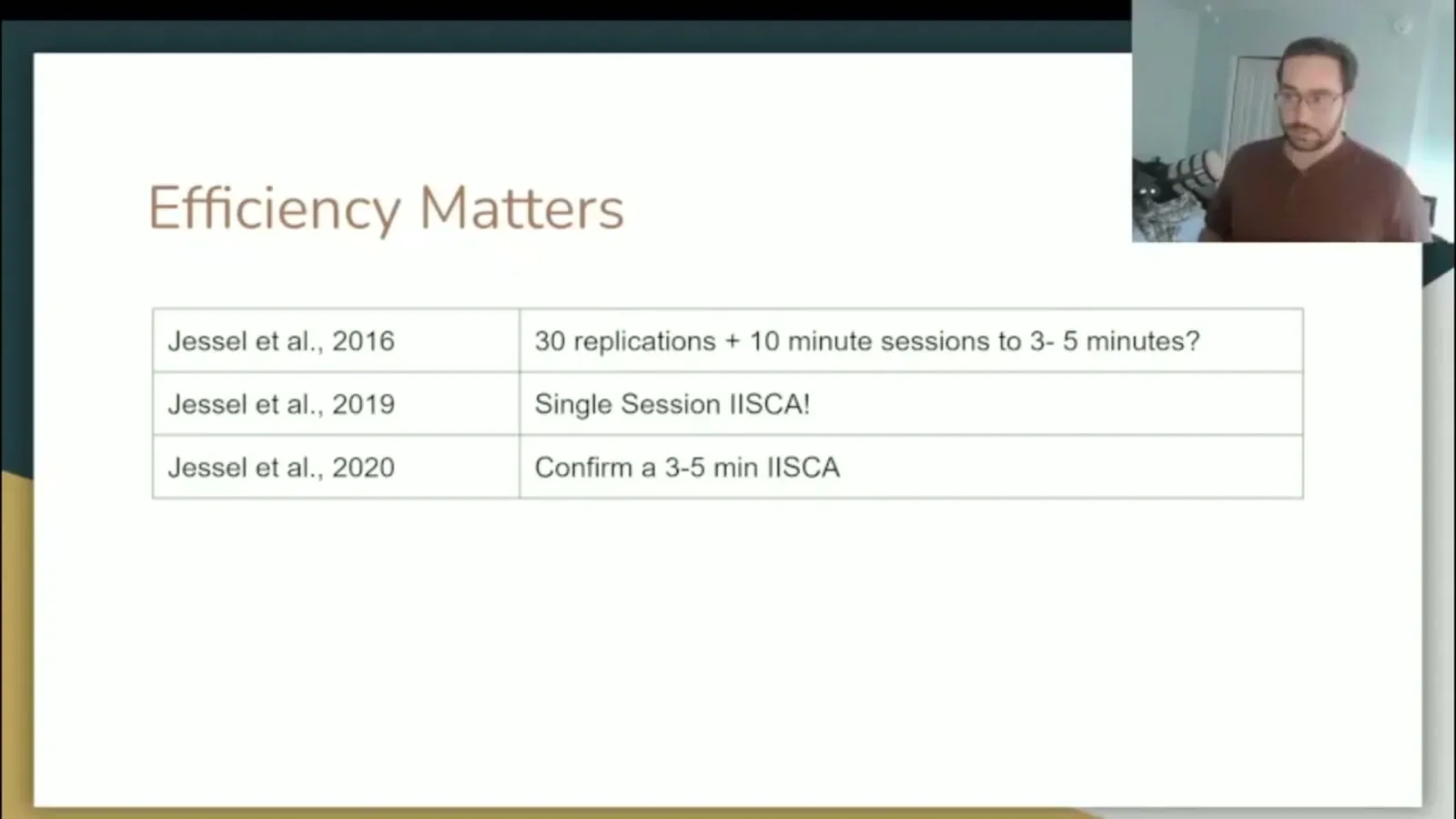
12 days of PFA & SBT
Experts who cover this
9 recordings on openceu cover shaping aba.
- Featured talk3 CEUs
12 days of PFA & SBT
Matt HarringtonThe Behaviorist Bookclub
Named as the presenter's favorite topic and the connective tissue of the entire PFA/SBT process, illustrated with his own client story (a slow multi-month fade…
- 1 CEU
Shaping Behavior Change when ADHD is in the Picture
Nicole StewartThe Behaviorist Bookclub
The core framework of the talk: shaping reinforcement to account for response effort and variability, using flexible criteria (e.g., not rigidly holding a…
- 1 CEU
Compliance to Commitment: Seven Habits of the Highly Effective Caregiver Trainer
Matt HarringtonThe Behaviorist Bookclub
Applied to caregiver goal-setting: instead of assigning the terminal goal directly, break it into small, immediately feasible steps so the caregiver…
- 1 Supervision CEU
Dunder Mifflin’s Guide to Training and Onboarding: Lessons from The Office
Mellanie PageThe Behaviorist Bookclub
Page reframes shaping as applying to staff training, not just client behavior: RBT training should start at the learner's current skill level and build…
- 1 CEU
Assent: Don't just say Yes!-
Matt HarringtonThe Behaviorist Bookclub
Presented as the primary lever practitioners should adjust after assent withdrawal, by changing step size or the number of correct responses required before…
- 1 CEU
The Math Behind Behavior Reduction
Matt HarringtonThe Behaviorist Bookclub
Harrington reframes shaping from a purely intuitive 'art' into a decision governed by the percentile schedule equation, arguing the underlying choice is always…
- 2 CEUs
Prediction and Probabilities: Three foundational equations to successful behavior reduction
Matt HarringtonThe Behaviorist Bookclub
Shaping is framed as a scientific rather than purely artful process, which the percentile schedule quantifies. Matt ties reinforcement density directly to…
- 1 CEU
New Year, New Care Collab Goals
Matt HarringtonThe Behaviorist Bookclub
Credited to SLPs as a particular strength (shaping natural language) worth incorporating into ABA plans, and used again describing how graduated exposure in…
- 3.50 Ethics CEUs
Analyzing Assent and Taking Data
Matt HarringtonThe Behaviorist Bookclub
Listed alongside pairing and transfer of stimulus control as core tools for gradually building a client's tolerance and relationship with the clinician rather…


On this page · 10 sections▾
Shaping is a way to teach a hard skill one small step at a time. You reward small wins that move closer to the goal. Over time, those little wins add up to the full skill. The final skill is called the terminal behavior, which just means the end goal.
This matters because most big goals feel too far away at first. A child cannot always jump straight to the finish line. BCBAs, RBTs, and parents can use shaping to make progress feel doable. You meet the learner where they are, then build up slowly. That builds success and trust at the same time.
Reward the small steps, not the whole goal#
Shaping starts by breaking a big goal into tiny pieces. You reward each piece as the learner gets closer. This keeps the learner from feeling stuck or lost.
Dr. Megan DeLeon shared a great example from her first client back in 2011. She built a child's comfort with an adult nearby during a fun trampoline activity. She used 18 small targets, grouped into stages with their own rules.
The adult would do the trampoline for five seconds and then say, okay, you know, I'm done and walk away because we were trying to show her it's not that bad. From the talk — Dr. Megan DeLeon
Notice the trick here. The adult left before the child pushed them away. That small choice kept the moment positive. It showed the child that having an adult close by was safe.
Start where the learner is right now#
You cannot pick a good first step without knowing the starting point. Shaping falls apart when you skip this. You have to find the entry point, which is the skill the learner already has.
Matt Harrington makes this point with a potty training example. If you place a child in underwear too soon, the plan breaks. The child is not ready for that jump yet.
Remember that shaping, the way shaping works is small steps at the beginning. So if you don't assess where they are now and you place the kid in underwear before they can identify what wet and dry is, well, you are in for a beating when it comes to the success of that program. From the talk — Matt Harrington
The same logic works for caregiver goals. Do not hand a parent the final goal on day one. Break it into small steps they can win right away. Early wins keep people going.
Change the step size when progress stalls#
Shaping is not one fixed plan. It has dials you can turn. The main dial is step size, which is how big each jump is.
Say you are building tolerance for waiting. You might start at one second, then five, then fifteen. If a learner struggles, shrink the jump. Move from one second to three seconds instead of a giant leap. If they breeze through, you can make bigger jumps.
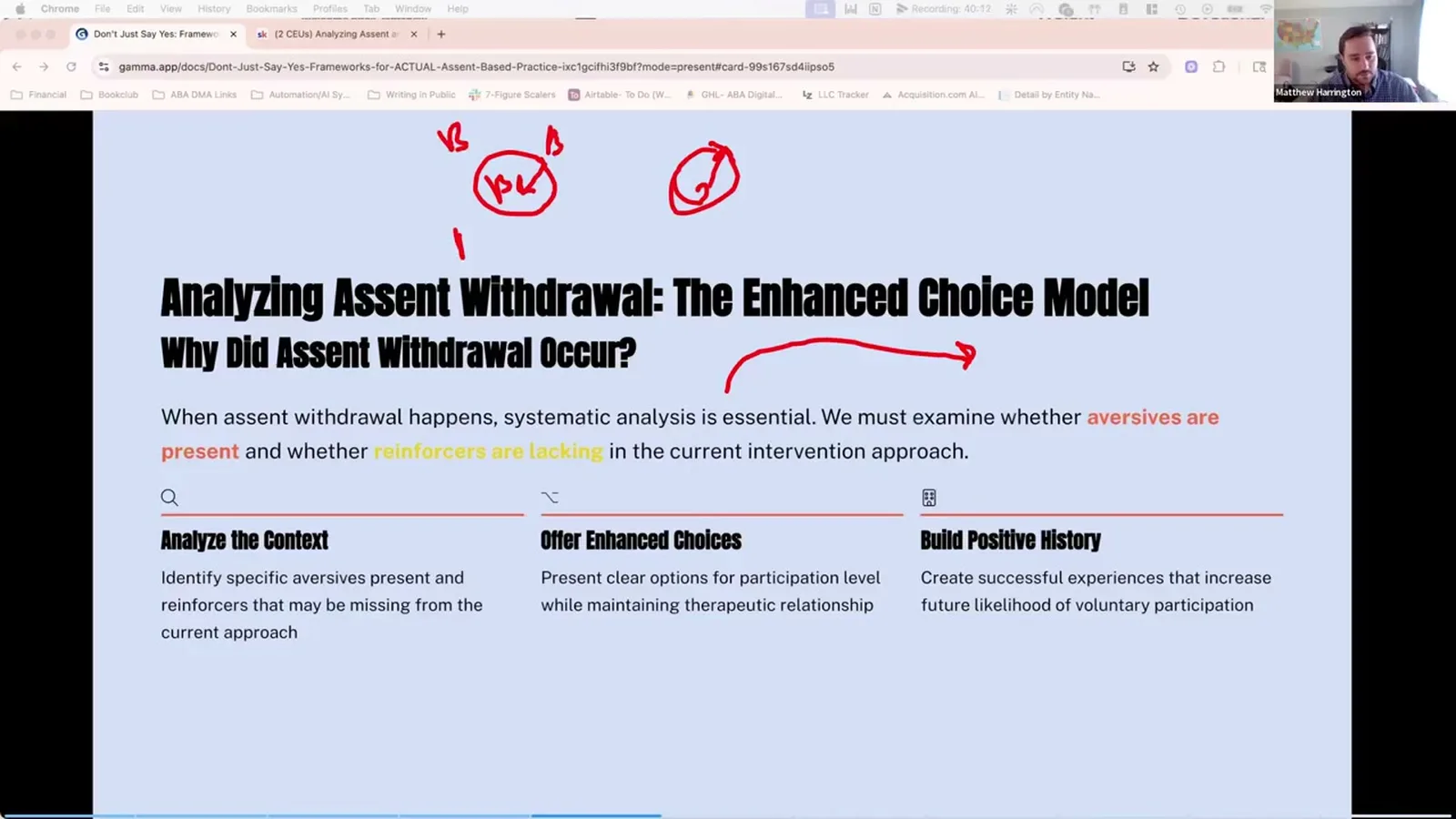
This matters most when a learner pulls back. In ABA we call this an assent withdrawal, which means the learner signals they want to stop. When that happens, change the step size before you change anything else. Small tweaks keep the learner in the game.
Teach the skill, do not force it#
 Advertisement
Shaping is a kind teaching tool. It grows a skill instead of pushing through resistance. Many experts see this as its biggest strength.
Matt Harrington calls it one of his favorite topics in the whole field. He also says it often works faster than harsher methods.
I really freaking love shaping. I think shaping as a concept is one of the coolest and most undervalued teaching skills that we have in our field. From the talk — Matt Harrington
He ties this to a simple goal for clinicians. We want to teach, not force. Shaping lets you build tolerance and skill without a fight. It also protects the relationship, which is why he pairs it with fading and pairing as an ethical analyst's best friends.
Going backward is still progress#
Shaping is not a straight line. Sometimes you push a step that is too big. The learner tells you they are not ready. That is normal, and it is fine.
Matt shared a client story about a slow fade of tolerance time. They moved too fast, so they stepped back to an easier level. The key insight was that stepping back did not erase their work.
he clearly told us that he wasn't ready for that jump and we took it all the way back... but we realized that we weren't going back to zero, we made a bunch of forward progress, now we're taking a couple steps back and that is absolutely okay. From the talk — Matt Harrington
So do not panic when you have to back up. You keep the gains you already made. A couple steps back can set up a smoother path forward.
Shaping works for staff and skills, not just kids#
Shaping is not only for clients. You can shape any learner, including your own team. This is a favorite angle for people who train new staff.
Mellanie Page reframes RBT training as a shaping process. You start where the new hire is. Then you build learning chances that move them toward the target level. Little by little, their skills grow.
Matt makes a similar point about working with other providers. He praises speech therapists, or SLPs, for shaping natural language. He likes folding their shaping work into ABA plans. Shaping is a shared language across the whole care team.
Shaping food, one tiny bite at a time#
Feeding is one of the clearest places shaping shines. Many autistic children have a hard time trying new foods. Shaping offers a gentle path to more food acceptance.
Dr. Holly Gover built a feeding plan around this idea. Her team broke eating into small parts to teach it step by step.
So we, like many other shaping papers, task analyzed the act of picking up a piece of food, chewing it and swallowing it. From the talk — Dr. Holly Gover
To task analyze means to split a skill into small steps. In one case, a child chewed a tiny noodle twenty times. That small step helped her tolerate swallowing. She lays out the full feeding approach in Feeding Face Off.
Is shaping art or science?#
Shaping can feel like an art. You read the learner and make judgment calls in the moment. But there is science under the art too.
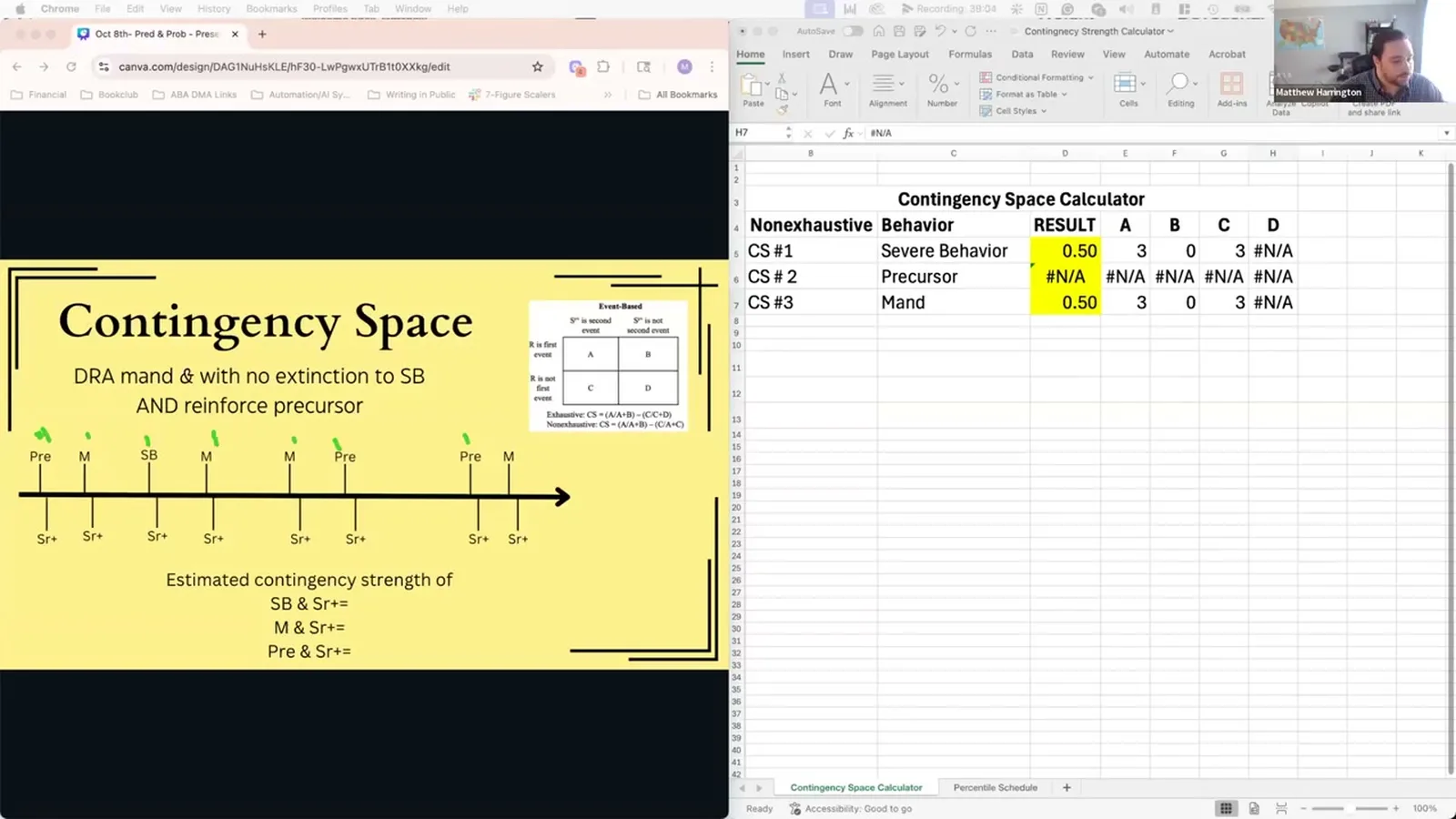
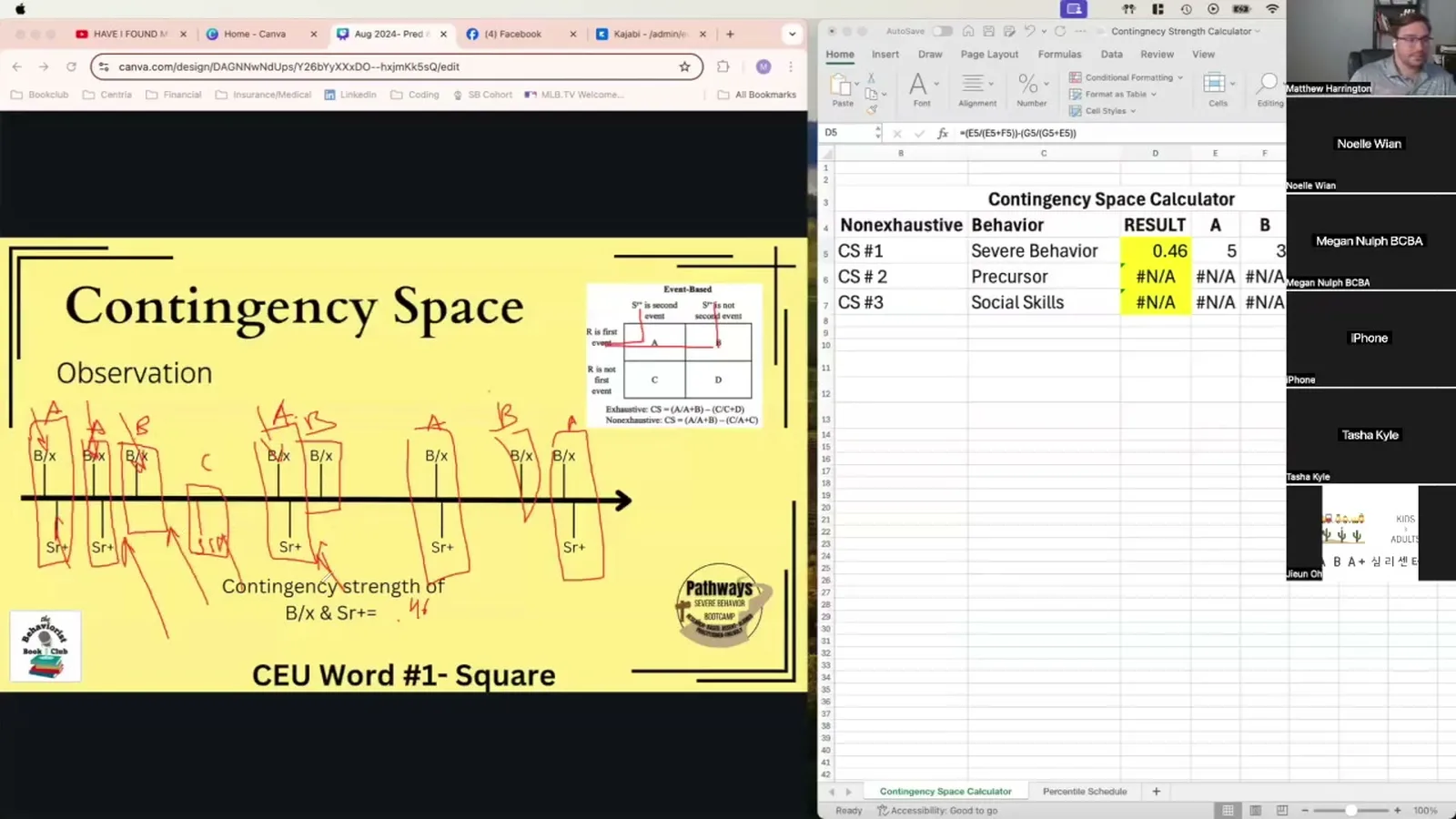
Matt Harrington points to a tool called the percentile schedule. That is a math rule for deciding when to reward a response. It looks at recent tries and picks a fair bar to beat.
Shaping is an art more than a science. From the talk — Matt Harrington
He then flips that idea on its head. At its core, shaping is one repeated choice. You look at a response and decide whether to reward it. The percentile schedule puts numbers to that choice. You can also change reward frequency, called reinforcement density, to match how hard the step is.
What the research says#
Research backs up shaping across very different goals. One study taught eye contact to two preschoolers with autism in India. Parents ran the plan over telehealth, guided by remote supervision. The children learned to make eye contact during normal play. The plan used preferred social activities instead of prompts or treats (Strömberg et al., 2025).
Feeding research shows shaping's role too. One study paired a warm relationship, called pairing, with shaping for two children with autism. Pairing plus shaping helped one child accept four new foods. This happened without strict seating rules for that child (Demchuk et al., 2026).
Shaping ideas even reach beyond people. Researchers built computer models of good shaping strategies. They found the best plans balance giving rewards and holding them back. Smart plans track how fast the learner is improving. Then they switch between easier and harder tasks to match (WL et al., 2025).
FAQ#
What is shaping in ABA in simple terms? Shaping means teaching a skill in small steps. You reward each step that moves toward the goal. Over time, the small wins build the full skill. It works because big goals feel easier when broken down.
How is shaping different from prompting? Prompting gives the learner a hint or help to respond. Shaping instead rewards the learner's own closer attempts. Some plans use no prompts at all and rely on rewards. You can also use both together, then fade the prompts out.
What do I do if a shaping step is too hard? First, shrink the step size so the jump is smaller. If the learner still struggles, step back to an easier level. You do not lose your earlier progress by backing up. A smaller step often gets things moving again.
 Advertisement
Turn this topic into a CEU
You just studied this. Now get credit for it.
Watch 12 days of PFA & SBT with Matt Harrington and earn 3 free BCBA CEUs. Detailed certificate, delivered the moment you finish.
Want the primary literature? Read the Shaping in ABA - Teaching in Small Steps research roundup on our sister site, Behaviorist Book Club.