Assent Withdrawal: When a Learner Says No
Assent withdrawal is how a learner tells you to stop. Learn to spot the signals, honor them, and change what comes next in ABA.
Key takeaway
Assent means a learner agrees to take part. It is a yes given freely, without pressure. Assent withdrawal is the moment that yes turns into a no.
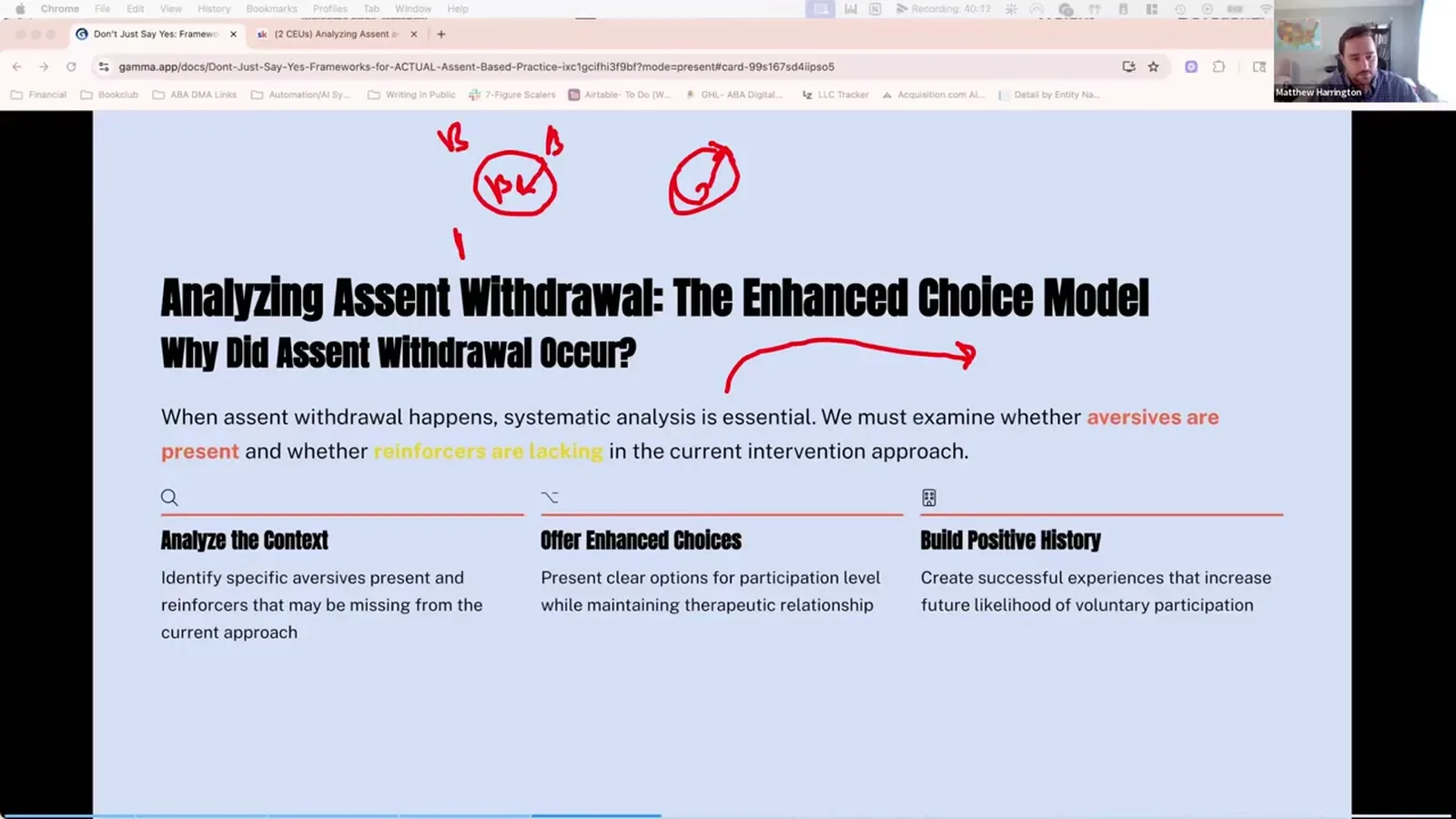
Assent: Don't just say Yes!-
Experts who cover this
3 recordings on openceu cover assent withdrawal.
- Featured talk1 CEU
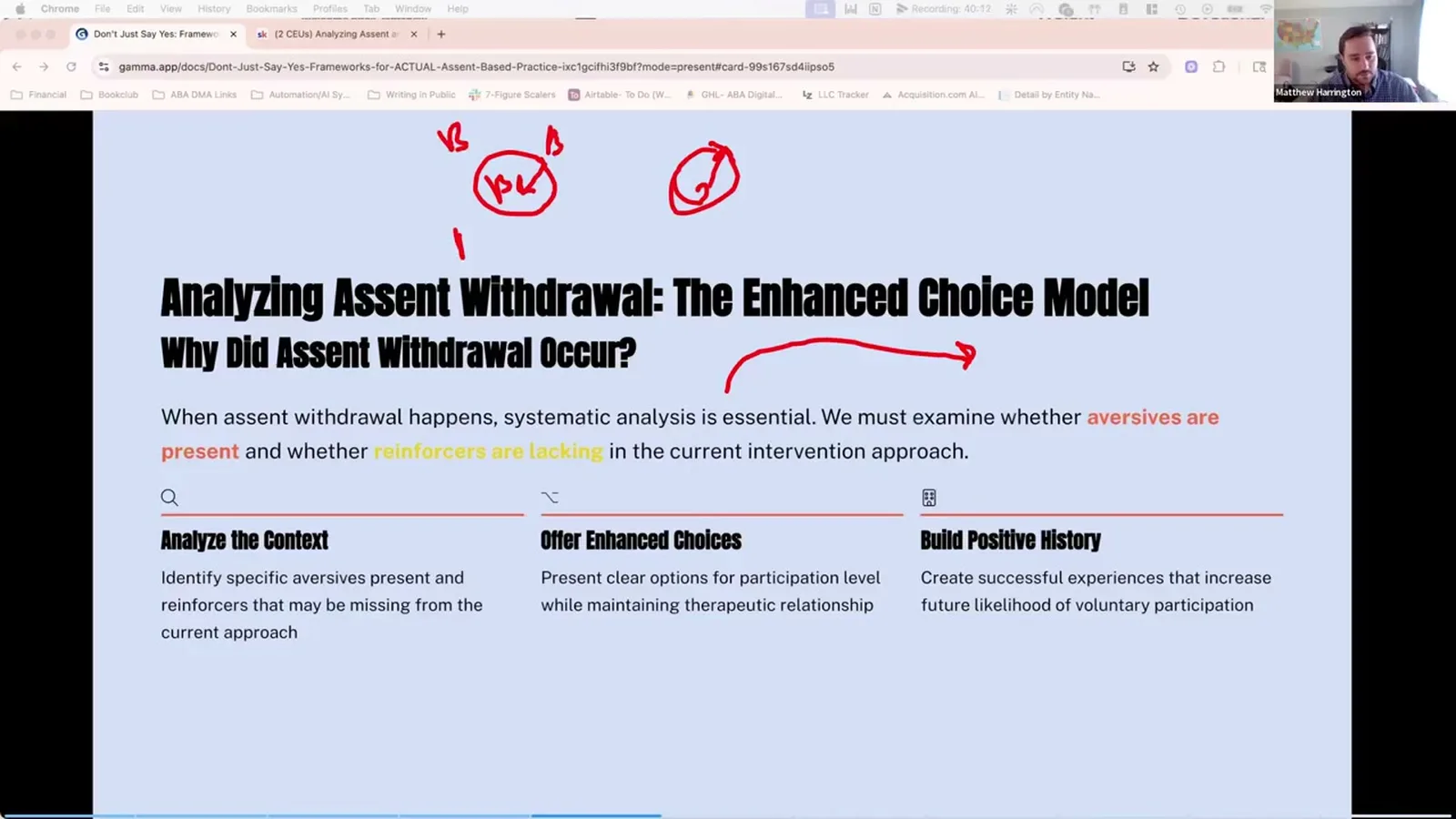
Assent: Don't just say Yes!-
Matt HarringtonThe Behaviorist Bookclub
The presenter argues that most assent trainings stop at 'back off' when a client withdraws assent, and instead teaches a framework for what practitioners…
- 0.50 CEUs
Beyond Compliance: What Assent-Based ABA Looks Like in Real Life
Danielle VirnelsonDani Elle Mentorship and Consulting
The talk details how withdrawal of assent shows up behaviorally, from explicit verbal refusal to subtle nonverbal signals like increased latency, posture…
- 1.50 CEUs
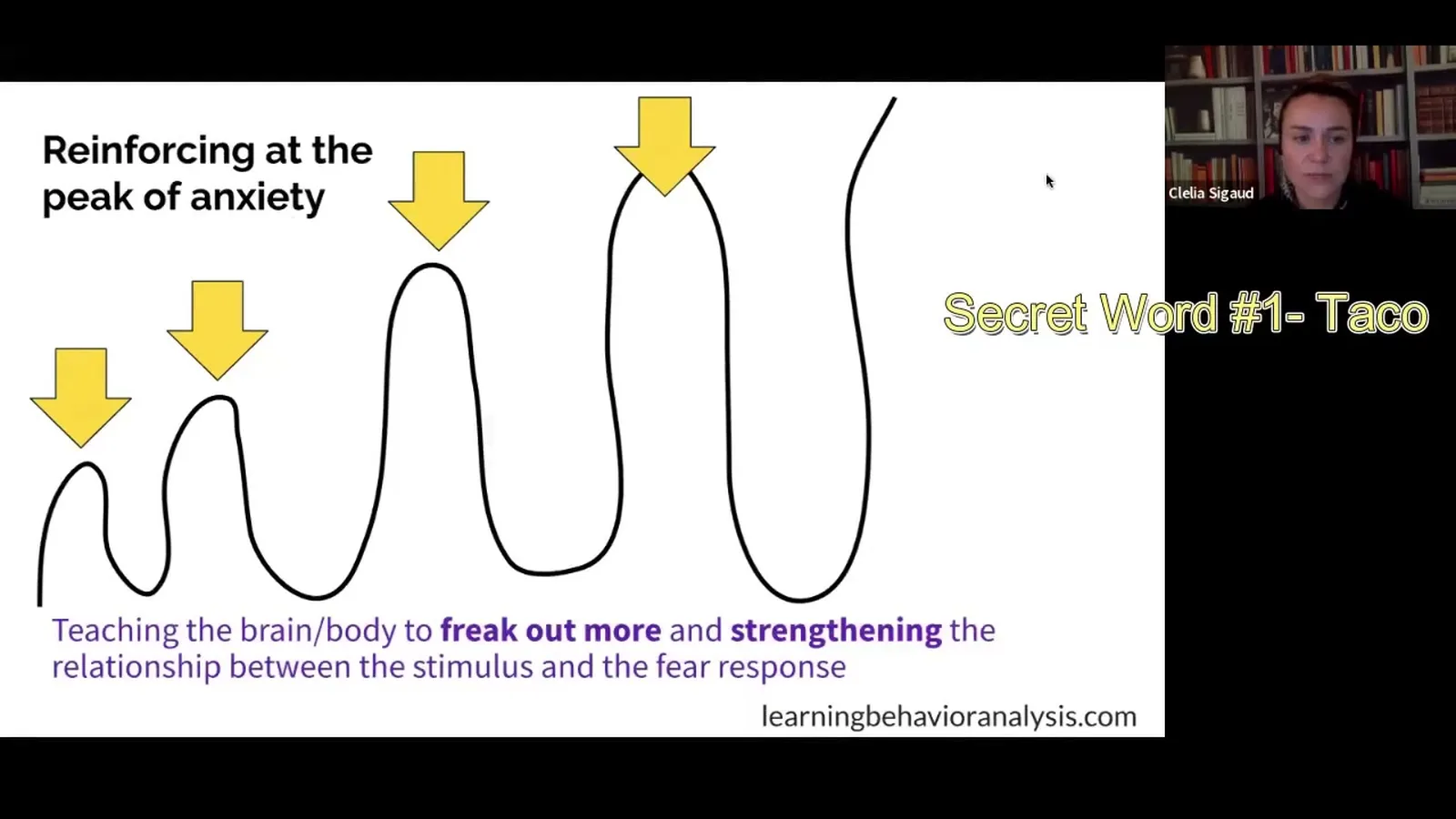
Hey, Chillax Man! Understanding the Logic of Anxiety
Dr. Clelia SigaudThe Behaviorist Bookclub
One of Matt's two paired mechanisms in M's intervention: at every step, if the client said no, no prompting or pushing occurred, so he always controlled the…

On this page · 9 sections▾
Assent means a learner agrees to take part. It is a yes given freely, without pressure. Assent withdrawal is the moment that yes turns into a no. The learner pulls back their agreement to what is happening right now.
That no matters. It carries real clinical information. A learner who withdraws assent is telling you something about the task, the pace, or the moment. Honoring that signal protects their dignity. It also makes your teaching better, because you stop and ask why the no happened.
What assent withdrawal actually means#
Assent withdrawal is not bad behavior. It is communication. The learner is saying stop, not now, or I am done. In behavior analysis, a BCBA (a certified behavior analyst) treats that message as data, not defiance.
Dr. Holly Gover, in a talk on flexible feeding, points out that assent withdrawal sits at the heart of the whole protocol. The choice boards and other tools are helpful extras. The real engine is simpler.
The core idea is that the learner keeps some control. When they say no, the plan bends. That is what separates assent-based work from plain compliance.
How it shows up when a learner cannot say no#
Many learners do not have the words to say no. So they show it with their bodies and their actions. You have to learn to read those signs.
Nikki, in a talk on school behavior support, describes learners moving away from the area or avoiding the task. Some use a communication device to ask for the bathroom over and over. They may not need the bathroom at all. They are asking for a way out.
Danielle Virnelson, a BCBA, lists a wide range of these signals. Some are loud and some are quiet. She names avoidance, escape behavior, aggression, crying, and self-injury. She also points to a learner who simply goes still and flat.
Reading the quiet signals#
The loud signs are easy to catch. Crying and pushing away are hard to miss. The quiet ones slip past busy adults.
Virnelson names a few of these small signs. One is increased latency, which means a longer delay before the learner responds. Another is a rise in self-stimulatory behavior, often called stimming. A shift in posture can count too. The learner has not yelled, but they have checked out.
For learners with words, the message gets clearer. They may say stop, I am done, or I do not want to. The job is the same either way. You notice the signal early and you act on it.
Backing off is only the first step#
 Advertisement
Most training stops at one idea. When a learner withdraws assent, you back off. Matt Harrington argues that backing off is only where the work starts.
But what about after you back off? What happens then? From the talk — Matt Harrington
His point is direct. If you back off and then do the exact same thing again, you will get the same no. The learner has not changed. The task has not changed. So the result will not change either. Honoring the no means changing what you bring back next time.
When withdrawal keeps happening, look at your teaching#
A single no is normal. A pattern of no is a message about your plan. Dr. D2 Rajaraman warns against treating assent as a rigid 100 percent rule in every case. Some moments, like a safety emergency, cannot fully honor a withdrawal.
But frequent withdrawal is a red flag. It points back at the teaching, not the learner.
When students are withdrawing assent regularly, we need to be analytic in that moment. We need to understand what is deficient about our teaching environment. From the talk — Dr. D2 Rajaraman
So the fix is not to push harder. The fix is to redesign. Maybe the task is too hard. Maybe the pace is too fast. Maybe the reward is too small. Repeated withdrawal tells you where to look.
Letting the learner control the pace#
One powerful use of assent is giving the learner the wheel. Matt shares a case with a client named M who faced high anxiety about returning to a classroom. At every single step, the no was respected.
at any time, no matter what, assent withdrawal was respected. From the talk — Matt
M could stop, wait, or go all the way back home. That control lowered the fear. He knew no one would force him forward. This pairing of slow exposure and full assent shows up in Hey, Chillax Man! Understanding the Logic of Anxiety, which explores the logic of anxiety in more depth.
The engine of the whole approach#
It helps to see where assent withdrawal fits inside a full plan. Gover frames it as one of two core parts, next to differential reinforcement, which means rewarding one response more than another.
When a learner withdraws assent, a real question comes up. Do you teach a new way to ask, called an FCR, or a functional communication response? Or do you keep reinforcing the swipe or the cry for now? There is no single right answer. The choice depends on the learner and the goal. What stays fixed is that the withdrawal gets honored first. You never override the no to force the task.
What the research says#
Research backs the idea that these skills can be taught to clinicians. One study built a training program for BCBAs and then measured the results (Shpall & Kuhn, 2026).
In that study, every participant learned to spot assent withdrawal, change the plan in response, and add regular assent checks. The training used clear steps. It defined the behaviors, embedded ongoing checks, and used a simple decision flowchart. The gains held over time. This matters because it shows assent-based practice is a skill clinicians can learn and keep.
Full citation: Shpall, C. & Kuhn, M. (2026). Evaluation of Assent Withdrawal Training for Board Certified Behavior Analysts: Impact on Competency and Clinical Practices. Behavioral Interventions, 41(1). https://doi.org/10.1002/bin.70080
Frequently asked questions#
What is the difference between assent and assent withdrawal?
Assent is a freely given yes to take part in a task. Assent withdrawal is when the learner takes that yes back. It can be spoken or shown through actions like moving away, crying, or going still. Both are forms of communication you treat as data.
How do I know if a nonverbal learner is withdrawing assent?
Watch the body and the actions, not just the words. Common signs include moving away, avoiding the task, frowning, crying, or repeatedly asking to leave through a device. Quieter signs include longer delays before responding and more stimming. When these show up, treat them as a no.
What should I do after a learner withdraws assent?
First, back off and honor the no. Then change something before you return to the task. If you bring back the exact same demand, you will likely get the same withdrawal. Look at the task, pace, and reward. Repeated withdrawal is a sign your plan needs a redesign. You can see this applied in real cases in Beyond Compliance: What Assent-Based ABA Looks Like in Real Life.
 Advertisement
Turn this topic into a CEU
You just studied this. Now get credit for it.
Watch Assent: Don't just say Yes!- with Matt Harrington and earn 1 free BCBA CEU. Detailed certificate, delivered the moment you finish.