Compliance to Commitment: Seven Habits of the Highly Effective Caregiver Trainer
Presented by Matt Harrington
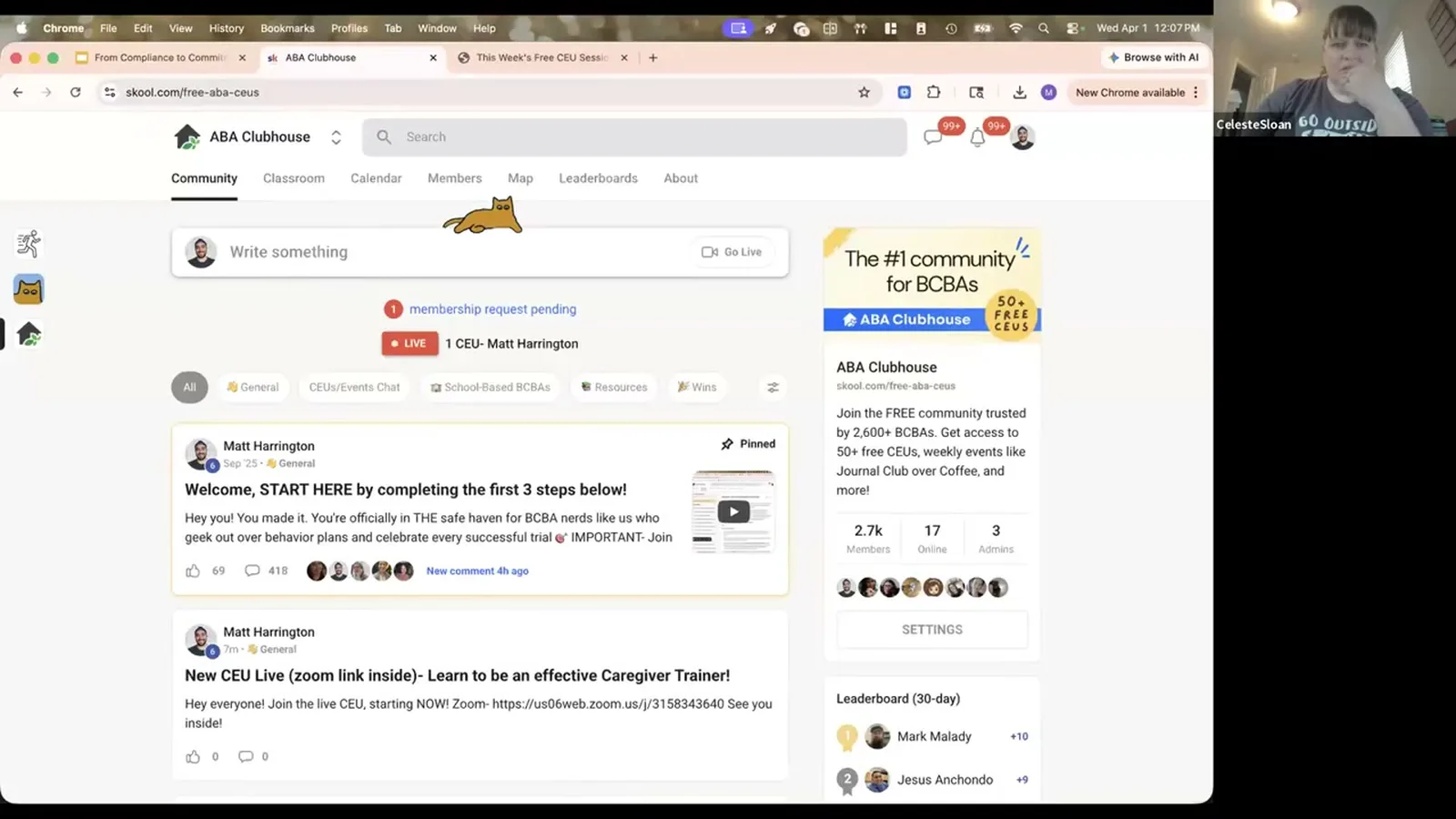
Drawing on principles of behavior change, motivational interviewing, and shaping, this session introduces seven evidence-based habits that transform caregiver training from a one-way instructional event into a collaborative, trust-driven process. Attendees will learn how to identify the most meaningful targets for family behavior change, hold honest conversations about barriers without damaging the therapeutic alliance, structure early wins that produce genuine reinforcement for caregivers, and use data visualization as a tool for sustaining momentum into more demanding programming. The session emphasizes a graduated approach: start small, build trust, demonstrate success, then expand.
Register free & watch nowCancel any time. Cert delivered to your inbox the moment you pass the quiz.
Learner ratings
from 71 learners
96% would recommend this CEU to other professionals in their field (53 responses)
“I appreciate the relatability of the teach method as well as emphasis on the first caregiver goal not being a clinical one.”
— Aneesa H.“As someone who does believe I am great at parent training, this CEU was still very informational when thinking about the outside factors influencing parent training. These are the things grad programs don't talk about - But I guess that's why we continue our education ;)”
— Elisabeth L.
About this CEU
Drawing on principles of behavior change, motivational interviewing, and shaping, this session introduces seven evidence-based habits that transform caregiver training from a one-way instructional event into a collaborative, trust-driven process. Attendees will learn how to identify the most meaningful targets for family behavior change, hold honest conversations about barriers without damaging the therapeutic alliance, structure early wins that produce genuine reinforcement for caregivers, and use data visualization as a tool for sustaining momentum into more demanding programming. The session emphasizes a graduated approach: start small, build trust, demonstrate success, then expand.
From the talk
What was covered
Seven habits that move caregivers from cautious to committed: assess first, build trust, shape small steps, and keep the data visual.
- Treat caregiver buy-in as a scale from negative to positive, not a yes-or-no trait. Some families arrive already burned by past services.
- Screen every possible first target through three filters before you pick one: feasibility, visible impact, and family readiness.
- Shrink the goal instead of trying to shrink parental stress, since stress is usually the fixed variable in the home.
- Make your first caregiver target a win they can feel within about a week. Then stretch to three weeks and a month as trust grows.
- Give caregivers a data sheet of colored squares, not a graph. It stays simple enough to keep and hard to argue with.
- When a caregiver says a plan is not working, keep asking. Find the exact scene where it failed, then change that one variable.
Why Caregiver Buy-In Breaks Down Before the First Training Session
Most of us learned to supervise the person standing right in front of us. That person is the behavior technician (the staff member running sessions). There is plenty of content on that. There is also a stack of research on running BST (instruct, model, practice, then feedback) with families. The gap sits between those two things. How do you get a tired, doubtful parent to show up and try one thing? Matt Harrington called this the zero to one step, and the whole talk stays there.
He pointed at the billing data to make his case. The 97156 code covers caregiver training hours. He called it the most underutilized code in ABA: BCBAs ask for it, then never bill it. He put the number at roughly 60 percent of those codes going unused. He also mentioned rumors of new CPT codes coming, with nothing confirmed yet. Parent non-adherence (caregivers not following through at home) is not new either. He cited Alan and Warzak on caregivers not carrying plans over into the home.
His early supervision was on an inpatient unit for severe behavior. Staff interviewed the caregivers at intake, then worked alone for weeks. Behavior dropped close to zero. Then the caregiver came back into the room and behavior spiked. That is renewal (behavior returns when the setting changes). Most of us do not have a hospital unit. We get 15 to 25 hours a week. The child has over 100 waking hours, spread across parents, grandparents, siblings, and teachers.
So he asked the group to stop sorting families into bought in and not bought in. Picture a scale instead. One is fully on board. Zero is neutral. Below zero are families who had a bad experience with ABA or a harmful school placement. Culture puts people below zero too. A family may expect their child to answer an adult with yes sir. If they watch you get the child to yell for a snack, it will not just look useless to them. It looks rude.
Most parents are cautious. Most caregivers are cynical.
From the talk — Matt Harrington
Habit 1: Assess Before You Assign the First Caregiver Target
Habit one is simple to say and hard to do. Walk in assuming you know very little. Drop what you decided about this family before. Your only job early on is to find where they sit on that scale. Harrington described the trap plainly. You build a plan around tolerating no and teaching play skills. You bring the caregiver your ten steps. They say okay, sounds good, and go quiet. Dig deeper and the real priority shows up. They are worn out by diapers.
He gave three questions to run before you choose that first target. Start with feasibility. If the family wants potty training, get honest about the cost. Does this mean a sit schedule all day? Underwear instead of diapers? Five wet pairs a day and laundry running nonstop? Do they even own enough underwear? If the answer is no, change the target rather than pushing a plan the home cannot carry.
Next is impact. Can they see progress soon? A caregiver may want seven friends at a birthday party. That is a fine terminal goal (the end goal you want). It is six months out and invisible in the meantime, so it is a poor first step. Last is readiness. Does this family want this, or are they repeating what the last provider told them to want? Watch them talk. Do they lean in? Can they say what changes in their day once it happens?
He also warned about ambivalence (wanting and not wanting change). Whatever you think is best is not agreement. It is often a parent who has heard promises for years and stopped expecting much. Parental stress belongs here too. Treat it as close to fixed. Manding for the bathroom (a request for something wanted) and staying dry for ten minutes is a real goal. A new washing machine and a full time helper is not.
it's a lot easier to change the goal and take smaller shaping steps to our overall overarching goal than it is to de-stress a parent
From the talk — Matt Harrington
Habit 2: Treat Trust as an Establishing Operation
Harrington defined trust in behavioral terms. It is say-do correspondence. You said a thing would happen. Then it happened. Repeat that loop and past words start to predict future events for the caregiver. That makes trust an establishing operation (something that makes a reward matter more). You are not trying to jump a family from negative one to one. You are trying to move them to negative 0.9, then negative 0.8.
This matters because alliance comes before treatment fidelity (running the plan as written). You can teach BST until you get 100 percent fidelity while you sit there and watch. That number tells you almost nothing about the rest of the week. A strong alliance has a sound. The caregiver asks why this will take six weeks instead of two. They share what happened at home. They tell you honestly what did not work. That is extra effort spent on a better outcome.
A weak alliance has a sound too. Sessions get short. Answers get closed. Meetings get missed. You hear whatever you think is best. Treat that as data, not as a difficult parent. He also named a reason many families guard themselves. Caregivers get gaslit (told their concerns are not real) by professionals often. A pediatrician says to wait it out. A therapist calls a behavior spike normal. A provider promises a goal with no plan behind it. By the time they reach you, their detector for talk without care is sharp.
Alliance is the thing that keeps that fidelity across the rest of those hundred hours.
From the talk — Matt Harrington
Habit 3: Use Motivational Interviewing to Restart the Conversation
He was careful here. This was not a how-to on motivational interviewing (guiding someone to their own reasons). He used it as a way to reopen a stalled conversation. The core idea is that people change more readily when they reach the conclusion themselves. Your job is to gather a lot of context. Name that context back to the caregiver. Reinforce it when they start talking about change.
Four tools carry most of the weight. Ask open-ended questions. Affirm effort, not just results. Use reflective listening, which means actually hearing them instead of loading your next line. Then summarize so everyone leaves on the same page. Open-ended interviews take longer and turn up more variables. That is the point. They get the whole home environment on paper where you can both look at it.
He described going four caregiver sessions deep with nothing but 30 minute listening sessions. No teaching. His message was that they were the expert on their child, and he was there to learn. Question, question, question. One caution came from the chat. Venting builds trust, but only if something follows it. He compared it to a staff survey that collects twelve complaints and changes nothing. Pull one item out of the vent and make it actionable for next session.
if you take one thing away from this presentation, take away open-ended questions and reflective listening.
From the talk — Matt Harrington
Habits 4 and 5: Shape the Goal and Engineer an Early Win
We would never write a client goal as 90 percent accuracy for a month with nothing in between. We build prerequisites. We use shaping (reinforcing small steps toward a goal). He pointed to the PFA and SBT model (a stepwise assessment and treatment process). It is a clean example of small skills stacked into a branch. Caregiver goals deserve the same treatment. Toilet training is the destination. This week is manding for the bathroom, or sorting wet from dry.
The sequence he gave is short. Define the terminal behavior precisely. Analyze the skill the caregiver has to perform. Find the entry point, meaning where they are right now. Build the steps so reinforcement lands early. Then use BST, or a lighter version of it, at each step. Entry point is the piece people skip. Put a child in underwear before anyone can tell wet from dry and the program takes a beating.
For telehealth and for sessions without the child present, he recommended teach back (the learner repeats it back). It comes from medicine. The doctor explains the procedure, then asks the patient to say it back. The doctor fills the gaps and asks again. You go back and forth until the caregiver can teach the plan to you.
Then comes the part he called being a little selfish. Your first target should be one you can win. The best first goal visibly improves the caregiver's life and lands in about a week. They do the thing, their day gets better, and the loop is reinforced. Listening to you produced the outcome they wanted. As the alliance grows, stretch to a three week target, then a month.
You need to serve it up on a silver platter and you need to knock that sucker out of the park.
From the talk — Matt Harrington
Habit 6: Get Past the Stated Barrier to the Real One
Harrington borrowed this habit from sales work. Someone gives you a reason they cannot do the thing. You ask about that reason and it dissolves. The stated barrier was rarely the real one. Underneath it is usually a trust question: will this actually work for us? You are not there to close a deal. You are there as a member of the alliance, working the same problem from the same side.
So keep asking. I hear that you do not think this will work. Can we go deeper? Are you seeing it fail? When are you seeing it fail? Now you learn it falls apart at 6 PM, while dinner is cooking and the TV goes off. That is a scene you can work with. You can change one variable in that scene.
The second kind of barrier is a feasibility miss. The caregiver agreed the plan was doable and it was not. You come back a week later to this is not working and I do not think it matters. Nothing went wrong with their motivation. The step was too big. Shrink it. This is where reading widely pays off. You know tools like signals, shaping, and other scheduling techniques (ways to time reinforcement). That lets you build something that actually fits this home, not just hand over a red and green board.
And then you chop up variables and you can actually get to what's really happening.
From the talk — Matt Harrington
Habit 7: Use Simple Visual Data to Sustain Caregiver Momentum
His hardest case was a parent who had become the expert. They were terrified of losing services, so they learned a bit of ABA and started running the plan their way. Earlier providers had gone along with it. He disagreed with the direction and had to say something close to everything you have been doing needs to change. The only thing that carried that message was a large pile of highly visual data.
His preferred display is not a graph. It is a spreadsheet. Days run down one side. One to three behaviors run across. Each day gets a colored square. Define the colors and keep a legend. One to five aggressions is a green day. Six to thirteen is yellow. Thirteen and up is red. He named the flaws himself. You lose true frequency. You cannot see bursts. A caregiver may forget partway through the day. It is still minimum viable data that a family will actually keep.
Other options he listed include a few more tools. Frequency counts work if the caregiver can manage them. Likert-like scales (rating on a small number scale) are another choice. Whole interval checks ask whether the behavior happened at all during a set time. Ongoing social validity questions (asking if the family values the results) round out the list. The rule stays the same across all of them. Dead simple and as visual as possible.
But the reason I like that strategy is because there is no arguing with a block of color, right?
From the talk — Matt Harrington
Making Caregiver Training Work Over Telehealth
A lot of the chat was about telehealth, and his take was mixed. It is harder in one way. You cannot sit with the child and model the skill live. It is easier in another. He consistently got triple the volume of caregiver training over telehealth. Hopping between families is more efficient than in-person visits, and caregivers are used to the format by now. He also pointed out why some caregivers prefer video: in person can feel like someone is right there to judge you, while a shaky connection is always an easy exit.
Before buy-in, he leans into open-ended interviews on telehealth. After buy-in, he formalizes. Run it like a flexible meeting with a loose agenda. Spend five to ten minutes on the past week. Steer to the one skill you are training. Close by looking at the tracking together. That visual close is what sets up next week's target. For notes and billing, document the reinforcers and punishers you found. Also note the ABC contingencies (what happens before and after a behavior) you uncovered in that conversation.
The last question of the hour was the one everyone lives with. Parents who never reply to any message about scheduling. The usual advice is to make training engaging. He rejected that framing. People do not show up for engaging. They show up when the topic removes something they hate. It may take a few tries and a few prompts before you land on it.
you don't want to make it engaging. You want to make it reinforcing.
From the talk — Matt Harrington
Common questions
What are the seven habits of a highly effective caregiver trainer?▾
The seven habits are: assess first, build the alliance, use motivational interviewing, shape the goal, engineer an early win, handle barriers honestly, and use data as a tool. Harrington framed all seven as the zero to one step: moving a caregiver from no relationship into a first bit of trust. The later work of deepening that trust is a different talk.
How do I pick the first caregiver training goal?▾
Run three checks before you choose anything: feasibility, impact, and readiness. Feasibility asks what the goal really costs this home in time, laundry, and bandwidth. Impact asks whether progress will be visible soon. Readiness asks whether the family wants this or is repeating what the last provider told them to want.
What should a trainer do when a caregiver says whatever you think is best?▾
Treat it as ambivalence, not agreement. It usually signals a weakened alliance, often in families who have heard promises from many providers. Switch tactics instead of pushing the same goal harder. Ask open-ended questions about what the caregiver wants back in their own week, then reverse engineer a target from there.
What kind of data should parents take at home?▾
Whatever is simple enough that they keep taking it. Harrington favors a spreadsheet: days in one column, a colored square per day. Each color gets a clear, defined range. Frequency counts, rating scales, and whole interval checks all work if the family can manage them. Keep it simple so the caregiver spends their effort on implementation, not on decoding a data sheet.
How do I get parents who never respond to schedule caregiver training?▾
Stop trying to make the session engaging and make it reinforcing instead. Every family has something in their week they hate. Identify that specific pain, then message them with relief from it rather than a generic scheduling request. Expect it to take a few attempts before you find the right one.
Is telehealth caregiver training less effective than in person?▾
It is harder for live modeling, since you cannot sit with the child and demonstrate. It is often better for volume and scheduling, and some families feel less judged on video. Use teach back for the instruction phase. Keep a loose agenda. End every session by looking at visual data together.
About the speaker
Matt Harrington runs The Behaviorist Book Club and the ABA Clubhouse. He hosts a CEU talk most Wednesdays, usually staying in the background while a guest speaker presents. His early supervision experience was on a hospital inpatient unit for severe behavior. Most of his clinical work has been with clients between three and sixteen years old, including cases in central Florida. He also runs a marketing agency that serves ABA companies, which supports the CEU series he runs.
This summary was generated from the recording’s transcript. Quotes are taken word for word from the talk.
What you'll learn
- 1Identify and prioritize caregiver behavior change targets using a structured assessment of feasibility, impact, and family readiness — including how to facilitate honest conversations about barriers without undermining the therapeutic relationship.
- 2Apply a shaping framework to caregiver training by breaking complex home implementation tasks into sequenced steps that produce rapid, visible reinforcement early in the process.
- 3Describe strategies for using visual data displays and performance feedback to sustain caregiver motivation and support gradual expansion into higher-effort or higher-stakes programming.
Concepts in this CEU
Related talks
Talks that cover the same concepts
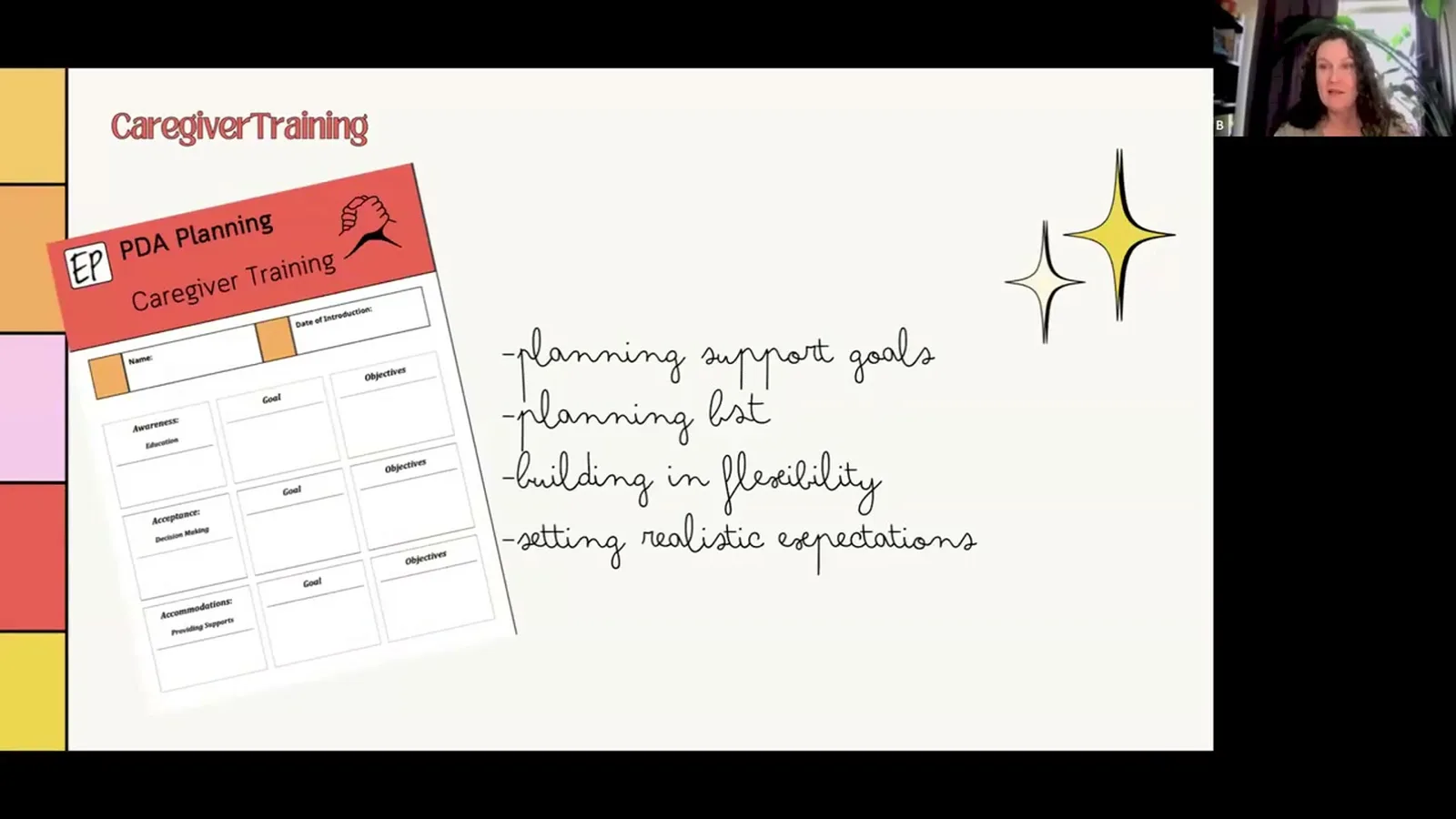
PDA Caregivers, Complex Profiles, Replacement Behaviors, and Being Trauma Informed
The Behaviorist Bookclub
Is It Technical or Relational? A Framework for Pinpointing Caregiver Collaboration Breakdowns
Parenting with ABA
New Year, New Care Collab Goals
The Behaviorist Bookclub
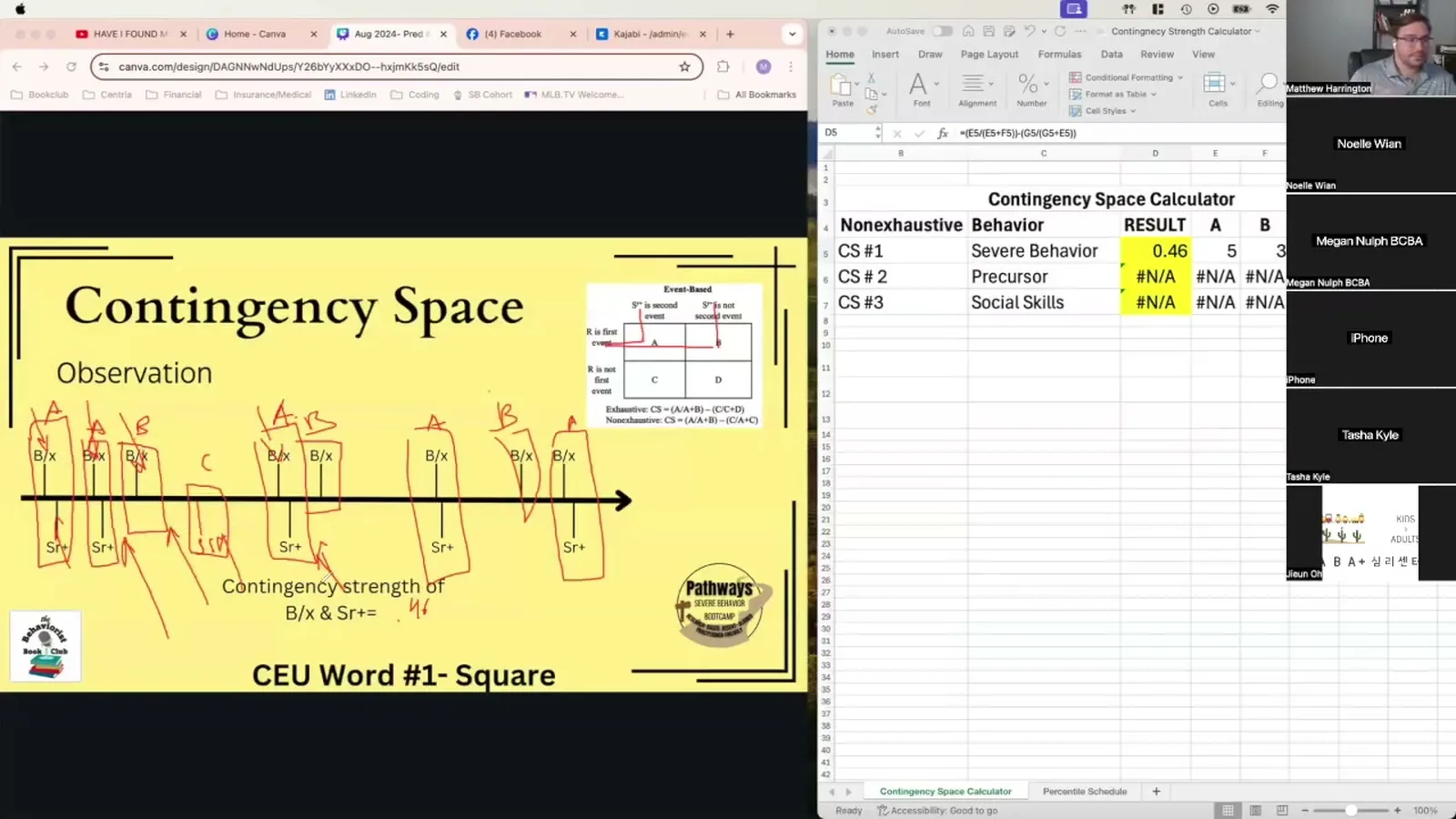
Prediction and Probabilities: Three foundational equations to successful behavior reduction
The Behaviorist Bookclub
Design Smarter: Using Instructional Design to Improve Staff and Stakeholder Training
The Behaviorist Bookclub
5 Days of Manding Mastery
The Behaviorist Bookclub
More from The Behaviorist Bookclub

Harm Reduction Within ABA Practice
The Behaviorist Bookclub
Supervising Beyond Technical Skills: Professionalism, Communication, and Clinical Judgment
The Behaviorist Bookclub
Reflective Supervision and Client Outcomes
The Behaviorist Bookclub
OpenCEU is supported by advertising from third-party sponsors. Sponsors are clearly labeled, have no influence over course content, instructors, or CEU decisions, and never appear on certificates. The BACB does not sponsor, approve, or endorse OpenCEU sponsors or their products.