The Enhanced Choice Model: Let Learners Opt Out
The enhanced choice model lets learners join, take a free break, or leave. See why real choice cuts problem behavior and builds trust.
Key takeaway
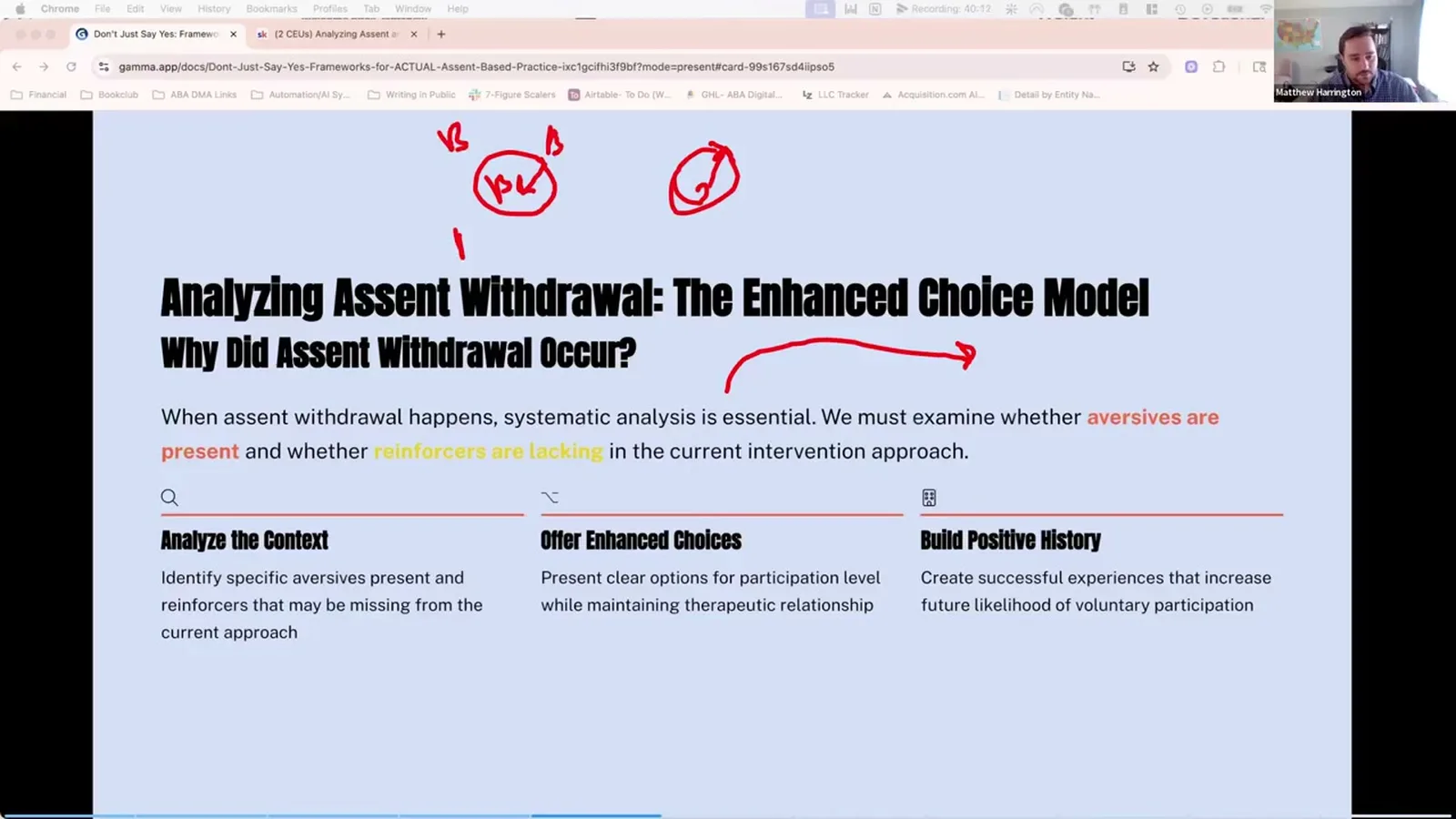
The enhanced choice model is a simple idea with big effects. During treatment, the learner always has real options. They can join the work, take a free break, or leave the space for the day.
12 days of PFA & SBT
Experts who cover this
6 recordings on openceu cover enhanced choice model.
- Featured talk3 CEUs
12 days of PFA & SBT
Matt HarringtonThe Behaviorist Bookclub
Day 12's capstone article (Rajaraman 2021): a trauma-informed redesign of PFA/SBT that removes all physical prompting, adds heavy pre-session role play and…
- 3.50 Ethics CEUs
Analyzing Assent and Taking Data
Matt HarringtonThe Behaviorist Bookclub
Cited repeatedly as the clinical demonstration proving assent-based concurrent chains work: clients could choose skills-based treatment, an NCR hangout zone…
- 1.50 CEUs
PDA Caregivers, Complex Profiles, Replacement Behaviors, and Being Trauma Informed
B. Kuerine GrayThe Behaviorist Bookclub
Referenced as a model of embedding choice into demand presentation (opt-in vs. opt-out) that Gray extends to PDA co-regulation, noting learners often continue…
- 1 CEU
Assent: Don't just say Yes!-
Matt HarringtonThe Behaviorist Bookclub
Described as an intervention where a client can choose to participate, receive free reinforcement, or leave, and the speaker explains that it works by evening…
- 1 Ethics CEU
Ethical Guardrails in Behavior Reduction
Matt HarringtonThe Behaviorist Bookclub
Cited as an example of choice and shared governance within trauma-informed care: giving kids the explicit option to leave a session and go home, with…
- 1 CEU
The Math Behind Behavior Reduction
Matt HarringtonThe Behaviorist Bookclub
Named as a school-friendly variation/advancement of NCR that reinforces behavior earlier in the response class (precursors) to suppress severe behavior…
On this page · 8 sections▾
The enhanced choice model is a simple idea with big effects. During treatment, the learner always has real options. They can join the work, take a free break, or leave the space for the day.
That last option matters most. The exit door is real, with no strings attached. When people trust that door, they often choose to stay and work. This page shows how BCBAs, RBTs, and parents can use that trust.
What the enhanced choice model actually is#
The model was built for treating dangerous problem behavior without holding a child. Instead of forcing steps, the team offers ongoing choices at every moment.
A learner can do three things at any time. They can take part in the teaching, which uses reinforcement for good responses. They can "hang out" and get free rewards with no demands. Or they can leave the room entirely.
This runs on assent, meaning the learner's own clear yes. When a learner pulls their assent, that counts as real communication. The team honors it. The learner gets the same good things whether they stay or step away.
Why real choice lowers problem behavior#
Problem behavior often works to escape hard demands. If a learner can already leave for free, there is little reason to fight. The escape is granted before the meltdown starts.
Matt Harrington frames the core mechanism in plain terms. It is about balancing the good and the bad across every option.
So in the enhanced choice model, it's all about evening out the amounts of bad and good across conditions. And if possible, aligning what you're learning with learner values. From the talk — Matt Harrington
When every path feels fair, the learner picks based on real preference. They are not cornered. That safety is what keeps severe behavior rare during hard teaching.
Opting out gives you data, not defeat#
Some teams fear the exit option. They worry every learner will run out the door. In practice, the opposite tends to happen.
Dr. Holly Gover found the opt-out by accident during feeding work. One child tried to leave, so they built a "chill space" for that. The break area became a core, data-rich part of the plan.
When you let kids opt out of the treatment, it actually gives you so much data on what's going on in the treatment. From the talk — Dr. Holly Gover
Every time a learner opts out, they tell you something. They show which demand was too hard right then. That signal helps you shape the next step better.
Learners choose to do hard things#
 Advertisement
The most surprising result is about effort. Given a true choice, learners often pick the harder path on their own.
Brian Middleton has seen this pattern across the research he trusts. Autonomy, meaning real say over your own actions, seems to unlock effort.
What we've seen without fail from what I've read of the literature is that these learners will choose to do hard things because they have a choice. From the talk — Brian Middleton
The choice itself becomes part of the reward. A demand you picked feels different from a demand pushed on you. B. Kuerine Gray sees the same thing with PDA, a profile marked by strong demand avoidance.
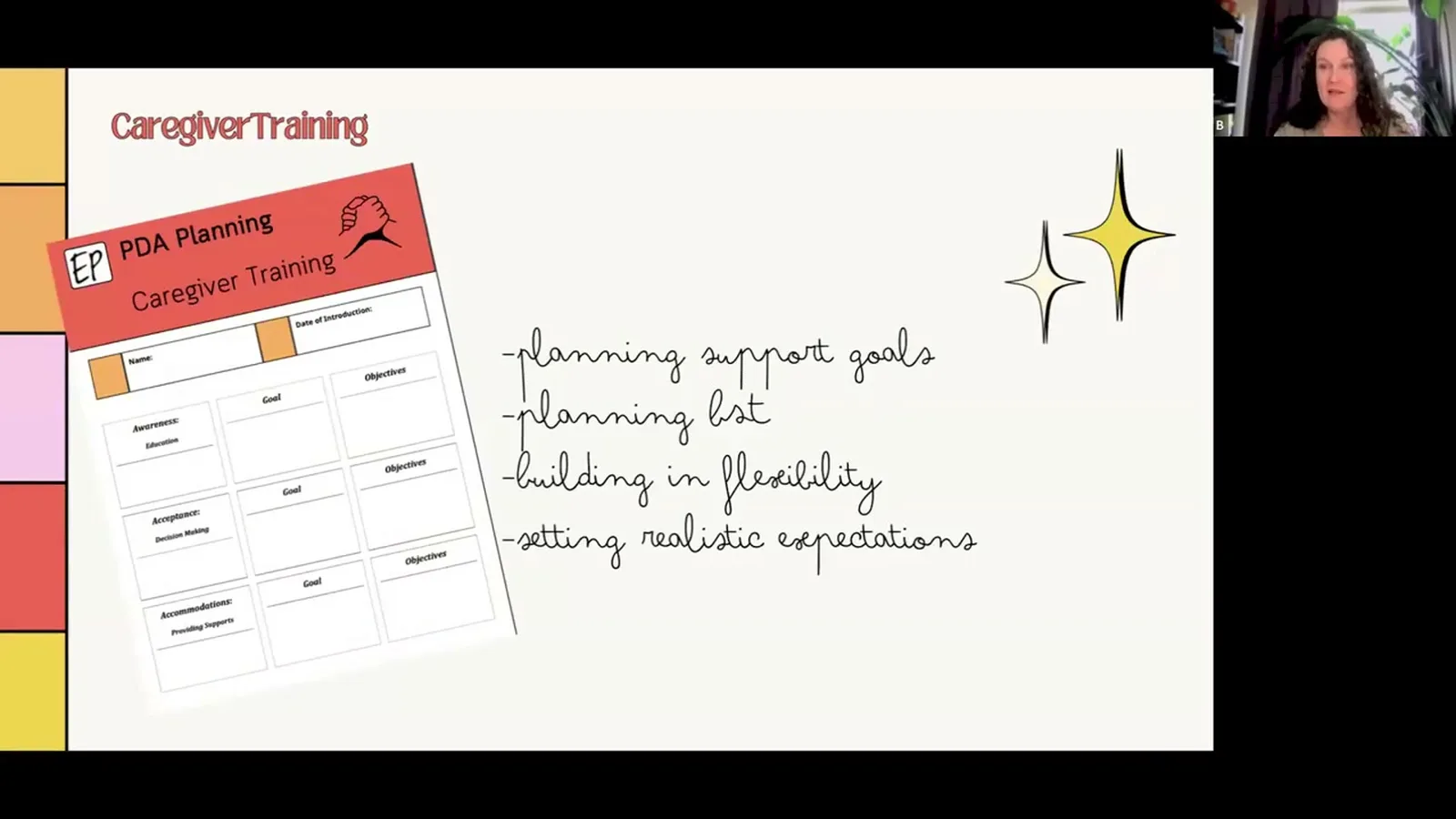
if you're familiar with that, like enhanced choice model, uh, where like, oh, do you want to engage or do you want to opt out? There are so many times I've worked with individuals who are presenting with PDA responses. And when they're given the choice, they continue... because it was their choice. From the talk — B. Kuerine Gray
Building choice into every session#
You do not need a full crisis plan to start. Small choices add up fast. Penny Holloway builds them into her daily programming.
She lets clients pick the order and the level of hard work. She even asks which tough demand they want to face first. This surfaces which tasks are the most aversive, meaning the ones they dislike most.
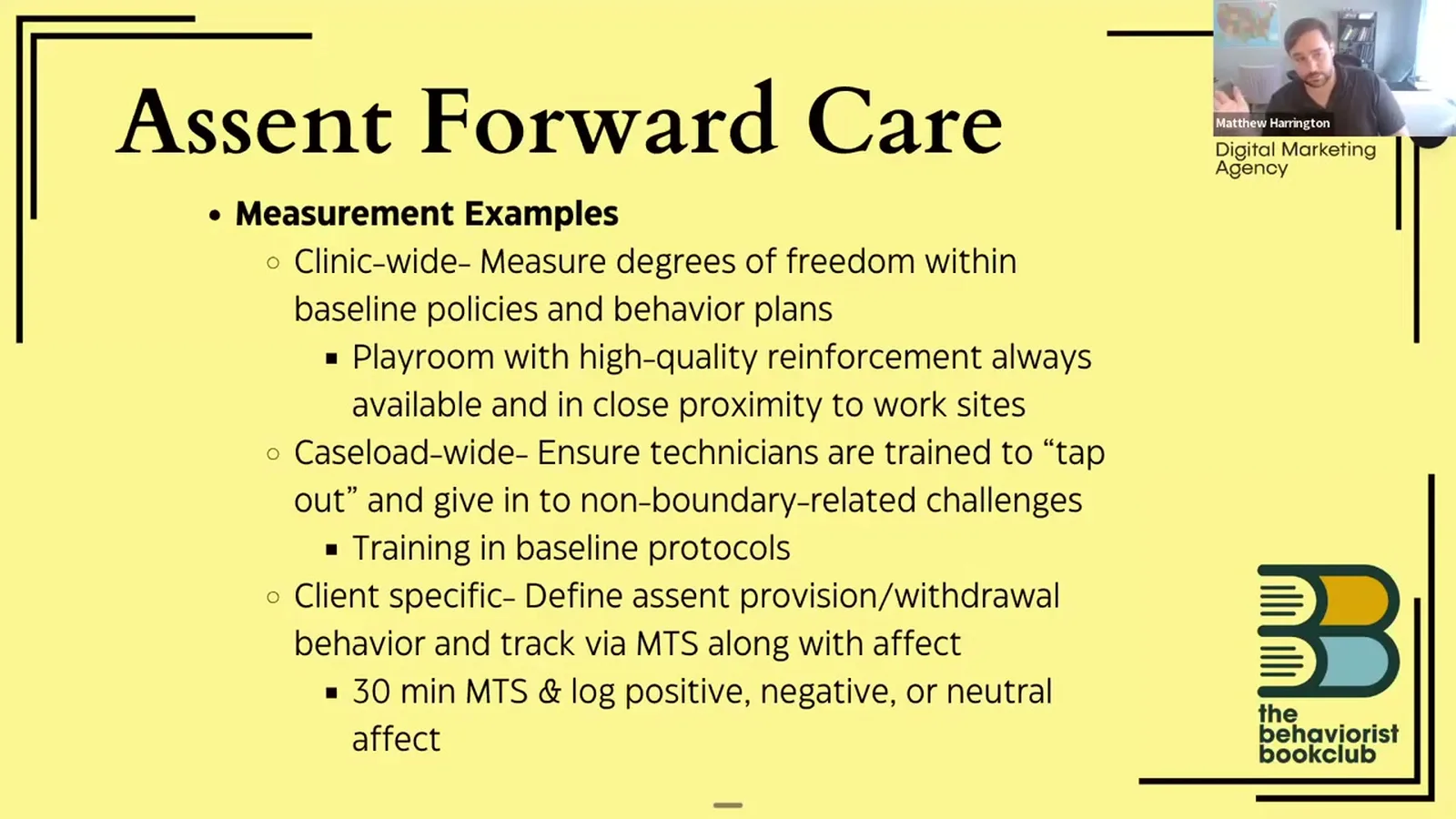
Ask the learner what to do first, last, or hardest. Give a clear "take a break" option they can use anytime. Make the break truly free, with their favorite things ready. These moves invite input without giving up your teaching goals.
The model in schools#
The enhanced choice model is not just for clinics. Public schools use a lighter version too. Matt Harrington links it to universal supports and to reinforcing early warning signs.
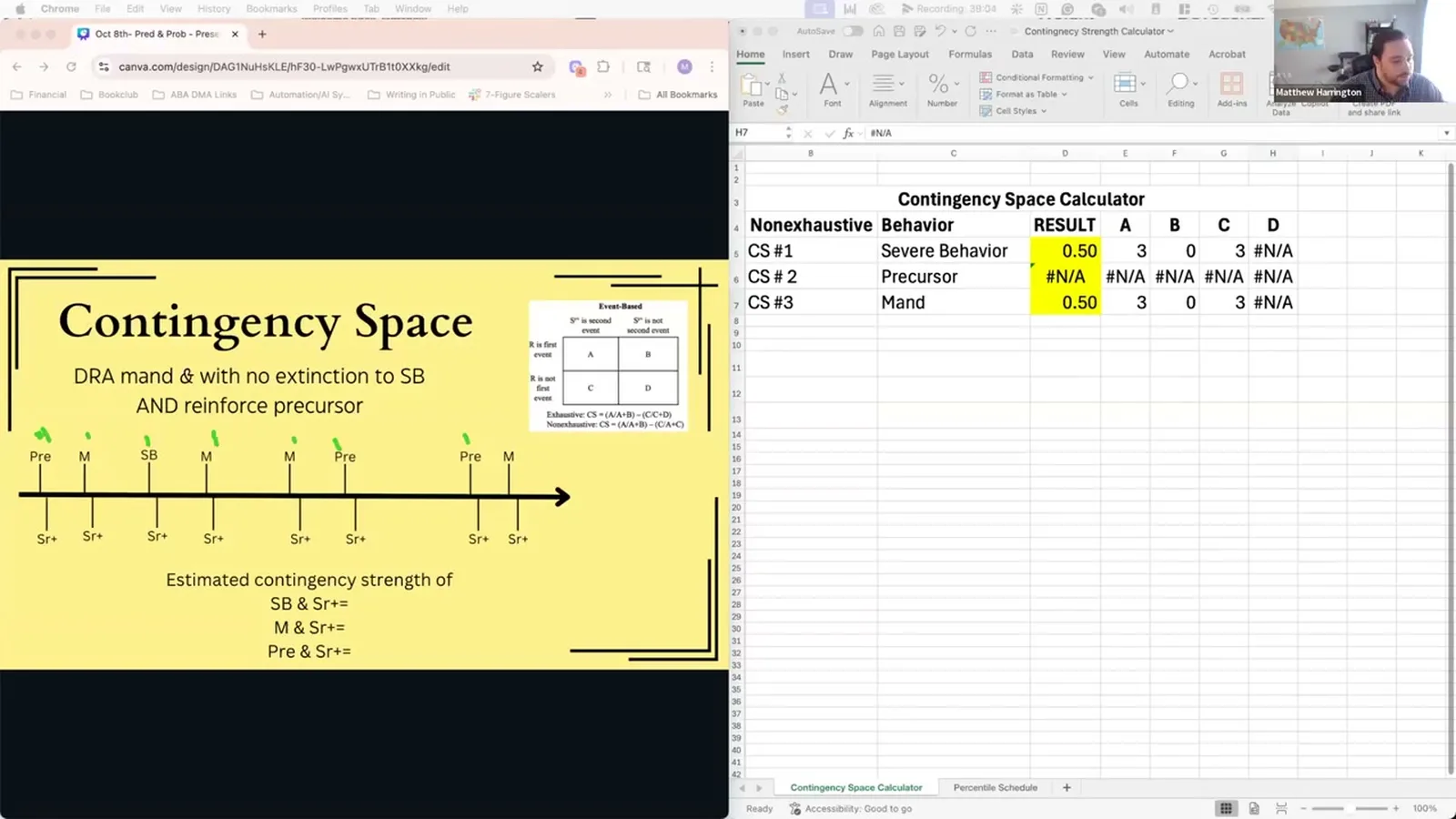
The idea is to catch precursor behavior, meaning small signs before a big outburst. You reward the calm, communicative response early in the chain. That suppresses the severe behavior before it builds.
Nicky Schneider used the school research to win over her director. She framed a clear question about choice and buy-in.
Her point was practical. When students can opt out, they tend to opt in more often. That framing helped her sell the approach to leadership.
What the research says#
Two studies anchor this model, and both are worth knowing. The first tested it with dangerous behavior across a clinic and a school. Children could join treatment, take free access to rewards, or leave the space entirely. They overwhelmingly chose to take part, which erased problem behavior and built new skills (Rajaraman, A., Hanley, G. P., Gover, H. C., Staubitz, J. L., Staubitz, J. E., Simcoe, K. M., & Metras, R. (2021). Minimizing Escalation by Treating Dangerous Problem Behavior Within an Enhanced Choice Model. Behavior Analysis in Practice, 15(1), 219-242).
The second study moved the model into a public day school. It served three children with emotional and behavioral disorders. Communication, tolerance, and cooperation went up, and early warning behavior went down. Students spent most of their time choosing the treatment over a free break area or regular class (Staubitz, J. L., Staubitz, J. E., Pollack, M. S., Haws, R. A., & Hopton, M. (2022). Effects of an enhanced choice model of skill-based treatment for students with emotional/behavioral disorders. Journal of Applied Behavior Analysis, 55(4), 1306-1341).
Together these findings point the same way. Real choice did not stall progress. It made hard work safer and kept learners coming back.
If you want to see the opt-out door in real feeding sessions, watch Feeding Face Off with Dr. Holly Gover.
FAQ#
Does letting kids leave mean they will never do the work?
No, and the data is clear on this. In the anchor study, almost no learner actually left the clinic. The one child who left a few times was getting sick. A real exit door lowers the fight, so learners tend to stay and work.
How is the enhanced choice model different from just giving breaks?
A normal break is often earned or time-limited. Here the break is always available and truly free. The learner can also leave the whole session, not just pause. That constant, no-strings option is what makes the choice feel real.
Can I use the enhanced choice model in a school setting?
Yes, and researchers have tested it in public schools. Students could pick treatment, a break area, or regular class time. Most chose the treatment, and severe behavior stayed rare. Schools often pair it with rewarding calm responses early, before behavior escalates.
 Advertisement
Turn this topic into a CEU
You just studied this. Now get credit for it.
Watch 12 days of PFA & SBT with Matt Harrington and earn 3 free BCBA CEUs. Detailed certificate, delivered the moment you finish.