Prediction and Probabilities: Three foundational equations to successful behavior reduction
Presented by Matt Harrington
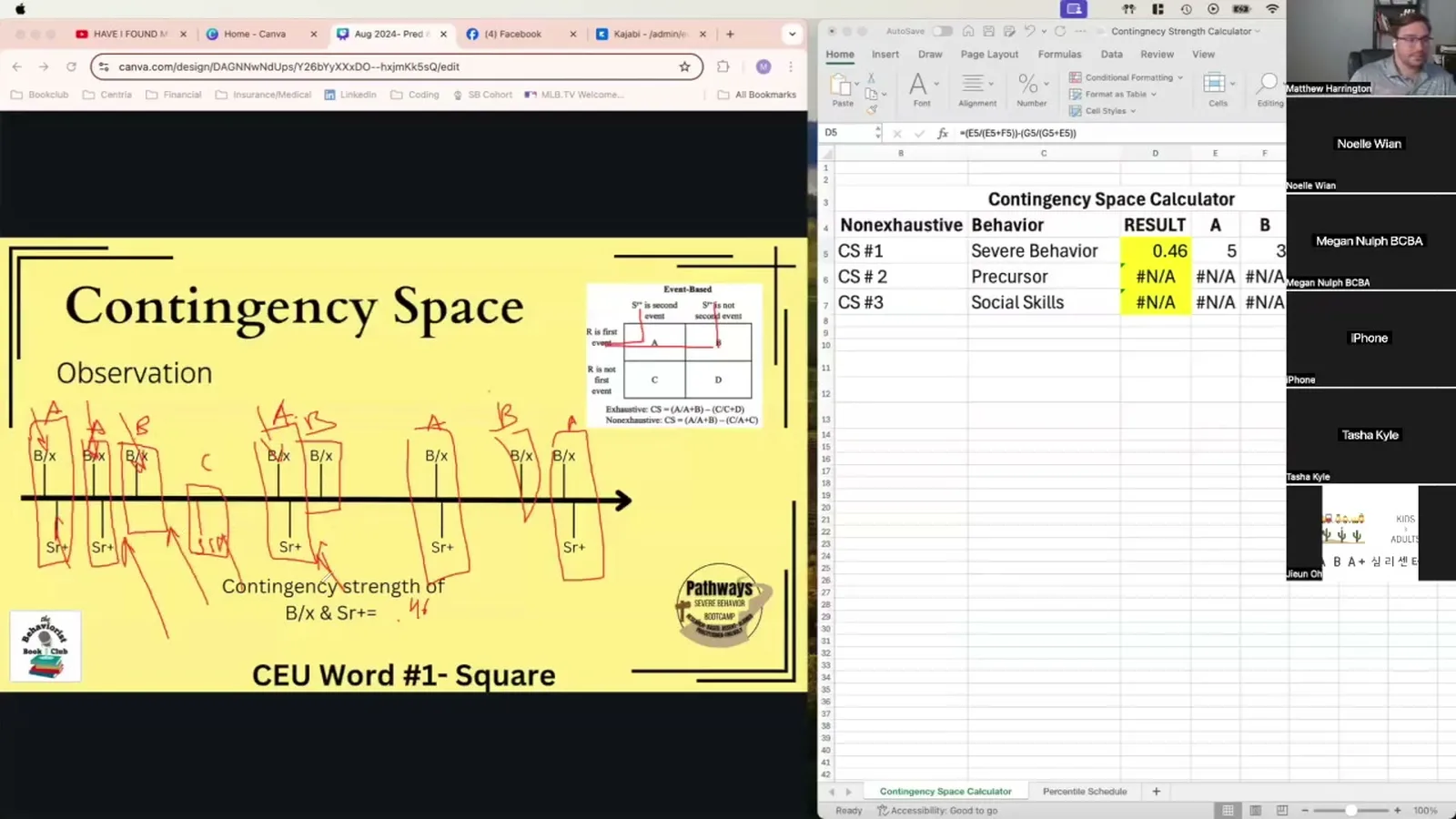
This course, “Predictions and Probabilities: Three Foundational Equations to Successful Behavior Reduction,” explores the core principles of behavior analysis through the lens of three pivotal equations: contingency space analysis, the matching law, and the percentile schedule. Designed for behavior analysts seeking to enhance their clinical decision-making skills, the course emphasizes the importance of understanding foundational equations to predict and influence behavior change effectively. Participants will learn how to apply these equations to real-world scenarios, ensuring interventions are individualized and ethically sound. Through a combination of theoretical exploration and practical examples, the course aims to deepen participants' understanding of behavior reduction strategies and improve their ability to implement successful interventions.
Register free & watch nowCancel any time. Cert delivered to your inbox the moment you pass the quiz.
About this CEU
This course, “Predictions and Probabilities: Three Foundational Equations to Successful Behavior Reduction,” explores the core principles of behavior analysis through the lens of three pivotal equations: contingency space analysis, the matching law, and the percentile schedule. Designed for behavior analysts seeking to enhance their clinical decision-making skills, the course emphasizes the importance of understanding foundational equations to predict and influence behavior change effectively. Participants will learn how to apply these equations to real-world scenarios, ensuring interventions are individualized and ethically sound. Through a combination of theoretical exploration and practical examples, the course aims to deepen participants' understanding of behavior reduction strategies and improve their ability to implement successful interventions.
What you'll learn
- 1Learning Objectives
- 2By the end of this session, participants will be able to:
- 3Understand the foundational principles of behavior analysis and their application in behavior reduction strategies.
- 4Analyze and apply the contingency space analysis to assess contingency strength and predict behavior change outcomes.
- 5Utilize the matching law to evaluate reinforcement rates and make informed clinical decisions regarding behavior interventions.
- 6Implement the percentile schedule to quantify and guide the shaping process, enhancing the precision and effectiveness of interventions.
- 7Reflect on ethical considerations and individualization in behavior interventions, ensuring alignment with personal and professional guardrails.
Concepts in this CEU
More from The Behaviorist Bookclub
Foundations of Reflective Supervision in Behavior Analysis
The Behaviorist Bookclub
Teaching WH-Questions Isn’t Enough: Building True Conditional Discrimination
The Behaviorist Bookclub
Reframing Behavior through an ADHD Lens
The Behaviorist Bookclub
OpenCEU is supported by advertising from third-party sponsors. Sponsors are clearly labeled, have no influence over course content, instructors, or CEU decisions, and never appear on certificates. The BACB does not sponsor, approve, or endorse OpenCEU sponsors or their products.