Errorless Learning in ABA: Teaching Without the Errors
Errorless learning uses prompts so learners rarely make mistakes. Learn how BCBAs use high reinforcement to teach new skills with fewer errors.
Key takeaway
Errorless learning is a way to teach so mistakes almost never happen. You give strong help, or prompts, right from the start. Then you slowly fade that help as the learner gets it.
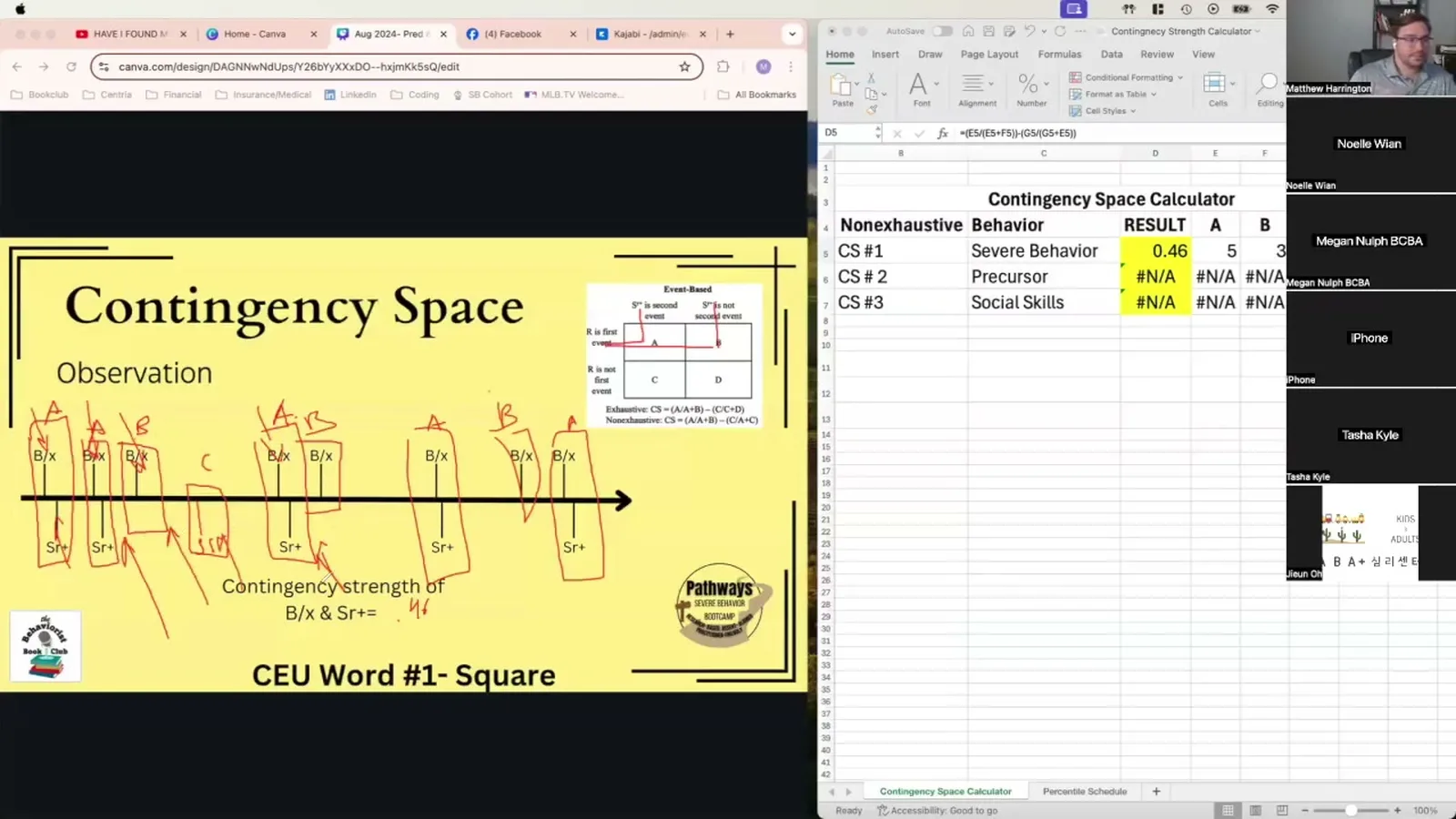
Prediction and Probabilities: Three foundational equations to successful behavior reduction
Free learning path on this topic
Master PFA and SBT
Matt Harrington's 12-article walk through practical functional assessment and skill-based treatment, from Hanley's 2014 study to the enhanced choice model. Then assent, since SBT depends on it, and the ethical guardrails that keep behavior reduction defensible. Five CEUs, one of them ethics.
Experts who cover this
3 recordings on openceu cover errorless learning.
- Featured talk2 CEUs
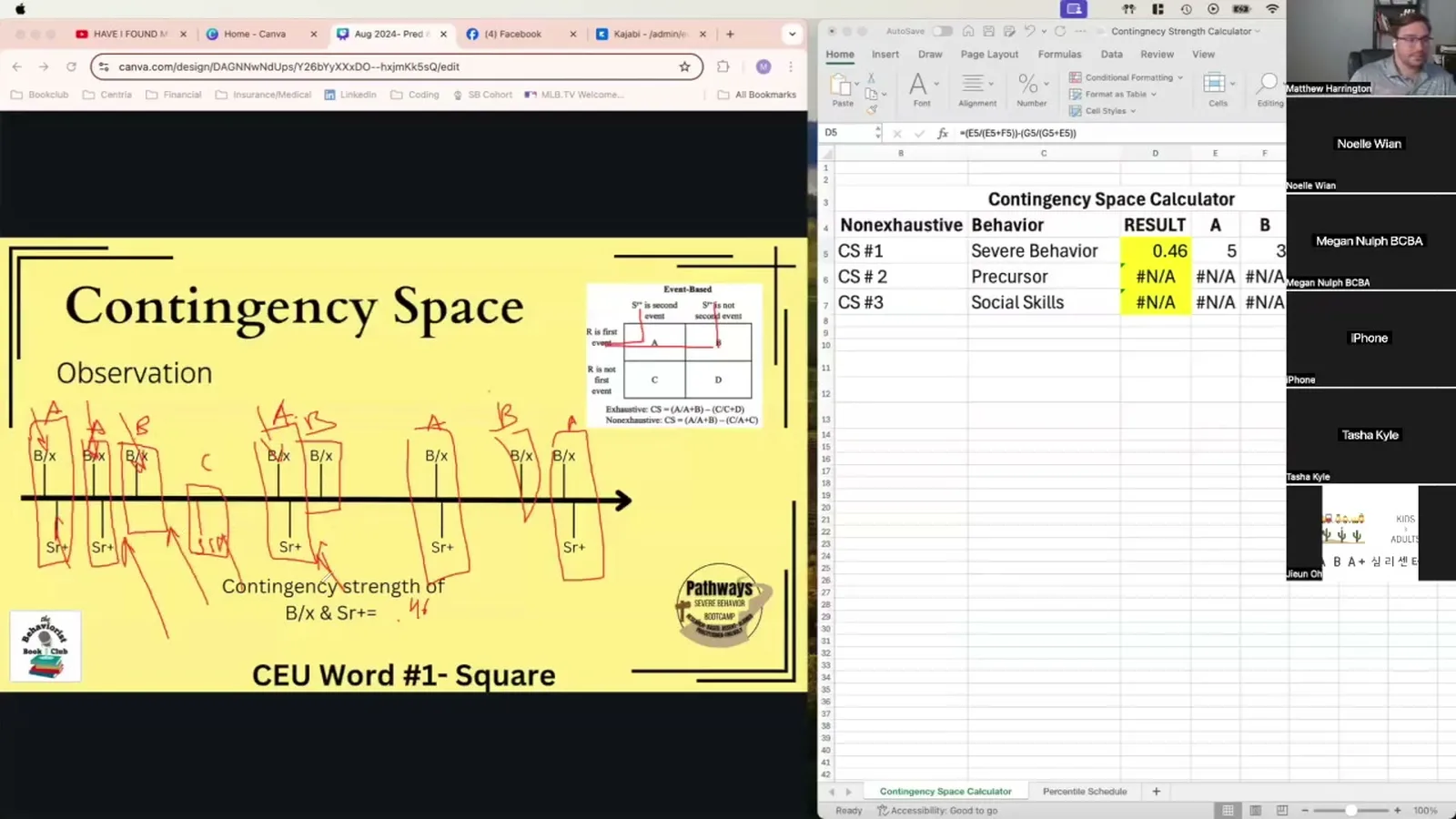
Prediction and Probabilities: Three foundational equations to successful behavior reduction
Matt HarringtonThe Behaviorist Bookclub
Used to illustrate a high W value in the percentile schedule: errorless learning aims for the client to contact reinforcement on roughly 90-100% of responses…
- 3 CEUs
12 days of PFA & SBT
Matt HarringtonThe Behaviorist Bookclub
Used to frame shaping's appeal: keeping each step just above the learner's current repertoire but still achievable, so success (not failure) drives acquisition.
- 1 CEU
The Math Behind Behavior Reduction
Matt HarringtonThe Behaviorist Bookclub
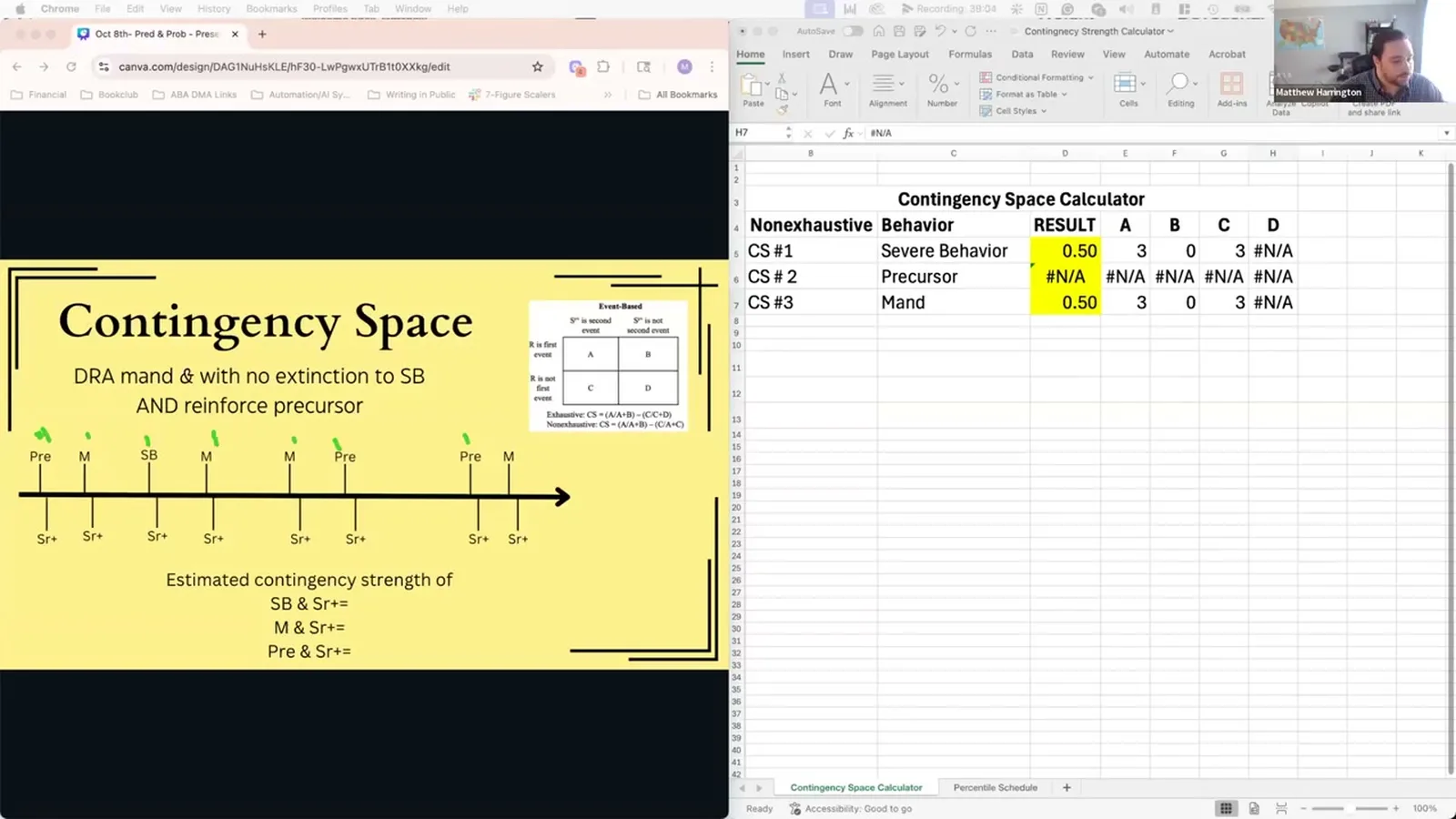
Positioned as the outcome of a high reinforcement-density (W) setting in the percentile schedule: more responses get reinforced, producing slower but steadier…
On this page · 7 sections▾
Errorless learning is a way to teach so mistakes almost never happen. You give strong help, or prompts, right from the start. Then you slowly fade that help as the learner gets it.
This matters because errors can slow and frustrate a learner. A stream of wrong answers feels bad and can teach the wrong thing. BCBAs, RBTs, teachers, and parents use errorless methods to keep success high. The learner touches reinforcement often and stays motivated.
What "errorless" really means#
The name can sound like zero mistakes ever. In practice, it means a very high rate of correct answers. Matt Harrington puts a clear number on that rate.
Think about this regarding errorless learning, right? When you're doing really solid errorless learning, about 90 to 100% of those responses should meet reinforcement in some way. That is a very high density of reinforcement, and that's a high W value. From the talk — Matt Harrington
So the target is almost every response getting reinforced. That heavy reinforcement is the heart of the method. Prompts make sure the learner answers right and earns that reward.
A prompt is any help that leads to the correct answer. It could be a point, a model, or a hand-over-hand guide. The learner rarely guesses, so the learner rarely gets it wrong. Over time, you fade the prompt so the skill stands on its own.
Success drives learning#
The core idea is simple. Keep the learner winning, and learning follows. Matt Harrington ties this to how we set each teaching step.
call it a type of errorless learning if you will, you know, we're bringing it back to the point where what we're expecting of the learner is always a little bit above but also well within their capabilities. From the talk — Matt Harrington
Each step should stretch the learner just a little. But it must stay inside what they can do. That balance keeps errors low and progress steady.
it's kind of like errorless learning in a way, we're focused on success throughout and minimizing errors. From the talk — Matt Harrington
The trade-off with speed#
 Advertisement
Errorless learning is not free of costs. Fewer errors can mean slower learning. Matt Harrington is honest about this trade-off.
larger W more reinforcement, meaning the learner is less likely to contact extinction and more likely to do, uh, more likely to experience what's akin to errorless learning. From the talk — Matt Harrington
More reinforcement keeps the learner away from failure. But it can also slow the pace of gains.
if we're closer to errorless learning, then we're going to have a slower learning process. From the talk — Matt Harrington
The slower pace is often worth it. Steady, low-stress success can protect motivation and reduce problem behavior. A learner who keeps winning stays willing to work. A learner who keeps failing may quit or act out. You choose the approach based on the learner in front of you.
You can hear these ideas built out further in The Math Behind Behavior Reduction and in 12 days of PFA & SBT.
When to reach for it#
Errorless learning shines with new or hard skills. It fits learners who get upset by mistakes. It also helps when a wrong answer could become a bad habit. Once a wrong answer sticks, it is hard to undo.
The method leans on prompts and fading. You start with enough help to make success sure. Then you pull that help back a little at a time. The learner keeps winning while the support shrinks.
Fading needs a careful eye on the data. Fade too fast, and errors creep back in. Fade too slow, and the learner leans on the prompt too long. The goal is a smooth handoff from your help to the learner's own skill. Good data tells you when the next step is safe.
Errorless learning also pairs well with shaping. Both keep the demand just above what the learner can already do. Both aim for success on nearly every try. This shared focus on winning is what links the two methods.
Common prompts and how to fade them#
Prompts come in a few common types. A physical prompt guides the learner's hands. A model prompt shows the learner what to do. A verbal prompt tells the learner the answer. A gesture prompt, like a point, hints at the right choice.
You usually fade from the most help to the least. You might start with a full physical prompt on day one. Then you shift to a light touch, then a point, then nothing. Each step gives the learner more room to respond alone.
Stimulus fading is another common path. Here you change the teaching materials, not your help. You might make the correct choice large and bright at first. Then you slowly make the choices look more alike. The learner keeps succeeding as the task gets harder.
What the research says#
Studies show errorless learning works, though it is not always the fastest. One randomized clinical trial compared it to error correction with 28 people with autism. Both methods were effective, efficient, and unlikely to trigger problem behavior (Leaf et al., 2020).
That trial found one clear difference between the two. The error correction group made more correct answers, but also more incorrect ones (Leaf et al., 2020). Errorless learning kept errors lower during teaching.
A broad review supports the method for discrimination skills. It looked at 28 articles with 283 participants who had intellectual and developmental disabilities. In most cases, errorless procedures improved discrimination skills, and most used stimulus fading.
The error gap can be large. In one study with young children, errorless groups made zero to three errors. The control group made 11 to 46 errors on the same task.
FAQ#
What is the difference between errorless learning and error correction?
Errorless learning uses prompts to prevent mistakes before they happen. Error correction lets a mistake occur, then teaches the right answer. Both can work, but errorless keeps error rates lower during teaching.
Does errorless learning mean the learner never fails?
Not exactly. It means correct responses happen at a very high rate, close to 90 to 100%. A few errors can still slip through. The goal is heavy success, not perfection.
Is errorless learning slower than other methods?
It can be. Fewer errors sometimes means a slower pace of gains. But the steady success protects motivation and lowers frustration. Many teams find that trade worth making.
 Advertisement
Turn this topic into a CEU
You just studied this. Now get credit for it.
Watch Prediction and Probabilities: Three foundational equations to successful behavior reduction with Matt Harrington and earn 2 free BCBA CEUs. Detailed certificate, delivered the moment you finish.
Keep going with a free learning path
Master PFA and SBT
Matt Harrington's 12-article walk through practical functional assessment and skill-based treatment, from Hanley's 2014 study to the enhanced choice model. Then assent, since SBT depends on it, and the ethical guardrails that keep behavior reduction defensible. Five CEUs, one of them ethics.