The Constructional Approach in ABA: Build, Don't Just Reduce
The constructional approach builds new skills instead of only cutting behavior down. Learn how BCBAs use it to make change that lasts.
Key takeaway
The constructional approach is a way to plan behavior change. Instead of asking "how do I stop this behavior," it asks "what should I build instead." The goal is a bigger, stronger set of skills, not just a quieter room.
Ethical Guardrails in Behavior Reduction
Experts who cover this
4 recordings on openceu cover constructional approach aba.
- Featured talk1 Ethics CEU
Ethical Guardrails in Behavior Reduction
Matt HarringtonThe Behaviorist Bookclub
Framed as Harrington's third guardrail's theoretical basis: focus on building repertoires toward a desired outcome rather than just eliminating behavior…
- 3.50 Ethics CEUs
Analyzing Assent and Taking Data
Matt HarringtonThe Behaviorist Bookclub
Cites Joe Lang's book as the source of the degrees-of-freedom concept, explaining its core tenet of analyzing the costs and benefits of all possible behaviors…
- 2 CEUs
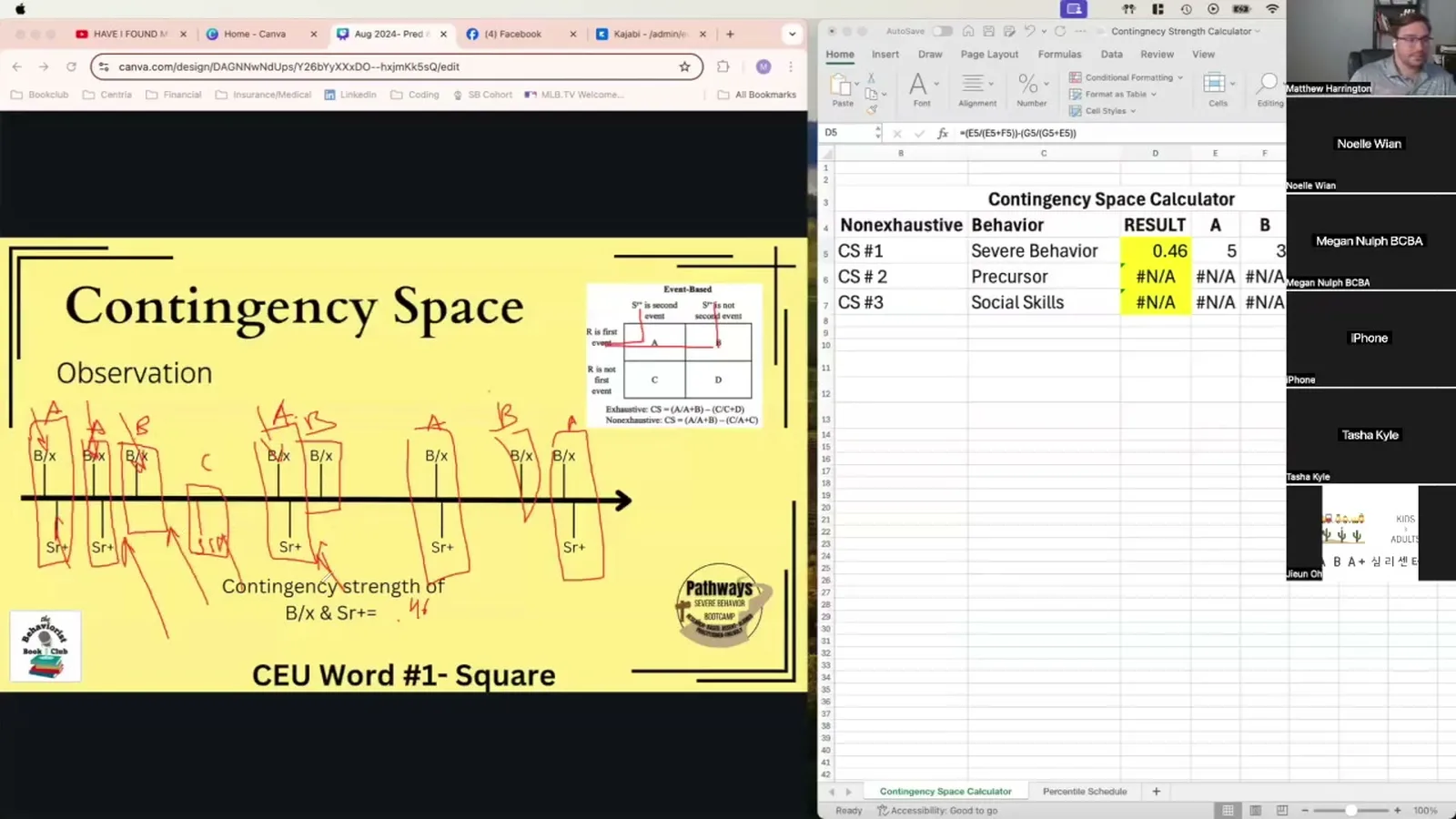
Prediction and Probabilities: Three foundational equations to successful behavior reduction
Matt HarringtonThe Behaviorist Bookclub
Named as one of the three sources of Matt's ethical guardrails; applied when a clinician chooses to only increase alternative/adaptive behaviors rather than…
- 1.50 CEUs
Hey, Chillax Man! Understanding the Logic of Anxiety
Dr. Clelia SigaudThe Behaviorist Bookclub
Guardrail used to build a response-class hierarchy of replacement behaviors as a redundant buffer against relapse into severe behavior, rather than just…
On this page · 7 sections▾
The constructional approach is a way to plan behavior change. Instead of asking "how do I stop this behavior," it asks "what should I build instead." The goal is a bigger, stronger set of skills, not just a quieter room.
This matters because many plans only knock a behavior down. That can work for a while. But if nothing new is built, the old behavior often returns. BCBAs, RBTs, teachers, and parents get better results when they add skills, not just remove problems.
Building repertoires, not erasing them#
The heart of the approach is simple. You focus on what the learner should be able to do. Matt Harrington sums it up in one clean line.
The constructional approach, what we're learning about is the focus of building repertoires rather than eliminating them. From the talk — Matt Harrington
A repertoire is just a set of skills a person has. When you grow that set, the hard behavior has less room to work. The learner now has better ways to get what they need.
The hammer problem#
Harrington uses a picture to show the contrast. Many plans treat behavior like a nail. You see it, you hit it. That mindset misses the bigger goal.
Building resistant repertoires means approaching challenges constructionally and building on current skills and adding new ones versus just focusing on whacking the behavior down with a hammer. From the talk — Matt Harrington
The hammer might be extinction. It might be noncontingent reinforcement. Those tools have a place. But they only remove. They do not build anything on their own.
Whether that hammer be NCR or extinction, teaching replacement skills that are not just functional to reduce the behavior, but functional and fit in to the overall picture. From the talk — Matt Harrington
A good replacement skill does two jobs. It lowers the behavior. It also fits the learner's real life and real goals.
A backup plan on a backup plan#
 Advertisement
Harrington ties this to safety. In severe cases, one replacement skill is not enough. If it fails under stress, you want more layers ready.
This is based heavily on the constructional approach, and essentially what I'm looking to do here is to create a response class hierarchy that not only replaces the severe behavior, but also creates a huge buffer, a huge backup plan on a backup plan on a backup plan, so that severe behavior doesn't happen again. From the talk — Matt
A response class hierarchy is a ranked set of behaviors that all get the same result. If the first one does not work, the learner has a second and a third. That redundancy protects against relapse.
Where the learner wants to go#
The approach starts with the person, not the problem. You ask three questions. Where does the learner want to go? What can they already do? What will keep the new behavior going?
Those answers shape the whole plan. They also double as your generalization and discharge plan. When skills serve real goals, they tend to stick after services end.
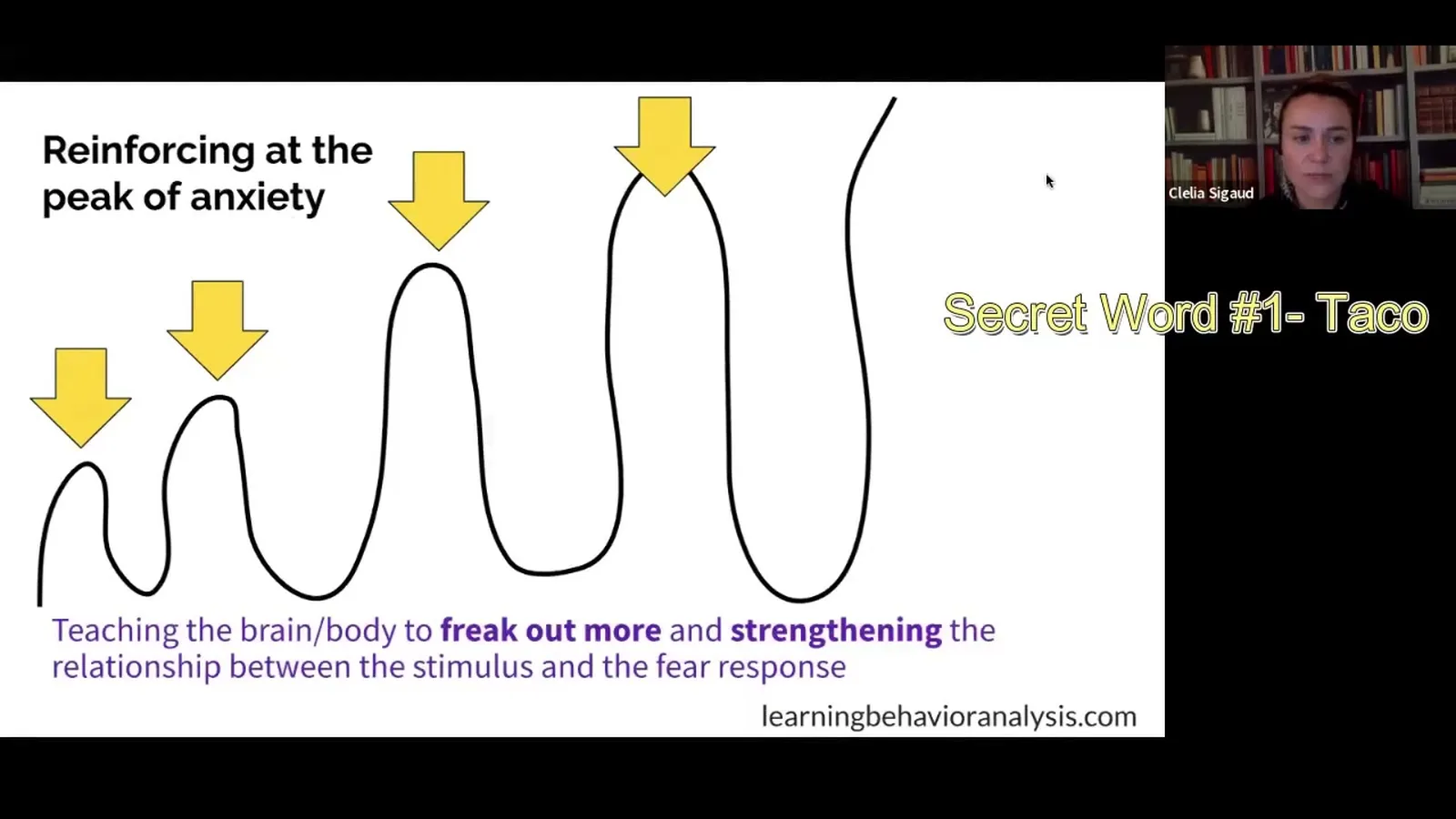
This same logic drives ethical behavior reduction. The Hey, Chillax Man! Understanding the Logic of Anxiety session shows how the approach guides work with fear and avoidance.
What the research says#
The constructional approach traces back to Israel Goldiamond. His logs asked people to record contingencies and explain why behavior happened. One study used those logs with college students. It found that the projects led to more behavioral explanations of behavior (Armshaw, Cihon, & Lopez, 2021). Students kept logs at three levels. Each level asked for more parts of the three-term contingency. Feedback given in class worked better than feedback sent online.
The approach also reaches beyond the classroom. One study coached three parents of autistic children. Instead of only trying to cut stress, it helped parents build skills to reach their own goals (Liden & Rosales-Ruiz, 2024). A mentor guided each parent at first. That support faded until each parent could run the steps alone. After the program, more of each parent's week was spent on events they wanted to keep. Time spent working on chosen goals went up as each goal was targeted.
Both studies share a theme. Change comes from building toward something, not just removing what hurts.
Putting it to work#
Start every plan with a goal, not a target to erase. Ask what the learner is trying to get. List the skills they already have. Then decide what new skills move them forward.
Build more than one path to the same outcome. Teach the strongest skill first and keep backups ready. Check that each new skill fits the learner's daily life. If it does not fit, it will not last.
Plan for the end of services from day one. Ask what will keep each skill going once you step away. Real payoffs in the learner's own world do that work. This is why the goal questions double as the generalization and discharge plan. A skill tied to the learner's goals keeps earning its keep.
FAQ#
Who created the constructional approach? Israel Goldiamond developed it. He argued for building useful repertoires instead of only removing problem behavior. Behavior analysts still use his framing today.
How is it different from a standard behavior reduction plan? A standard plan often centers on stopping one behavior. The constructional approach centers on what to build instead. Reduction still happens, but it comes from growth, not just suppression.
Can I use it with parents and caregivers, not just clients? Yes. The approach works for anyone with goals. Coaching studies have used it to help parents build skills and reach personal goals, which lowered stress along the way.
 Advertisement
Turn this topic into a CEU
You just studied this. Now get credit for it.
Watch Ethical Guardrails in Behavior Reduction with Matt Harrington and earn 1 free BCBA CEU. Detailed certificate, delivered the moment you finish.