Compassionate Care in ABA: More Than a Buzzword
Compassionate care turns empathy into action in ABA. See how experts define it, why it lifts outcomes, and how to build it into daily practice.
Key takeaway
Compassionate care means treating people with warmth and respect. It puts the person, not just the data, at the center. In ABA, it pairs technical skill with real human connection.

Supervision Articles Deep Dive
Free learning path on this topic
Supervision, Done Right
Four supervision CEUs that build on each other. What reflective supervision is, how to build a supervision system, how to assess supervisee competence instead of counting hours, and how supervision affects provider outcomes. The BACB asks supervisors for three supervision CEUs per cycle. This covers it.
Experts who cover this
3 recordings on openceu cover compassionate care aba.
- Featured talk3.50 Supervision CEUs
Supervision Articles Deep Dive
Matt HarringtonThe Behaviorist Bookclub
Covering a multi-level framework, Harrington reframes 'compassionate care' and 'assent-based care' away from marketing buzzwords toward a strategic three-level…
- 1 Supervision CEU
Reflective Supervision and Provider Outcomes in ABA
B. Kuereine GrayThe Behaviorist Bookclub
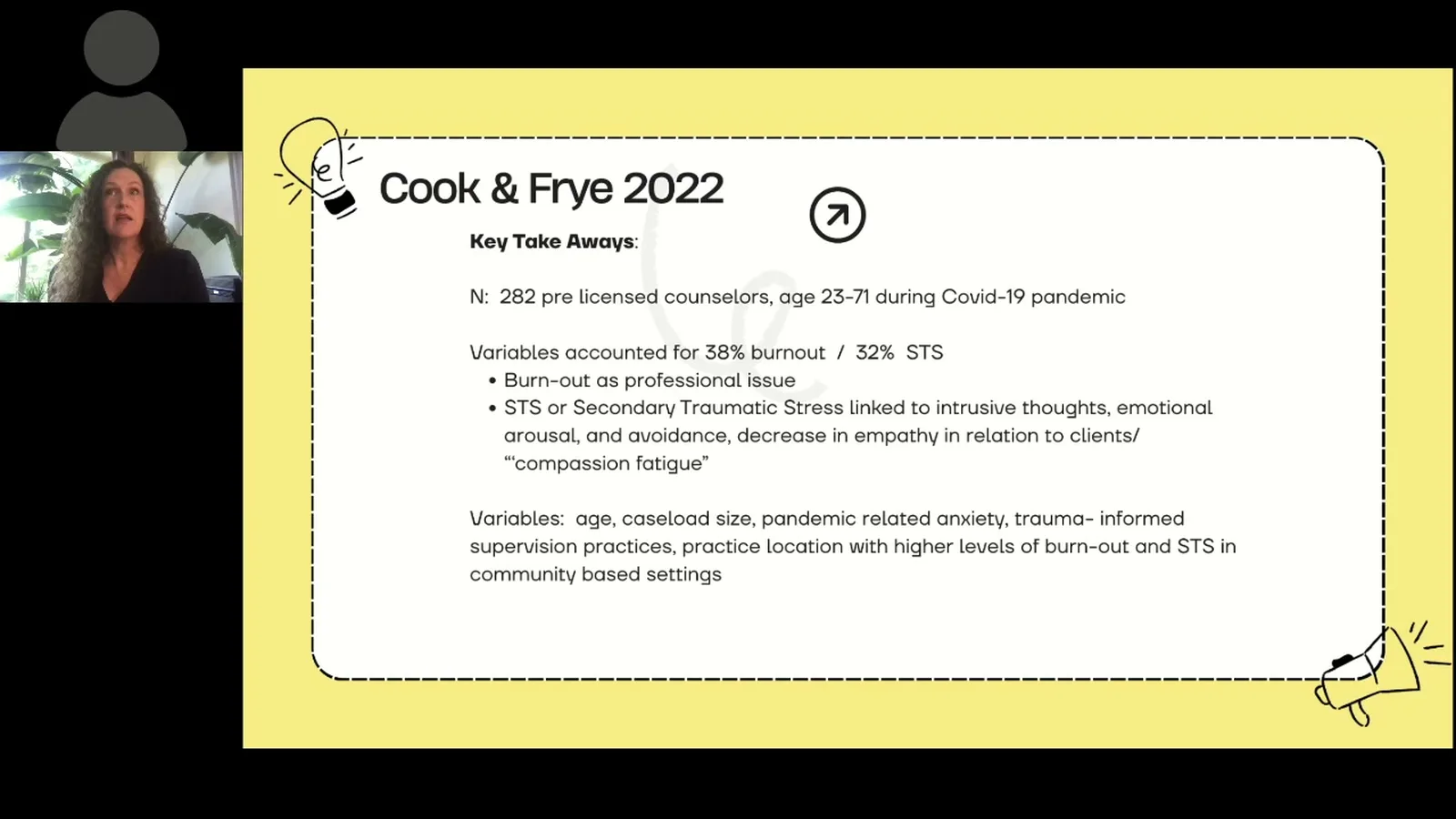
Gray distinguishes secondary traumatic stress (also called compassion fatigue, a term that gained use during the COVID pandemic) as a personal issue defined by…
- 2 CEUs
Prediction and Probabilities: Three foundational equations to successful behavior reduction
Matt HarringtonThe Behaviorist Bookclub
One of the three frameworks Matt pulls his personal 'ethical guardrails' from; every intervention must be fully informed and assented to throughout, which…


On this page · 7 sections▾
Compassionate care means treating people with warmth and respect. It puts the person, not just the data, at the center. In ABA, it pairs technical skill with real human connection.
This matters for BCBAs, RBTs, teachers, and parents. Clients feel safer and more heard. Teams stay longer and families trust the work more.
More than a marketing buzzword#
Some people hear "compassionate care" and roll their eyes. They think it is just a slogan for hiring. Matt Harrington pushes back on that view.
ascent-based ABA is just a different way of doing ABA, some slight tweaks, some different frameworks, instead of this marketing buzzword that we immediately shift off and push away and say, oh, that's just something that the big private equity companies say so they can get people to work there. From the talk — Matt Harrington
He frames it as a real system, not a poster. In the talk, he describes a multi-level framework for building a nurturing system. It works at three levels: the organization, the supervisor, and the therapist. Each level shapes the care a client actually feels.
The payoff is practical, not just kind. Matt notes that this kind of care tends to lead to more satisfied consumers. Happy families stay committed, and teams stay longer too.
Compassion is empathy plus action#
Empathy and compassion are not the same thing. Empathy is feeling with someone. Compassion adds a step and does something about it.
Penny Holloway draws this line clearly. She warns against pity, which keeps clients small. She says our clients never deserve pity, the kind that treats a child as helpless and without skills. Real compassion moves toward action instead.
But compassion, yes, compassion takes empathy a step further, brings action to an empathetic response. In this regard, compassion converts empathy into an act aimed at alleviation of suffering. From the talk — Penny Holloway
Nicky Schneider builds a similar ladder. It runs from perspective taking to empathy to compassion. Each step asks a bit more of you. Empathy means putting yourself in the other person's shoes and feeling what they feel.
The top step is a shared plan, not a solo fix. You build it with the person, whatever way they communicate.
Compassion really is a plan that you set with the individual on how to relieve their suffering, whether they're able to communicate it vocally or non-vocally, you come together to make a plan. From the talk — Nicky Schneider
Make compassion measurable#
 Advertisement
Warm words are easy to say and hard to keep. So make compassion something you can observe. Holloway turns it into checklist items.
What I really like about this article is they have measures for compassion and compassion. And I really have woven them into my treatment integrities that I sometimes take with whomever I'm observing. From the talk — Penny Holloway
Treatment integrity means checking that the plan is run as written. When compassion sits on that checklist, it stops being a vibe. It becomes a skill you can coach and track.
Guardrails that guide your decisions#
Compassionate care also gives you a place to stand. It sets limits on what you will do. Matt calls these his guardrails. He pulls them from three places: assent-based care, trauma-informed care, and the constructional approach to behavior analysis.
Assent means the client agrees and stays willing during the work. If a plan breaks that rule, the guardrails ask you to change it.
So the reason why I bring up my guardrails, which is that every intervention is fully informed and assented to throughout, we're causing no further harm, and we're building resistant repertoires, is because the guardrails are a strong reason why you as a clinician need to make changes in your programming. From the talk — Matt Harrington
You can see these ideas in action in Prediction and Probabilities: Three foundational equations to successful behavior reduction. For a values-first take on the same theme, see Values - Your compass through the clinical journey - Applied 2022.
What the research says#
The interest in compassion started with a clear gap. Taylor and colleagues noted that many BCBAs learn technical skills but little about relationships. They argue that attending to caregiver relationships may improve treatment outcomes (Taylor et al., 2018).
Follow-up surveys confirmed the training gap. Most behavior analysts reported no direct teaching on relationship-building skills in graduate school. The majority said formal training in this area is very important (LeBlanc et al., 2019).
The good news is that these skills can be taught. One study used behavioral skills training over telehealth. Graduate students improved in interviewing, cultural responsiveness, and compassionate care, and kept the gains (Gatzunis et al., 2023). Another project taught compassion skills to students, with gains that held at follow-up (Rohrer & Weiss, 2022).
The training can even reach frontline staff. One study taught behavior technicians the traits of a "behavior artist" through a teaching procedure. All three technicians improved on the target skills (Bukszpan et al., 2023). So compassion is not a fixed trait. It is a set of behaviors that supervisors can shape.
Even simple tools can build these skills. One study used clicker training and role-play to teach relationship skills. Both practitioners increased their target skills during training (Canon & Gould, 2021). This gives supervisors low-cost ways to coach compassion.
Why it changes outcomes#
Compassionate care is not soft or extra. It links to results you can see. Matt tied it to happier clients earlier in the talk.
The research points the same direction. Strong relationships with caregivers may boost how well treatment works. Families who feel respected tend to stay committed to the plan. That commitment is what carries progress over time.
FAQ#
What is compassionate care in ABA? It is care that joins technical skill with warmth and respect. The client and family stay at the center. It shows up in listening, consent, and shared planning.
What is the difference between empathy and compassion? Empathy is feeling what another person feels. Compassion takes the next step and acts to ease their suffering. In ABA, that action is often a plan built with the person.
Can compassionate care be taught? Yes. Studies show that behavioral skills training raises these skills. Practitioners learn specific, observable behaviors and keep them over time.
 Advertisement
Turn this topic into a CEU
You just studied this. Now get credit for it.
Watch Supervision Articles Deep Dive with Matt Harrington and earn 3.5 free BCBA CEUs. Detailed certificate, delivered the moment you finish.
Keep going with a free learning path
Supervision, Done Right
Four supervision CEUs that build on each other. What reflective supervision is, how to build a supervision system, how to assess supervisee competence instead of counting hours, and how supervision affects provider outcomes. The BACB asks supervisors for three supervision CEUs per cycle. This covers it.