Skill-Based Treatment: A Plain Guide for BCBAs
Skill-based treatment teaches new skills instead of just stopping hard behavior. See how ABA experts use SBT with kids, in schools, and at home.
Key takeaway
Skill-based treatment is a way to help kids with hard behavior. People often call it SBT for short. Instead of just stopping the behavior, you teach the child better skills.
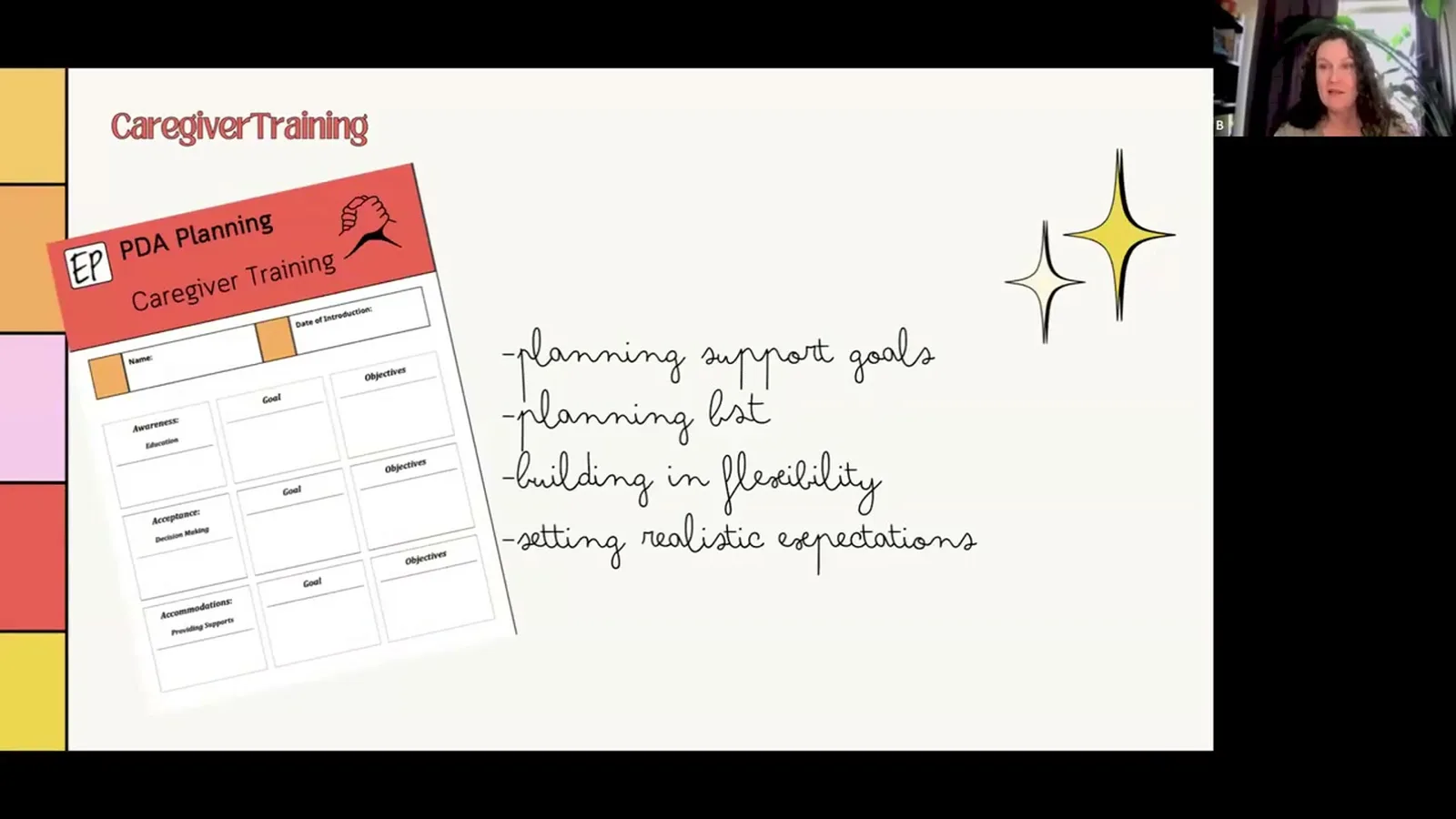
PDA Caregivers, Complex Profiles, Replacement Behaviors, and Being Trauma Informed
Experts who cover this
6 recordings on openceu cover skill based treatment.
- Featured talk1.50 CEUs
PDA Caregivers, Complex Profiles, Replacement Behaviors, and Being Trauma Informed
B. Kuerine GrayThe Behaviorist Bookclub
Gray describes specific SBT modifications for PDA presentations, including fading the traditional 'clap' cue that signals the demand chain because it can…
- 3 CEUs
12 days of PFA & SBT
Matt HarringtonThe Behaviorist Bookclub
Named as the treatment half of the PFA/SBT pairing, presented via a changing-criterion-style graph format where shaping, chaining, and fading run alongside the…
- 1 CEU
Research to practice - extending past the pages
Matt HarringtonThe Behaviorist Bookclub
Applied across two case studies (a 14-year-old with transition struggles and a school placement change) as the intervention model, with the speaker arguing the…
- 1.50 CEUs
Hey, Chillax Man! Understanding the Logic of Anxiety
Dr. Clelia SigaudThe Behaviorist Bookclub
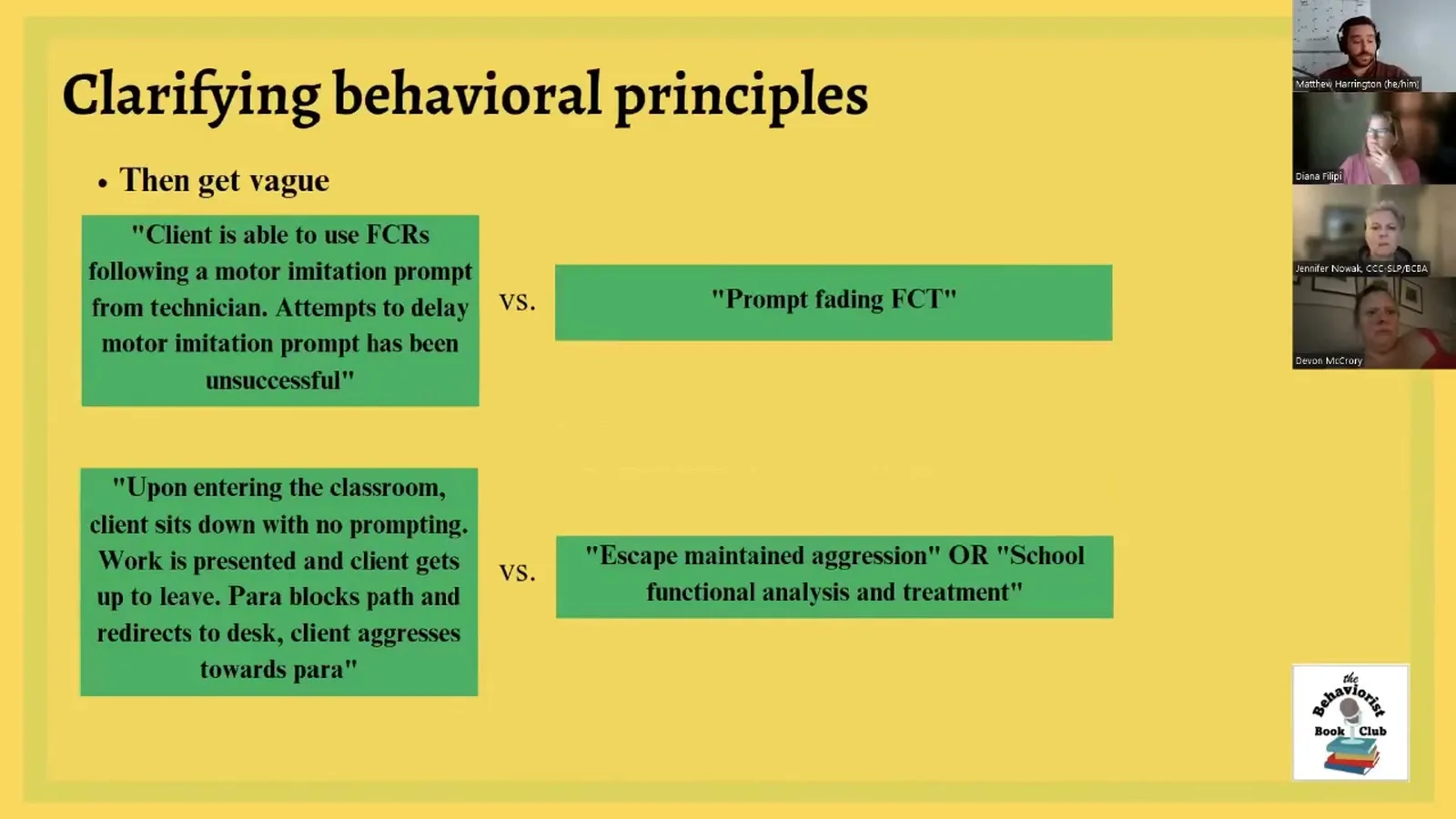
Matt used a standard SBT protocol (FCT plus tolerance of denial) for the client's escape-maintained transition behavior; it worked well at the clinic but…
- 1 CEU
Compliance to Commitment: Seven Habits of the Highly Effective Caregiver Trainer
Matt HarringtonThe Behaviorist Bookclub
Cited as the clearest existing example of the shaping logic the presenter wants clinicians to apply to caregiver training: branching micro-skill sequences that…
- 2 CEUs
Prediction and Probabilities: Three foundational equations to successful behavior reduction
Matt HarringtonThe Behaviorist Bookclub
Cited as an example of the matching law in action: SBT deliberately keeps reinforcing severe behavior for safety reasons while ramping up reinforcement for…
On this page · 8 sections▾
Skill-based treatment is a way to help kids with hard behavior. People often call it SBT for short. Instead of just stopping the behavior, you teach the child better skills. The child learns to ask for what they want. The child learns to wait, to cope, and to do work.
This matters for BCBAs, RBTs, and parents. Hard behavior usually does a job for the child. It gets a break, or attention, or a favorite thing. SBT teaches a kinder way to get those same things. That is why it can lower behavior and build real skills at the same time.
What skill-based treatment actually is#
SBT is the treatment half of a well-known ABA pair. The first half is the assessment. It finds out why the behavior happens. The second half teaches new skills to replace it.
The core idea is simple. You teach the child to ask for what they want. Then you slowly ask for a little more each time. You teach them to hear "no" and stay calm. You teach them to wait and then do some work.
None of this is brand new. It uses shaping, which means building a skill one small step at a time. SBT just lays out those steps in a clear order. That order is what makes it easy to follow.
It starts with tiny steps#
Most experts describe SBT as a chain of small goals. Each goal is a tiny skill. Together they build up to the big goal you actually want.
The steps are often called "CABs." Think of each CAB as one link in a chain. You do not jump to the end. You add one link at a time until the child reaches the finish line.
It's clearly laid out in SBT where you start with these micro skills and you slowly build up the branch. Cab one, cab two, cab two a, cab two B, cab two C, right? Linguistics aside, all it is, is a series of tiny goals that gets you to the terminal goal. From the talk — Matt Harrington
This makes planning easier for the whole team. You name the end goal first. Then you write the small steps backward from there. One presenter used a plain home example. She wanted a child named Johnny to eat a sandwich in the kitchen. From that end goal, she wrote each CAB step by step.
Safety comes first#
Some behavior is dangerous. Think of hitting, biting, running away, or self-injury. SBT does not ignore that risk. It plans around it on purpose.
Early on, the team may still give in when big behavior happens. That keeps the child safe. At the same time, they build up rewards for asking the right way. Over time, asking works better than the behavior, so the child shifts to asking.
One model adds even more safety by giving choices. The child can join the lesson, hang out with fun things, or leave the space. Kids almost always choose to join. That choice lowers the chance of a big meltdown.
Teaching real skills kids can use#
 Advertisement
SBT is not vague. It teaches a clear, short list of life skills. These are skills the child will use every day, at home and at school.
The usual four are easy to name. Ask for what you want. Be okay when someone says no. Move away from fun toward being ready. Then cooperate and do the work.
Following the assessment, we moved into skill based treatment with a focus on teaching Camden four skills to self advocate, to be okay when someone told him no, to transition away from reinforcement and being ready to work, and last but not least, to cooperate with work tasks. From the talk — Lauren Weaver
One school case showed the payoff. In baseline, the child slept half the day and did little work. By the end, the team kept adding more work. The child kept doing it with little to no hard behavior.
Bending SBT for tricky profiles#
SBT is a frame, not a rigid script. Skilled clinicians change it to fit the child in front of them. This is very clear with anxiety-driven profiles like PDA.
Some kids get a loud clap cue that signals the next demand. For anxious kids, that cue can set off fear. So teams fade the clap for those children. In some cases they pause SBT for a while and come back later.
There is a hidden strength here too. Because SBT drops the demand fast, you can test coping tools safely. If one calming method fails, you try the next one with little risk.
because in SBT, because you're dropping requirements so fast, you can try things out in a safer way, right? You can rotate through seven different co-regulation methods. From the talk — B. Kuerine Gray
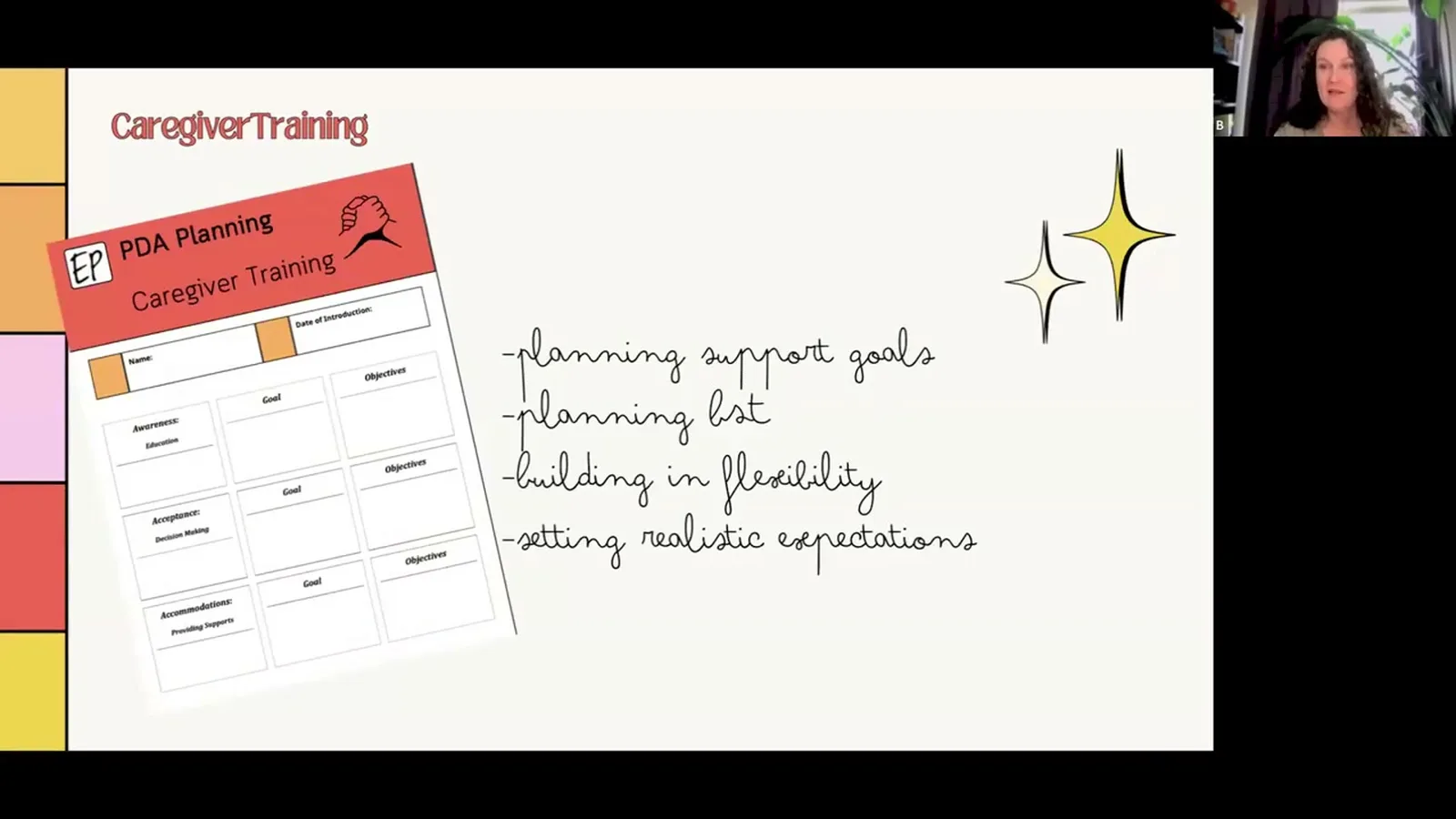
You can hear more of this thinking in PDA Caregivers, Complex Profiles, Replacement Behaviors, and Being Trauma Informed. It also explains why trauma-informed care sits under the whole model.
The same approach in different settings#
A common worry is that SBT only works in a quiet clinic. Experts push back on that idea. The setting can change while the plan stays the same.
The real question is the type of challenge, not the room. If the behavior fits what SBT treats, the model can move from clinic to school.
It wasn't the setting. It was the type of behavioral challenges that SBT is really good at addressing. From the talk — Matt Harrington
Schools use SBT language every day, even in plain words. "Universal" just means your plan when no formal lesson is running. Transitions are common CAB targets. One CAB may be "put your stuff away." The next CAB may be "come with me." If you want the school angle, see Research to practice - extending past the pages.
What the research says#
The research base for SBT keeps growing. Several recent studies show strong results in real settings.
One study built a safer version with lots of choices for the child. Children mostly chose to join treatment. That choice led to the loss of problem behavior and new adaptive skills (Rajaraman et al., 2021). A follow-up put the same choice model in public schools for kids with emotional and behavioral disorders. It raised good replacement responses and cut early warning behavior (Staubitz et al., 2022).
Other work looks at how long the gains last. Six children with autism got the assessment and SBT in a special school. Hard behavior dropped to near zero across staff and rooms. One year later, the gains held, and physical restraint was gone for every child (Slaton et al., 2024). A newer study even used SBT to reduce interfering repetitive behavior. Task accuracy rose above 80% for all three students (Slaton et al., 2025).
These are not perfect proof for every child. But they show a clear pattern. SBT can lower dangerous behavior and teach lasting skills in homes, clinics, and schools.
FAQ#
Is skill-based treatment the same as ABA? SBT is one approach within ABA, not a different field. It uses core ABA tools like shaping and reinforcement. What stands out is the focus on teaching skills first. The goal is a calmer child with more ways to cope.
What are CABs in SBT? CABs are the small steps in the skill chain. Each CAB is one tiny skill the child learns. You link them in order until the child reaches the big goal. For example, one CAB is packing up and the next is transitioning with an adult.
Does SBT work for dangerous behavior? Yes, and it is built with that risk in mind. Teams plan for safety and often add choices for the child. Studies show hard behavior dropping to near zero over time. Many programs also removed the need for physical restraint.
 Advertisement
Turn this topic into a CEU
You just studied this. Now get credit for it.
Watch PDA Caregivers, Complex Profiles, Replacement Behaviors, and Being Trauma Informed with B. Kuerine Gray and earn 1.5 free BCBA CEUs. Detailed certificate, delivered the moment you finish.