Non-Contingent Reinforcement (NCR) in ABA Explained
Non-contingent reinforcement gives access on a time schedule, not for a behavior. Learn how NCR works, why it resists fidelity errors, and how to thin it.
Key takeaway
Non-contingent reinforcement is often shortened to NCR. It means giving a reinforcer on a set time schedule, not for a behavior. The person gets access no matter what they do in that moment.
Solving Clinical Challenges with Research
Free learning path on this topic
Master PFA and SBT
Matt Harrington's 12-article walk through practical functional assessment and skill-based treatment, from Hanley's 2014 study to the enhanced choice model. Then assent, since SBT depends on it, and the ethical guardrails that keep behavior reduction defensible. Five CEUs, one of them ethics.
Experts who cover this
4 recordings on openceu cover non-contingent reinforcement.
- Featured talk2.50 CEUs
Solving Clinical Challenges with Research
Matthew HarringtonThe Behaviorist Bookclub
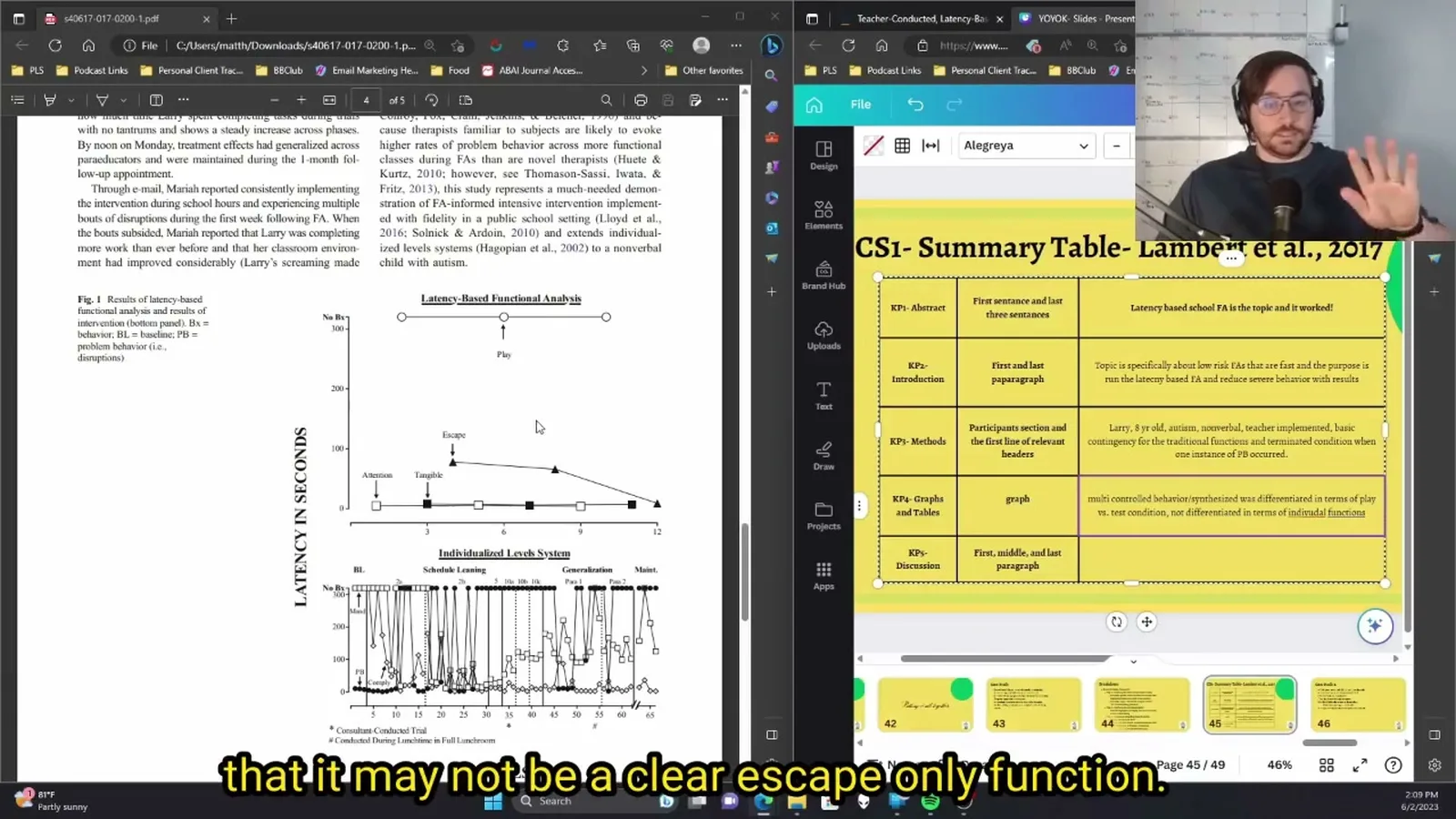
For the key-places-framework demo, Harrington skims a Kelly-et-al 2023 article on using multiple schedules to rapidly thin NCR for destructive behavior…
- 2 CEUs
Prediction and Probabilities: Three foundational equations to successful behavior reduction
Matt HarringtonThe Behaviorist Bookclub
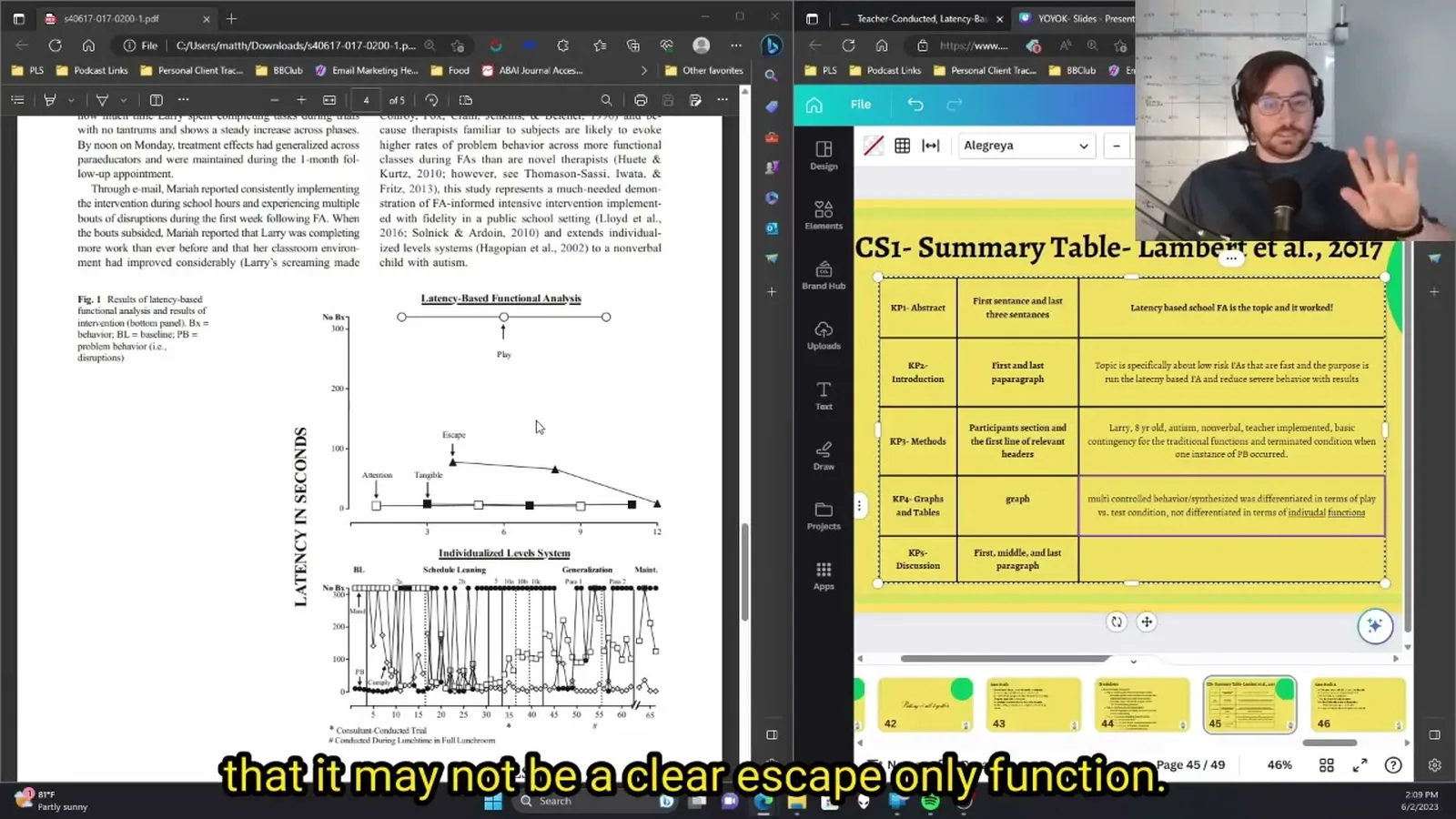
NCR is presented as far more resistant to fidelity errors than extinction: contingency-strength math shows a technician missing reinforcer deliveries at 75%…
- 2.50 CEUs
5 Days of Manding Mastery
Matt HarringtonThe Behaviorist Bookclub
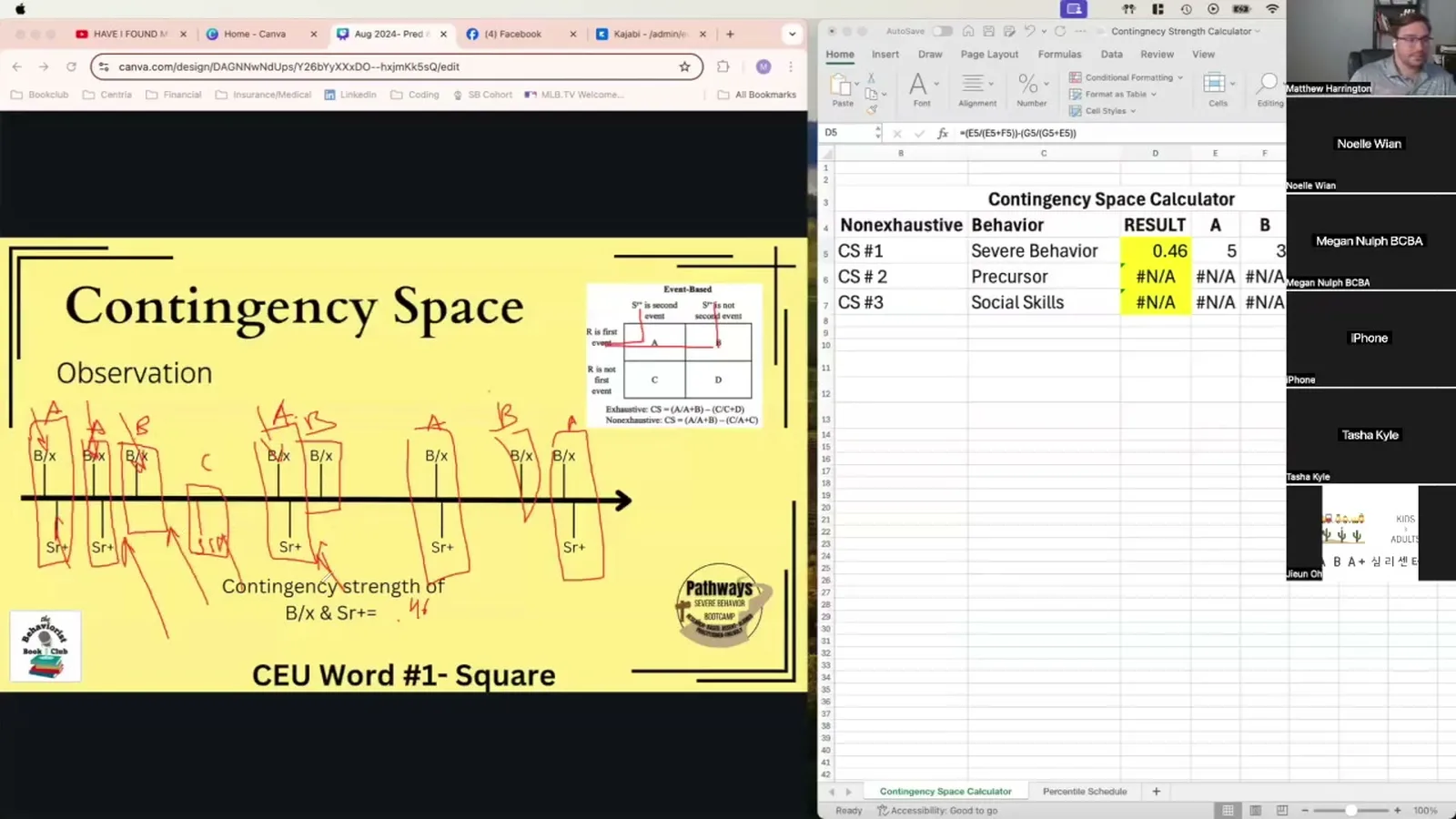
Framed as the hardest and most-avoided part of FCT: fading from a dense FR1 schedule to a leaner, more naturalistic schedule, with the target density depending…
- 3.50 Ethics CEUs
Analyzing Assent and Taking Data
Matt HarringtonThe Behaviorist Bookclub
Used as the 'hangout zone' clients can access at any time by withdrawing assent, deliberately holding the same functional reinforcers as the…
On this page · 8 sections▾
Non-contingent reinforcement is often shortened to NCR. It means giving a reinforcer on a set time schedule, not for a behavior. The person gets access no matter what they do in that moment. Because the item comes freely, the reason to act out often fades.
NCR is a common tool for hard behavior. It can lower challenging behavior fast and gently. It also links to schedule thinning, which is how you slowly stretch the time between reinforcers. This guide covers how NCR works, why it is forgiving, and how to fade it well.
What NCR is in plain words#
Picture a child who screams to get a break. With NCR, you give short breaks on a timer, say every two minutes. The break no longer depends on the scream. So the scream loses its job.
The key is the time schedule. You are not waiting for a behavior. You deliver the reinforcer on the clock instead.
This builds a rich, calm setting for the learner. In one demo Matt Harrington describes, the NCR space had no demands at all.
Why NCR holds up when fidelity slips#
Real staff miss steps. Timers get late. A good plan should still work when this happens. NCR is strong here.
Matt Harrington uses contingency math to compare NCR and extinction under errors. He asks whether NCR really resists fidelity slips better than extinction does. The numbers show why NCR is safer under messy conditions.
At 75% fidelity, you lose around 0.01 of contingency strength, 0.01 of effectiveness of NCR. At 75% fidelity of extinction, you end up with a 0.3 contingency strength. From the talk — Matt Harrington
A small miss barely dents NCR. The same miss can wreck extinction. That makes NCR a smart pick when new staff are still learning.
NCR drops behavior fast, then you thin#
NCR often works quickly. When the reinforcer is free and frequent, the behavior has little reason to occur. The next job is to stretch the schedule.
In a case study Harrington reviews, a team used multiple schedules to thin NCR fast. Results were strong across clients.
NCR effectively dropped behavior to zero or close to zero. And then fading went almost perfectly for all clients. From the talk — Matthew Harrington
A multiple schedule uses signals to show when the reinforcer is on or off. Those signals help the learner handle longer gaps. That is what makes quick thinning possible.
Schedule thinning is the hard part#
 Advertisement
Dropping behavior is the easy win. Thinning the schedule is where teams struggle. You must stretch the time without the behavior coming back.
Harrington ties thinning to the fading stage of communication training. He says to plan the fade before you start.
you really should pick how you're going to fade the schedule before you even start implementing the training procedure. From the talk — Matt Harrington
Your end goal depends on the reinforcer. A snack that heats in a microwave may need a wait of under two minutes. A big reward like a trip may take a much longer stretch. Set that target early so you thin with a purpose.
When NCR is a strong choice#
NCR fits well in a few clear cases. It shines when staff are still building skills. It also helps when you want a calm, rich setting fast.
The forgiving nature is the first draw. A late timer or a missed delivery does not sink the plan. That safety net makes NCR friendly for new teams and new caregivers.
The rich setting is the second draw. NCR floods the space with the person's reinforcers. Harrington compares it to a schedule that only pays off when things go right.
NCR gives a rich reinforcement environment. DRO does if things go well. From the talk — Matt Harrington
So NCR gives a sure thing, while some other plans give a maybe. That certainty can calm hard behavior quickly. You trade some teaching power for stability and safety early on.
NCR and honoring choice#
NCR can also support choice-based care. You can build a low-demand space that always holds the person's favorite reinforcers. This lets a learner step away without losing anything they value.
The clients at any time could leave the clinic. They could hang out in NCR where presumably they had all of their functional reinforcers where they could participate in the skills-based treatment. From the talk — Matt Harrington
This keeps stepping away from being a punished choice. The break zone holds the same good things as the work zone. You can read more in Prediction and Probabilities: Three foundational equations to successful behavior reduction.
What the research says#
NCR shows up across decades of behavior work. The findings help set fair expectations for it.
NCR often lowers a target behavior, but it is not always the strongest control on its own. In one classic study, a preschooler's compliance dropped under NCR, but it stayed variable. It fell to lower levels under DRO (Differential reinforcement of other behavior and noncontingent reinforcement as control procedures during the modification of a preschooler's compliance). This is a reminder to pick your procedure for the case.
NCR is a solid team player for serious behavior. A review of elopement, which means running or wandering off, listed NCR among several used treatments (Treatment of elopement in individuals with developmental disabilities: a systematic review). Most studies in that review reported positive outcomes. The strongest results came from function-based care. NCR is also recommended for behaviors with a sensory component, paired with antecedent control (The role of physiological arousal in the management of challenging behaviours in individuals with autistic spectrum disorders).
FAQ#
What is the difference between NCR and DRO? NCR gives the reinforcer on a time schedule no matter what. DRO gives it only when the target behavior is absent for a set time. NCR keeps a very rich reinforcement setting. DRO adds a light contingency to strengthen the "not doing it" part.
Does NCR reinforce bad behavior by accident? It can if the timing is careless. If a delivery lands right after the behavior, you may pair them by chance. Good timing and short fixed intervals lower this risk. Many teams pause delivery briefly after a target behavior to avoid the pairing.
How do you fade an NCR schedule? Start dense, then stretch the time between reinforcers in small steps. Watch the behavior data at each step. If it stays low, thin again. If it rises, go back one step and slow down.
 Advertisement
Turn this topic into a CEU
You just studied this. Now get credit for it.
Watch Solving Clinical Challenges with Research with Matthew Harrington and earn 2.5 free BCBA CEUs. Detailed certificate, delivered the moment you finish.
Keep going with a free learning path
Master PFA and SBT
Matt Harrington's 12-article walk through practical functional assessment and skill-based treatment, from Hanley's 2014 study to the enhanced choice model. Then assent, since SBT depends on it, and the ethical guardrails that keep behavior reduction defensible. Five CEUs, one of them ethics.
Want the primary literature? Read the Non-Contingent Reinforcement (NCR) in ABA Explained research roundup on our sister site, Behaviorist Book Club.