Extinction in ABA: What It Is and When to Use It
Extinction means a behavior no longer earns its reinforcer. Learn how BCBAs use it, why fidelity matters so much, and when it is the wrong call.
Key takeaway
Extinction means a behavior stops earning the reinforcer it used to earn. The behavior still happens. The payoff it used to produce does not come anymore.
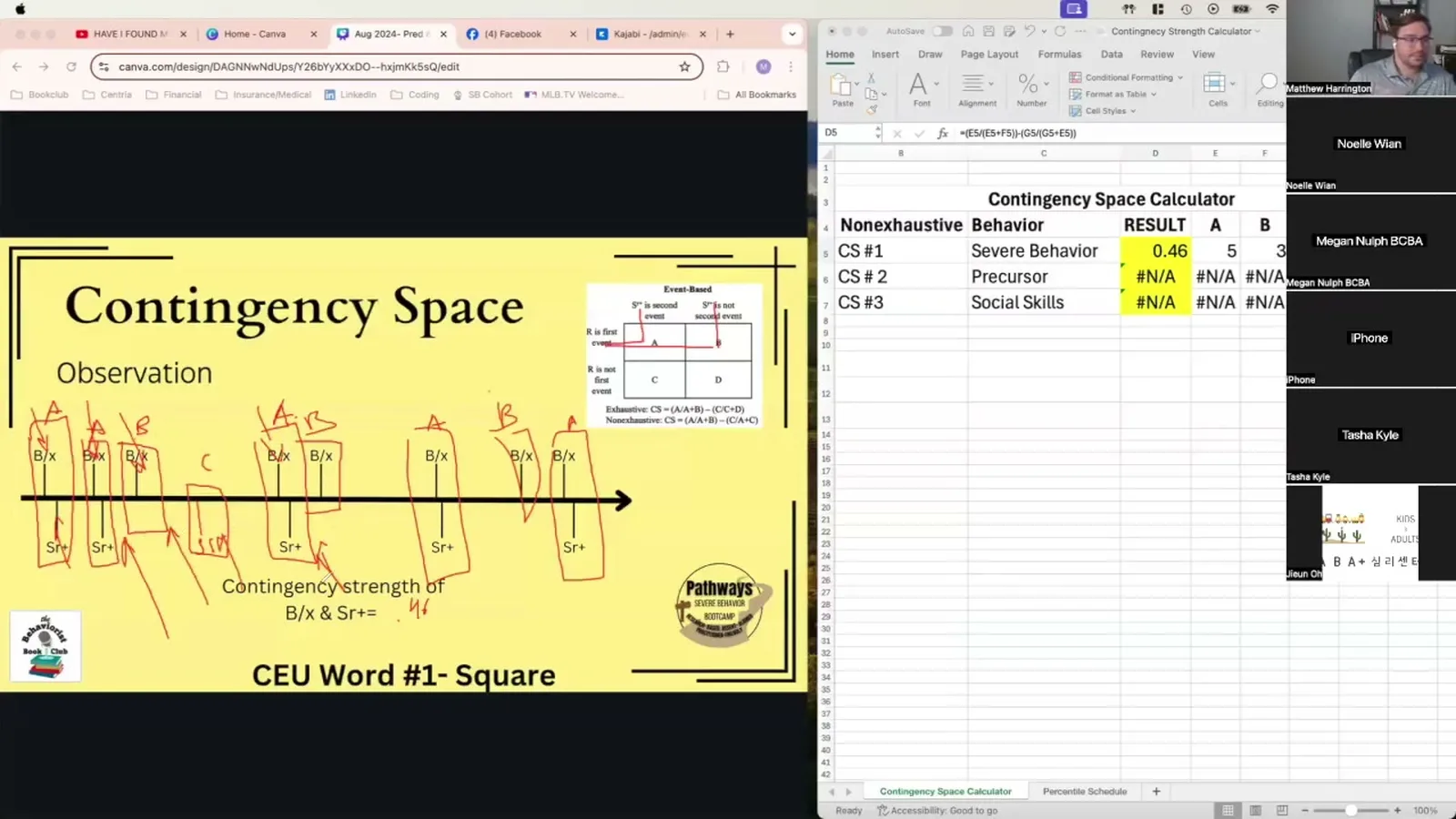
Prediction and Probabilities: Three foundational equations to successful behavior reduction
Free learning path on this topic
Master PFA and SBT
Matt Harrington's 12-article walk through practical functional assessment and skill-based treatment, from Hanley's 2014 study to the enhanced choice model. Then assent, since SBT depends on it, and the ethical guardrails that keep behavior reduction defensible. Five CEUs, one of them ethics.
Experts who cover this
8 recordings on openceu cover extinction.
- Featured talk2 CEUs
Prediction and Probabilities: Three foundational equations to successful behavior reduction
Matt HarringtonThe Behaviorist Bookclub
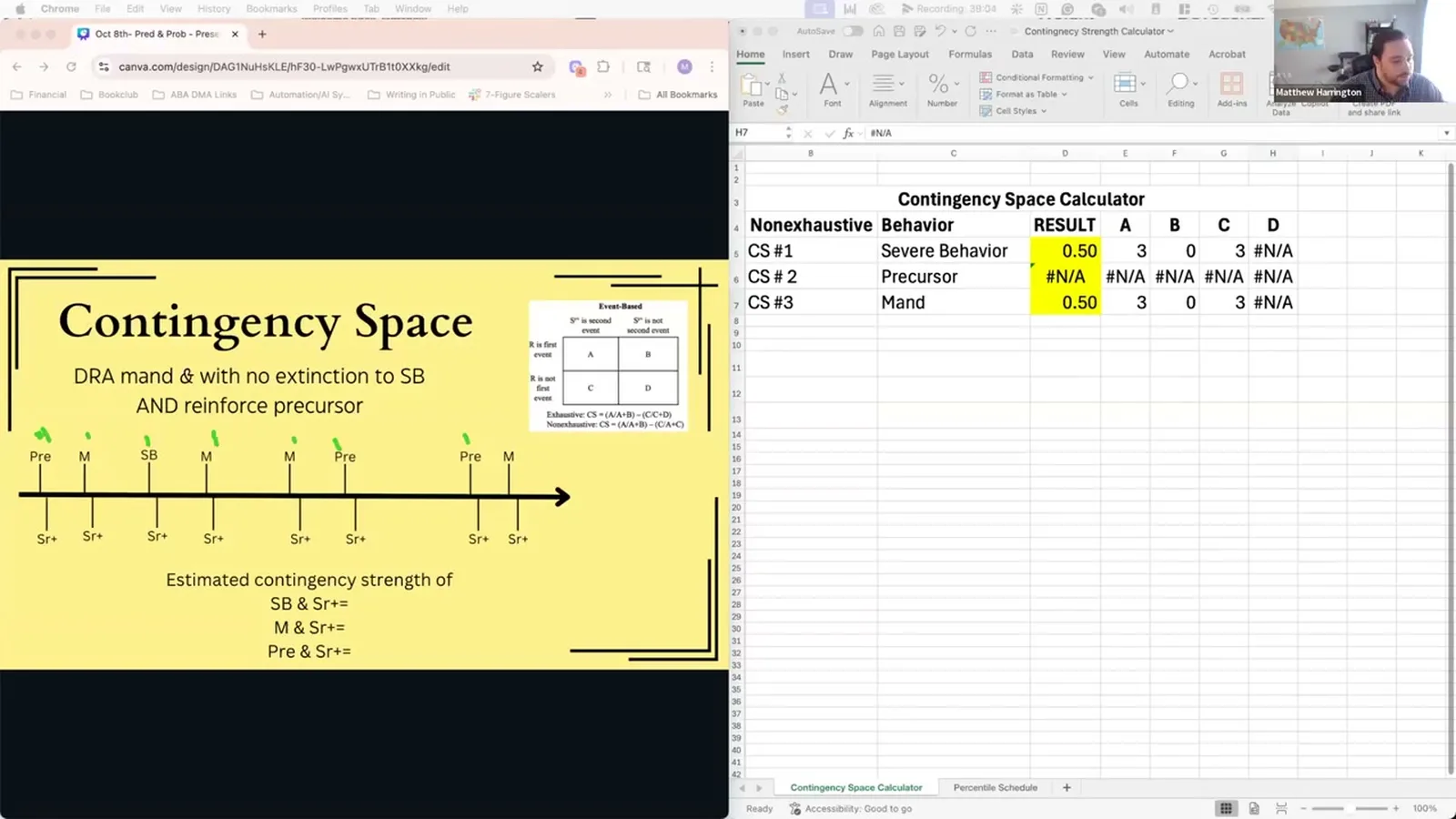
Extinction at 100% fidelity is shown to completely shatter contingency strength, but the talk's key argument is that extinction is fragile: at 75% fidelity…
- 0.50 PDUs
Bite-Size Behavior Analysis: Differential Reinforcement
Anlara HoskinsCandid Contingencies, LLC
Extinction is defined as withholding reinforcement entirely for a behavior that previously produced it, illustrated with a client example where hitting to…
- 1 CEU
The Use of Matrix Training to Teach Multi-Component Tacting Through Telehealth
Dr. Jessica OsosCopper Consulting Group
Osos hypothesizes that some participants' variable or low post-test responding reflected an extinction effect, since post-test sessions (like baseline)…
- 1 CEU
Why are they Waking up at 2 AM?
Lindsay AndersonThe Behaviorist Bookclub
Critiques pure extinction for sleep as risky with severe behavior and prone to intermittent reinforcement when parents can't sustain it, since it suppresses…
- 3.50 Ethics CEUs
Analyzing Assent and Taking Data
Matt HarringtonThe Behaviorist Bookclub
Critiques 'old school' reliance on hardcore escape extinction as the default response to challenging behavior, describing a case where years of pure extinction…
- 1 Ethics CEU
Ethical Guardrails in Behavior Reduction
Matt HarringtonThe Behaviorist Bookclub
Harrington reframes extinction as a routine, embedded part of shaping (each small increment of unreinforced behavior is a 'mini extinction') rather than only…
- 1 CEU
The Math Behind Behavior Reduction
Matt HarringtonThe Behaviorist Bookclub
Modeled mathematically as a contingency strength of -1 (or undefined/null), where reinforcement only ever follows the absence of the target response…
- 1.50 CEUs
Hey, Chillax Man! Understanding the Logic of Anxiety
Dr. Clelia SigaudThe Behaviorist Bookclub
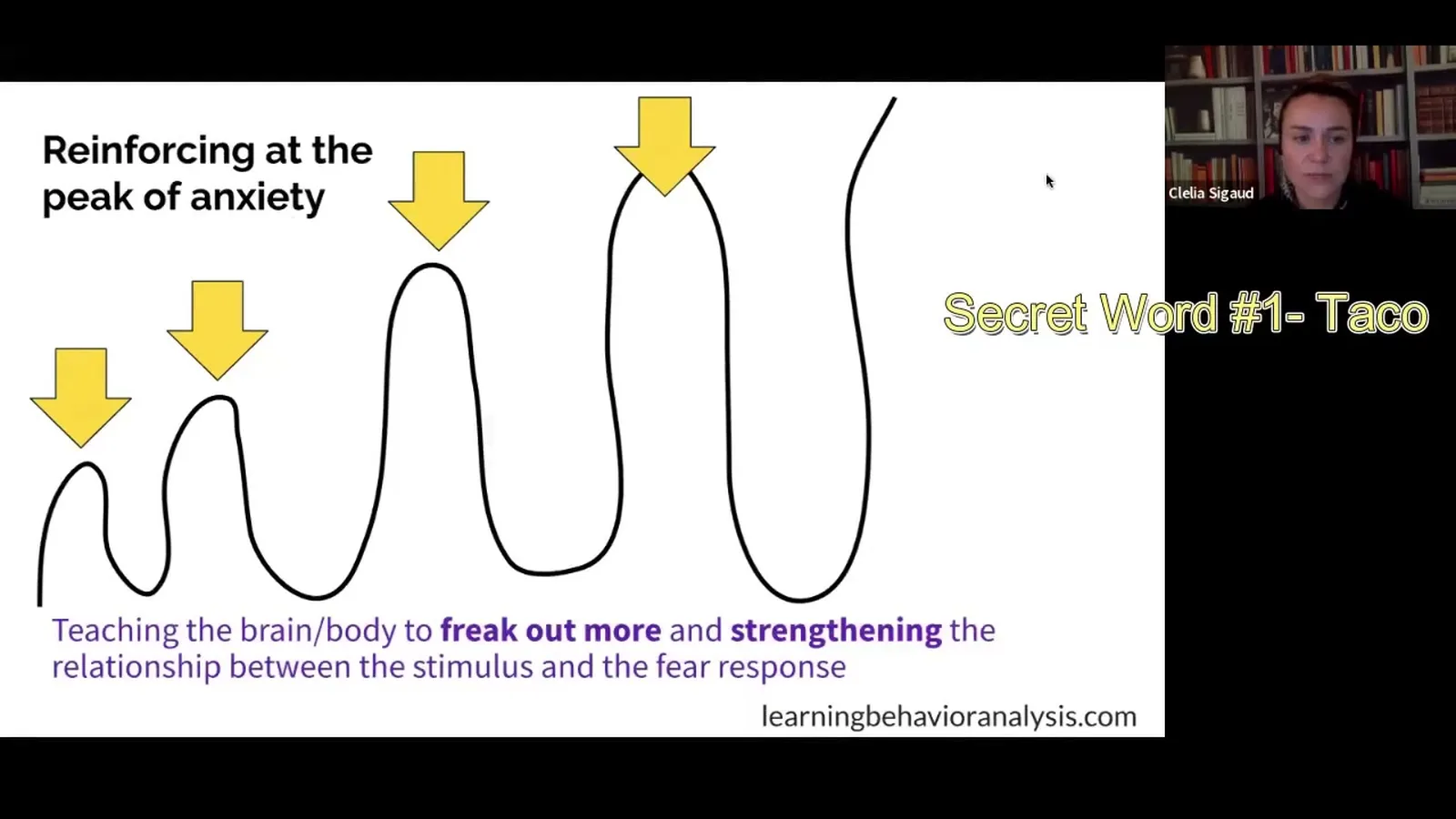
Flooding is described as working through pure extinction, where the previously available escape is withheld until the fear response subsides on its own.



On this page · 14 sections▾
Extinction means a behavior stops earning the reinforcer it used to earn. The behavior still happens. The payoff it used to produce does not come anymore.
Extinction is one of the most powerful tools in behavior analysis. It is also one of the easiest to get wrong. This page pulls together what working BCBAs say about how it works, where it fails, and when they refuse to use it.
What extinction actually means#
Extinction is not a punishment. Nothing gets added after the behavior. Something that used to be delivered simply stops being delivered.
Anlara Hoskins gives the cleanest plain-English version. She walks through a client who hits to get an iPad. Hitting is unsafe, so hitting no longer produces the iPad at all.
If we're not providing any reinforcement at all, we're breaking that relationship between hitting and gaining access. From the talk — Anlara Hoskins
That phrase "breaking the relationship" is the whole idea. A behavior works because it reliably makes something happen. Extinction removes the reliability. Hoskins sums it up even shorter.
Hoskins puts it even more bluntly: extinction is simply the behavior-analytic term for withholding reinforcement.
The word "reinforcer" just means whatever the behavior was getting. It could be a toy, attention, or escape from a hard task.
Extinction is not the same as ignoring#
People often hear extinction and think "ignore it." That is only true when the behavior was maintained by attention. Function drives everything.
If a child screams to escape a math worksheet, ignoring the scream still lets them skip the math. That is not extinction. The reinforcer still arrived. For escape-maintained behavior, extinction means the task stays in front of them.
If a child hits to get a tablet, extinction means the tablet does not appear after hitting. Ignoring the hit is beside the point. The tablet is the reinforcer, not your eye contact.
This is why a functional assessment comes first. You cannot withhold a reinforcer until you know which one is doing the work. Hoskins frames extinction as one option inside a larger differential reinforcement plan. Differential reinforcement means reinforcing a different, safer behavior instead of the one you want to reduce. It sits next to changes in response effort and reinforcer size.
The math behind why extinction works#
Matt Harrington teaches extinction using contingency strength. That is a number for how tightly a reinforcer is tied to a behavior. When a behavior always produces the reinforcer, the tie is as strong as it gets.
Extinction flips that number to the opposite end. The reinforcer only ever shows up when the behavior is absent.
The reinforcer has a 100% chance of occurring if behavior is not occurring. From the talk — Matt Harrington
Harrington points out the math gets strange at that extreme. You end up dividing by zero, so the value is closer to undefined than to a normal negative score. In his session The Math Behind Behavior Reduction he walks the arithmetic step by step.
The practical takeaway is simple. Done perfectly, extinction does not nudge a behavior down. It removes the reason the behavior existed.
Extinction at 100% fidelity doesn't just weaken the contingency strength. It breaks that sucker apart. It completely shatters the contingency, right? From the talk — Matt Harrington
Why extinction is fragile at less than perfect fidelity#
Here is the part most training skips. Extinction only shatters the contingency at 100% fidelity. Fidelity means how often the plan is run correctly.
Harrington ran the numbers for a team that slips a little. Imagine eight trials where the behavior gets nothing and three where it accidentally works. Contingency strength climbs back to about 0.27. That is not a rounding error. That is a live, working contingency.
If the only way to access reinforcement is severe behavior, and that contingency strength is still 0.23 or 0.27, that behavior is going to persist all over the place. So as soon as you drop the fidelity of extinction, you start seeing that behavior happen again. From the talk — Matt Harrington
Most procedures degrade gently when your team is 75% consistent. Extinction does not. It falls off a cliff. A plan that only works at perfect fidelity is a plan that depends on tired humans never making a mistake.
That is a design question, not a staff-blaming question. If your setting cannot hold high fidelity across every shift and every caregiver, extinction is the wrong tool for that setting.
Extinction does not teach anything new#
Extinction tells a learner what stops working. It never tells them what to do instead. That gap is the source of most extinction failures.
Harrington names this directly as the shared weakness of extinction and noncontingent reinforcement, where reinforcement is delivered on a fixed schedule no matter what the person does. Neither one builds a skill. That is exactly why reinforcing a safer alternative behavior usually rides along with extinction in a real plan.
Lindsay Anderson shows what the gap looks like in practice. She works on pediatric sleep, where "cry it out" style extinction is common advice. She sees kids who stop protesting and still do not sleep.
extinction is definitely not all bad... pure extinction without teaching the skills necessary to fall asleep can a lot of times lead to kids who maybe aren't having those big behaviors anymore or aren't coming out of their room. But they also just aren't sleeping any better. From the talk — Lindsay Anderson
The protest went away. The actual target skill, falling asleep alone, was never taught. Her alternative is a shaping approach called time-based visiting, covered in Why are they Waking up at 2 AM?.
The small extinctions hidden inside shaping#
Extinction is not only the dramatic version where you withhold a big reinforcer during a crisis. Harrington argues it is quietly built into every teaching procedure we use.
Shaping works by reinforcing closer and closer approximations. Reinforcing the closer one means not reinforcing the older one. That second half is extinction.
If we are learning how to tolerate hard things, it involves not reinforcing a time of 10 seconds and reinforcing a time of 15 seconds. Those are all mini extinctions. From the talk — Matt Harrington
Teaching speech works the same way. An early sound gets reinforced for a while, then stops, so a clearer word can take over. Anderson makes the same point about sleep shaping. Every step up the ladder puts the previous step on partial extinction.
This reframe matters for practice. If you believe extinction is always off the table, you have quietly ruled out shaping too. The honest question is not whether to use extinction. It is how big a jump you ask a learner to absorb at once.
The response class ladder problem#
 Advertisement
Penny Holloway raises the sharpest clinical objection to classic extinction. She credits Megan Miller for changing how she thought about it.
When you withhold reinforcement, the learner does not just stop. They try harder and they try bigger. That escalation is a rehearsal, and rehearsal builds fluency.
during extinction, we are making a client incredibly fluent in climbing up that response class ladder. So first, there will be a grunt, then there will be a push, and then X, Y, Z. From the talk — Penny Holloway
A response class is a group of behaviors that all produce the same outcome. They usually run from low effort to high effort. If the quiet version stops working, the loud version gets its turn, and the loud version is the one that finally pays.
Holloway still uses extinction. She just narrows where she puts it. She places previously mastered responses on extinction while shaping the next step, and she will not hold a demand through a long escalation.
So for me, that's the place of extinction, not I'm going to hold my demand and watch you have a meltdown for three hours. From the talk — Penny Holloway
When extinction is simply not an option#
Some behaviors are too dangerous to ride out. Some teams are not trained or staffed to hold a plan perfectly. Both facts rule extinction out before ethics even enters the room.
Harrington is blunt about how often this happens in real caseloads.
there are many times in my career where extinction was not an option simply due to the severity of the behavior From the talk — Matt Harrington
Anderson draws the same line for home sleep plans. She screens families out before recommending anything extinction-based.
if there are severe behaviors like physical aggression or self-injurious behavior, it's just not going to be safe to make this recommendation. From the talk — Lindsay Anderson
She adds a second, quieter risk. Exhausted parents cannot sustain the plan, and a half-run plan is worse than no plan.
it's really hard to walk a crying child back to bed 10 times in the middle of the night... this is going to lead to that intermittent reinforcement of parents bringing the child into their bed. From the talk — Lindsay Anderson
Intermittent reinforcement makes behavior harder to change, not easier. Failed extinction can leave you worse off than where you started.
Primary reinforcers change the whole calculation#
Brian Middleton makes an argument about extinction that rarely shows up in coursework. His complaint is about the examples we teach with.
The way we teach extinction, every single example we use is problem solving brain. Knocking on a door, vending machine, ringing doorbells, all these different things. From the talk — Brian Middleton
Those are all conditioned reinforcers. A conditioned reinforcer is something we learned to value, like money or a snack token. Waiting out a vending machine is annoying, not dangerous.
Middleton says the ethics change completely when the reinforcer is primary. A primary reinforcer is something the body needs, like food, water, air, or safety.
When you're drowning, air is a primary reinforcer. You're not going to go, use your words. Then I'll throw you the rope. Throw them the damn rope. Get them out of that situation. From the talk — Brian Middleton
His clinical rule follows from that. Get the person out of danger first, then teach. You cannot run a learning procedure on someone whose body is in survival mode. Before you place anything on extinction, ask what the behavior is actually getting.
Escape extinction and assent#
Escape extinction means the demand stays in place no matter what the learner does. It is the version most tied to compliance-first practice, and the one most often overused.
Harrington describes taking over a case where it was the entire treatment plan.
I've had experiences where I've had a family who has been in behavioral analysis for five years, the child engages in challenging behavior, and all they know is extinction. That is the only thing any of these behavior analysts who eventually burn out end up doing with this kid. It's just hardcore extinction. From the talk — Matt Harrington
Five years of extinction had not solved the behavior. It had burned out a string of clinicians instead.
His deeper point is that escape extinction often fails on its own terms. A learner escalating toward property destruction usually escapes anyway, through the delay and the disruption. You end up teaching that high-effort, high-risk behavior is the price of a break.
Even if the RBT doesn't attend to it, even if the RBT holds onto the paper and hands the pencil, the pencil is going to get thrown. Even if we do all of the right things with our escape extinction, even if we hold the chair in, all of these very subpar responses on our part, what is the individual experiencing? From the talk — Matt Harrington
The alternative he uses is to find a lower-effort member of the same response class and reinforce that one. Teach the learner an easy, safe way to ask for a break before the hard way gets rehearsed again.
Extinction that nobody planned#
Extinction does not wait for a treatment plan. It happens any time reinforcement quietly stops. Two talks show it showing up uninvited.
Dr. Jessica Osos ran a matrix training study over telehealth. Her post-test sessions matched baseline, which meant no praise and no programmed consequences for correct answers. Responding for one participant dropped back toward zero.
we're potentially seeing an extinction effect. From the talk — Dr. Jessica Osos
That is a measurement warning worth keeping. If your probe conditions strip out all reinforcement, a falling graph may show extinction rather than lost skills. Booster sessions brought the responding back.
Dr. Clelia Sigaud describes the same process on purpose inside anxiety treatment. Flooding exposes a person to the full-strength feared situation and blocks the escape.
The logic there is that the escape that was previously available will no longer be available. From the talk — Dr. Clelia Sigaud
Sigaud contrasts flooding with systematic desensitization, which climbs a hierarchy of smaller steps. That is the same tradeoff Anderson and Holloway describe. One big extinction event, or many small ones inside a shaping plan.
Where experts disagree about extinction#
These speakers do not agree about how large a role extinction should play. The disagreement is real and it shows up in what they actually do.
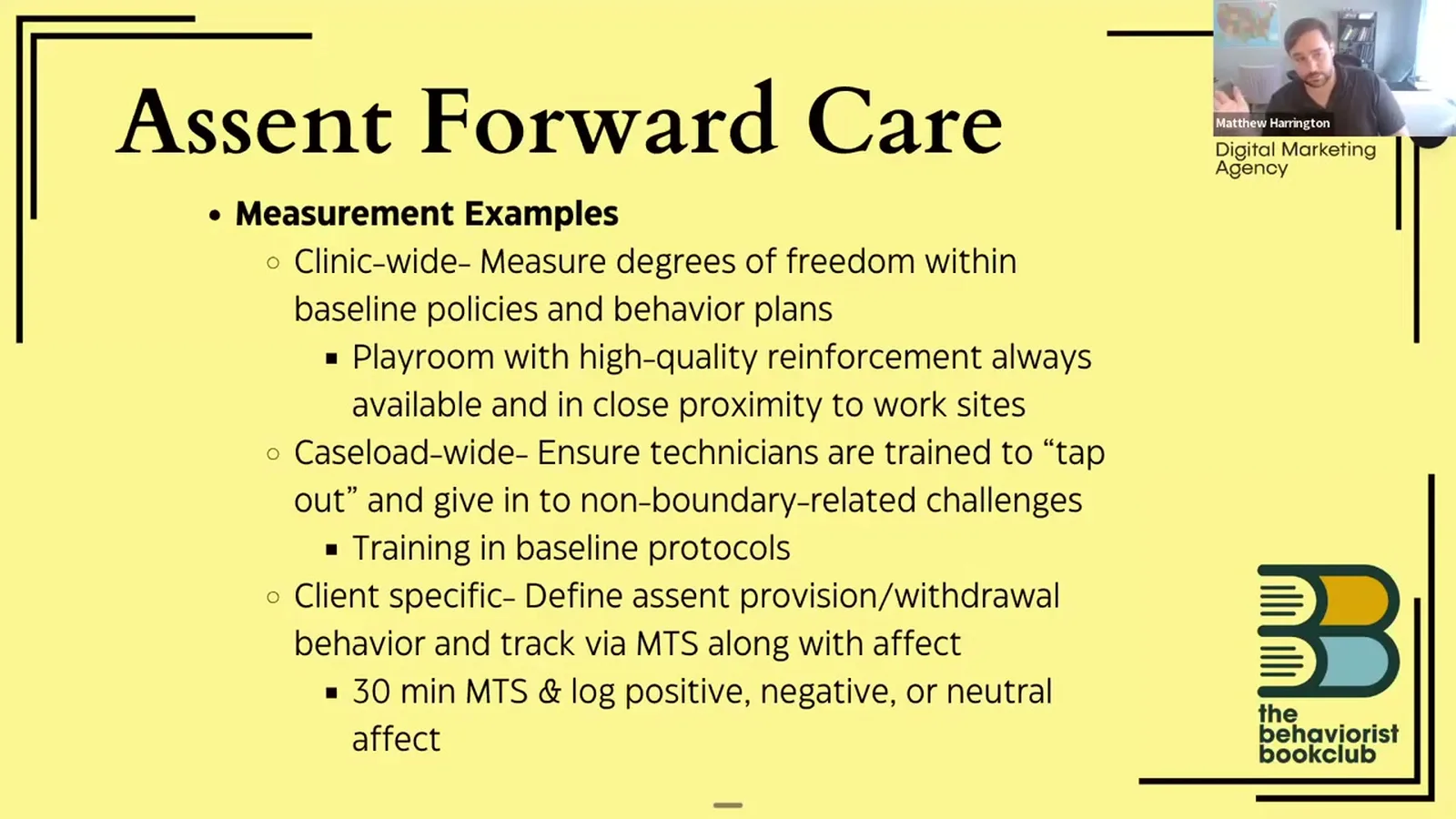
Harrington treats extinction as a normal, unavoidable part of learning. In his ethics talk he argues extinction is an "assent possible" procedure. It belongs inside assent-forward care, as long as the dose is applied individually.
Holloway draws a tighter boundary. She will place a previously mastered response on extinction while shaping, but she will not hold a demand through a long escalation. For her, safety, rapport, and being able to tell a parent what happened come first.
Anderson is somewhere between them by setting. She uses partial extinction inside shaping steps and rules out pure extinction when severe behavior or exhausted caregivers are in the picture.
Middleton pushes hardest on the ethics of the target. His argument is not about dose at all. It is that extinction applied to a survival-relevant reinforcer is the wrong procedure no matter how well it is run.
Notice what they agree on. Nobody defends extinction alone as a standalone plan. The real fight is over how much escalation a learner should be asked to rehearse, and who gets to decide.
What the research says#
Current research keeps pointing in the same direction the clinicians do. Extinction works better when something else is being reinforced at the same time.
One study taught cooperation with nasal swab tests using differential reinforcement and stimulus fading, gradually working up to the full test, with no escape extinction at all. Differential reinforcement alone worked for one participant, and adding stimulus fading worked for the other four (Briere, Janetzke, Fleck, & Bourret, 2025, Journal of Applied Behavior Analysis). Hard medical tasks can be taught without holding the demand through distress.
Basic research says the same about the early spike in behavior when reinforcement stops. A strong spike showed up when no alternative reinforcement was available. It shrank when an alternative reinforcer was offered, especially a larger one (Shahan & Avellaneda, 2025, Journal of the Experimental Analysis of Behavior). Giving the learner something that still works softens the transition.
Another study looked at reducing how much extinction exposure a plan needs. Alternating sessions where the alternative behavior did and did not pay off cut the return of old behavior. Short off-periods worked nearly as well as long ones (Shahan, Hiltz, Avellaneda, & Greer, 2025, Journal of the Experimental Analysis of Behavior). Less time on extinction can still buy the benefit.
Extinction is also slower than it looks on a summary graph. In one study with human participants, responding dropped once reinforcement was removed. Most participants were still responding at the end of the extinction phase (Alessandri & Lattal, 2025, Journal of the Experimental Analysis of Behavior). Plan for a tail, not a clean stop.
FAQ#
What is extinction in ABA? Extinction means a behavior no longer produces the reinforcer that used to maintain it. Nothing is added or taken away as a punishment. The old payoff simply stops arriving, so the behavior weakens over time.
Is extinction the same as ignoring behavior? No. Ignoring only counts as extinction when attention was the reinforcer. If the behavior was maintained by escape or by getting an item, ignoring it can still deliver that reinforcer. You have to withhold the specific reinforcer the assessment identified.
When should a BCBA avoid extinction? Avoid it when the behavior is dangerous, when the team or family cannot run it consistently, or when the reinforcer is survival-relevant. Partial extinction can make behavior stronger through intermittent reinforcement. In those cases, build the replacement skill first.
 Advertisement
Turn this topic into a CEU
You just studied this. Now get credit for it.
Watch Prediction and Probabilities: Three foundational equations to successful behavior reduction with Matt Harrington and earn 2 free BCBA CEUs. Detailed certificate, delivered the moment you finish.
Keep going with a free learning path
Master PFA and SBT
Matt Harrington's 12-article walk through practical functional assessment and skill-based treatment, from Hanley's 2014 study to the enhanced choice model. Then assent, since SBT depends on it, and the ethical guardrails that keep behavior reduction defensible. Five CEUs, one of them ethics.