From Hours to Competence: Assessing and Developing Supervisee Skills
Presented by Lauren Donovan
Cancel any time. Cert delivered to your inbox the moment you pass the quiz.
Learner ratings
from 114 learners
93% would recommend this CEU to other professionals in their field (91 responses)
“Great”
— Cynthia G.“Knows alot about supervision”
— Mercy E.
About this CEU
Supervision is often measured by time rather than meaningful skill development. Without clear ways to assess and track performance, supervisors may rely on subjective judgment, which can lead to inconsistent outcomes and underprepared supervisees. This training focuses on practical approaches to assessing supervisee skills, setting clear goals, and tracking progress over time. The emphasis is on making supervision more intentional and directly connected to skill development and clinical outcomes.
From the talk
What was covered
Lauren Donovan on moving supervision past hour counts: baseline every trainee, rate knowledge, application, and performance, and mine real cases for hours.
- Log hours if you must, but grade skills on their own: what a trainee can define, apply, and perform.
- Baseline every new trainee with prior records, a self rating, and your own direct observation before you set goals.
- Use one rating scale across every skill so the record stays consistent and you actually keep it up.
- Keep the tracker in a shared file so the trainee can see progress and help set the next goal.
- Pull unrestricted tasks out of one stuck program instead of inventing separate projects.
- Run behavior skills training alongside your deadline: you submit your version, the trainee practices on the same data.
Why Hour Counts Do Not Prove Competence
Supervision is easy to count in hours. The log shows when a trainee (someone earning hours toward certification) showed up. It does not show what that person can do alone. Lauren Donovan built this whole talk around that gap. Time is the input. Competence is what we owe the field.
Exposure is not mastery. A trainee can watch you write a plan one time and still not be able to write one next month. Fieldwork (supervised hours before board certification) is supposed to build an independent clinician, not just a person who is eligible to sit for the exam. Most new BCBAs (certified behavior analysts) start practicing on their own fast. The support they get after that varies a lot from place to place.
So the stakes sit with the supervisor. The people you train will serve real learners next year. Many of them will supervise other people a few years after that. Donovan said supervision quality shows up in the programming those learners receive. Weak fieldwork passes down. Strong fieldwork passes down too.
Completing an activity does not mean it can be performed.
From the talk — Lauren Donovan
The Barriers Supervisors Name First: Time and Billable Hours
Donovan polled the room on their biggest barriers to supervising trainees. Time came out biggest in the word cloud, and she said that is always the answer. Scheduling, follow through, consistency, and motivation came next. Several people named unrestricted hours (fieldwork tasks outside direct service) as the hardest part of the job. Others named a missing curriculum or a system that is too complicated to keep.
The money math drives a lot of it. Unrestricted work is often not billable. Prep time, planning time, and the supervision meeting itself usually are not billable either. Trainees still have targets to hit, and so do you.
Funding rules add a second wall. Some work has to carry the certified person's signature before it goes to a funder, so you cannot hand that task to a trainee at all. Setting narrows things too. A trainee who is in one home with one learner sees a thin slice of the field. Donovan said she never ran a functional analysis (a test of behavior's cause) during her own fieldwork and had to learn it after she was certified. She pointed to Lydden et al. 2020 for options. The top two there were nonprofit work and salaried trainee or apprentice roles.
None of that's billable and you have to get billables every month, every weekend.
From the talk — Lauren Donovan
Set Expectations Before You Accept a Trainee
Donovan front loads the work. Name both roles at the start. Name how goals get set and how progress gets checked. Name the clinical opportunities you can offer and the ones you cannot. Put all of it in the supervision agreement (a written contract with your trainee). Be honest that some fieldwork will land outside paid time, because for many trainees it will.
She is direct about limits. Trainees ask for more hours, and supervisors have far less time than the demand. Decide your cap before the request arrives. If you are new to this, take one person and build your system around that one person. Ask them for feedback on how it is going. Then grow the number. Saying no to a request is part of doing this well.
Scope matters just as much. You do not have to teach the whole test content outline (the exam's topic list), and you are not teaching to the exam at all. You are building clinical skill on real cases. If a skill sits outside your scope, say that out loud. Some trainees seek a second supervisor on purpose to widen what they learn.
Teach what you know and teach what you know well.
From the talk — Lauren Donovan
Start With a Baseline, Not a Blank Page
Two trainees rarely start in the same place. One may be brand new to the field. One may be transferring in with a stack of hours already logged. So Donovan opens with a baseline (where their skills start today). She reviews whatever records came from the prior supervisor, has the trainee rate their own skills, then runs her own assessment.
Direct observation is the part people skip. A self rating and a live look often disagree, and that gap is the useful part. It tells you where teaching should start. It also tells you which claims need a second look before you sign off on anything.
She keeps the test content outline nearby as a guide rather than a syllabus. Items get crossed off as they are covered in real work. Nobody covers everything in a month. The list keeps your coverage honest across a full year of supervision.
One might be brand new. Another might have a thousand hours.
From the talk — Lauren Donovan
Track Knowledge, Application, and Performance Separately
This is the heart of her system. Donovan splits her tracker into three columns. Knowledge is what a trainee can define and explain. Application is what they do with a scenario or a graph in your meeting. Performance is what they do with a real case in the room.
She split them for a reason. Some people can define any term and explain it beautifully to a parent, then freeze in the moment with a learner. Others run great sessions but cannot tell you why any of it worked. A BCBA has to do both. Tracking only one column hides the hole in the other one.
The knowledge questions are simple. Can they define it? Can they explain it to a teacher or a parent? Can they describe the ethical issues inside it? Donovan folds ethics into every standard instead of teaching it as a separate unit. Application happens during your meeting. Talk through scenarios, pull up a real graph together, and ask what the data show and what they would change next. She notes that AI can draft practice scenarios, as long as you check them and keep student information out.
Performance means show me. Run a staff training. Run a parent training. Make a program change on time. Write a treatment plan, behavior guidelines, or an FBA (a study of why behavior happens). Take permanent product data (data from work left behind). Every one of those gets rated on the same four point scale, and the file lives somewhere the trainee can see it so you set the next goal together.
I use that same rating scale for every thing so it's just a four-point Likert scale, not demonstrated. Emerging, proficient, and and independent.
From the talk — Lauren Donovan
Choose What to Teach From Coursework, Caseload, and Goals
Donovan does not follow a packaged curriculum. She builds the plan around each trainee and calls it a puzzle. Four pieces fit together: the test content outline, the courses they are taking right now, what the job and the organization actually need, and their caseload, goals, and interests.
Coursework is the easiest hook. Look at the syllabus with them. If the class is on measurement this month, plan the next assignments around measurement. The schoolwork itself does not count as fieldwork hours. The applied version of that same topic does, and the bridge between the two is where learning sticks.
She revisits the plan as things change. New course, new competencies, new caseload, new responsibilities. Spend the last five minutes of each meeting on next steps and ask what they are studying right now. She credited Garza et al. for part of this approach and added her own pieces on top.
Unrestricted hours should be built. On skills for independent practice. Not just to accumulate hours.
From the talk — Lauren Donovan
Turn One Stuck Program Into Weeks of Unrestricted Hours
Supervisors keep saying unrestricted hours are hard to find. Donovan's answer is to mine the clinical work already sitting on your desk. One program that is not moving can carry weeks of meaningful tasks.
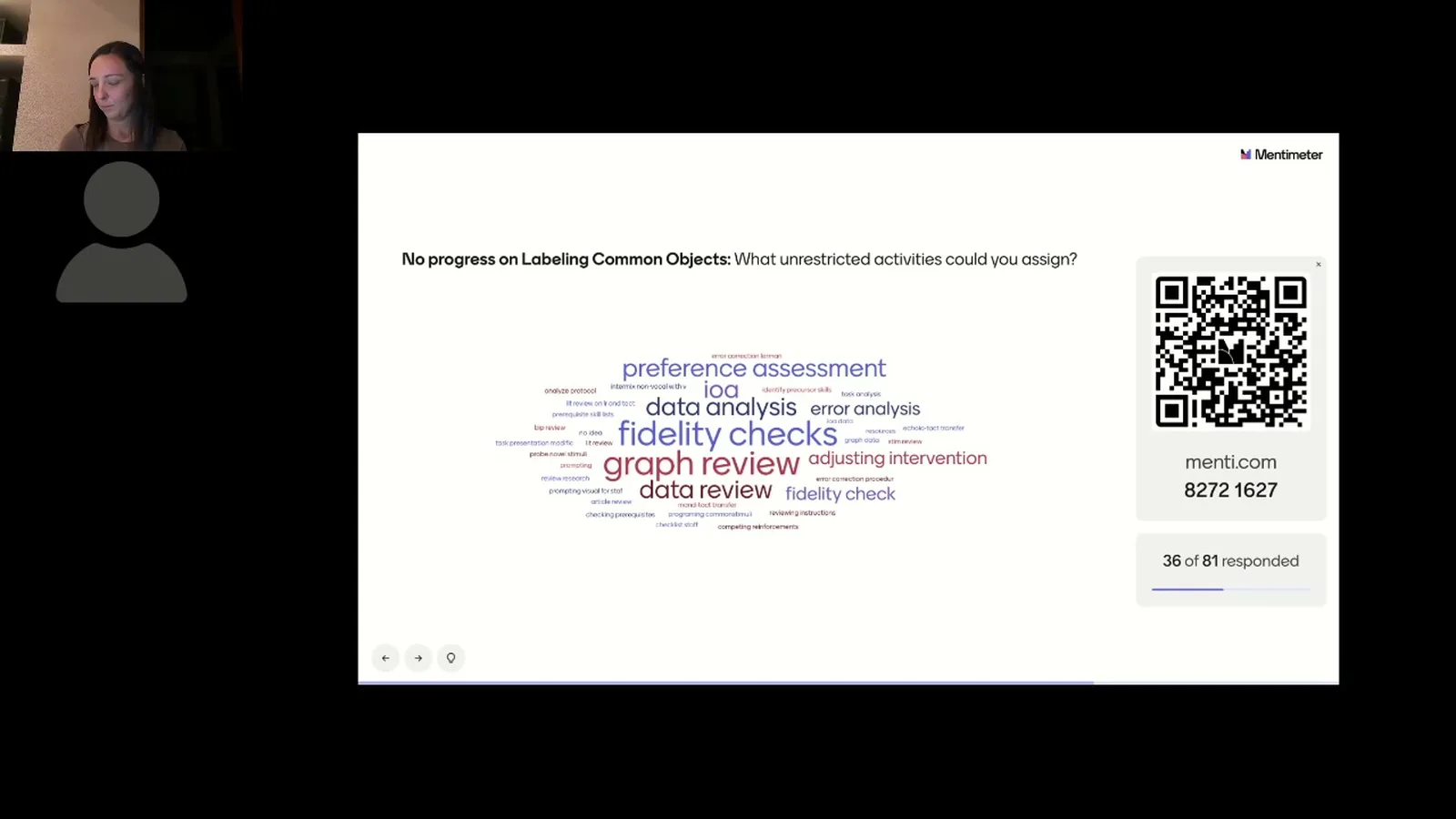
The room proved it live. For a learner who is stuck on labeling objects, attendees listed a fidelity check (is staff running it as written), interobserver agreement data (two people score the same thing), error analysis (looking at patterns in mistakes), a preference assessment (finding what a learner likes), probes with new materials, a prompting review, and a check on prerequisite skills (skills needed before this one). For rising aggression they listed ABC data sheets (antecedent, behavior, consequence notes), another fidelity check, an intervention review, and a full FBA.
Big tasks get broken into steps. An FBA can fill several weeks on its own. One week on writing definitions. The next on building the ABC sheet. Then graphing the data and learning to read it. Donovan also assigns a time estimate with each task, because a job that should take an hour should not take ten. She noted the 2027 requirements are stricter, and the work has to involve a real learner rather than made up data.
The last move is teaching trainees to bring you their own proposals. They still need your approval before they run anything. But a trainee who asks to run a fidelity check across staff has saved you the assignment and is already motivated to do it. That is a skill you teach on purpose, one generalization at a time.
One clinical situation can create so many meaningful unrestricted opportunities.
From the talk — Lauren Donovan
Use BST Without Missing Your Deadline
BST (tell, show, practice, then feedback) is the standard here. The board names it as a core part of effective supervision, and we all know the research. Donovan's honest read is that most of us drop it the second a deadline shows up.
Her fix is to run both tracks at once. You write the report and meet the deadline, and your version is the one that gets submitted. The trainee writes on the same data as a teaching task. Then you compare the two documents and walk through how you got to yours. If a full plan is too much, give them one section instead of the whole thing.
She also warns against handing out tasks before you have taught them. Prepare the trainee. Model the work. Give the background knowledge first. Let them watch you make the clinical decision out loud and narrate the steps. Train one thing at a time if that is all the week allows.
Then the whole thing loops. Assess, set goals, teach with BST, observe, give timely feedback, and reassess. Donovan pointed out that this is the same logic we already use when we program for learners. Her argument is that strong systems cut the administrative drag, which leaves more of your attention for the supervision itself.
Someone's working through their first treatment plan. You still have a deadline so I I suggest you do both, right?
From the talk — Lauren Donovan
Common questions
What is wrong with measuring supervision by hours?▾
Hours tell you when someone showed up, not what they can do without help. A trainee can finish an activity once and still not be able to repeat it alone. Donovan's point is that fieldwork exists to build an independent clinician, not just an exam candidate. That means you need a record of skills, not only a record of time.
How do I assess a supervisee's skills if I do not have a formal tool?▾
Start with three buckets: knowledge, application, and performance. Ask them to define and explain the concept, then talk through a scenario or a real graph, then watch them do the actual task. Rate each one on a simple scale like not demonstrated, emerging, proficient, and independent. One consistent scale you will actually use beats a detailed system you abandon.
What counts as a good unrestricted activity?▾
Anything tied to a real clinical need that builds skill for independent practice. One learner who is not progressing can generate a fidelity check, interobserver agreement data, an error analysis, a preference assessment, and a graph review. Assign a time estimate with the task so it does not balloon. Under the 2027 requirements the work has to involve a real learner, not made up data.
Can I use this kind of tracker with RBTs?▾
Donovan said yes, with edits. The full version is fairly deep for an RBT (a registered behavior technician), and most people supervise a lot of them at once. Build something similar with the skills and assessment methods that match their actual role. Keep it light enough that you can complete it for everyone on the team.
How do I use BST when I am already behind on deadlines?▾
Run both tracks on the same data. You write the report on time and submit your version, and the trainee writes theirs as a teaching task. Afterward, compare the two and show your reasoning. If that is still too much, assign one section of the document instead of the whole plan.
About the speaker
Lauren Donovan is a behavior analyst who supervises trainees for both the BACB and the QABA. She works independently as a consultant, helping organizations and individual clinicians strengthen their supervision systems and clinical quality, and she works internationally after time based in Dubai and Abu Dhabi. This session is the second in her three part supervision series with The Behaviorist Bookclub.
This summary was generated from the recording’s transcript. Quotes are taken word for word from the talk.
What you'll learn
- 11. Participants will be able to describe limitations of supervision models focused primarily on time requirements. 2. Participants will be able to identify methods for assessing supervisee skill levels 3. Participants will be able to describe one approach for tracking supervisee progress
Concepts in this CEU
Related talks
Talks that cover the same concepts

Press Pause: What the RBT 40-Hour Training Was Really Meant to Do
Bowsprit Consulting LLC
Building a Supervision System That Actually Works
The Behaviorist Bookclub
Supervising Beyond Technical Skills: Professionalism, Communication, and Clinical Judgment
The Behaviorist Bookclub
Is It Technical or Relational? A Framework for Pinpointing Caregiver Collaboration Breakdowns
Parenting with ABA
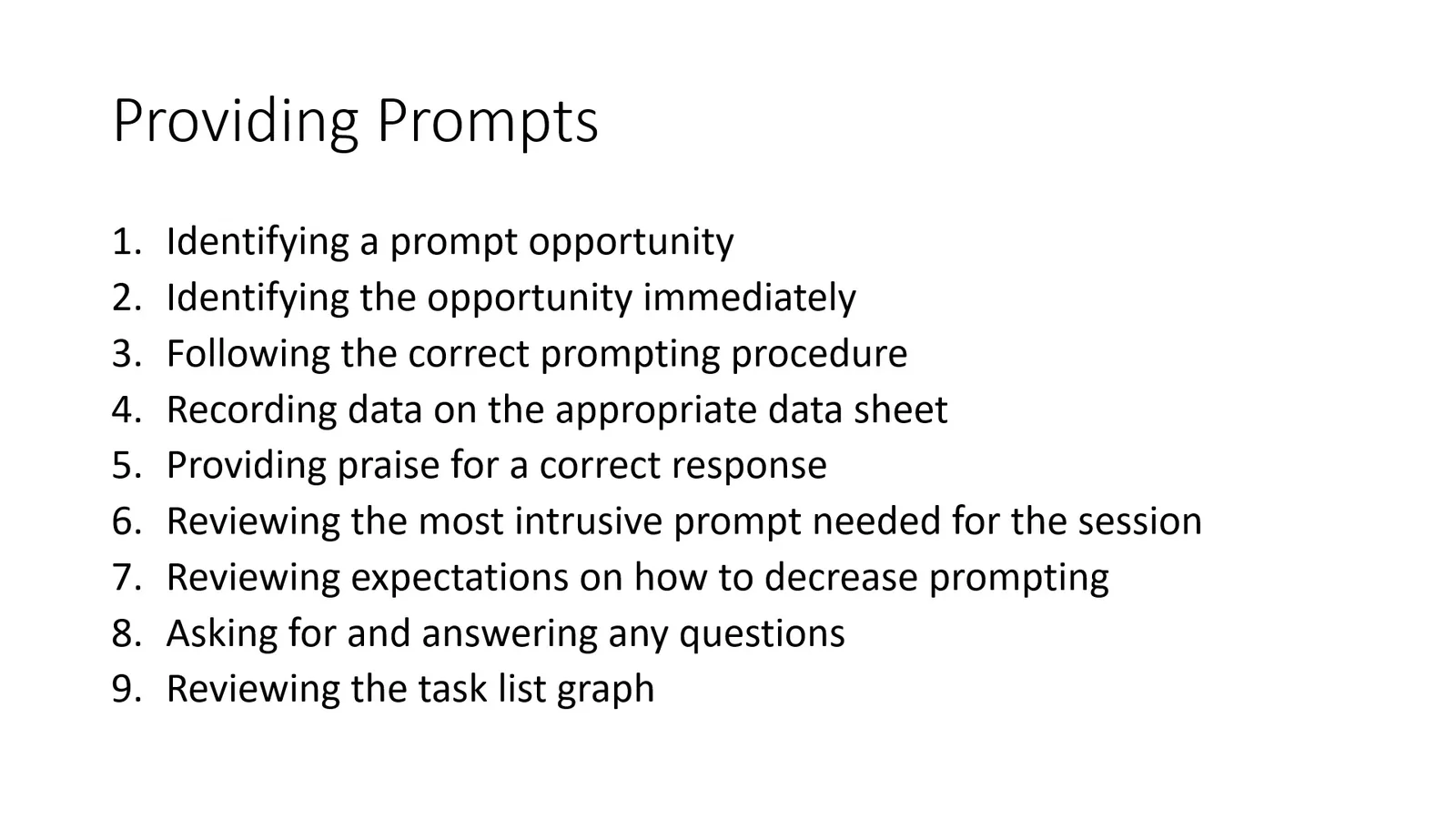
Toward an Evidence-based Supervision Model: Training Students in Independent Fieldwork
Willow Mentorship & Consulting, LLC
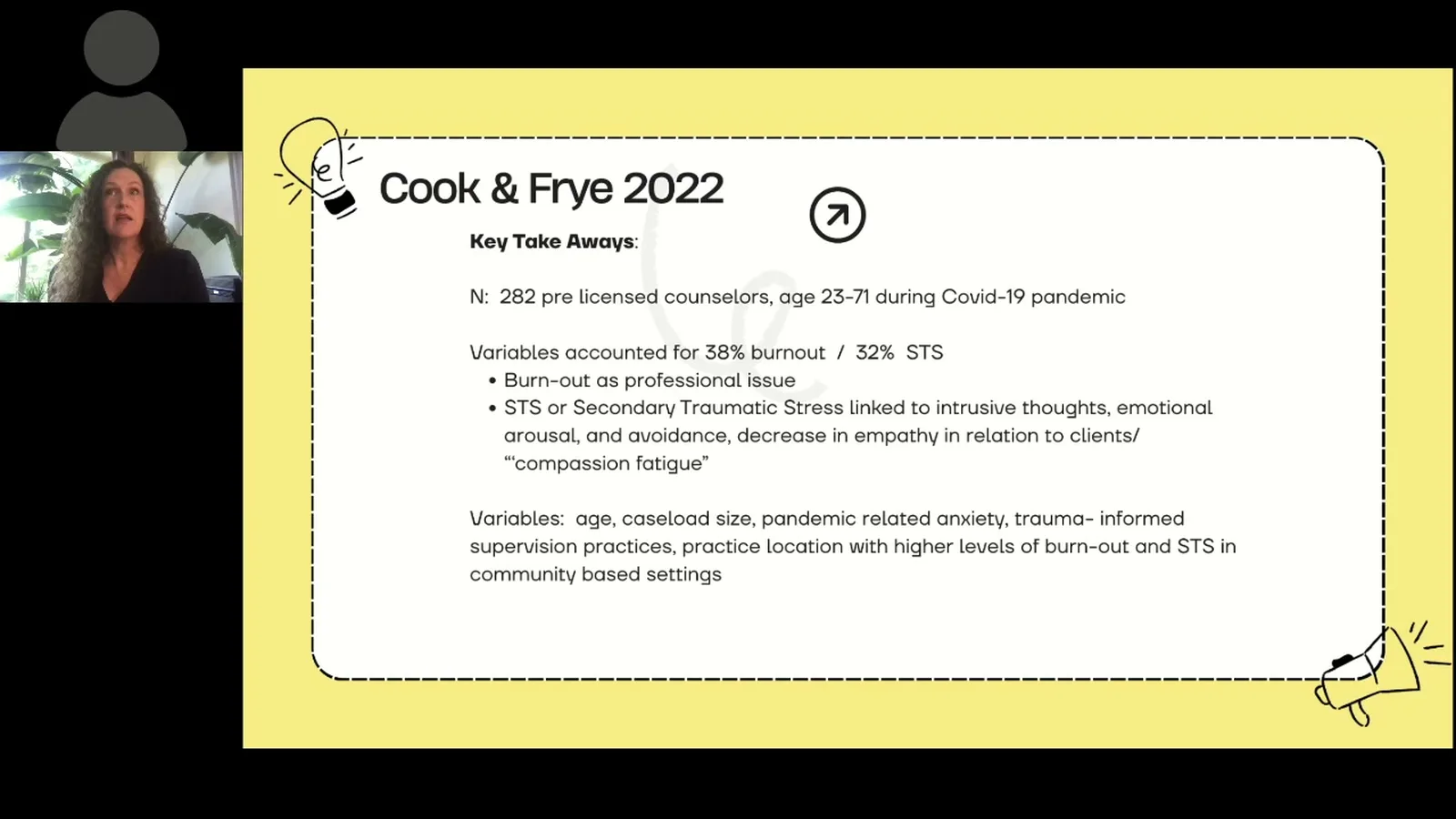
Reflective Supervision and Provider Outcomes in ABA
The Behaviorist Bookclub
More from The Behaviorist Bookclub
OpenCEU is supported by advertising from third-party sponsors. Sponsors are clearly labeled, have no influence over course content, instructors, or CEU decisions, and never appear on certificates. The BACB does not sponsor, approve, or endorse OpenCEU sponsors or their products.