Functional Analysis in ABA, Explained
A functional analysis tests why a behavior happens by manipulating the environment. Learn what it proves, how to pick a format, and when to run one.
Key takeaway
A functional analysis is a test that shows why a behavior happens. You change one thing in the environment at a time. Then you watch if the behavior goes up or down.
Confessions of a New Behavior Analyst in Functional Analysis
Free learning path on this topic
Child Development for Behavior Analysts
Typical development for behavior analysts. Kristen Byra's overview, then Kelly Brzak's deep dives on ages 2 to 5, 6 to 8, and 9 to 11, with milestones, common problem behaviors, and programming tips for each band.
Experts who cover this
10 recordings on openceu cover functional analysis.
- Featured talk2.50 CEUs
Confessions of a New Behavior Analyst in Functional Analysis
Matt HarringtonThe Behaviorist Bookclub
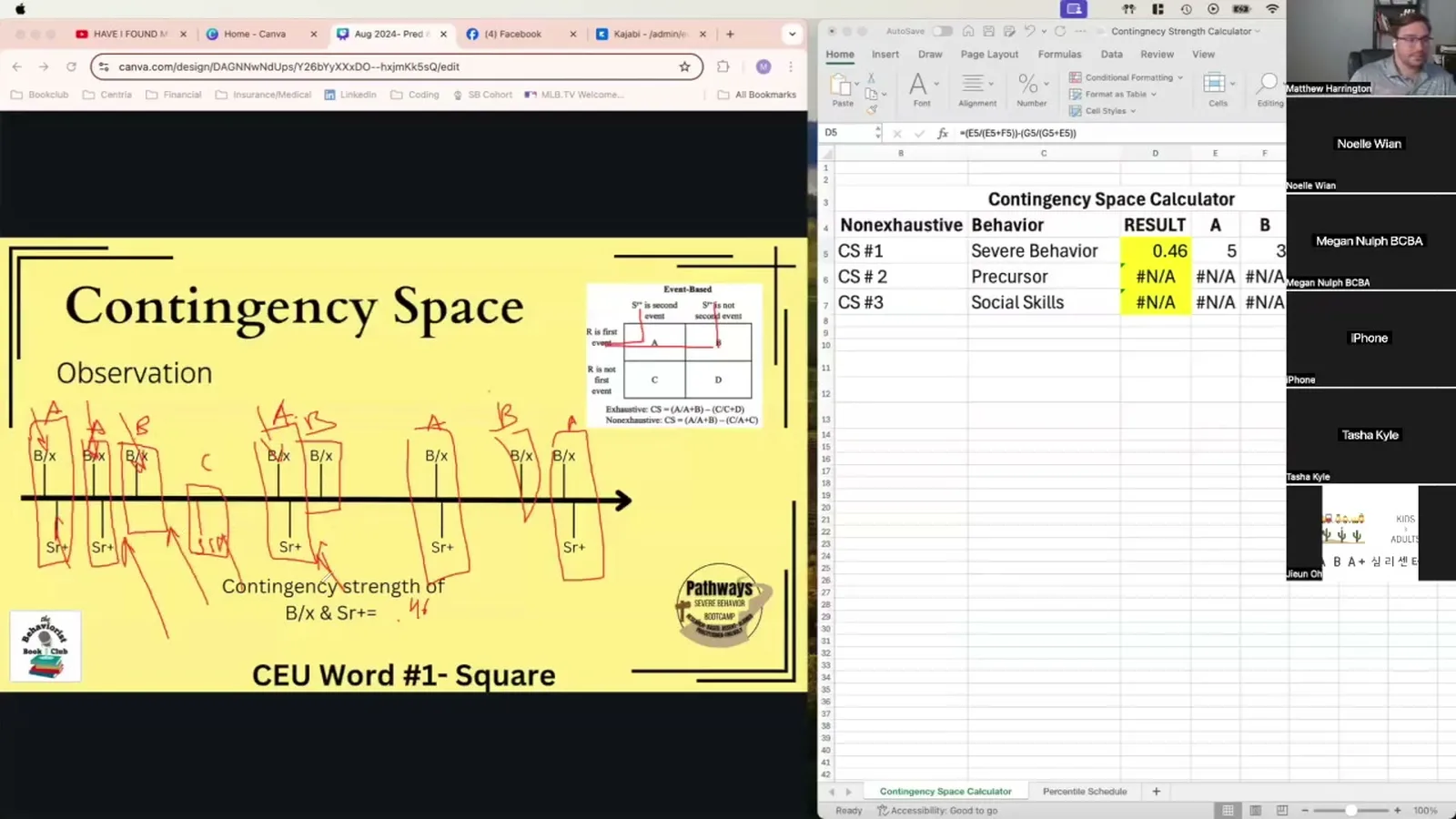
The talk reframes functional analysis as a broad search for an if-then relationship between behavior and environment rather than a rigid Iwata-style protocol…
- 1 CEU
From Research to the Applied Setting: Breaking Down the Three-Legged Stool of "Evidence Based Practice"
Dr. Jessica OsosCopper Consulting Group
Functional analysis is used repeatedly as the example of a structured, evidence-based assessment that must precede intervention selection; skipping it is…
- 2.50 CEUs
Solving Clinical Challenges with Research
Matthew HarringtonThe Behaviorist Bookclub
Determining whether the function of a behavior is correct is treated as the first branch point in both search-term examples and case study 1, where escalating…
- 2.50 CEUs
5 Days of Manding Mastery
Matt HarringtonThe Behaviorist Bookclub
Listed as the required first step of FCT, with a preference for fast, efficient variants (brief FA, latency-based FA, single-session assessments) over lengthy…
- 3 CEUs
12 days of PFA & SBT
Matt HarringtonThe Behaviorist Bookclub
Used throughout as the comparison condition against the ISCA: isolating attention, escape, and tangible conditions separately repeatedly failed to…
- 1.50 CEUs
Hey, Chillax Man! Understanding the Logic of Anxiety
Dr. Clelia SigaudThe Behaviorist Bookclub
Matt ran a functional analysis (an IISCA-style interview-informed synthesized contingency analysis) on the client and found a synthesized contingency of access…
- 1 CEU
Research to practice - extending past the pages
Matt HarringtonThe Behaviorist Bookclub
Used to illustrate that demographic and resource context matters when applying research: an FA run under constant nurse supervision in a hospital setting may…
- 1 Supervision CEU
Delegating with Confidence: Training and Supervising RBTs to Support Assessments
Dr. Jessica OsosCopper Consulting Group
Functional analysis is mentioned as outside the scope of 97152/technician-supported assessment, associated instead with the older, soon-to-be-retired T-codes…
- 1 CEU
Stronger Together: Care Collab
Matt HarringtonThe Behaviorist Bookclub
Used as an analogy for why care collaboration needs a purpose: just as you wouldn't run a functional analysis unrelated to the intervention you're building…
- 2 CEUs
Prediction and Probabilities: Three foundational equations to successful behavior reduction
Matt HarringtonThe Behaviorist Bookclub
Referenced through its attention/demand test conditions as the clearest example of a contingency strength of 1, since every occurrence of behavior contacts…


On this page · 9 sections▾
A functional analysis is a test that shows why a behavior happens. You change one thing in the environment at a time. Then you watch if the behavior goes up or down. If the behavior spikes when a task gets hard, escape is likely the reason.
This matters because the right treatment depends on the right cause. A plan built for the wrong reason often fails. So the functional analysis is the step that points every other choice in the right direction. It is a functional behavior assessment, meaning a way to find out what keeps a behavior going.
What a functional analysis actually tests#
Speakers across these talks keep landing on one idea. A functional analysis proves cause, not just correlation. Dr. Joshua Jessel calls it the medical equivalent of an allergy test. It is the one method that shows real control over the behavior.
Dr. Tom Szabo uses the same allergy picture. You expose the person to different conditions. You see which one reliably drives the behavior up. When escape from a task makes it spike, you know the reason is escape, not attention. The contingency, the if-then link between behavior and reward, becomes clear.
The functional analysis is really the comparable assessment to other health professionals because it's the only empirical demonstration of functional control.
From the talk — Dr. Joshua Jessel
Jessel also names a hard truth. This is the only part of the whole process where you plan to trigger the behavior and reward it. That is what makes the test honest. You are not guessing from notes. You are watching the behavior respond in front of you.
It is a question, not a fixed recipe#
Matt Harrington pushes hard on one point. A functional analysis is not a rigid protocol you copy step for step. It is a search for an if-then relationship. You need at least one test condition and one control condition. Everything else can flex.
That view frees clinicians from treating one 1980s method as the only real version. The classic Iwata format still has hundreds of replications behind it. But it is not the only door in.
Functional analysis is absolutely not a set of formal procedures set forth by Iwata et al. 1984-92 and meant to be taken in stone at that moment. It's not the Ten Commandments of functional assessment.
From the talk — Matt Harrington
The takeaway is simple. Ask what question you are trying to answer. Then pick the test that answers it for this person.
Why you run one before you treat#
Skipping the assessment is a common and costly mistake. Dr. Jessica Osos shows case after case where teams jumped to a plan with no test. The plan misses because it targets the wrong function. A bite maintained by escape needs an escape-based plan, not an attention one.
Matt Harrington frames it around purpose. You would never run an assessment with no goal for the treatment. The only reason to find the function is to make an intervention work better. If you run a test on a behavior that has nothing to do with your current plan, you waste time.
The problem is that they skipped a structured assessment, so they don't do an FA.
From the talk — Dr. Jessica Osos
So the test is not busywork. It earns its place by feeding a specific treatment decision.
Picking the right format for the person#
 Advertisement
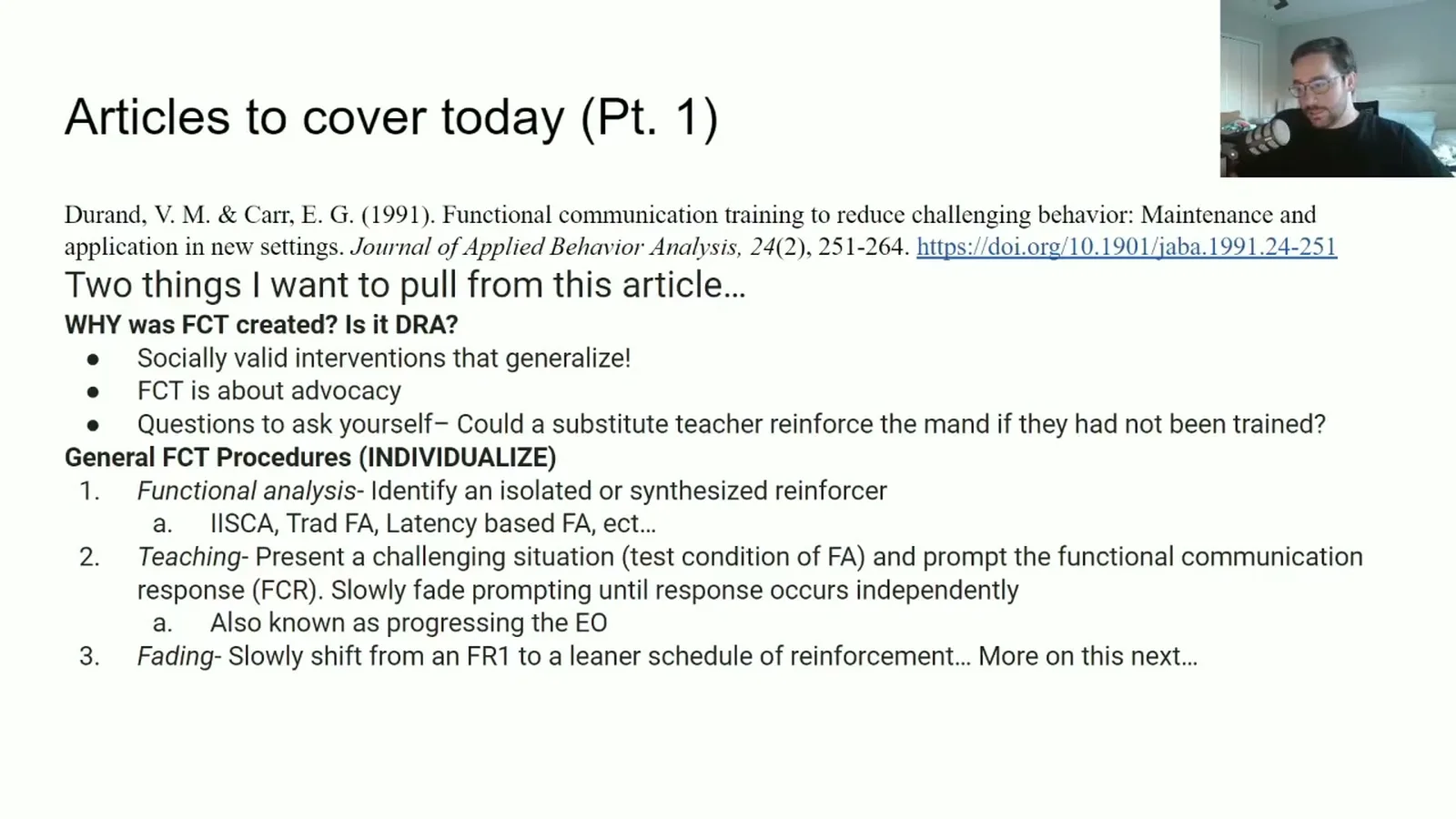
There is no single functional analysis. There is a menu. Matt Harrington lists the options across two talks. The standard Iwata-style test. The brief version. The latency-based version. The trial-based one. The practical functional assessment, or PFA. Each trades length for a different kind of information.
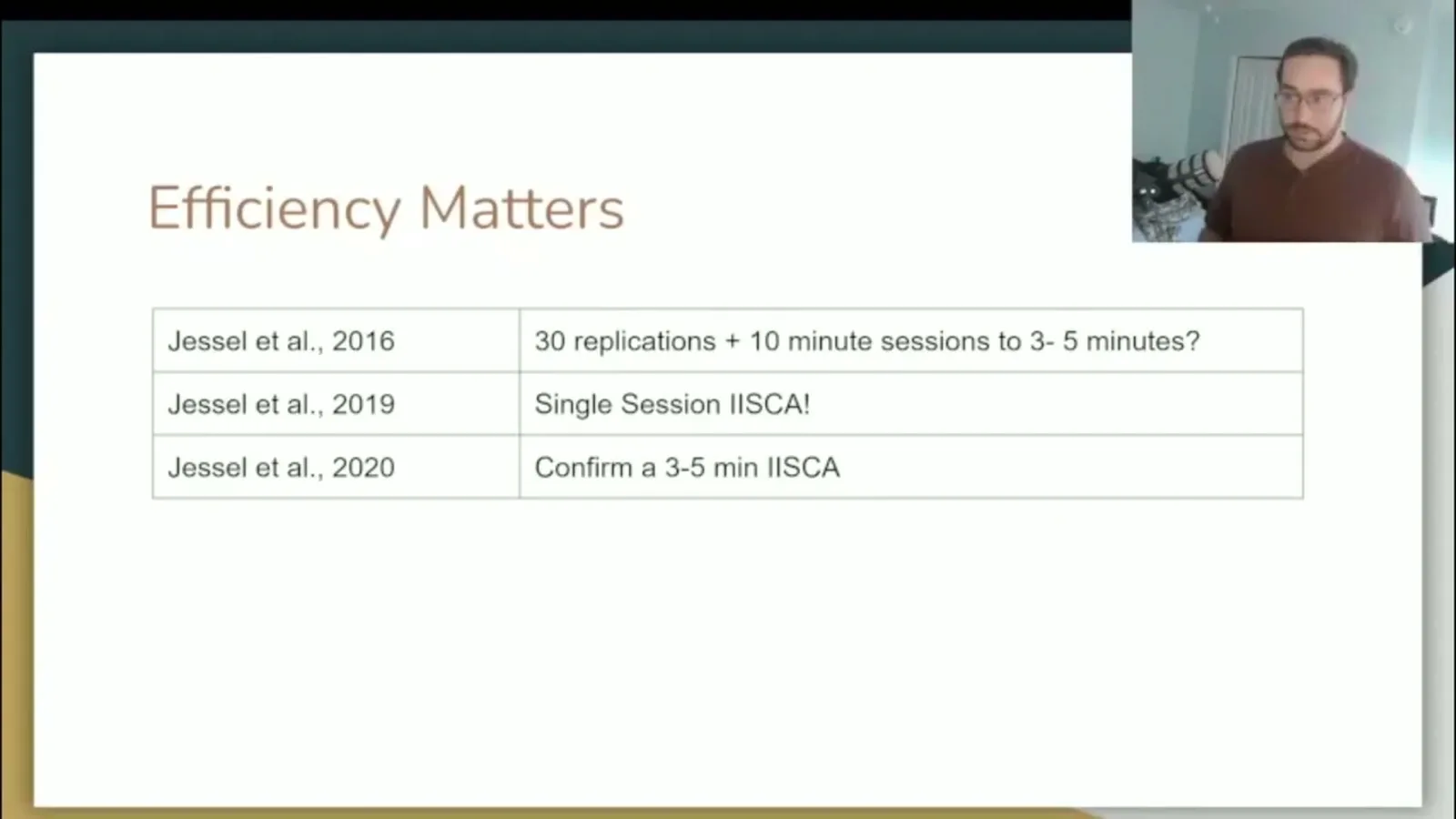
Speed often matters. Jessel notes the standard test averages around three hours. Shorter formats can protect that same strength of control while cutting the time. In manding work, teaching a learner to ask for what they want, Matt favors fast options like a brief or single-session test. That keeps the assessment from becoming the whole engagement.
The choice also depends on the setting and the person. Aggression in a school is not the same job as self-injury in a clinic. You may lean on a visual review of existing graphs, or you may need a full test. The point is to match the tool to the case, not to a research camp you happen to like. Two of these formats, the trial-based functional analysis and the telehealth functional analysis, are their own topics worth reading on their own.
Isolated versus synthesized contingencies#
One live debate runs through these talks. Do you test each reason on its own, or combine them? The isolated approach checks attention, escape, and tangible items separately. The synthesized approach tests a real-life mix at once.
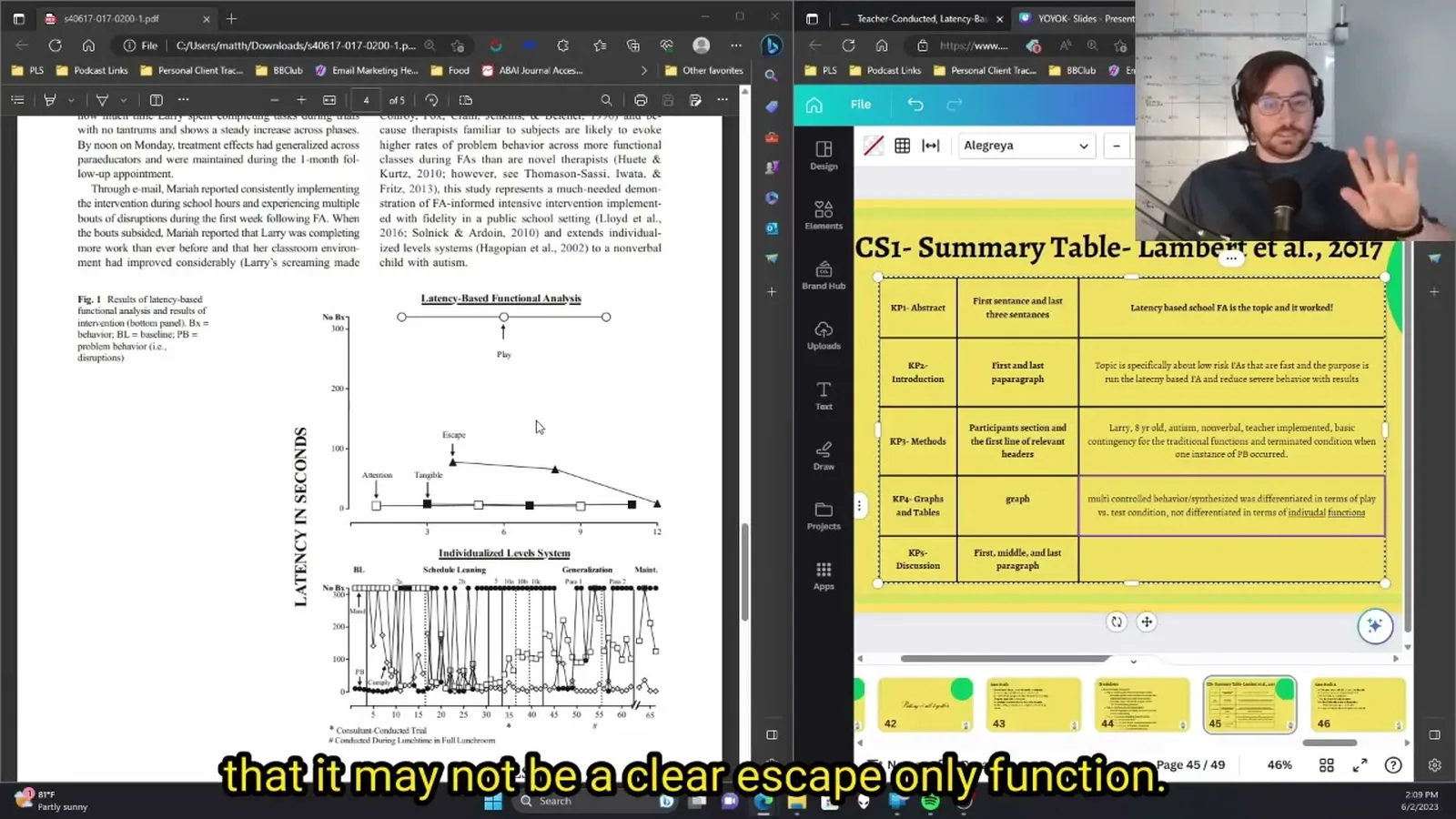
In the PFA and skill-based treatment talk, Matt shows a case where the isolated test never differentiated. The lines on the graph stayed flat and told him nothing. The synthesized condition found a clear reason fast. In an anxiety case, that same synthesized test revealed access to preferred activities plus escape from a hard transition, both together.
Feeding cases add a wrinkle. Matt notes that a test often shows escape and attention as dual functions. There is real debate over whether attention is a true function or just an artifact of the test setup. Good clinicians hold that question open instead of assuming the graph is gospel.
The clean-lab problem#
A functional analysis can be too tidy. Dr. Shane Spiker argues that these tests are often cleaner than real life. The natural world does not arrange itself the way a test room does. Stripping out every messy antecedent, the thing that happens right before a behavior, can also strip out the teaching moments a learner needs.
Context is the other catch. Matt Harrington points out that a test run under constant nurse supervision may not transfer well. A group home with a five-to-one ratio just cannot match that setup. A test that works in a hospital may become "functional analysis in quotes" once it moves to a school. The conditions that made it clean may not exist where the person actually lives.
the natural world is not arranged in the way that FAs are arranged.
From the talk — Dr. Shane Spiker
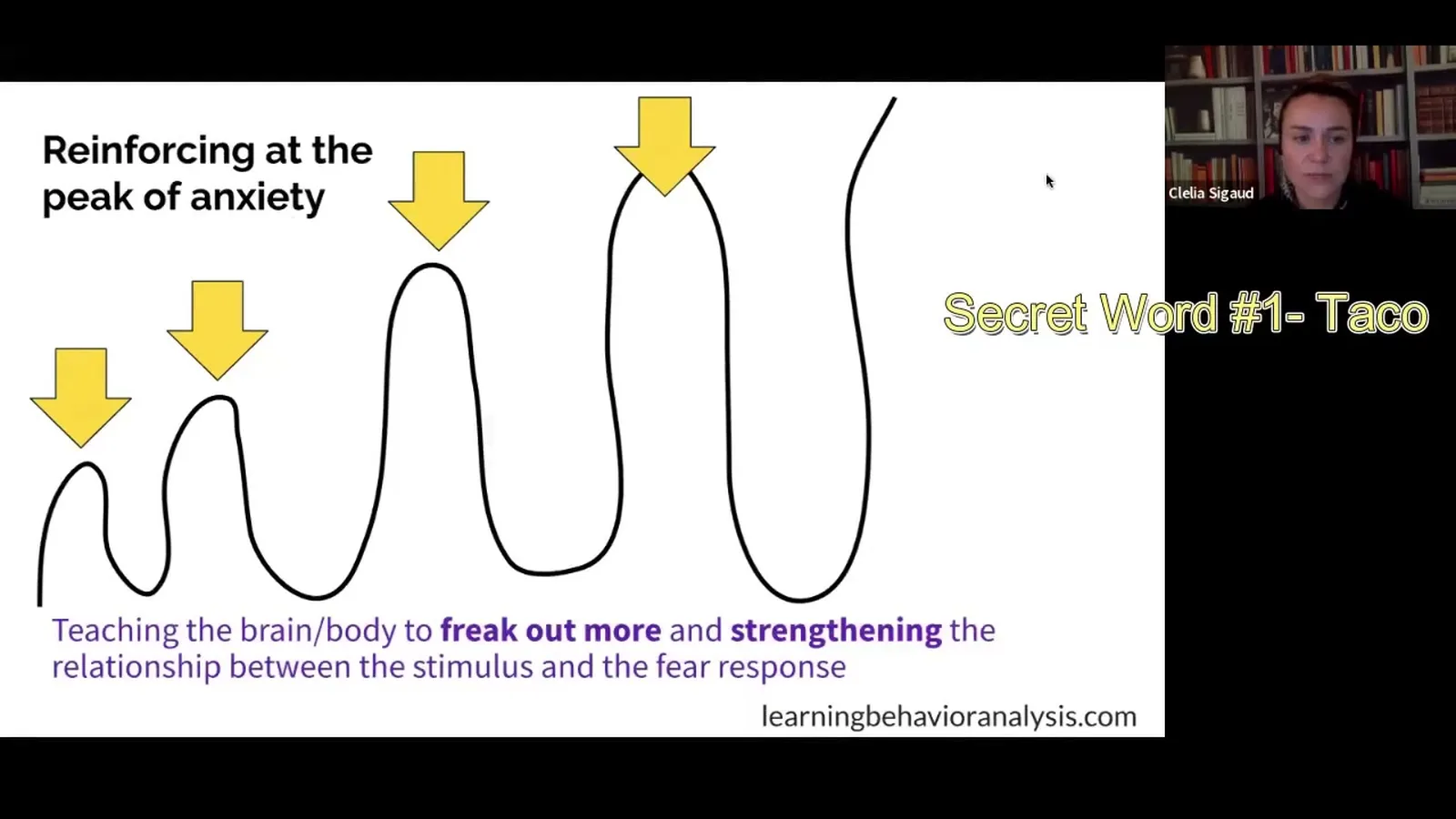
There is a reason these tests produce such strong, clear patterns. In a demand or attention condition, every single instance of the behavior gets rewarded. Matt calls that a contingency strength of one. It is great for showing a function. It also builds a strong habit fast, which is why you close the test with care.
Where the method came from#
The functional analysis did not appear overnight. Stephanie Peterson traces it back to Brian Iwata's work, which grew out of basic research on reinforcement. That lab science became an applied technology. Then that technology changed everyday practice for assessing and treating problem behavior.
That history is the whole point of evidence-based work. A principle gets studied, turned into a usable method, and refined for the field. The functional analysis is one of the clearest wins in that chain.
What the research says#
Recent papers back up the flexible, decision-driven view these speakers describe.
A 2025 guide helps newer clinicians decide when to include specific test conditions. It also covers how to pick a method for a given case, with a focus on safe and ethical practice across settings (Brown, Helvey, Kranak, & Lavin, 2025).
A 2025 survey asked fifteen experts how they choose among eleven test variations. They stressed considering multiple methods rather than defaulting to one, which echoes Matt Harrington's core message (Hoffmann & Boyle, 2025).
A 2025 study compared a standard test with a trial-based test, this time in dogs, and got matching results. That supports embedding test conditions in natural settings (Salzer, Dozier, DiGennaro Reed, & Reed, 2025).
Frequently asked questions#
What is the difference between a functional analysis and a functional behavior assessment?
A functional behavior assessment is the broad process of figuring out why a behavior happens. It can include interviews, observations, and rating scales. A functional analysis is one specific, hands-on part of that process. It is the experiment where you change conditions and watch the behavior respond. It is seen as the most rigorous option because it shows cause, not just a guess.
How long does a functional analysis take?
It depends on the format. Dr. Joshua Jessel notes the standard version averages around three hours. Shorter options exist for good reason. A brief, latency-based, or single-session test can cut that time a lot while still showing clear control. Clinicians often pick a faster format when time, safety, or setting makes a long test hard to run.
Do I always need a functional analysis before treatment?
You need to know the function before you build a plan. A functional analysis is the strongest way to find that function, but it is not always the only path. Sometimes a visual review of existing data points clearly to escape or attention. The real rule is simple. Do not start a treatment aimed at a cause you have not confirmed. Skipping that step is how plans end up targeting the wrong reason.
For a deeper case-based walkthrough, see Solving Clinical Challenges with Research. For the isolated versus synthesized comparison in action, see 12 days of PFA & SBT.
 Advertisement
Turn this topic into a CEU
You just studied this. Now get credit for it.
Watch Confessions of a New Behavior Analyst in Functional Analysis with Matt Harrington and earn 2.5 free BCBA CEUs. Detailed certificate, delivered the moment you finish.
Keep going with a free learning path
Child Development for Behavior Analysts
Typical development for behavior analysts. Kristen Byra's overview, then Kelly Brzak's deep dives on ages 2 to 5, 6 to 8, and 9 to 11, with milestones, common problem behaviors, and programming tips for each band.
Want the primary literature? Read the Functional Analysis in ABA, Explained research roundup on our sister site, Behaviorist Book Club.