Skill Deficit vs. Performance Deficit: Can't vs. Won't
A skill deficit means a person can't do it yet. A performance deficit means they can but don't. Learn how BCBAs tell them apart and pick the right fix.
Key takeaway
A skill deficit means a person cannot do a behavior yet. A performance deficit means they can do it, but they do not do it when it counts.
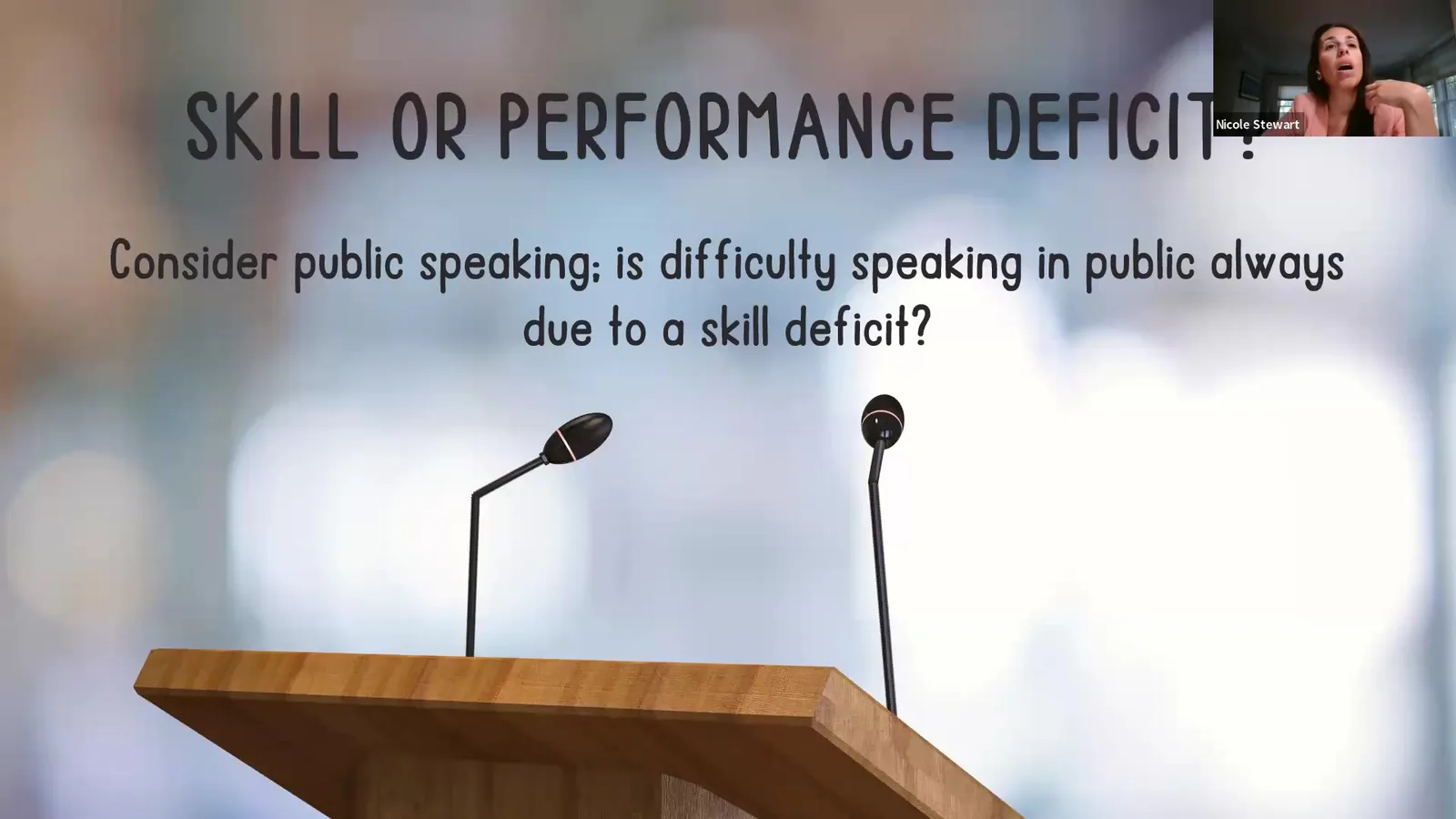
The ADHD Exchange: Social Skills: Performance or Skill Deficit?
Free learning path on this topic
Supervision, Done Right
Four supervision CEUs that build on each other. What reflective supervision is, how to build a supervision system, how to assess supervisee competence instead of counting hours, and how supervision affects provider outcomes. The BACB asks supervisors for three supervision CEUs per cycle. This covers it.
Experts who cover this
7 recordings on openceu cover skill deficit versus performance deficit.
- Featured talk1.5 Learning CEUs
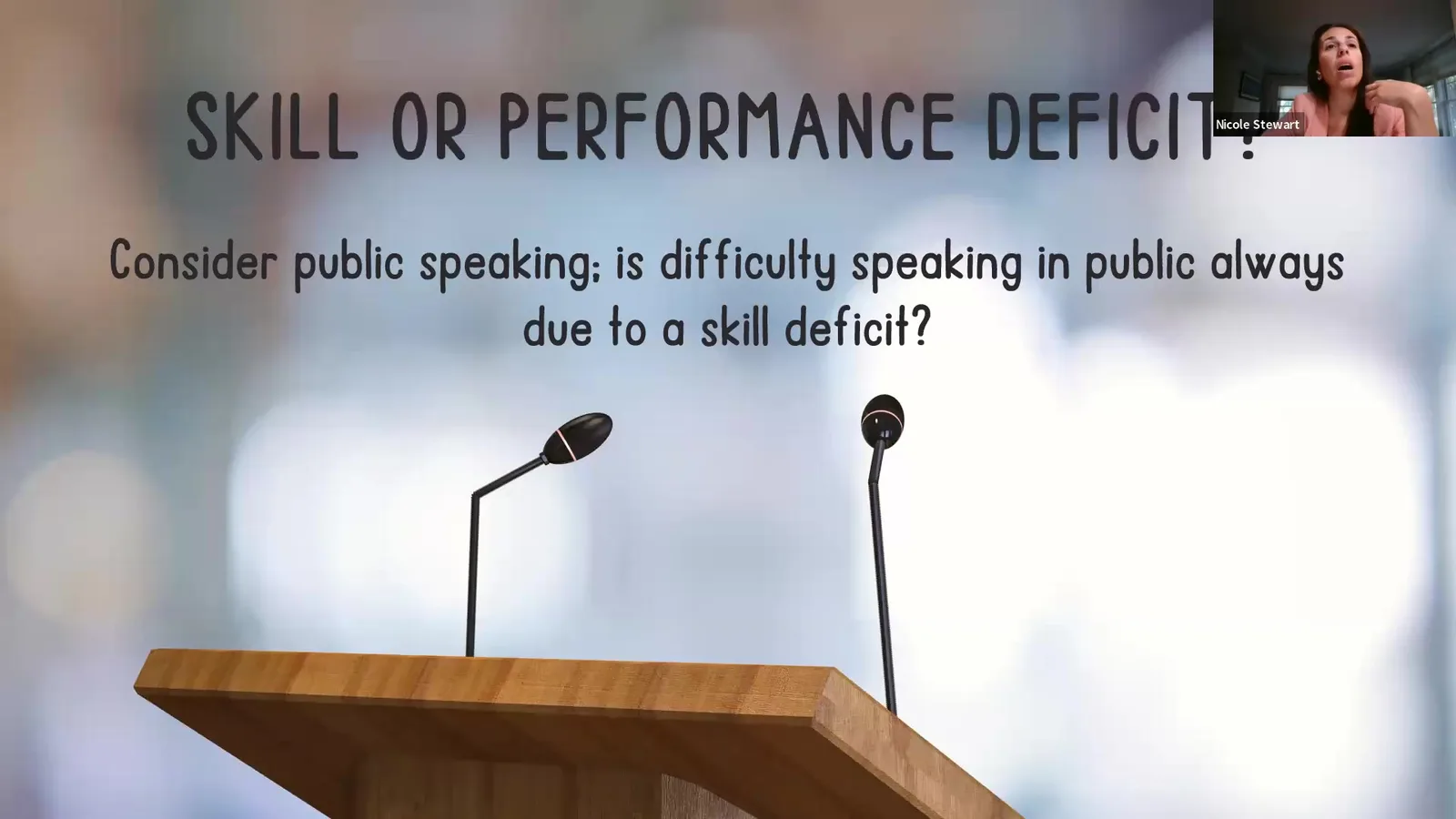
The ADHD Exchange: Social Skills: Performance or Skill Deficit?
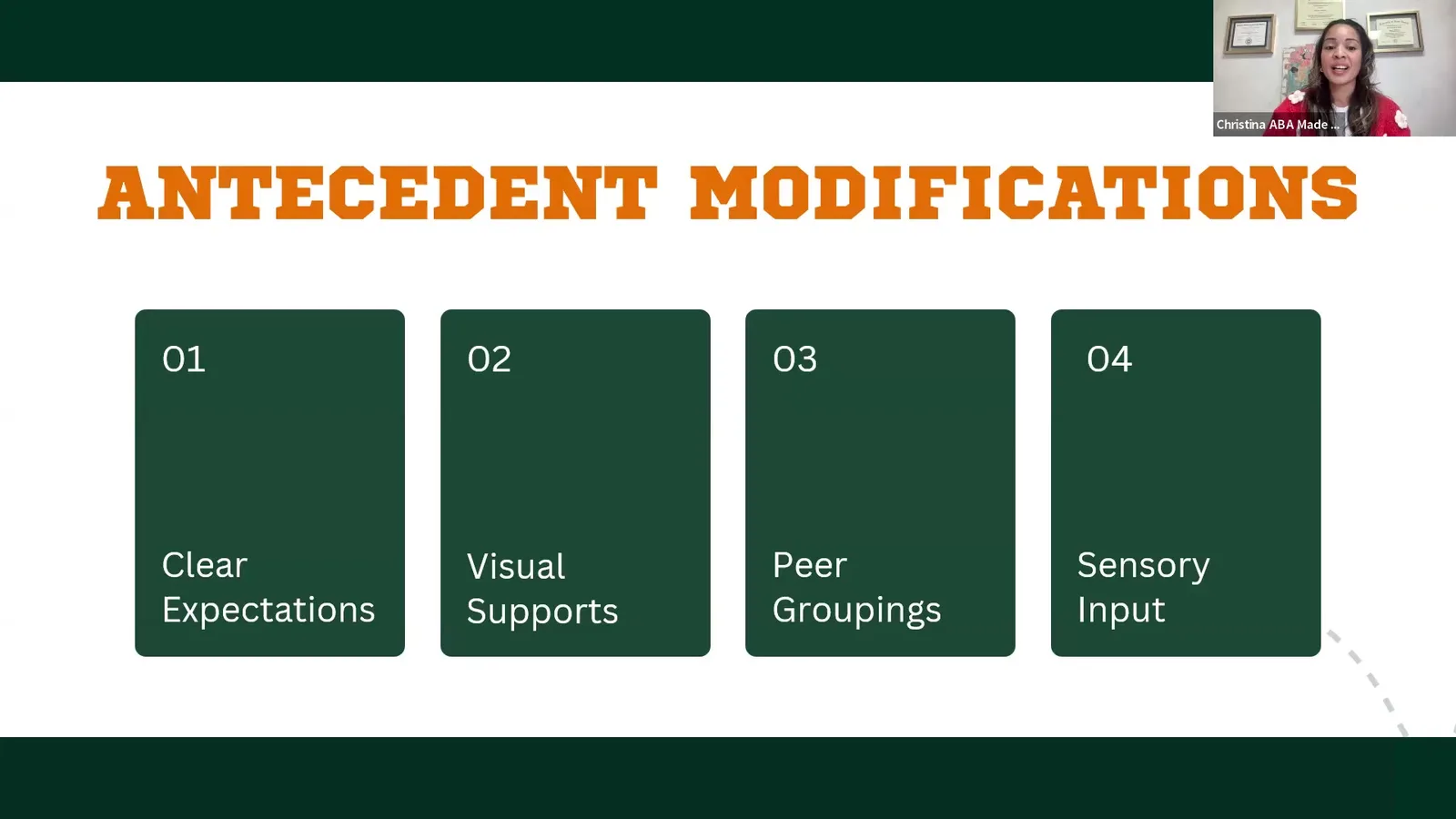
Nicole StewartABA Made Ez
Central theme of the talk: citing Aduen et al. (2018), Nicole explains kids with ADHD usually know social skills but struggle to perform them in the moment…
- 1 Supervision CEU
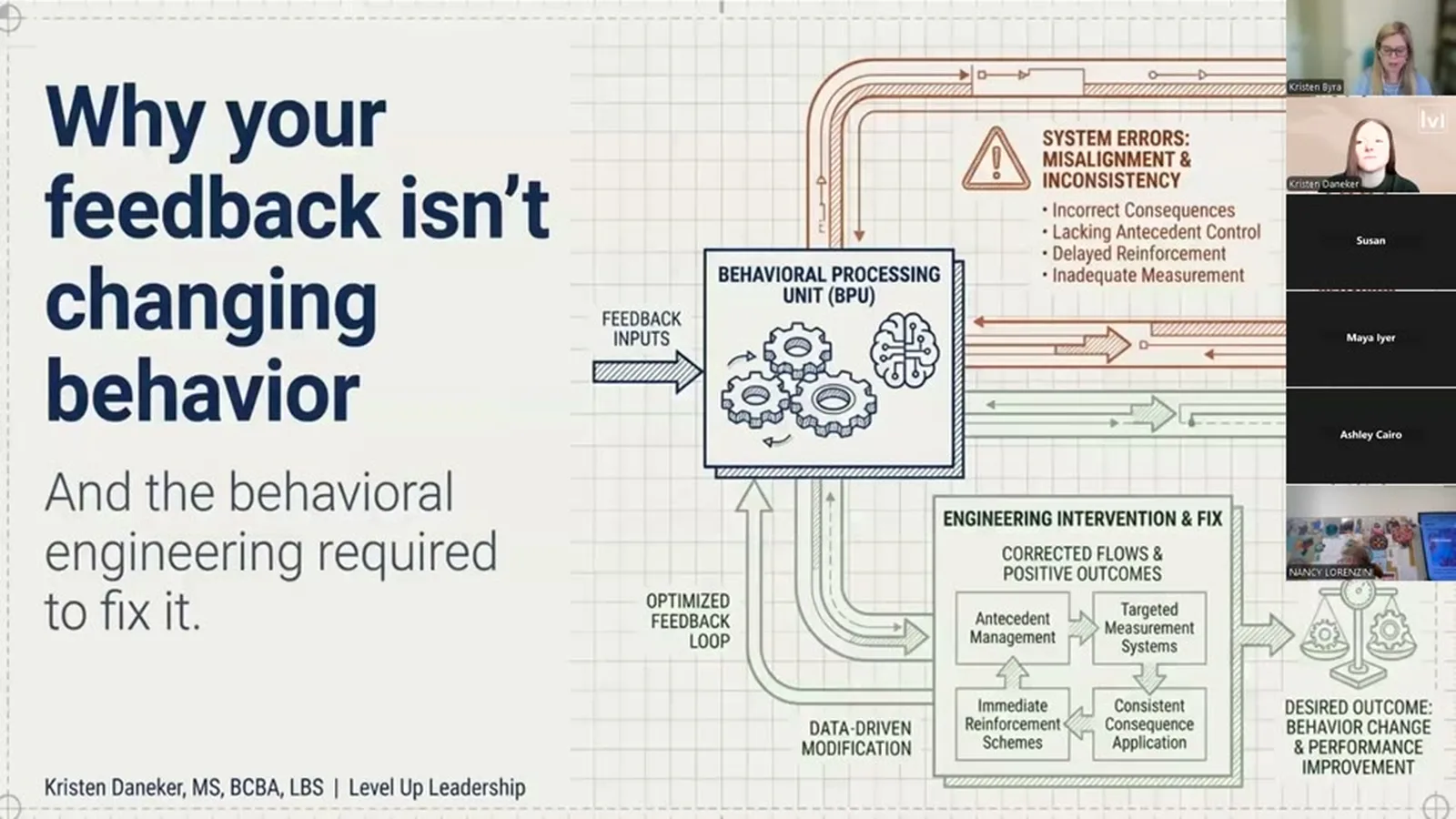
Why Your Feedback Isn't Changing Behavior
Kristen DanekerUpskill ABA
Daneker frames staff performance problems using a skill-versus-will quadrant model, arguing most supervisors overuse the 'will' (motivation/attitude)…
- 1 Learning CEU
When You’re Everyone’s Support: Building Sustainable Leadership.
Allyson MullinsBehavioral Wellness Coaching, LLC
Mullins presents three overlapping barrier categories a leader must distinguish before choosing an intervention: a true skill deficit, unclear…
- 1 Supervision CEU
The Supervision Breakthrough: Bringing Empathy to BCBA Supervision Through Behavior Science
Bailey PayneRooted Consultation, LLC
Payne instructs supervisors to diagnose whether a supervisee's failure to perform reflects a true skill deficit (lack of knowledge/training) or a performance…
- 1.5 Learning CEUs
The ADHD Exchange: Classroom Management: ADHD Behavior Management
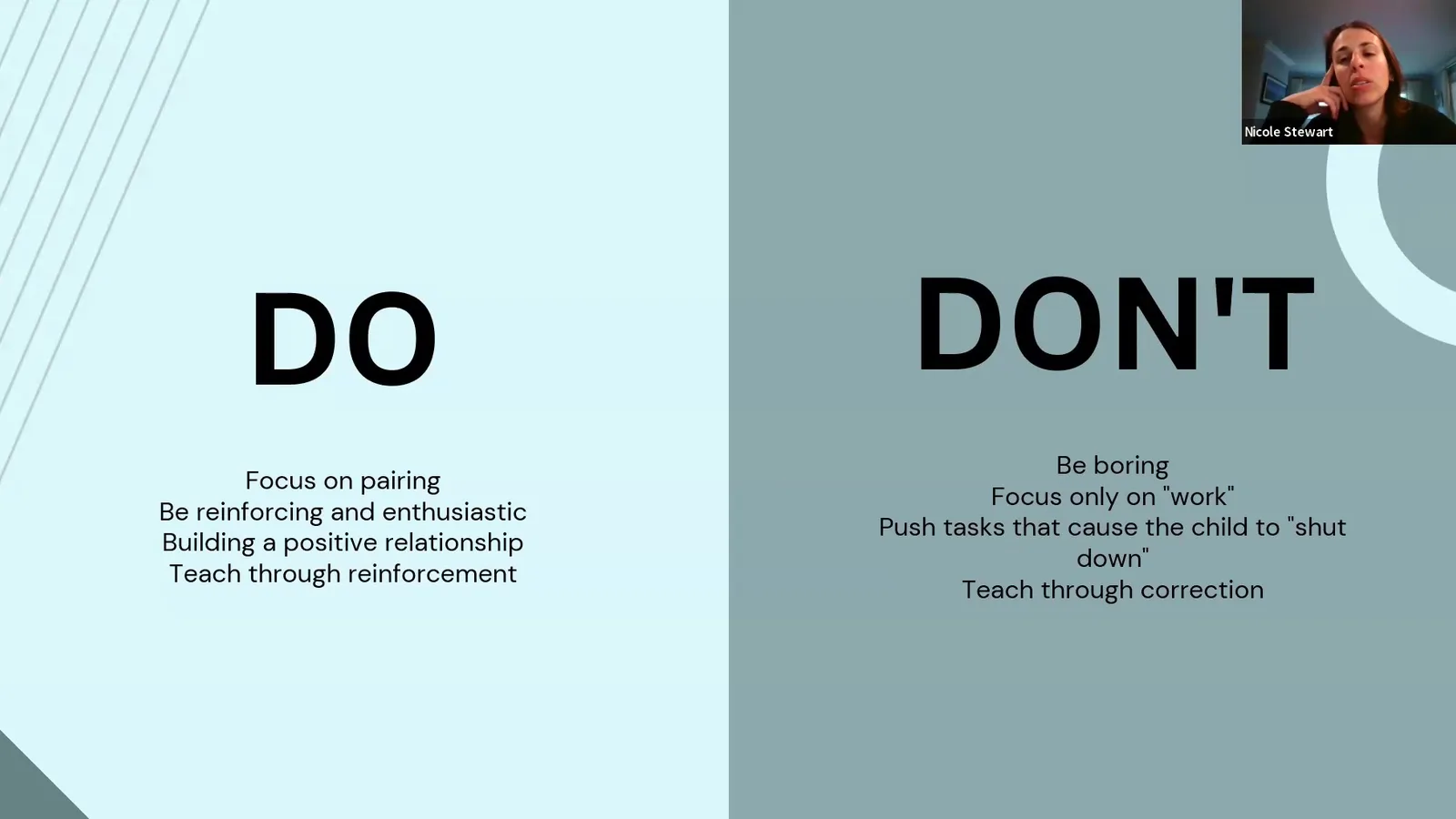
Nicole StewartABA Made Ez
Framed as a key diagnostic question for problem behavior in the classroom: determining whether a child lacks the skill to complete a task or lacks the…
- 1.5 Learning CEUs
The ADHD Exchange: Best Practices
Nicole StewartABA Made Ez
Used to analyze shutdown behavior: determining whether a child lacks the actual skill to do a task versus has the skill but lacks motivation, which changes the…
- 1 Supervision CEU
Practical Takeaways for School-Based Behavior Analysts
Dr. Kaci EllisThe Behaviorist Bookclub
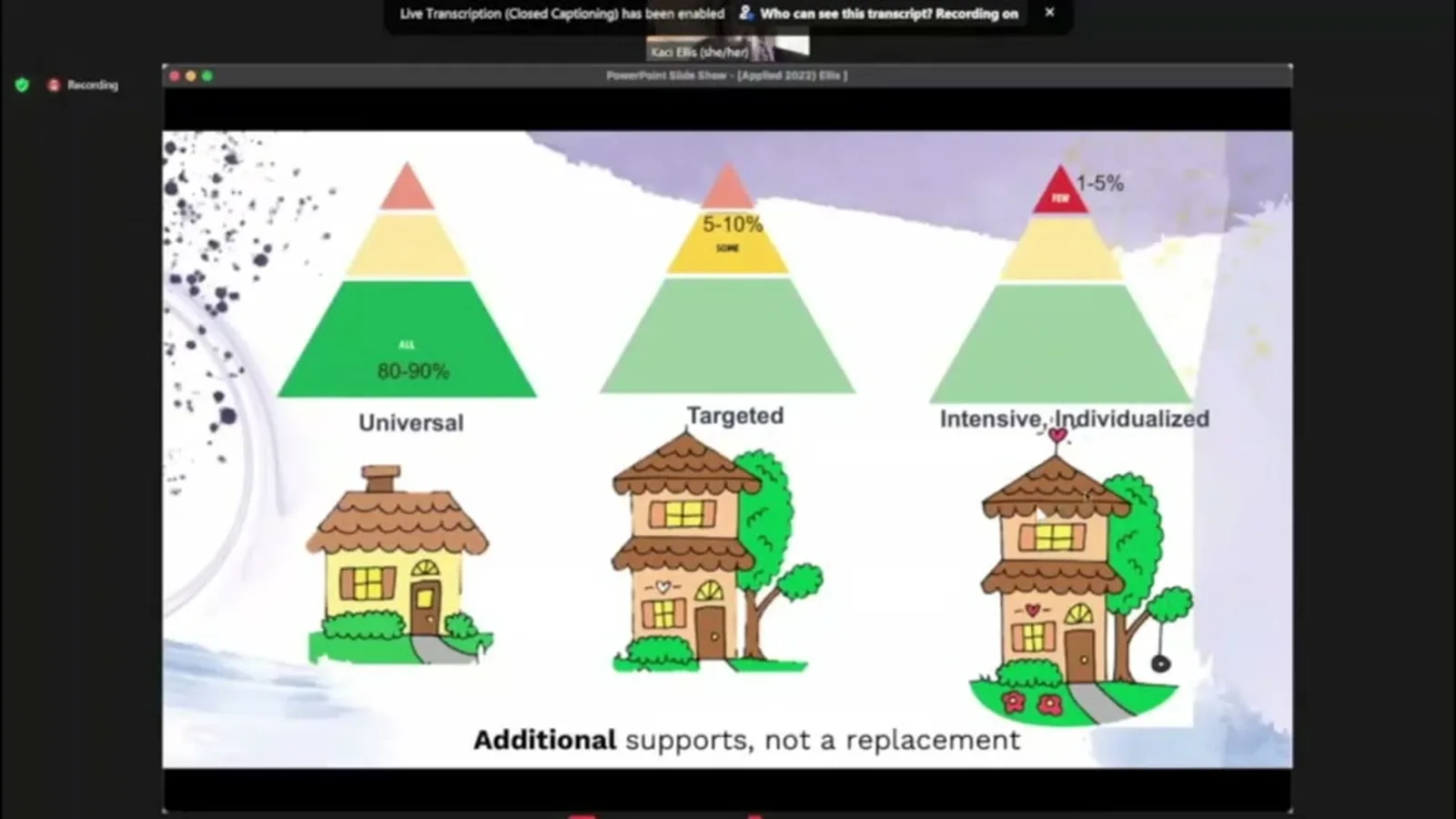
Used to sort tier two support needs: a performance deficit means the student knows how but doesn't want to, while a skill deficit means the student genuinely…

On this page · 11 sections▾
A skill deficit means a person cannot do a behavior yet. A performance deficit means they can do it, but they do not do it when it counts. The first is a "can't do" problem. The second is a "won't do" or "doesn't do right now" problem.
This difference matters because each one needs a different fix. Teaching more will not help someone who already knows how. More rewards will not help someone who never learned the skill. Below, seven behavior analysts explain how they tell the two apart with kids, students, and staff.
What "can't do" and "won't do" really mean#
A skill deficit is a gap in learning. The person has not been taught the behavior well enough to do it. A performance deficit is different. The person has the skill, but something gets in the way of using it.
Dr. Kaci Ellis, speaking about school-based work, put it in very plain terms. She uses this split to sort which supports a student needs.
"Performance deficit, they know how, they don't want to. So skilled or can't. Skill deficit, they don't know how."From the talk — Dr. Kaci Ellis
Ellis says a school should keep a "toolbox" of tier two supports. Tier two means extra help for a small group, added on top of class-wide supports. Some tools fit performance problems. She names behavior contracts, which are written agreements about expected behavior and rewards, and a token economy she called Chart Moose. A token economy is a system where a student earns tokens for good behavior and trades them in for a prize later. Other tools fit skill problems, where direct teaching is the answer. Picking the wrong box wastes time. It can also make the student feel like a failure. So the first job is always the same. Ask whether the person can do the skill at all.
Why ADHD social skills are usually a performance problem#
Nicole Stewart built a whole ADHD Exchange talk around this question. Her focus was social skills in kids with ADHD. She hears the same story from parents again and again. Class is fine. Structured groups are fine. But recess is a mess, and lunch is a mess.
Stewart says that pattern points to a performance deficit. The child learned the skill in a calm, structured setting. The trouble shows up in loose, busy settings with fewer cues. She pointed to a 2018 study by Aduen and colleagues. The team looked at 70 children, ages 8 to 12. About half had ADHD. They coded parent and teacher ratings for skill gaps versus performance gaps.
"so generally the conclusions are that people with adhd know what they're supposed to do but whether or not they can perform the skill in the moment is a completely different story"From the talk — Nicole Stewart
Neither group had trouble learning new social skills. But kids with ADHD were more likely to be rated with performance deficits. They were also less likely to be scored with strengths. Stewart called that finding "huge."
The "he knows better" moment#
Stewart made the idea personal. Her own son knows he should not call a friend a cheater. He knows it is rude. He did it anyway.
That is the heart of a performance deficit. Knowing the rule is not the same as following it in a hot moment. Stewart offered a simple comparison for adults. Think about public speaking. Many people know how to give a talk. They know to stand up straight and speak clearly. Yet their voice shakes, or they freeze. Is that a skill problem? Usually not. The skill is there. The moment makes it hard to use.
For BCBAs and parents, this changes the plan. Running another social skills group may not help much. The child can already pass the quiz. The work is helping the child use the skill in the real setting. That might mean more prompts at recess, rewards for using the skill in context, or practice in looser settings. Stewart's point is that motivation and setting are often the missing pieces, not knowledge.
Skill or will? Shutdowns and task refusal in class#
Christina Torres brought the same idea into the classroom. She shared it on two ADHD Exchange panels. Her short version is "skill or will." She tells parents and teachers to start there whenever a child refuses work.
"is it a skill deficit or is it a will deficit? Do they have the skills to accomplish this task? Are they, or are they, do they lack the motivation to accomplish it?"From the talk — Christina Torres
Torres links skill gaps to escape behavior. Escape means a child acts out to get away from a task. If a task is too hard, it becomes aversive, which means unpleasant. The child may shut down or act out to get away from it.
"Is it a skill or is it a will? Is it a skill deficit that they're lacking that's making it aversive and they want to escape?"From the talk — Christina Torres
Her fixes are practical. Cut the number of problems. Ask the child to circle just three out of ten. Offer choices so the child feels some control. Teach them to say "I don't understand, I need more help." That last one is functional communication training, or FCT. It gives the child a better way to ask for a break or help. Torres also models the task first. Sometimes a child just needs to see they can succeed.
The skill versus will quadrant for staff#
The same split works with adults. Kristen Daneker uses it to explain why feedback to staff often fails. She calls it a system failure: misdiagnosing the root deficit.
Daneker uses a four-box grid. One axis is skill, low to high. The other is will, low to high. In the low skill, high will box, you find an eager staff member. They want to learn and want to run protocols well. They just need more training. In the high skill, low will box, the person can do the job in many settings. They can do it with or without a supervisor. But they do not do it consistently.
"And there is an overemphasis on this will idea when a lot of times it is a skill deficit issue"From the talk — Kristen Daneker
Daneker warns against calling someone a "bad employee." We would never call a client a "bad client," she notes. We would ask how to help them succeed. Staff deserve the same science. If a skill is solid, she adds, keeping it strong still takes reinforcement, meaning rewards that make a person more likely to keep doing the behavior. Natural pulls, like avoiding a meltdown in the bathroom, will beat weak supervisor praise every time. Her full talk, Why Your Feedback Isn't Changing Behavior, covers the whole grid.
A quick test: can they do it with you right there?#
Daneker also gives a simple way to tell the two apart. It works for staff, and it maps well to kids too.
Stand right next to the person. Guide them through the task. Coach them in the moment. Then watch. If they still cannot do it with you there, you have found a skill gap. That calls for more training. If they can do it with you beside them, the skill is there. The problem is likely will, or performance.
This test is fast and fair. It does not rely on guessing about attitude. It gives you data. It also guards against the bias Daneker warned about, which is blaming motivation too soon. Each answer leads to a different course of action. A skill gap leads to teaching, modeling, rehearsal, and feedback. A performance gap leads to looking at reinforcement and what else competes for the person's time and effort. Either way, the next step is now based on what you saw, not on a hunch.
Knowledge does not equal capacity#
Bailey Payne adds an important layer. She talks about supervising new BCBAs with empathy. Her key line is short.
"I have the knowledge. I don't have the capacity."From the talk — Bailey Payne
Payne defines a skill deficit as missing knowledge. It is a new skill. The person has not had enough teaching, modeling, practice, or feedback. A performance barrier is different. The person knows what to do but lacks the capacity to do it right now.
She uses her own home as an example. Payne has a nine-year-old and a five-year-old. She knows the behavior skills that make bedtime go smoothly. But after a long day, she does not always use them. "Knowledge does not equate capacity," she says.
Payne asks supervisors to look at the supervisee's life. Maybe you explained the task. Maybe you modeled and rehearsed it. They still are not doing it. Then check in. Ask what they need. Look for competing contingencies, which are other demands pulling them away. Then lower the response effort, meaning how much work the task takes, to fit the capacity they have. Make the request easier, and reinforce the behavior you want.
Beyond two buckets: unclear expectations and the environment#
Allyson Mullins thinks two buckets are not always enough. She speaks to leaders who support many clinicians. She names three barrier types, and she says they can overlap.
First is the skill deficit. Mullins describes it as a case where the person does not yet perform the task accurately under the conditions that matter. She stresses that even very experienced staff can have one. A new payer rule, a new documentation format, or a hard talk with a caregiver can all be new skills.
Second is unclear expectations or authority. The person may not know what "done" looks like. They may not know which decisions are theirs to make. More practice will not fix that. They need a clear picture of the finished product, clear boundaries, and clear points to escalate.
Third is an environmental barrier. This includes competing demands, missing information, limited resources, or not enough time. Mullins gives a sharp warning here. If a clinician can write a treatment plan well but has no time to do it, more training can backfire. It adds response effort without fixing the real constraint.
Where experts disagree#
The speakers agree on the core idea. You must find out "can't" or "won't" before you act. But they lean different ways on which one is more common, and on how many categories exist.
Nicole Stewart, citing Aduen and colleagues, says kids with ADHD usually know the social skill. Their struggle is doing it in the moment. Her default leans toward performance.
Kristen Daneker leans the other way for staff. She says supervisors overuse the "will" story. In her view, the real cause is often a skill gap. Her default leans toward skill.
These views do not fully clash. Stewart is talking about children with ADHD and social skills. Daneker is talking about adult staff and job tasks. Still, the contrast is a useful warning. Your starting guess should depend on the person and the setting. And it should be tested, not assumed.
A second difference is about the model itself. Ellis, Torres, and Daneker mostly use a two-part split. Payne adds competing contingencies and capacity. Mullins adds unclear expectations and environmental barriers as their own categories. For Payne and Mullins, "won't" is often really "can't right now, under these conditions."
What the research says#
The bundle for this topic does not include any separate research articles. The one study named across the talks is the one Nicole Stewart described in detail. Aduen and colleagues studied 70 children ages 8 to 12, about half with ADHD (Aduen et al., 2018). They coded parent and teacher ratings as skill acquisition deficits or performance deficits.
The results, as Stewart reported them, were clear. Neither group showed a deficit in learning new social skills. But children with ADHD were more likely to be rated as having performance deficits (Aduen et al., 2018). They were also less likely to be rated as having social strengths.
This finding supports a shift in how social skills work is planned for kids with ADHD. If the skill is already there, more teaching alone may not close the gap. Plans should also target use of the skill in real, unstructured settings like recess and lunch. Practitioners should read the original study for full methods and limits before applying it broadly.
FAQ#
What is the difference between a skill deficit and a performance deficit? A skill deficit means the person does not know how to do the behavior yet. A performance deficit means they know how but do not do it when needed. The first needs teaching. The second needs changes to motivation, reinforcement, or the setting.
How do you know if it is a skill deficit or a performance deficit? Try Kristen Daneker's test. Stand next to the person and guide them through the task. If they still cannot do it, it is likely a skill deficit. If they can do it with support, it is likely a performance deficit. You can also check whether they do it in calm settings but not busy ones.
Do kids with ADHD have a social skill deficit? Often, no. Research described by Nicole Stewart found kids with ADHD learned social skills as well as their peers. But they were more often rated as having performance deficits (Aduen et al., 2018). They know what to do but struggle to do it in the moment.
Turn this topic into a CEU
You just studied this. Now get credit for it.
Watch The ADHD Exchange: Social Skills: Performance or Skill Deficit? with Nicole Stewart and earn 1.5 free BCBA CEUs. Detailed certificate, delivered the moment you finish.
Keep going with a free learning path
Supervision, Done Right
Four supervision CEUs that build on each other. What reflective supervision is, how to build a supervision system, how to assess supervisee competence instead of counting hours, and how supervision affects provider outcomes. The BACB asks supervisors for three supervision CEUs per cycle. This covers it.