Scope of Competence in ABA: Knowing Your Limits
Scope of competence is what you can actually do well. Learn how BCBAs judge their own limits, expand them, and stay inside the BACB ethics code.
Key takeaway
Scope of competence is the set of things you personally can do well with clients. It is built from your education, your training, your supervised experience, and your real work history.

Scaling Influence- Coaches
Free learning path on this topic
Culturally Responsive Practice
Makenzie Sandler's three-part series on culturally responsive practice, each worth an ethics CEU. Cultural competence in clinical work, unconscious bias and values, then culture across teams and systems using OBM.
Experts who cover this
13 recordings on openceu cover scope of competence.
- Featured talk1 Ethics CEU
Scaling Influence- Coaches
Mellanie PageThe Behaviorist Bookclub
Walks through the BACB ethics code requirement to practice only within scope of competence, reframing it as a five-stage growth process (foundational…
- 1 CEU
That's Outside My Scope of Competence
Dr. Allison Bowhers-PeutinWillow Mentorship & Consulting, LLC
Dr. Allison Bowhers-Peutin defines scope of competence, per Broadhead and colleagues (2018), as the activities a BCBA feels they can do successfully and with…
- 1 CEU
School Collaboration as an Area of Competence - Applied 2022
Dr. Clelia SigaudThe Behaviorist Bookclub
Distinguished from scope of practice as the narrower set of skills a specific individual has actually demonstrated under supervision, illustrated with a…
- 1 Ethics CEU
Beyond 1:1: The Ethical Path to Creating a Scalable Course as a BCBA
Mellanie PageThe Behaviorist Bookclub
The core ethics topic of the talk: a framework for determining whether a BCBA has enough documented preparation, foundational knowledge, guided practice, and…
- 1 Ethics CEU
Dunder Mifflin’s Guide to BCBA Ethics: Lessons from The Office
Mellanie PageThe Behaviorist Bookclub
Discusses BACB ethics code 1.06 through Michael Scott's outdated business views, arguing that clinicians shouldn't just refer out cases outside their scope but…
- 1.50 CEUs
Hey, Chillax Man! Understanding the Logic of Anxiety
Dr. Clelia SigaudThe Behaviorist Bookclub
Framed as always narrower than scope of practice and built from didactic training, supervision sign-off, and staying current; Sigaud gives a self-check…
- 1 PDU
Navigating Communication with Clinicians
Anlara HoskinsCandid Contingencies, LLC
Ethics code 1.06 requires RBTs to ensure competence before implementing a protocol; the speaker ties this to self-advocacy for additional training when an RBT…
- 1 CEU
Reframing Behavior through an ADHD Lens
Nicole StewartThe Behaviorist Bookclub
Nicole ties the whole training back to the BACB ethics code, arguing BCBAs working with clients who have ADHD need to understand the diagnosis to stay within…
- 1 Ethics CEU
Increasing Competence and Confidence in Helping People with Disabilities through Grief
Patricia LundThe Behaviorist Bookclub
The speaker walks through the ethical boundary of addressing grief as a BCBA: not diagnosing grief disorders or processing feelings like a therapist would, but…
- 1 Ethics CEU
Interdisciplinary Grief Support for People with Disabilities: Enhancing Outcomes Through BCBA-LPC Collaboration
Patricia LundThe Behaviorist Bookclub
Patricia cites BACB ethical code 1.05 to emphasize that BCBAs should not perform mental-health-practitioner tasks around grief and should seek supervision or…
- 1 CEU
Shaping Behavior Change when ADHD is in the Picture
Nicole StewartThe Behaviorist Bookclub
Nicole tied the talk back to the BACB ethics code, stressing that practitioners must ensure they are working within their scope of competence when treating…
- 1 Supervision CEU
Practical Takeaways for School-Based Behavior Analysts
Dr. Kaci EllisThe Behaviorist Bookclub
Applied specifically to school settings: BCBAs and RBTs should not be providing academic instruction or modifying curriculum, and a pre-established contract…
- 1 CEU
Grief Support at the Front Lines: Training Day Hab and Group Home Staff to Support Adults with IDD Through Bereavement
Tricia LundThe Behaviorist Bookclub
Lund is explicit that direct support staff and BCBAs should not act as grief counselors, but training them to respond with compassion rather than punishment…



On this page · 17 sections▾
Scope of competence is the set of things you personally can do well with clients. It is built from your education, your training, your supervised experience, and your real work history. It is smaller than what your credential technically allows.
Every BCBA (Board Certified Behavior Analyst) and RBT (Registered Behavior Technician) has one. The hard part is judging it honestly. This page pulls together how ten experts on OpenCEU explain it, test it, and grow it.
What the ethics code actually says#
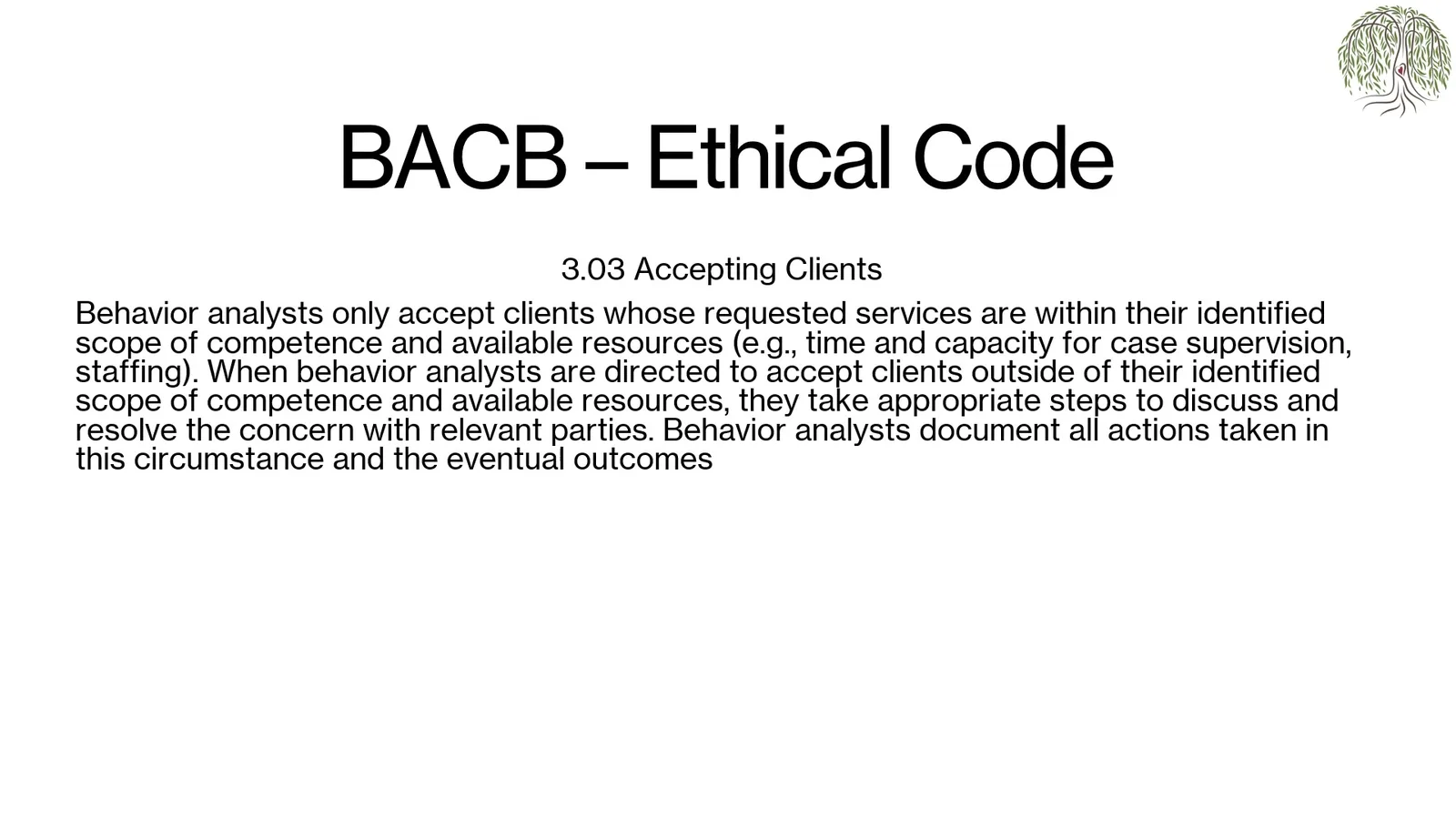
The rule lives in BACB (Behavior Analyst Certification Board) ethics code 1.05. Dr. Allison Bowhers-Peutin walks through the exact language in her talk on the topic. The code does not just say "stay in your lane." It also tells you the door out of your current lane.
behavior analysts practice only within their identified scope of competence. They engage in professional activities and new areas. such as populations or procedures, only after accessing and documenting appropriate study, training, supervised experience, consultation, and or co-treatment. From the talk — Dr. Allison Bowhers-Peutin
Two things matter in that sentence. You can move into a new area. But you have to document study, training, supervision, or co-treatment first. If none of that support is available, the code asks you to transition the case to someone who is ready.
Bowhers-Peutin also notes how little research exists on this topic in behavior analysis. She leans on three sources to fill the gap. The BACB describes scope of competence as the activities a behavior analyst can consistently perform with proficiency. Brodhead and colleagues describe it as completing a task at a level that meets an accepted standard. Both definitions point at performance you can repeat, not a topic you once read about.
Mellanie Page reads the same code and lists the five ingredients it names. She uses that list as a checklist, not as a quote to recite.
practice only within the scope of competence, which is education, training, supervised experience, credentials, and appropriate professional experience. From the talk — Mellanie Page
Scope of competence vs. scope of practice#
These two terms get mixed up constantly. They are not the same thing.
Scope of practice is what the whole profession is allowed to do. It is set by the BACB and by state licensure law. It is very wide. It covers classroom consultation, feeding treatment, organizational work, and much more.
Scope of competence is much narrower. It is what one specific person can do well right now. Dr. Clelia Sigaud makes the distinction in her school collaboration session using a simple two-circle picture.
Scope of competence is going to always be smaller than scope of practice for us as behavior analysts... a scope of competence is what a specific individual professional can actually do well enough to do with clients. From the talk — Dr. Clelia Sigaud
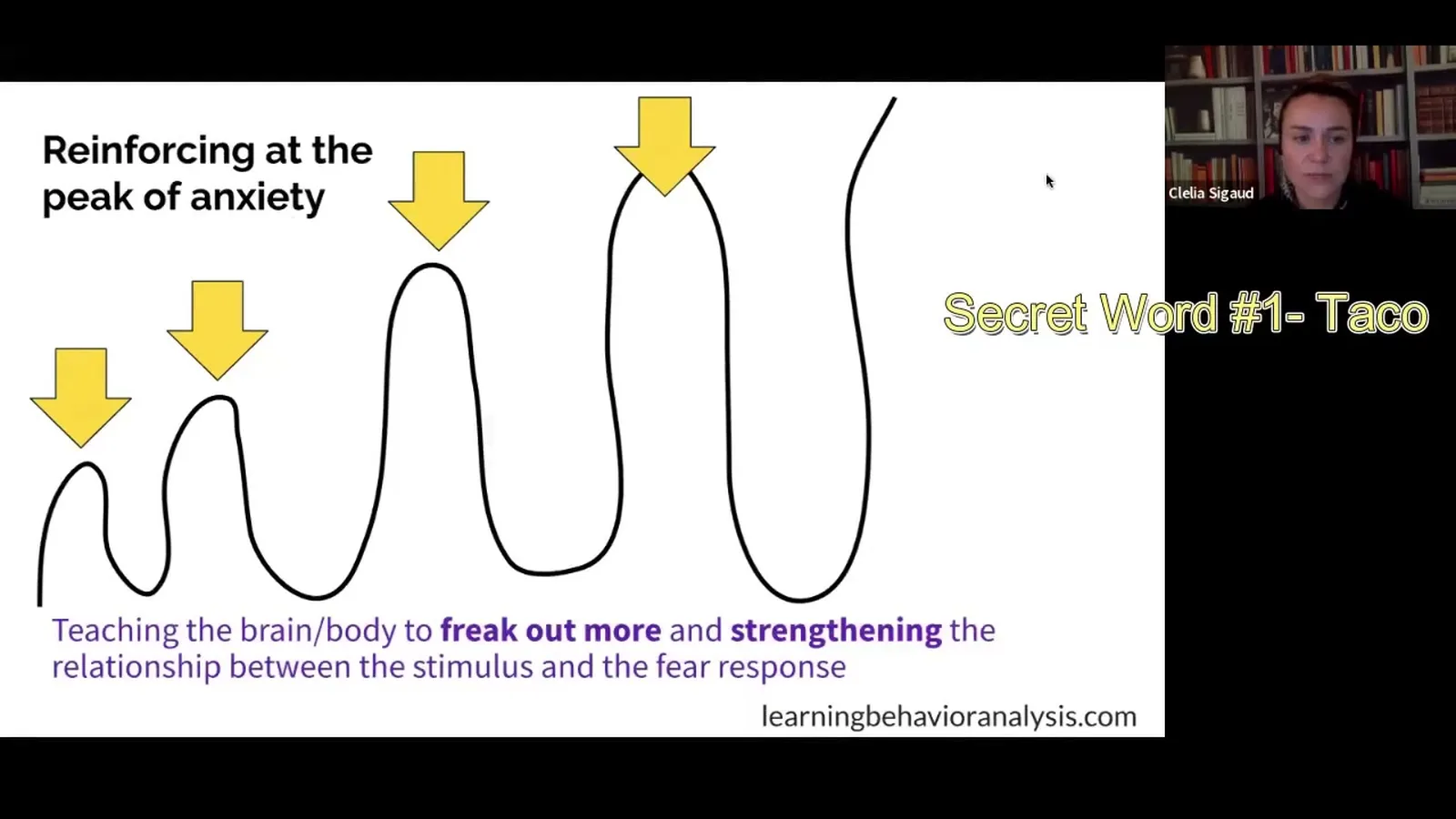
She makes the same point in her anxiety session, and adds why the gap is normal rather than shameful. Nobody has enough hours in a career to master everything the field is allowed to do.
Of course, our scope of competence will always be smaller than scope of practice. From the talk — Dr. Clelia Sigaud
Some things sit outside scope of practice for everyone with a BCBA credential. Sigaud names surgery, piloting planes, and giving legal or financial advice. No amount of reading moves those inside your circle.
The parts that add up to competence#
Competence is not one thing. It is several things stacked together. Missing one leg makes the whole stool wobble.
Dr. Clelia Sigaud breaks it into coursework, supervision, and staying current. She points out that the person who signs off on your skill has to be competent themselves.
competence incorporates more than one consideration within it. So we have to have this robust history of coursework of literature mastery in the topic... it's also important that we've experienced quality supervised experience in the area that we are considering being competent in. From the talk — Dr. Clelia Sigaud
She uses sleep as her own honest example. She has done a little sleep work in supervision. She does not follow the current sleep literature. So sleep is not in her scope, and the fix would start with reading, not with taking the case.
The didactic piece is the first question to ask yourself.
So, didactically, we can ask ourselves if we've had the coursework or the professional development experiences necessary to have that foundational knowledge in this area. From the talk — Dr. Clelia Sigaud
Mellanie Page boils the same idea down into two words you can hold in your head.
So competence is basically documented preparation... and some demonstrated performance. From the talk — Mellanie Page
Preparation means you learned it. Performance means you have actually done it, not just thought about it.
Competence is never finished#
A degree is not a finish line. Neither is a certification or a job title. Mellanie Page says many clinicians treat the paper as proof and then stop checking.
None of us are eternally competent, right? The science is constantly evolving. And so our competence also needs to evolve with it. From the talk — Mellanie Page
That cuts both ways. A skill you had five years ago may have drifted. A method you learned in grad school may have been replaced. Competence expires quietly if you stop feeding it.
Patricia Lund raises the same point about grief work with people who have intellectual and developmental disabilities. The research there is young and still arriving.
We also want to make sure that we're maintaining our competence, especially in this area of grief and IDD where research is starting to come up. From the talk — Patricia Lund
A step-by-step way to test your own scope#
Mellanie Page gives a staged self-check instead of a yes-or-no verdict. It turns a vague worry into a clear next step.
First, foundational knowledge. Do you know the core concepts in this area? Have you taken structured training or CEUs tied to it? Have you read the literature?
Second, guided practice with feedback. Have you run a supervised case or project? Has a mentor watched you and debriefed with you? The test is whether you tried, got feedback, and improved.
Third, independent performance. This is the stage most people rush.
independent performance here means you can perform the work safely without direct oversight. From the talk — Mellanie Page
She suggests starting small here. One client. One small group. A pilot project. Sometimes work you are not charging for yet. Her self-check question is simple: are my outcomes consistent, and can I explain them?
Fourth, maintenance and growth. You keep reading, keep getting feedback, and keep updating.
The staged version helps because it gives you something to do today. A flat "I am not competent in that" ends the conversation. Naming the stage you are at points to the next move. If you have the reading but no supervised reps, you need a mentor. If you have supervised reps but shaky outcomes, you need more feedback before you go solo. Page also suggests structured role play when real cases are not available yet.
Where experts disagree: refer out, or skill up?#
The sources on OpenCEU do not fully agree on what to do when a case sits just past your edge. The difference is real, and it is worth thinking through.
Mellanie Page argues that referring out has become a reflex. She calls her position nontraditional on purpose.
We're told that we need to stick to our scope of competence, which I completely agree with. My nontraditional view is that we have the ownership and accountability to expand that competence. From the talk — Mellanie Page
Her worry is the step people skip. You pass the case along, and then you never go learn the skill. Next year, the same case shows up and you pass it along again. She wants clinicians to find the mentor, read the literature, and come back prepared.
Dr. Allison Bowhers-Peutin lands near the same place, citing Contreras and colleagues. She wants scope treated as a map for growth, not a wall to hide behind. In her words, scope of competence should never limit a BCBA. It should show where to expand skills next, not become a reason to stay stuck.
Other speakers push harder on the limit. Tricia Lund is blunt that some doors should stay shut, because trying to open them causes harm.
they think that it's not their place... they are correct. They are correct. I don't want to make it sound like I'm saying we can all be counselors or we can train people to be counselors because that's practicing outside of our scope and damage can be done. From the talk — Tricia Lund
Both camps are describing something true. The split is about which error is more common in the field. Page and Bowhers-Peutin see too much avoidance. Lund and Dr. Kaci Ellis see too much drift into roles that belong to other professions. The honest read is that the answer depends on the skill. A procedure you could learn with supervision is different from a license you do not hold.
Confidence is not the same thing as competence#
 Advertisement
Scope of competence has a feelings problem. Dr. Allison Bowhers-Peutin uses the definition from Brodhead and colleagues, which is built partly on how the clinician feels.
Scope of competency are activities that an individual BCBA feels they can do successfully and with confidence. From the talk — Dr. Allison Bowhers-Peutin
That makes self-report a key part of the system. And self-report can miss in both directions. Dr. Tyra Sellers frames it as a matching problem between skill and confidence.
There's risk. There's risk if you're overconfident, which is what this graph is showing. But there's also risk if you're underconfident because you're unlikely to take risks to try some things. From the talk — Dr. Tyra Sellers
Overconfidence puts clients in danger. Underconfidence stalls your growth and leaves needs unmet. Mellanie Page adds that imposter syndrome is not evidence. She says most clinicians are more competent than they think, and that the feeling is a signal you care.
Supervisors have to model the self-check#
Evaluating your scope is not a private task. Dr. Tyra Sellers points out the code applies to supervisory skills too, not just clinical ones.
We're required per the ethics code to continually evaluate our scope of competence in terms of clinical and supervisory skills. From the talk — Dr. Tyra Sellers
Then she asks the question most supervisors skip. Are you teaching your trainees how to evaluate their own scope, by doing it out loud yourself? A supervisee who never sees an expert say "I do not know this yet" will not learn to say it either.
This matters for RBTs, BCaBAs (Board Certified Assistant Behavior Analysts), paraprofessionals, and school behavior techs. Each of them has a scope too, and each one needs a model for how to check it.
What RBTs should do when a protocol feels beyond them#
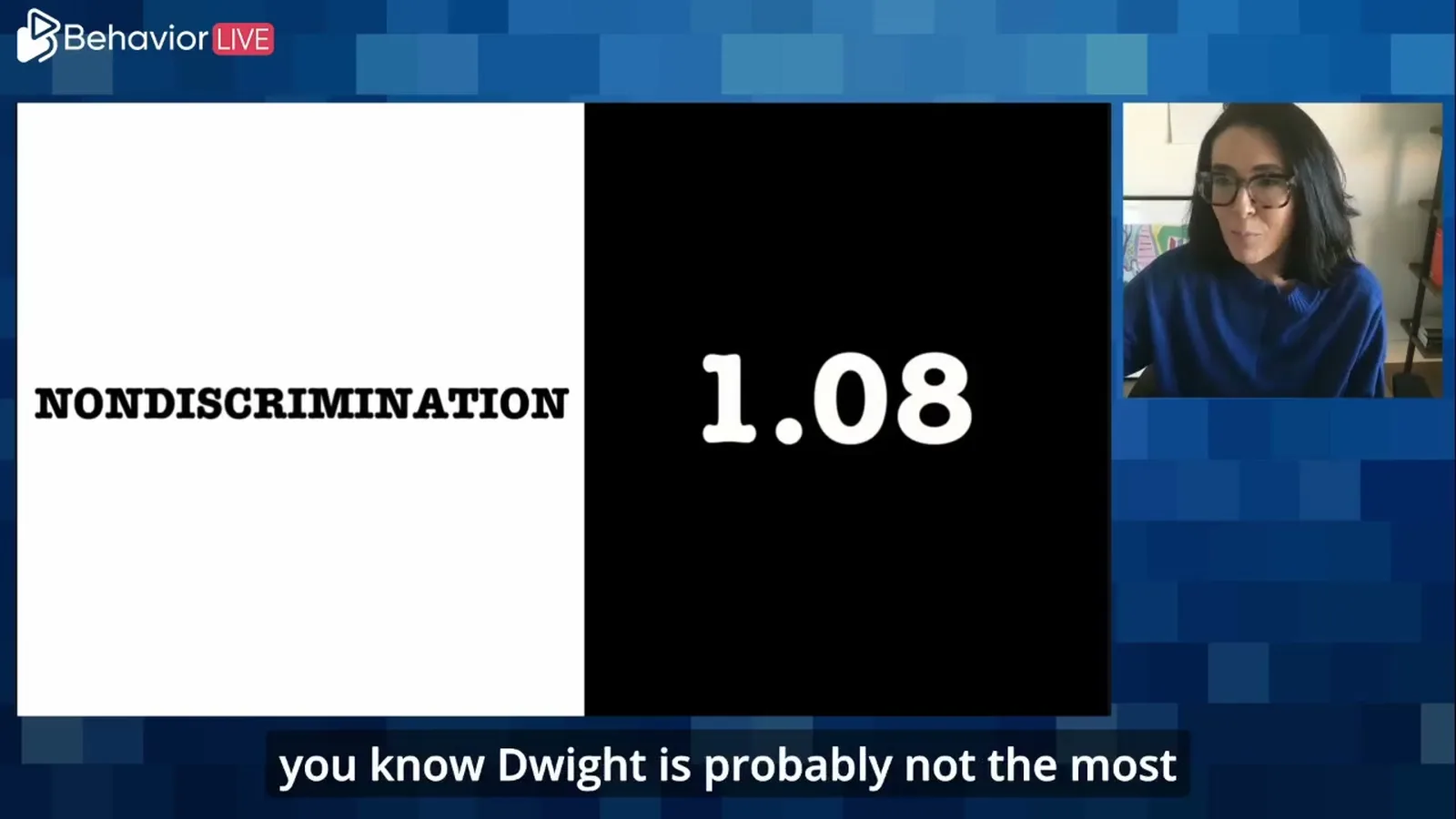
Anlara Hoskins applies the idea one level down, to the people running the plans. She ties it to ethics code 1.06.
Next is 1.06, which really talks about ensuring competence prior to implementing any of the protocols that are in your client's treatment plan. From the talk — Anlara Hoskins
Her point is that the code protects the technician, not just the client. A BCBA needs to know that the person carrying out a procedure can actually carry it out safely. If you cannot, the plan fails quietly and the client pays.
So the action step is self-advocacy. Ask for more training. Ask for more supervision. Ask for an alternative approach if the current one is not working.
Hoskins ties all of that back to the RBT code on practicing within your scope of competence. Her framing is that comfort is a safety signal, not a complaint. If you do not feel trained to criterion, the procedure probably is not being run the way it was designed.
She uses an architect and construction crew comparison to explain the liability split. The crew builds the building, but the architect signed the design. That is why the BCBA carries the professional risk. It is also why the crew has to speak up the moment a step is unclear.
Scope of competence in schools#
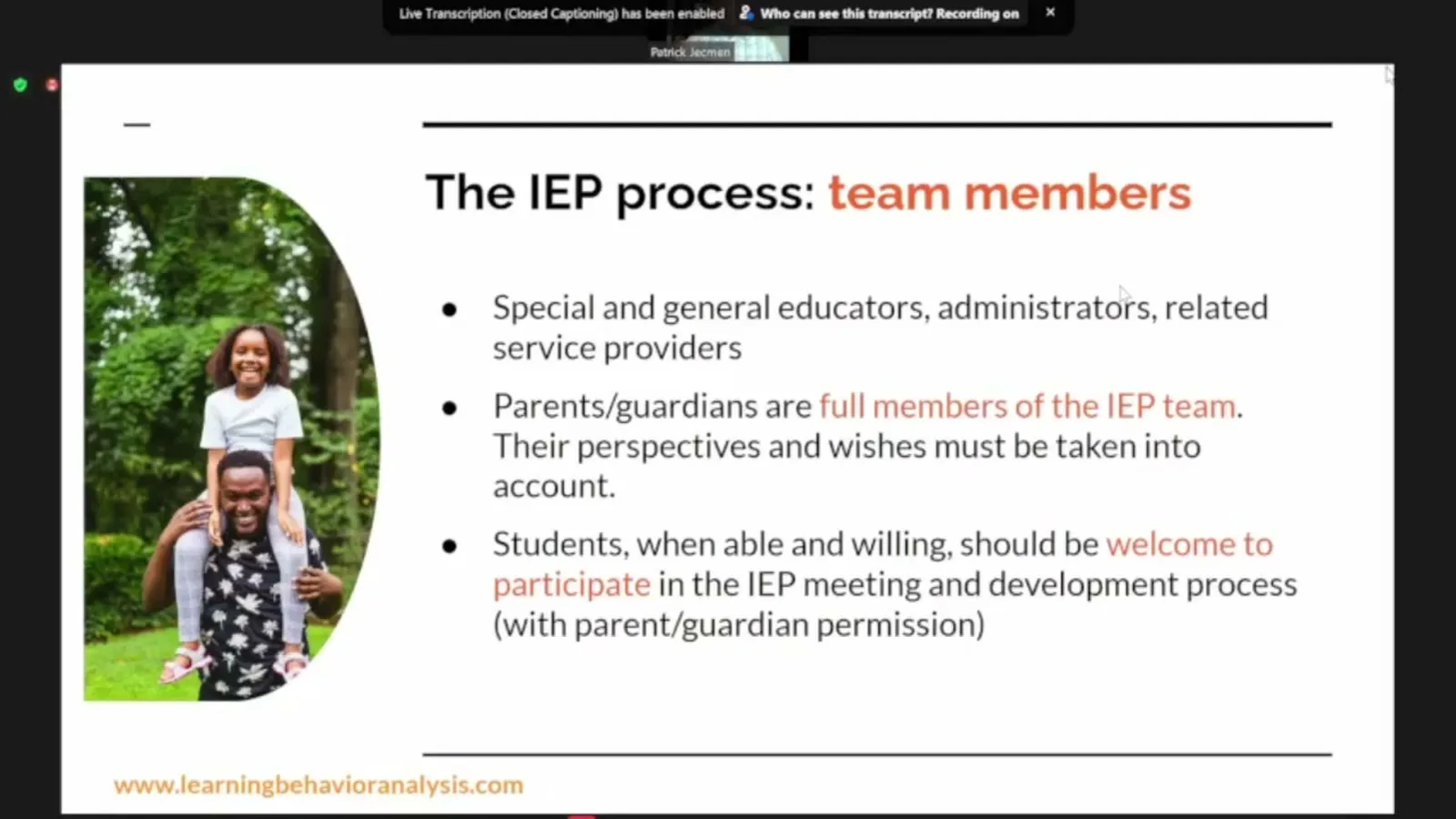
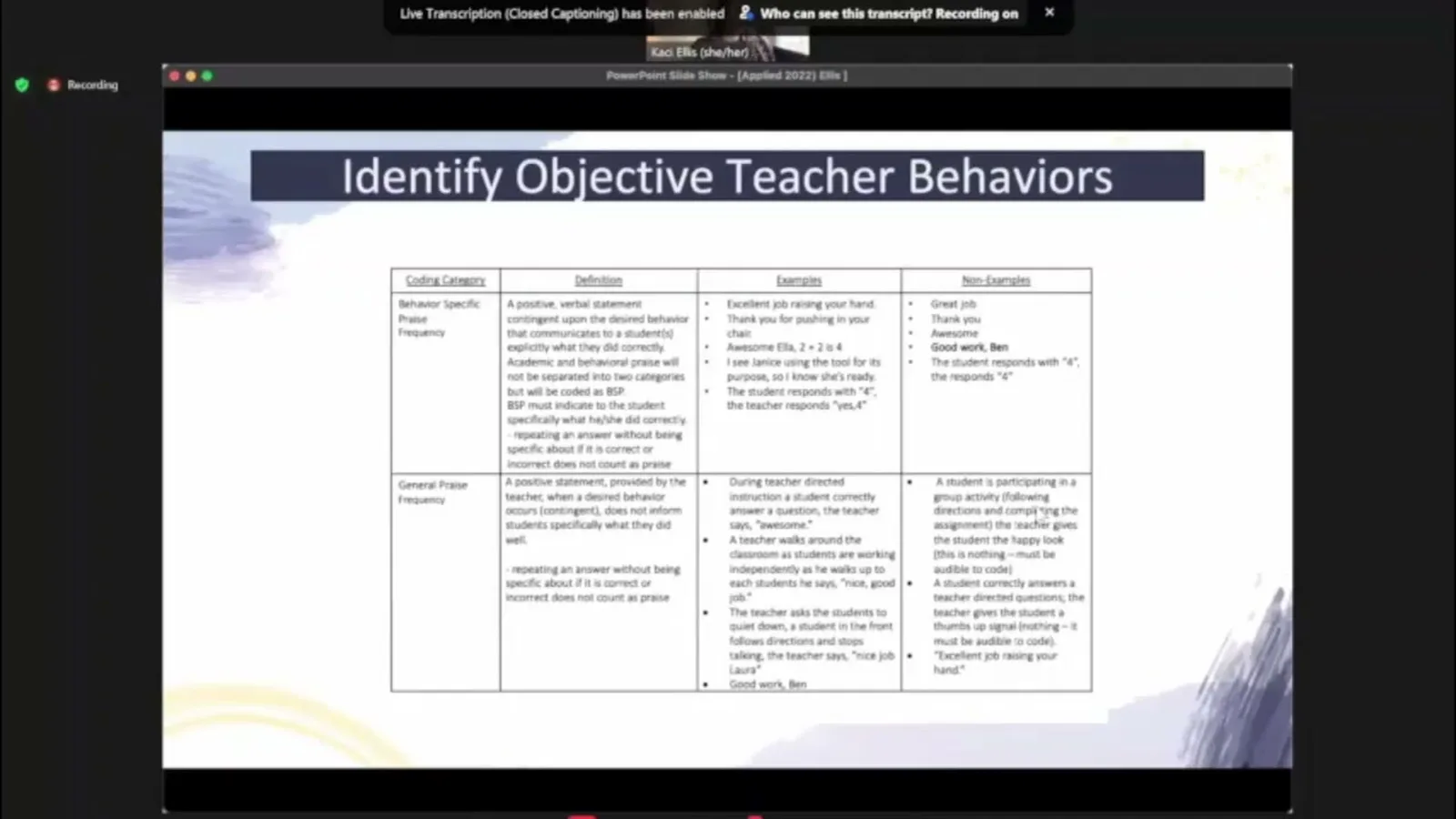
School settings blur roles fast. Dr. Kaci Ellis says BCBAs and RBTs get pulled into teaching work that is not theirs to do.
I would not expect an RBT to just know how to do this because again, that's outside of our competence. We are not meant to be providing academic instruction or therefore behavioral support. From the talk — Dr. Kaci Ellis
Her fix is preventive, not confrontational. Build your own matrix of what you can and cannot do under the ethics code. Bring it to the contract meeting before you start. Most educators have never read the BACB code, so they are not overstepping on purpose.
It's an outreach of my scope of competence, or it's an outreach of my ethical code. I don't feel comfortable doing that. From the talk — Dr. Kaci Ellis
With that agreement in place, you can point back to it later instead of arguing in the moment. Ellis also tells school-based analysts never to write a behavior plan alone. She says to share FBA (functional behavior assessment) results with caregivers every time.
Grief, mental health, and the therapist line#
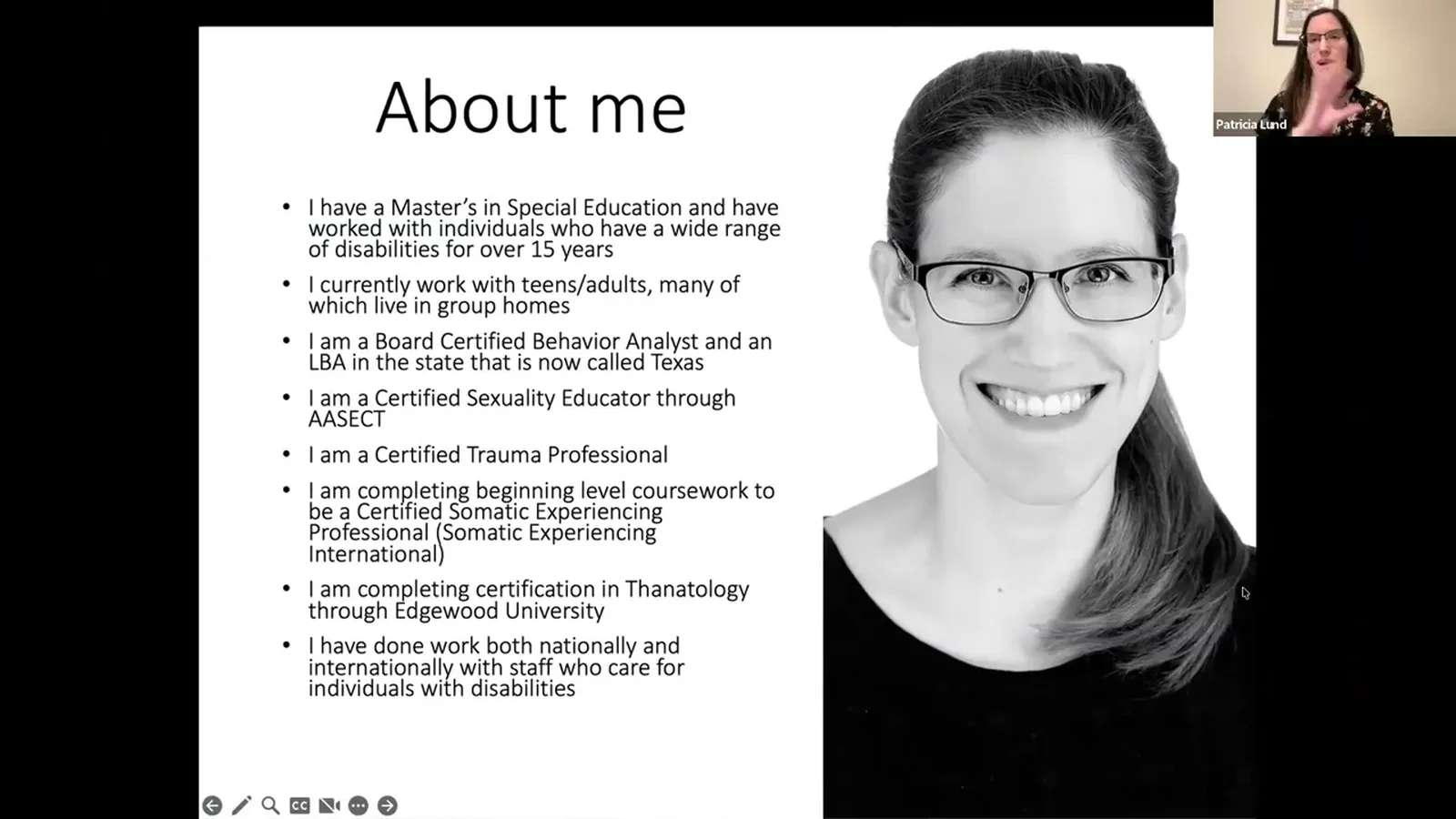
Patricia Lund hit the scope question head on when she started studying grief and loss. She is not a therapist, and she did not want to act like one.
Ethical code 1.05, you want to make sure that you're practicing within your scope of competence. If you're not a mental health practitioner, then we're not going to do mental health practitioner things. From the talk — Patricia Lund
She draws two firm lines. BCBAs do not diagnose. Prolonged grief disorder and complicated grief are real diagnoses, and they are not ours to give. BCBAs also do not do processing work.
it's not our goal to help someone process their feelings of grief. Um, that's going to be a therapist. From the talk — Patricia Lund
There is still plenty inside the line. You can track how often a behavior happens. You can watch whether its form is changing. You can share that data with the licensed counselor. You can advocate so the client actually gets seen.
Compassion sits inside your scope#
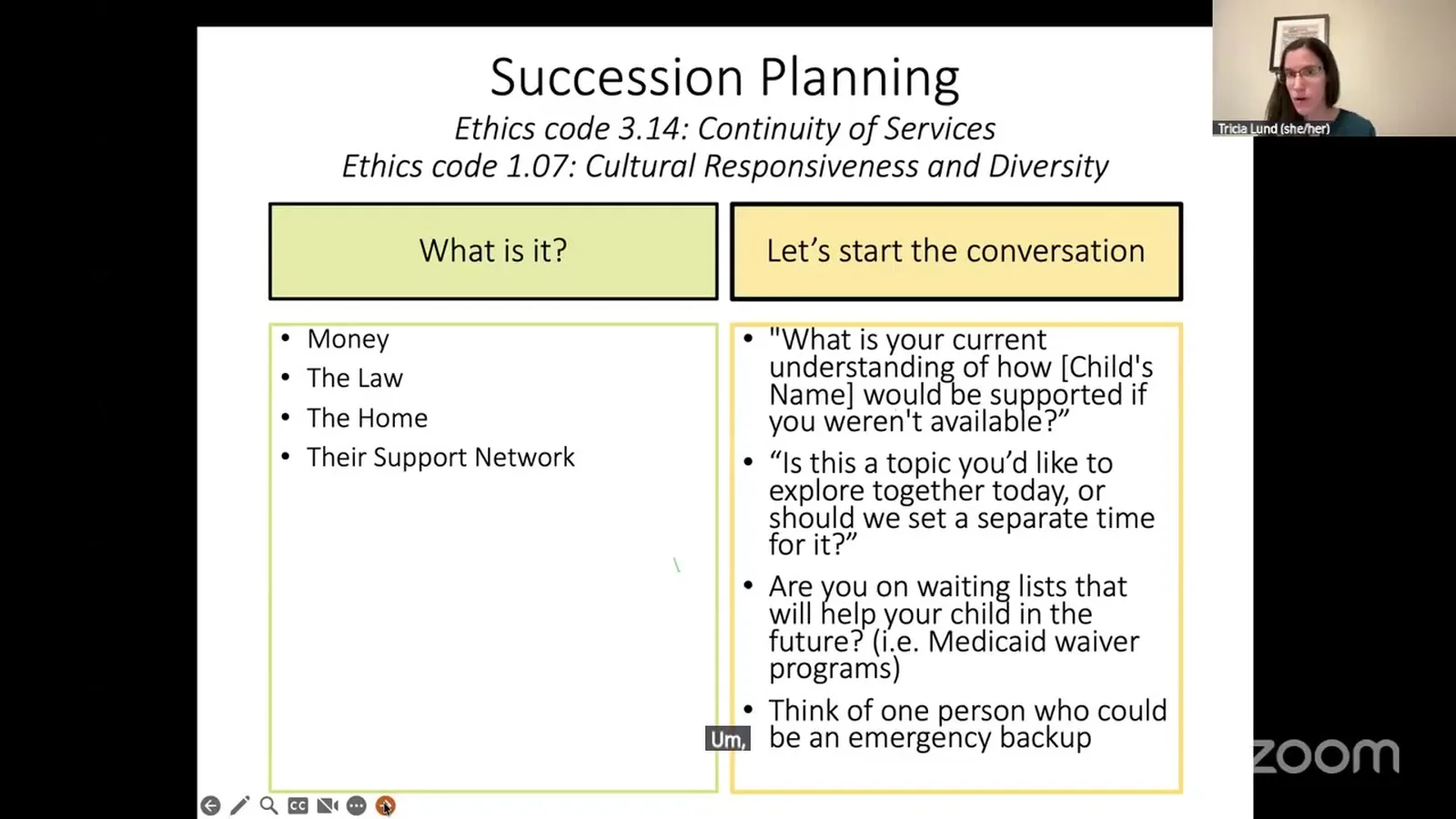
Tricia Lund adds a distinction that keeps staff from freezing. Direct support staff often refuse to help a grieving client because they think it is not their job. She agrees with the first half and rejects the second.
You're not a counselor. I'm not asking you to be a counselor. I am asking you to be a compassionate person and respond with compassion. From the talk — Tricia Lund
That reframe matters. Staying inside your scope does not mean staying silent or treating grief behavior as misbehavior. Lund notes that grief can look like sleeping much more, or new complaints of aches and pains. If nobody connects those to the loss, the team treats a medical symptom and misses the cause.
Medical diagnoses change what competence requires#
Nicole Stewart applies scope of competence to ADHD. Her argument is that working with a population obligates you to understand it.
So we want to make sure we're practicing within. Our scope of competence. From the talk — Nicole Stewart, BCBA
Almost every BCBA has clients with ADHD, whether or not the diagnosis is written down. Stewart ties that to two other duties in the code: providing effective treatment, and considering medical needs.
considering medical needs. ADHD is a medical diagnosis. From the talk — Nicole Stewart, BCBA
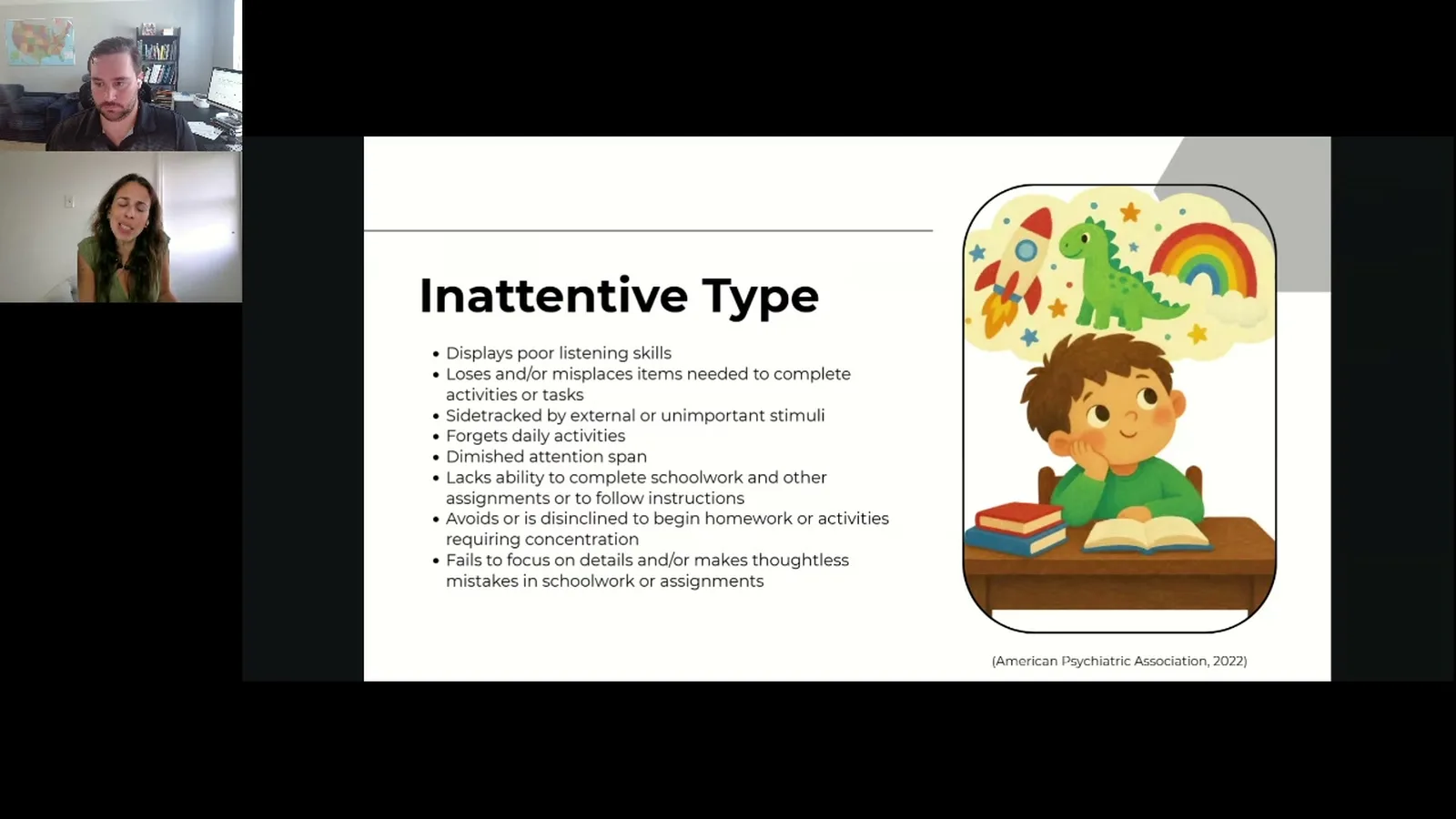
There are biological effects behind the label. If you do not know them, your reinforcement schedules and prompts may be off. Task demands built on a wrong model of the learner do not work either. Stewart frames this as a risk of accidental harm, not as a knowledge gap you can ignore. Her sessions walk through how shaping and response effort choices shift when ADHD is part of the profile.
Why ignoring scope hurts more than it helps#
A common pushback sounds reasonable. There is huge need, nobody is perfect, so we should just do our best. Dr. Clelia Sigaud takes that argument seriously and then answers it.
When we disregard scope of practice or scope of competence, we're not performing a service for our clients that's going to be optimally helpful for them. From the talk — Dr. Clelia Sigaud
She names three costs. The client gets a weaker service than they came for. The funder or employer was told you could do something you cannot, which is deceitful. And over time the whole field takes reputation damage from ineffective or unsafe work.
Helping more people is not the same as helping people more. Dr. Allison Bowhers-Peutin's session That's Outside My Scope of Competence covers this problem directly. It works through what to do when a case lands outside your circle mid-service.
Growing scope on purpose#
If scope is meant to grow, growth needs a plan. Mellanie Page points to core principle four in the code, which covers staying current.
Remaining current and increasing your knowledge of best practices and advances in ABA and participating in professional development activities. From the talk — Mellanie Page
Her practical list is short. Find a mentor or supervisor in the new area. Read the literature on the specific skill or population. Use the resources the BACB gives members. Collaborate with BCBAs who already work there.
CEUs are probably the most engaging way to continue to develop competency, and to refresh on topics that you may already feel confident in. From the talk — Mellanie Page
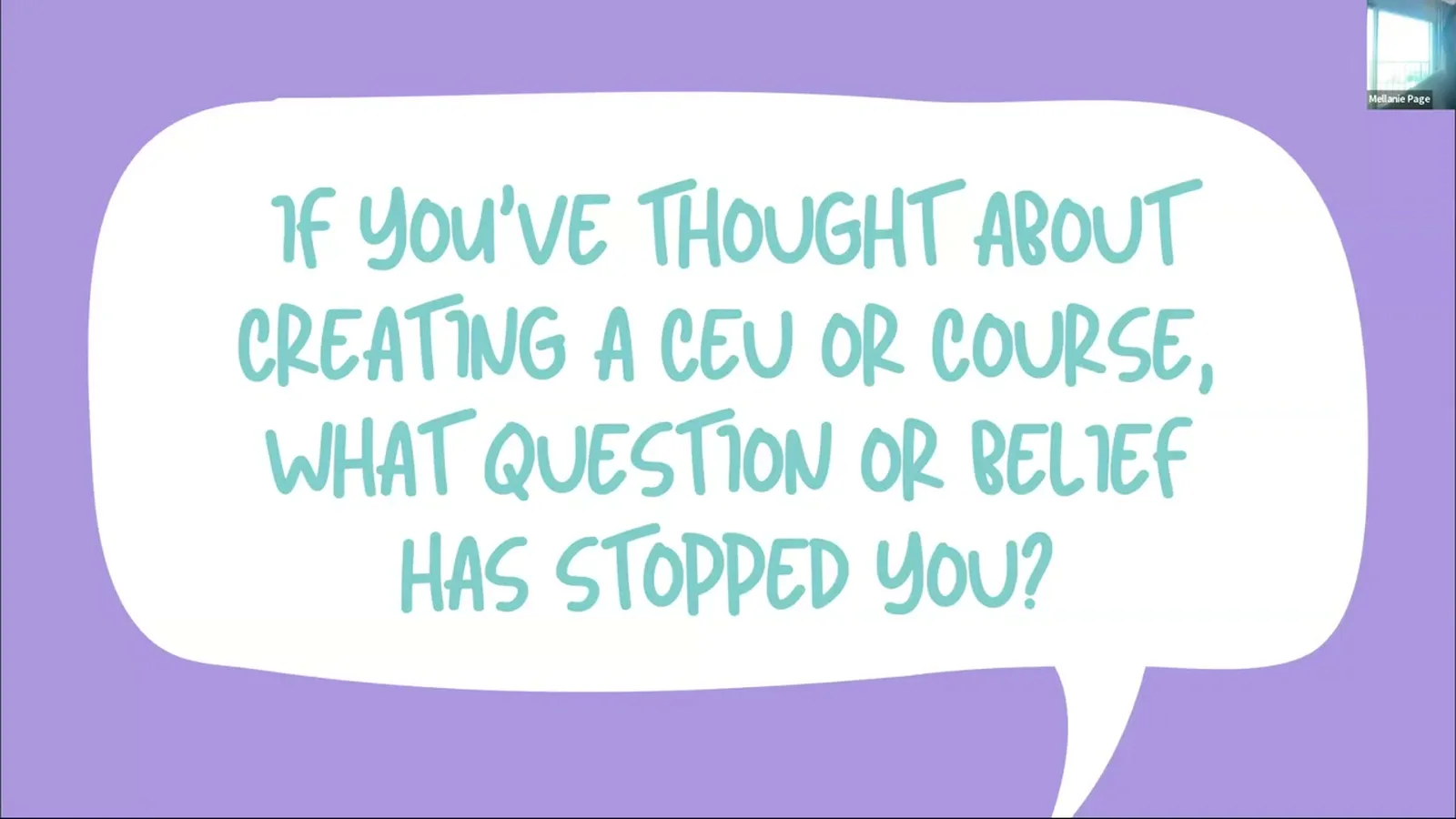
Note the second half of that sentence. Refreshers count. Page also applies the framework to teaching and coaching, where you are putting your judgment in front of many people at once. Before you teach a topic, she asks you to show documented preparation, guided practice, and independent performance in that exact topic.
She adds a second duty on the other side of mastery. If you have genuinely mastered something, how are you sharing it? Hosting a CEU is one answer. Mentoring is another. Page frames maintaining competence as a two-way job. Find where you are thin and fix it, then pass on what you know well. Her coaching work uses the same staged test, applied to a narrow focus area rather than to ABA as a whole.
What the research says#
Research on this topic is thinner than you would expect. The paper most often cited is a call for the field to talk about it at all. It argues that behavior analysis defined its scope of practice through licensure but never really defined scope of competence for individuals (Brodhead, Quigley, & Wilczynski, 2018, Behavior Analysis in Practice). That is the source behind the definition Dr. Allison Bowhers-Peutin uses in her talk.
Scope problems get worse when a field grows fast. Around 10,000 new behavior analysts entered the field in 2021 alone. One case study describes building a panel review process so novice practitioners get real case oversight, especially with severe challenging behavior (Logue, Hustyi, Toby, & Outlaw, 2023, Behavior Analysis in Practice). Individual responsibility is the rule, but systems make it possible to follow.
The same gap shows up in graduate training. Interest in organizational behavior management has grown faster than the supply of qualified instructors. That gap means some faculty end up teaching outside their own scope (Rafacz, Gravina, DiGennaro Reed, Ludwig, Sleiman, Johnson, & Brand, 2024, Journal of Organizational Behavior Management). Teaching a topic is itself a competence claim.
New service formats create new scope questions too. When telehealth direct therapy expanded quickly, there was no integrity measure for it. Clinicians had no reference point for doing it well (Nohelty, Hirschfeld, & Miyake, 2021, Behavior Analysis in Practice). A tool that defines what good practice looks like is often the first step toward being able to claim competence in it.
FAQ#
What is scope of competence in ABA? Scope of competence is the set of activities one behavior analyst can perform well and safely. It comes from your education, training, supervised experience, credentials, and work history. BACB ethics code 1.05 requires you to practice only within it.
What is the difference between scope of practice and scope of competence? Scope of practice is what the whole profession is allowed to do, set by the BACB and state law. Scope of competence is what you personally can do well today. Your competence circle always sits inside the practice circle.
How do you expand your scope of competence as a BCBA? Start with study and CEUs in the specific area. Then get supervised practice with feedback from someone competent in that area. Move to small, independent work and check whether your outcomes hold up. Document each step, since the code asks for documented study, training, supervision, consultation, or co-treatment.
 Advertisement
Turn this topic into a CEU
You just studied this. Now get credit for it.
Watch Scaling Influence- Coaches with Mellanie Page and earn 1 free BCBA CEU. Detailed certificate, delivered the moment you finish.
Keep going with a free learning path
Culturally Responsive Practice
Makenzie Sandler's three-part series on culturally responsive practice, each worth an ethics CEU. Cultural competence in clinical work, unconscious bias and values, then culture across teams and systems using OBM.