Behavioral Skills Training (BST): How Experts Use It
Behavioral skills training (BST) teaches skills through instruction, modeling, rehearsal, and feedback. See how BCBAs use it with staff, parents, and teachers.
Key takeaway
Behavioral skills training (BST) is a four-step way to teach a skill: instruction, modeling, rehearsal, and feedback. The trainer explains the skill, shows it, and has the learner practice it.
Dunder Mifflin’s Guide to BCBA Supervision: Lessons from The Office
Free learning path on this topic
Supervision, Done Right
Four supervision CEUs that build on each other. What reflective supervision is, how to build a supervision system, how to assess supervisee competence instead of counting hours, and how supervision affects provider outcomes. The BACB asks supervisors for three supervision CEUs per cycle. This covers it.
Experts who cover this
18 recordings on openceu cover behavioral skills training.
- Featured talk1 Supervision CEU
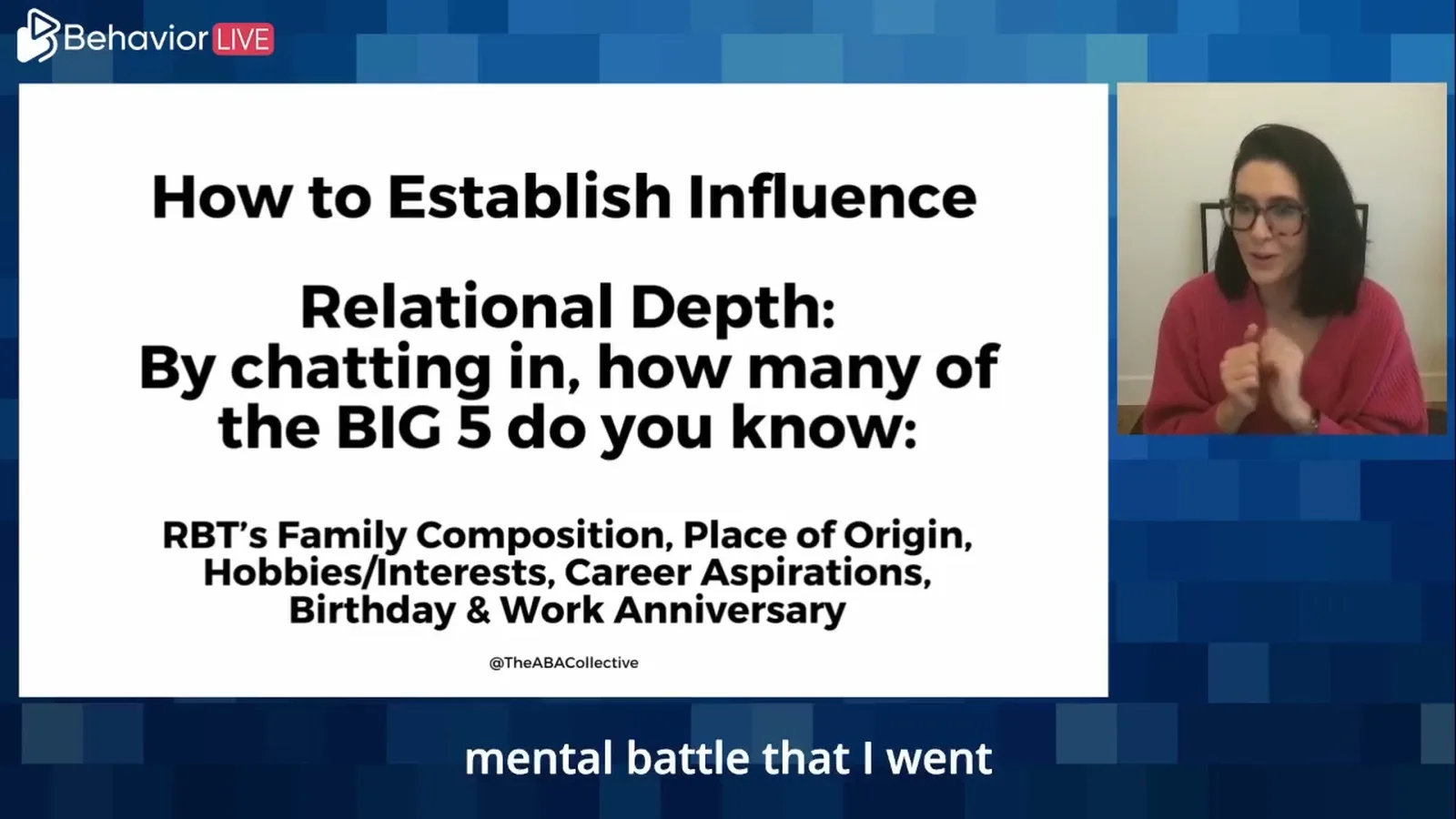
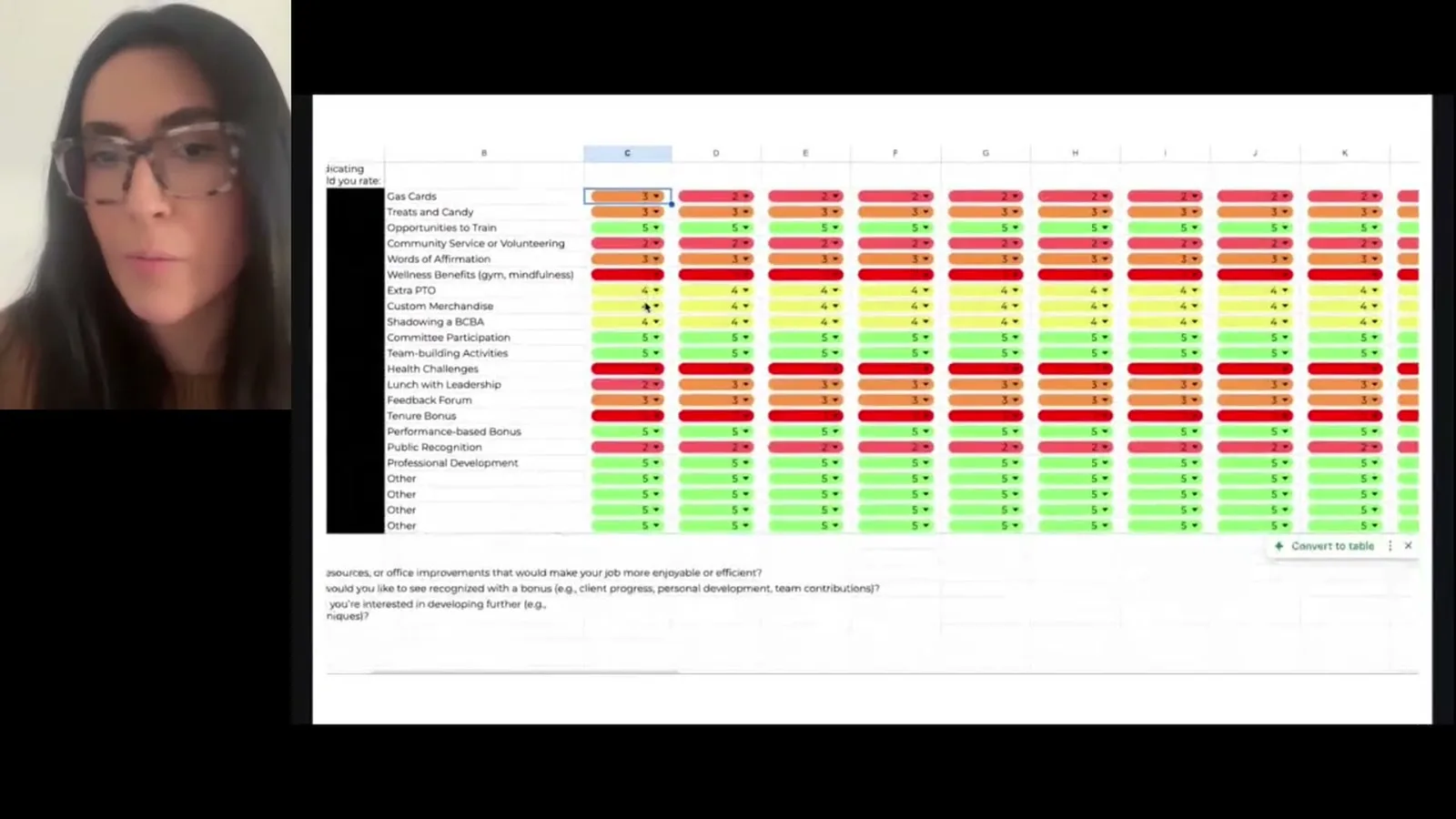
Dunder Mifflin’s Guide to BCBA Supervision: Lessons from The Office
Mellanie PageThe Behaviorist Bookclub
Presented as one of the best ways to apply the science to training and mentoring RBTs, broken into instruction, modeling, rehearsal, and feedback, with an…
- 1 CEU
Press Pause: What the RBT 40-Hour Training Was Really Meant to Do
Crystal HarmsBowsprit Consulting LLC
Harms reviews the four components of BST (instruction, modeling, rehearsal, feedback) as the evidence-based method that should underlie RBT training…
- 1 Supervision CEU
Toward an Evidence-based Supervision Model: Training Students in Independent Fieldwork
Dr. Allison Bowhers-PeutinWillow Mentorship & Consulting, LLC
BST (instruction, modeling, rehearsal, feedback) is proposed and tested as the method to train BCBA supervisors in goal setting, feedback, and prompting, since…
- 3.50 Supervision CEUs
Supervision Articles Deep Dive
Matt HarringtonThe Behaviorist Bookclub
BST is the throughline tool across several supervision articles in this compilation, used to teach fieldwork documentation, active listening, and feedback…
- 1 CEU
An Examination of Abuse Prevention
Tricia Lund & Carolyn BronerThe Behaviorist Bookclub
Described as the dominant approach BCBAs use for safety training (instruction, modeling, rehearsal, feedback), effective for discrete stranger-lure scenarios…
- 1 Supervision CEU
From Hours to Competence: Assessing and Developing Supervisee Skills
Lauren DonovanThe Behaviorist Bookclub
Donovan frames BST as an evidence-based, BACB-identified core component of supervision that teaches through guided practice rather than simply telling trainees…
- 1 Supervision CEU
Delegating with Confidence: Training and Supervising RBTs to Support Assessments
Dr. Jessica OsosCopper Consulting Group
BST is named as the evidence-based training method BCBAs should use before delegating assessment tasks to an RBT, described as four steps: written…
- 1 Supervision CEU
Building a Supervision System That Actually Works
Lauren DonovanThe Behaviorist Bookclub
The talk frames BST as the gold-standard teaching method for supervisees but notes clinicians often skip steps like modeling, calling it something everyone…
- 1 CEU
Compliance to Commitment: Seven Habits of the Highly Effective Caregiver Trainer
Matt HarringtonThe Behaviorist Bookclub
Referenced as the standard tool for teaching caregivers a skill, with the presenter noting its key ingredients (instruction and feedback) without re-teaching…
- 1.50 CEUs
PDA Caregivers, Complex Profiles, Replacement Behaviors, and Being Trauma Informed
B. Kuerine GrayThe Behaviorist Bookclub
Gray maps the 'paradigm shift' caregiver program's awareness/acceptance/accommodation components onto a BST framework, describing awareness as education…
- 1 Supervision CEU
Design Smarter: Using Instructional Design to Improve Staff and Stakeholder Training
AllyThe Behaviorist Bookclub
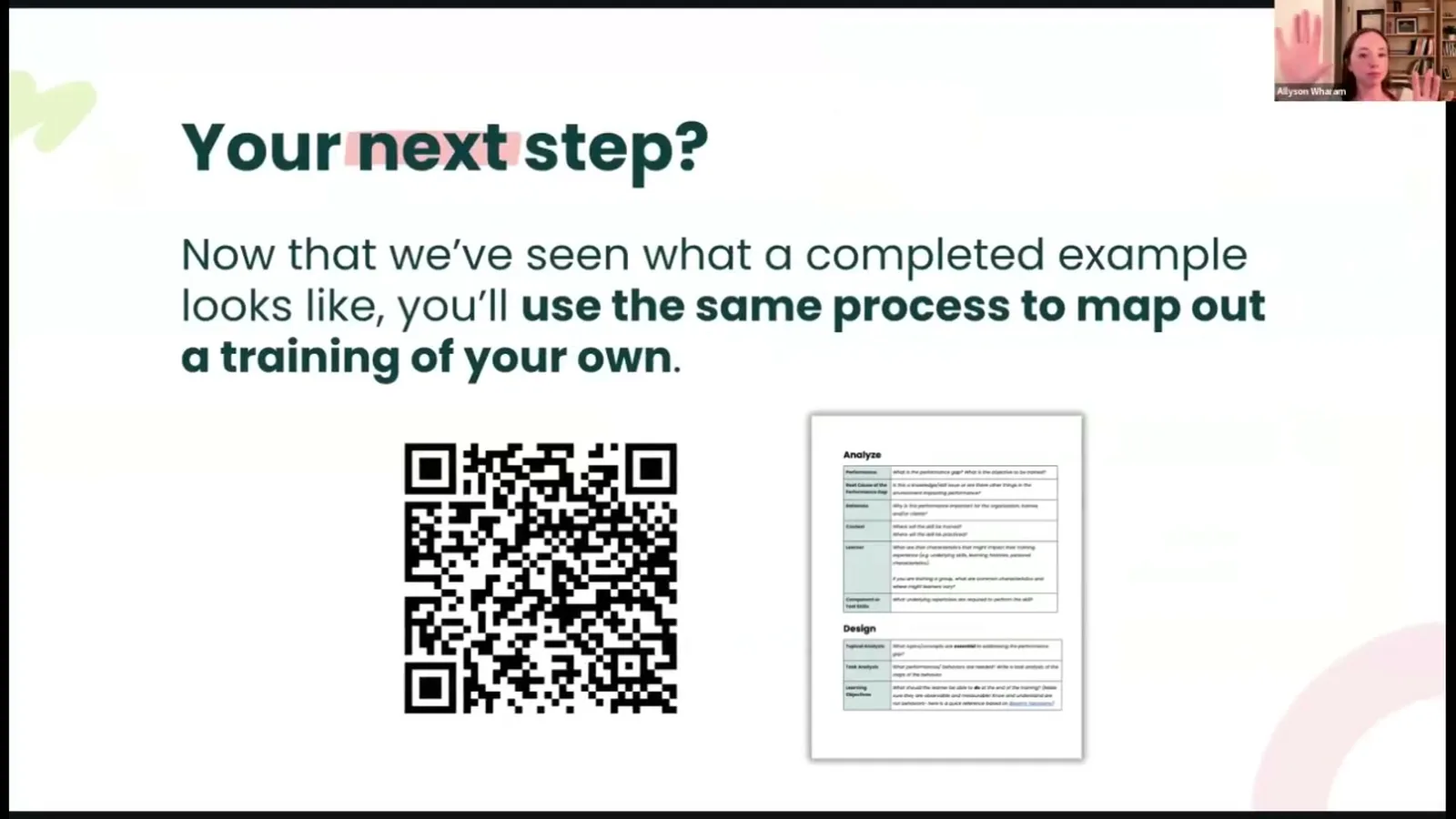
Ties BST directly to Gagne's nine events, framing the eliciting-performance step as BST's role-play/rehearsal component and the assessment step as BST's…
- 2.50 CEUs
5 Days of Manding Mastery
Matt HarringtonThe Behaviorist Bookclub
Named as the (unremarkable but effective) method behind the telehealth caregiver-coaching study: instruction, modeling, role play, and feedback, applied to…
- 1 Supervision CEU
Dunder Mifflin’s Guide to Training and Onboarding: Lessons from The Office
Mellanie PageThe Behaviorist Bookclub
Attendees and Page converge on modeling, role-play, and feedback as more effective ways to teach RBTs technical skills than relying on jargon and terminology.
- 2.50 CEUs
Confessions of a New Behavior Analyst in Functional Analysis
Matt HarringtonThe Behaviorist Bookclub
Cited as the evidence-based method (Iwata 1982, Miltenberger & Fuqua 1985) for teaching caregivers and technicians to implement FA conditions with fidelity…
- 1 CEU
Is It Technical or Relational? A Framework for Pinpointing Caregiver Collaboration Breakdowns
Leanne PageParenting with ABA
Named as a technical-side fix: caregivers who have not received behavioral skills training (modeling, practice, feedback) on plan steps need more BST rather…
- 1 Supervision CEU
Reflective Supervision and Provider Outcomes in ABA
B. Kuereine GrayThe Behaviorist Bookclub
Used as an analogy to argue that if BST-style modeling, scaffolding, and multiple exemplars are known to be effective for caregivers, the same approach should…
- 1 Ethics CEU
Dunder Mifflin’s Guide to BCBA Ethics: Lessons from The Office
Mellanie PageThe Behaviorist Bookclub
Cited as the way to move non-discrimination and cultural competence training beyond didactic instruction into modeled, scenario-based practice that solidifies…
- 1 Ethics CEU
Scaling Influence- Coaches
Mellanie PageThe Behaviorist Bookclub
Comes up in Q&A to clarify that coaching that looks like BST (instruction, role play, feedback, repeat) doesn't automatically mean someone is practicing under…




On this page · 19 sections▾
Behavioral skills training (BST) is a four-step way to teach a skill: instruction, modeling, rehearsal, and feedback. The trainer explains the skill, shows it, and has the learner practice it. Then the trainer coaches the practice until the learner gets it right.
BST matters because most of what behavior analysts do depends on other people doing things well. Technicians run programs. Parents carry plans into the home. Teachers use new strategies in busy classrooms. New supervisors learn to supervise. BST is how the field turns "I told them" into "they can do it." Below, a dozen clinicians and researchers explain how they use it, where it breaks down, and where they do not fully agree.
The four steps of behavioral skills training#
The steps are simple to list. Mellanie Page is a BCBA (Board Certified Behavior Analyst), the credentialed clinician who designs and oversees behavior plans. She trains and mentors RBT teams (Registered Behavior Technicians, the frontline staff in ABA) and puts it plainly.
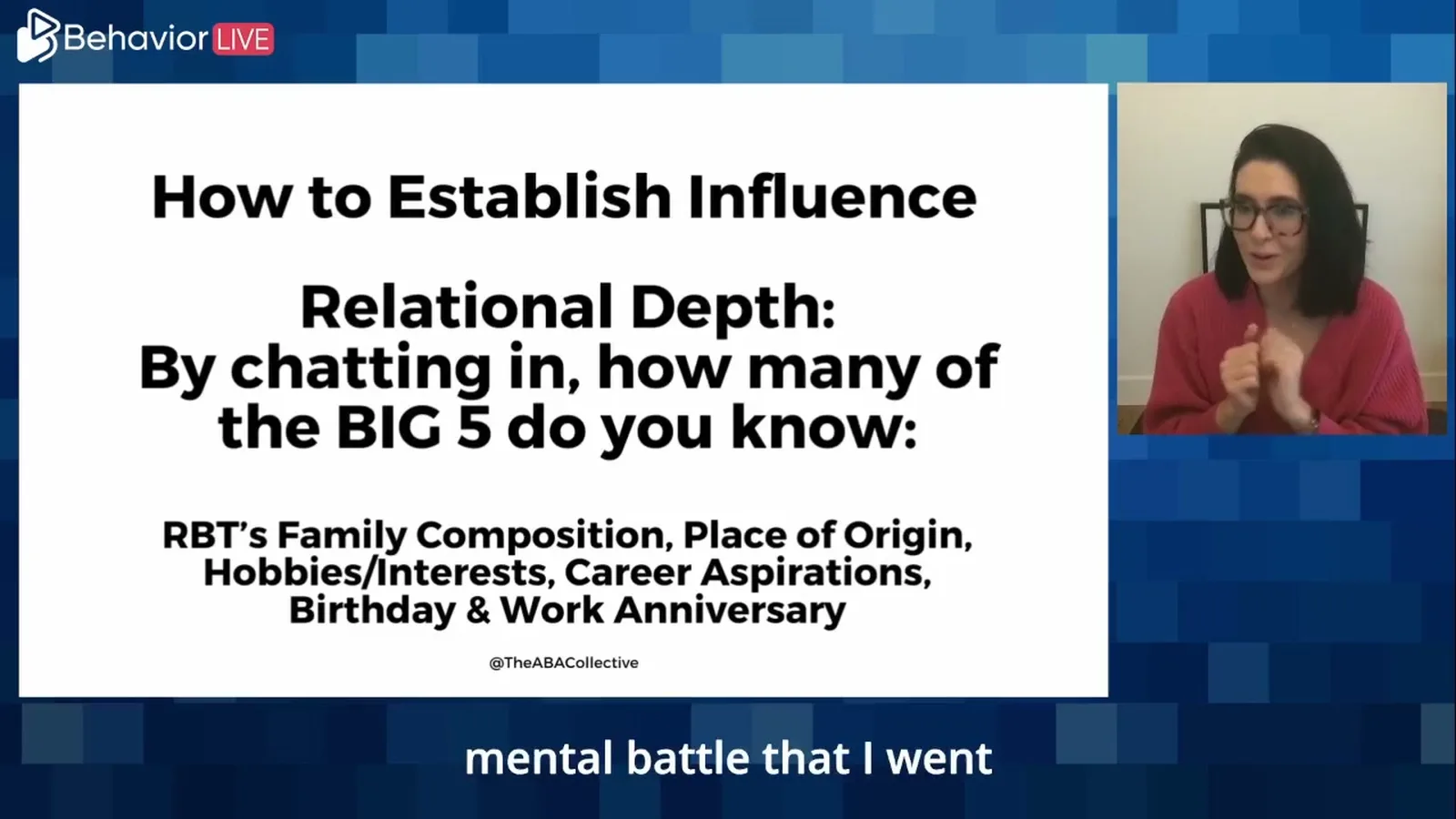
So BST for sure, hands down, is one of the best ways to apply our science to training and mentoring our teams.
From the talk — Mellanie Page
Instruction comes first. That can be a written protocol, a short handout, or a talk about the program. Modeling comes next. The trainer shows what the skill looks like when it is done correctly. Rehearsal is the learner's turn. They practice the skill, often in a role play (a practice run with a pretend client). Feedback closes the loop. The trainer points out what went well and what to fix.
Patrick Jackman, who coaches teachers in schools, adds an important detail. The last two steps repeat. He describes "that continued cycle of rehearsal and feedback until we meet mastery criteria." Mastery criteria is the goal level you set before training starts. You keep practicing and coaching until the learner hits it. BST is not a one-pass lecture with a demo tacked on. It is a loop that ends only when the skill is solid.
Why telling people what to do is not training#
Several speakers make the same point from different angles. Lecture alone does not build skills.
Dr. Allison Bowhers-Peutin tested this directly with BCBA supervisors. In her study, supervisors first got a lecture on how to run supervision sessions. None of them reached the target level. Then they got BST.
Instead, a training based in behavioral skills training was effective to improve supervisor behavior.
From the talk — Dr. Allison Bowhers-Peutin
She notes this should not surprise anyone. Being told to do something is rarely the best way to learn it. That is true even for master's level clinicians. Her second experiment used brand-new BCBAs who had never supervised anyone, and BST still worked.
Matt Harrington found a gap in how the field trains itself. He reviewed a survey of 140 BCBAs about procedural fidelity (checking whether staff do each step the way it was written). Most had learned about it in grad school, mostly by lecture.
only 41% of participants were taught using behavioral skills training.
From the talk — Matt Harrington
His takeaway is blunt. There was no role play and no feedback in training. We cannot be surprised when the skill is missing on the job.
Jargon does not prepare staff to do the job#
Mellanie Page makes a related point about onboarding new technicians. Many trainers lean on terms, concepts, and principles. That vocabulary feels simple to a BCBA. To a new hire, it feels complicated. And it does not help them act.
She asked her audience what works instead. The answers came back fast.
Modeling techniques and role-playing.
From the talk — Mellanie Page
Page sums it up in a line from the session. If you model, give me a chance to do it, and give me feedback, "we wouldn't have to use any words." Attendees also suggested pairing jargon with plain words and giving real-life examples.
The same idea shows up in her ethics training. Topics like non-discrimination and cultural competence are often taught with recorded modules. Page says these topics are more complicated than they look. She recommends building training around scenarios and showing examples of how to speak, act, or respond. In her words, the goal is to get "some experiential training. Some BST" so staff are fluent in how to respond.
Rehearsal and feedback are the active ingredient#
If one step matters most, Crystal Harms knows which one. Harms trains RBTs and writes about the purpose of the RBT 40-hour training. She says the practice-and-coach step is what makes BST work.
Rehearsal with feedback.
From the talk — Crystal Harms
That, she says, is BST's active ingredient, more than exposure alone.
She tells her supervisees something they get tired of hearing: "Modeling is not teaching." When a supervisee says "but I showed them," Harms points out that showing is only step two. The job is not done until the trainee has practiced and reached fluency (doing the skill smoothly and quickly, without prompts).
Harms also pays attention to how feedback lands. Some RBTs have never received feedback in a supportive way. Their learning history makes correction feel like punishment. She frames feedback as a guide to help them be the best RBT they can be. She repeats that framing again and again. When corrective feedback comes, the reaction is much better.
Training an RBT on a new behavior plan#
Mellanie Page walks through a common case. An RBT is new to a specific behavior support plan. Here is how BST fits.
The trainer starts by teaching the parts of the plan and the program details. Then comes the model.
And then you move into modeling that implementation, either during a client behavior or through role play, whatever you have accessible to you.
From the talk — Mellanie Page
After that, the RBT rehearses the plan. The trainer gives behavior-specific feedback. That means naming exact actions, both strengths and areas to improve. Attendees in her session also offered "learn one, do one, teach one," which Page calls a variation of BST.
Page adds one more tool: self-evaluation. Some RBTs seem not to "listen" to feedback. Often they have blind spots. Having them rate their own work can bring those gaps into view.
Preparing RBTs to help with assessments#
Dr. Jessica Osos looks at a different task: delegating assessment work to RBTs. Before a BCBA hands off an assessment procedure, the RBT needs training that can stand up to review. Insurers may ask for records that show the task is within the RBT's competence.
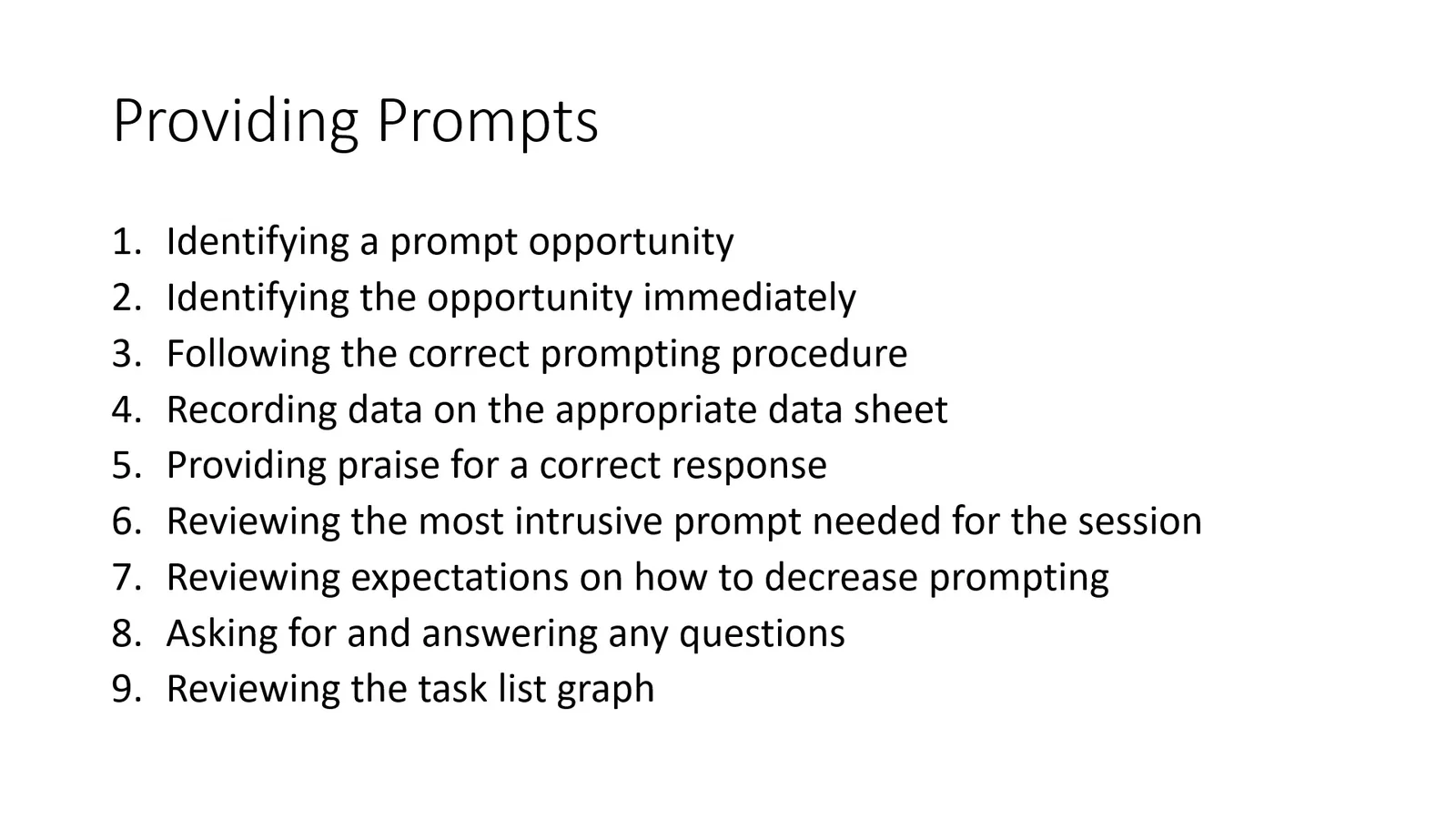
Osos lists the same four steps. She gives written instructions, models the procedure, and then has the RBT rehearse it. The key is where the rehearsal happens.
that RBT is practicing it to fluency. In that role play before ever running it with a client and that there's feedback.
From the talk — Dr. Jessica Osos
She asks trainers to be mindful of every step. Research shows why each step matters, she says. Skipping one weakens the whole process. When BST is done well, staff learn new assessment procedures quickly.
Using BST to give corrective feedback#
Dr. Tyra Sellers turns BST inward. She uses it to structure the feedback conversation itself.
By the way, when you're giving corrective feedback, use behavioral skills training. Get so fluent with the components of BST that in a 60-second feedback delivery, you are doing all of those things.
From the talk — Dr. Tyra Sellers
She demonstrated this live with a discrete trial teaching example. Discrete trial teaching is a structured way of running short, repeated learning trials. In her example, the technician did most things well. But they left the materials on the table after each trial, so the learner could grab them.
Sellers praises what went right. She explains the fix: scoop the materials toward you after the response. Then she offers the model and the rehearsal as a choice.
Do you want me to show you what that looks like? Do you want to run a couple of trials together? Or do you want to practice just so you get a feel for what it's like?
From the talk — Dr. Tyra Sellers
Her advice for supervisors who dread these talks is simple. Practice out loud, even alone in the car. That is BST for the supervisor.
Coaching teachers in their own classrooms#
 Advertisement
Patrick Jackman uses BST to coach teachers on skills like behavior-specific praise (telling a student exactly what they did well). His version is fast and hands-on. He observes, agrees on a target skill with the teacher, and sets a clear goal. For example, a four-to-one ratio of praise to correction, counted in 15-minute blocks.
Then he models, and not in a training room.
We want to model that use of behavior specific praise with that teacher's own class. We're going to get in there next to them. We're going to show them how it can be done in the natural setting, right?
From the talk — Patrick Jackman
He often offers to take over the class. The teacher is not sent off to grade papers. They watch. Right after, he observes the teacher practice and takes data on the spot. Teaching the class himself also shows him where the plan will be hard. He sees which times and activities cause trouble.
Timing is part of his method. He tries to observe, meet, and model within the same school day.
I think having this happen very close together is helpful. It also shows the teacher that you're not just telling them what to do and then ditch them out, right?
From the talk — Patrick Jackman
Jackman admits BST is labor intensive. With planning, though, he says it can move teachers to a comfortable place quickly.
Training parents and caregivers#
Caregiver training uses the same steps, but the plan often has to bend. Matt Harrington treats it as a shaping problem. Shaping means reinforcing small steps toward a final goal.
We want to use BST or a variation of BST depending on feasibility at each step.
From the talk — Matt Harrington
Before training, he defines the final skill precisely. He breaks it into parts and finds the entry point, meaning where the parent is right now. That might be a skill level or the time they can commit. Small early steps help the parent contact success fast.
Harrington also reviewed a telehealth study on language coaching. The caregivers were in Germany and the trainers were overseas. The training was not fancy.
They did basic behavioral skills training. So they had information, they modeled, they role played, and then they provided feedback.
From the talk — Matt Harrington
Caregivers recorded videos of themselves playing with their kids. Fidelity was high. For Harrington, the magic was in the language strategies, not the training method. Plain BST was enough to deliver them.
Leanne Page offers a way to decide when more BST is the answer. She sorts caregiver breakdowns into technical and relational problems. If a parent has not had behavior skills training on the plan's steps, that is a technical problem. The fix is more training or a simpler plan. If the problem is trust or the relationship, more BST will not solve it.
Adapting BST for complex profiles#
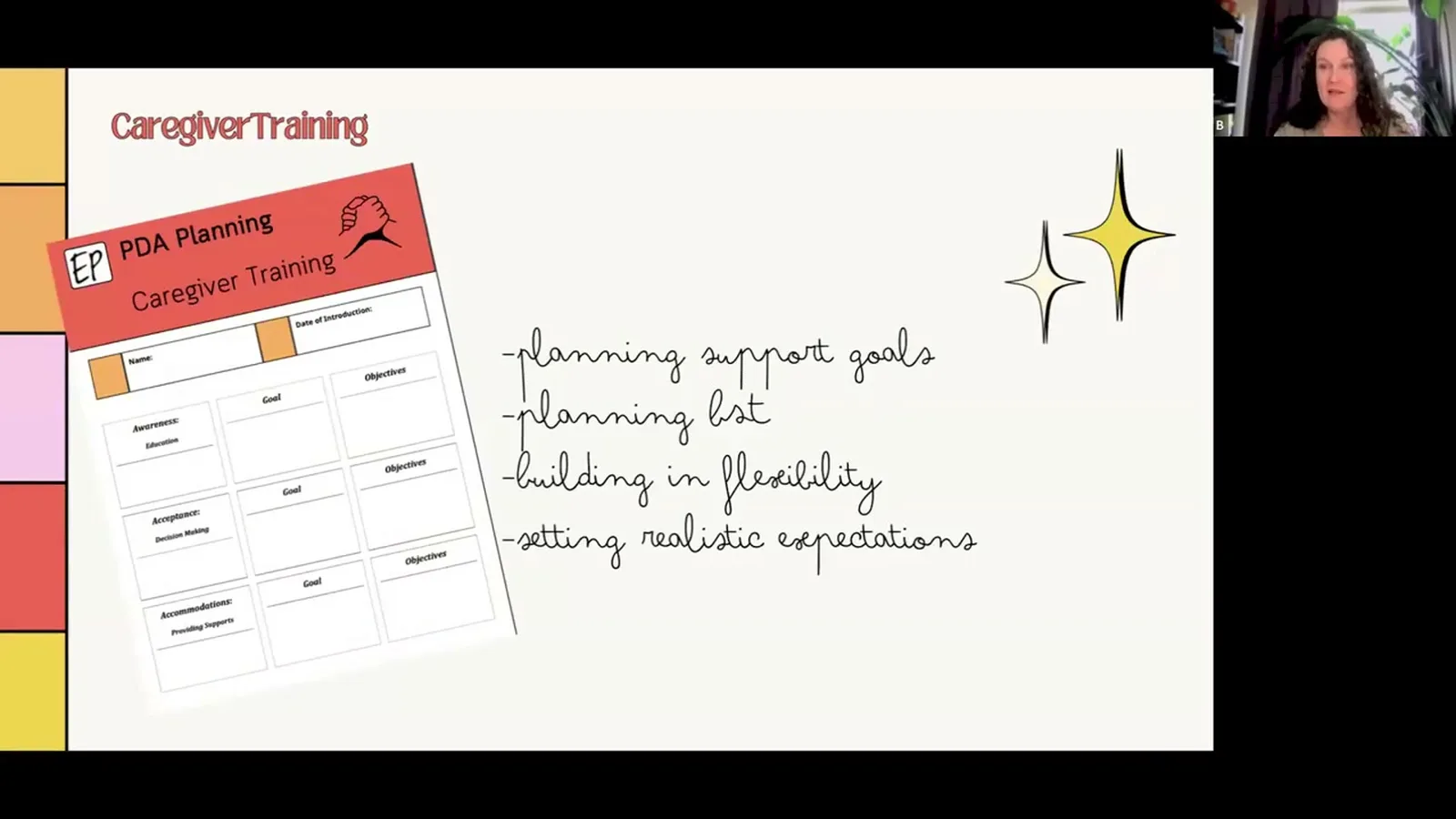
B. Kuerine Gray works with caregivers of children with a PDA profile (a pattern of strong demand avoidance). She maps a caregiver program called the paradigm shift onto BST. Awareness becomes the education piece. Acceptance and decision-making become the training piece, where parents learn to respond to behavior. Accommodations become the proactive piece, meaning how the environment is set up.
She shared a feeding case where the stakes were high. The goal was to avoid hospitalization.
BST was used to provide education on not only communication, but being able to present a accommodated environment to them and pair with reinforcement so that they could develop positive associations
From the talk — B. Kuerine Gray
In another case, a 14-year-old with severe aggression, caregiver training focused on autonomy. Parents learned to adjust expectations, frame demands differently, and read escalation cues. Gray stresses that training for this profile must build in flexibility.
Gray carries the same logic into supervision. If we use modeling and scaffolding with caregivers because it works, she asks, why would we skip it with our own staff?
Teaching functional analysis, including over telehealth#
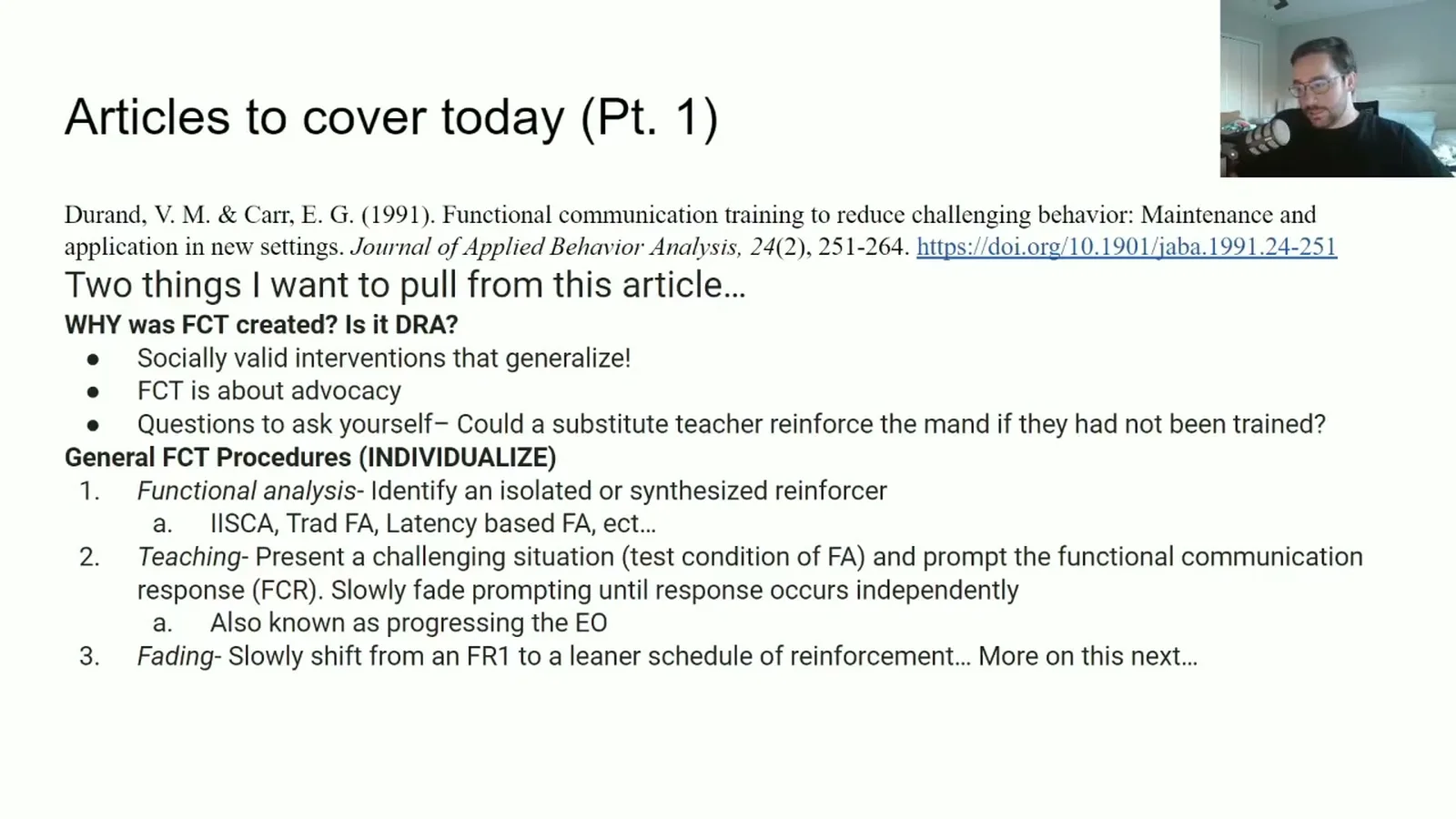
A functional analysis tests why a behavior happens. It uses set conditions that must be run with high fidelity. Matt Harrington says BST is the standard way to teach them.
Behavioral skills training has been shown a million and a half times to be able to effectively teach functional analysis conditions very efficiently.
From the talk — Matt Harrington
He points back to early work. In 1982, Iwata and colleagues used BST to improve clinical interviewing, with a 33-step fidelity checklist. Miltenberger and Fuqua used a 10-step checklist a few years later. Harrington notes this research is nearly 40 years old and needs updating.
Over telehealth, the BCBA is often not the one running the conditions. So he meets the implementer ahead of time, often on Zoom. He role plays several scenarios. Some have the behavior, some do not, and some add random surprises.
When it comes to the best way to use BST, most of the research shows that feedback and things like talkback are really effective methods.
From the talk — Matt Harrington
Talkback means the caregiver explains the method back in their own words. If he can be "in their ear" during the session, he live-coaches without disturbing the client.
Training supervisors, not just technicians#
BST is not only for entry-level staff. Dr. Allison Bowhers-Peutin used it to teach BCBA supervisors three skills: goal setting, feedback, and prompting with planned fading. Planned fading means cueing a correct response, then gradually removing the cue. The BACB (Behavior Analyst Certification Board) is the body that sets the field's credentialing rules. She notes its supervision curriculum already recommends BST for both supervisors and trainees. Until her work, though, that use had not been tested in an experiment.
Lauren Donovan builds BST into her supervision system and adjusts the target by role.
You can use BST for everybody, but for therapists.
From the talk — Lauren Donovan
For therapists, the focus is performance feedback. For trainees, it is clinical judgment and programming. For supervisors, it becomes leadership coaching. The method stays the same while the skill changes.
In a second talk, Donovan notes that the BACB names BST as a core part of effective supervision. It builds competence through guided practice, "rather than Simply telling supervisors or trainees what to do."
Why clinicians skip steps#
Almost everyone endorses BST. Fewer people do all of it. Lauren Donovan hears this constantly.
We know BST is the best thing. We know we should be doing it.
From the talk — Lauren Donovan
People tell her they use BST all the time. Then they explain that they modeled once, three weeks ago. That is not BST. Donovan names the real barrier: time. Supervisors say they have report deadlines, and feedback loops take longer.
Her answer is to do both. When a trainee writes their first treatment plan, the deadline still exists. So the supervisor teaches through that real task instead of setting it aside. She also suggests linking fieldwork tasks to what the trainee is learning in school. That way, practice and coursework build on each other.
Scaling BST with video and virtual training#
One-on-one BST is expensive. Matt Harrington thinks the field has to scale it, and he believes that means going virtual.
He is honest about the tradeoff. In-person BST is likely more effective every time, he says. But virtual formats make training practical for large organizations. He praises studies that keep the real BST parts, like role play and feedback, instead of just "watch a video."
Not only do they have virtual training, but they also have the BST, its specific components of feedback, role play, all of those other things.
From the talk — Matt Harrington
One study he reviewed taught fieldwork documentation with video lessons and mock scenarios. Written guides and color coding helped. But many learners still needed Zoom coaching to reach mastery. Harrington's read: this lines up with everything known about BST, including that feedback is necessary. Video can carry instruction and modeling. It struggles to replace the feedback step.
BST and instructional design#
Ally, who designs staff and stakeholder training, shows how BST fits a larger framework. Instructional design uses a sequence called Gagne's nine events of instruction. Ally points out that behavior analysts already know several of them.
Eliciting performance is just that role play or rehearsal piece of BST, providing feedback.
From the talk — Ally
The assessment event matches BST's feedback step. Both are iterative. Ally also flags two things BST trainers often miss. The first is "providing learning guidance," like examples, non-examples, and common pitfalls. The second is transfer, which is simply the design world's word for generalization. The skill has to work outside the training room, not just inside it.
Mellanie Page offers a reminder about scope. BST is really a form of coaching. Matt Harrington describes it as "feedback, role play, instruction, repeat." Using BST-style coaching does not mean someone is practicing ABA under a BCBA credential. The method is behavioral, but it is not owned by one profession.
Where BST falls short: abuse prevention#
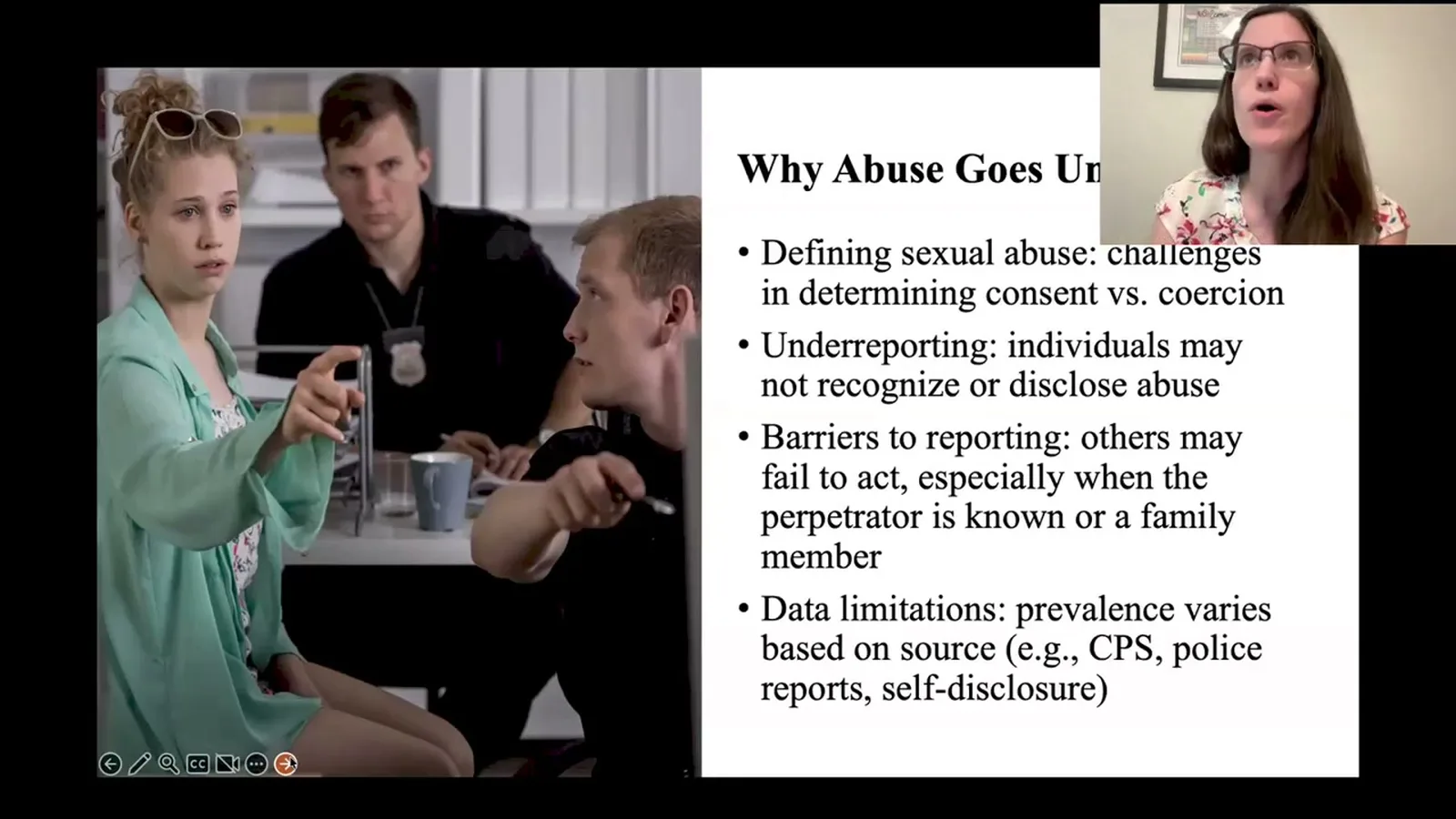
Tricia Lund, who studies abuse prevention for people with disabilities, takes a hard look at BST's limits. BST is the main tool BCBAs use for safety training. It works well for clear threats, like a stranger offering a lure. The learner says no, leaves, and tells a trusted adult.
Relationships are harder. Lund points out a gap in the research base.
the majority of BST research on relationship safety... has been conducted with regards to strangers.
From the talk — Tricia Lund
Abuse often comes from people the person knows, including caregivers. That exposes a hidden assumption in safety BST.
BST, when you're looking at relationships, we're making the assumption that the person with a disability is able to actually leave that situation... in situations where they are relying on the person for care, they may not actually be able to leave.
From the talk — Tricia Lund
Lund still calls BST a reliable strategy for some safety skills. She does not think it is enough on its own for abuse inside care relationships.
Where experts disagree#
The speakers agree that BST works. They split on three practical questions.
Full package or a lighter version? Dr. Jessica Osos asks trainers to make sure every step is met. Lauren Donovan warns that a single model weeks ago does not count. Matt Harrington takes a more flexible view. He uses "BST or a variation of BST depending on feasibility," especially with parents. He also accepts virtual BST as a tradeoff, even though in-person is likely stronger. So one camp guards the complete package. The other trims it to what a family or agency can actually sustain.
How much does modeling matter? Crystal Harms says "Modeling is not teaching" and puts rehearsal with feedback at the center. Mellanie Page's onboarding session leaned on modeling as the main alternative to jargon. Harrington, reviewing the research, highlights feedback and talkback. These are not fully opposed. But they would lead trainers to spend limited time in different places.
Model live or rehearse first? Osos wants the RBT practicing to fluency in role play "before ever running it with a client." Harms says modeling is always best done in real time with clients if possible. Jackman models inside the teacher's real classroom. Mellanie Page says to model during client behavior or in role play, whichever you have. The split tracks the risk. Assessments call for practice away from the client. Everyday teaching skills may benefit from the natural setting.
What the research says#
Published studies back the core claim and also feed the debates above.
A component analysis compared single BST steps for teaching data collection to preservice professionals. Modeling was the most effective single component. Some participants reached mastery in two sessions. Instruction and feedback also helped, but less consistently (Keene, Elfers, & Shepley, 2026). The authors suggest some skills may need only select components. That result pushes against the "modeling is not teaching" view, at least for simple skills.
A study of school paraeducators compared full BST with a brief performance feedback approach. Both worked about equally well. The brief version took less time (Ampuero & Robertson, 2025). This supports trimming BST when time is tight.
A web-based module taught behavior analysis students to run BST for medication safety skills. One student reached 90% fidelity from the module alone. Two others needed added feedback (Gray, Miltenberger, & Walker, 2026). Like Harrington's review, this suggests online training can carry a lot, while feedback often closes the gap.
BST with a brief video model also taught discrete trial teaching to new staff with no prior experience. Staff rated the approach as highly acceptable (Zheng, Albright, & Mahoney, 2025).
FAQ#
What are the four steps of behavioral skills training? The four steps are instruction, modeling, rehearsal, and feedback. The trainer explains the skill, shows it, has the learner practice, and then coaches the practice. Rehearsal and feedback repeat until the learner meets a set mastery goal.
Is BST only for training RBTs? No. Clinicians use BST with RBTs, parents, teachers, new BCBA supervisors, and people learning safety skills. Dr. Tyra Sellers even uses it to structure a 60-second corrective feedback conversation. The steps stay the same while the skill being taught changes.
Can BST be done over telehealth? Yes. Studies discussed here trained caregivers fully over telehealth with high fidelity. Trainers can model on video, role play on Zoom, and give feedback on recorded sessions. Many experts note that live feedback is still the step that is hardest to replace.
For more on the RBT 40-hour training, see Press Pause: What the RBT 40-Hour Training Was Really Meant to Do.
 Advertisement
Turn this topic into a CEU
You just studied this. Now get credit for it.
Watch Dunder Mifflin’s Guide to BCBA Supervision: Lessons from The Office with Mellanie Page and earn 1 free BCBA CEU. Detailed certificate, delivered the moment you finish.
Keep going with a free learning path
Supervision, Done Right
Four supervision CEUs that build on each other. What reflective supervision is, how to build a supervision system, how to assess supervisee competence instead of counting hours, and how supervision affects provider outcomes. The BACB asks supervisors for three supervision CEUs per cycle. This covers it.
Want the primary literature? Read the Behavioral Skills Training (BST) research roundup on our sister site, Behaviorist Book Club.