Rejection Sensitive Dysphoria (RSD) and ADHD in ABA
What Rejection Sensitive Dysphoria (RSD) is, why it shows up in ADHD learners, and how ABA teams can correct errors and build skills without the sting.
Key takeaway
Rejection Sensitive Dysphoria (RSD) is a strong, painful reaction to rejection or criticism that often shows up in people with ADHD. "Dysphoria" just means a deep feeling of unease or distress.
Empowering Autonomy and Self-Management in ADHD Learners
Experts who cover this
4 recordings on openceu cover Rejection Sensitive Dysphoria (RSD).
- Featured talk1 CEU
Empowering Autonomy and Self-Management in ADHD Learners
Nicole StewartThe Behaviorist Bookclub
Stewart describes rejection sensitivity in ADHD as a physical, embodied experience of perceived rejection that can be punishing enough to suppress attempts at…
- 1 PDU
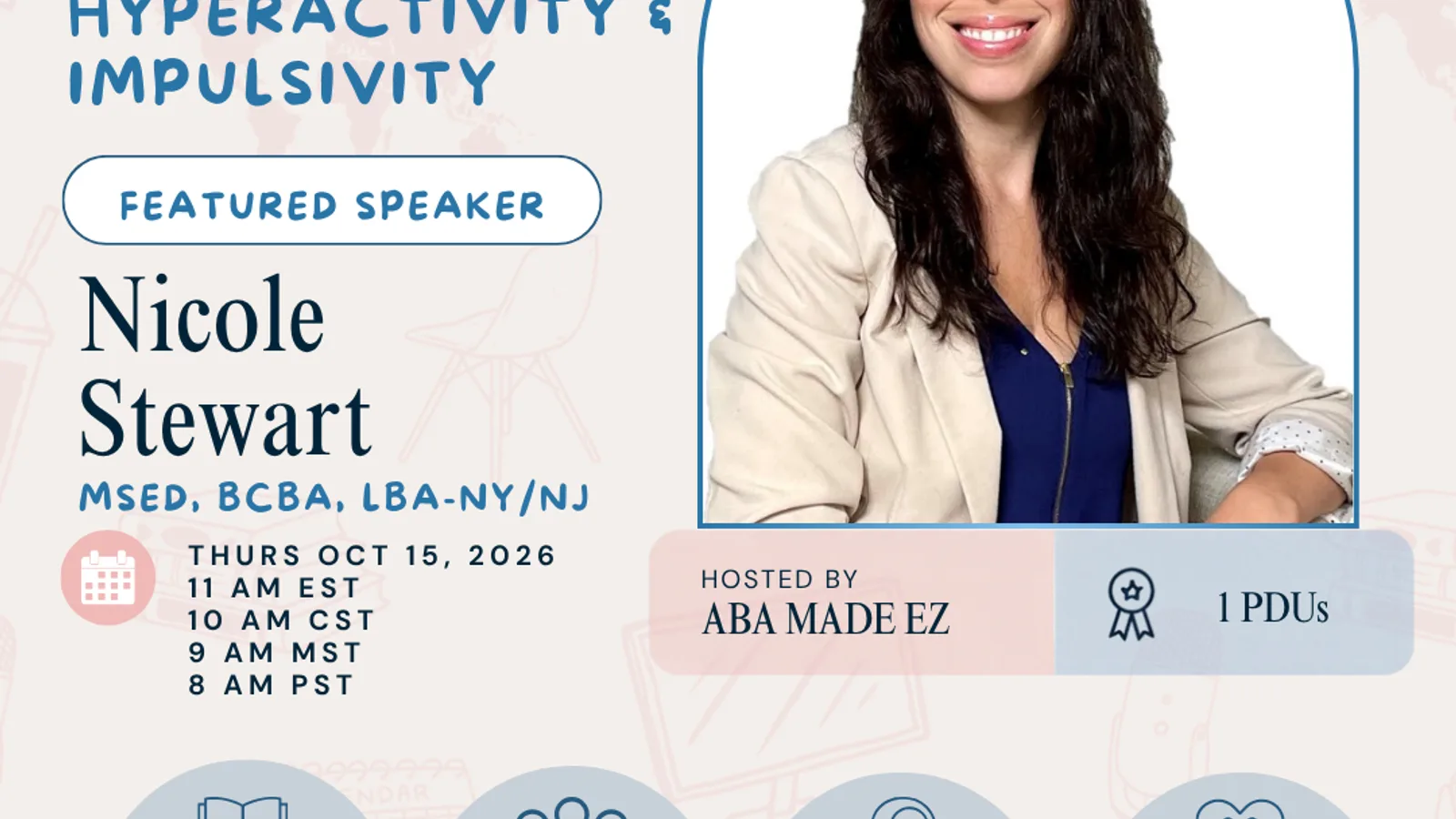
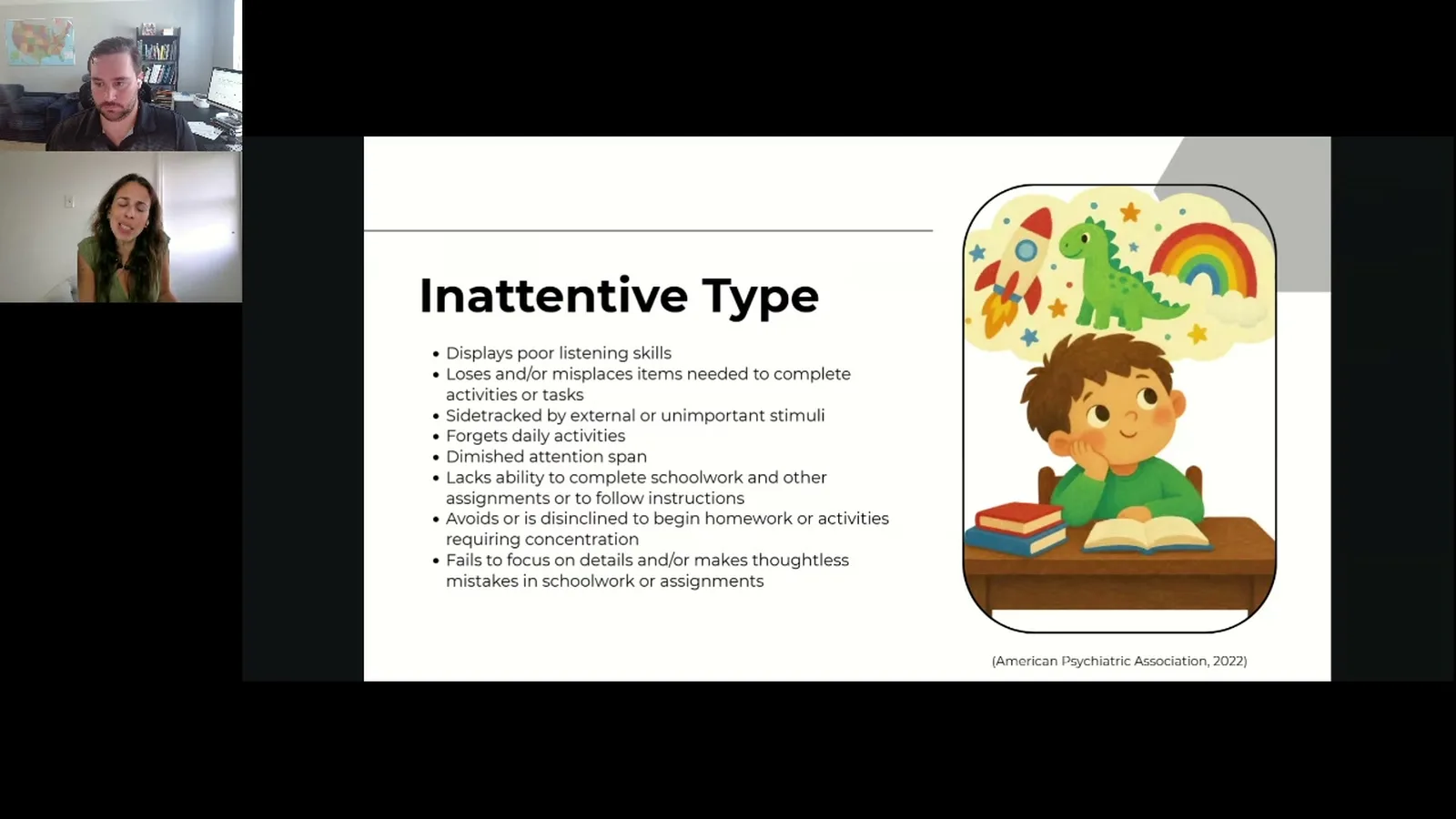
Understanding ADHD: An RBT PDU Series | ADHD 101: Inattention, Hyperactivity & Impulsivity
Nicole StewartABA Made Ez
Described as a common ADHD/autism comorbidity symptom — extreme emotional fragility triggered by negative feedback or perceived criticism, illustrated by a…
- 1 CEU
Shaping Behavior Change when ADHD is in the Picture
Nicole StewartThe Behaviorist Bookclub
Error correction was flagged as especially difficult for ADHD clients due to rejection sensitivity, with Nicole recommending gentle modeling of correct…
- 1 CEU
Reframing Behavior through an ADHD Lens
Nicole StewartThe Behaviorist Bookclub
Raised by an attendee and expanded on by Nicole as a phenomenon where people with ADHD experience physical symptoms of rejection, even in response to a neutral…

On this page · 10 sections▾
Rejection Sensitive Dysphoria (RSD) is a strong, painful reaction to rejection or criticism that often shows up in people with ADHD. "Dysphoria" just means a deep feeling of unease or distress. RSD is a widely used clinical term. Whether it counts as a formal diagnosis on its own is general context, not something addressed in the talks below. In ABA talks, it comes up as part of the bigger ADHD picture.
For behavior analysts, RSD matters because feedback is a daily part of teaching. A small correction can land like a big blow. Nicole Stewart, a BCBA (Board Certified Behavior Analyst) who teaches about ADHD, returns to this topic across several talks. Her points shape how we praise, correct, and support learners who feel rejection hard.
What RSD feels like day to day#
In an RBT training on ADHD basics, Nicole Stewart gives a simple way to picture RSD. She lists it among the traits that often travel with ADHD and autism.
Rejection sensitive dysphoria. That's that feeling of like emotional fragility.
From the talk — Nicole Stewart
"Emotional fragility" means feelings that break easily. Stewart says the trigger can be negative feedback or criticism. It can also be criticism the person only thinks they heard. That second part is key. The rejection does not have to be real to hurt.
She shares a story about her own son. In gym class, one child got a lot of help and attention from the group. Her son came home feeling bad about himself. The moment had nothing to do with him. Still, he felt left out, because he feels people do not always give him that same support. Stewart points out that kids can be sensitive even when nobody did anything to them. For a clinician, this is a useful reminder. The trigger may be hard to spot from the outside.
Rejection you can feel in your body#
One of Stewart's strongest points is that RSD is not only a thought or a mood. It can be a body feeling. In her talk on reframing behavior, an attendee raised RSD in the chat. Stewart then shared a recent article she had been reading.
people with ADHD actually experience physical. symptoms of rejection when and they are when when they feel
From the talk — Nicole Stewart, BCBA
In plain terms, the sting of rejection can show up as a real change in the body. Right after this point, a parent in the audience added that her son says rejection "makes the stomach hurt." Stewart agreed that this made sense.
She makes the same point in her talk on autonomy and self-management. There she frames it as early research, not settled fact.
the experience. of rejection in those with ADHD. Shows up as a physical. experience with with sensation, physical sensations.
From the talk — Nicole Stewart, BCBA
This changes how we read a child's behavior. A learner who pulls away after feedback may be reacting to real discomfort. They are not simply being stubborn.
Why a neutral moment can still sting#
A common mistake is to think RSD only follows harsh words. Stewart pushes back on that idea. She explains that the trigger can be something with no negative intent at all.
Even a neutral stimulus. Can evoke those feelings. of rejection
From the talk — Nicole Stewart, BCBA
A "stimulus" is anything in the setting that a person reacts to. A neutral stimulus is one that is not meant to be good or bad. The gym class story fits here well. Nobody rejected her son, and nothing was aimed at him, yet he still felt rejected.
For ABA teams, this means you cannot judge the trigger by your own intent. You may give a calm, plain instruction and still see a big reaction. The reaction is the data. It tells you how that moment landed for the learner. Watching for these patterns can help you plan feedback that feels safer. It can also help you explain the reaction to parents and teachers who think it came "out of nowhere."
Withdrawal, meltdowns, and masking#
In her autonomy talk, Stewart opens the topic with a direct question to the audience.
Rejection sensitivity. What is it? Why is it important?
From the talk — Nicole Stewart, BCBA
She then names three ways the body feeling can show up in behavior. The first is withdrawal. This means pulling back to escape the uncomfortable sensations. The second is a meltdown. Stewart describes parents who told her their kids melt down every time they get rejected. She links this to social awareness, or knowing how others will see you. Kids without that skill have no way to hold the feeling in.
The third is masking. Masking means hiding your real feelings so others will not see them. Stewart says this is more common in people who do have social awareness. They know a meltdown would stand out, so they cover it up. But she warns that masking is very tiring. A learner who looks fine may be working hard just to keep it together. That hidden effort can drain energy that would otherwise go to learning.
Why RSD matters for independence#
Stewart's autonomy talk is about helping ADHD learners manage their own behavior. That goal depends on the learner being willing to try new things. Trying new things means risking mistakes. Mistakes bring feedback, and feedback can feel like rejection.
When the body reacts that strongly, withdrawal makes sense. If trying leads to a painful feeling, the learner may simply stop trying. In behavior terms, the feeling can act like punishment. Punishment here means anything that makes a behavior less likely to happen again. It is not about intent. It is about what happens next.
This is why Stewart treats rejection sensitivity as a "huge piece" of the ADHD picture. A plan to build self-management will stall if each attempt feels like a threat. Clinicians may need to make early attempts feel safe before asking for more. That can mean smaller steps, more praise for effort, and fewer moments of open correction. The aim is to keep the learner in the game long enough to build real skill.
Coercion, defiance, and the next point#
Stewart places RSD right after a talk segment on coercion. Coercion means getting someone to act through pressure or force. She cites research by Diller on parent and child interactions. That work found coercive exchanges can condition and maintain defiant behavior in people with ADHD.
Her summary of the idea is simple. The research theorized that defiance was reinforced through dopamine pathways. Dopamine is a brain chemical tied to reward. Being defiant may still deliver that reward, which makes defiance more likely next time. So, Stewart says, any tactic that "smells of coercion" can lead to defiance that then gets reinforced.
She then says this leads straight into rejection sensitivity. The link is practical. Pressure and harsh correction can feel like rejection to a sensitive learner. That can set off the body response and the behavior that follows. A softer, less forceful approach protects against both problems at once. For BCBAs writing plans, this is a strong reason to check every step for hidden pressure.
Error correction without the sting#
Error correction is how a teacher shows a learner the right answer after a mistake. It is a core ABA tool. In her talk on shaping behavior, Stewart flags it as a special risk for ADHD learners.
the big piece for ADHD is even more than really enforcement error correction. I had a client who could not tolerate error correction. Rejection sensitivity. Can lead to behavioral issues when providing. error corrections.
From the talk — Nicole Stewart, BCBA
Her fix is to change how the correction looks. First, reinforce the effort. Reinforcement means adding something that makes a behavior more likely to happen again. She gives an example from letter writing. You might say, "That's such a great job that you tried to do an E." Then you add, "I'm going to show you how I do these. Ready? Look. That's how I make an E."
The key move is gentle modeling. Modeling means showing the skill instead of explaining what went wrong. Stewart contrasts this with saying "I'll fix it" or "Do it better." Those phrases can set off rejection sensitivity. Modeling keeps the learner encouraged to keep trying. She also notes that social praise, like warm words and attention, works really well for these learners. Her full approach is in Shaping Behavior Change when ADHD is in the Picture.
Helping learners name what they feel#
Right before her error correction section, Stewart makes a related point. She says functional communication can be "life-changing" for the kids she works with. Functional communication means teaching a person a clear way to express a need or feeling. Here it means helping a learner communicate what is happening inside them.
This fits RSD well. The rejection feeling is often hidden or confusing, even to the learner. A child may only know that their stomach hurts. When a learner can say "that felt bad" or "I need a break," the team gets useful information. The learner also gets a safer option than a meltdown or masking.
Stewart's other points support this approach. Kids without social awareness melt down because they lack another way to cope. Kids with social awareness mask, which wears them out. Teaching a learner to name the feeling gives both groups a better path. It also helps caregivers see that the reaction is real and worth taking seriously.
What the research says#
There are no peer-reviewed article citations for RSD here yet. The research below is what Nicole Stewart describes in her talks.
In her reframing talk, Stewart mentions a recently published article on rejection sensitivity. She reports that it found people with ADHD feel physical symptoms of rejection. She adds that even a neutral stimulus could trigger those feelings.
In her autonomy talk, Stewart cites a study by Roni Smith and colleagues. It looked at the experiences of five college students with ADHD. Stewart is careful about its limits. She says it is "by no means conclusive." Five people is a very small group. She calls it a foundation for future research on the topic.
She also cites Diller's work on coercive parent and child interactions. That research theorized that defiance in ADHD can be reinforced through dopamine pathways. It is not a study of RSD itself. Stewart uses it to explain why pressure can backfire with sensitive learners.
The takeaway is that this research is early. Clinicians should treat RSD as a useful lens, not a proven model.
FAQ#
Is Rejection Sensitive Dysphoria a real diagnosis? RSD is a widely used clinical term. Whether it stands as a formal diagnosis on its own is general context, not a point Stewart's talks cover. In ABA talks, it's usually discussed as part of ADHD, often alongside autism.
Can RSD cause physical symptoms? Early research suggests it can. Nicole Stewart reports that people with ADHD may feel rejection as real body sensations. One parent shared that her son says it makes his stomach hurt.
How should an RBT correct mistakes with a learner who has RSD? Praise the effort first. Then gently model the right answer instead of saying "fix it" or "do it better." This keeps the learner trying without setting off the rejection response.
Turn this topic into a CEU
You just studied this. Now get credit for it.
Watch Empowering Autonomy and Self-Management in ADHD Learners with Nicole Stewart, BCBA and earn 1 free BCBA CEU. Detailed certificate, delivered the moment you finish.