Early Signs of Autism: What BCBAs Should Hand to Parents
The CDC red flags, the M-CHAT, and the three resources a BCBA can send to a worried parent without overstepping, from a BCBA-led CEU.
Key takeaway
A Board Certified Behavior Analyst (BCBA) is often the first clinician a worried parent talks to about a younger sibling, and the right handoff is the CDC red flag list, the Modified Checklist for Autism in Toddlers (M-CHAT), and the Ages and Stages Questionnaire, paired out loud with the line "we are not diagnosticians." That sentence is the whole job.
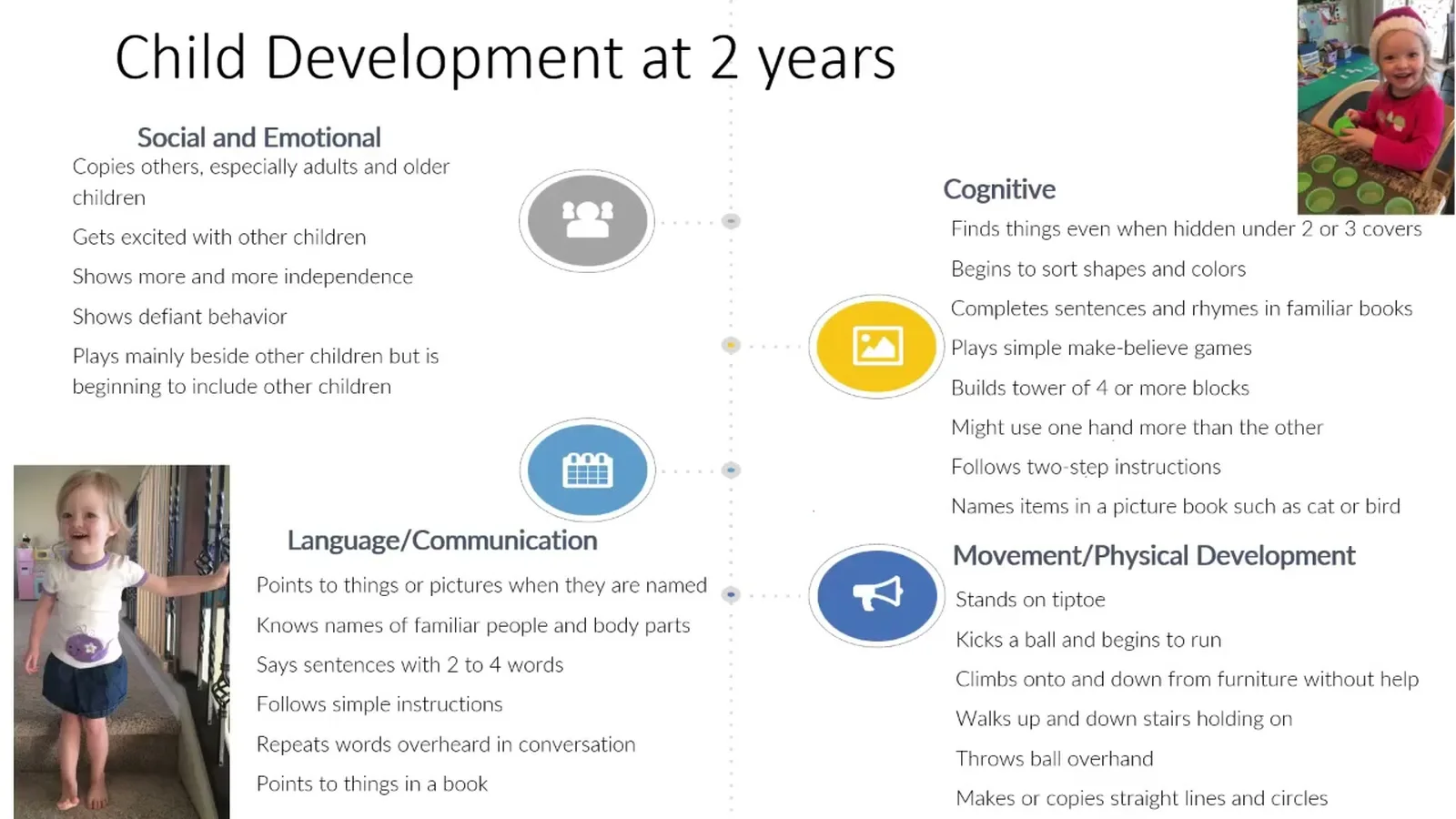
Child Development for Behavior Analysts
On this page · 8 sections▾
A Board Certified Behavior Analyst (BCBA) is often the first clinician a worried parent talks to about a younger sibling, and the right handoff is the CDC red flag list, the Modified Checklist for Autism in Toddlers (M-CHAT), and the Ages and Stages Questionnaire, paired out loud with the line "we are not diagnosticians." That sentence is the whole job. You give parents the tools to bring real data to the pediatrician, and you stay in your scope while you do it.
The stakes are not small. Reliable autism diagnostics can be done by age two, but most kids in the United States are not diagnosed until age four or later. That is two years a family loses while a parent tries to figure out who to ask. If you are the BCBA already in the home for an older sibling, you are sitting in the seat where that gap can close. You just need to know what to say, what to send, and where to stop.
The Conversation That Starts in Your Parent Training Sessions#
Most of these conversations do not happen in a meeting. They happen at the kitchen table, after the session with the older sibling is done, when mom looks up from the couch and says "I think something might be going on with the baby too." You are tired. She is tired. The baby is on the rug. That is the moment.
Kristen Byra, PhD and BCBA, framed it cleanly in her talk for BCBAs on child development.
If parents are talking to you about like, hey, I have some concerns about little brother, little sister, we are obviously not diagnosticians, or most of us are an aunt. These are some good resources to send back to parents and say, hey, there's this free tracker. From the talk — Kristen Byra
The "aunt, not diagnostician" framing is the right opener for you too. It lowers the temperature, it tells the parent you are not about to drop a bomb on them, and it keeps you on the correct side of the Centers for Disease Control and Prevention (CDC) and the Behavior Analyst Certification Board ethics code at the same time.
What Counts as a Red Flag at 12, 14, and 18 Months#
The CDC publishes a short list of early signs. It is written for parents, which makes it the right thing to read out loud with one. You do not have to translate it. You just have to know it well enough to scan the list with mom and ask "have you been seeing this one?"
We're not responding to our name by 12 months. We're not pointing at objects or showing interest in 14 months. We don't have any kind of pretend play skills. We're avoiding eye contact and want to be alone. We have trouble understanding other people's feelings. We have delayed speech and language skills. From the talk — Kristen Byra
The CDC list also flags echolalia, giving unrelated answers to questions, getting upset by small changes to routine, narrow and intense interests, repetitive behavior, and strong reactions to sound, taste, smell, sight, or touch. None of these by themselves mean autism. A short list of them, seen at home for weeks, is a reason to start asking the pediatrician for a referral. That is the message.
The Three Free Tools You Can Send Tonight (CDC, M-CHAT, Ages and Stages)#
Three resources. All free. All in plain language. Send them in one short text or email so the parent can open them at the next wellness check.
CDC Milestone Tracker app. Free on the App Store and Google Play. Checklists by month from 2 months through 5 years, with short videos showing what each milestone looks like in real life. The video clips are the part that matters most for a parent who is not sure what "responds to name" really means. The parent walks into the pediatrician with data, not a feeling.
M-CHAT-R, on the Autism Speaks website. A 20-question screener for kids 16 to 30 months old. Available in many languages, which matters when English is not the family's first language. It takes about five minutes for a parent to complete. A flagged score is not a diagnosis. It is a permission slip to ask for a referral.
Ages and Stages Questionnaire (ASQ). A longer screener that covers communication, gross motor, fine motor, problem solving, and personal-social skills. Many pediatric offices use it already. Some states give it for free through their early intervention program. The parent can ask at the next visit.
You can drop those three links in a single message. That is the whole handoff.
What to Say (and Not Say) When a Parent Asks 'Do You Think It's Autism?'#
This is the moment the ethics code wants you to handle clean. You are not a diagnostician. You do not have an Autism Diagnostic Observation Schedule (ADOS), you have a relationship with the older sibling and a sharp eye. So you say what you saw, you hand over the tools, and you stop.
Kristen draws the line out loud.
Screening does not supplant diagnostics, right? So screening, just because the screening tool comes back with a concern does not mean that there is an automatic diagnosis of autism. We just want to make sure that we are giving parents tools if they're concerned, but we are certainly not telling them, yes, younger sibling does or does not have autism. From the talk — Kristen Byra
Things to say:
- "I am not a diagnostician, but I can share some free tools you can bring to the pediatrician."
- "Here is what the CDC lists. A few of these caught my eye. Have you been noticing any of them?"
- "If you want, fill out the M-CHAT tonight and bring it to your next visit."
- "The pediatrician can refer you for a full evaluation. That is the next step."
Things to never say:
- "I think your child has autism."
- "I think your child does not have autism."
- "Don't worry about it, kids develop on their own time."
- "Wait and see how it looks in a year."
The first two are out of scope. The second two cost time. Right now time is the most expensive thing in the room.
Why the Gap Between Age 2 and Age 4 Matters#
If you only get one slide from this whole topic into a parent's head, it is this one. The science says we can diagnose autism reliably by age two. The data says most kids are not diagnosed until age four or later. Two years of early intervention is sitting in that gap.
Even though we can get reliable diagnostics done by age two, we're still seeing that most kiddos are not being diagnosed until age four or later. And so ideally, we are getting all this information into the hands of caregivers as soon as possible. So if there is concern, we can start intervening right away and not have to wait. From the talk — Kristen Byra
The gap is wider for some families than others. The literature shows kids of color are diagnosed later than white kids, kids in rural areas wait more than a year longer than kids in cities, and girls are missed more often than boys. Some of that is socioeconomic. Some of it is access to a developmental pediatrician within driving distance. Some of it is a parent who was told by one provider to "just wait." Your job is not to fix the whole system. Your job is to make sure this one family does not lose a year because nobody handed them the M-CHAT.
A One-Page Handoff Script You Can Save in Your Notes App#
Save this in your phone. Paste it the next time you need it. Edit the names to match the family.
Hi [parent name], thanks for asking me about [sibling name] today. I am the BCBA for [older sibling], not a diagnostician, so I cannot tell you whether [sibling name] has autism. What I can do is share three free tools that a lot of parents use to bring real information to their pediatrician.
- The CDC Milestone Tracker app. Free, has short videos so you can see what each milestone actually looks like.
- The M-CHAT-R screener for kids 16 to 30 months, on the Autism Speaks website. Free, available in many languages, takes about 5 minutes.
- The Ages and Stages Questionnaire. Your pediatric office may already use this. You can ask at the next visit.
If anything in the CDC list or the M-CHAT catches your eye, bring it to the pediatrician and ask for a developmental evaluation referral. Early evaluation is the only thing that opens the door to early services, and the wait lists are long, so it is worth asking sooner rather than later.
I am happy to talk through what you see at home. I am not the right person to make the call. But the pediatrician is, and these three tools will help you walk in there ready.
That is the handoff. Short, scoped, free for the parent, defensible for you. You can deliver the same thing in person in under three minutes.
Frequently asked questions#
Can a BCBA tell a parent their child has autism?
No. Diagnosis of autism spectrum disorder is outside the BCBA scope of practice. A BCBA can share information about screening tools, point out behaviors they have observed, and recommend a developmental evaluation through the pediatrician. The actual diagnosis is made by a developmental pediatrician, a child psychologist, or a psychiatrist using tools like the ADOS-2.
What is the M-CHAT and who can use it?
The M-CHAT-R is the Modified Checklist for Autism in Toddlers, Revised. It is a free 20-question screener for kids 16 to 30 months old. Parents fill it out themselves on the Autism Speaks website. It is available in many languages. A flagged score is not a diagnosis, it is a signal to ask the pediatrician for a referral for a full evaluation.
What do I do if a parent ignores the red flags I pointed out?
You said what you needed to say. You stay in relationship with the family, keep working with the older sibling, and bring it back up at a future parent training session if you see something new. Some families need to hear it more than once before it lands. Some need to hear it from a second voice, like a pediatrician or a preschool teacher. Document your conversation in the session note so there is a record that you flagged the concern.
Keep going#
The handoff is one piece of a bigger job. The same talk goes deeper on the BCBA scope on developmental milestones, mastery criteria that match real child development data, and where ABA practitioners commonly aim too high, too low, or in the wrong place entirely.
Watch the full CEU: Child Development for Behavior Analysts with Kristen Byra.
Turn this topic into a CEU
You just studied this. Now get credit for it.
Watch Child Development for Behavior Analysts with Kristen Byra and earn 1 free BCBA CEU. Detailed certificate, delivered the moment you finish.