Token Economy in ABA: How Point Systems Really Work
A token economy rewards good behavior with tokens to trade for prizes. Learn how BCBAs build one that works, and why setup and buy-in matter most.
Key takeaway
A token economy is a reward system built on tokens. A person earns tokens for target behaviors. Later they trade those tokens for something they want.

Free learning path on this topic
Culturally Responsive Practice
Makenzie Sandler's three-part series on culturally responsive practice, each worth an ethics CEU. Cultural competence in clinical work, unconscious bias and values, then culture across teams and systems using OBM.
Experts who cover this
4 recordings on openceu cover token economy aba.
- Featured talk1 CEU
ABA Beyond Autism
Nicole ParksThe Behaviorist Bookclub
Full case study of a token economy Parks personally rolled out across an entire Georgia state psychiatric hospital following a 2009 legal settlement, splitting…
- 1 CEU
Empowering Autonomy and Self-Management in ADHD Learners
Nicole StewartThe Behaviorist Bookclub
Stewart critiques over-reliance on token economies and reward systems for compliance in ADHD learners, arguing they are difficult to generalize or fade and can…
- 1 Supervision CEU
Practical Takeaways for School-Based Behavior Analysts
Dr. Kaci EllisThe Behaviorist Bookclub
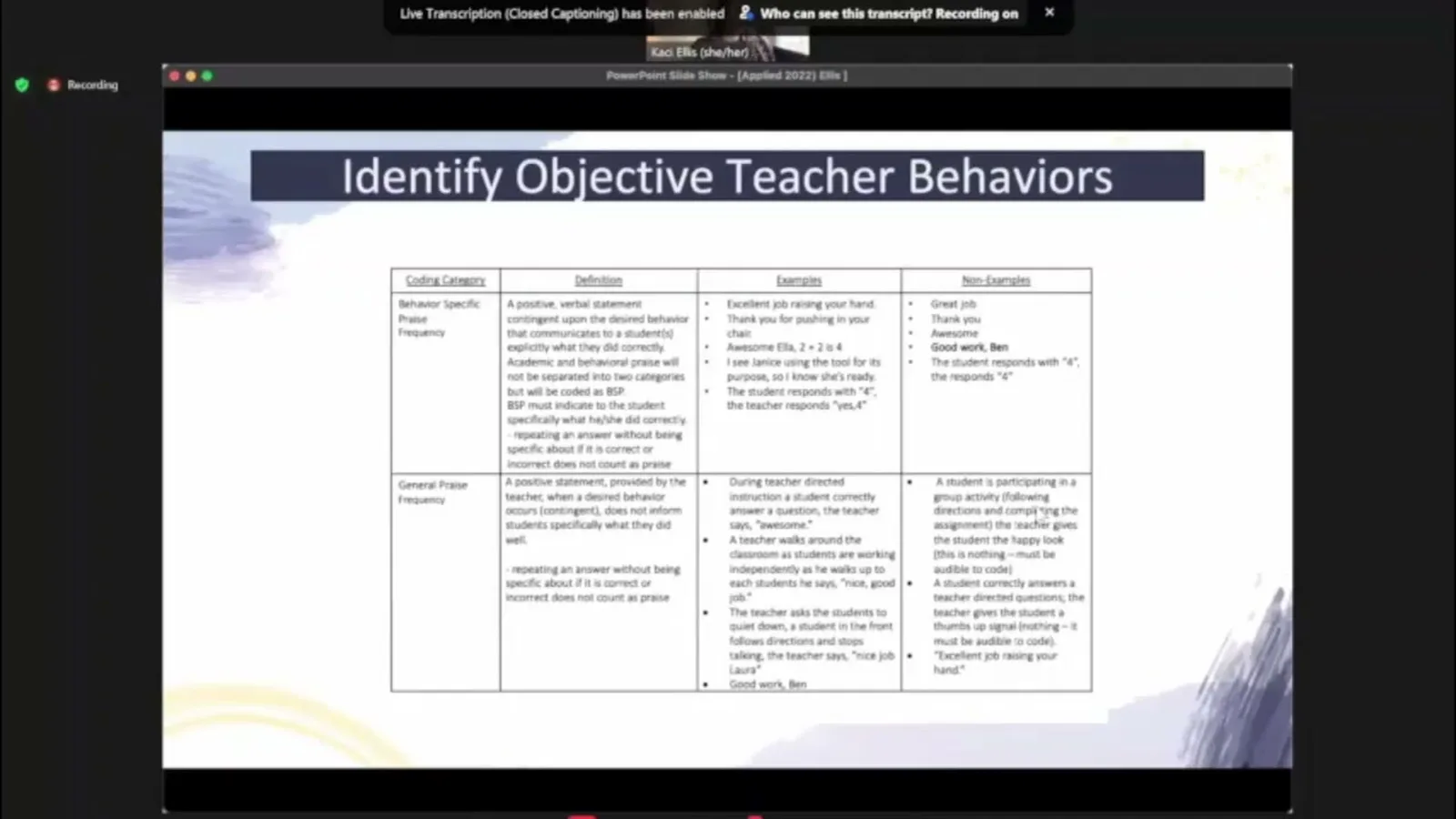
Presented with a caution that having a token economy doesn't mean it's implemented correctly, plus a step-by-step process the presenter uses to teach teachers…
- 1 Supervision CEU
Dunder Mifflin’s Guide to Training and Onboarding: Lessons from The Office
Mellanie PageThe Behaviorist Bookclub
Used as the example behavior-management strategy for illustrating derived relational responding in staff training, including a grocery-store generalization…

On this page · 7 sections▾
A token economy is a reward system built on tokens. A person earns tokens for target behaviors. Later they trade those tokens for something they want. The token works like money in a small economy.
This tool helps BCBAs, RBTs, teachers, and parents. It gives quick feedback and a clear path to a reward. It works in classrooms, homes, and even hospitals. But a token system only works when it is built with care. A weak setup can make a good idea fall apart fast.
Having a system is not enough#
A token board on the wall does not mean it works. Setup and teaching decide the outcome. Dr. Kaci Ellis warns about this common gap.
Just because a teacher has a token economy doesn't mean it's going correctly. From the talk — Dr. Kaci Ellis
People need to understand the system first. Teachers may not even know what a token economy is. So you explain each part before you launch it. Ellis walks teachers through the steps so the system is clear. She makes sure everyone knows what a token economy is and why it works.
The backup rewards can be creative and social. They do not have to cost money. Some schools use a schoolwide ticket that unlocks events. One reward Ellis describes is being class DJ for a brain break. Simple, fun rewards like these keep the system strong.
Build it around the person's values#
A token system works best when it fits the person. You tie it to what they truly care about. Brian Middleton built one from a teen's core values. He also made it a whole-family effort.
sounds like Paul needs a token economy at home. And everybody in the home needs to be a participant in this token economy. It's not just him. It's everybody. From the talk — Brian Middleton
He also managed access to strong rewards. Some items were only available for a set time. Middleton used limited holds on a few of the things Paul could earn. This kept those rewards powerful instead of letting them lose value.
Tokens alone will not save a bad setting#
A token system cannot fix a joyless room. If everything else is unpleasant, tokens fall flat. Claudia Segoe makes this point about classrooms. She notes these systems go by many names, like level systems or school stores. But the name is not what makes them work.
A ticket now and then is not a real experience. The whole environment has to be worth showing up for.
If everything is terrible, except that I get tickets, which I occasionally can redeem for a prize, I'm not going to have a meaningful school experience, right? From the talk — Claudia Segoe
A large-scale success story#
 Advertisement
Token economies can work far beyond the classroom. Nicole Parks rolled one out across a whole psychiatric hospital. It started after a 2009 legal settlement pushed for better patient care. The design shared control with the patients themselves.
we had cards, we had a point system and each of the, um, patients was able to allot 50% of their points and their treatment team was allowed to allot the other 50% of their points across some different activities throughout the day. From the talk — Nicole Parks
That shared control built buy-in from the start. The results were strong across the unit. Parks saw more participation in groups and other treatment activities. There was also a drop in restrictive interventions.
Even a long-resistant patient came around in time. He watched others enjoy the rewards and joined in.
So for a long time, he didn't really care. He had a card. He never got it signed off on. And then eventually after he kept hearing people come back to the unit, talking about all the things that they were getting and going to the events and stuff like that, he started participating. From the talk — Nicole Parks
You can see more school-based systems in Practical Takeaways for School-Based Behavior Analysts.
His story shows what buy-in can do over time. The system did not force him to join. It made joining worth his while. Good design pulls people in instead of pushing them.
What the research says#
Token economies have solid research support in schools. One review looked at 24 studies from kindergarten to fifth grade. The systems produced large effects in both general and special education rooms. The components used varied by classroom type (a review and meta-analysis of K-5 token economy practices).
They help beyond typical school settings too. One pilot study used a token system with children in orphanages. Aggressive behavior dropped a lot after the program (Varghese et al., 2025). Another study used an app-based token system with adults with disabilities. Engagement in daily and work tasks rose and held up for weeks (Beahm et al., 2023).
The way tokens are earned can shape saving behavior. One study tied token systems to how children handle reward delays. Children with more self-regulation saved more tokens. A variable token schedule lined up with their delay choices better than a fixed one (Kim, Fienup, Reed, & Jahromi, 2022).
Steps to build a strong system#
A good token economy follows a clear plan. First you pick the target behaviors to reward. You define them so everyone can spot them the same way. Then you choose a token that is easy to give and track.
Next you pick backup rewards the person truly wants. A preference assessment helps you find these. You set a fair price for each reward. You also decide how often tokens can be exchanged.
Finally, you teach the whole system before you start. Everyone should know how to earn and spend tokens. You check that the plan runs the way you designed it. Small tune-ups keep the system fair and motivating.
FAQ#
What is a token economy in ABA?
It is a reward system based on tokens. A person earns tokens for target behaviors. They trade the tokens later for a preferred item or activity. The token works like money in a small economy.
Why do some token economies fail?
Many fail from poor setup, not a bad idea. People may not understand how the system works. Tokens also fall flat in an otherwise unpleasant setting. Buy-in and clear teaching are what make one succeed.
What can you use as backup rewards?
Backup rewards can be items, activities, or social events. Many do not cost money at all. Examples include picking a class song or being class DJ. The best rewards match what the person truly values.
 Advertisement
Turn this topic into a CEU
You just studied this. Now get credit for it.
Watch ABA Beyond Autism with Nicole Parks and earn 1 free BCBA CEU. Detailed certificate, delivered the moment you finish.
Keep going with a free learning path
Culturally Responsive Practice
Makenzie Sandler's three-part series on culturally responsive practice, each worth an ethics CEU. Cultural competence in clinical work, unconscious bias and values, then culture across teams and systems using OBM.
Want the primary literature? Read the Token Economy in ABA research roundup on our sister site, Behaviorist Book Club.