The Supervision Breakthrough: Bringing Empathy to BCBA Supervision Through Behavior Science
Presented by Bailey Payne

BCBA supervisors play a vital role in developing competent future behavior analysts, yet many behavior analysts receive limited formal training in empathy and relationship-building skills, which matters because supervisor compassion and support are associated with staff well-being and burnout (LeBlanc et al., 2020; Austin & Fiske, 2023). Although traditional supervision practices effectively teach technical competencies, they may not explicitly teach the compassionate interpersonal skills needed for effective professional relationships (Rohrer et al., 2021). This presentation bridges that gap by applying the 12 Behavior Breakthrough skills to BCBA supervision, providing practical ways to integrate empathy and compassion while maintaining clear expectations and accountability. Attendees will learn to identify observable supervisory behaviors that demonstrate empathy and compassion and distinguish skill deficits, performance barriers, and competing contingencies before responding to supervisee performance. Attendees will also practice using behavior-analytic strategies to provide feedback that combines clarity, collaboration, reinforcement, and a teachable next step.
Sign in to buy — $20One-time purchase, permanent access. Cert delivered to your inbox the moment you pass the quiz.
Learner ratings
from 17 learners
94% would recommend this CEU to other professionals in their field (17 responses)
“This was great! Very clear and informative and useful!”
— Liza G.“Lots of great points about how to ensure you are using ABA with your adult trainees.”
— Allison G.“Planning to go over the 4-step process with my BCBA candidates and introduce them to these concepts, want to make sure I am able to focus on building relationships during and through training before they take on the leadership role.”
— Sara G.“Love how organized and engaging you were! I cannot tell you how aligned I am in style, but your organization and execution were impeccable!”
— Theresa P.“Thank you so much for an informative and important presentation!”
— Cierra H.“Great Presentation Bailey!!!”
— Falon R.
About this CEU
BCBA supervisors play a vital role in developing competent future behavior analysts, yet many behavior analysts receive limited formal training in empathy and relationship-building skills, which matters because supervisor compassion and support are associated with staff well-being and burnout (LeBlanc et al., 2020; Austin & Fiske, 2023). Although traditional supervision practices effectively teach technical competencies, they may not explicitly teach the compassionate interpersonal skills needed for effective professional relationships (Rohrer et al., 2021). This presentation bridges that gap by applying the 12 Behavior Breakthrough skills to BCBA supervision, providing practical ways to integrate empathy and compassion while maintaining clear expectations and accountability. Attendees will learn to identify observable supervisory behaviors that demonstrate empathy and compassion and distinguish skill deficits, performance barriers, and competing contingencies before responding to supervisee performance. Attendees will also practice using behavior-analytic strategies to provide feedback that combines clarity, collaboration, reinforcement, and a teachable next step.
Credits
1 supervision CEU · 60 min
From the talk
What was covered
Bailey Payne on making BCBA supervision compassionate: observable behaviors, capacity vs. skill, and a four-step feedback plan.
- Judge your own compassion by what your trainee reports, not by what you meant.
- Before you respond to weak work, check whether you ever taught the skill well.
- Ask what would be helpful instead of saying you know how someone feels.
- Name the exact behavior you want to see, not the long list you do not want.
- Run the four steps in order: observe, understand, teach, then reinforce.
- Praise your own work out loud so your trainee learns to do the same.
Why Technical Skill Is Not the Whole Supervision Job
Most supervisors learn to teach the technical side well. We write plans, run assessments, and check off the task list. Payne opened with a harder point. Technical skill alone is not the full repertoire (the set of skills someone has). People learn best from people they find reinforcing. The relationship is what makes the teaching land.
She asked the room a plain question. Did your graduate program teach empathy and relationship skills? The chat filled up with no. A few people had it, one from a social work program. Payne said her own path looked the same. She had smart, highly trained supervisors and learned a great deal. Empathy was simply never the topic.
She then tied this to the field's own research. LeBlanc and colleagues found little formal training in compassion, empathy, and therapeutic relationship skills. Relationship building got picked up by chance, through practice. Austin and Fisk surveyed a large group of ABA providers. Supervisor support sat in the middle of the link between supervisor compassion and staff burnout (feeling worn down by work). Put plainly, how supported a person feels is what carries the effect. That puts real weight on your behavior in one-on-one meetings.
I was certified in 2014. I received none.
From the talk — Bailey Payne
Empathy Is the Guess. Compassion Is the Move.
Payne split the two words, and the split does real work. Empathy is perspective taking (trying to see it their way). You try to understand and feel what another person lives through. You also admit you have never stood in their shoes.
Compassion goes one step past that. It turns the guess into action meant to make something easier. Empathy is about the person. Compassion is about the act. For a behavior analyst, the act is the part we can see and count.
That shift changes the question you ask in supervision. The question is not whether you feel for your trainee. The question is what you did about it. Feelings stay private. Behavior can be taught, modeled, and shaped.
To me, compassion is more about the action. and what we can do.
From the talk — Bailey Payne
Observable Supervisor Behaviors That Count as Compassion
Payne pushed to objectify (turn it into countable behavior) the whole idea. Her list of observable moves was concrete. Listen. Ask questions. Name the concern you heard. Cut the jargon (field words outsiders do not know). Explain the why. Work beside the person. Hold the judgment.
Two of those moves carry most of the weight. The first is to stop assuming you understand. Payne has been a single mom and has been through a divorce. She still will not claim she knows another person's version of that. On the surface two stories can look alike. The coping skills, the support, and the history are not the same. So ask what would be helpful right now. Then change something based on the answer.
The second is to listen before you solve. Our whole job is writing goals and building the fix. Jump straight to the fix and you skip the part that builds trust. Drop the phrases that claim too much, like I know how you feel. Believe people when they describe their own experience.
A few more fit on a sticky note. Ask permission before you help. Offer choices instead of deciding for someone. Respect a no, and let people change their mind. Last, check your own work. Ask whether the way you responded actually helped.
I don't get to decide. whether my behavior truly is compassionate. my social partner does.
From the talk — Bailey Payne
What Empathy Is Not: The Standard Stays in Place
Payne spent real time on the limits, and this is where the talk earns trust. Empathy does not mean lower competency standards. It does not mean you skip corrective feedback (telling someone what to fix). Hard feedback can feel unkind to give. Dodging it to protect feelings is not empathy.
Empathy also does not mean you ignore an ethics or performance concern. You do not remove every difficult task. You do not agree with everything so you seem nice. Kindness alone is not the goal. You also do not take on the learning your trainee has to do.
Her frame for accountability is worth borrowing. Hold the performance standard. At the same time, check whether your teaching, practice, resources, and feedback can support it. Accountability includes the conditions for success. Most of those conditions are your own behavior. So the shift is away from they should know this. The new question is what my behavior did or did not provide.
passion and empathy is not the absence of standards, right? It's the way that we help people learn to meet them.
From the talk — Bailey Payne
Skill Deficit, Performance Barrier, or Competing Contingencies
We sort client behavior this way all day long. Payne asked whether we do it adult to adult. She gave three buckets. A skill deficit means the person never learned it. A performance barrier means something blocks a known skill. Competing contingencies (other rewards pulling someone away from the task) means something else pays off more right now.
A skill deficit points back at the teaching. The skill is new. There was not enough modeling, practice, or feedback. A performance barrier looks different. The person knows how to do it. Something in their life is in the way right now.
She made that real with her own bedtime routine. She knows the behavior skills for a smooth bedtime. After a very long day with two strong-willed kids, she does not always have the capacity to use them. Now apply that to a trainee who was taught, who practiced, and who still is not doing it.
The fix looks like the one we use in session. Find out what competes, through questions and real listening. Lower the response effort (make the ask easier to do) to match the capacity in the room. Then strengthen the reinforcement (the payoff that grows a behavior) for what you want. Ask before you assume someone is unwilling.
Knowledge does not equate capacity, right?
From the talk — Bailey Payne
Run the Behavior Breakthrough Skills on Your Own Behavior
Payne's book, Behavior Breakthrough, lays out 12 skills for parents and teachers. The talk generalized (used a skill in new places) them to supervision. Each skill ran through the same three moves. Use it on your own behavior out loud. Model it so your trainee hears it. Then watch for the skill in their behavior and in their sessions.
Start with descriptive praise (naming the exact behavior you liked). What you notice is what you get more of. In supervision, your attention is the big payoff. Name the specific thing your trainee did well. Over time your words become their inner voice. So say it about yourself too. Tell them you are proud of a goal you wrote.
Next is stating things positively. That does not mean cheerful. It means you name the behavior you want, not the one you do not want. Read this, then give me that feedback. Practice writing one goal, then check back in. Think of a vague grad school assignment and the grade that followed. Clear instructions would have changed it. Clear expectations are a compassionate act.
The rest follow the same path. Watch your timing when you deliver praise, feedback, or an outcome. Use first then (do this, then get that) on yourself: feedback first, then the wins, then a break. Offer choices to make a hard talk less aversive (less unpleasant to sit through). Handle a no in three steps. Say no. Offer two options of equal value. Then say when the thing may come back. Set antecedent expectations (state the rule before the behavior). Use visuals and timers in your own meetings.
I want to become someone's inner voice. of self-love.
From the talk — Bailey Payne
A Four-Step Sequence for Compassionate Corrective Feedback
Payne's feedback model runs in four steps, and the order matters. Observe: describe what happened with no labels and no guess at intent. Understand: name the barriers and the unknowns before you respond. Teach: state the behavior you want, then model and rehearse it. Reinforce: notice the gain, praise it, and check later for independent work.
She walked a case most of us know. A trainee goes quiet, gives short answers, and avoids eye contact after you flag an error in a plan. At the next meeting the revisions are still not done. The pull is to correct the errors again. Step back instead.
Observe first. Short answers do not prove the person is upset, checked out, or unwilling. Then look at your side of it. Was your feedback clear and actionable? Did you teach, or did you only identify errors? Pointing at errors with no teaching is not behavior analytic, and it is not compassionate.
Then teach, with the other skills woven in. Revise the first section together. Have them practice the next part while you give feedback. Build a checklist. Use the timer, the choice, and the first then. Praise the gain when it shows up. Verify later that the work holds up alone.
feedback can be both. Corrective and compassionate.
From the talk — Bailey Payne
Safe to Disagree: Why a Yes From Your Trainee Is Not Proof
The last piece is about power, and it is easy to miss. Your trainee needs your signature on their hours. They want you to see them as capable. So a yes may not mean they understand or feel ready. Agreement comes cheap when someone depends on you.
So ask what you have taught about three moves. Can they disagree with you? Can they say they are not sure? Can they report a mistake? Payne's answer is to model all three. Say you do not know. Say let us try it and watch what happens. Own your own mistakes, including the early-career work you would rather not discuss. That is how mistake recovery gets learned.
She closed with a warning from the family research she cited. Families have called treatment plans too prescriptive. That looks like heavy jargon, too many demands, no read on capacity, and no relationship. Some of those families stopped trying to connect and left services. The same thing can happen to a future behavior analyst you supervise.
Her self-check list makes a good weekly audit. Do you ask questions before you assume? Can your trainee describe exactly what success looks like? Do you give specific praise as often as you correct? Does your feedback teach a replacement behavior (what to do instead)? Do you check your own behavior first? Are you shaping independence rather than waiting for it?
Make it a safe space. To disagree, because there's a lot of different ways to behave.
From the talk — Bailey Payne
Common questions
What is the difference between empathy and compassion in supervision?▾
Payne framed empathy as perspective taking. You try to understand what your supervisee lives through, while admitting you have not lived it. Compassion is the next step, where you act to make something easier. Supervision gets judged on the action, not the feeling.
Does being compassionate mean lowering standards for a supervisee?▾
No. Payne was direct that empathy is not lower competency standards and not skipped corrective feedback. You hold the standard and still check whether your teaching, practice, and feedback support it. Accountability includes the conditions for success.
How do I tell a skill deficit from a performance barrier?▾
A skill deficit means the knowledge is not there yet, often because teaching, modeling, or practice was thin. A performance barrier means the person knows how but something is blocking them. Ask instead of assuming. Then lower the effort of the task and raise the payoff for the behavior you want.
How do I know if my supervisees see me as compassionate?▾
You ask them. Payne's point is clear: you do not decide whether your behavior was compassionate. Your social partner does. Build the check into your meetings by asking whether the way you responded was helpful.
What are the four steps for giving compassionate corrective feedback?▾
Observe and describe what happened with no labels or guessed intent. Understand the barriers and unknowns before you respond. Teach by stating the expected behavior clearly, then modeling and rehearsing it. Reinforce by noticing the improvement and verifying independent performance later.
About the speaker
Bailey Payne is a behavior analyst and the author of Behavior Breakthrough, a book written for parents and teachers. She has been certified since 2014 and uses the book's skill framework to train teachers and future behavior analysts. In this talk she applied that framework to supervision and shared a four-step compassionate supervision checklist with attendees.
This summary was generated from the recording’s transcript. Quotes are taken word for word from the talk.
What you'll learn
- 11. Identify at least three observable supervisor behaviors that demonstrate empathy and compassion. 2. Differentiate between skill deficits, performance barriers, and competing contingencies when evaluating supervisee performance. 3. Apply Behavior Breakthrough strategies to provide compassionate feedback while maintaining clear expectations and accountability.
Concepts in this CEU
Course materials
Related talks
Talks that cover the same concepts
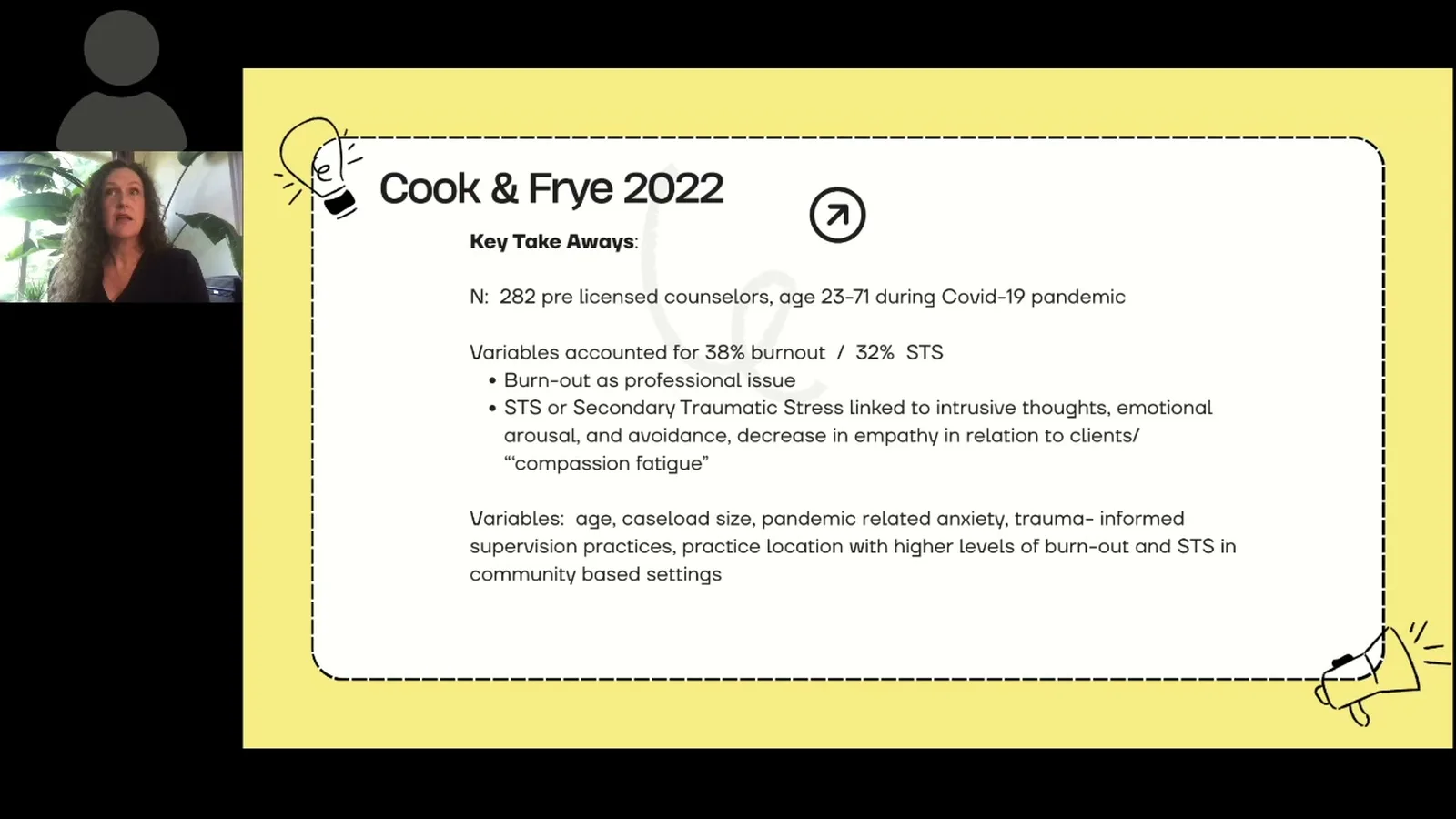
Reflective Supervision and Provider Outcomes in ABA
The Behaviorist Bookclub
Dunder Mifflin’s Guide to BCBA Supervision: Lessons from The Office
The Behaviorist Bookclub
When You’re Everyone’s Support: Building Sustainable Leadership.
Behavioral Wellness Coaching, LLC

Building Rapport: A Listen Goes a Long Way
Rooted Consultation, LLC
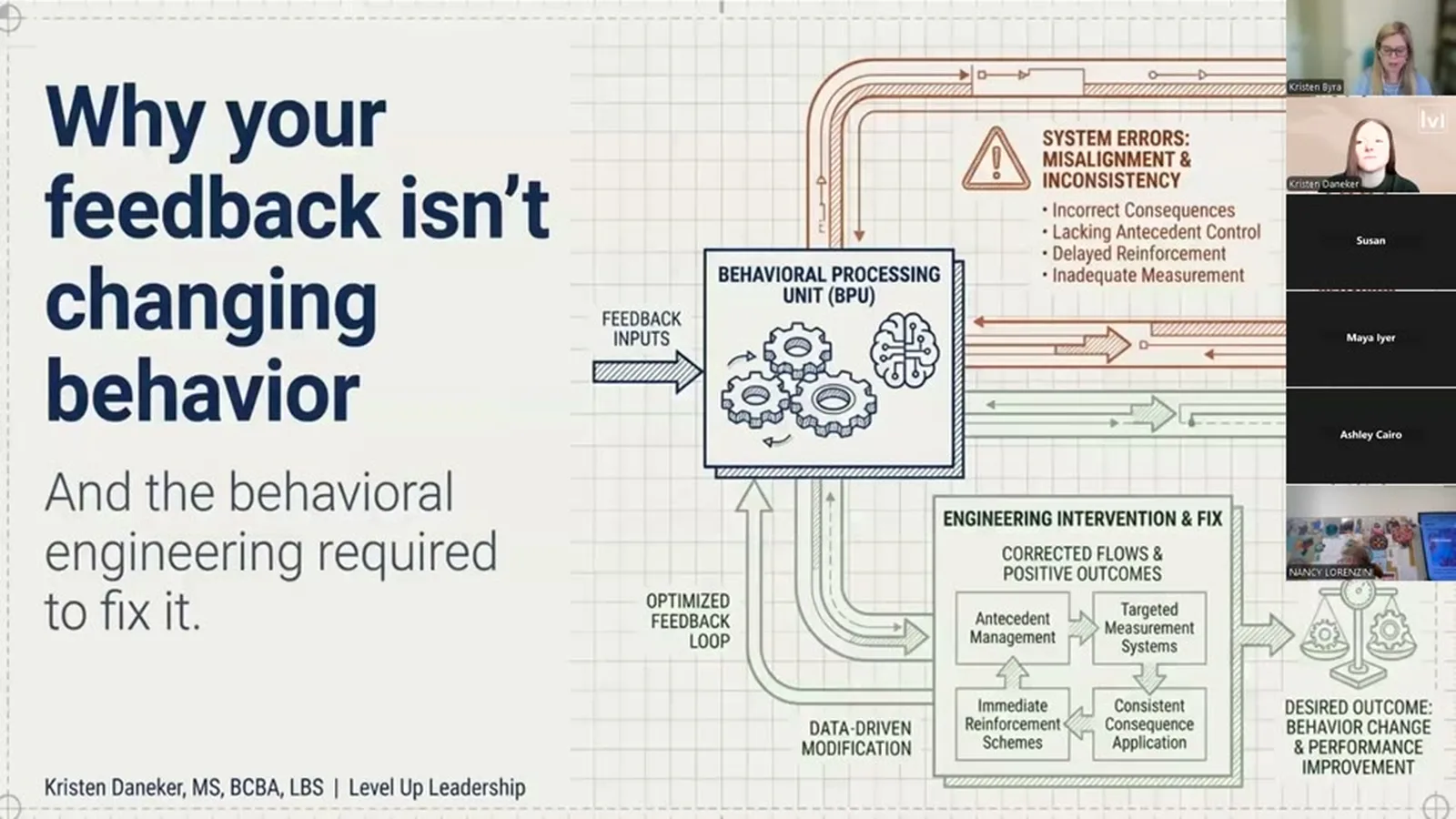
Why Your Feedback Isn't Changing Behavior
Upskill ABA
Toward an Evidence-based Supervision Model: Training Students in Independent Fieldwork
Willow Mentorship & Consulting, LLC
More from Rooted Consultation, LLC

Ethics of Marketing: From a Hustle to the Honest Sell
Rooted Consultation, LLC

Beyond Competence: Using ACT to Cultivate Psychological Flexibility in Behavior Analytic Supervision
Rooted Consultation, LLC

Providing Fieldwork Supervision in a School Setting
Rooted Consultation, LLC
OpenCEU is supported by advertising from third-party sponsors. Sponsors are clearly labeled, have no influence over course content, instructors, or CEU decisions, and never appear on certificates. The BACB does not sponsor, approve, or endorse OpenCEU sponsors or their products.