Renewal in ABA: Why Behavior Comes Back
Renewal explained: why reduced problem behavior returns after a context change, why caregivers can trigger spikes, and how to mitigate it.
Key takeaway
Renewal is when a problem behavior comes back after a change in setting. You may cut a behavior down to near zero. Then something in the context shifts.

Compliance to Commitment: Seven Habits of the Highly Effective Caregiver Trainer
Free learning path on this topic
Master PFA and SBT
Matt Harrington's 12-article walk through practical functional assessment and skill-based treatment, from Hanley's 2014 study to the enhanced choice model. Then assent, since SBT depends on it, and the ethical guardrails that keep behavior reduction defensible. Five CEUs, one of them ethics.
Experts who cover this
2 recordings on openceu cover renewal aba.
- Featured talk1 CEU
Compliance to Commitment: Seven Habits of the Highly Effective Caregiver Trainer
Matt HarringtonThe Behaviorist Bookclub
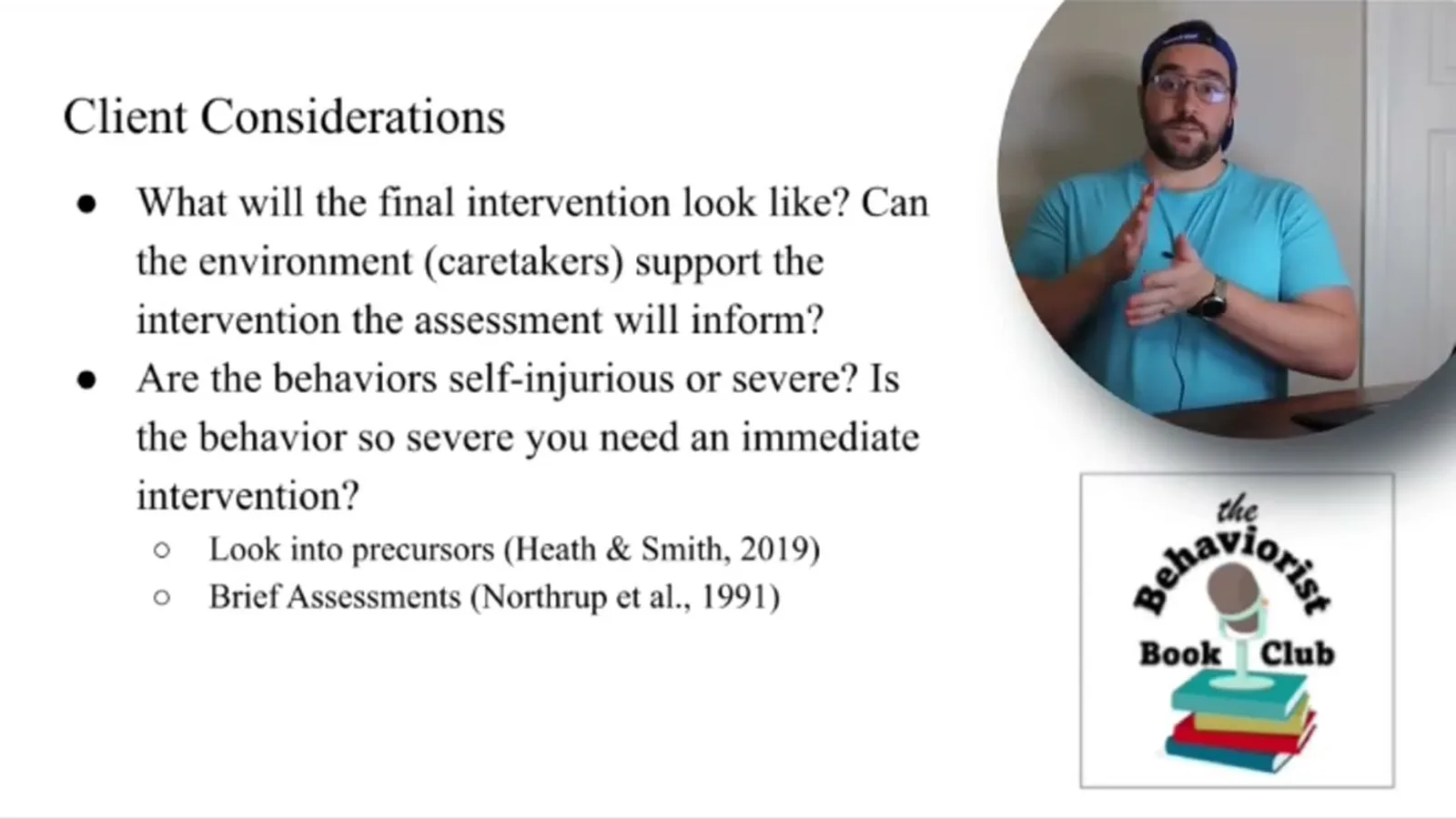
Described from the presenter's inpatient experience: problem behavior that had been reduced to near-zero would spike again once caregivers were reintroduced, a…
- 2.50 CEUs
Confessions of a New Behavior Analyst in Functional Analysis
Matt HarringtonThe Behaviorist Bookclub
Uses a behavioral feeding example of behavior spiking the moment a caregiver enters the room after weeks of low responding to illustrate renewal, a change in…

On this page · 8 sections▾
Renewal is when a problem behavior comes back after a change in setting. You may cut a behavior down to near zero. Then something in the context shifts. The behavior spikes right back up.
This surprises many new clinicians. The plan worked, so why did it fail? The answer is renewal. This page uses three OpenCEU talks to explain what it is and how to fight it.
What renewal is#
Renewal has a clear definition. The behavior was low in one context. A part of that context changes. The old behavior returns.
This is renewal, right? This is when a behavior increases due to a change in context, including a change in implementer. From the talk — Matt Harrington
The word "context" is broad here. It can mean the room, the routine, or the person running the plan. An implementer is just the person carrying out the procedure.
So a behavior can look fully fixed in the clinic. Then it roars back at home. Nothing about the child changed. Only the context did.
Three kinds of context change#
Not all context changes are the same. Renewal can follow a change in place, a change in person, or a change in task. Each one can bring the behavior back.
Matt Harrington calls the basic version a simple renewal. It happens when a problem behavior starts up again after a change in the environment. That change can be the actual location or the people running the procedures.
This is why a plan must travel. A behavior fixed with one therapist is not truly fixed. It has to hold up across people, places, and tasks. If it only works in one room, the work is not done. A durable plan is one that survives a context change.
Why caregivers can trigger spikes#
Caregivers often become the trigger for renewal. The clinical team learns to run the plan well. The parent is a different implementer, so the old behavior can return.
There was a couple different times when behavior would just spike through the roof as soon as the caregiver entered the picture, even though behavior had been low, low, low for three, four weeks at that time over multiple different foods. From the talk — Matt Harrington
This is not the caregiver's fault. It is how renewal works. The child learned the plan with the team, not with the parent yet.
The fix is caregiver training. You bring the caregiver in and push the behavior back down with them. Now the plan works in their hands too.
We got behavior down, it spikes back up, and now we push it back down again, right? And we did that through caregiver training. From the talk — Matt Harrington
Renewal in feeding treatment#
 Advertisement
Renewal is a hot topic in behavioral feeding. Gains made in a hospital can slip when the child goes home. Harrington calls it the field's big question right now.
I'm pretty sure every other feeding article is now on renewal mitigation. All everyone wants to talk about in behavioral feeding is renewal mitigation. And renewal is the, when the behavior comes back following a context change. From the talk — Matt Harrington
One strategy is to blur the line between settings. If the clinic feels more like home, the home context is less of a shock. That can soften the spike.
So it's like, what can we do at the hospital setting or at the setting that we're at to make the hospital more like home? From the talk — Matt Harrington
He explores this feeding angle further in Feeding Face Off, and shares more renewal stories from functional analysis work in Confessions of a New Behavior Analyst in Functional Analysis.
How to mitigate renewal#
You cannot always prevent renewal. But you can plan for it. A few strategies lower the risk.
Train across many contexts. Use different people, rooms, and tasks during treatment. The behavior then has less "new" to react to later.
Fade contexts slowly. Make the treatment setting look more and more like the final one. Small steps beat one big jump.
Loop caregivers in early. The sooner the parent runs the plan, the sooner it holds at home. Do not wait until discharge day.
You can also use extinction cues. These are signals that tell the child the new rules are in effect. You teach the cue in treatment, then carry it into the new setting. The cue helps the plan travel with the child.
Plan for renewal from day one#
Renewal is not a sign the plan failed. It is a known risk you can expect. The best teams plan for it before it happens.
Talk to families about it early. Warn them that a spike may come after discharge. When they expect it, they stay calm and keep running the plan. Panic often makes things worse.
Build a return path too. If behavior spikes, you push it back down again, just like the first time. A quick booster with the caregiver can settle it fast. Renewal is a bump in the road, not a dead end.
What the research says#
Renewal is common in real clinics, not just labs. One study looked at 98 patients and 749 context changes in an outpatient setting. Renewal showed up in about a quarter of context changes, and task changes triggered the highest rates (Aggarwal et al., 2026, Journal of Applied Behavior Analysis).
Research also supports fading the context slowly. In one study, renewal happened for 17 of 18 people without fading. With context fading, it dropped to only 9 of 18 (Jackson & Kestner, 2026, Journal of the Experimental Analysis of Behavior).
Combining strategies can help even more. One study tested extinction cues and context fading together. Context fading, alone or paired with an extinction cue, was effective at reducing renewal (Silva & Saini, 2025, Journal of the Experimental Analysis of Behavior).
FAQ#
What is the difference between renewal and other relapse? Renewal is relapse caused by a change in context. The contingencies stay the same. Other kinds of relapse, like reinstatement, come from a change in what follows the behavior, such as an accidental reinforcer.
Why does behavior come back at home but not the clinic? Home is a different context than the clinic. The child learned the new plan in the clinic setting. Moving to home is a context change, and that change can renew the old behavior.
Can you prevent renewal completely? Not always. But you can lower the risk. Train across many settings and people. Fade the context slowly toward the final one. Bring caregivers into the plan early.
 Advertisement
Turn this topic into a CEU
You just studied this. Now get credit for it.
Watch Compliance to Commitment: Seven Habits of the Highly Effective Caregiver Trainer with Matt Harrington and earn 1 free BCBA CEU. Detailed certificate, delivered the moment you finish.
Keep going with a free learning path
Master PFA and SBT
Matt Harrington's 12-article walk through practical functional assessment and skill-based treatment, from Hanley's 2014 study to the enhanced choice model. Then assent, since SBT depends on it, and the ethical guardrails that keep behavior reduction defensible. Five CEUs, one of them ethics.