Establishing Operations in ABA: Motivation Explained
An establishing operation makes a reward more valuable and drives behavior. Learn how EOs shape mand training, trust, sleep, and the research behind them.
Key takeaway
An establishing operation makes something more worth wanting. It raises the value of a reward for a short time. It also makes behavior that gets the reward more likely.
5 Days of Manding Mastery
Free learning path on this topic
Verbal Behavior: Beyond WH-Questions
Dana Pettus's three-part series on building generative verbal behavior. Why WH-question programs stall, how to establish speaker-listener repertoires, and how to scaffold advanced verbal skills like recall and simple inference. Three hours, three CEUs.
Experts who cover this
3 recordings on openceu cover establishing operation.
- Featured talk2.50 CEUs
5 Days of Manding Mastery
Matt HarringtonThe Behaviorist Bookclub
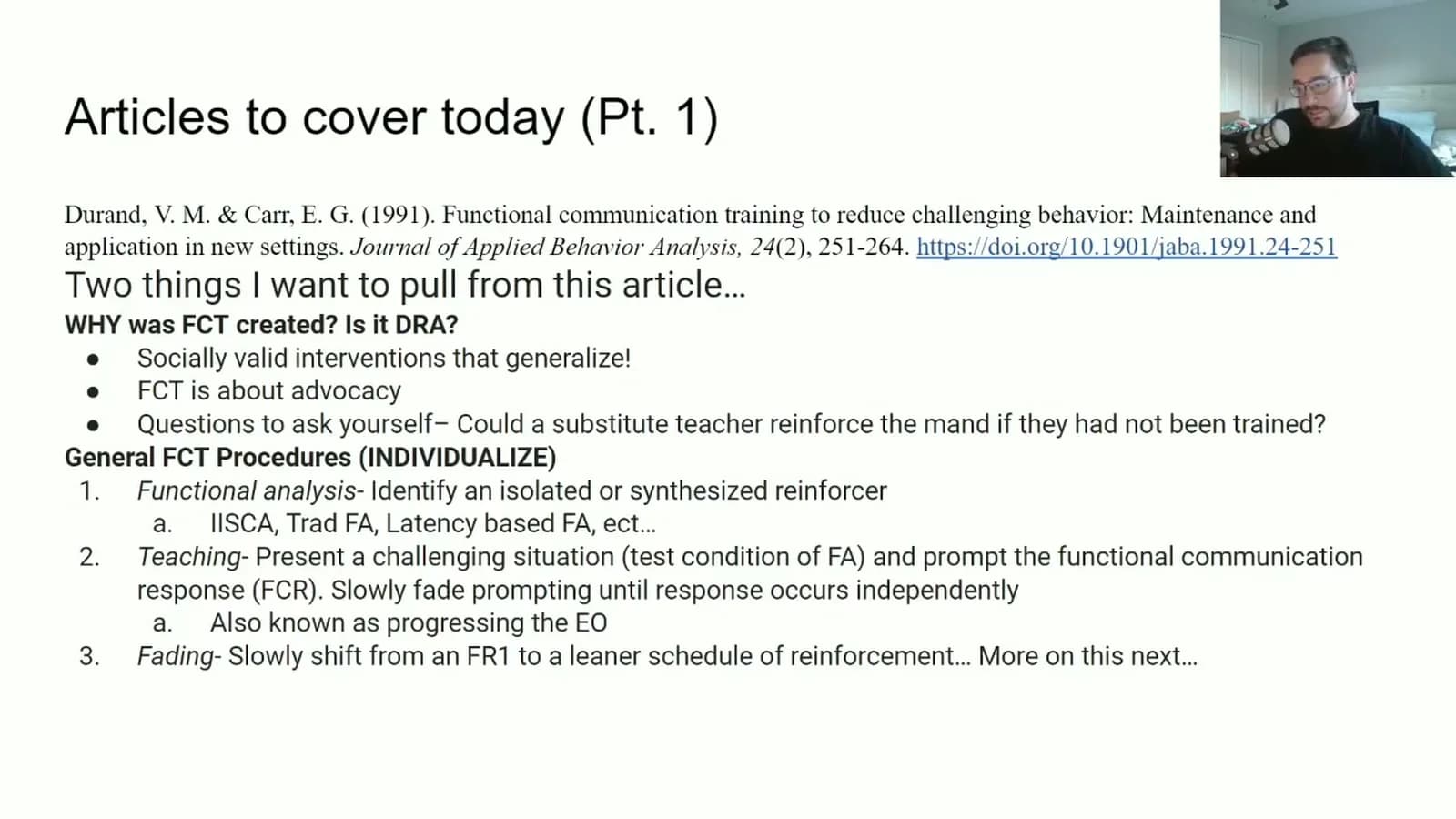
Presented as the engine behind mand training efficiency: technicians must capitalize on naturally occurring deprivation/satiation states (food, screen time…
- 1 CEU
Compliance to Commitment: Seven Habits of the Highly Effective Caregiver Trainer
Matt HarringtonThe Behaviorist Bookclub
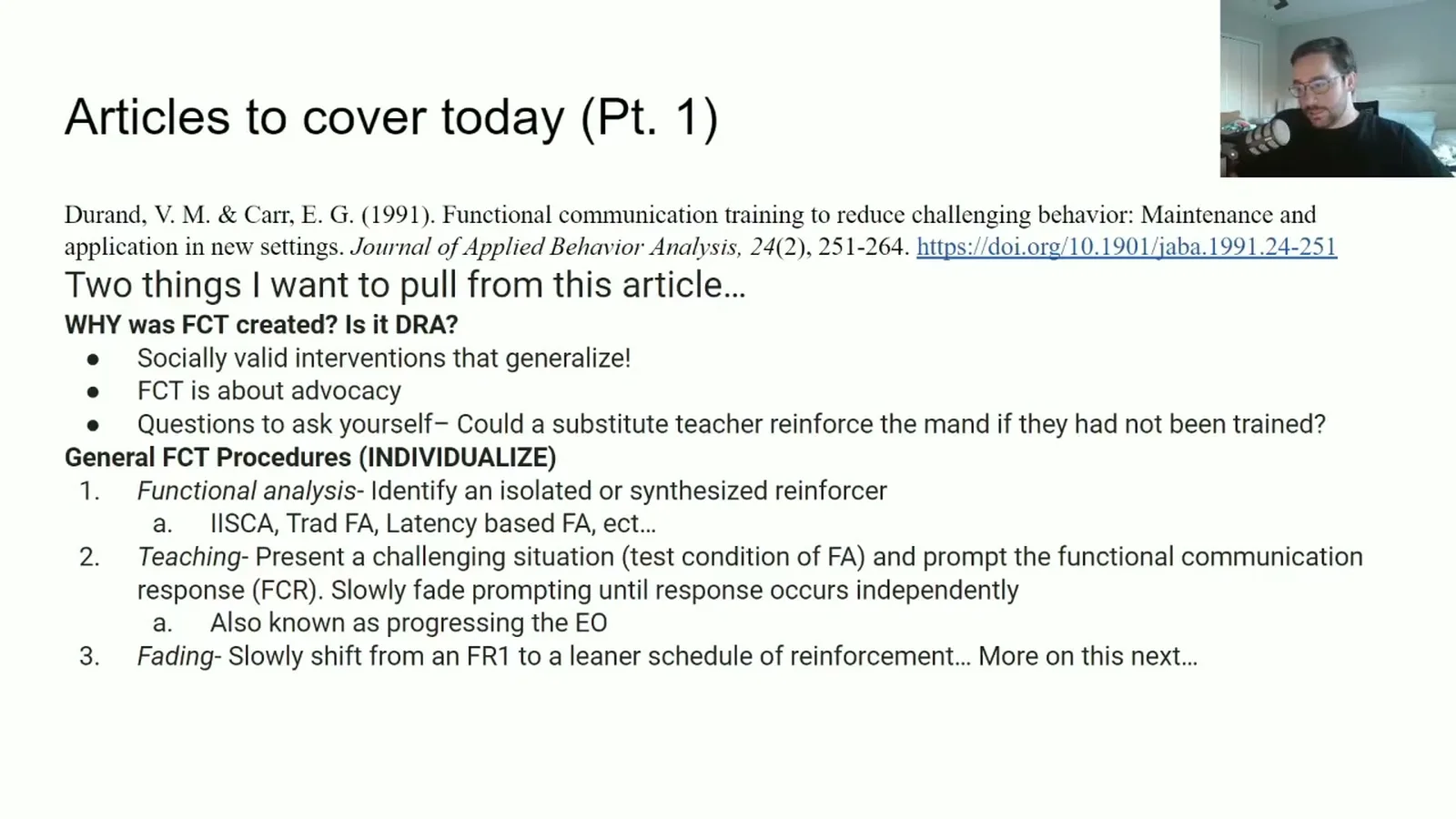
Trust itself is framed as an establishing operation built through repeated say-do correspondence: each time a clinician's prediction matches what actually…
- 1 CEU
Why Won’t They Go to Bed? A BCBA’s Guide to Effective Bedtime Routines
Lindsay AndersonThe Behaviorist Bookclub
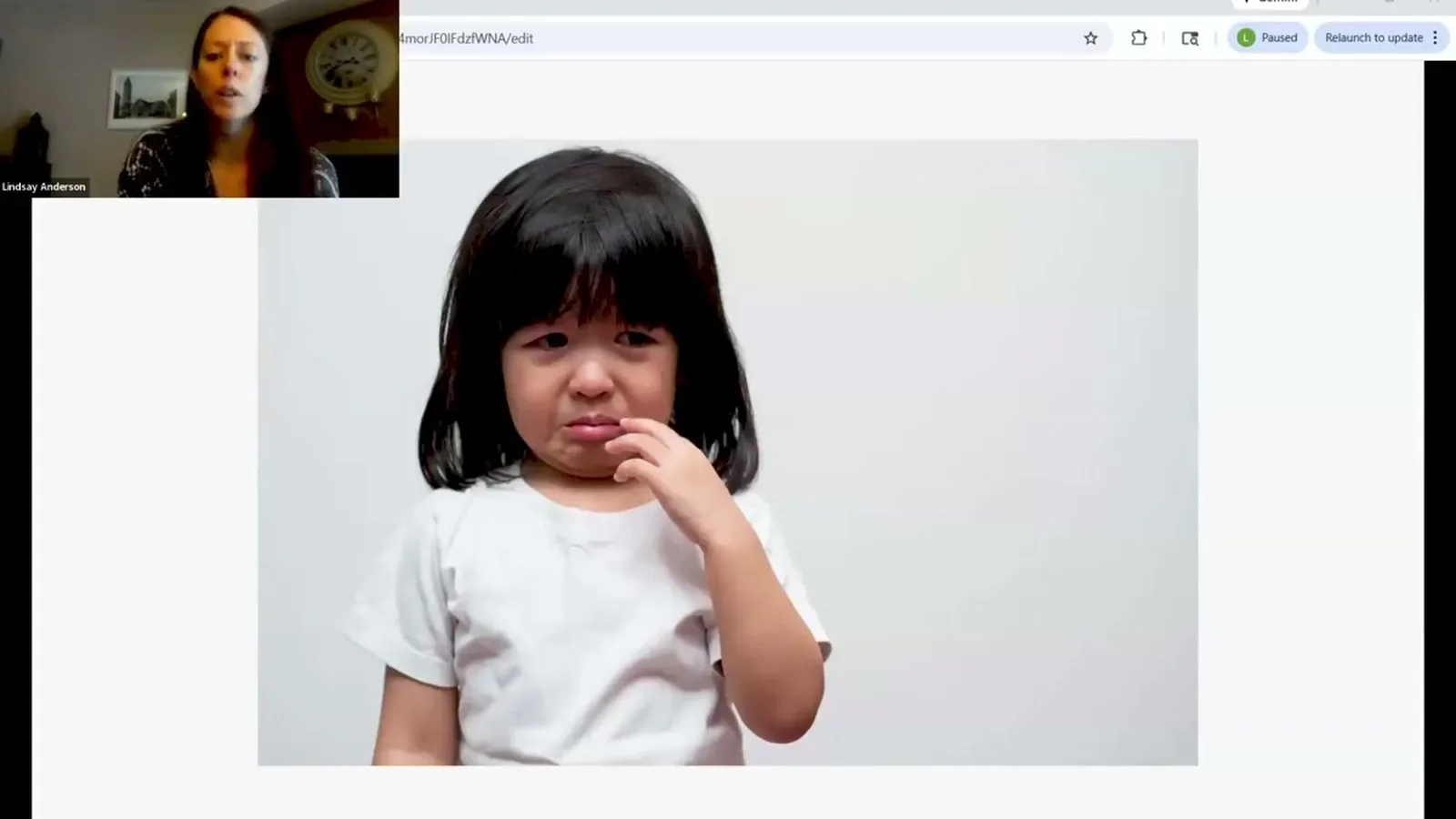
Cited from Bootzin (1977) and Michael (1982) as the behavioral basis for treating sleep operantly: falling asleep is reinforced by sleep itself, and recent…
On this page · 8 sections▾
An establishing operation makes something more worth wanting. It raises the value of a reward for a short time. It also makes behavior that gets the reward more likely.
This matters for daily ABA work. BCBAs, RBTs, and parents use motivation to teach. A hungry learner will work for a snack. A satiated learner will not. The short name for this idea is EO.
What an establishing operation is#
Motivation is not fixed. It goes up and down all day long. An establishing operation is what pushes it up.
Two forces drive most EOs: deprivation and satiation. Deprivation means going without something for a while. That makes the thing more valuable right now.
Satiation is the opposite of deprivation. It means having plenty of something. When you have a lot, you stop wanting more. So satiation lowers the value of a reward.
Both forces change behavior in the moment. A deprived learner will work harder for a reward. A satiated learner has little reason to try.
EOs in mand training#
Mand training teaches a learner to ask for what they want. This only works if the learner wants something. Matt Harrington says to capitalize on naturally occurring establishing operations. Deprivation and satiation make things more or less valuable. They also change how often the learner will ask.
Timing is everything here. A satiated learner will not ask for more. Matt gives a simple example with snacks.
The classic example that everyone uses is if you don't want to run man training for a bag of chips right after they've just had lunch and they had a bunch of bags of chips for free. From the talk — Matt Harrington
The fix is to teach when motivation is high. You can even build the EO on purpose. Matt suggests teaching a mand for a tablet after a one hour break outside. The time away makes the tablet worth asking for.
This is smart, gentle teaching. You work with the learner's real motivation. You do not fight against a satiated state.
Trust as an establishing operation#
EOs are not only about food or toys. Matt Harrington uses the idea for trust too. He calls trust an establishing operation for caregivers.
I want to talk about trust as the establishing operation. Trust is that say, do correspondence. I say something is going to happen. And then in the future, something does happen. From the talk — Matt Harrington
Each kept promise raises the value of your word. The caregiver becomes more willing to follow your advice. Broken promises do the opposite. Matt urges teams to reinforce that cycle often. When past words keep matching current events, objective trust builds up.
This is a fresh way to think about trust. It is not just a feeling. It is a motivation state you can build with action.
Timing EOs during a functional analysis#
 Advertisement
A functional analysis tests why behavior happens. It often uses an EO to trigger the behavior. Dr. Joshua Jessel explains this trigger step. The session begins when the reinforcers are removed and the EO is presented.
But timing the EO takes care. You should not present it when a learner is already upset. Jessel warns against this common mistake.
What we are looking to do is avoid presenting an establishing operation when the child is already angry and prone to escalate. From the talk — Dr. Joshua Jessel
A poorly timed EO can make things worse. The learner is already primed to react. Good timing keeps the analysis safe and clean.
When too much control backfires#
EOs can also work in surprising ways. Dr. Shane Spiker shares a case where control backfired. His team removed every known trigger for a client.
deprivation produced a kind of a unique EO and produced a behavioral variation that we weren't prepared for. From the talk — Dr. Shane Spiker
Too much control created a new kind of deprivation. That deprivation became its own EO. It drove a behavior no one expected. Spiker adds a warning about managing every antecedent. If we do, we never get to manage the consequences. That can push the EO in the wrong direction.
The lesson is balance. EOs are always at work, even hidden ones. Removing every trigger does not remove motivation. It can shift it somewhere you cannot see.
EOs even explain sleep#
The idea reaches beyond ABA sessions. Lindsay Anderson uses EOs to explain sleep. She points to classic behavioral work.
Michael, in 1982, he expanded on this by saying that the quality and duration of recent sleep, combined with the length of time that we've been awake, acts as an establishing operation that alters the reinforcing value of sleep and changes the probability of whether we're able to fall asleep or not. From the talk — Lindsay Anderson
So time awake works like deprivation for sleep. The longer you are up, the more you want to rest. This shows how broad the EO idea really is.
What the research says#
Research shows EOs are useful teaching tools, not just ideas. One clinical tutorial reviewed three ways to build EOs on purpose. These included incidental teaching and interrupted chains (Frampton et al., 2024). Each method helps a teacher create motivation to mand.
EO timing also affects side effects of treatment. One study limited how much a learner faced the EO during treatment. Less exposure led to faster drops in destructive behavior and fewer extinction bursts (Fisher et al., 2018). More exposure often caused a burst instead.
EOs can turn a learned skill into a used skill. One study raised feeder attention to lower the value of escape. After this EO change, two children with feeding disorders started to self-feed target foods (Hansen et al., 2023). The skill was there, and the EO brought it out.
FAQ#
What is an establishing operation in ABA?
It is anything that makes a reward more valuable for a time. It also makes behavior that gets the reward more likely. Deprivation and satiation are the two main drivers. The short name is EO.
What is the difference between an EO and an abolishing operation?
An establishing operation raises the value of a reward. An abolishing operation lowers it. For example, hunger is an EO for food, while a full meal abolishes it. Both are types of motivating operations.
How do you use establishing operations in teaching?
Teach when the learner is motivated, not satiated. You can capture natural motivation or build it on purpose. A break before tablet time is one example. Good timing makes teaching faster and gentler.
Matt Harrington goes deeper on trust and caregiver coaching in Compliance to Commitment: Seven Habits of the Highly Effective Caregiver Trainer.
 Advertisement
Turn this topic into a CEU
You just studied this. Now get credit for it.
Watch 5 Days of Manding Mastery with Matt Harrington and earn 2.5 free BCBA CEUs. Detailed certificate, delivered the moment you finish.
Keep going with a free learning path
Verbal Behavior: Beyond WH-Questions
Dana Pettus's three-part series on building generative verbal behavior. Why WH-question programs stall, how to establish speaker-listener repertoires, and how to scaffold advanced verbal skills like recall and simple inference. Three hours, three CEUs.