Therapeutic Alliance in ABA: Trust Before Fidelity
What therapeutic alliance means in ABA, how to spot a strong or weak one, and why trust with clients and caregivers comes before fidelity.
Key takeaway
A therapeutic alliance is the trust and teamwork between a clinician and the person they serve. It means the client or caregiver believes you want the best for them.
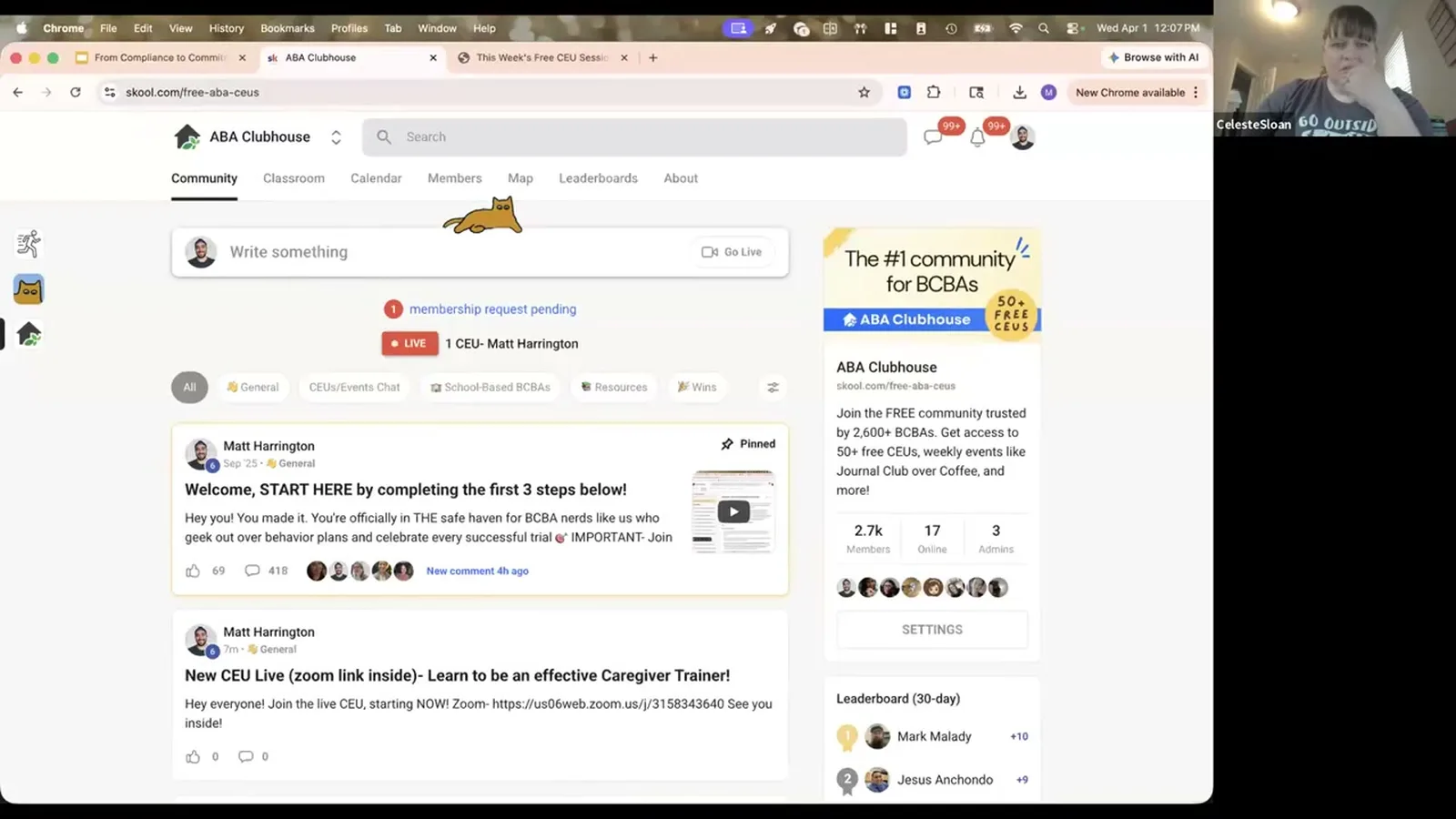
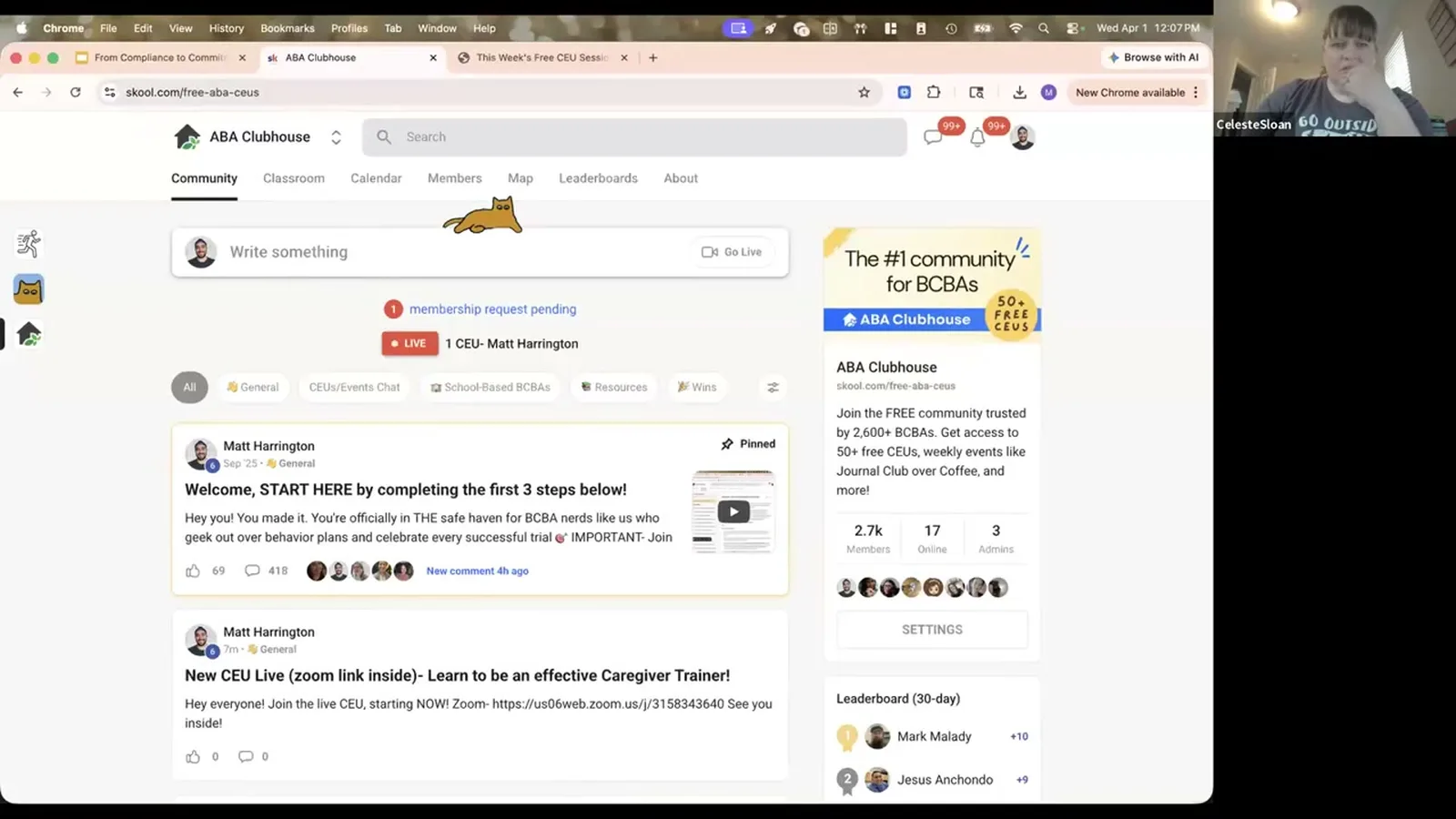
Compliance to Commitment: Seven Habits of the Highly Effective Caregiver Trainer
Free learning path on this topic
Supervision, Done Right
Four supervision CEUs that build on each other. What reflective supervision is, how to build a supervision system, how to assess supervisee competence instead of counting hours, and how supervision affects provider outcomes. The BACB asks supervisors for three supervision CEUs per cycle. This covers it.
Experts who cover this
3 recordings on openceu cover therapeutic alliance.
- Featured talk1 CEU
Compliance to Commitment: Seven Habits of the Highly Effective Caregiver Trainer
Matt HarringtonThe Behaviorist Bookclub
Defined as the trust and buy-in that precedes implementation fidelity: a strong alliance shows up as caregivers asking realistic challenging questions and…
- 1 CEU
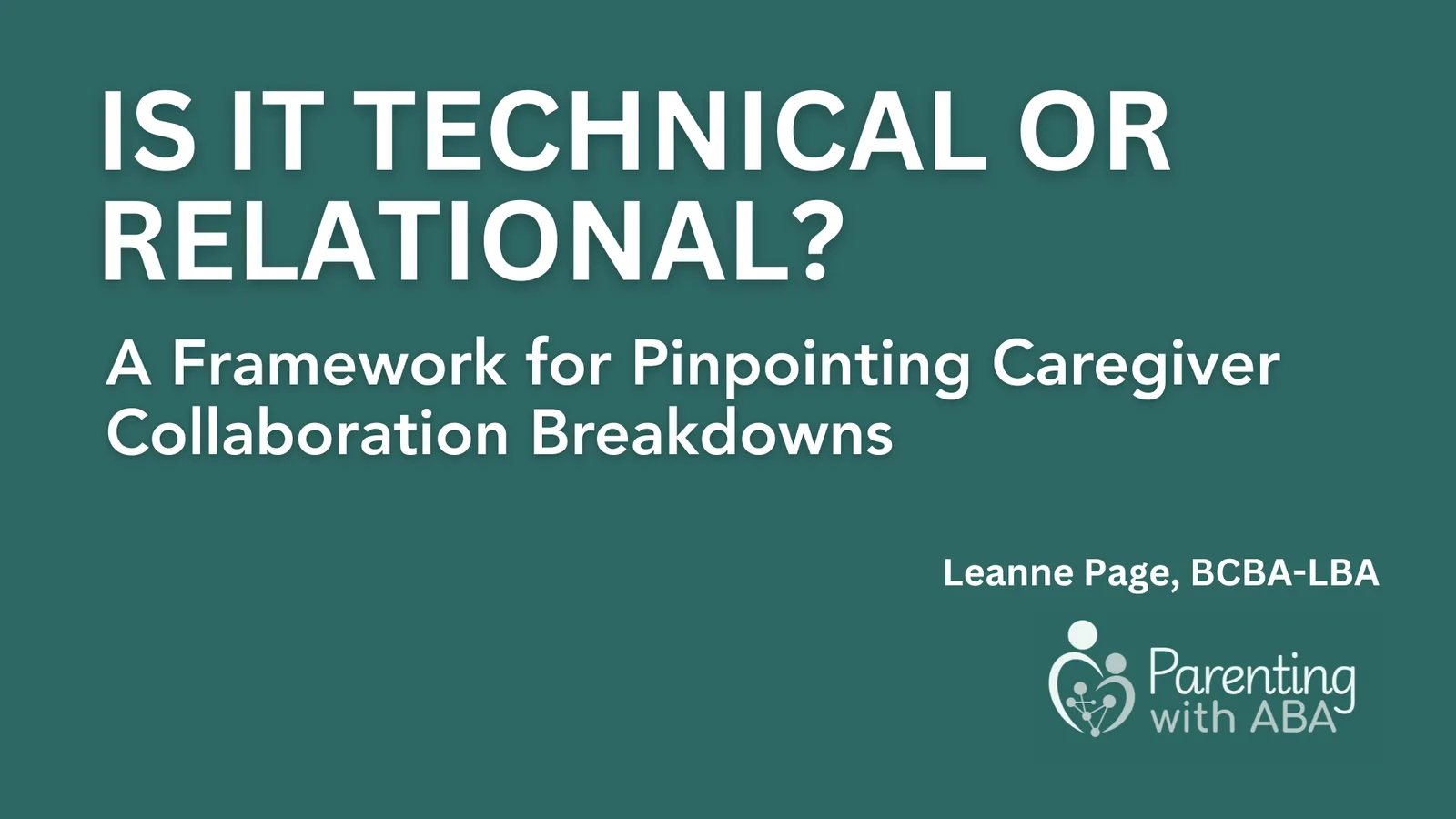
Is It Technical or Relational? A Framework for Pinpointing Caregiver Collaboration Breakdowns
Leanne PageParenting with ABA
Breaks the therapeutic relationship into bond, goals, and tasks, and frames the clinician as becoming a discriminative stimulus (SD) that should signal safety…
- 1 Ethics CEU
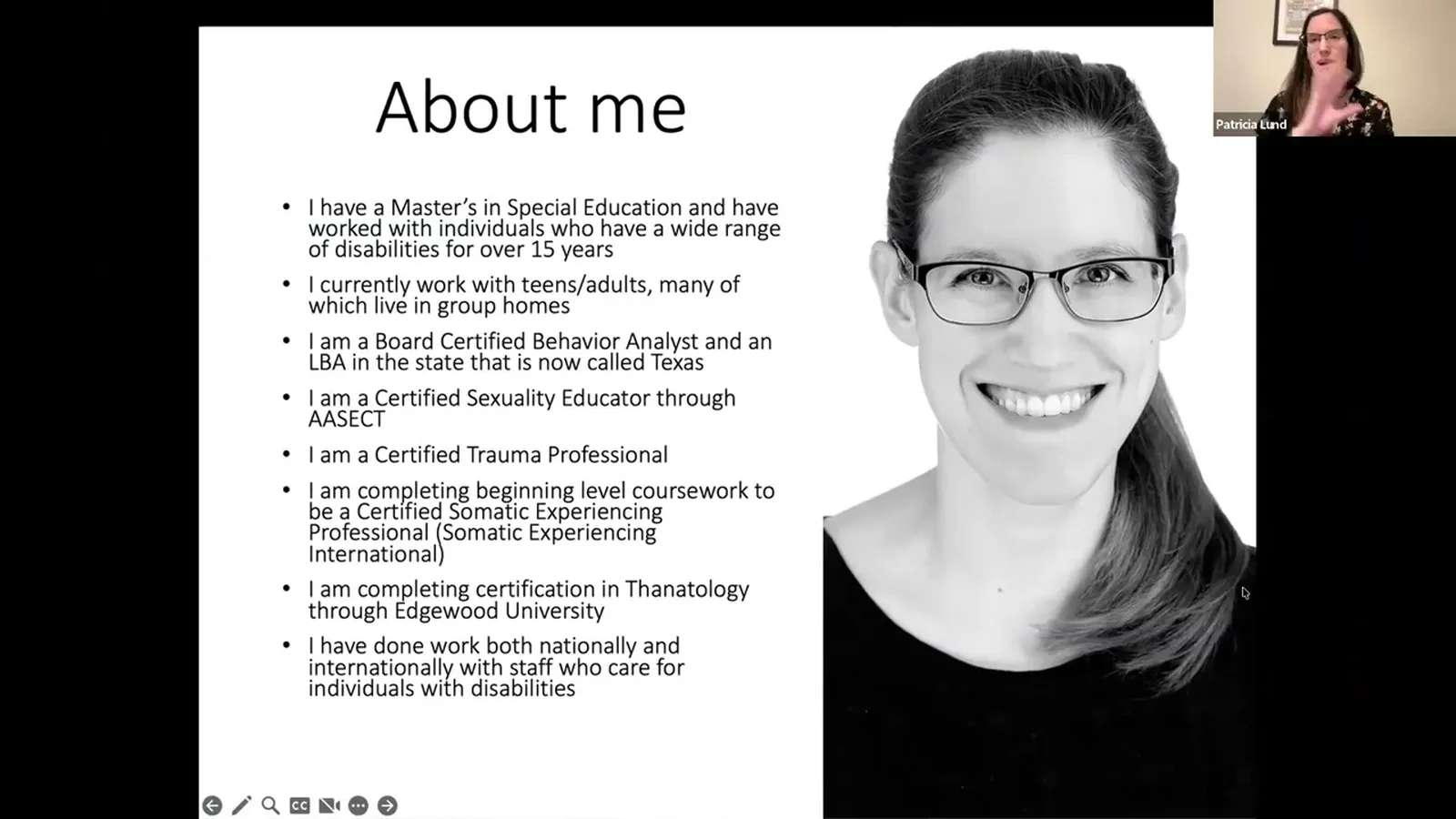
Interdisciplinary Grief Support for People with Disabilities: Enhancing Outcomes Through BCBA-LPC Collaboration
Patricia LundThe Behaviorist Bookclub
Lisa argues that grief counseling outcomes depend more on the rapport between counselor and client than on any particular theoretical model of grief.
On this page · 11 sections▾
A therapeutic alliance is the trust and teamwork between a clinician and the person they serve. It means the client or caregiver believes you want the best for them. It also means you both agree on where you are going and how to get there.
This matters because good plans fail without it. A caregiver can follow a plan perfectly while you watch, then drop it once you leave. A client can feel hurt when you challenge them too soon. Behavior analysts are now paying close attention to alliance. The speakers below explain what it is, how to see it, and how to protect it.
What a therapeutic alliance is#
Nicky Schneider works on behavior change in schools. She describes alliance as a stage you reach after other steps. First comes compassion, which she calls a plan made with the person to ease their suffering. Then comes perspective taking and empathy. Alliance goes one step further than all of these.
We want to build a therapeutic alliance, which is a step further than compassion and perspective taking and empathy.
From the talk — Nicky Schneider
For Schneider, rapport is the starting point. Rapport means sharing an experience together, like two people enjoying the same game. She compares it to the play condition in a functional analysis (a test that finds out why a behavior happens). In that condition, the adult is warm and fun. Alliance is what grows once that rapport turns into steady trust.
Therapeutic alliance is when you built the rapport and now you have trust and that individual... understand and acknowledge that you want the best for them, right? And that you have positive regard for them always.
From the talk — Nicky Schneider
She adds one more piece. The person is confident you will always get them back to a safe place.
Bond, goals, and tasks#
Leanne Page trains behavior analysts on caregiver collaboration. She breaks the relationship into three parts. The first part is the bond, meaning the personal connection. The second part is goals, meaning what you are both working toward. The third part is tasks, meaning the actual steps each of you will take.
This split is useful because a problem can live in one part and not the others. A caregiver might like you a lot but disagree with the goal. Or they might share the goal but find the tasks too hard to do at home. Page's larger point is that some problems are technical and some are relational. A technical problem needs more modeling, more practice, or a changed plan. A relational problem needs attention to the bond, goals, or tasks.
Page also notes a gap in training. Behavior analysts often find relational skills harder. She says this is because these skills were never part of their coursework or the exam content outline. Yet she calls them important and powerful. You can explore her full framework in Is It Technical or Relational? A Framework for Pinpointing Caregiver Collaboration Breakdowns.
The clinician as a signal of safety#
Page asks a question she hears often from BCBAs. Is building a bond just pairing? Pairing means making yourself linked with good things so your presence becomes rewarding. She agrees that pairing is part of it. You do want your presence to be reinforcing. But she frames the bond in more behavioral terms.
The therapist becomes an SD. for the client's behavior.
From the talk — Leanne Page
An SD, or discriminative stimulus, is a cue that signals what will happen next. When you walk into a session, your presence tells the caregiver something. Page asks clinicians to decide what they want that signal to be. The answer she hears most often is safety. She contrasts this with a clinician who hands families long plans that are out of touch with their lives. That clinician may signal stress instead of support.
This view keeps alliance inside behavior analysis. It is not a vague feeling. It is a learned history that shapes how caregivers respond to you.
Why alliance comes before fidelity#
Matt Harrington teaches caregiver training. His main claim is that trust comes first and accurate follow-through comes second. Implementation fidelity means how closely someone carries out a plan as written. Behavioral skills training, or BST, can get a caregiver to do the plan correctly in front of you. But you are only there for a small slice of the week.
Alliance precedes implementation fidelity, meaning you can teach BST all you want. You can get 100% fidelity when you're there observing, but Alliance is the thing that keeps that fidelity across the rest of those hundred hours.
From the talk — Matt Harrington
Harrington draws a clear conclusion from this. If trust comes before fidelity, then high fidelity requires building alliance. That means attending to the caregiver as a person. It also means caring about every part of that relationship, because the relationship itself shapes the clinical outcome. In his view, alliance is not a soft extra. It is the thing that carries your plan into the hours you never see.
Signs of a strong alliance and a weak one#
 Advertisement
Harrington also gives a practical way to check alliance. A strong alliance does not look like quiet agreement. It looks like questions. A caregiver might ask why a goal will take six weeks instead of two. They might tell you what really happens at home.
A strong Alliance is one that is questioning and one that gives realistic challenges, right? A caregiver who is curious about why we're doing something, sharing home information, reporting what does and doesn't work.
From the talk — Matt Harrington
He explains that this caregiver is putting in extra effort. They share context so the outcome gets better. Pushback, in this case, is a good sign.
A weak alliance looks very different. Sessions get short. The caregiver closes off. Appointments start to get missed. Harrington names these as warning signs that the alliance needs repair. This flips a common habit. Many clinicians feel relieved when a caregiver stops asking questions. Harrington suggests that silence may be the real problem.
Alliance as a prerequisite for hard conversations#
Dr. Tom Szabo uses Acceptance and Commitment Therapy, or ACT, within ABA. ACT helps people relate differently to difficult thoughts. In his work, he sometimes tests a client's thought in the moment. For example, a client might say they always make mistakes.
Szabo first reflects the thought back. This works as an abolishing operation, meaning it lowers the client's urge to argue. Then he may contrive an establishing operation. That means he sets up a gentle challenge, like asking if the client truly always makes mistakes. He says this step requires a great deal of alliance. His team has built a 14-step behavior analytic approach to alliance that they are studying.
If you have not developed a therapeutic rapport with the client and you now contrive an establishing operation, you'll invalidate them, you'll make them feel crappy.
From the talk — Dr. Tom Szabo
His advice is to be very careful when you challenge what someone says they feel. Without trust, a challenge feels like an attack.
Empowerment instead of compliance#
Schneider connects alliance to a larger goal. When trust is in place, the person becomes motivated to change their own behavior. She calls this empowerment. The student is not just following orders. They are choosing to change because they trust the adult.
A therapeutic alliance should really base itself on gaining trust and rapport to empower the individual rather than compliance based instruction.
From the talk — Nicky Schneider
Schneider admits this is hard in schools. She asks clinicians to act like detectives. With students who can talk through their choices, she sits down and asks them why they do what they do. This fits with Harrington's title, which moves from compliance to commitment. Both speakers treat compliance as a weak endpoint. Real change, in their view, comes from someone who wants to take part.
Alliance outside ABA: grief support#
Lisa Trevlyan spoke on grief support for people with disabilities. Her talk covered teamwork between BCBAs and licensed professional counselors. She makes a strong claim about counseling. The specific grief model matters less than the relationship. She quotes a book by Malin to make the point.
The most important issue is not about the model of grief that the counselor espouses, but about the person who's mourning their loss and the rapport between the personal offering support and the bereaved.
From the talk — Lisa Trevlyan
Trevlyan adds that studies show how much alliance adds to good outcomes in mental health care. She also says help should fit what feels comfortable to the grieving person. It should not just fit what the helper thinks is right. This idea lines up with Page's focus on shared goals. It also shows why a counselor can add value to a behavior team.
Where experts disagree: is alliance the same as rapport?#
The speakers agree that alliance matters. They do not agree on how it relates to rapport and pairing.
Schneider draws a firm line. Rapport is shared enjoyment. Alliance comes after, once trust and positive regard are in place. She says pairing, as described in research, is not enough on its own. In her model, you can have rapport without having an alliance yet.
Szabo and Trevlyan use the words more loosely. Szabo says the challenge step needs "a tremendous amount of a therapeutic alliance." In the next breath, he warns about not having "therapeutic rapport." Trevlyan talks about "that therapeutic alliance and the rapport" together. For both of them, the two terms work almost as one idea.
Page lands in the middle. She says yes, pairing is part of the bond. But she reframes the bond as the clinician becoming a cue for safety. That is more than being fun to be around.
This difference has real effects. If rapport and alliance are the same, pairing may feel like the finish line. If they are different, a clinician who has great rapport may still lack trust. Schneider's view would push that clinician to keep building.
What the research says#
Research in behavior analysis supports the idea that relational skills matter. Plattner and Anderson surveyed 277 BCBAs about their training and use of these skills. They list skills such as empathic statements, reflective listening, and affirmations. They argue these may be as important as knowing the science itself. They suggest behavior analysts may benefit from direct training in these skills. They also point to motivational interviewing as one proven approach (Plattner & Anderson, 2023).
A study of early intervention adds an important detail. Researchers followed 21 providers and 23 caregivers using a parent coaching program called Project ImPACT. Caregivers rated their alliance after each session. How closely providers followed the coaching model was not linked to those alliance ratings (Pickard et al., 2025). In plain terms, following the manual well did not by itself build trust.
Other studies look at autistic clients in therapy. One study of 64 autistic children in cognitive behavioral therapy for anxiety found that alliance was lower than for non-autistic children. Yet stronger alliance, as rated by therapists and parents, predicted bigger drops in anxiety. An interview study of 14 autistic adults found that some therapists showed bias against autistic traits. That bias hurt the alliance and lowered the clients' self-esteem.
Plattner, C., & Anderson, C. (2023). Therapeutic Relationships in Applied Behavior Analysis: Current Status and Future Directions. Behavior Analysis in Practice, 16(4), 1222-1230. https://doi.org/10.1007/s40617-023-00819-8
Pickard, K., Gillespie, S., Stahmer, A., Singh, J., & Scahill, L. (2025). Characterizing the Relationship Between Intervention Delivery and Outcomes Within Part C Community Settings. Behavioral Sciences, 15(10). https://doi.org/10.3390/bs15101394
FAQ#
What is the difference between a therapeutic alliance and rapport? Rapport is sharing a good experience together. Some experts, like Nicky Schneider, see alliance as the next step. It adds trust, shared goals, and a belief that you always want the best for the person. Other speakers use the two words almost the same way.
How can I tell if my alliance with a caregiver is weak? Matt Harrington points to short sessions, closed-off answers, and missed appointments. A strong alliance often looks like questions and pushback. A caregiver who shares what fails at home is usually invested, not difficult.
Is therapeutic alliance part of behavior analysis? Yes. Leanne Page describes the clinician as a discriminative stimulus, a cue that can signal safety. Research on BCBAs also suggests relational skills may be as important as technical skills. Many clinicians say they were never formally trained in them.
 Advertisement
Turn this topic into a CEU
You just studied this. Now get credit for it.
Watch Compliance to Commitment: Seven Habits of the Highly Effective Caregiver Trainer with Matt Harrington and earn 1 free BCBA CEU. Detailed certificate, delivered the moment you finish.
Keep going with a free learning path
Supervision, Done Right
Four supervision CEUs that build on each other. What reflective supervision is, how to build a supervision system, how to assess supervisee competence instead of counting hours, and how supervision affects provider outcomes. The BACB asks supervisors for three supervision CEUs per cycle. This covers it.