Supervision by Design: Applying Instructional Technology to Fieldwork Training
Presented by Dr. Allyson Wharam

Fieldwork is a learning experience, but it is not always designed like one. Supervision may include required hours, meetings, assignments, and clinical experiences without a clear plan for how those experiences work together to build toward independent practice. This presentation introduces instructional design principles supervisors can use to create more intentional, competency-focused fieldwork experiences. Participants will explore how backward design can clarify meaningful outcomes, evidence of competence, and the sequence of experiences needed to support increasingly independent performance. The ADDIE framework will be applied as an iterative process for designing and improving fieldwork at multiple levels, from the overall curriculum to an individual trainee’s pathway and specific learning experiences. The presentation will also examine how technology can support learning across these levels when it is selected in response to the outcome, learner, context, instructional activity, and assessment needs. Participants will consider the affordances and constraints of technology and use the SAMR model as one lens for examining what technology may enable supervisors and trainees to do, or do better, than would otherwise be possible. Using fieldwork-specific examples and guided application, participants will practice connecting outcomes, curriculum, individual learner needs, learning experiences, assessment, and technology into a coherent design process that can be evaluated and refined over time.
Sign in to buy — $20One-time purchase, permanent access. Cert delivered to your inbox the moment you pass the quiz.
Learner ratings
from 17 learners
100% would recommend this CEU to other professionals in their field (17 responses)
“Dr. Wharam has created such salient and efficient resources and she is always willing to share them. She truly cares about the advancement of our field and its future practicitoners.”
— Crystal H.“Lots of great innovative information and tools with this. Thank you!”
— Allison G.“Loved learning about ADDIE and will look to incorporate it into my own work.”
— Falon R.
About this CEU
Fieldwork is a learning experience, but it is not always designed like one. Supervision may include required hours, meetings, assignments, and clinical experiences without a clear plan for how those experiences work together to build toward independent practice. This presentation introduces instructional design principles supervisors can use to create more intentional, competency-focused fieldwork experiences. Participants will explore how backward design can clarify meaningful outcomes, evidence of competence, and the sequence of experiences needed to support increasingly independent performance. The ADDIE framework will be applied as an iterative process for designing and improving fieldwork at multiple levels, from the overall curriculum to an individual trainee’s pathway and specific learning experiences. The presentation will also examine how technology can support learning across these levels when it is selected in response to the outcome, learner, context, instructional activity, and assessment needs. Participants will consider the affordances and constraints of technology and use the SAMR model as one lens for examining what technology may enable supervisors and trainees to do, or do better, than would otherwise be possible. Using fieldwork-specific examples and guided application, participants will practice connecting outcomes, curriculum, individual learner needs, learning experiences, assessment, and technology into a coherent design process that can be evaluated and refined over time.
Credits
1 supervision CEU · 60 min
From the talk
What was covered
Dr. Allyson Wharam explains how to design fieldwork training on purpose, instead of letting it happen by accident.
- Start your fieldwork plan from the outcomes a trainee must show at the end. Do not start from activities that happen to be countable.
- Run ADDIE (a five-step design loop) at three levels: the whole curriculum, one trainee's path, and a single learning experience.
- Decide in advance what will count as proof of a skill. That might be a written program, a direct observation, or a spoken rationale.
- Sequence skills so foundations come first, then move trainees from heavily taught practice toward independent performance with real clients.
- Show trainees their own progress. A skill map they never see cannot guide what they ask to practice.
- Pick tools by matching the goal, the learner, and the setting. Then name what each tool makes easier and what it makes harder.
Why Two Trainees With the Same 2,000 Hours Are Not the Same
Dr. Allyson Wharam opened with a quick poll. Two trainees finish the same 2,000 hours of fieldwork (supervised hours before certification). How sure are you that both are ready to practice alone as a BCBA (board certified behavior analyst)? The chat filled with ones. Almost nobody rated it high. Hours count time. They do not count skill.
She then showed four sample trainees. Each one logged the same hours. The skills they walked away with looked nothing alike. Some spread is normal and expected. The worry is the wide gap. One trainee leaves ready for the job. Another leaves without the skills the job needs.
She grounded that in work she cited from the field. A 2016 special issue on supervision argued that fast growth makes good supervision more urgent. Many new supervisors were never taught how to supervise. A 2019 survey by Sellers and colleagues found only 27 percent of supervisors used any graph of trainee skills. Cohen and Kodak found that only 33 percent of BCBA directors felt their trainees sufficiently demonstrated hard skills. A third study looked at unrestricted hours and found wide swings in what trainees got to practice. Left to chance, what a trainee practices tracks caseload and billable hours.
What Instructional Design Adds to Supervision
Wharam defined instructional design (planning how people learn) in one line. It is the intentional, systematic process of building learning that leads to real behavior change. Two words carry the weight: intentional and systematic. Training often drifts into content dumping. You hand over a pile of information. That information may or may not change what someone does.
She asked the room what they already do that counts as design. Answers came fast. Writing objectives in behavioral terms. Starting from the assessment. Task analysis (breaking a skill into steps). Shaping and scaffolding (support that fades over time). Planning for generalization (using a skill in new places). Collecting data, graphing it, and checking social validity (whether people find it worthwhile).
Her point was simple. You already own these tools. Most analysts use them well for client programs. Far fewer carry them into staff training and fieldwork. That carryover is not automatic. It depends on your own learning history as a supervisor.
So you'll notice the bolded words here are intentional and systematic.
From the talk — Dr. Allyson Wharam
ADDIE as a Loop You Run at Three Levels
ADDIE (a five step design loop) stands for analyze, design, develop, implement, and evaluate. The chart looks like a straight line. The work is not. You circle back as you go, and evaluation feeds the next round.
In most workplace projects, the analyze step asks whether training is even the right fix. Fieldwork is different. The gap is built in. Someone shows up without the skills, and your job is to close that gap on purpose.
The part that is easy to miss is the layering. You design the fieldwork program for any trainee who walks in. You then design one trainee's path through it. Inside that, you design a single learning experience. Same process, three levels, running at once.
Analyze: Outcomes, Learners, and Setting
The analyze step asks what fieldwork should prepare a trainee to do. What skills does independent practice require? Who is actually entering your program? Wharam described the range she sees. One trainee has fifteen years in the field. The next is fresh out of college. Another taught special education for twenty years. Work history, age, culture, and prior learning all shape how they approach fieldwork.
Setting matters just as much. A school based trainee practices different things than one in an early intervention clinic. Adult services and organizational work shift it again. Billing rules and caseloads can block access to whole skill areas. Those limits belong in the plan, not in the excuses later.
Some outcomes still hold for everyone. Her example: anyone finishing fieldwork should be able to read and analyze a graph. She also warned against borrowing the test content outline (the exam topic list) as your curriculum. It was never built for that. Nothing on it covers building therapeutic relationships, and that is clearly something a trainee needs. Watch the same trap with topics. Preference assessment (finding what a learner likes) is a topic, not an outcome. The outcome is different. A trainee should pick the right assessment for a client. They should run it, or train someone else to run it. Then they should read the results and use them to make a clinical call.
Analysis takes a really long time.
From the talk — Dr. Allyson Wharam
Design: Backward Design, Sequence, and Evidence
Backward design (planning from the end result) asks three questions in order. What should they be able to do? What will show you they can do it? What experiences build it? Wharam leans on behavioral skills training (tell, show, practice, feedback). She also uses talk aloud problem solving (saying your thinking out loud). These are her two workhorses.
Then comes sequence. Nobody runs a functional behavior assessment (why a behavior keeps happening) on day one. The prerequisites are not there. Her scope and sequence (the order skills get taught) starts with foundations, measurement, ethical practice, and skill acquisition. Later blocks cover skills assessment, behavior assessment and planning, and supervision monitoring. That order is not random. It follows component composite analysis (small skills build bigger ones). Data collection and graph reading show up inside goal writing, assessment, and progress monitoring. Teach them early and the complex work gets easier to teach.
Evidence deserves the same care. She listed permanent products (work you can review later). Examples include a written report, a graph, a plan, or a completed data sheet. Add direct observation of the trainee running the procedure. Add the rationale behind the choice. Seeing the right pick once is not enough. Ask them to walk you through the decision so you can hear the clinical thinking. One more axis matters: move from taught and supported practice toward independent performance. Her culminating projects are all done with a real client.
Because once you are a BCBA, you don't have your supervisor with you.
From the talk — Dr. Allyson Wharam
Develop and Implement: Build a Toolkit, Then Tailor It
Develop is where the plan turns into usable things. Sample data sheets. A short article to read before the first attempt. Scaffolds for running behavioral skills training. Quick references on assessment types. Templates that make a trainee's reasoning visible. A fidelity checklist (did they follow each step) so you know the skill was done right. Rubrics and job aids live here too.
She also flagged background knowledge. Some trainees arrive without the basic concepts, or they learned them but not to fluency. Some trainees need basic terms taught first. Response class (behaviors that serve the same purpose) is one example. Topography (the physical shape of a behavior) is another. Build those pieces once and reuse them. You still do the tailoring in the moment, but you are not starting from zero every time.
Implement is where the individual work happens. Her example: a trainee can name the types of preference assessment and has watched several. They have never picked one for a client, and they lean hard on supervisor prompts. Skip the introduction they do not need. Spend the time on clinical decision making and on prompt fading (slowly giving less help). Wait before you answer. Ask what they think first. A curriculum is a toolkit, not a replacement for your judgment about the person in front of you.
It depends on the trainee, whether or not you need them.
From the talk — Dr. Allyson Wharam
Evaluate: Make Progress Measured and Visible
Evaluation sits last on the chart and runs the whole time in practice. Look at what the trainee can do, not just what they covered. Can they give examples, describe it, spot it, and perform it? Can they recombine it into harder work? Does it hold up in messier cases and more independent conditions?
If you oversee several supervisors, check their delivery too. Is everyone running a similar experience? Is the system easy enough to actually use? Ask trainees and supervisors how it feels to use. Look at client outcomes. Then hunt for gaps, bottlenecks, and steps that are not earning their keep.
Two habits she flagged as common problems. Progress gets judged by feel, with no real measure behind it. And progress stays in the supervisor's head. Share the map. A trainee who can see what is still unlearned can ask for those opportunities. Portfolios help here. Have trainees collect the products they build across fieldwork. It becomes evidence for you and a toolkit for them.
So like any instruction, we're using our data to inform decisions.
From the talk — Dr. Allyson Wharam
Choosing Technology: Fit First, Then Affordances and SAMR
Technology is broader than software. A timer counts. So does a pen or a specific form. The test is fit. Start from the goal, the learner, the setting, the activity, and the assessment. She walked through TPACK (tech, teaching, and content together). How you teach a procedure differs from how you teach a principle. Procedures call for models and fidelity checklists. Principles call for visuals, explainer videos, readings, and quizzing. Design tasks call for talk aloud problem solving, worked examples, and templates.
Then weigh affordances (what a tool makes possible) against constraints (what a tool makes harder). Her example was observing a trainee run a procedure. In person you give feedback on the spot and move around the room. You also cannot replay it, the trainee never watches themselves, and people react to your presence. Remote adds scheduling and travel relief plus replay for both of you. It costs you immediate feedback and a clear view. So moderate the trade. Record the live session so the trainee can watch it back with you. She mentioned using a platform that let her tag video with feedback at an exact moment. Not immediate, but tightly tied to the performance.
SAMR (four levels of tech change) gives one last lens. Substitution changes nothing. Augmentation improves the task a little, like a clickable digital version of a paper curriculum. Modification redesigns it, like feedback embedded right in the video. Redefinition enables work you simply could not do before, such as collaboration across time and distance. You do not always need the top rung. You need the rung that serves the outcome.
Not just picking something that seems cool.
From the talk — Dr. Allyson Wharam
Common questions
What does backward design look like in fieldwork supervision?▾
You start from what a trainee must be able to do at the end of fieldwork. Next you decide what evidence would prove they can do it. Only then do you choose the experiences that build it. The order keeps you from filling hours with activities that never add up to a skill.
How do I use ADDIE for supervision when I only have one trainee?▾
Run the same loop at a smaller scale. Analyze what this person already brings and what the setting allows. Design the sequence and the evidence, develop the few materials you need, implement with real clients, then evaluate and adjust. With one trainee the analyze step is mostly a close read of their current skills.
What counts as evidence that a trainee is competent?▾
Wharam described three kinds. Products you can review later, such as a written program, a graph, or a report. Direct observation of the trainee performing the skill with a client. And their spoken rationale, so you can check the decision making behind a correct choice. One observation of a right answer is not enough on its own.
Can I use the BACB (the board that certifies behavior analysts) test content outline as my fieldwork curriculum?▾
She advised against it. The outline exists to define exam content. The BACB has noted that the older task list drifted into being used as a curriculum. It is not broad enough for fieldwork. Building therapeutic relationships, for example, is not on it but clearly belongs in training.
Is remote supervision worse than in person?▾
It is different, not simply worse. In person gives immediate feedback and an easy view of the performance. Remote gives scheduling access and replay, so both of you can review the session. The move is to name the constraints and offset them. For example, record a live session so the trainee can watch their own work.
What are the most common fieldwork design mistakes?▾
She flagged several recurring mistakes. Treating a countable activity as an outcome is one. Assigning complex work before the prerequisite skills exist is another. Judging progress informally with no real measure is a third. Keeping progress data where only the supervisor sees it causes problems too. So does running every trainee through an identical path despite very different starting points.
About the speaker
Dr. Allyson Wharam is a BCBA. She is the founder and CEO of Sidekick Learning. The company offers a fieldwork supervision curriculum and the platform that delivers it. She holds a doctorate in instructional design and technology. In this session, she applied backward design, ADDIE, TPACK, and SAMR to the work of designing fieldwork.
This summary was generated from the recording’s transcript. Quotes are taken word for word from the talk.
What you'll learn
- 1Describe how instructional design principles can be applied to create intentional, competency-focused fieldwork experiences that build toward independent practice.
- 2Apply backward design and the ADDIE framework to align fieldwork outcomes, curriculum, individualized learning experiences, practice, feedback, assessment, and evaluation.
- 3Evaluate potential uses of technology in fieldwork by considering the learning goal, learner and context, affordances and constraints, and how the technology may support, improve, or enable learning and assessment.
Concepts in this CEU
Related talks
Talks that cover the same concepts
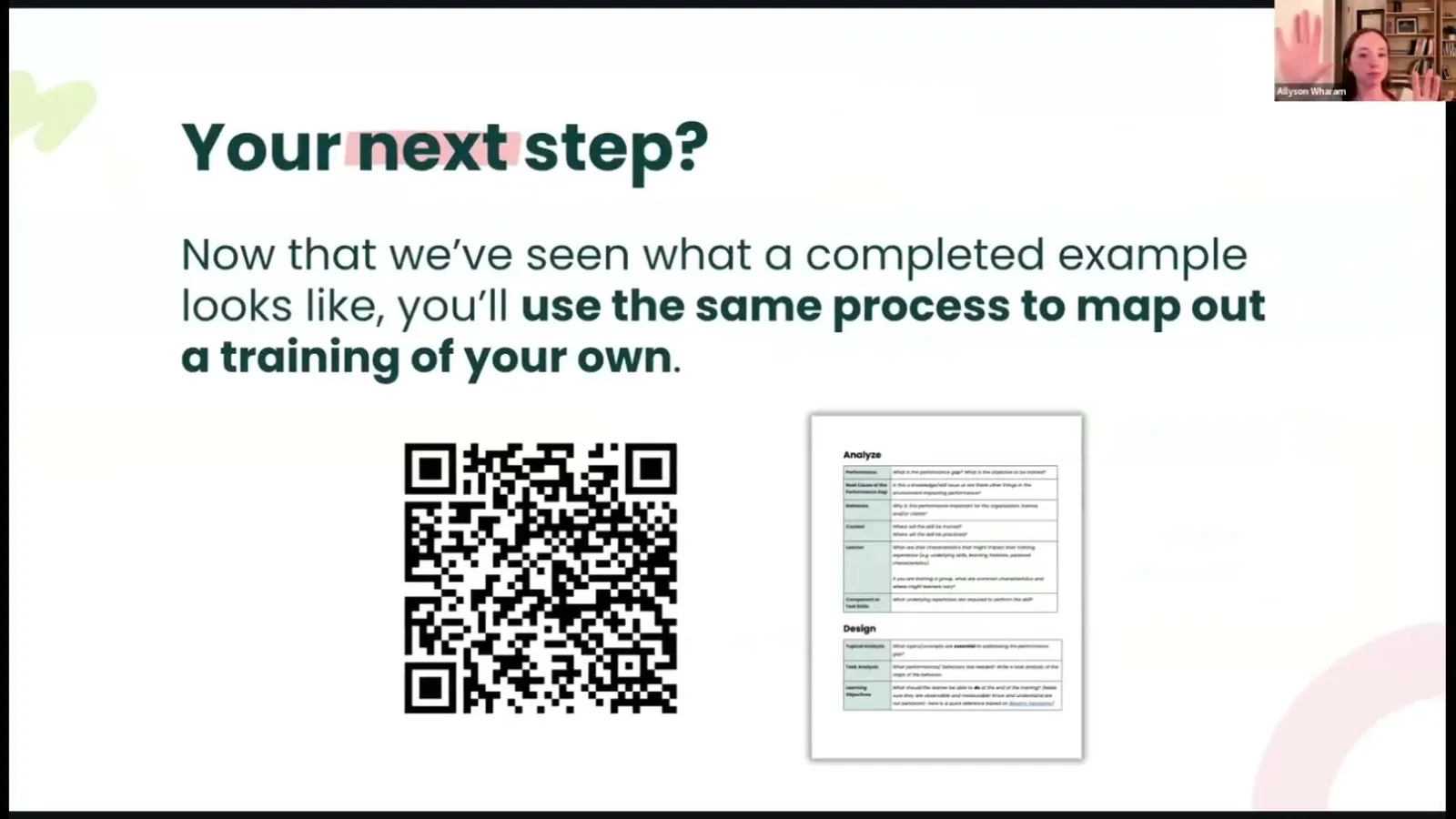
Design Smarter: Using Instructional Design to Improve Staff and Stakeholder Training
The Behaviorist Bookclub
When You’re Everyone’s Support: Building Sustainable Leadership.
Behavioral Wellness Coaching, LLC

Press Pause: What the RBT 40-Hour Training Was Really Meant to Do
Bowsprit Consulting LLC
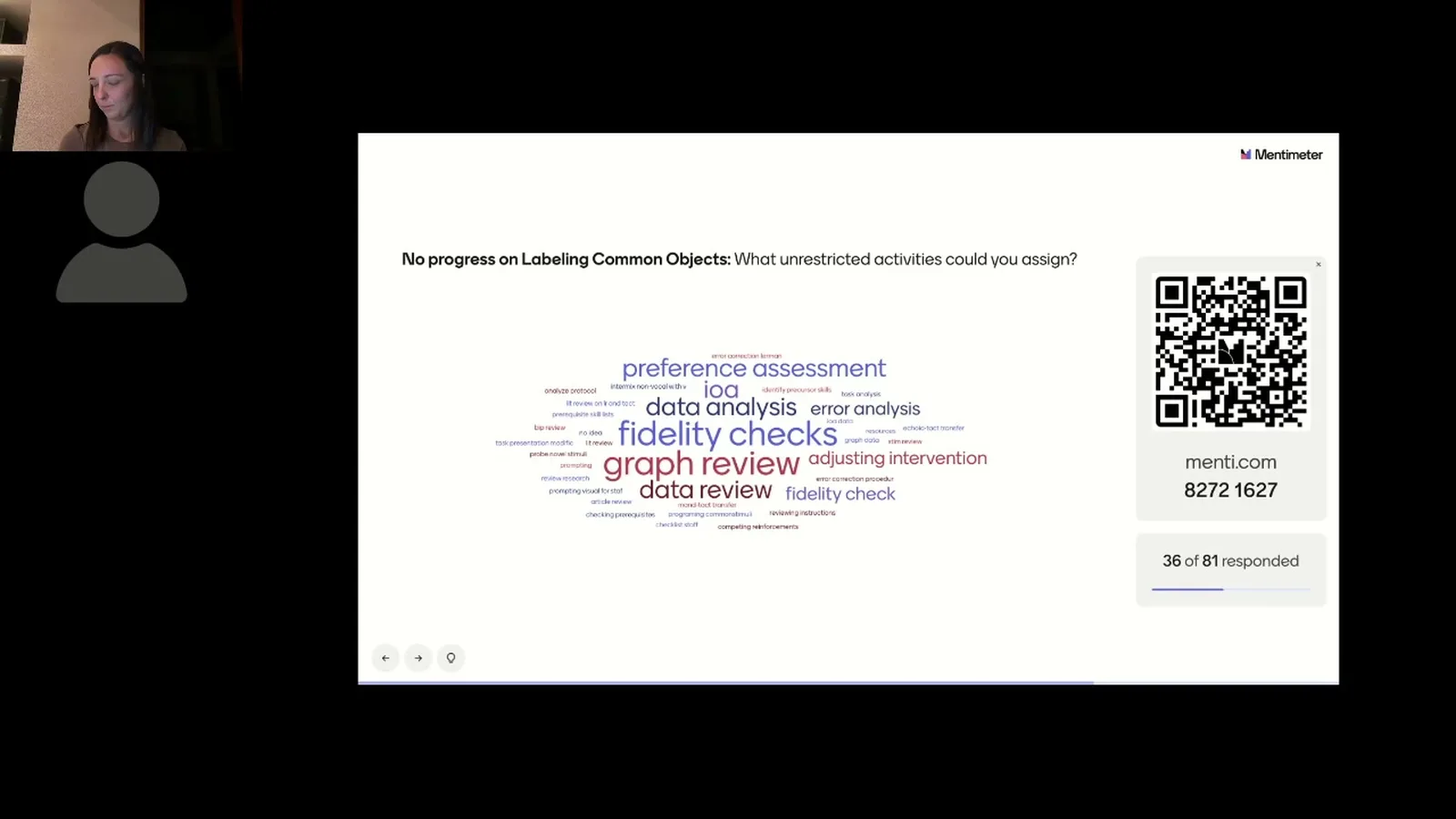
From Hours to Competence: Assessing and Developing Supervisee Skills
The Behaviorist Bookclub
Compliance to Commitment: Seven Habits of the Highly Effective Caregiver Trainer
The Behaviorist Bookclub

Rad N Bad: 2,000 Hours, Zero Clinical Judgment? Competency-Based Supervision and Intentional Mentorship
Hickory Learning Group
More from Rooted Consultation, LLC

Ethics of Marketing: From a Hustle to the Honest Sell
Rooted Consultation, LLC

Beyond Competence: Using ACT to Cultivate Psychological Flexibility in Behavior Analytic Supervision
Rooted Consultation, LLC

Providing Fieldwork Supervision in a School Setting
Rooted Consultation, LLC
OpenCEU is supported by advertising from third-party sponsors. Sponsors are clearly labeled, have no influence over course content, instructors, or CEU decisions, and never appear on certificates. The BACB does not sponsor, approve, or endorse OpenCEU sponsors or their products.