Task Analysis in ABA: Breaking Skills Into Steps
Task analysis breaks a skill into small teachable steps. Learn how BCBAs use it to teach daily living skills, and when too many steps hurt progress.
Key takeaway
Task analysis is breaking a skill into small steps. You take one goal, like brushing teeth, and split it. Each step is one clear action a person can do.
Explore free BCBA CEU courses
Free learning path on this topic
Supervision, Done Right
Four supervision CEUs that build on each other. What reflective supervision is, how to build a supervision system, how to assess supervisee competence instead of counting hours, and how supervision affects provider outcomes. The BACB asks supervisors for three supervision CEUs per cycle. This covers it.
Experts who cover this
2 recordings on openceu cover task analysis aba.
- 1 CEU
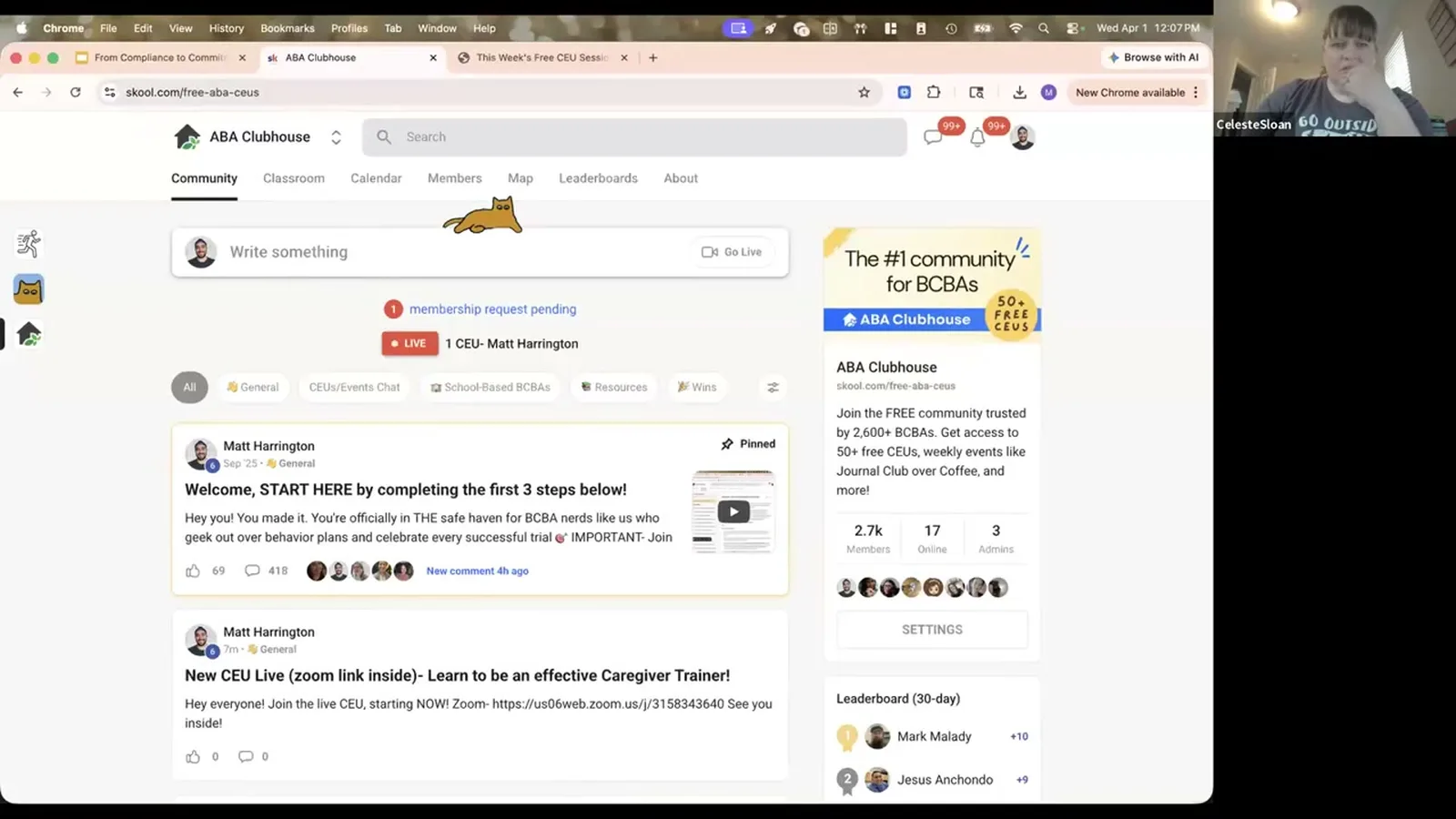
Compliance to Commitment: Seven Habits of the Highly Effective Caregiver Trainer
Matt HarringtonThe Behaviorist Bookclub
Used to find a caregiver's current entry point before sequencing steps, so training moves forward gradually rather than skipping ahead of what the caregiver…
- 1 Supervision CEU
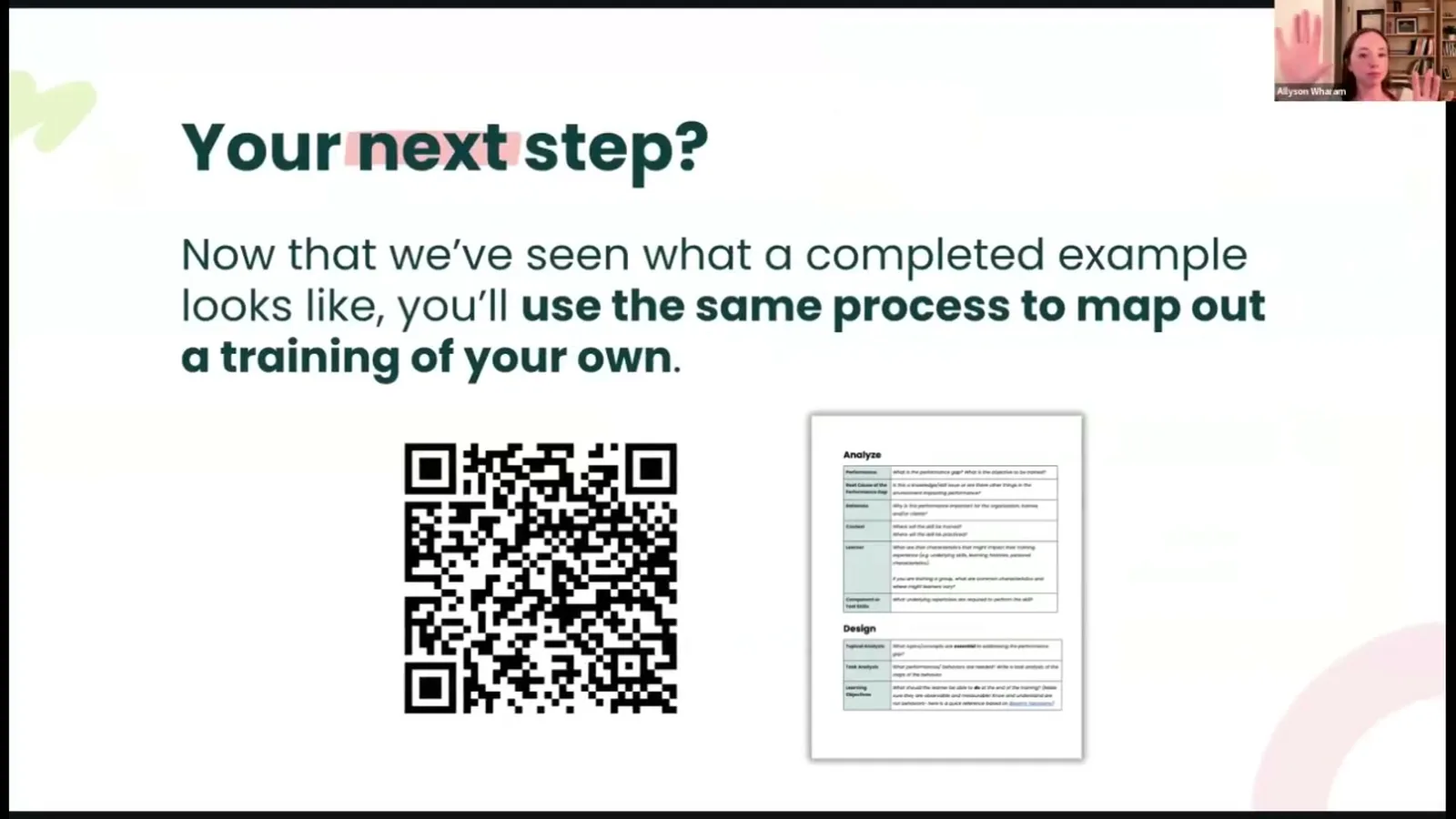
Design Smarter: Using Instructional Design to Improve Staff and Stakeholder Training
AllyThe Behaviorist Bookclub
Distinguishes a topical analysis (concepts, facts, rules) from a task analysis (breaking a physical performance or procedure into steps) as the two…
On this page · 7 sections▾
Task analysis is breaking a skill into small steps. You take one goal, like brushing teeth, and split it. Each step is one clear action a person can do. Then you teach the steps in order.
This tool helps BCBAs, RBTs, teachers, and parents. Big skills can feel too hard to teach all at once. Small steps make the skill reachable. They also give many chances to reinforce early wins. A clear list of steps helps every team member teach the same way.
Finding the entry point#
A good task analysis starts with where the learner is now. You do not begin above their current skill. You meet them at their real starting point. Matt Harrington calls this the entry point.
So focus on that task analysis and the entry point. We want to know where they are now, whether it be a skill, an amount of time they can commit to anything in between. From the talk — Matt Harrington
Once you know the entry point, you order the steps. A smart order builds momentum fast. It puts easy wins early so the learner gets reinforced often. As Matt Harrington puts it, you sequence the steps to maximize early reinforcement. Those early wins keep the learner motivated to continue.
Two kinds of content analysis#
Not every skill is a physical routine. Some learning is about facts, rules, or ideas. Instructional design splits these into two types. Ally explains the difference in staff training.
The next is like a physical performance or behavior, and that's something where we can write the actual task analysis and break down a procedure to engage in that. From the talk — Ally
A task analysis fits a physical performance best. You use it when someone must do steps in order. You can even apply it to your own clinical process. Ally notes you can task analyze a clinical routine too. You list the goals, describe the steps, then describe the responses.
Do not break it down too far#
Task analysis is powerful, but it has a trap. You can split a skill into too many pieces. Then you lose sight of the real goal. Kaelynn Partlow names this risk with humor.
We are master shapers. We can turn anything into a task analysis. And if that's too hard, we can task analysis our task analysis and break it down into 75 shaping steps. From the talk — Kaelynn Partlow
The danger is drift. You can be busy teaching tiny steps and stall real progress. Partlow warns that too many steps can hide the real goal. When that happens, you may lose sight of the progress that matters.
Problem-solve one step at a time#
 Advertisement
A learner may get stuck on a single step. That is not a reason to give up the whole skill. You can break just that step into smaller parts. Dr. Holly Gover found this in feeding work. Her team task analyzed the act of picking up food, chewing, and swallowing. Then they learned to fix a hard step fast.
We learned quickly that we could problem solve a step that they were having trouble with. And actually that they didn't have to fail for too long. We could actually task analyze the step. From the talk — Dr. Holly Gover
You can see this feeding work in Feeding Face Off.
The lesson is to stay flexible with your steps. A task analysis is a draft, not a rule. You adjust it as you watch the learner work. If a step is too big, you split it right then.
A tool for real-world skills#
Task analysis shines with daily living skills. Think dressing, toothbrushing, or cooking a simple meal. It also works for rare or sensitive skills. Amber Valentino shares one strong example.
They didn't know how to teach menstrual hygiene, so we found one article that was very dated, like 30 years old at the time... and we modernized that we brought it to practice and we used it with adolescent girls in homes with their parents, facilitating the teaching. From the talk — Amber Valentino
The method itself was simple and clean. Valentino describes it as just task analysis and chaining. Yet that simple approach filled a real gap in practice.
What the research says#
Task analysis helps teach real skills to many learners. One study used a picture-based task analysis to teach yoga poses. Learners scored their own steps after each pose. Accuracy rose for all the poses (Ortega, Miltenberger, & Mercado, 2026).
It also works when parents run the teaching. A behavioral package taught autistic children to brush their own teeth. It used task analysis, chaining, and prompts with parent help. Independent brushing rose from 33.7% of steps to 77.5% (Esposito et al., 2024).
Staff can learn it too, then help others gain independence. In one study, healthcare staff learned task analysis and prompting. They then helped adults with dementia do daily tasks alone. Correct staff steps rose sharply across all three tasks (Hanniffy & Kelly, 2025).
The number of steps matters. One review looked at how many steps a task analysis should have. It suggested up to about seven steps at a low reading level. More than that did not improve task performance (a review of number and readability of task analysis steps).
Parents can also learn to use these steps at home. One review of daily living skills training found strong results. Most studies used prompting, reinforcement, and task analysis together. Many showed that the new skills lasted and spread to new settings (a systematic review of caregiver-implemented daily living skills interventions).
FAQ#
What is a task analysis in ABA?
It is a skill broken into small, ordered steps. Each step is one clear action a learner can do. You teach the steps one at a time. This makes hard skills like dressing or cooking reachable.
How many steps should a task analysis have?
Research suggests up to about seven steps for many skills. Too many steps can slow real progress. Written steps should stay at a low reading level. The right number depends on the learner and the skill.
What is the difference between task analysis and chaining?
Task analysis is the list of steps for a skill. Chaining is how you teach those steps in order. You link the steps together into one smooth routine. The two tools almost always work side by side.
 Advertisement
Keep learning
Earn free BCBA CEUs on openceu
Browse on-demand recordings from verified ACE providers and earn CEUs across autism, ABA, and behavior analysis. Detailed certificate, delivered the moment you finish.
Keep going with a free learning path
Supervision, Done Right
Four supervision CEUs that build on each other. What reflective supervision is, how to build a supervision system, how to assess supervisee competence instead of counting hours, and how supervision affects provider outcomes. The BACB asks supervisors for three supervision CEUs per cycle. This covers it.
Want the primary literature? Read the Task Analysis in ABA research roundup on our sister site, Behaviorist Book Club.