Getting the Right Answer Isn’t Enough: Establishing Speaker–Listener Repertoires for Complex Learning
Presented by Dana Pettus
Cancel any time. Cert delivered to your inbox the moment you pass the quiz.
Learner ratings
from 51 learners
97% would recommend this CEU to other professionals in their field (31 responses)
“Deficits in joint control account for lack of progress, such as when a child can respond to intraverbals in DTT but not in context. Teaching joint control is a cusp, and I am excited to learn how to open the world for the children I teach.”
— Tracie G.“great info. presented well”
— Linda P.“I really enjoyed looking through this new lens!”
— Crystal H.“This was very informative! Highly recommend.”
— Savannah A.“love it, different”
— Maria G.
About this CEU
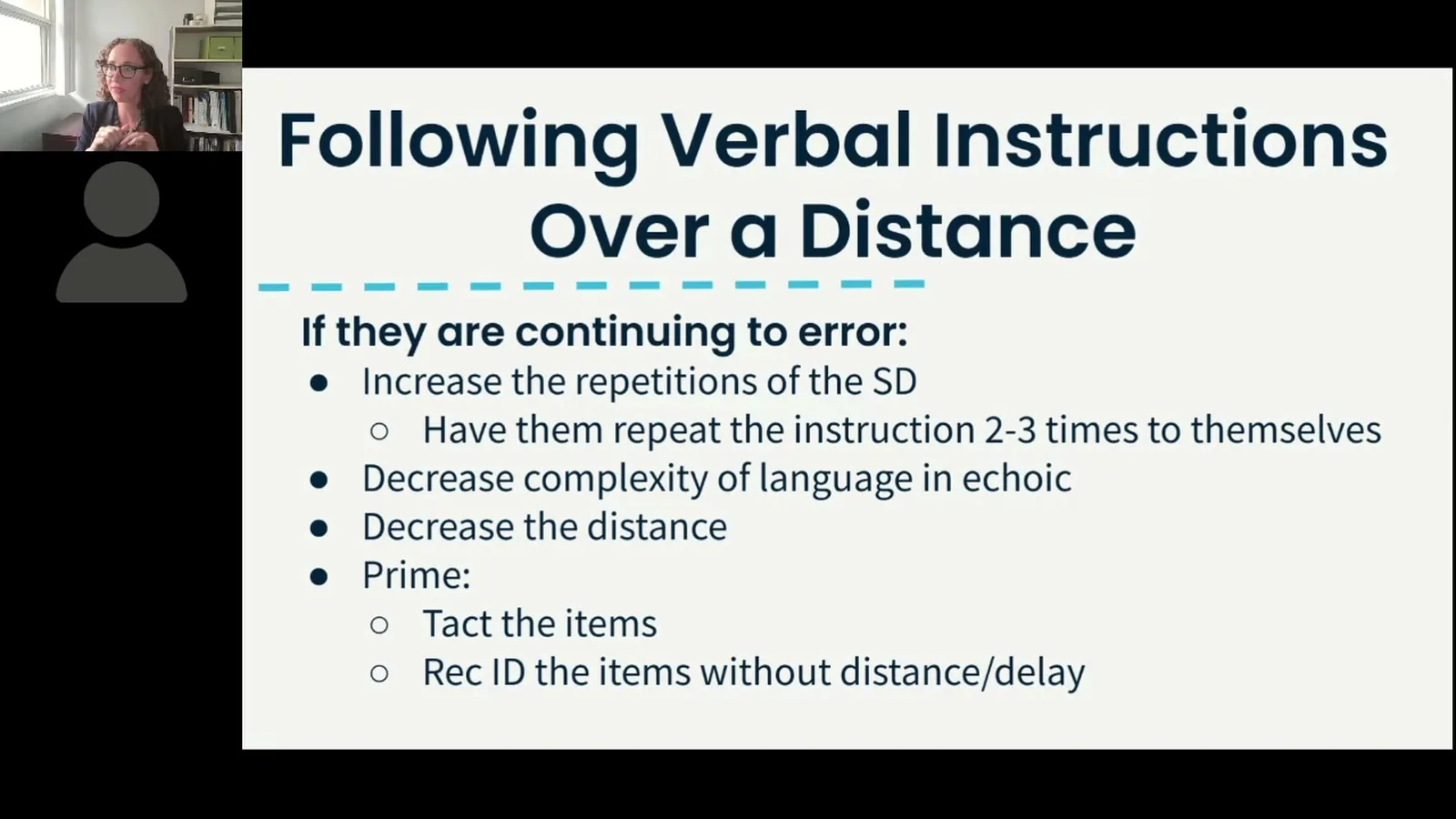
Learners may follow multi-step instructions, complete worksheets, or answer comprehension questions correctly—yet performance often collapses when prompts fade, delays increase, or task demands shift during novel tasks. Accurate responding does not necessarily indicate functional problem solving. In many cases, the controlling variables reflect restricted stimulus control rather than established speaker–listener mediation. This presentation examines verbal mediation and joint control as critical teaching tools in moving learners from basic skills into complex learning. Joint control occurs when a rehearsed verbal operant and a tact jointly evoke a response under shared topographical control. Participants will analyze how self-echoic rehearsal, tacting, and intraverbal responding interact to support responding across delay, distance, and novelty. Emphasis will be placed on identifying missing prerequisite repertoires, establishing overt verbal mediation, and transferring control to covert mediation. Applications will include multi-step instructions, mediated selection, recalling past events, and reading comprehension—supporting more durable and generative repertoires.
What you'll learn
- 11. Define joint control as the onset of joint stimulus control over a common response topography and distinguish it from simple listener responding 2. Analyze learner performance to determine whether correct responding reflects mediated problem solving or restricted stimulus control. 3. Identify prerequisite repertoires (e.g., self-echoic, tact, listener, and mixed operants) necessary for establishing functional speaker–listener interactions. 4. Design instructional procedures that establish overt verbal mediation and systematically transfer responding to covert mediation. 5. Apply joint control procedures to teach a variety of skills including multi-step instructions, mediated selection, listing, and early academic problem-solving tasks.
Concepts in this CEU
Related talks
Talks that cover the same concepts
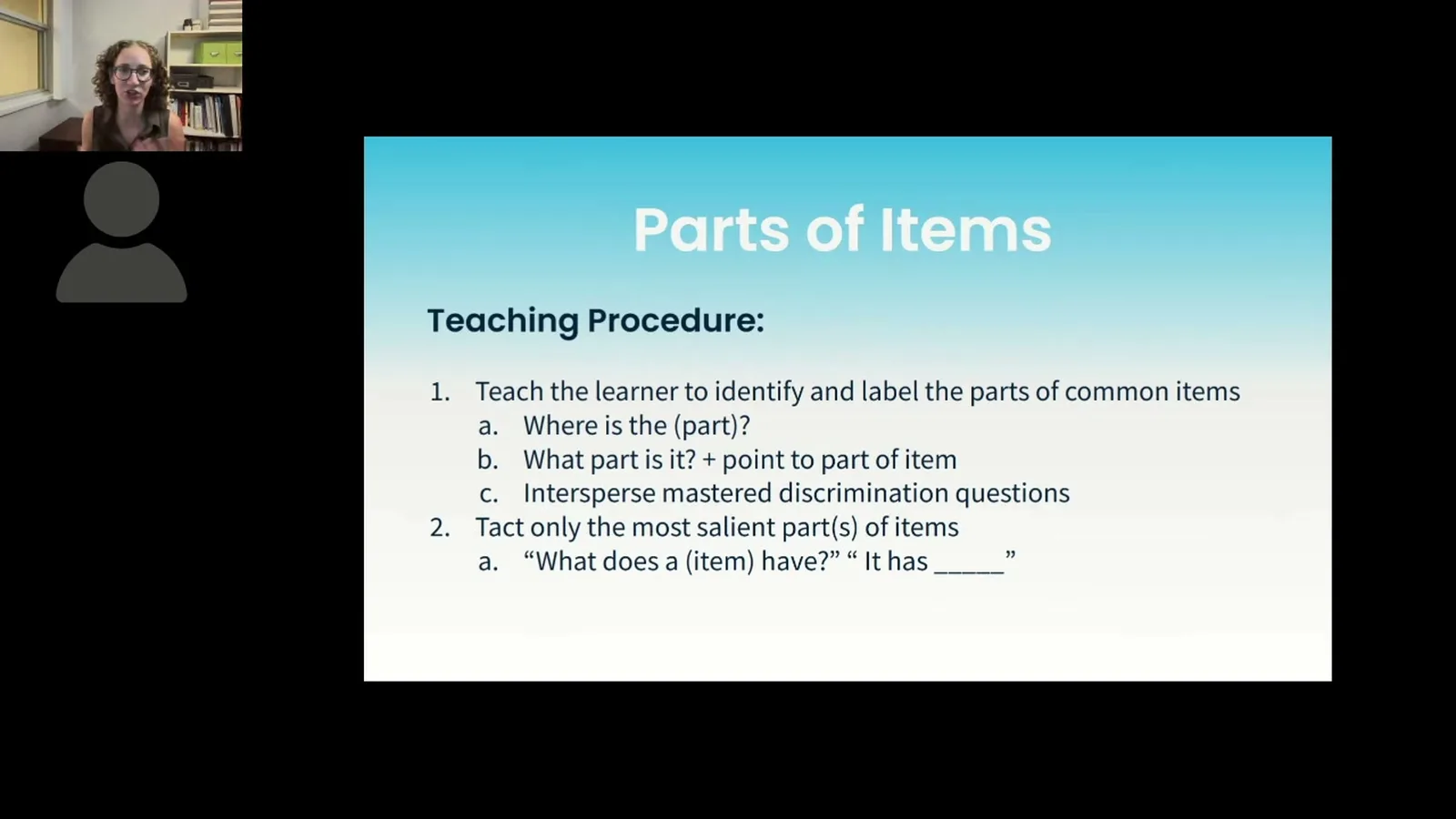
Teaching WH-Questions Isn’t Enough: Building True Conditional Discrimination
The Behaviorist Bookclub

Child Development Deep Dive: Middle Childhood (6-8 year olds)
The Behaviorist Bookclub

genArete: To Teach or not to Teach!
The Behaviorist Bookclub

Child Development for BCBAs- Age 9-11
The Behaviorist Bookclub
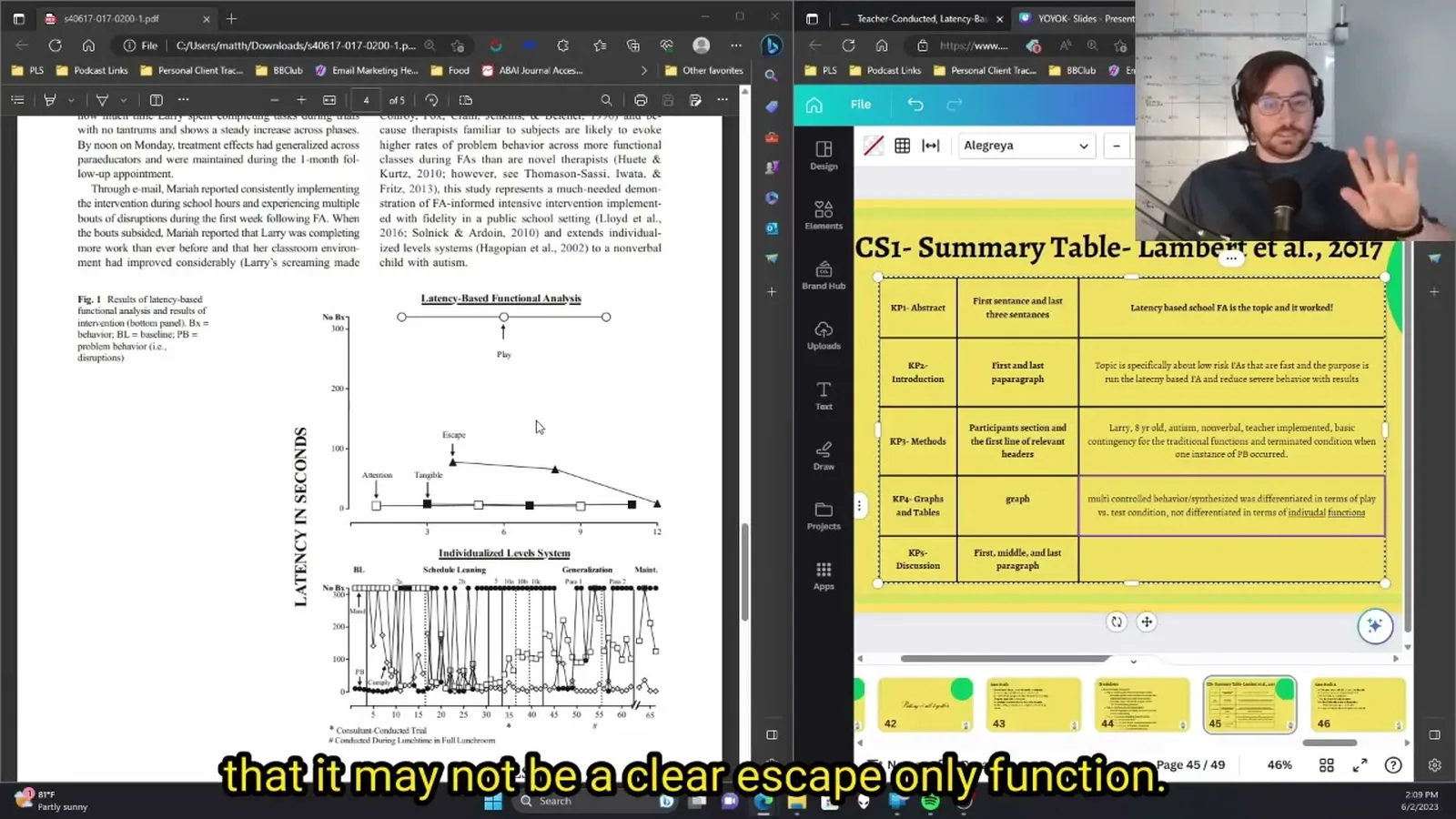
Solving Clinical Challenges with Research
The Behaviorist Bookclub
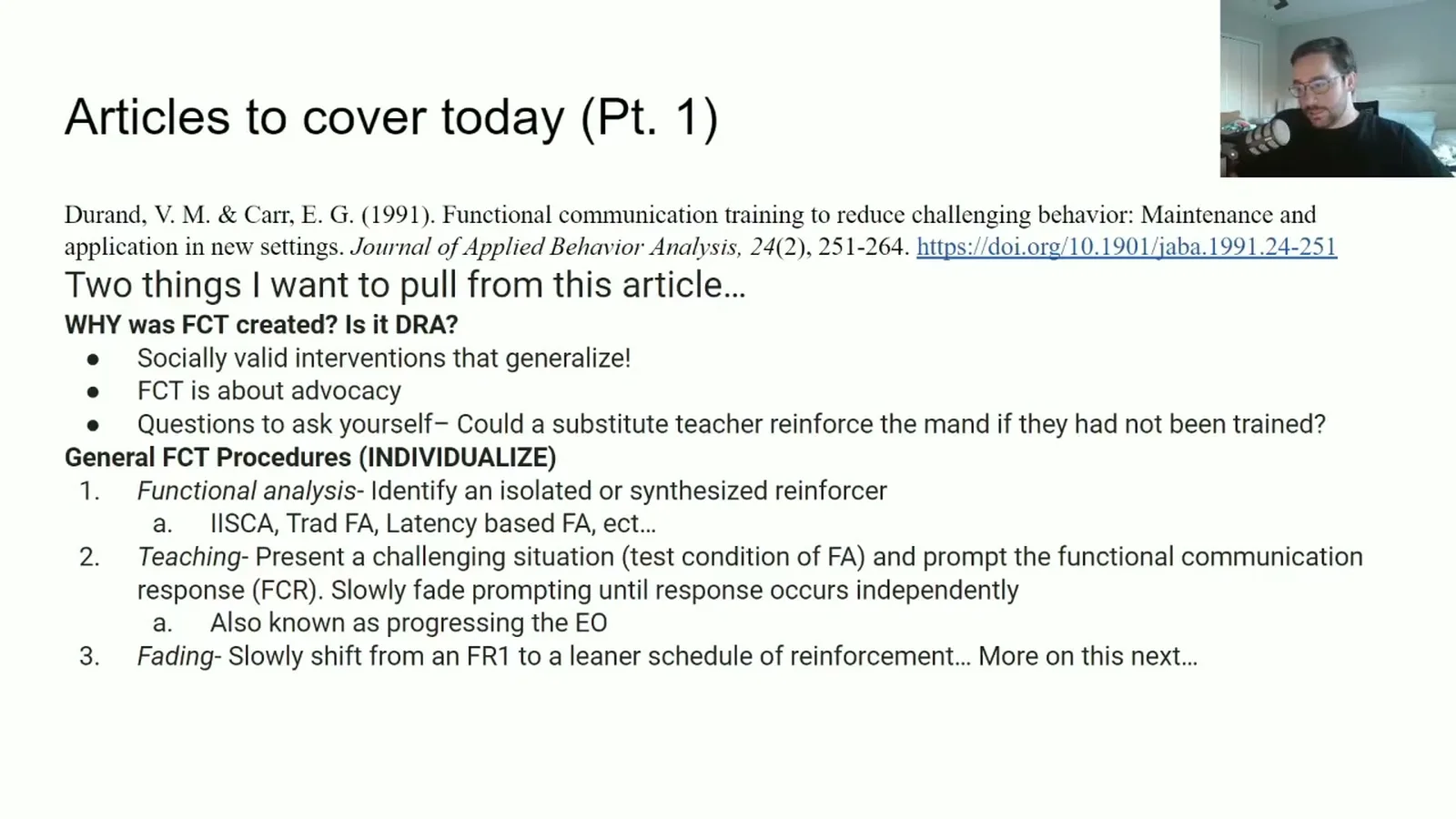
5 Days of Manding Mastery
The Behaviorist Bookclub
More from The Behaviorist Bookclub

Empowering Autonomy and Self-Management in ADHD Learners
The Behaviorist Bookclub
Shaping Behavior Change when ADHD is in the Picture
The Behaviorist Bookclub
From Hours to Competence: Assessing and Developing Supervisee Skills
The Behaviorist Bookclub
OpenCEU is supported by advertising from third-party sponsors. Sponsors are clearly labeled, have no influence over course content, instructors, or CEU decisions, and never appear on certificates. The BACB does not sponsor, approve, or endorse OpenCEU sponsors or their products.