Echoic Skills: The Building Block of Vocal Language
An echoic is when a child repeats a sound or word they hear. Learn why echoic skills predict vocal talking and how to build them in ABA.
Key takeaway
An echoic is when a child repeats a sound or word right after they hear it. You say "ball," and the child says "ball" back.
Solving Clinical Challenges with Research
Free learning path on this topic
Verbal Behavior: Beyond WH-Questions
Dana Pettus's three-part series on building generative verbal behavior. Why WH-question programs stall, how to establish speaker-listener repertoires, and how to scaffold advanced verbal skills like recall and simple inference. Three hours, three CEUs.
Experts who cover this
5 recordings on openceu cover echoic.
- Featured talk2.50 CEUs
Solving Clinical Challenges with Research
Matthew HarringtonThe Behaviorist Bookclub
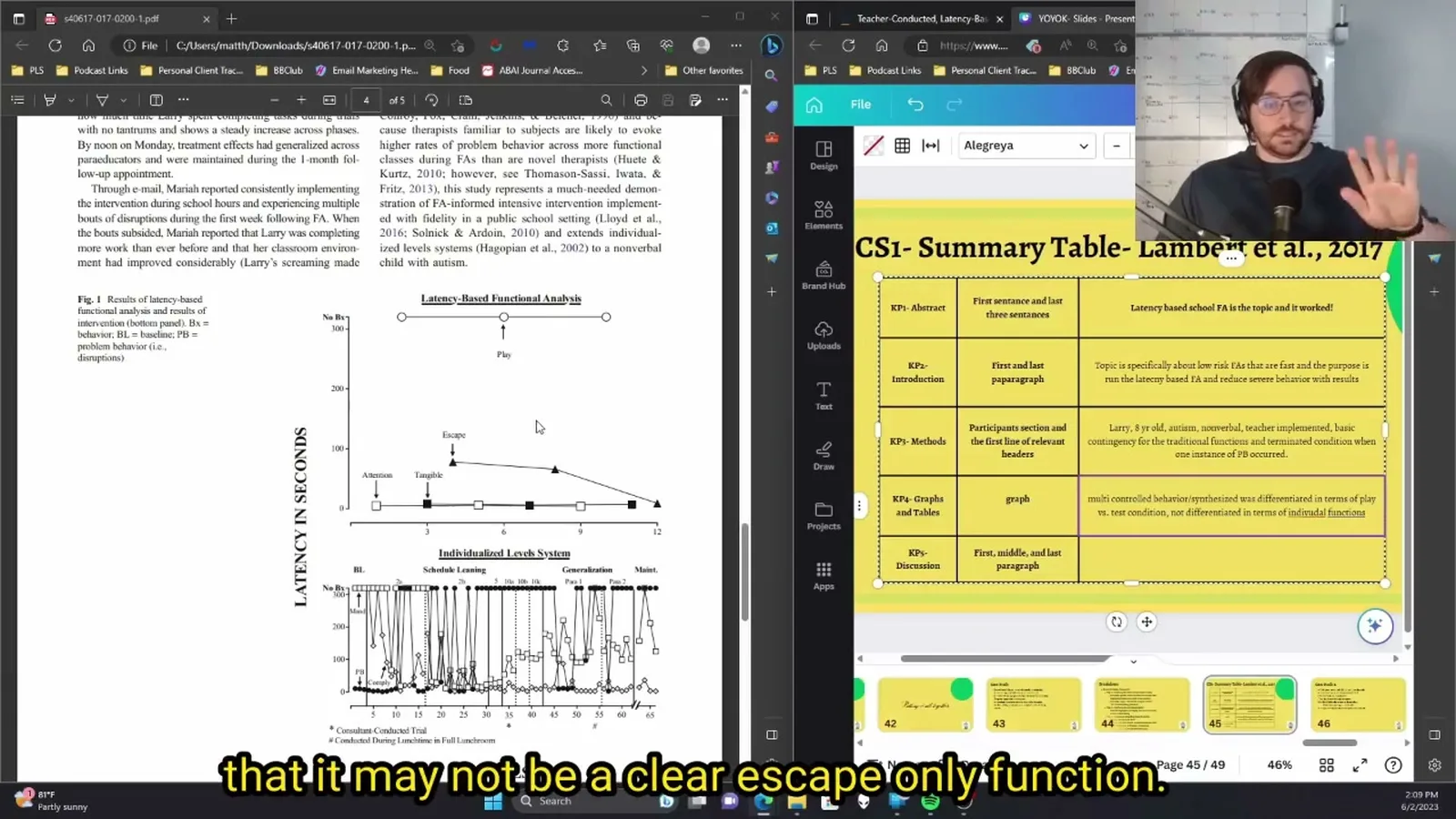
Within the prerequisite-assessment article, echoic scores turn out to be the strongest predictor of vocal mand acquisition: children who failed vocal imitation…
- 1 CEU
Getting the Right Answer Isn’t Enough: Establishing Speaker–Listener Repertoires for Complex Learning
Dana PettusThe Behaviorist Bookclub
An echoic repertoire is named as a prerequisite for joint control programs since learners must be able to repeat instructions aloud during prompting; the…
- 1 CEU
Child Development for BCBAs- Age 9-11
Kelly BrzakThe Behaviorist Bookclub
Kelly recommends keeping echoic skills strong for 9-11 year olds and using echoic prompts to model redirected language, such as turning 'I don't want to do it'…
- 2.50 CEUs
5 Days of Manding Mastery
Matt HarringtonThe Behaviorist Bookclub
Identified as the specific prerequisite skill that predicts success with vocal manding: without one- and two-syllable imitation, vocal mand training is likely…
- 1 CEU
Teaching WH-Questions Isn’t Enough: Building True Conditional Discrimination
Dana PettusThe Behaviorist Bookclub
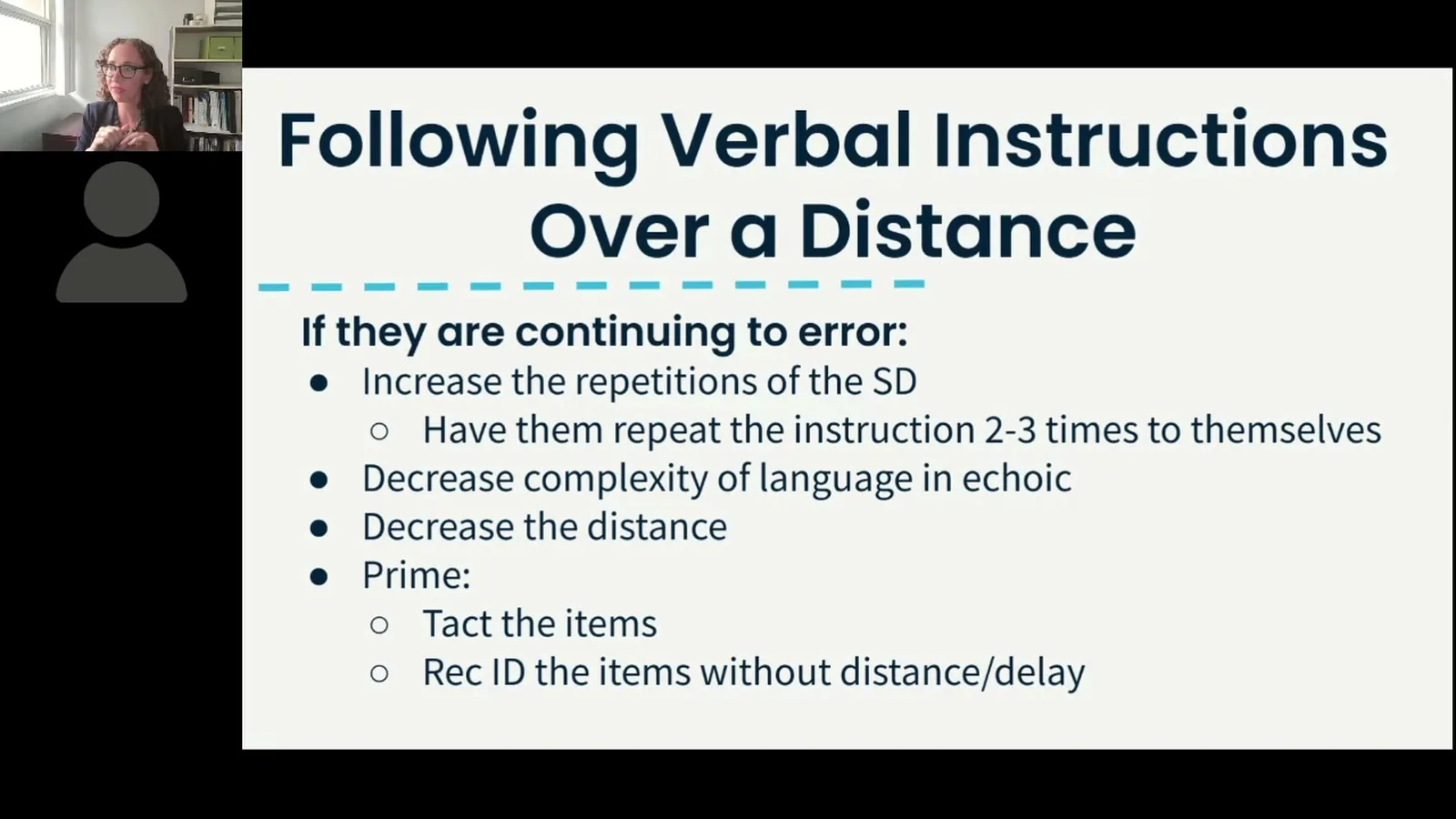
The first step in teaching the autoclitic frame procedure: pairing the frame with potential responses through pure echoic repetition, with no stimulus present…

On this page · 7 sections▾
An echoic is when a child repeats a sound or word right after they hear it. You say "ball," and the child says "ball" back. That simple copy is one of the first steps toward spoken language.
Echoic skills matter because so much of vocal talking is built on top of them. A child who can copy sounds can be taught to ask for things with their voice. A child who cannot copy sounds will often struggle with that same goal. So checking echoic skills early can save weeks of training that may not work.
The idea shows up across many talks and studies in ABA, short for applied behavior analysis, a therapy that teaches skills in small steps. Some experts use echoics to predict which children will talk. Others use echoic prompts as a tool to teach harder skills. This page pulls those threads together so you can see the full picture of why echoics come first.
Echoic scores can predict vocal talking#
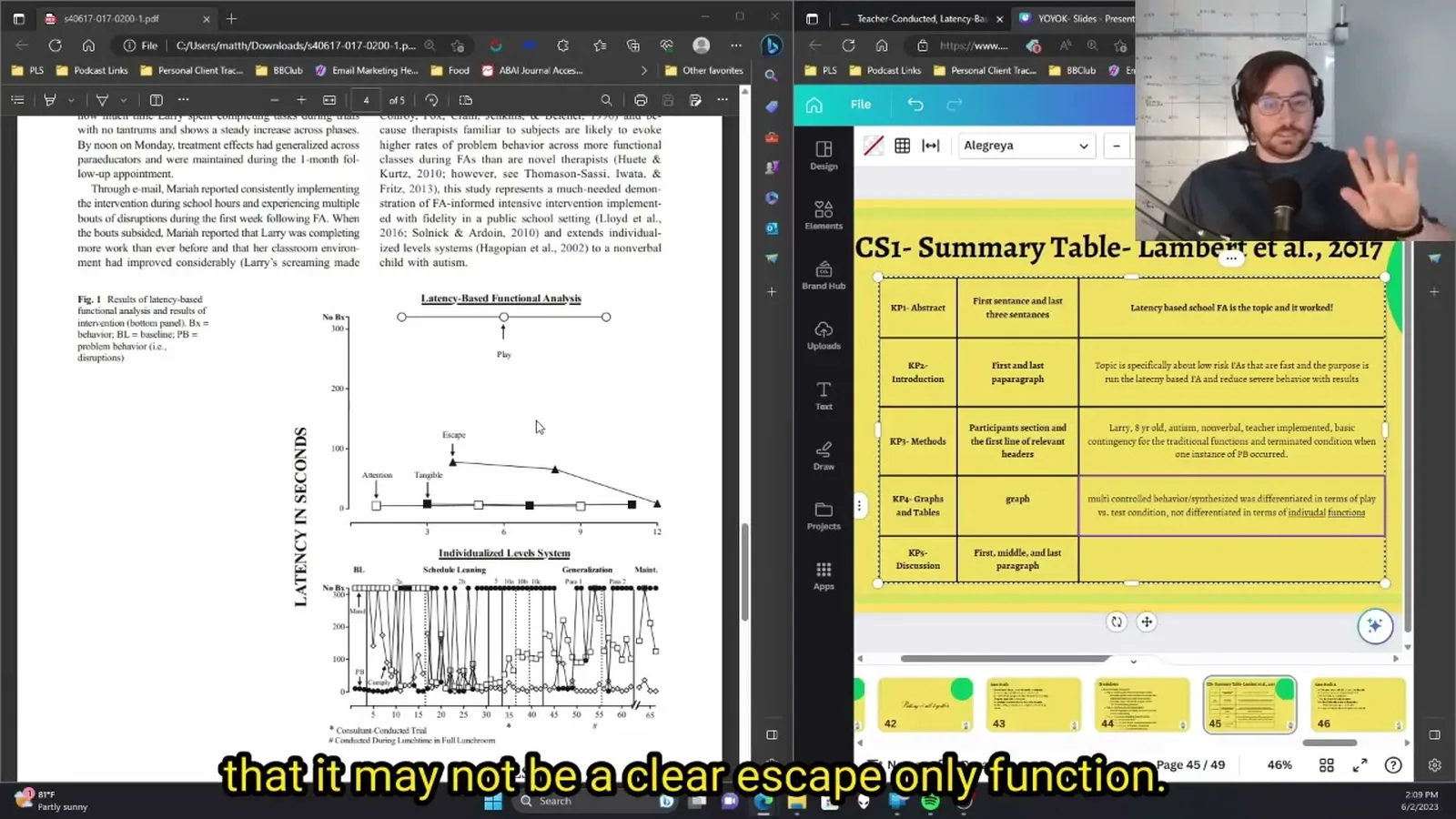
In an ABA setting, a BCBA is a board certified behavior analyst who plans a child's program. Matthew Harrington looked at how well early skills predict later ones. He found that echoic scores were the strongest sign of whether vocal manding would take hold. A mand is a request, like asking for a snack or a toy.
His decision rule was simple. If a child fails vocal imitation, you expect their echoic score to be low too. That low score is a flag. It tells the team that pushing hard on vocal training may not pay off yet.
If vocal fails, that means we'd expect echoic to be low.
From the talk — Matthew Harrington
This does not mean the child cannot communicate. It means the team should check echoic skills first before betting on a vocal goal.
The prerequisite skill for vocal requests#
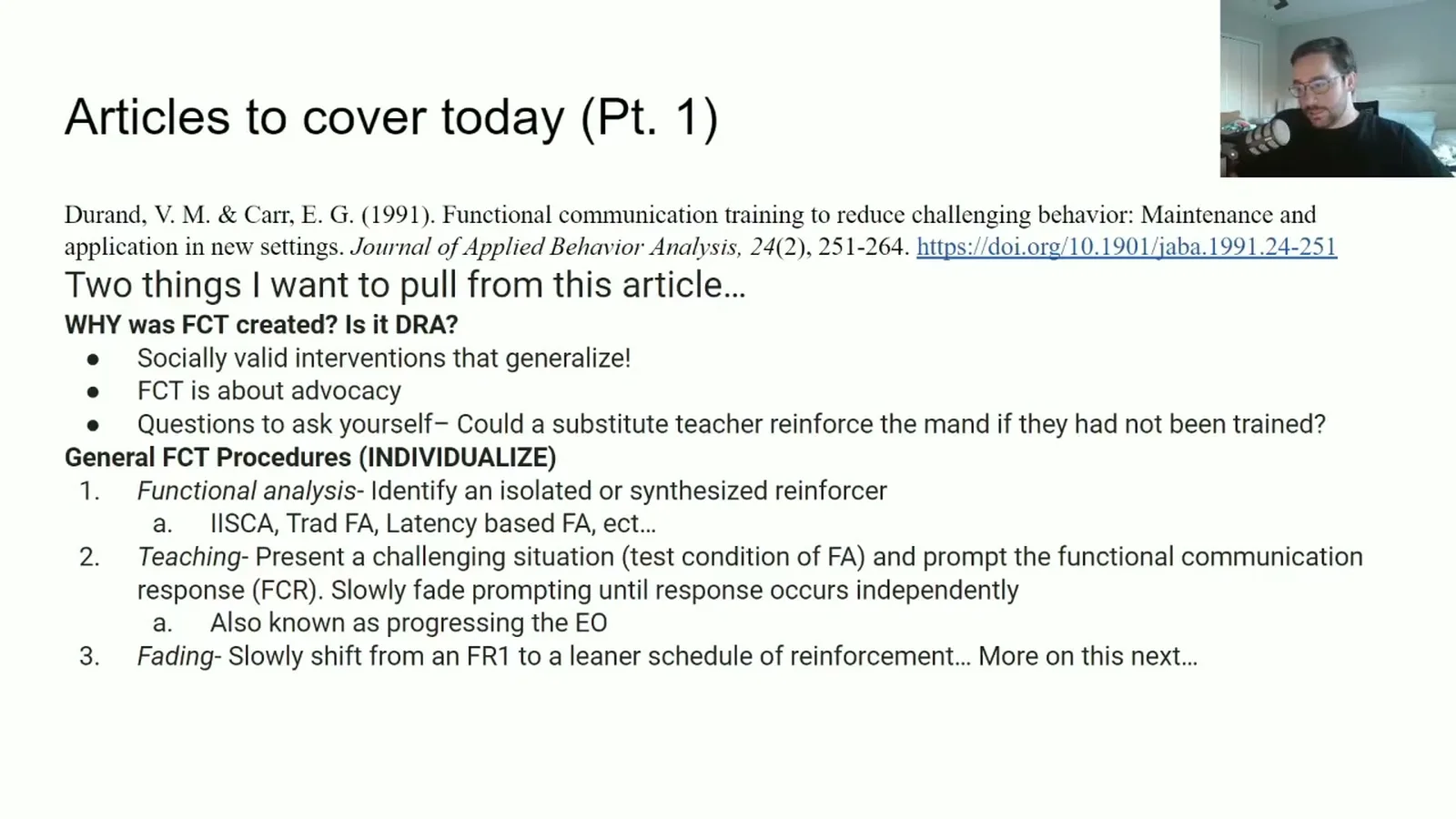
In a separate talk on manding, Matt Harrington made the same point in a hands-on way. He looked at whether imitation skills were present before starting vocal requesting. When those skills were there, vocal training worked well. When they were missing, training often stalled.
The key skills are copying one-syllable and two-syllable sounds. Think "ah" or "mama." A child who can do this has the raw material for speech. A child who cannot will likely have a hard road with vocal requests.
As Harrington puts it in the talk, a child who cannot imitate one-syllable and two-syllable sounds will probably struggle with vocal mand training.
The lesson repeats across both talks. Test the echoic skill first. Let that result guide whether you pick a vocal path or another way to communicate. The 5 Days of Manding Mastery session walks through this check step by step.
Keep echoic skills strong as kids grow#
 Advertisement
Echoic work is not only for very young children. Kelly Brzak spoke about kids ages 9 to 11. She urged teams to keep the echoic skill set strong at that age too. A strong echoic skill stays useful long after the first words come.
One good use is redirection. When a child says something like "I don't want to do it," you can model better words for them to copy. The child echoes the new phrasing, and over time the kinder wording sticks. This only works if the child can echo well.
Echoic prompts, as we all know, can work wonders when targeting redirection.
From the talk — Kelly Brzak
Brzak also noted that planned echoic practice pays off later. If you build echoics into the program on purpose, there is a high chance the skill helps in tough moments. That makes echoic training a steady investment that keeps paying off.
Echoic training often comes first in bigger programs#
Some language goals are complex and need a careful order. Dana Pettus described teaching an autoclitic frame, which is a sentence pattern like "it is a red ball." Following Dr. Espinosa's method, the team starts with pure echoic practice before anything else.
At this first stage there is no object to name and no choice to make. The child just repeats the frame and the words that fill it. This builds a smooth link between the sentence pattern and the words that go inside it. Only after that does naming and sorting begin.
This shows a wider truth about echoics. They are a base layer. Many advanced skills sit on top of a solid echoic repertoire, so teams build the echoic first. The Teaching WH-Questions Isn't Enough: Building True Conditional Discrimination talk goes deeper on this order of teaching.
Echoic prompts help build other language skills#
Across these talks, one theme stands out. Echoics are not just a goal on their own. They are a tool to teach harder skills. An echoic prompt gives the child the answer to copy, and the copy becomes a bridge to independent talking.
You can use echoic prompts to help a child answer questions, request items, and hold short conversations. The prompt makes the target words easy to say at first. Then you fade the help so the child says the words alone. This move from copy to independent speech shows up again and again in practice and in the research below.
That is why teams treat echoic work as an early priority. It is quick to test and quick to teach. And it opens the door to bigger goals like naming, requesting, and back-and-forth talk. When echoics are weak, those bigger goals get much harder to reach.
What the research says#
Studies back up what these experts see in the clinic. One research team reviewed charts for 118 children with autism (Mason et al., 2024). Their model found that a mand repertoire, vocal play, and motor imitation predicted whether a child could echo. Children with these three skills were far more likely to echo the speech of others.
Echoic prompts also help build harder skills. In one study, children echoed a keyword from each question, such as answering "What color?" with "color blue" (Meleshkevich et al., 2021). This made the sounds easier to notice and helped correct answers grow. Another study compared echoic prompts with listener prompts (Alzrayer, 2023). The echoic prompt led to more complex intraverbal responses, which are conversation-type answers, in three of four children.
Echoics matter early and for requesting too. One team used vocal imitation with infant siblings at risk for autism (Neimy et al., 2020). The babies reliably made more sounds and more echoic approximations. Another study paired echoic prompts with larger rewards for children who used speech devices (Muharib et al., 2021). Spoken requests grew for all three children, and one began using only spoken words even when his device was still an option.
Frequently asked questions#
What is an echoic in simple terms?
An echoic is a repeat. The child hears a sound or word and says the same thing back. It is one of the basic verbal skills in ABA. It is the copy step that many other talking skills grow from.
Why do behavior analysts check echoic skills before vocal goals?
Because echoic skill predicts whether vocal training will work. If a child cannot copy one and two-syllable sounds, a vocal request goal will likely stall. Checking first helps the team pick a path that fits the child and avoids wasted weeks.
Can echoic skills help older children, not just toddlers?
Yes. Older kids benefit too. A strong echoic skill lets you model better words for a child to copy, which helps with redirection and calmer speech. Planned echoic practice keeps the skill ready for harder moments.
 Advertisement
Turn this topic into a CEU
You just studied this. Now get credit for it.
Watch Solving Clinical Challenges with Research with Matthew Harrington and earn 2.5 free BCBA CEUs. Detailed certificate, delivered the moment you finish.
Keep going with a free learning path
Verbal Behavior: Beyond WH-Questions
Dana Pettus's three-part series on building generative verbal behavior. Why WH-question programs stall, how to establish speaker-listener repertoires, and how to scaffold advanced verbal skills like recall and simple inference. Three hours, three CEUs.