Child Development Deep Dive: Middle Childhood (6-8 year olds)
Presented by Kelly Brzak, MS, BCBA

In this second installment of her three-part child development series for behavior analysts, Kelly Brzak, MS, BCBA (Problem Zolved, LLC) covers middle childhood, ages 6-8. She reviews why these years matter — school readiness, expanding social repertoires, emerging metacognition, and a heightened period of hippocampal activity that supports recall — and stresses considering the whole child across physical, emotional, social, and cognitive domains, repeatedly noting that developmental delay does not mean lower IQ. She surveys common problem behaviors at this age (whining, tantrums, task refusal), prescribing communication skills and tolerance building, and flags when to refer out (SLPs, feeding specialists, developmental pediatricians) and mandated reporting duties. On assessment and programming, she advocates using caregiver motivation to drive intervention, including Likert-scale interviews built on AFLS domains, and asking children directly what they want to work on. She cautions against scripted responding and limiting reinforcement to expected answers, arguing that operant conditioning can turn learners into 'little robots' if analysts punish independence and creativity. Practical strategies include tact-to-intraverbal bridge programming and explicit-memory recall games, honoring mands for removal without coercion, scaffolding through choices and ongoing pairing, handling homework requests appropriately (analysts should not do academics but can build sitting and attending repertoires), goal-writing critiques, session materials tips, and caregiver pairing guidance, including not letting parent non-response punish the analyst's outreach efforts.
Register free & watch nowCancel any time. Cert delivered to your inbox the moment you pass the quiz.
Learner ratings
from 56 learners
100% would recommend this CEU to other professionals in their field (8 responses)
“Good”
— Trupthi K.“great ceu”
— Julie P.“good presentation about goals, teaching tips & tricks, etc for this age group - not as much about actual child development as I would expect based on title”
— Deva C.
About this CEU
In this second installment of her three-part child development series for behavior analysts, Kelly Brzak, MS, BCBA (Problem Zolved, LLC) covers middle childhood, ages 6-8. She reviews why these years matter — school readiness, expanding social repertoires, emerging metacognition, and a heightened period of hippocampal activity that supports recall — and stresses considering the whole child across physical, emotional, social, and cognitive domains, repeatedly noting that developmental delay does not mean lower IQ. She surveys common problem behaviors at this age (whining, tantrums, task refusal), prescribing communication skills and tolerance building, and flags when to refer out (SLPs, feeding specialists, developmental pediatricians) and mandated reporting duties. On assessment and programming, she advocates using caregiver motivation to drive intervention, including Likert-scale interviews built on AFLS domains, and asking children directly what they want to work on. She cautions against scripted responding and limiting reinforcement to expected answers, arguing that operant conditioning can turn learners into 'little robots' if analysts punish independence and creativity. Practical strategies include tact-to-intraverbal bridge programming and explicit-memory recall games, honoring mands for removal without coercion, scaffolding through choices and ongoing pairing, handling homework requests appropriately (analysts should not do academics but can build sitting and attending repertoires), goal-writing critiques, session materials tips, and caregiver pairing guidance, including not letting parent non-response punish the analyst's outreach efforts.
What you'll learn
- 1Learning Objectives
- 2Participants will identify key developmental milestones for children ages 6–8 across social, emotional, language, cognitive, and motor domains.
- 3Participants will recognize common problem behaviors observed during middle childhood and discuss developmental and environmental factors that may contribute to these behaviors.
- 4Participants will describe evidence based programming strategies for children ages 6–8, including practical approaches to caregiver pairing and the use of Behavioral Skills Training (BST).
Concepts in this CEU
Related talks
Talks that cover the same concepts

Child Development for BCBAs- Age 9-11
The Behaviorist Bookclub
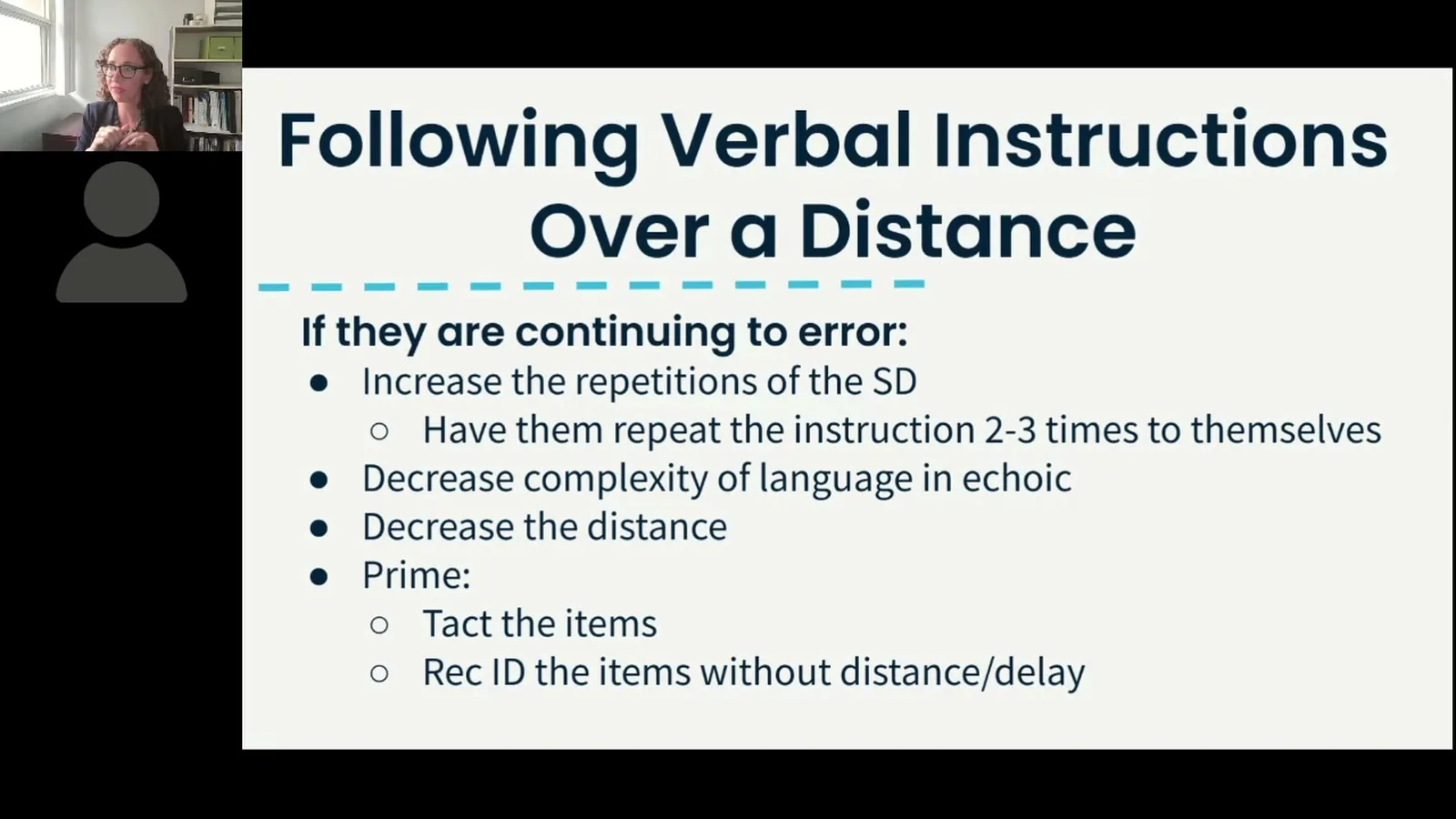
Getting the Right Answer Isn’t Enough: Establishing Speaker–Listener Repertoires for Complex Learning
The Behaviorist Bookclub
Child Development Deep Dive: Early Childhood (2-5 year olds)
The Behaviorist Bookclub

The Use of Matrix Training to Teach Multi-Component Tacting Through Telehealth
Copper Consulting Group
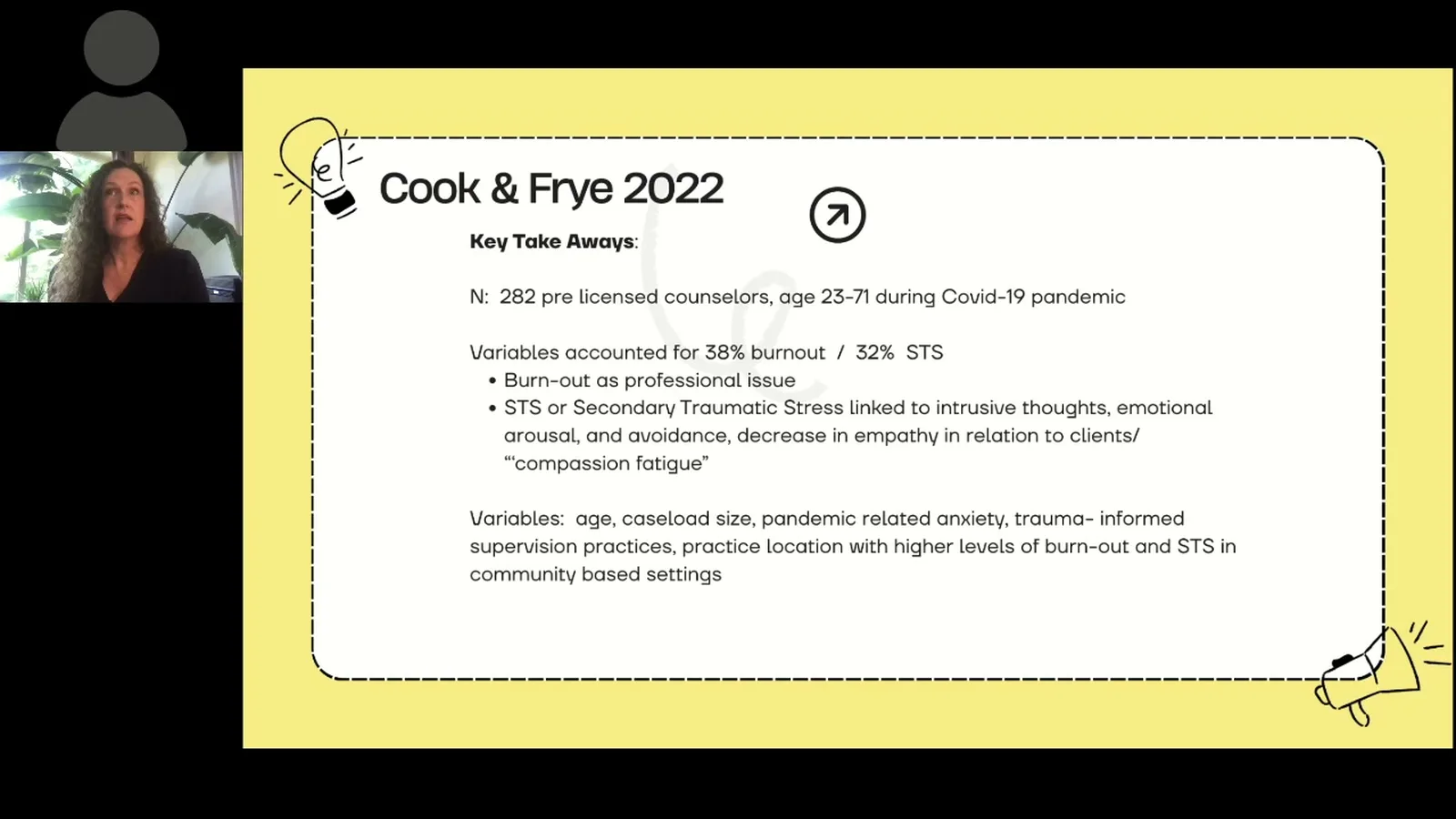
Reflective Supervision and Provider Outcomes in ABA
The Behaviorist Bookclub

Delegating with Confidence: Training and Supervising RBTs to Support Assessments
Copper Consulting Group
More from The Behaviorist Bookclub

Empowering Autonomy and Self-Management in ADHD Learners
The Behaviorist Bookclub
Shaping Behavior Change when ADHD is in the Picture
The Behaviorist Bookclub
From Hours to Competence: Assessing and Developing Supervisee Skills
The Behaviorist Bookclub
OpenCEU is supported by advertising from third-party sponsors. Sponsors are clearly labeled, have no influence over course content, instructors, or CEU decisions, and never appear on certificates. The BACB does not sponsor, approve, or endorse OpenCEU sponsors or their products.