Teaching WH-Questions Isn’t Enough: Building True Conditional Discrimination
Presented by Dana Pettus
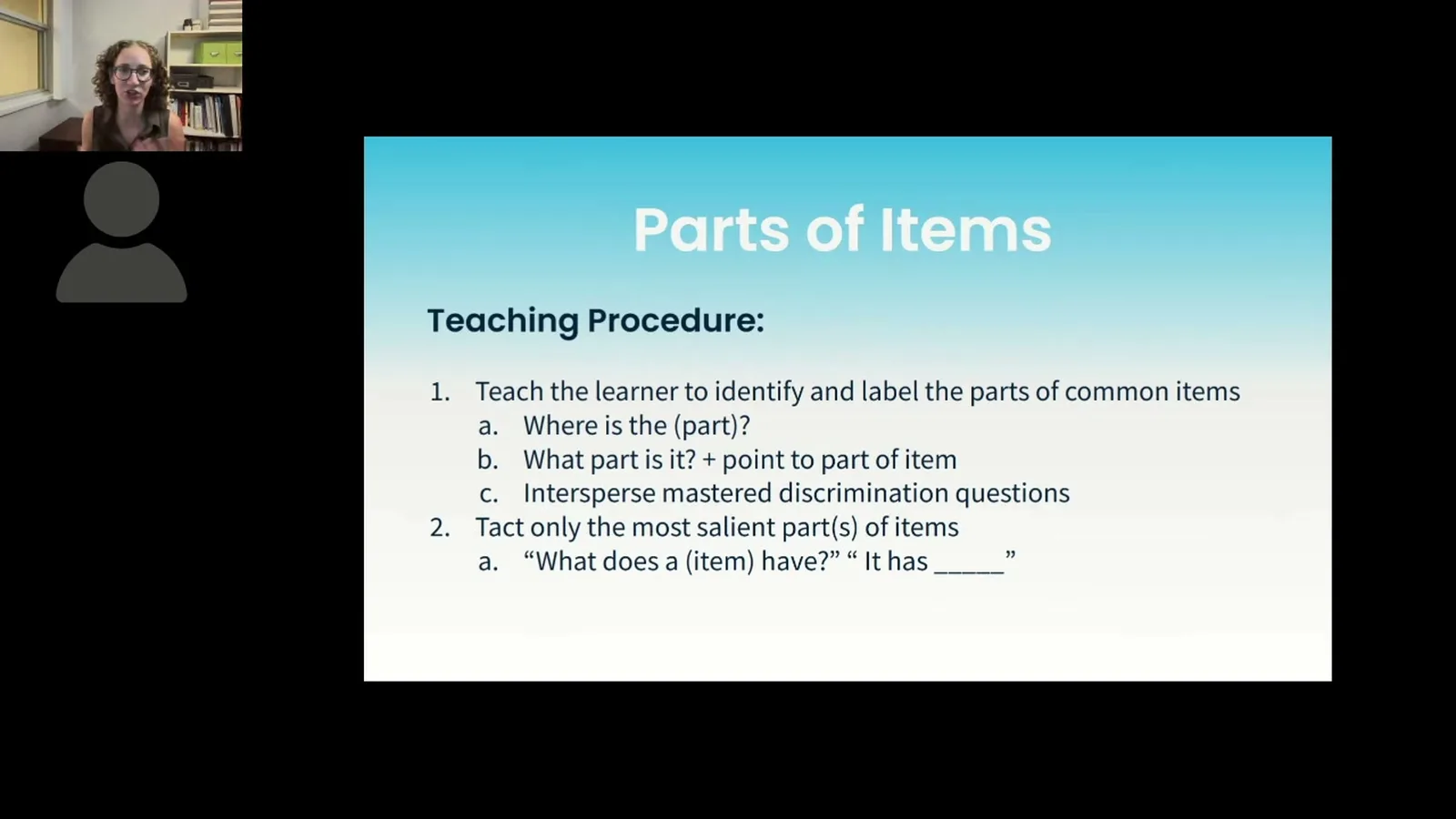
This presentation challenges the assumption that teaching WH-questions in isolation produces flexible verbal repertoires. Drawing on the work of Dr. Francesca degli Espinosa, participants will examine how autoclitic frames and the scaffolding of skills can be used to systematically establish robust discriminated responding across verbal forms and to prevent faulty stimulus control before it becomes entrenched.
Register free & watch nowCancel any time. Cert delivered to your inbox the moment you pass the quiz.
Learner ratings
from 83 learners
98% would recommend this CEU to other professionals in their field (40 responses)
“great session.”
— Lindsay M.“This presentation provided helpful guidance to teach language to children to do not develop generative intraverbal responding and plateau.”
— Tracie G.“don't have the hours in Aus”
— Morgan M.“The questions were clear and helpful in understanding autoclitic frames and question discrimination.”
— Demphna A.“amazing to understand the expanding the level of tact and verbal behavior. Thank You”
— Dur G.
About this CEU
Many behaviour analysts can establish correct responding to individual WH-questions. However, when programs stall at more complex discriminations—such as discriminating features from functions questions, or adjectives from class relations—the issue is rarely the learner’s ability. The breakdown often reflects faulty stimulus control resulting from programming that uses a train and hope method of teaching question discrimination.
What you'll learn
- 11. Discriminate between correct WH responding under limited stimulus control and responding under true conditional and multiply controlled stimulus control. 2. Analyze learner errors to identify competing, restricted, or faulty stimulus control within tact and WH-question programs. 3. Design cumulative instructional sequences to establish discriminated responding across WH forms, adjectives, features, functions, and class relations. 4. Revise existing verbal behaviour programs to strengthen stimulus control, promote maintenance, and reduce rote responding.
Concepts in this CEU
Course materials
Related talks
Talks that cover the same concepts
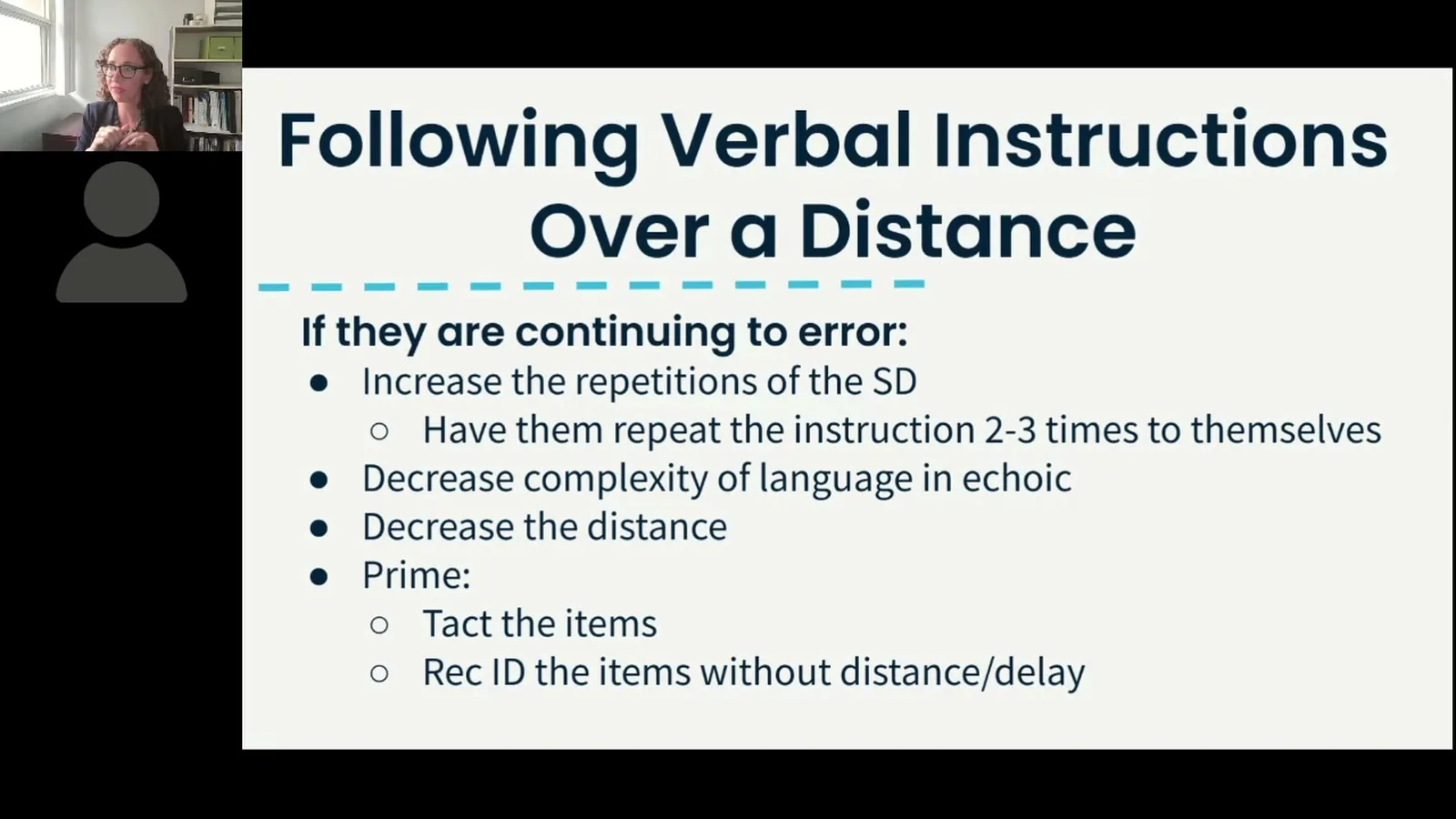
Getting the Right Answer Isn’t Enough: Establishing Speaker–Listener Repertoires for Complex Learning
The Behaviorist Bookclub

It’s Complicated: Teaching Relationship Safety That Reflects Real Life
The Behaviorist Bookclub

Shaping Behavior Change when ADHD is in the Picture
The Behaviorist Bookclub

The Interdisciplinary Case Conference
The Mindful Learner LLC

genArete: To Teach or not to Teach!
The Behaviorist Bookclub

Child Development for BCBAs- Age 9-11
The Behaviorist Bookclub
More from The Behaviorist Bookclub
Empowering Autonomy and Self-Management in ADHD Learners
The Behaviorist Bookclub
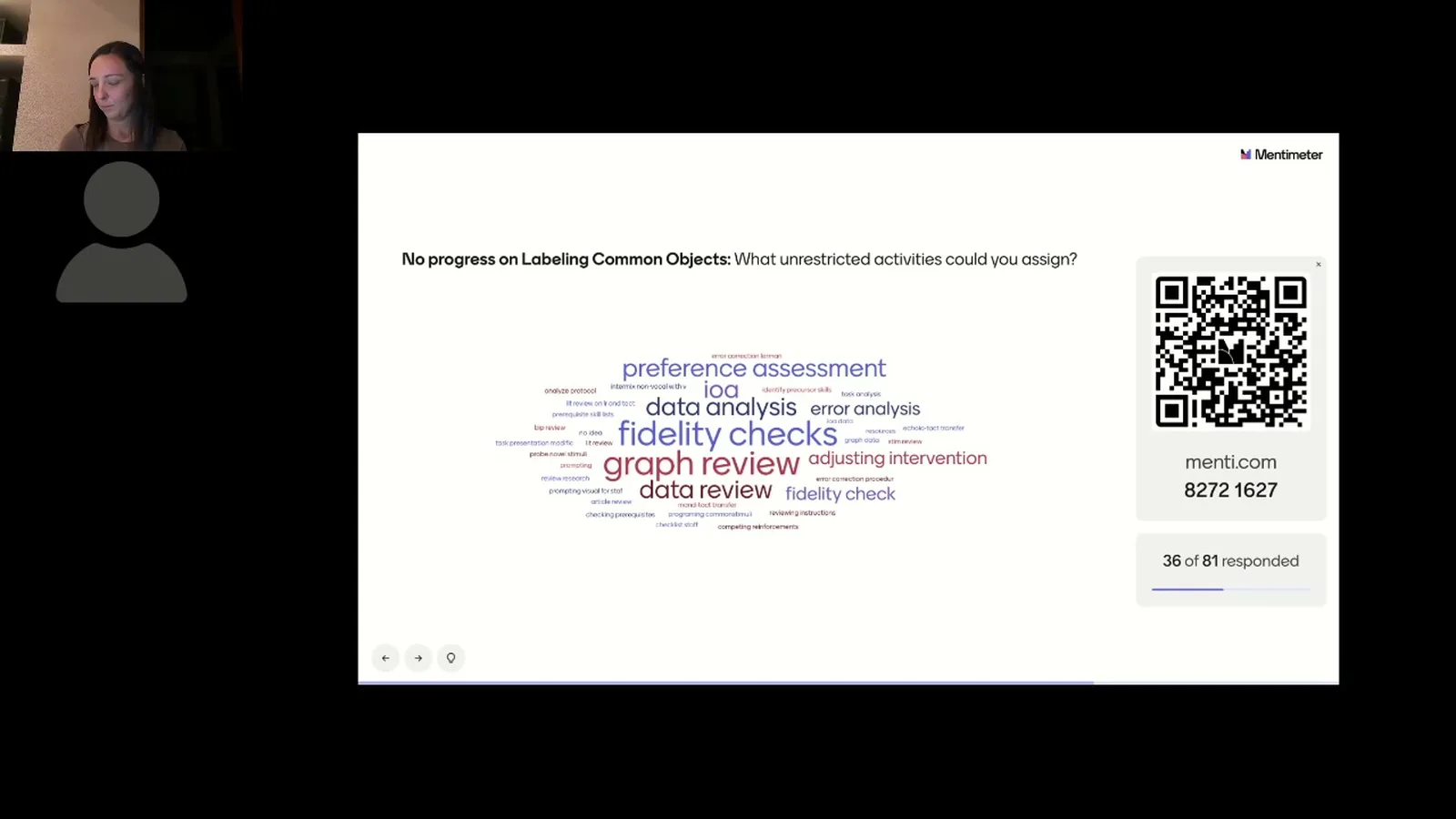
From Hours to Competence: Assessing and Developing Supervisee Skills
The Behaviorist Bookclub
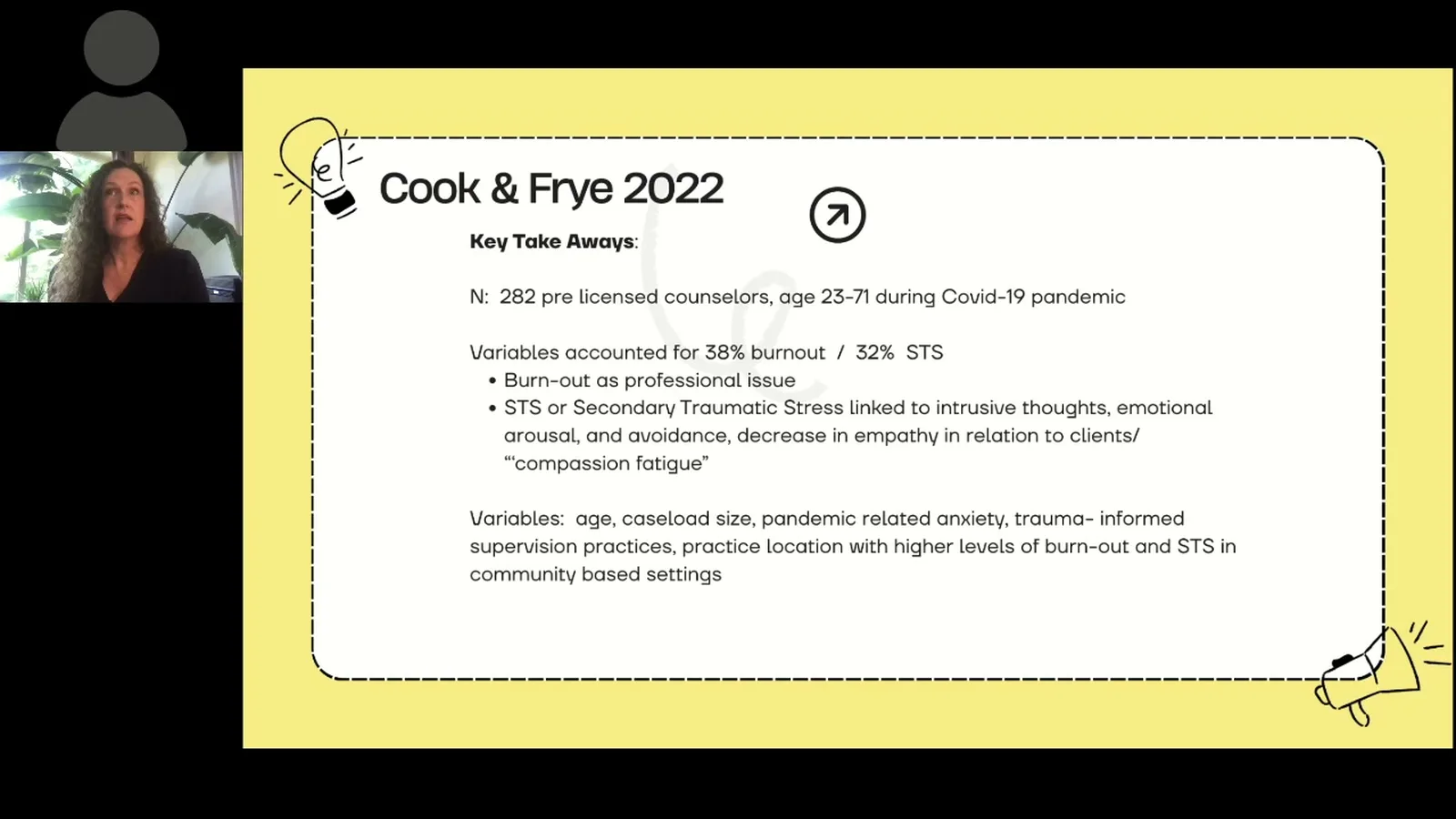
Reflective Supervision and Provider Outcomes in ABA
The Behaviorist Bookclub
OpenCEU is supported by advertising from third-party sponsors. Sponsors are clearly labeled, have no influence over course content, instructors, or CEU decisions, and never appear on certificates. The BACB does not sponsor, approve, or endorse OpenCEU sponsors or their products.