genArete: To Teach or not to Teach!
Presented by Mark Malady, BCBA

In the final talk of his three-part genArete series, Mark Malady, BCBA, addresses what clinicians should do after a skill-based assessment identifies underperforming skills. He begins with target selection in the context of the whole person, revisiting Wolf's (1978) three levels of social validity and noting that only about 17-18% of JABA studies from 2010-2020 included any social validity measure. He challenges the standard definition of skill acquisition, arguing that all new skills are built by leveraging existing skills, and that assessments should identify functional skills within a hierarchy rather than treating developmental and functional approaches as a dichotomy. Using an example of a learner with 83 skills below the presumed functional range, he presents a five-way sorting framework: leave conditions the same, use environmental arrangements, create and use accommodations, build foundational skills, or build the target skill. He details when accommodations are appropriate, their functions (increasing reinforcement in historically aversive settings, reducing corrective feedback, establishing early self-advocacy through mand-tact repertoires), and myths about foundational skills, including how topography-based targets like eye contact led to coercive practices. He closes with component-composite skill relations, requirements different teaching strategies place on learner repertoires, realistic time-to-mastery commitments, termination criteria that incorporate caregiver report and quality-of-life indicators, and anticipating side effects of new skills, such as joint attention potentiating socially maintained challenging behavior.
Register free & watch nowCancel any time. Cert delivered to your inbox the moment you pass the quiz.
Learner ratings
from 31 learners
100% would recommend this CEU to other professionals in their field (11 responses)
“Awesome, thank you!”
— Savannah A.“Thank you!”
— Lee D.“The information was very well organized and engaging. I truly enjoyed gaining new insights on other perspectives related to skill acquisition.”
— Natalie B.“I enjoyed it because Mark Malady brought up considerations that had never occurred to me.”
— Lisa K.“I bit dificult for me to follow even though the content is valuable”
— Maud A.
About this CEU
In the final talk of his three-part genArete series, Mark Malady, BCBA, addresses what clinicians should do after a skill-based assessment identifies underperforming skills. He begins with target selection in the context of the whole person, revisiting Wolf's (1978) three levels of social validity and noting that only about 17-18% of JABA studies from 2010-2020 included any social validity measure. He challenges the standard definition of skill acquisition, arguing that all new skills are built by leveraging existing skills, and that assessments should identify functional skills within a hierarchy rather than treating developmental and functional approaches as a dichotomy. Using an example of a learner with 83 skills below the presumed functional range, he presents a five-way sorting framework: leave conditions the same, use environmental arrangements, create and use accommodations, build foundational skills, or build the target skill. He details when accommodations are appropriate, their functions (increasing reinforcement in historically aversive settings, reducing corrective feedback, establishing early self-advocacy through mand-tact repertoires), and myths about foundational skills, including how topography-based targets like eye contact led to coercive practices. He closes with component-composite skill relations, requirements different teaching strategies place on learner repertoires, realistic time-to-mastery commitments, termination criteria that incorporate caregiver report and quality-of-life indicators, and anticipating side effects of new skills, such as joint attention potentiating socially maintained challenging behavior.
What you'll learn
- 1Learning Objectives
- 2By the end of this CEU, participants will be able to:
- 3Select options for responding to underperforming skills following the results of skill-based assessments.
- 4Describe features of selecting accommodations versus skill building.
- 5Identify potential side effects of teaching new skills (e.g., joint attention, mands, stimulus equivalence) and describe how component-composite skill relations inform whether a target is ready to be taught.
Concepts in this CEU
Related talks
Talks that cover the same concepts
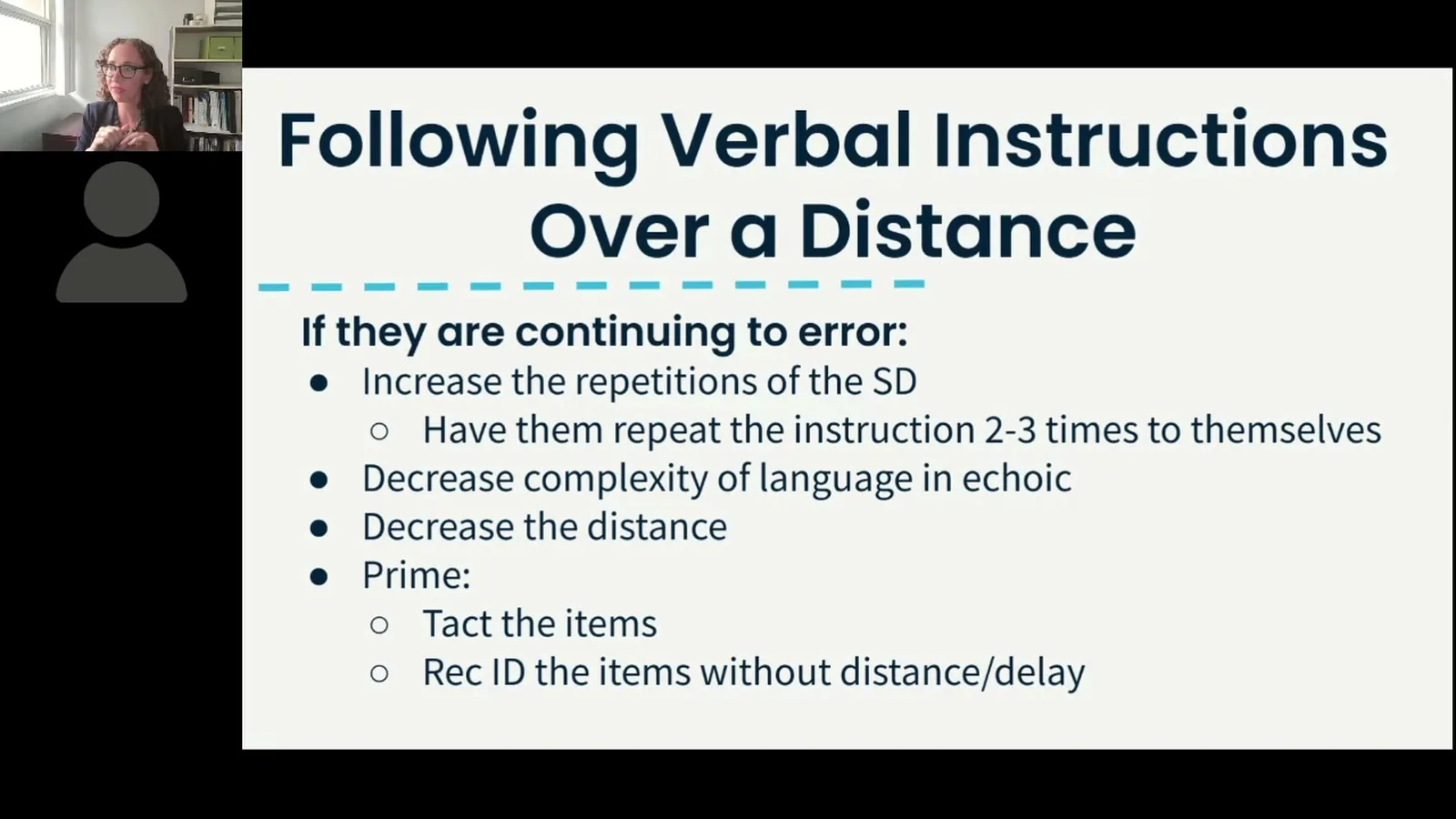
Getting the Right Answer Isn’t Enough: Establishing Speaker–Listener Repertoires for Complex Learning
The Behaviorist Bookclub
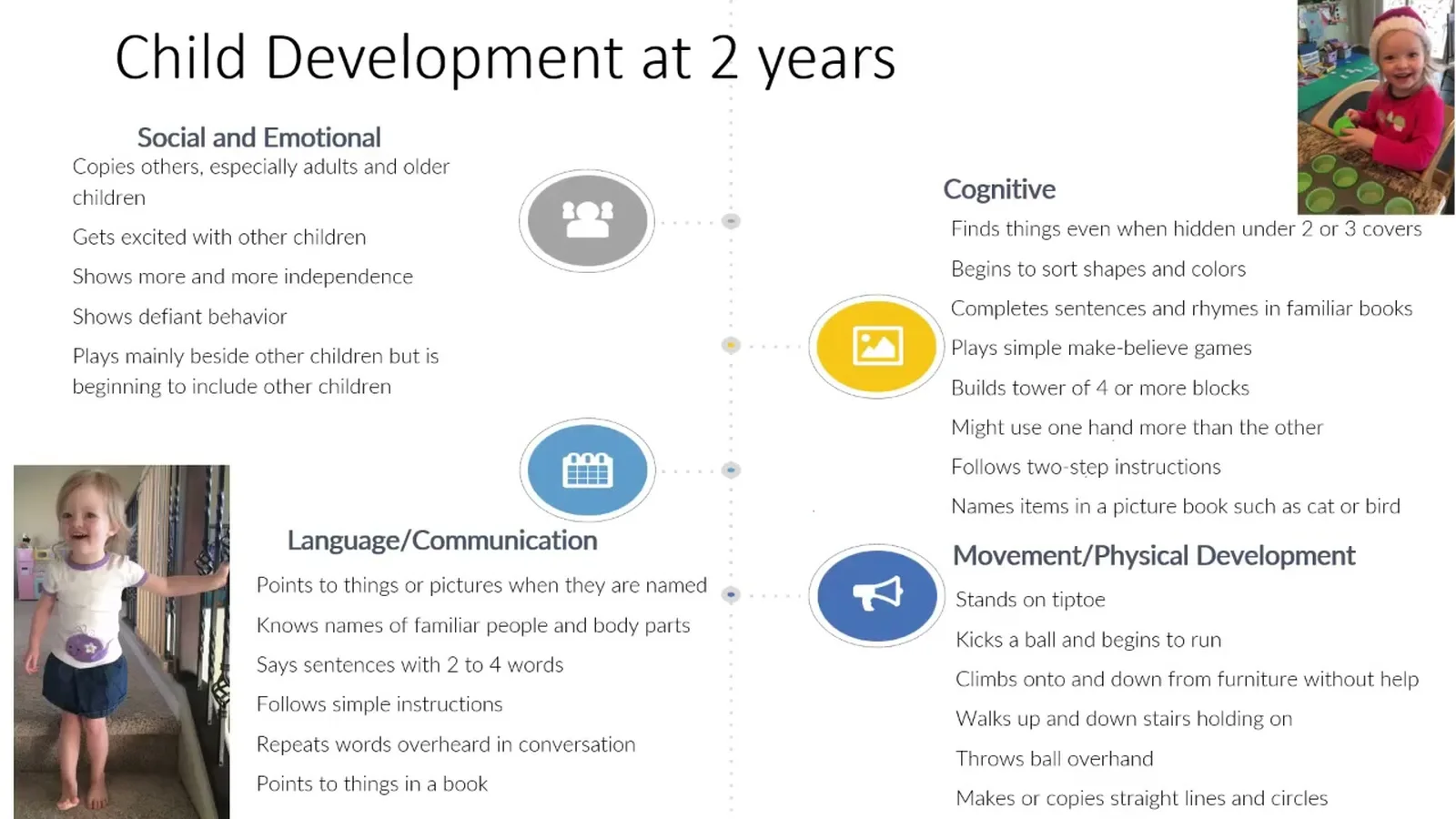
Child Development for Behavior Analysts
The Behaviorist Bookclub
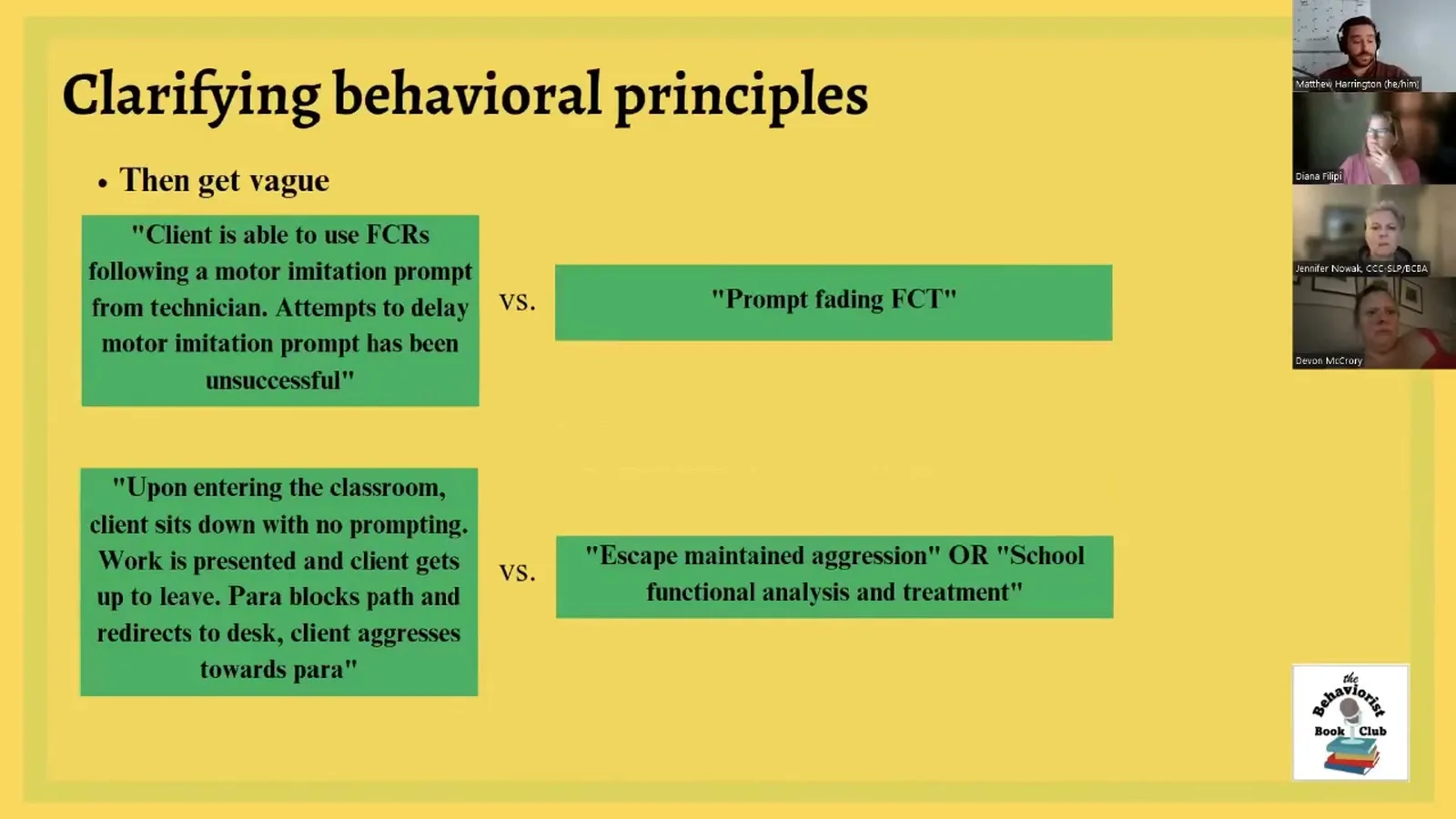
Research to practice - extending past the pages
The Behaviorist Bookclub

Shaping Behavior Change when ADHD is in the Picture
The Behaviorist Bookclub
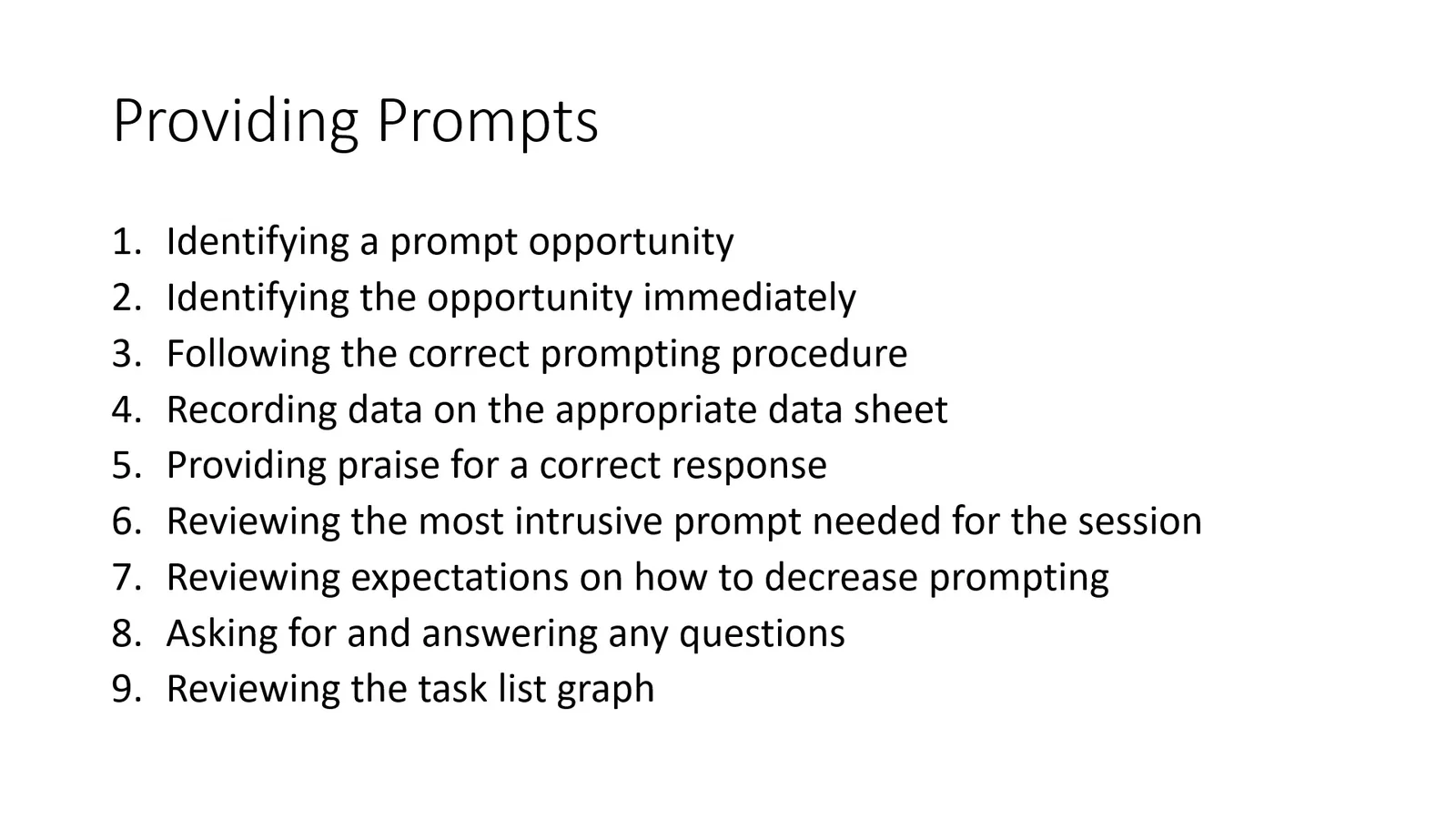
Toward an Evidence-based Supervision Model: Training Students in Independent Fieldwork
Willow Mentorship & Consulting, LLC

From Research to the Applied Setting: Breaking Down the Three-Legged Stool of "Evidence Based Practice"
Copper Consulting Group
More from The Behaviorist Bookclub
Empowering Autonomy and Self-Management in ADHD Learners
The Behaviorist Bookclub
From Hours to Competence: Assessing and Developing Supervisee Skills
The Behaviorist Bookclub
Reflective Supervision and Provider Outcomes in ABA
The Behaviorist Bookclub
OpenCEU is supported by advertising from third-party sponsors. Sponsors are clearly labeled, have no influence over course content, instructors, or CEU decisions, and never appear on certificates. The BACB does not sponsor, approve, or endorse OpenCEU sponsors or their products.