Self-Advocacy for Autistic Learners Starts With Interoception
Self-advocacy goes deeper than scripted no's. Teach autistic learners to trust body signals and speak up, from a BCBA-led CEU.
Key takeaway
The goal of self-advocacy is not to teach an autistic learner the right script. It is to help them notice when their body says something is wrong, and to reinforce the moment they speak up about that feeling instead of pushing through it.
What Does Your Body Know? Teaching Individuals with IDD to Recognize Internal Warning Signs`
Free learning path on this topic
ADHD for Behavior Analysts
Nicole Stewart's three-part series on ADHD for behavior analysts. Reframe what you are seeing, shape behavior change in a way that fits how ADHD learners learn, then hand over autonomy and self-management. Three hours, three CEUs.
On this page · 9 sections▾
The goal of self-advocacy is not to teach an autistic learner the right script. It is to help them notice when their body says something is wrong, and to reinforce the moment they speak up about that feeling instead of pushing through it.
That is a small shift in language. It is a huge shift in programming. Most safety curricula in our field teach learners what to say and who to tell. Tricia Lund, BCBA and certified sexuality educator, makes the case in her CEU that those scripts only fire after a learner has already labeled a situation as unsafe. For a lot of autistic kids and adults, that label never lands in time. The body knows first. The script comes later, if at all.
This page pulls the bigger picture together for clinical directors, supervising BCBAs, and parents who want to know why interoception keeps showing up in self-advocacy work, and how to write goals that actually fund.
Why scripted "no go tell" is not enough#
"No go tell" teaches a learner three things. Say no to the unsafe person. Go away from them. Tell a trusted adult. Behavioral skills training has solid research behind it, and the chain works when the learner has already decided a situation is unsafe.
The problem is that early grooming does not look unsafe. It looks like attention, gifts, a hand on a shoulder, a ride home with someone the family already trusts. The learner is waiting for the obvious bad-guy moment. The obvious moment rarely comes until the boundary has already been crossed several times.
A scripted response is a useful starting point. It is not a finish line. Self-advocacy needs a layer underneath the script that tells the learner something is off well before the situation matches a rule they were taught.
The compliance trap and how it blocks self-advocacy#
A lot of our learners have spent years inside compliance-heavy programming. Sit. Quiet hands. First-then. Earn the break. Those contingencies build a strong history of going along with what the adult in charge wants.
Then we ask the same learner to refuse an adult, walk away, and report. That is a hard reversal. We have reinforced compliance so densely that the very behaviors self-advocacy depends on, hesitating, pulling back, saying "I don't like this," have been shaped down or punished out.
"Traditional teaching often reinforces tolerance and compliance. The goal is to strengthen man's escape, information, and self-advocacy rather than inadvertently extinguishing early warning behaviors."
When we plan a self-advocacy program, we have to look at the learner's reinforcement history first. If every protest has been redirected, every hesitation prompted past, every "no" treated as a behavior to extinguish, we have to undo that before any safety script will hold.
Body signals as the first layer of self-advocacy#
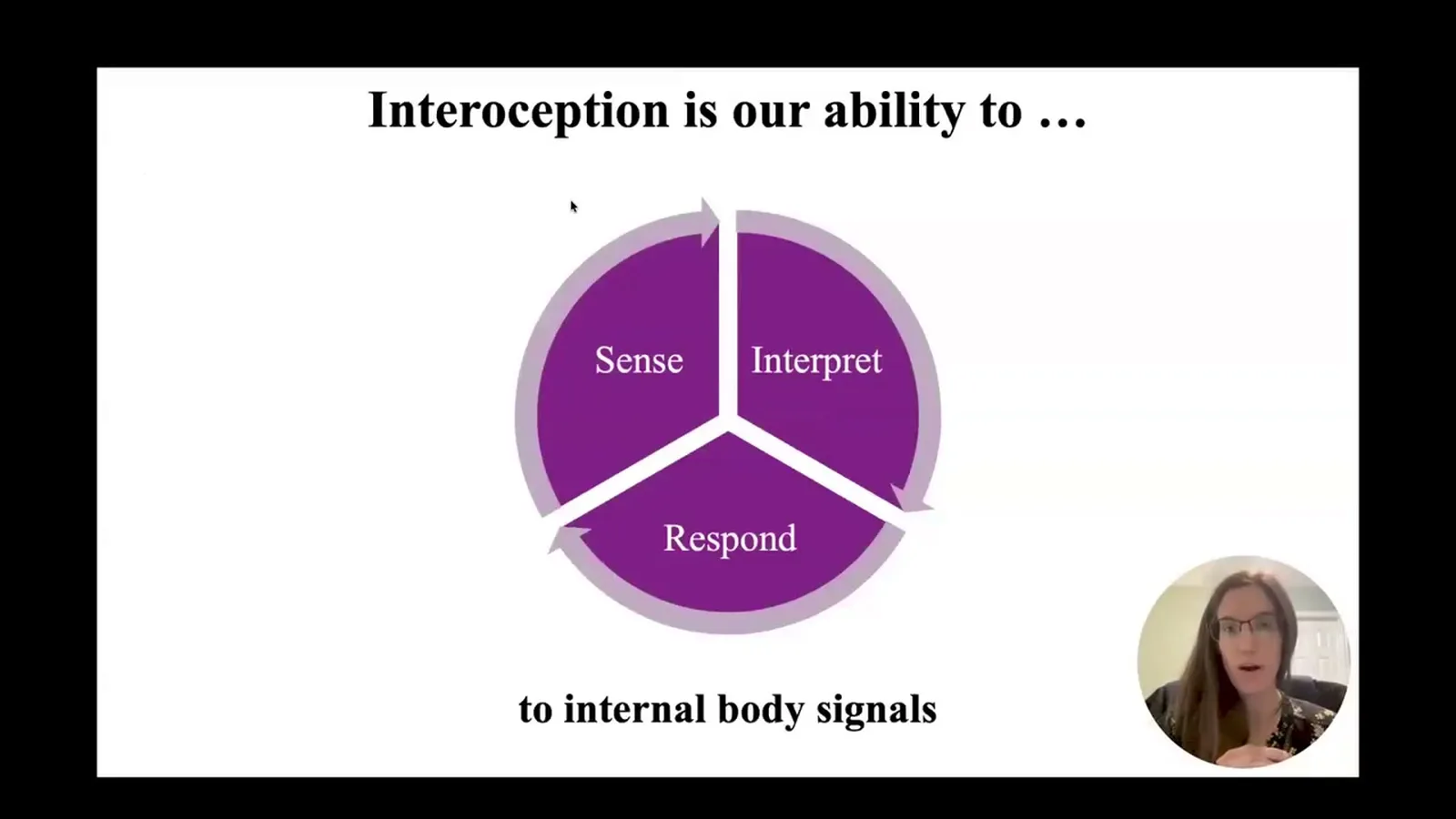
Interoception is the body's ability to sense, interpret, and respond to internal signals. Tight chest. Knot in the stomach. Racing heart. Heavy eyes. Urge to move closer to or farther from someone. Lund's frame is straightforward: the body tracks danger the same way it tracks hunger.
For most autistic learners, those signals are present but not yet discriminated. They feel something. They cannot label it. They have not been taught to trust it. So the signal passes, the situation continues, and the only thing left to act on is the overt rule, which by then is too late.
A self-advocacy plan that starts with body discrimination teaches the learner to notice and tact a private event before the situation requires a complex decision. That is the first layer. Everything else, the script, the report, the trusted adult, sits on top of it.
Reinforcing reports of discomfort, not just compliance#
This is the part most teams miss. If a learner says "I don't like that" during a session, what happens? In a lot of programs, the adult prompts them past it. Keep going. You're okay. Almost done.
That sequence quietly punishes the exact behavior we want self-advocacy to produce.
"Safety instruction becomes more than rule following. It becomes self-advocacy."
The fix is operational. Decide ahead of time which responses count as early self-advocacy. Pulling back. Asking for space. Going quiet. Naming a body feeling. Then build a reinforcement plan that strengthens those responses on purpose, instead of treating them as noncompliance to work through.
A useful gut check during programming: when this learner sets a small boundary, what does the adult in the room do next? If the answer is "redirect to task," the program is teaching the opposite of self-advocacy.
Programming goals that move toward self-advocacy#
A self-advocacy program with interoception at its base has a few moving parts. None of them are exotic. They map cleanly onto an existing ABA program.
- Tact private events. The learner names what their body feels: tight, calm, fast, heavy, hot. Body maps, simple scales, and visuals carry most of the load here.
- Pair external events with internal cues. During greetings, transitions, new people, or proximity, run a body check-in. "What is your body telling you right now?"
- Pause, scan, decide. A short response chain. Pause and stop responding on autopilot. Scan the body. Decide on a next move: move away, move closer, ask, stay, request space, get support.
- Reinforce reporting discomfort. Mands for escape, mands for space, hesitation, "I don't like that," "something feels weird." These get reinforced, not redirected.
- Embed in daily living. Toileting, hygiene, eating, transitions. Interoception is a generalized skill, not a safety-lesson-only skill.
Each piece is something a BCBA is already trained to design and measure. The shift is mostly in what we choose to reinforce and what we stop treating as a problem.
How to write self-advocacy goals insurance will fund#
A common worry: payers won't reimburse "feelings work." The path through is to keep the goal behavior analytic and tie it to a quality-of-life outcome the payer already accepts.
Frame the overarching goal as a safety skill or social skill. Safety with family, safety with peers, safety with caregivers, safety with new people. Then slice the prerequisite goals into observable, measurable steps with clear contingencies. A few that hold up well on paper:
- Learner tacts a body sensation (tight, calm, fast, heavy) when presented with a body-map visual across 4 of 5 trials.
- Learner completes a pause-scan-decide chain during a planned proximity probe across 3 of 4 trials.
- Learner mands for space ("I need space," gesture, AAC) within 30 seconds of an introduced antecedent across 3 sessions.
- Learner reports a body cue to a trusted adult during natural routines across 80% of opportunities.
Each one tracks something concrete. Each one ties to a safety outcome a payer can defend. Lund and her co-presenter Carolyn both flag that "social skill" and "safety skill" framings tend to draw the least pushback from funders. Bridge for BCBAs: this is how you keep self-advocacy work clinical, measurable, and reimbursable without watering it down.
Where interdisciplinary teams fit in#
Interoception is not owned by any one discipline. A BCBA can run the assessment, identify the precursors, and build the response chain. An OT brings sensory processing and body mapping. A speech therapist builds the language or AAC the learner needs to tact what they feel. Caregivers and direct support staff are usually the first to notice a posture change, a breathing change, or a sudden shift in proximity seeking.
"If we're asking learners to notice, trust, and act on internal signals, no single discipline owns that work. Effective safety programming requires coordinated expertise across environments."
The practical move for a clinical director is to write the interdisciplinary loop into the program from day one. Who is teaching the body label. Who is teaching the verbal report. Who is reinforcing the report when it happens at home or at school. When everyone reinforces the same set of self-advocacy responses, the skill generalizes. When only one setting reinforces it, the skill stays in the clinic.
FAQ#
What is self-advocacy in ABA? Self-advocacy in ABA is a measurable repertoire where the learner notices an internal cue, communicates it, and acts on it. That can be mand for space, mand for help, refusal, requesting a different person, or reporting a body feeling. It is not a personality trait. It is a behavior chain we can teach and reinforce.
Why is interoception the foundation of self-advocacy? Because the body registers discomfort before the mind names the situation as unsafe. If a learner cannot detect, label, or trust a body signal, every downstream safety script depends on someone else noticing for them. Interoception is what turns a scripted "no go tell" into a real-time response the learner can run on their own.
How do you write self-advocacy goals for insurance? Frame them as safety or social skills tied to a quality-of-life outcome. Keep each prerequisite goal observable: tacting body sensations, completing a pause-scan-decide chain, manding for space, reporting body cues to a trusted adult. Each step has a clear count, a clear criterion, and a clear contingency.
Can compliance-focused teaching hurt self-advocacy? Yes. If protest, hesitation, and refusal have been reinforced down across years of programming, the learner does not have a reinforcement history for the very behaviors self-advocacy needs. The fix is to rebuild that history on purpose, not to add a self-advocacy goal on top of an unchanged contingency system.
What does a self-advocacy session actually look like? A short body check at the start. A planned antecedent during the session, like a transition, a new person, or a proximity change. A prompt to scan the body and name the feeling. Reinforcement for any honest report, including "I don't like this" or "I want space." Data on the tact, the mand, and the decision the learner made.
Take the CEU#
If you want the full clinical case, including the grooming dynamics behind why scripted safety teaching falls short for autistic learners, watch Tricia Lund and Carolyn's BCBA-led CEU on openceu.com.
Turn this topic into a CEU
You just studied this. Now get credit for it.
Watch What Does Your Body Know? Teaching Individuals with IDD to Recognize Internal Warning Signs` with Tricia Lund and earn 1 free BCBA CEU. Detailed certificate, delivered the moment you finish.
Keep going with a free learning path
ADHD for Behavior Analysts
Nicole Stewart's three-part series on ADHD for behavior analysts. Reframe what you are seeing, shape behavior change in a way that fits how ADHD learners learn, then hand over autonomy and self-management. Three hours, three CEUs.