What PFA and SBT Actually Are in ABA (Plain English)
Plain walkthrough of Practical Functional Assessment and Skill-Based Treatment, how they fit together, and where they came from, from a BCBA-led CEU.
Key takeaway
PFA is the Practical Functional Assessment, the short interview-and-test process a Board Certified Behavior Analyst (BCBA) uses to figure out what is actually keeping a challenging behavior going. SBT is Skill-Based Treatment, the teaching plan that follows it.
12 days of PFA & SBT
On this page · 9 sections▾
PFA is the Practical Functional Assessment, the short interview-and-test process a Board Certified Behavior Analyst (BCBA) uses to figure out what is actually keeping a challenging behavior going. SBT is Skill-Based Treatment, the teaching plan that follows it. In 30 seconds: you talk to the caregiver, you build one short test that puts the suspected reinforcers together at the same time, you confirm the behavior happens for that combined reason, and then you teach the learner a better way to ask for it, wait for it, and accept "no" or "wait" without falling apart.
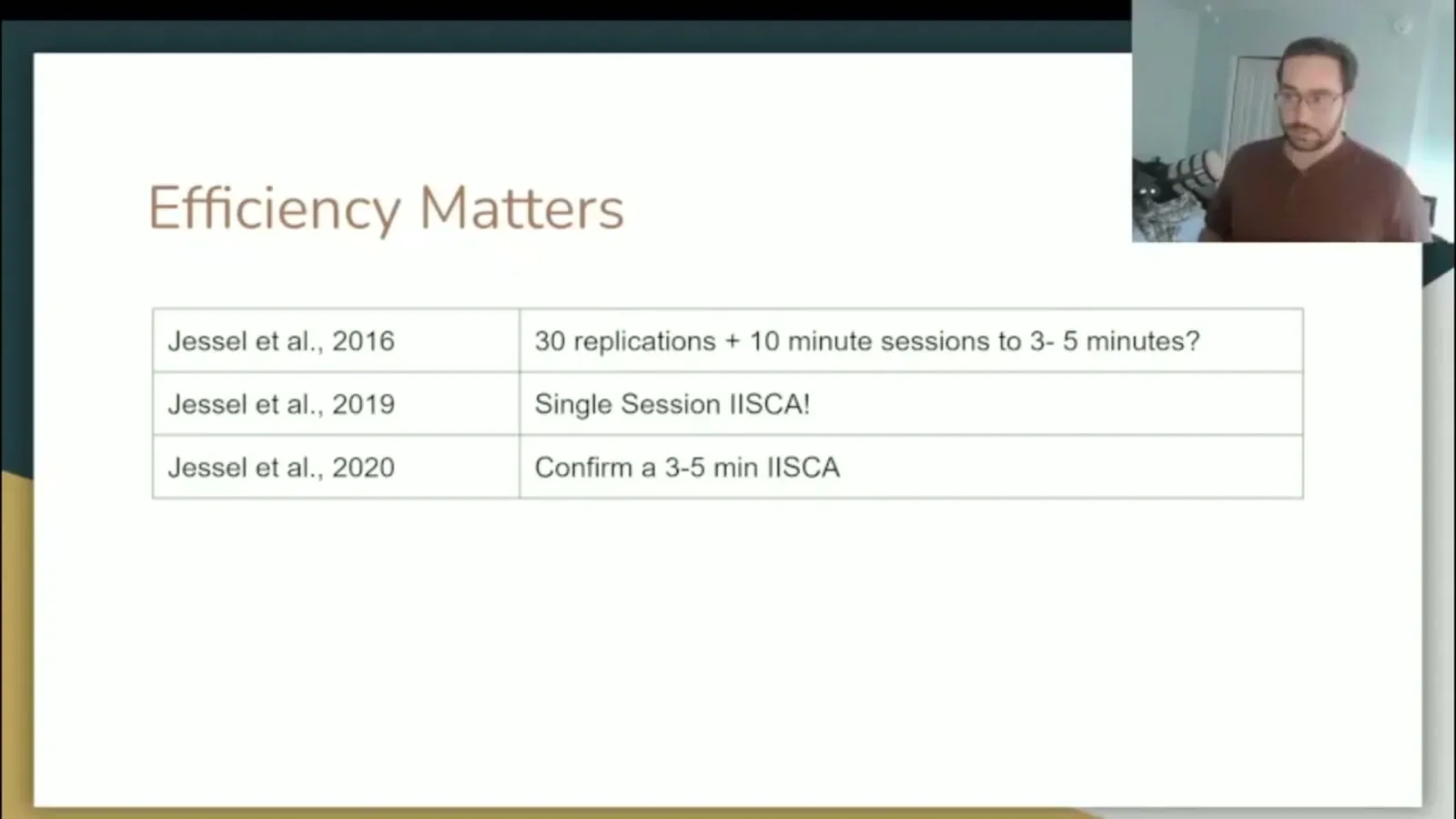
The naming is where most people get lost. PFA is the umbrella name for the assessment piece. The first version Greg Hanley and colleagues published in 2014 used an Interview-informed Synthesized Contingency Analysis, called an ISCA. Later work shortened it to a single condition compared to a control, and that one is called an IISCA, the Interview-Informed Synthesized Contingency Analysis. Same family, smaller footprint. SBT is the treatment side that pairs with either one. You will see all four names in the literature and they refer to the same general approach, just at different sizes.
PFA and SBT in 30 seconds#
Here is the whole arc in one paragraph. The 2014 Hanley paper started this whole approach. The goal was a functional analysis that put the suspected reinforcers together at the same time (a synthesized contingency), kept social validity at the center the whole way through, and then handed the team a treatment plan they could actually run. The PFA finds the reinforcers. The SBT teaches a Functional Communication Response (FCR), then teaches the learner to handle being told "no" (denial), then teaches them to wait or do small bits of work (tolerance). Shaping is how you make the FCR and the tolerance step grow over time without falling apart.
If you remember nothing else: PFA answers "why is this happening." SBT answers "what do we teach next."
The acronym soup: PFA vs IISCA vs ISCA vs SBT (they are not all the same)#
Here is where most BCBAs lose an hour on Google. The talk lays the vocabulary trap out cleanly:
I'm going to use the term ISCA. That's similar to PFA, which is similar to synthesized contingency analysis, just like I'm going to use the term traditional FA or trad FA, which is similar to an isolated contingency analysis, just for ease of vernacular. From the talk — Matt Harrington
Here is the cheat sheet:
- PFA, Practical Functional Assessment, is the umbrella term for the whole assessment approach Hanley and colleagues built.
- ISCA, Interview-informed Synthesized Contingency Analysis, is the original 2014 version. It compares a test condition (where all the suspected reinforcers are available at once) with a control condition (where they are not).
- IISCA, Interview-Informed Synthesized Contingency Analysis, is the shortened version that came later. Same logic, fewer conditions, often one test and one control.
- Synthesized contingency analysis is the family name for any FA that combines reinforcers instead of testing them one at a time.
- SBT, Skill-Based Treatment, is the teaching package that follows. It is not an assessment. It is what you do once the PFA confirms what is going on.
- Traditional FA (or trad FA) is the older 1982 model from Iwata and colleagues. It tests one reinforcer at a time. The talk calls this an isolated contingency analysis to keep the contrast clean.
Same family, different sizes. If a paper says "we ran a PFA," they probably mean an IISCA. If a paper says "we ran an SBT," they ran the teaching package after a PFA. They almost never come apart.
What the PFA side actually does (the interview-driven analysis)#
The PFA starts with an open-ended interview with the caregiver or teacher. You are not running a checklist. You are listening for what the behavior looks like, what tends to set it off, and what tends to make it stop. Most of the time the answer is some combination of attention, escape from a demand, and access to a preferred item or activity all bundled together. That bundle is the synthesized contingency.
Then you set up one short test. In the test condition the learner gets the whole bundle the moment the behavior shows up. In the control condition the learner already has the bundle, so there is nothing to ask for. If the behavior shows up in the test and disappears in the control, you have your answer. You do not need a 90-minute multi-element FA to get there.
The point of the synthesis is social validity. Real life is bundled. A kid melts down because mom stopped paying attention and asked them to put their shoes on. That is attention plus escape plus a stopped activity, all at once. Testing each one alone often misses what is actually happening at home.
What the SBT side actually does (FCR, denial, tolerance, chaining)#
Once the PFA confirms the function, SBT teaches three things in order: the ask, the wait, and the work.
First, the FCR. The learner is taught one simple way to ask for the whole reinforcer bundle. Early on it can be as plain as "my way." It does not need to be polite or full sentences. It needs to work every single time so the learner trusts it.
Second, denial. The learner asks, and sometimes the answer is "not right now." Here is what that looks like in the session:
Then we did denial baseline. So this was just testing out if they didn't have that initial reinforcer, that initial my way FCR request be denied. And for this case, problem behavior spiked back up a little bit. And then the denial and tolerance training that came after that. From the talk — Matt Harrington
That little spike is expected. The teaching kicks in right after: the learner is shown a calm response to "no" or "wait," the calm response gets the reinforcer, and the difficulty grows from there.
Third, tolerance. The wait gets longer. A small demand gets added. Then another. This is the chaining piece, and it is where shaping does most of the work. You add one tiny step at a time. If a step blows up, you back off and rebuild.
The FCR also grows. "My way" becomes "my way please," then "excuse me, may I have my way please." That progression is its own topic and lives on a sibling page in this cluster.
How to read an SBT graph without getting lost#
The first time you open an SBT paper the graph looks strange. It is not a reversal. It is not a multiple baseline in the usual sense. The talk explains it this way:
Most of the SBT process is presented in this format, where as you scroll down the graph, you kind of see the changing expectations. And as the participant's behavior conforms to what we'd expect in each of those conditions, that's where experimental control is demonstrated. It's similar to a change in criterion design. From the talk — Matt Harrington
Translation: each phase on the graph is a harder expectation. Short wait, then longer wait, then small demand, then bigger demand. The learner's behavior is supposed to track the expectation. When the expectation goes up and the behavior stays where it should, that is experimental control for a change-in-criterion design. You are not looking for a flat line. You are looking for the line to match the level the teacher set for that phase.
If the line does not match, the next phase does not start. The team backs off, rebuilds, and tries again. That is the whole quality check built into the method.
Why it exists: the social-validity problem with traditional FAs#
The original 2014 Hanley paper was a response to a real complaint from families and frontline staff: the traditional FA worked in the data sheet but did not always feel like it matched what was happening at home. Sessions were long. Behavior had to be evoked many times. Reinforcers were tested in isolation in ways that did not match real life.
The PFA and SBT model was a fix for that. Social validity is the test that says: the people doing this with us think it is worth doing. The PFA-and-SBT model was built so families could sit in on a session, follow along, and feel like the plan made sense. That is why the interview is open-ended. That is why the contingency is synthesized. That is why denial and tolerance training are explicit. The model is built to look reasonable to a parent, not just to another behavior analyst.
When PFA and SBT is the right call (and when it is not)#
PFA and SBT is a strong default when the behavior is dangerous, the function looks bundled, the family is at the table, and you have time to teach a full FCR-denial-tolerance arc. It also holds up across a wide range of learners, including kids with limited vocal language, kids with co-occurring ADHD or anxiety, and learners in school or clinic settings.
It is not the right call when the behavior is purely automatic (no social reinforcer at all), when the team cannot keep the test condition safe, or when there is no one in the learner's life who can run a calm denial. In those cases a traditional FA or a different treatment package is the better starting point.
It is also not a magic bullet on day one. A single-session IISCA can confirm function fast, but the teaching arc still takes time. If the team is promising a parent that the meltdowns will stop after the first session, the team has set the wrong expectation.
Frequently asked questions#
Do I need to be Hanley-trained or FTF-certified to use PFA and SBT? No. The procedures are published in peer-reviewed journals and you can run them as a BCBA without a certificate. The FTF Consulting training is useful for coaching and case support, but it is not a credential the BACB requires. Read the source papers (Hanley 2014, Jessel 2019, Rajaraman 2021) before you run your first one.
Is PFA and SBT considered evidence-based by the BACB? The BACB does not maintain a list of approved interventions. What matters is whether the procedure has peer-reviewed support and whether it is the right fit for the case. PFA and SBT have a growing body of replicated research across multiple labs, so the evidence base is strong. The clinical judgment piece is still on you.
Can an RBT run SBT sessions or does the BCBA have to? An RBT can implement SBT sessions once the plan is written and the RBT is trained and competency-checked on the specific procedures. The BCBA writes the plan, makes the phase-change calls based on the graph, and supervises. The day-to-day teaching can run through the RBT the same way any other behavior plan does.
Keep going#
This page is the broad pillar for the PFA and SBT cluster on openceu.com. If you want to go deeper on a specific piece, the sibling pages below pick up where this one stops.
Ready to put a face and a voice to all of this? Watch the full session with Matt Harrington at openceu.com and earn the CEU while you are at it.
Turn this topic into a CEU
You just studied this. Now get credit for it.
Watch 12 days of PFA & SBT with Matt Harrington and earn 3 free BCBA CEUs. Detailed certificate, delivered the moment you finish.