Anxiety in ABA: The Logic Behind the False Alarms
Anxiety is a threat response plus worry, not a behavior function. Learn when it becomes a disorder and why the difference matters for BCBAs and RBTs.
Key takeaway
Anxiety is a normal response to a threat you sense. It mixes fear of danger with worry about the future. Almost everyone feels it, and that is healthy.
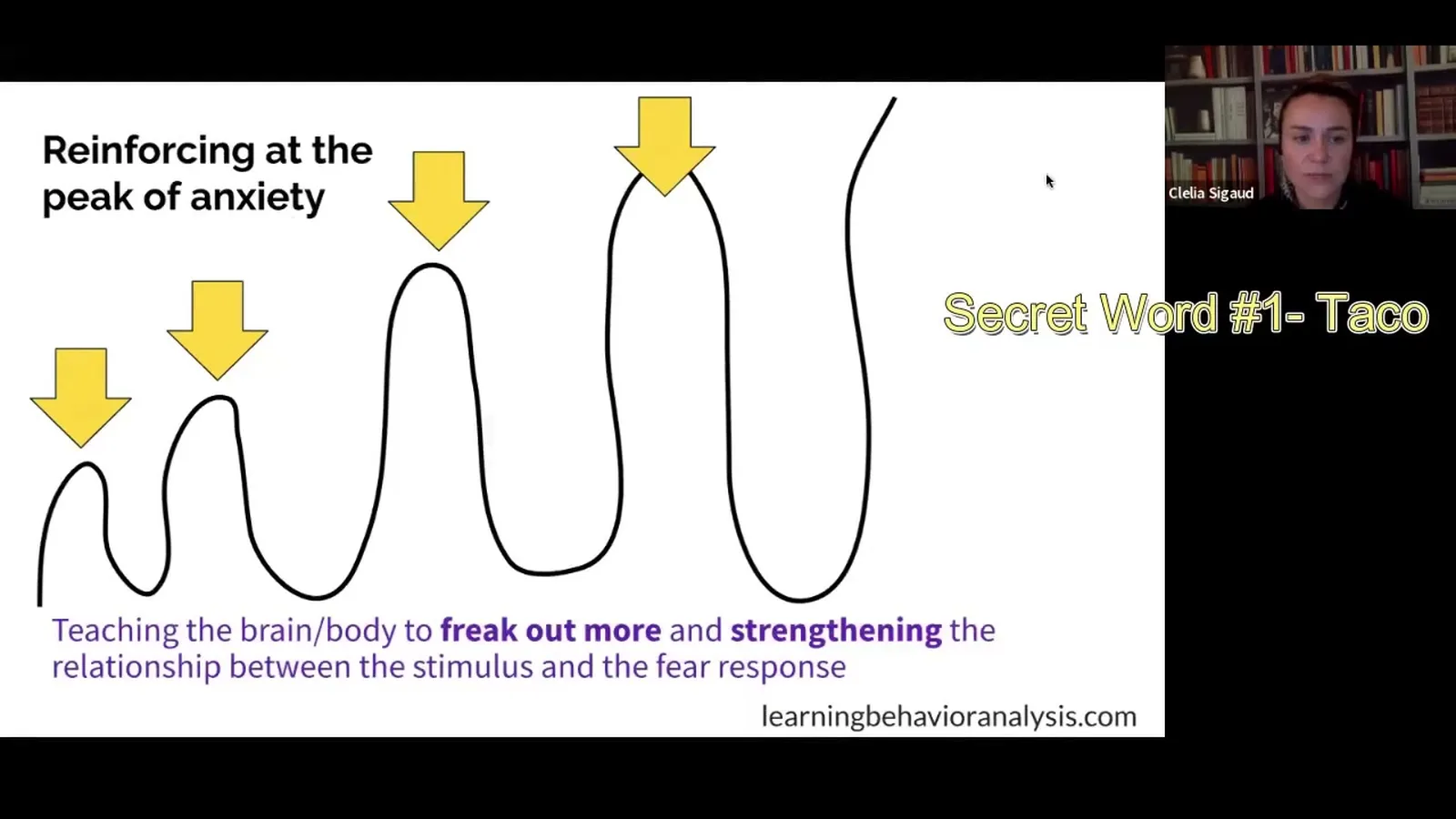
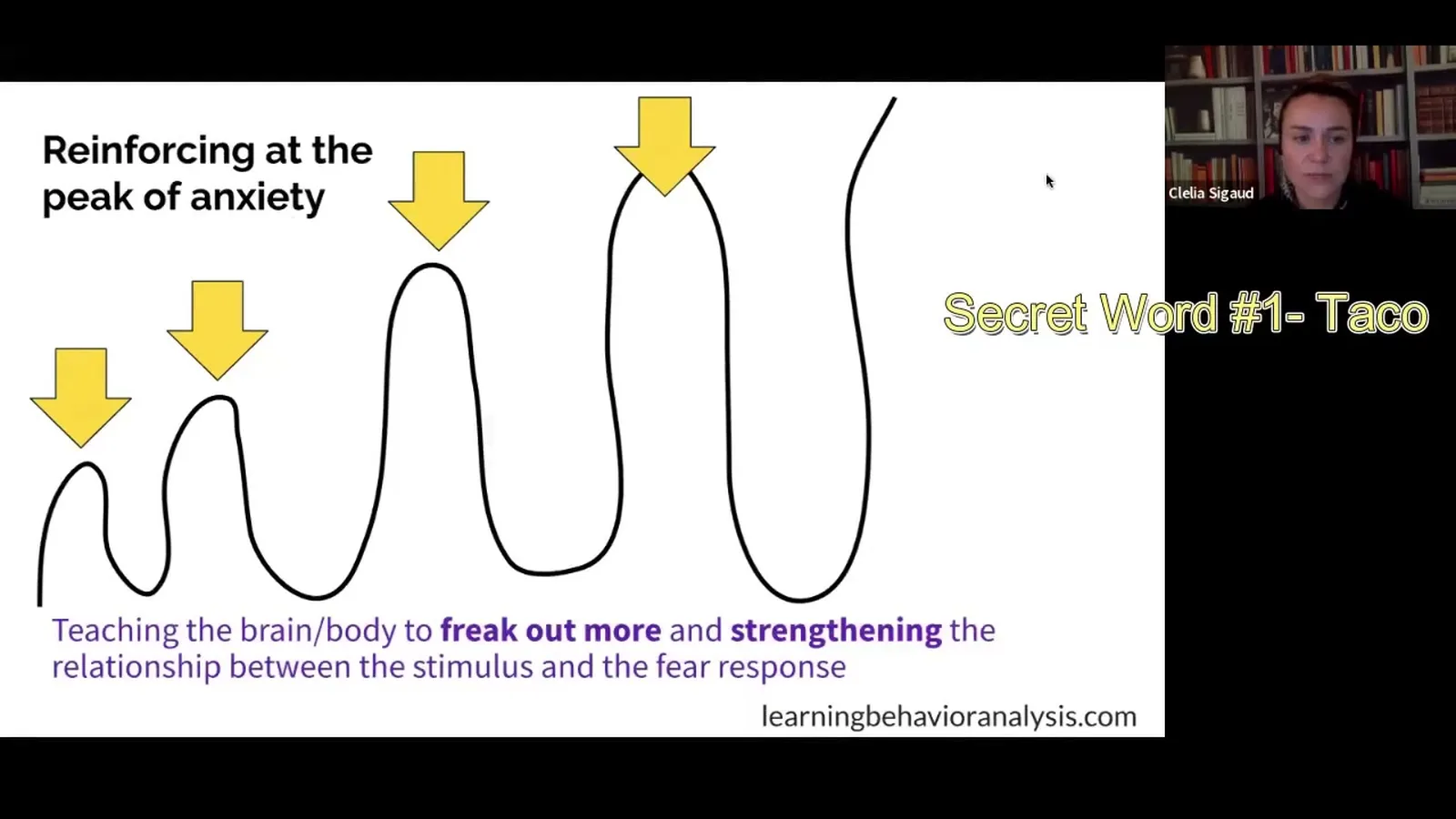
Hey, Chillax Man! Understanding the Logic of Anxiety
Experts who cover this
The recording behind this guide covers anxiety aba.
- Featured talk1.50 CEUs
Hey, Chillax Man! Understanding the Logic of Anxiety
Dr. Clelia SigaudThe Behaviorist Bookclub
Sigaud frames anxiety as a normal, evolutionarily healthy response (fear plus worry) rather than a diagnostic label, and argues it only becomes disordered when…
On this page · 6 sections▾
Anxiety is a normal response to a threat you sense. It mixes fear of danger with worry about the future. Almost everyone feels it, and that is healthy.
This topic matters because behavior analysts often meet anxious learners. BCBAs, RBTs, and parents need to know what anxiety is and is not. Getting it wrong can lead to the wrong plan. Understanding the logic of anxiety helps you respond with care.
What anxiety really is#
Dr. Clelia Sigaud starts with a simple, clear definition. Anxiety is not just fear, and it is not just worry. It is both of those things joined together.
Anxiety is about a response to a perceived threat plus worry. From the talk — Dr. Clelia Sigaud
The word "perceived" is doing real work here. The threat does not have to be real to feel real. The body reacts to the sense of danger, not the facts.
This response kept humans safe for thousands of years. Fear helps you act fast when danger is near. Worry helps you plan for problems that might come. In small doses, anxiety is useful and even protective.
Sigaud frames anxiety as evolutionarily healthy, not broken. It is a system doing its job most of the time. A little anxiety before a test can sharpen focus. The feeling itself is not the enemy.
When anxiety becomes a disorder#
Feeling anxious is not the same as having a disorder. Sigaud frames the tipping point in a memorable way. A disorder is anxiety that fires when there is no real threat.
Basically, an anxiety disorder is a lot of false alarms going off in the brain and the body. From the talk — Dr. Clelia Sigaud
Picture a smoke alarm that goes off with no fire. That is what an anxiety disorder feels like inside. The body sounds the alarm again and again for nothing.
Two things push anxiety into disorder territory. First, it shows up when it is not expected for that age. Second, it gets in the way of daily life. That block on normal function is a key sign.
A young child who fears the dark is often typical. An adult frozen by that same fear may need help. The age and the level of impairment tell the story.
Impairment means the anxiety blocks things the person values. Maybe they skip school, lose sleep, or avoid friends. When fear starts shrinking a life, it has crossed a line. That is when support and treatment make sense.
Anxiety is not a behavior function#
 Advertisement
Behavior analysts study why behavior happens. We call these reasons the functions of behavior, meaning what a behavior gets or avoids. Sigaud warns against squeezing anxiety into that box.
So anxiety isn't really the same as a function of behavior, nor is it just sort of this catch all box of of mystery that motivates certain behavior. From the talk — Dr. Clelia Sigaud
This is a subtle but important point. Anxiety is not a function like escape or attention. It is a private experience of fear and worry inside the person.
Treating anxiety as a mystery cause is also a trap. It is tempting to blame every hard behavior on anxiety. But that guess skips the real work of careful assessment.
Instead, Sigaud asks clinicians to respect what anxiety actually is. It is a response, not a magic explanation. You still study the learner's world to understand their behavior.
This matters for how we talk about clients too. Saying "he did it because of anxiety" can end the analysis too soon. It sounds like an answer, but it skips the real work. Careful clinicians keep asking what the behavior gets or avoids.
Why this matters for behavior analysts#
Getting anxiety right changes how you help. If you mislabel it, you may pick the wrong tools. A clear view keeps your plan honest and kind.
Anxiety can look like avoidance or refusal on the surface. A child may run from a task that scares them. That escape is real, but fear may be driving it. You address both the behavior and the fear behind it.
Respecting the learner's inner experience also builds trust. You do not dismiss their worry as just acting out. You take the false alarms seriously while teaching new skills. That blend of empathy and structure is the heart of the work.
Knowing the logic of anxiety also guides your tone. You can stay calm when a learner panics over a small thing. You know the alarm is false, even if it feels real to them. That steady, kind response helps the learner feel safe again.
Want to go deeper? Dr. Sigaud covers all of this in her CEU course Hey, Chillax Man! Understanding the Logic of Anxiety. It earns 1.5 CEUs.
What the research says#
Anxiety often travels with autism, and research shows it is common. One study followed families from an autism diagnosis for three years. At diagnosis, over half of mothers and many children showed clinical distress (study on parental anxiety and child emotional difficulties after diagnosis). Anxiety touches the whole family, not just the child.
Anxiety can also be hard to measure in autistic youth. One study compared parent and child anxiety ratings across groups. Children with autism and anxiety sometimes reported less anxiety than their parents saw (study on social anxiety and visual attention to eyes in autistic youth). This gap reminds us to gather more than one point of view.
Some anxiety even rises with social skill, which surprises many people. One study tracked autistic children's real-time social moments for a week. Children with stronger perspective-taking skills talked to peers more but also felt more anxiety during those moments (study on theory of mind and momentary social anxiety). More social contact can mean more chances to worry.
Treatment research offers hope too. In one study, a modified cognitive behavior group helped autistic adults with social anxiety. Exposure tasks worked best when they were structured and predictable (qualitative study of cognitive-behavioural therapy components for social anxiety). Clear, planned steps make anxiety treatment easier to handle.
FAQ#
Is anxiety a function of behavior in ABA?
No, anxiety is not one of the functions of behavior. It is a private response of fear plus worry. Behavior analysts still study what a behavior gets or avoids separately.
When does normal anxiety become an anxiety disorder?
Anxiety becomes a disorder when it fires without a real threat. It also has to be unexpected for the person's age. The clearest sign is that it blocks normal daily life.
How should behavior analysts handle an anxious learner?
Take the worry seriously instead of calling it just acting out. Look at what the behavior gets or avoids as well. Then teach coping skills while keeping tasks predictable and safe.
 Advertisement
Turn this topic into a CEU
You just studied this. Now get credit for it.
Watch Hey, Chillax Man! Understanding the Logic of Anxiety with Dr. Clelia Sigaud and earn 1.5 free BCBA CEUs. Detailed certificate, delivered the moment you finish.
Parent or caregiver? Find a vetted ABA provider near you on ProviderSpark.