Manding in ABA: Teaching Kids to Ask
A mand is a request for what a person wants right now. Learn why BCBAs teach manding first and how they build it into real communication.
Key takeaway
A mand is a request for something a person wants right now. When a child says "cookie" because they want a cookie, that is a mand.
Solving Clinical Challenges with Research
Free learning path on this topic
Verbal Behavior: Beyond WH-Questions
Dana Pettus's three-part series on building generative verbal behavior. Why WH-question programs stall, how to establish speaker-listener repertoires, and how to scaffold advanced verbal skills like recall and simple inference. Three hours, three CEUs.
Experts who cover this
3 recordings on openceu cover manding.
- Featured talk2.50 CEUs
Solving Clinical Challenges with Research
Matthew HarringtonThe Behaviorist Bookclub
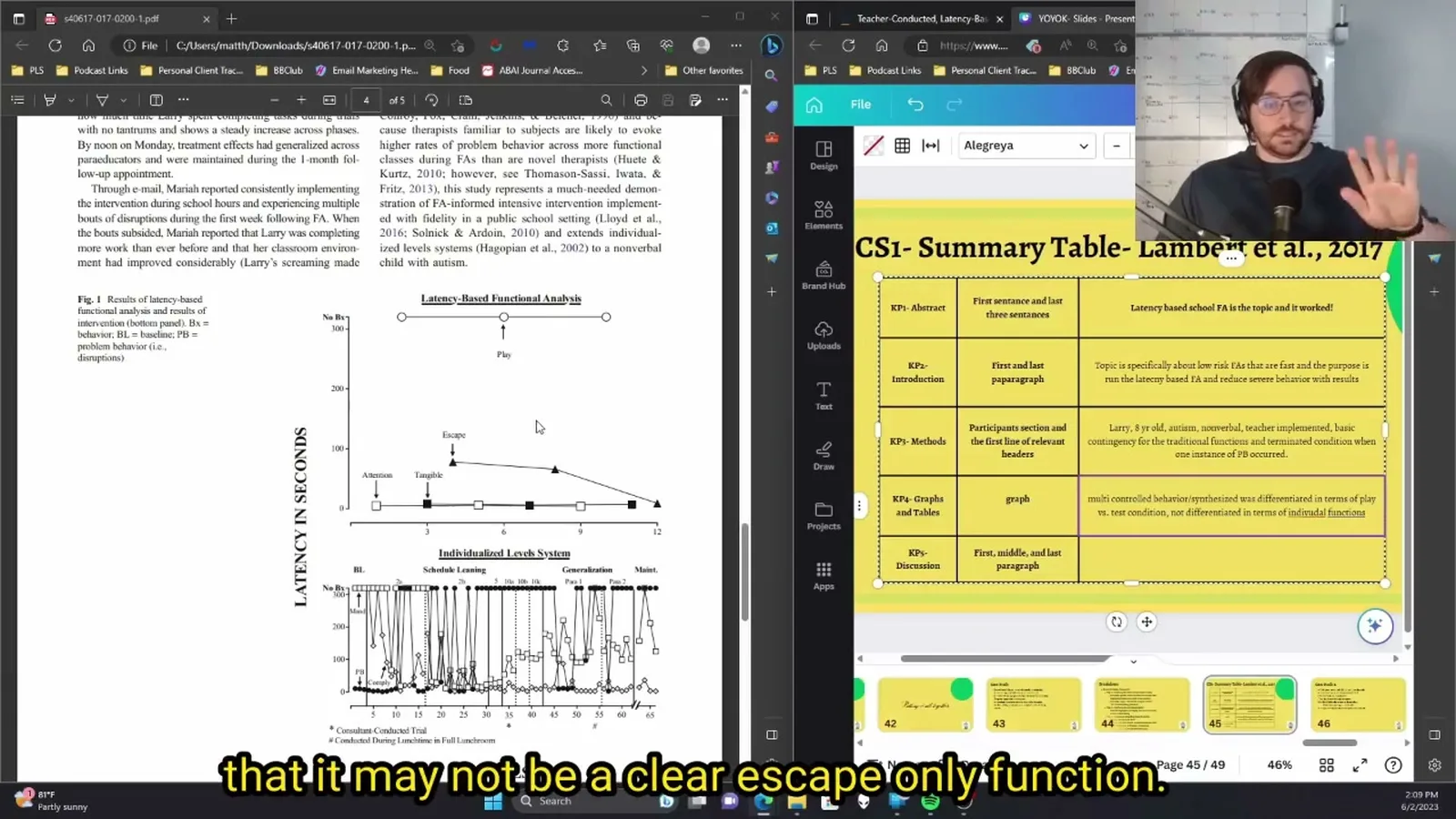
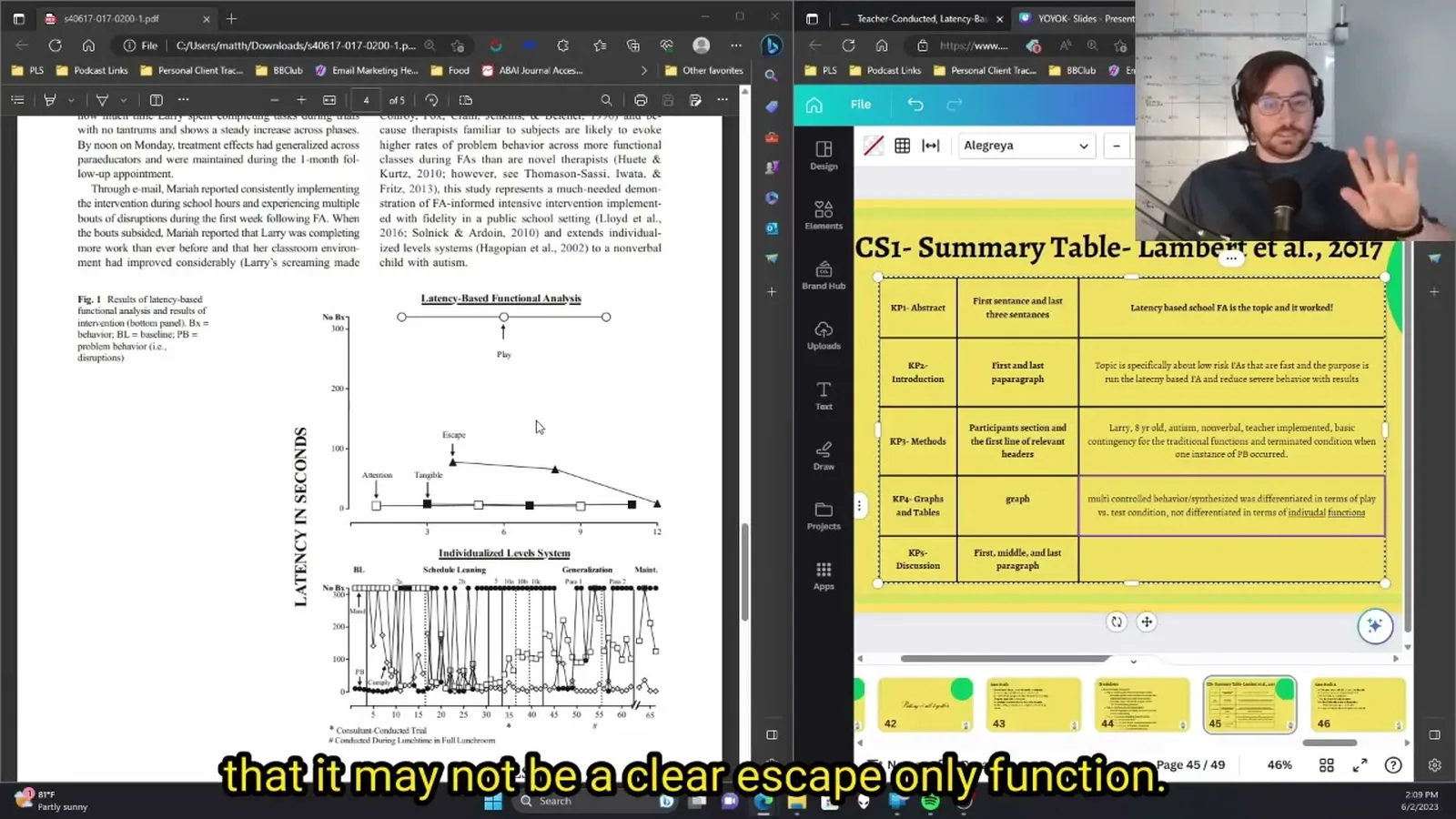
Case study 2 centers on a nonverbal six-year-old whose caregiver wants language development; Harrington walks the search from 'no identifiable echoics, tacts…
- 0.50 PDUs
Bite-Size Behavior Analysis: Differential Reinforcement
Anlara HoskinsCandid Contingencies, LLC
Used in a worked example of a client working on manding skills to access an iPad, where different topographies (two-word mand, one-word mand, screaming…
- 1.50 CEUs
PDA Caregivers, Complex Profiles, Replacement Behaviors, and Being Trauma Informed
B. Kuerine GrayThe Behaviorist Bookclub
Used across multiple case examples (S's food refusal, O's advocacy skills, F's augmentative communication) as part of building functional communication before…

On this page · 10 sections▾
A mand is a request for something a person wants right now. When a child says "cookie" because they want a cookie, that is a mand. Manding is the skill of making that request.
Manding is one of the first things a BCBA teaches. It gives a child a real way to be heard. This page covers why it comes first, how teams pick a way to ask, and how they make mands stronger.
Why manding comes first#
Manding is powerful because it pays off right away. The child asks, and the child gets the thing. No other verbal skill has that kind of built-in payoff.
Matthew Harrington walks through this in a case study. He worked on a case with a nonverbal six-year-old whose caregiver wanted language. He read the research and found a clear pattern in the literature.
So in the absence of functional man's behaviors occur. Recommended man's be targeted early. From the talk — Matthew Harrington
His plain-English read of that line was simple. Target mands as soon as you can. When a child has no working way to ask, other behavior fills the gap. That behavior is often yelling, grabbing, or hitting, because those things work. Manding gives the child a better tool that works just as fast.
When a child has no words yet#
Some kids come to a team with almost no verbal skills at all. Harrington describes a case with no echoics, tacts, or intraverbals. An echoic is copying a sound or word. A tact is naming something you see. An intraverbal is answering or talking back and forth.
When all three are missing, a team cannot start with conversation. They start with wanting. The child already wants things, so motivation is already there.
Harrington points out that this profile is common in the research. The study he skimmed had participants who looked a lot like his client.
13 kids could not engage in one word functional man's. From the talk — Matthew Harrington
Those kids were two to eight years old with low language skills. Most had autism, and several had already tried vocal mand training without success. That last detail matters. A failed try at speech does not mean the child cannot learn to ask.
Picking the right way to ask#
A mand does not have to be a spoken word. Harrington's search led him to research on mand modality. Modality just means the form the request takes. The three common options are sign language, picture exchange, and vocal speech.
The study he reviewed used a brief prerequisite assessment. That is a short check of skills a child already has before training starts. It looked at things like echoic skills and matching skills. The goal was to see whether those early checks predict which modality a child learns fastest.
This is a practical question, not an academic one. Picking the wrong form can cost months. A child who cannot copy sounds yet may do far better with pictures or signs. A short assessment up front can point the team toward the form most likely to stick.
Manding when behavior is not safe#
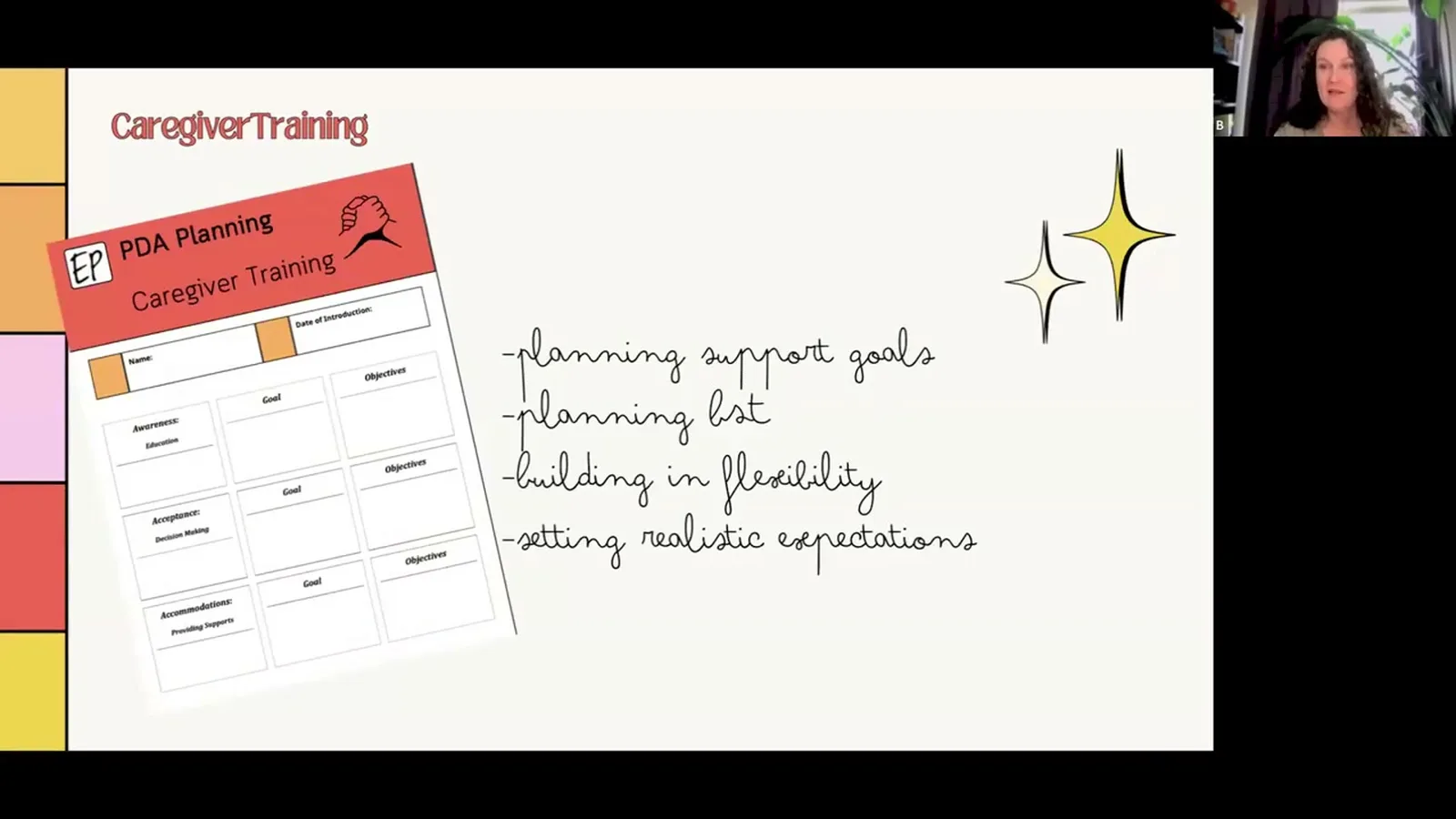
B. Kuerine Gray describes cases where communication and safety are tied together. One client, S, had extreme food refusal that threatened hospitalization. Another client, O, was fourteen and had severe aggression. In both cases, the team built a way to ask before anything else.
For S, the work started with pairing and shaping. Pairing means making a place or person feel good before any demands show up. The team made the table where food appeared a positive place first. Then they shaped a functional communication response over time. A functional communication response is just a mand that replaces an unsafe behavior with a safe way to ask.
For O, Gray's team paired mand training with self-advocacy skills.
we worked on advocacy skills, man training, and SBT for tolerance of demand presentation From the talk — B. Kuerine Gray
SBT means skill-based treatment. It teaches a child to tolerate a demand or a wait, not just to ask. A mand that only works when the answer is yes will not hold up in real life.
Manding is one piece of a bigger plan#
 Advertisement
Gray's cases make one thing clear. Mand training on its own is rarely the whole plan. Around it sit caregiver training, changes to how demands are framed, and better reading of the child's cues.
With O, caregivers learned to offer more chances for choice. They adjusted expectations and changed how they asked for things. They also learned to honor and reinforce requests when they happened. A mand only stays strong if adults respond to it.
Gray also describes clients who had years of exposure to augmentative devices. Those are tools like speech-generating apps or buttons that talk for a child. But the clients never started using them on their own. That gap is the real target. Knowing how to press a button is not the same as asking. Gray's talk on complex profiles walks through several of these cases in more detail: PDA Caregivers, Complex Profiles, Replacement Behaviors, and Being Trauma Informed.
Making the mand you want stronger#
Once a child can ask, the next question is which form to grow. Anlara Hoskins uses a clear example of a client working on mands for an iPad.
let's say that you have a client who is working on their manding skills to gain access to From the talk — Anlara Hoskins
That client had several ways to get the iPad. Screaming, hitting, saying "iPad," and saying "want iPad" all worked. Hoskins calls these different topographies in the same response class. Topography is the shape of the behavior. A response class is a group of behaviors that get the same result.
The team wanted the two-word mand. So they made that form pay the most.
We want those two-word mans. And so when they say one iPad, they get the champion outcome. From the talk — Anlara Hoskins
The child still got the iPad for saying just "iPad." That keeps the child talking on hard days. But the two-word request earned faster access, longer time, and more praise. That is differential reinforcement in plain terms. All the requests work, but the best one works best.
Checking that a request is really a mand#
It is easy to assume a child is manding when they are not. A child may hand over a picture or make a gesture without meaning the item on it.
One study tested this with adults who used communicative gestures. When staff handed over an item that did not match the request, the participants took it anyway. That tells you the gesture was not truly a mand. It was a trained move that produced something, anything.
The fix was a correction step. Staff interrupted, guided, gave instruction, and repeated the trial. Correct rejections of the wrong item went up. The lesson is worth building into any program. Hand over the wrong item on purpose sometimes. If the child accepts it without complaint, the mand is not under the right control yet.
Teaching a wider range of mands#
Many kids get stuck asking for the same two or three things. That narrow range limits what they can enjoy and who they can connect with.
Research on varied manding tackles this directly. Teams set up concurrent schedules, which means two or more choices paying off at the same time. They adjust how much each choice pays, and they add prompts when needed. Over time the child starts asking for a broader set of items.
Advanced work goes further. One line of research combined Skinner's verbal behavior with relational frame theory. Children were taught to mand for two items, then those items were linked to other stimuli through trained relations. Some children then manded for the new items without being taught directly. That is called derived manding, and it hints at how mands can spread on their own.
What the research says#
Research keeps refining how we teach mands and how we keep them strong. One study looked at how prompt density affects how long a request holds up. Dense prompting can make communication more resistant to change. But the results also depended on reinforcement history and response class size (Ringdahl et al., 2023, Behavioral Interventions). How you prompt shapes how well a mand lasts.
Another study replicated work on varied manding with three boys with autism, ages seven to nine. The team changed reinforcement schedules, alone and with prompts. That raised rates of the target mands for all three boys (Seaver, Kelly, Murray, & Baruni, 2023, Behavioral Interventions). Small changes to what pays off can widen what a child asks for.
Other work in this area looks at mands as an assessment tool. Researchers have compared a manding analysis to a traditional functional analysis and found similar results in most cases. That approach reinforces requests instead of problem behavior, which is safer in many settings.
FAQ#
What is manding in ABA? A mand is a request for something a person wants right now. Manding is the skill of making that request. It is often the first communication goal a BCBA teaches.
Does a mand have to be spoken? No. A mand can be a word, a sign, a picture exchange, or a device press. Teams often run a short prerequisite assessment to pick the form most likely to work fastest.
How does manding help with problem behavior? Problem behavior often works as a request. A child screams and gets the item. Teaching a mand gives the same result with less cost, so the harder behavior has less reason to happen.
 Advertisement
Turn this topic into a CEU
You just studied this. Now get credit for it.
Watch Solving Clinical Challenges with Research with Matthew Harrington and earn 2.5 free BCBA CEUs. Detailed certificate, delivered the moment you finish.
Keep going with a free learning path
Verbal Behavior: Beyond WH-Questions
Dana Pettus's three-part series on building generative verbal behavior. Why WH-question programs stall, how to establish speaker-listener repertoires, and how to scaffold advanced verbal skills like recall and simple inference. Three hours, three CEUs.
Parent or caregiver? Find a vetted ABA provider near you on ProviderSpark.