Latency-Based Functional Analysis: A BCBA Guide
Latency-based functional analysis ends each trial at the first behavior. Learn when it fits safety cases, elopement, and low-resource settings.
Key takeaway
A functional analysis is a test that finds why a behavior happens. A latency-based functional analysis is one version of that test. Instead of counting how often a behavior happens, you time it.
Solving Clinical Challenges with Research
Free learning path on this topic
Child Development for Behavior Analysts
Typical development for behavior analysts. Kristen Byra's overview, then Kelly Brzak's deep dives on ages 2 to 5, 6 to 8, and 9 to 11, with milestones, common problem behaviors, and programming tips for each band.
Experts who cover this
3 recordings on openceu cover latency-based functional analysis.
- Featured talk2.50 CEUs
Solving Clinical Challenges with Research
Matthew HarringtonThe Behaviorist Bookclub
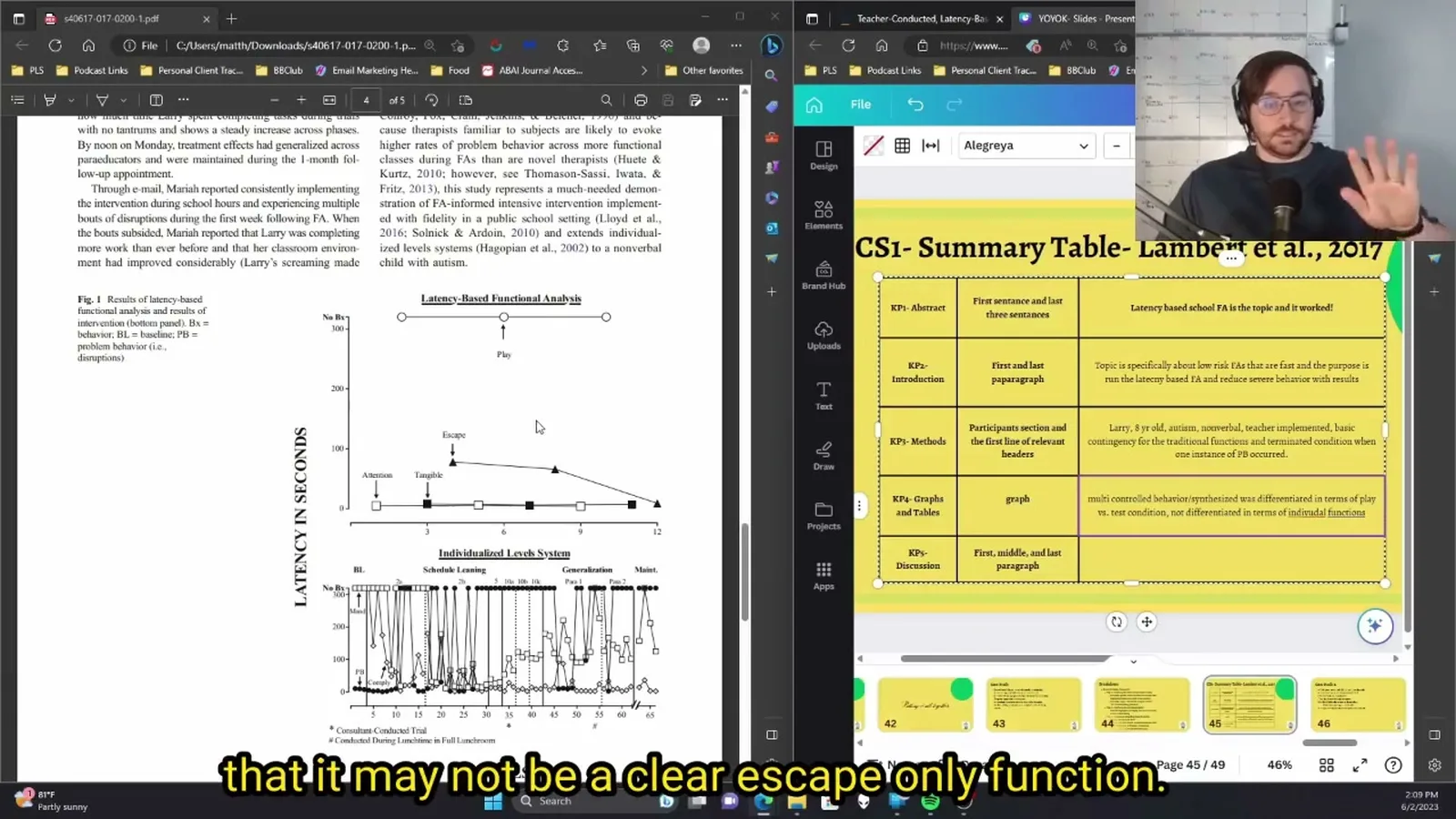
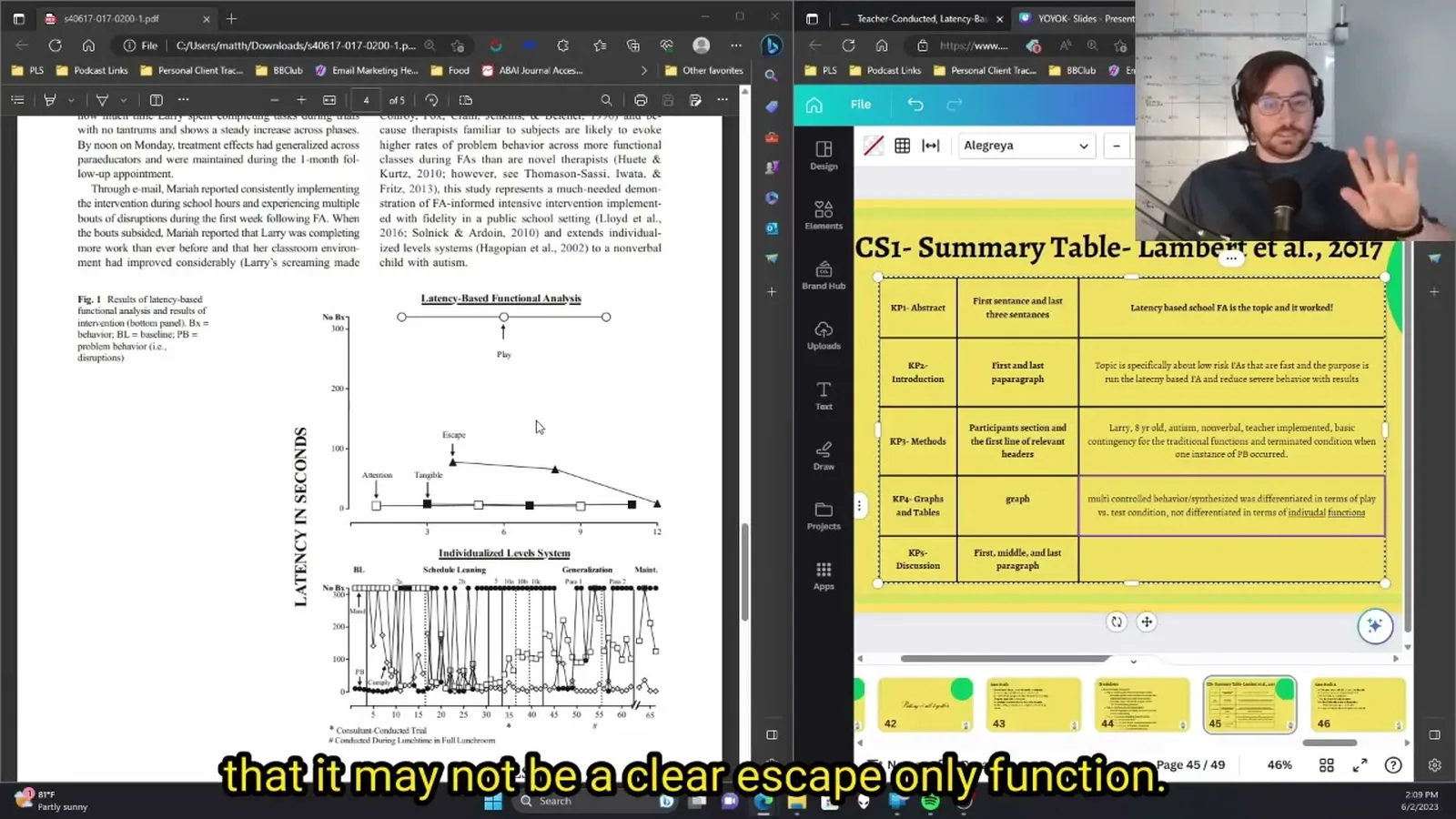
In case study 1, Harrington selects and skims a Lambert-et-al-style article on teacher-conducted latency-based FA because it fits a low-resource school setting…
- 3 CEUs
12 days of PFA & SBT
Matt HarringtonThe Behaviorist Bookclub
A format (Jessel 2018) originally used for elopement that the presenter has adapted as his default telehealth ISCA style because it's easy to coach caregivers…
- 2.50 CEUs
Confessions of a New Behavior Analyst in Functional Analysis
Matt HarringtonThe Behaviorist Bookclub
Explains why latency-based FA (trial ends at first behavior instance) is especially suited to behaviors like elopement that are hard to reset in rate-based…
On this page · 7 sections▾
A functional analysis is a test that finds why a behavior happens. A latency-based functional analysis is one version of that test. Instead of counting how often a behavior happens, you time it. You measure how long it takes for the behavior to start.
The key move is what happens next. The trial ends at the very first instance of the behavior. You do not keep going and let it happen again and again. This makes the test safer and shorter. That is why BCBAs reach for it in tough cases.
Why the "first instance" rule matters#
The whole method rests on ending trials early. Matt Harrington explains why this fits certain behaviors so well. Some behaviors are hard to reset once they start. He points to traits in the latency format that make it ideal for a behavior like elopement.
Elopement means leaving a safe area without permission. Once a child runs, the moment is over. You cannot cleanly "redo" it in a rate-based test.
So, for example, with the latency-based, it's going to be much easier to work with a behavior like elopement within the latency-based functional analysis because each time the behavior occurs within the latency-based, the trial ends. From the talk — Matt Harrington
Ending at the first instance keeps everyone safer. You get your data point, then you stop.
A good fit for safety and low resources#
Harrington walks through a school case to show when to pick this tool. The setting was a classroom with few staff. There were also worries about other students getting hurt.
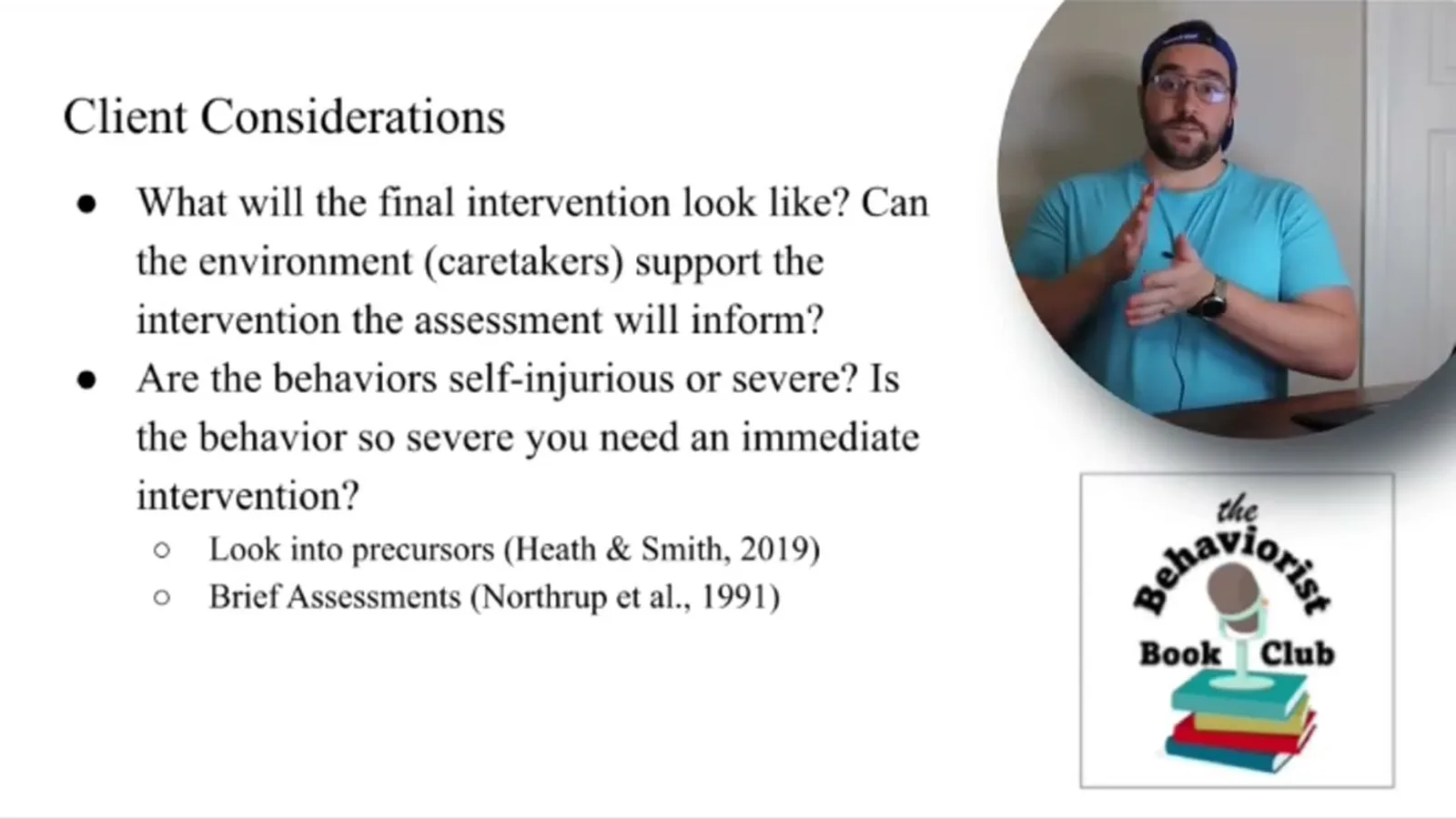
Latency-based FAs may be appropriate when they're concerned with safety. From the talk — Matthew Harrington
He points out how well the method matched the setting. It could be run by the teacher, not just a specialist. It was also brief, which fit a busy classroom.
It's teacher conducted, which lines up with our demographic. It's a latency-based functional analysis, which is perfect. That's a brief functional analysis, and it looks like exactly what we need. From the talk — Matthew Harrington
So the choice was not random. The safety concern and thin staffing pointed straight to this format.
How the trials actually run#
 Advertisement
The steps are simpler than they sound. You start a trial and start your timer. When the behavior first appears, you deliver the planned consequence. Then you close the trial and wait before the next one.
terminated test trials after delivering prescribed consequence following the first instance of disruption, and then waited to do a new trial until one minute passed without, um, disruptions. From the talk — Matthew Harrington
That waiting period matters. It gives the learner a clean reset before the next trial. Short latency times point to a strong pull toward the behavior. Long latency times point to a weak pull.
Easy to coach parents through#
Latency-based FA is not just for clinics. Matt Harrington uses it in telehealth, where he coaches caregivers by video. He likes it because it is simple to guide from a distance.
a lot of times use latency based because I can easily coach them through it... what do you think would happen if you did this or that. From the talk — Matt Harrington
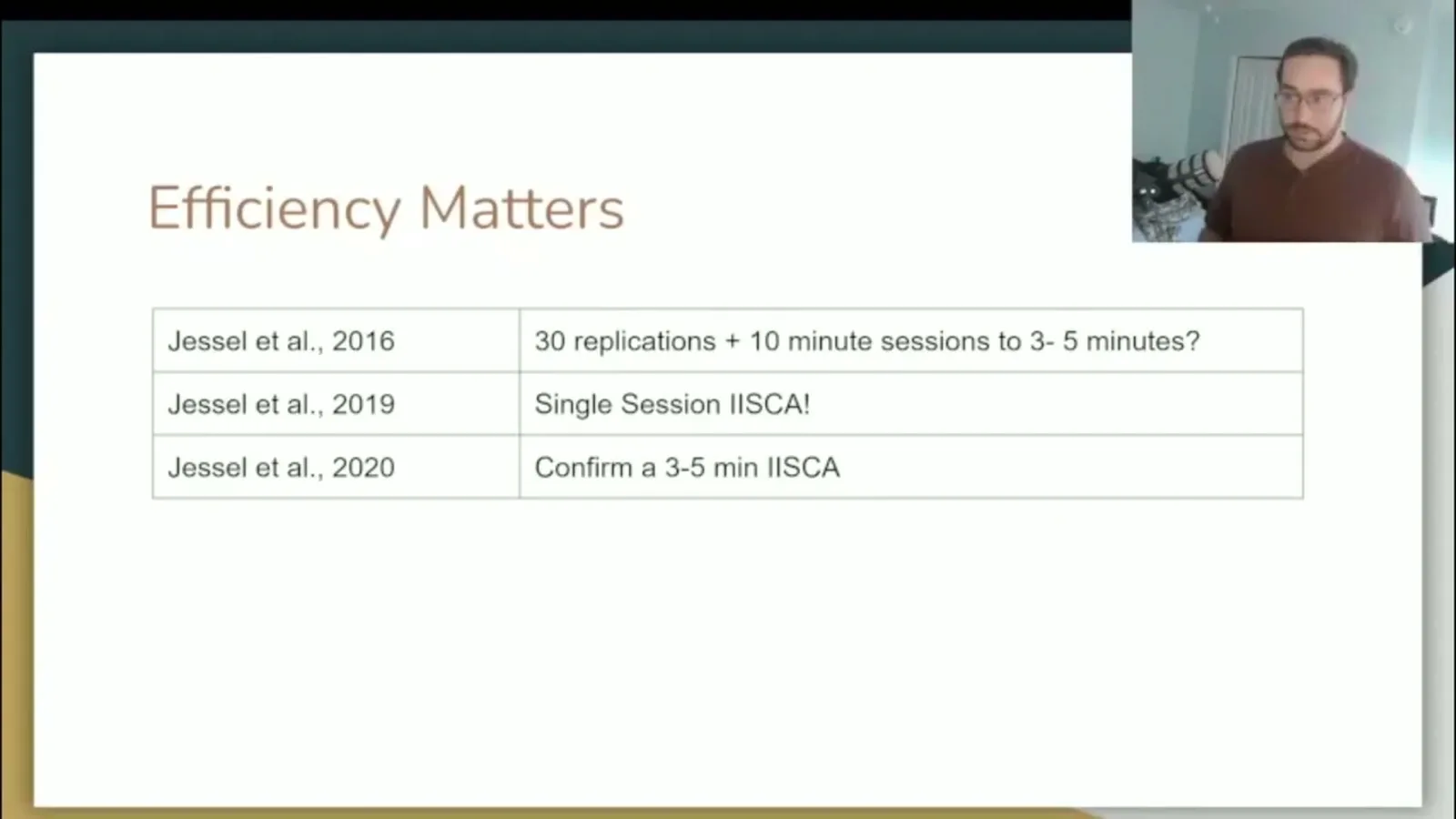
He built this into his default telehealth style. He notes the latency-based ISCA format traces back to a Jessel article. That study used it to assess elopement, which is a typical target for this tool.
Coaching a parent through a rate-based test is harder. Latency-based cuts the technical language and keeps it clear. Harrington unpacks his approach further in Confessions of a New Behavior Analyst in Functional Analysis.
What the research says#
The evidence base for this method is growing. Lambert and colleagues trained a first-year special education teacher to run a latency-based FA. She collected the data herself and used it to build a working intervention. The treatment effects even held up a month later (Lambert, Lopano, Noel, & Ritchie, 2017).
The method also travels to hospital settings. One team ran 18 latency-based FAs with autistic children on inpatient units. They found a clear behavioral function in about 44 percent of cases (Lambert, Staubitz, Roane, et al., 2017). This shows the tool works when frequent behavior would be unsafe.
Reading the results needs care, and structured rules help. Sunde and colleagues adapted visual-inspection criteria for latency-based data. When expert raters used those criteria, they agreed on the function most of the time (Sunde, Briggs, & Mitteer, 2022). Clear rules make the outcomes easier to trust and easier to teach.
When it may not reveal a clear function#
This tool is useful, but it is not magic. Sometimes the test does not point to a clear function. The hospital study above found a function in fewer than half of cases. That is a normal part of the work, not a failure.
So plan for that outcome before you start. Have a next step ready if the pattern stays unclear. You might extend the analysis or try a different format. The safety benefit still holds even when the answer is not clean.
Also read the latency times with care. A short time to the behavior signals a strong function. A long time signals a weaker pull. Structured visual rules help you and your team agree on what you see.
FAQ#
How is latency-based FA different from a standard FA?
A standard FA is usually rate-based. It counts how many times a behavior happens in a set time. A latency-based FA times how long it takes to start, then ends the trial. This means far fewer instances of the behavior overall.
When should I choose a latency-based FA?
Choose it when safety is a top concern. It fits behaviors like elopement or aggression that are risky to repeat. It also fits low-resource settings, such as a classroom with one teacher. And it works well over telehealth with a coached caregiver.
Does ending the trial early give weaker data?
No, the timing itself is the measure. A short time to the behavior signals a strong function. Research shows latency-based results line up with more traditional measures. Structured visual rules also help raters agree on what the data mean.
 Advertisement
Turn this topic into a CEU
You just studied this. Now get credit for it.
Watch Solving Clinical Challenges with Research with Matthew Harrington and earn 2.5 free BCBA CEUs. Detailed certificate, delivered the moment you finish.
Keep going with a free learning path
Child Development for Behavior Analysts
Typical development for behavior analysts. Kristen Byra's overview, then Kelly Brzak's deep dives on ages 2 to 5, 6 to 8, and 9 to 11, with milestones, common problem behaviors, and programming tips for each band.