Treatment Plan Stalled? Run the Parsimony Check First
What to check before you tear up a stalled ABA treatment plan, ranked by simplest first, from a BCBA-led CEU.
Key takeaway
Before you rip up the plan, run the parsimony ladder: check if the preferred tech is on vacation, check if the preference assessment is six months old, and check if the skills you need are already in the client's repertoire but not happening right now.
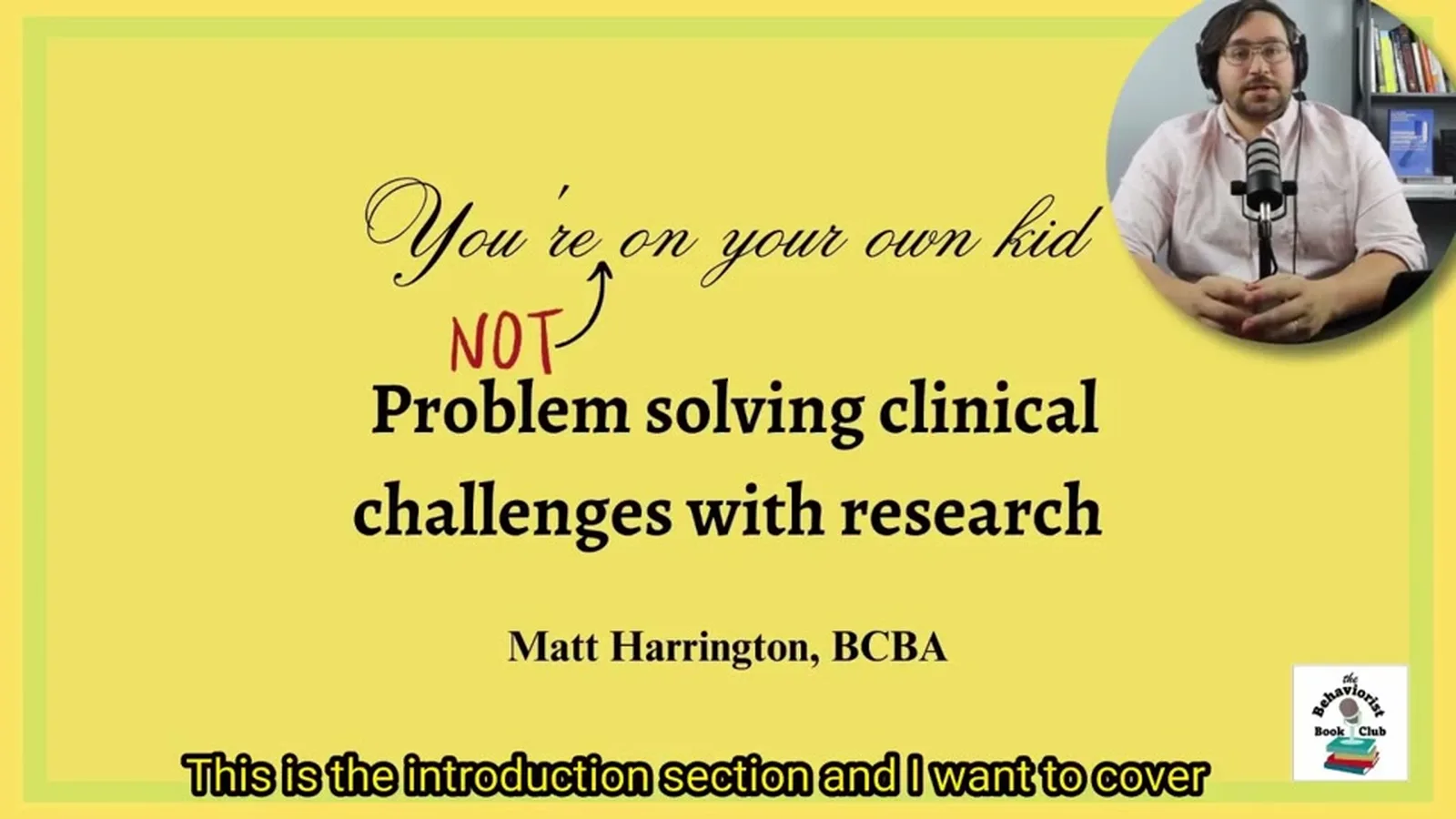
Solving Clinical Challenges with Research
Free learning path on this topic
Child Development for Behavior Analysts
Typical development for behavior analysts. Kristen Byra's overview, then Kelly Brzak's deep dives on ages 2 to 5, 6 to 8, and 9 to 11, with milestones, common problem behaviors, and programming tips for each band.
On this page · 9 sections▾
Before you rip up the plan, run the parsimony ladder: check if the preferred tech is on vacation, check if the preference assessment is six months old, and check if the skills you need are already in the client's repertoire but not happening right now. These three cheap checks fix more stalled plans than any redesign.
Why Plans Stall: It Is Almost Never the Big Stuff#
You know the feeling. You open the data Monday morning and the line that has been flat for weeks is suddenly spiking. Aggression is back. SIB is back. The parent texted twice over the weekend. Your brain jumps straight to redesign. New FA. New BIP. New language program. Maybe pull in the clinical director.
Stop. Most stalled plans are not stalled because the plan is wrong. They are stalled because something small and boring changed in the client's week, and nobody flagged it. The plan still works. The conditions it was built for have shifted.
This is where the principle of parsimony pulls its weight. It is not a slogan. It is a sequencing rule. Cheap explanations get tested first. Expensive explanations wait.
Parsimony is defined in the Cooper book, as all simple logical explanations for the phenomenon under investigation be ruled out experimentally or conceptually before moving to complex or abstract explanations are considered.
That is the rule. Rule out the simple stuff first. Then move on.
The Parsimony Ladder: Six Checks Before You Redesign#
Here is the ladder I run before I touch a single program. It takes about twenty minutes. Some checks you can do from your phone in the parking lot.
- Is the preferred technician on vacation, sick, or on a new schedule.
- When did you last run a preference assessment.
- Are the skills you need already present but not occurring.
- Has the antecedent environment changed at home or in session.
- Did any medications change.
- Did the schedule of reinforcement quietly drift.
Run them in order. The cheaper checks at the top will catch most of your stalls. If you get to the bottom of the ladder and everything checks out, then you have earned the right to think about a redesign. Not before.
Check 1: Is the Preferred Technician on Vacation This Week?#
This is the one I miss the most. I have done it. You have probably done it. The data spikes, the BCBA brain fires up, and we are in clinical mode before we have looked at the staffing schedule.
And then you're like, wait a second, the technician that the client is with for most of their sessions is out of town for the next week and a half. And everything was fine before they went out of town. And now things are going wrong.
Open the schedule. Find the tech the client has the strongest rapport with. Is that person on the case this week? Same hours as before? Same days? If the answer is no, you might not have a clinical problem. You might have a staffing problem with a clinical mask.
What to do tonight: pull the last 30 days of session schedules. Cross-reference with the behavior data. If the spike lines up with a tech change, your move is not a new plan. Your move is a staffing conversation, a pairing protocol for the covering tech, and maybe a temporary thinning of demand until rapport is back.
Check 2: When Did You Last Run a Preference Assessment?#
Preferences move. Kids change. A reinforcer that was magic in March is wallpaper by September. If your reinforcer menu is older than three or four months, you are guessing.
And we were just like scratching our head until somebody was like, hey, you know, we haven't done a preference assessment in about six months. So we did a preference assessment. We got totally new reinforcers and guess what? Everything went back to the intervention working the way it was supposed to.
That is a six-month preference assessment fix. No new FA. No new BIP. Just refresh the reinforcers and the existing plan starts working again.
What to do tonight: check the date on the most recent preference assessment in the chart. If it is older than three months, schedule a fresh one this week. MSWO is fast. You can run it inside a regular session. Then update the reinforcer board, brief the techs, and watch the data for ten days before you decide the plan needs surgery.
Check 3: Are the Skills Present but Not Occurring?#
This is the second-cheapest check, and the one most BCBAs skip because it requires a slightly different lens. You are used to scanning for skill deficits. The question here is the opposite. What can this client already do that they are not doing right now?
not just looking at the behaviors that are occurring, but the skills that are present that aren't occurring. For example, if you have a client who's engaging in aggression, but you know, they have the vocal skills to ask for help when they get stuck somewhere
If the client has the words and is not using them, the answer is rarely "teach more words." The answer is usually motivation, prompting fade gone too far, or a context that does not pull the skill. Sometimes the staff stopped prompting because the client was independent for a stretch. Sometimes the client stopped getting reinforced for asking, so asking faded.
What to do tonight: list three skills the client has mastered that would replace the problem behavior. Pick one. Ask the team if it has been prompted in the last week. If not, that is your starting point. You do not need new acquisition targets. You need to recover what was already there.
Check 4: Has the Antecedent Environment Changed?#
New sibling at home. New apartment. New school placement. New nap schedule. New roommate at the group home. New thermostat setting in the clinic. New tablet. New phone. New caregiver doing morning routine.
Any of these can stall a plan that was working two weeks ago. None of them are clinical failures. All of them are antecedent shifts the plan was not built to absorb.
What to do tonight: text the parent. Ask one question. "Has anything changed at home in the last two weeks? Even small stuff." You will be surprised how often the answer is a new baby, a move, or a parent starting a night shift. That is the variable. The plan did not break. The world around it changed.
What to Do After the Cheap Checks Fail#
Let's say you run all six. The tech is the same. The preference assessment is fresh. The skills are being prompted. Nothing changed at home. Medications are stable. Schedules are intact.
Now you have earned the right to think bigger. New FA. Re-evaluate function. Pull research on the topography you are seeing. Bring in the clinical director.
But here is the disclaimer, because parsimony gets misused.
We don't want to start throwing in a new functional analysis, developing a bunch of new language skills, doing all of these fancy things, when we just have an outdated preference assessment. Go to the simplest solution, examine it, test it out.
Parsimony is a sequencing rule. It does not mean the answer will always be small. It means you do not jump to the big answer before you have ruled out the small ones. If the cheap checks come back clean, the case has earned the deep work. Go do the deep work.
Tonight's Move: One Question to Bring to Tomorrow's Meeting#
Pick one stalled case. Run the first three rungs of the ladder before tomorrow's clinical meeting. Bring this question to the team:
"Before we redesign, can we confirm: same tech, fresh preference assessment, and the replacement skill is still being prompted?"
If the answer to any of those is no, you have your next move and it is not a redesign. If the answer to all three is yes, you have a real clinical problem and the team should treat it that way.
FAQ#
Why has my client's ABA plan stopped working all of a sudden?
Plans that stall suddenly are usually responding to a context change, not a plan flaw. The most common culprits are a preferred tech leaving the case, an outdated preference assessment, a mastered skill no longer being prompted, or a change at home the parent did not mention. Run those four checks before you assume the plan needs to be rebuilt.
When should a BCBA redo a functional analysis vs adjust the current plan?
Redo the FA after you have ruled out the cheap explanations. If the tech is the same, the reinforcers are fresh, the replacement skill is being prompted, and nothing has changed in the antecedent environment, then the function may have shifted and a new FA is warranted. If any of those cheap checks fail, fix that first and watch the data for two weeks before deciding the function has changed.
How often should preference assessments be redone in ABA?
For most clients, every three months is a safe default. For clients in active acquisition or going through developmental shifts, every four to six weeks. If you cannot remember the last time you ran one, that is your answer. Run it this week.
Want the full framework Matt uses to run the parsimony ladder and then pull research when the cheap checks fail? Watch the full CEU: Solving Clinical Challenges with Research.
Turn this topic into a CEU
You just studied this. Now get credit for it.
Watch Solving Clinical Challenges with Research with Matthew Harrington and earn 2.5 free BCBA CEUs. Detailed certificate, delivered the moment you finish.
Keep going with a free learning path
Child Development for Behavior Analysts
Typical development for behavior analysts. Kristen Byra's overview, then Kelly Brzak's deep dives on ages 2 to 5, 6 to 8, and 9 to 11, with milestones, common problem behaviors, and programming tips for each band.