Mastery Criteria for Tantrums: Why Zero Is the Wrong Number
Why a 'zero tantrums for six months' goal is wrong for a four-year-old and what typical-child data says instead, from a BCBA-led CEU.
Key takeaway
The average three-year-old has 2.5 tantrums a day.
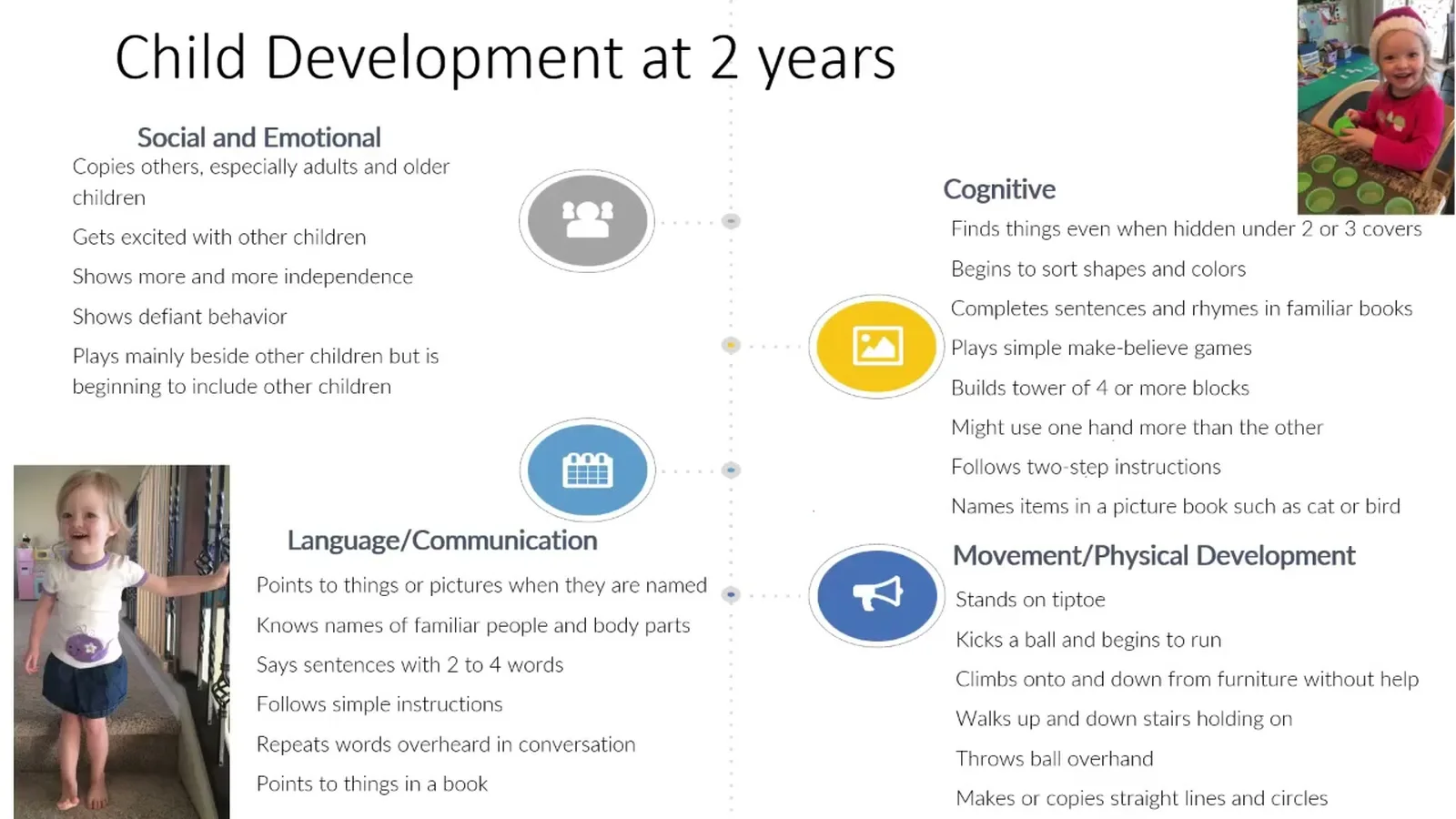
Child Development for Behavior Analysts
On this page · 7 sections▾
The average three-year-old has 2.5 tantrums a day. So when a Board Certified Behavior Analyst (BCBA) writes a goal like "zero instances of tantrum behavior for six consecutive months" for a four-year-old client, the right response is the one Kristen Byra gave on her CEU: please come to my house. Please. Because no four-year-old on earth, with or without a diagnosis, is hitting that number. The fix is to rewrite the criterion using the numbers typical kids actually post.
The "Please Come to My House" Problem: Goals That Beat Typical Kids#
Open almost any Behavior Intervention Plan (BIP) for a young child and you will find a tantrum goal that sounds clean on paper. One instance of tantrum behavior for four consecutive weeks. Zero instances for three months. Zero for six months. The numbers look tight. The clinician feels good about writing them. The funder reads them and nods.
The problem is that those numbers do not exist in the typical population. A three-year-old without a diagnosis does not go a month with one tantrum. A four-year-old without a diagnosis does not go six months with zero. We are writing mastery criteria that the kids in the park, the kids at the birthday party, and the kids at the grocery store are not hitting either.
We're going to have a kid who's four of zero instance of tantrum behavior for six consecutive months. Like, please come to my house. Like, please, please, please come to my house. Because there is no way under the sun, that's ever going to happen. From the talk — Kristen Byra
That is the test for any tantrum goal you write. Would the typical kid down the street pass it? If the answer is no, the goal is anti-developmental. You are not measuring progress. You are measuring the impossible.
What a Typical Three-Year-Old Actually Looks Like (2.5 a Day)#
Here are the numbers from the typical-development literature. Three-year-olds average 2.5 tantrums per day. That works out to about 6.1 tantrums per week. Median duration is around 15 minutes.
Sit with that for a second. Two and a half tantrums a day is the middle of the bell curve for a neurotypical three-year-old. That is the kid your goal is supposed to look like.
So when a treatment plan says the three-year-old client will have "one instance of tantrum behavior for four consecutive weeks," the math has already failed. A typical three-year-old has roughly 24 tantrums in four weeks. We are asking a client with a developmental delay to do something a typical kid does not do.
The honest reframe is not "lower the bar." It is "match the bar." Three-year-old tantrum behavior is part of being three. The goal is to reduce it toward the typical range, not below it.
Why Duration Under 30 Seconds Is Not a Real Target#
The other place tantrum goals quietly break is duration. Plans often say the tantrum will be resolved in under 30 seconds. Sometimes under one minute. The typical median for a three-year-old is closer to 15 minutes.
So I will see duration of like tantrum of no more than 30 seconds. Like, are you kidding? Like, it takes me 30 seconds just to get myself mad enough to get into the tantrum. I'm not going to be resolved in 30 seconds. From the talk — Kristen Byra
That is the gut check. If a grown adult cannot escalate, peak, and recover in 30 seconds, a three-year-old cannot either. Writing 30 seconds is writing a number that no one in the room, client or clinician, can produce. The plan fails on day one and the team spends the next six months pretending it is "in progress."
A workable duration target starts with the typical median (around 15 minutes) and moves toward the lower end of the typical range. It does not start with a number pulled out of a textbook example.
The 4 and 5 Year Old Numbers (and the Data Gap After That)#
The literature does keep going for a couple more years. Four-year-olds still average 1.9 tantrums per day. Five-year-olds are still having tantrums at least once a day on average. That is the typical baseline you are writing against.
Four-year-olds are still having 1.9. Five-year-olds are still having them at least once a day. Unfortunately I don't have data from the literature in terms of times per week or duration for the five, six, and seven. From the talk — Kristen Byra
After age five the data thins out. There is no clean typical-rate number for six and seven year olds in the published literature. That gap matters for two reasons.
First, you cannot benchmark a six-year-old's tantrum rate the same way. You will have to reason from the five-year-old baseline plus the family's report of siblings and peers. Second, the honest answer to a funder asking "what is the typical rate?" is "the literature does not have it yet." That is the right answer. Do not invent a number to make the goal sound rigorous.
This is also the part of the picture that proves you are reading developmental research, not copying a template. The clinicians who write "zero for six months" goals have never opened the tantrum-frequency data. The clinicians who write defensible goals have.
What to Write Instead: Reduction Targets That Match Development#
So what does a goal look like when it respects typical development? A few rules.
Start with the typical-rate number for the client's chronological age. Three-year-old: 2.5 a day. Four-year-old: 1.9 a day. Five-year-old: about one a day. That is the floor. You are not writing below it.
Write a reduction target, not an elimination target. If the client is having eight tantrums a day, a one-year goal might be "two to three tantrums per day, averaged over four consecutive weeks." That meets the typical-development line for a three-year-old. It is also a real, measurable change.
Pair frequency with duration. A client tantruming three times a day for 45 minutes each is in different shape than a client tantruming three times a day for 10 minutes each. Both numbers matter. Both belong in the criterion.
Build in the antecedent. Tantrums clustered around transitions, denied access, or task demands are different problems. Naming the context in the goal ("during non-preferred task demands" or "during transitions out of preferred activities") keeps the team from chasing a global number that hides the real pattern.
Account for the family's reality. The "Captain Destructo" detail Kristen used in the talk is the reason this matters. Her best friend's two-and-a-half-year-old loses it over a blue cup that should have been red. That is typical. Caregivers who think tantrums are pathology need to hear that. Goals written against an unrealistic standard make families feel like they are failing too.
When to Revisit the Goal: A 90-Day Review Rule#
A tantrum goal is not a write-it-and-forget-it artifact. The client grows. The family situation shifts. Sleep changes. School starts. The antecedent stack reshuffles. A goal that made sense at three does not necessarily make sense at three and a half.
A simple rule: every 90 days, sit with the goal and ask three questions. Is the client still in the same developmental window? Is the typical-rate baseline still the same? Is the antecedent pattern still the one we wrote for?
Even the best laid plans can fail. So again, another shameless plug, even if you plan for prerequisite skills and typical child development and things like that, sometimes things just don't want them to news. Use caution with, for challenging behavior. From the talk — Kristen Byra
That is the honest version of what mastery criteria for tantrums looks like in practice. You set the criterion against typical development. You watch the data. You revise on a schedule. And you do not pretend the original plan was the final word. Challenging behavior, more than skill acquisition, is the place where the plan has to keep moving.
Frequently asked questions#
Is it ever appropriate to write a zero-tantrums goal for a young child?
No, not for a child in the typical-tantrum age range (roughly two to five). A zero target ignores what neurotypical kids of the same age are doing and sets the team up for a goal that cannot be met. The exception is a specific, time-bound, context-limited goal, such as "zero tantrums during the 10-minute morning circle" once the data shows that context is already trending that way. Even then, the global treatment plan should not carry a zero target.
What is a developmentally appropriate tantrum reduction target?
Start with the typical-rate number for the client's age (2.5 a day at three, 1.9 a day at four, about one a day at five) and write a reduction that moves the client toward that range. For a three-year-old having eight tantrums a day, a reasonable one-year target is two to three tantrums a day, averaged over four weeks, with duration trending toward 15 minutes or less. Pair the frequency target with a duration target and the antecedent context. That gives the team something real to measure.
How do I explain to a parent that some tantrums are typical?
Use the numbers. Tell the parent that the average three-year-old has about 2.5 tantrums a day, the average four-year-old still has nearly two, and the average five-year-old still has at least one. Then tell them what the goal is reducing the client toward, and why. Most parents have never been told what typical looks like. The 2.5-a-day number reframes a lot of guilt. It also makes the treatment plan feel like a partnership instead of a verdict.
Turn this topic into a CEU
You just studied this. Now get credit for it.
Watch Child Development for Behavior Analysts with Kristen Byra and earn 1 free BCBA CEU. Detailed certificate, delivered the moment you finish.