Cultural Differences in Child Development Milestones: What ABA Misses
Why milestone charts assume one culture and how to write goals that respect a family's actual timeline, from a BCBA-led CEU.
Key takeaway
A cross-cultural study of 25 child development skills found a three-month gap in when parents thought a kid should be fed from a spoon, a ten-month gap on putting on shoes, and a seven-month gap on naming colors.
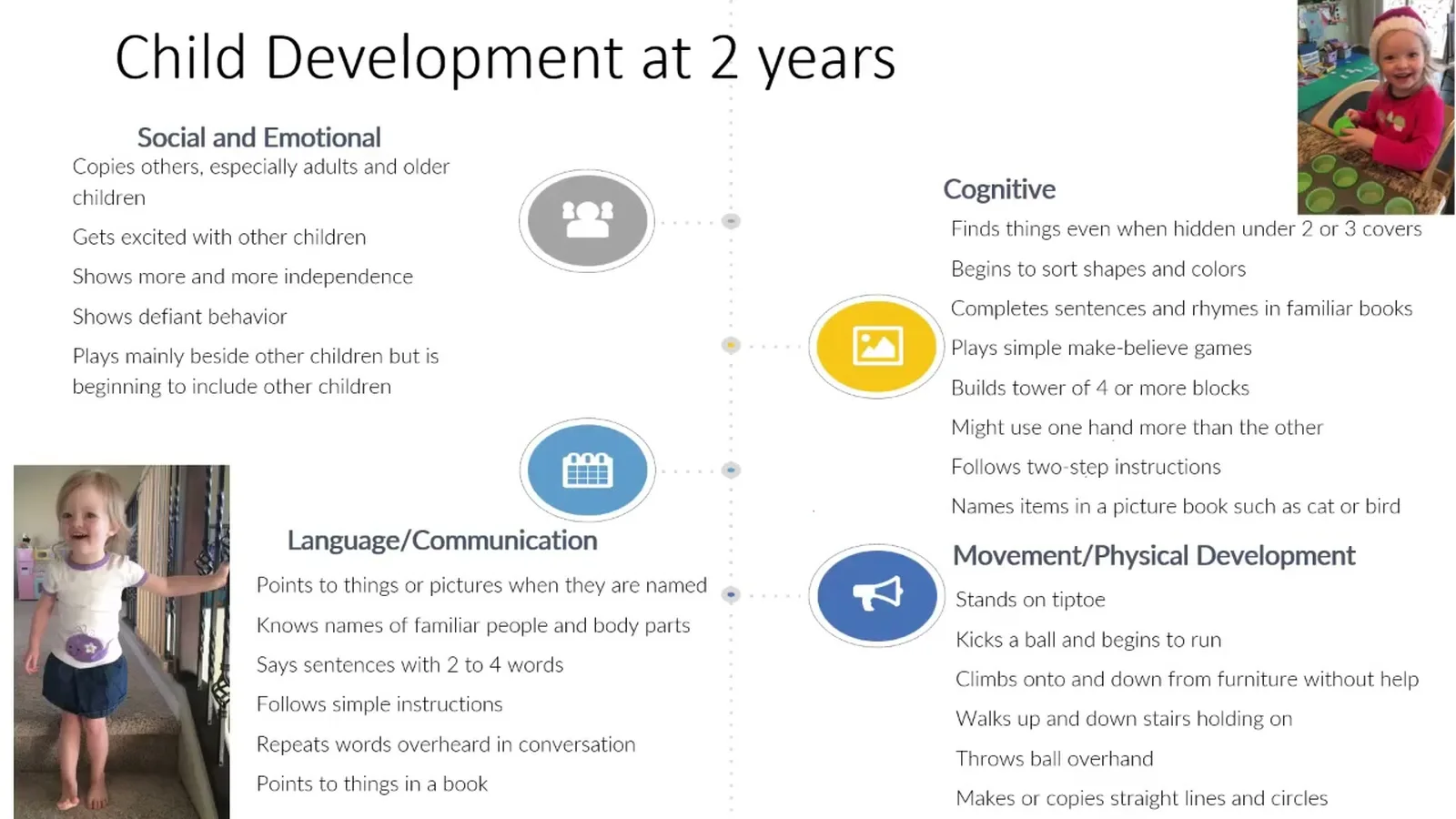
Child Development for Behavior Analysts
On this page · 8 sections▾
A cross-cultural study of 25 child development skills found a three-month gap in when parents thought a kid should be fed from a spoon, a ten-month gap on putting on shoes, and a seven-month gap on naming colors. Toilet training was the biggest split of all: most of the United States waits until age two or three, while most other countries start a lot earlier. Kristen Byra, PhD, BCBA, told a story on her CEU that puts numbers like those on the floor of the clinic. She took over a four-year-old whose old treatment plan had toilet training as a goal. The boy was mobile. He had decent language. On paper he was ready. In real life it was going terribly. Mom said it was overwhelming. When Kristen asked why they were even targeting it, mom said the last Board Certified Behavior Analyst (BCBA) told her she had to. That is the cost of treating a milestone chart as a universal. When expectations are too low, a parent does not raise a flag at the 15-month wellness check for a kid with no words. When expectations are too high, a parent panics at 12 months because their kid is not stringing two-word sentences together. Both ends of that gap put kids in the wrong plan.
The Hidden Assumption in Every Milestone Chart on Your Desk#
The CDC chart, the Ages and Stages questionnaire, the VB-MAPP self-care checklist, the Vineland age equivalencies. They are good tools. They are also written from a single cultural lens. The age a kid is expected to feed themselves with a spoon, dress themselves, sleep alone, or start toilet training is not a fact of biology. It is a parenting expectation that varies a lot from one country and one family to the next.
That matters for BCBAs because every goal we write is downstream of a chart. If the chart says shoes by 36 months and the family thinks shoes by 46 months, the BCBA who quietly trusts the chart is going to push a goal the family did not ask for. The family will either fight it, fake the data, or stop showing up.
Step one is honest. The milestone chart on your desk is one culture's answer to a question that every culture answers differently. It is a starting point for a conversation with the parent, not the answer.
Three Real Gaps: Spoon Feeding, Shoes, Toilet Training#
The 1997 cross-cultural study Kristen pulled into her talk asked parents from different cultural backgrounds the same 25 questions about when a kid should be able to do basic self-care. The gaps were not small.
Being fed from a spoon, you can see there's some pretty big differences here, like a three month difference of when a kiddo should be able to be fed from a spoon. If we look at putting on their shoes, like a 10 months difference of when certain folks thought their kiddos should be able to do that by themselves. From the talk — Kristen Byra
Three months on spoon feeding. Ten months on shoes. Seven months on naming colors. Those are not rounding errors. Those are entire treatment quarters. If you write a fading plan around the chart's age and the family lives by a different one, the kid will look like a slow learner when the real issue is a goal that does not fit the home.
Toilet training is where the split gets loudest.
Toilet training. In the United States, we're usually looking at two to three years, but in most other countries, they're doing it a lot earlier. Not that they're independent, but we're starting, we are starting the act of toilet training young kiddos. From the talk — Kristen Byra
Notice the word "starting." In a lot of cultures, starting toilet training at twelve or eighteen months is normal. The child is not independent at that age. The parent is doing the work of catching the right moment, sitting on a small potty, using a cue word. By the time a kid is two and a half, the family has been at this for a year. To them, the goal is not "is the kid ready," it is "are we keeping the routine we already started." That changes what your toilet training plan should look like, who runs it, and what counts as progress.
The 4-Year-Old Toilet Training Story: When the Goal Was Wrong#
This is the case Kristen kept coming back to, and it is the one every BCBA recognizes.
I took over a kiddo who came into our clinic. He was four years old. I saw his old treatment plan and toilet training was one of the goals. He was super mobile. He had some pretty good language skills. But I saw it was going terribly. I asked mom, what's happening here? She said, it's just really overwhelming. From the talk — Kristen Byra
By the chart, the goal looked clean. Age four. Language. Mobility. The readiness checklist would have been mostly green. But the data was bad. The kid was not making progress. The parent was burnt out. That is the gap a chart cannot see.
Then Kristen asked the question that the previous BCBA never did. Why are we working on this?
She's like, no, the BCBA said I had to do this. I was gutted that a parent just got forced into working on something that was not their most immediate need. It was stressful for them. They weren't making any progress, but they were so worried the BCBA was going to drop them from care that they agreed to it. From the talk — Kristen Byra
That family was not non-compliant. They were scared. They thought saying no to a goal meant losing the only support they had. So they nodded along to a plan that wrecked their evenings and went nowhere. Every BCBA who has run a session in a home has seen some version of this.
The fix is not "be more culturally aware." The fix is asking the parent why we are targeting a goal before it goes in the plan, and being willing to take it out when the answer is "because the last BCBA said so."
How Low and High Expectations Both Break the Plan#
The clinical risk runs in two directions, and that is the move most cultural sensitivity guides miss. If a family expects first words at 18 months, they will not raise a concern at the 15-month wellness check for a kid with no language. If a family expects two- and three-word sentences at 12 months, they will panic at the 12-month wellness check over a kid who is right on track. Same chart. Different ceiling. Different outcome for the kid.
Low expectations delay the referral. The family does not flag a real concern because in their head the kid is still on time. By the time someone notices, the window for the earliest intervention is closed. We already know children of color and children from non-English-speaking homes get diagnosed years later than their peers. Part of that gap is a milestone chart that does not match the family's frame.
High expectations cause the opposite problem. A family panics at the 12-month check because their kid does not match a chart that was unrealistic in the first place. Now we have a referral that did not need to happen, a worried parent, and a clinician trying to walk back a comparison that never made sense.
A BCBA who only has the chart in their pocket cannot tell which side of the gap a given family is on. The only way to know is to ask. What did you expect your kid to be doing at this age? What did your older kid do? What does your sister's kid do? That is the part of the intake that gets skipped, and it is the part that decides whether the goals you write will actually move.
Two Questions to Ask Before You Pick a Self-Care Goal#
Before a self-care goal goes in a treatment plan, two questions will catch most of the cultural mismatches.
First. What does this skill look like in your home today, and who handles it? If mom always feeds the four-year-old with a spoon and is fine with that for another year, an independent self-feeding goal is not your next move. If grandma takes the kid to the potty every two hours and has been doing that since 18 months, your toilet training goal needs to plug into a routine, not replace it.
Second. If we did not work on this, what would your life look like in six months? If the answer is "the same, it is fine," the goal does not belong in this plan. If the answer is "I cannot send him to the preschool I want," or "I cannot leave the house without a change of clothes," the goal earns its spot.
Those two questions are doing the same job as a fancy cultural questionnaire. They put the family's actual life in front of you before the chart does.
Where to Put the Cultural Conversation in the Treatment Plan#
The cultural conversation is not a separate section. It lives inside three places in the plan you are already writing.
It lives in caregiver concerns. Write down what the parent actually said, in their words, not a translation into ABA-speak. "Mom is not worried about toilet training this year" is a clinical sentence. It belongs in the plan.
It lives in social validity. If the goal you picked does not match what the family wants, the goal does not have social validity, full stop. That is true even if the chart says it should.
It lives in mastery criteria. A "100% independent" mastery line for a self-care skill assumes the family wants total independence on the timeline you picked. Sometimes they do. Sometimes the family wants "starts the routine, lets us help" for another year. Both are valid endpoints. Pick the one the family is actually working toward.
The treatment plan is the place where the parent's expectation, the family's culture, and the chart all have to agree before a single session runs. If they do not agree, the plan does not work, no matter how clean the data sheet looks.
Frequently asked questions#
Does the CDC milestone chart apply to families from other countries?
Partly. The motor milestones travel pretty well across cultures because they are tied to physical development. The self-care and language milestones travel less well because they are tied to parenting expectations that vary a lot. Use the chart as one input. Ask the parent what they expected at each age and write that down too.
How do I bring up cultural differences without offending a family?
Skip the word culture. Ask about the kid's home routine and the parent's older kids or nieces and nephews. "Tell me what mealtime looks like at home" gets you more honest info than "let's talk about cultural differences in feeding." The parent is the expert on their own house. Your job is to listen and write goals that fit what you hear.
What if the family's timeline puts the child behind on insurance criteria?
Document the discussion. Write the goal at a pace the family will actually run, and write the clinical rationale for why that pace is the right one. Insurance auditors are looking for a plan that matches the kid in front of you, not a plan that matches a chart. A goal the family won't run is a goal that won't show progress, and a goal with no progress is a bigger funder risk than a goal with a slower timeline.
Watch the full CEU#
Kristen Byra's full talk covers screening tools, assessment-driven goal development, mastery criteria for tantrums and compliance, and the prerequisites that have to be in place before you write self-care goals at all. If you are rebuilding how your team picks goals, this is the hour to watch.
Turn this topic into a CEU
You just studied this. Now get credit for it.
Watch Child Development for Behavior Analysts with Kristen Byra and earn 1 free BCBA CEU. Detailed certificate, delivered the moment you finish.