Active Listening in ABA Supervision
Active listening is a teachable set of behaviors. See how ABA experts define it, break it into skills, and use it in supervision.
Key takeaway
Active listening means you show the other person you truly heard them. You pause, you reflect back what they said, and you watch their tone and body.
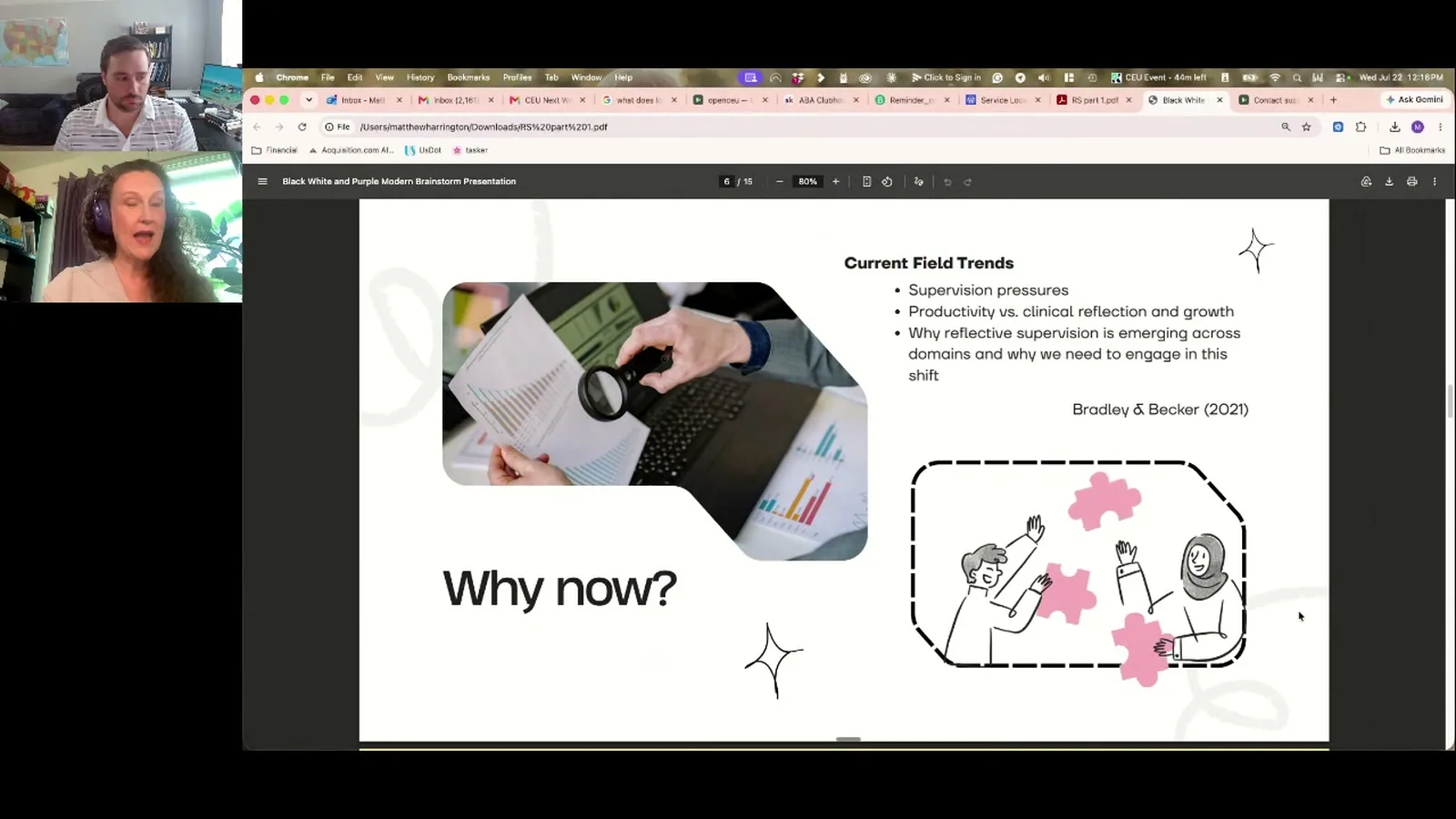
Foundations of Reflective Supervision in Behavior Analysis
Experts who cover this
2 recordings on openceu cover active listening.
- Featured talk1 Supervision CEU
Foundations of Reflective Supervision in Behavior Analysis
B. Kuereine GrayThe Behaviorist Bookclub
The speaker walks through what reflective/active listening looks like in supervision: pausing, paraphrasing, attending to tone and nonverbal cues, and asking…
- 3.50 Supervision CEUs
Supervision Articles Deep Dive
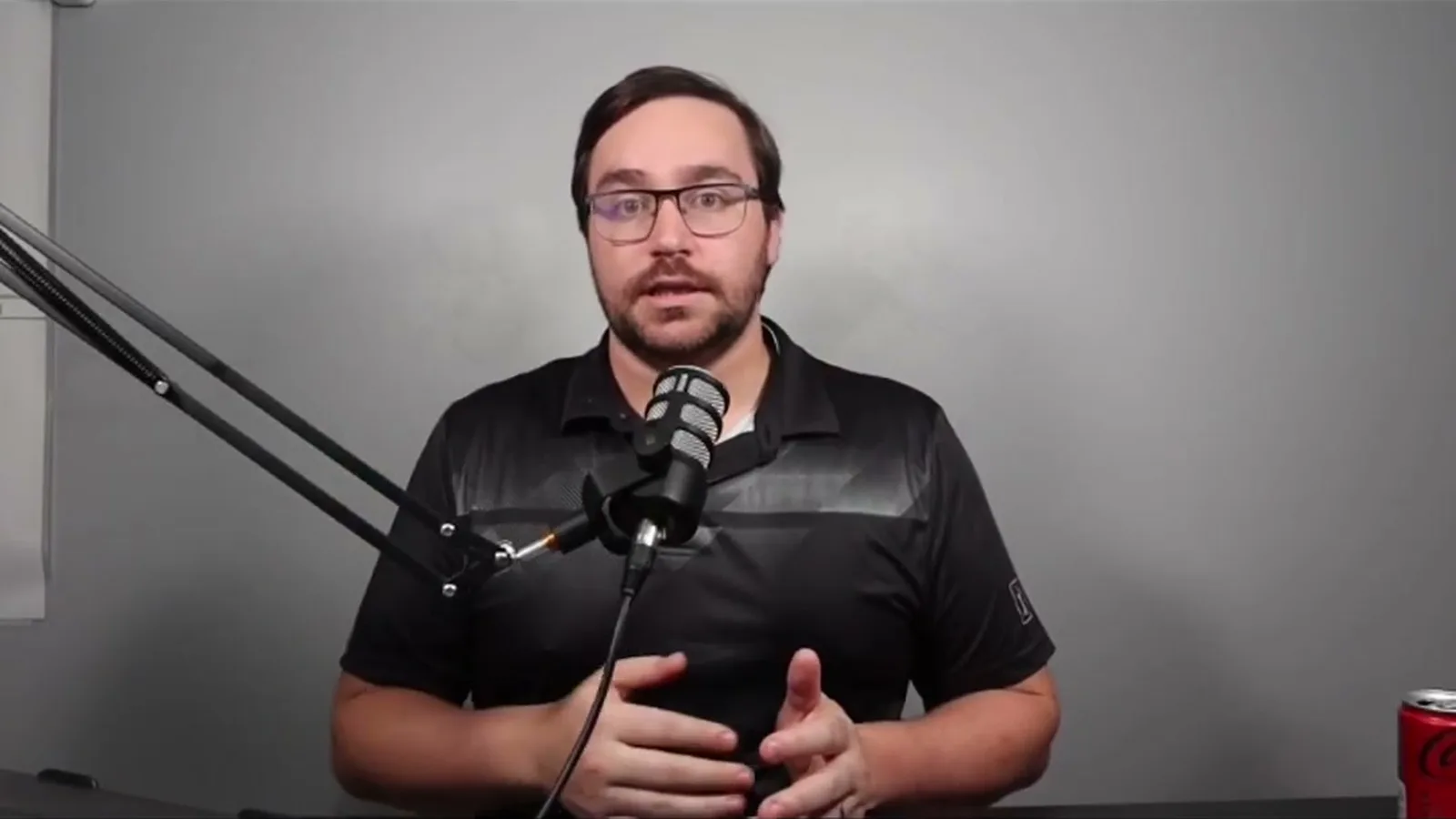
Matt HarringtonThe Behaviorist Bookclub
Covering a 2024 article, Harrington highlights an attempt to objectively define and teach empathy through observable active-listening behaviors, reflective…
On this page · 9 sections▾
Active listening means you show the other person you truly heard them. You pause, you reflect back what they said, and you watch their tone and body. It is not just staying quiet while someone talks. It is a set of actions you can see and count.
That matters in ABA, short for applied behavior analysis, because listening is a skill, not a personality trait. When you can name the behaviors, you can teach them and practice them. Good listening builds trust with families, staff, and the people you supervise. This page pulls together what several ABA experts say about it.
What active listening actually is#
Many people treat listening as something you either have or you do not. The experts in these talks push back on that idea. They break listening into small, clear steps you can watch.
B. Kuereine Gray describes it as a mix of moves that work together. You pause. You put the speaker's words in your own words. You ask a follow-up question instead of waiting for your turn to talk.
That framing is helpful. No single move is the whole skill. It is the blend of pausing, reflecting, and attending that makes someone feel heard.
The behaviors that make it observable#
To teach a skill, you have to define it in plain terms. Matt Harrington covered a 2024 study that tried to do exactly that with empathy. The researchers turned a fuzzy idea into a list of actions.
Those actions included reflective statements, eye contact, and emotional mirroring. A reflective statement just means you say back the feeling or point you heard. Emotional mirroring means your face and tone match the other person's. Here is how Harrington described the training video:
They watched a 35 minute expert video modeling specific behavior, reflective statements, eye contact, emotional mirroring From the talk — Matt Harrington
When you can list the parts, you can score them. That turns "be more empathetic" into something a trainee can practice and a supervisor can measure.
Why the nonverbal signals count#
Words are only part of listening. Both speakers stress the signals you send without talking. Your body tells the other person whether you are with them or checked out.
Gray points to the quiet cues that carry a lot of weight. She names nodding, eye contact, and open body language as core parts of the skill. These small signals do real work. A nod at the right moment tells a supervisee to keep going. Turning your body toward someone shows you are present. Miss these, and the person may feel unheard even if your words are kind.
Pause and paraphrase#
One move shows up again and again as the heart of active listening. You stop, and you say back what you heard in your own words. Gray keeps it simple.
Being able to pause and paraphrase. From the talk — B. Kuereine Gray
The pause does two jobs. It gives the speaker room to finish a thought. It also gives you time to catch the real point before you reply. The paraphrase then checks your understanding. If you got it wrong, the other person can fix it right away. This simple loop stops a lot of miscommunication before it starts.
Active listening can be taught fast#
 Advertisement
A common worry is that soft skills take years to build. The study Harrington reviewed suggests otherwise. It used peer-led behavioral skills training, which is a teach-model-practice-feedback method run by fellow trainees instead of one expert. As Harrington put it, the study used peer-led behavioral skills training to teach trainees active and empathetic listening skills. The results were quick and strong. Trainees learned the skills without needing constant expert help, and the gains carried over to new situations.
Four out of the six were able to reach mastery and generalization in a pretty efficient timeframe, less than two hours, as well as not needing the expert support. From the talk — Matt Harrington
Less than two hours is a short window for a skill this useful. It also means teams can spread the training without one expert doing all the work. Peers can coach peers once the target behaviors are clear.
Where it fits in supervision#
Supervision is where these skills pay off most. When you guide new behavior analysts, you spend hours in conversation. A supervisor who listens well hears the real problem faster and builds a stronger bond.
Gray's talk frames reflective supervision as a practice built on this kind of listening. You attend to tone and body language, not just the facts of a case. You ask follow-up questions to understand, not to correct. That stance helps a supervisee feel safe enough to share mistakes and worries.
Harrington's review adds the training piece. If a supervisor's listening is weak, you do not have to hope it improves on its own. You can name the missing behaviors and train them the same way you would train any other skill. For more on that approach, see Supervision Articles Deep Dive.
The same skill shows up across programs#
Active listening is not only a supervision tool. It appears in programs built for very different goals. That range shows how basic and useful the skill is.
One study taught active listening as part of a group program to lower health risk behaviors. Listening sat next to disclosure and problem-solving skills. Another program used it to build social skills for autistic adults with limited language. There, coaches tracked eye contact and active listening as target behaviors alongside on-topic talk.
Across all these settings, the pattern holds. When a program breaks listening into clear actions, people can learn it. The skill travels well because the behaviors stay the same.
What the research says#
Two peer-reviewed studies inform this page. Neither had a full citation on file, so they are named here by title and finding.
One study, "Group intervention to reduce HIV transmission risk behavior among persons living with HIV/AIDS," tested a five-session group program. It taught active listening along with self-reflection, assertiveness, and problem-solving. The program cut risky behavior in a real community setting, which shows these skills work outside the lab.
A second study, "Social Interaction Skill Intervention for Autistic Adults with Intellectual Disability and Limited Language: A Pilot of the SKILL Program," used a peer-led group format. Five participants showed gains in both spoken skills and nonverbal ones, including eye contact and active listening. The authors note this group is often left out of social skills research.
Taken together, the studies back up what the talks claim. Active listening can be defined, taught, and measured across many groups and goals.
Frequently asked questions#
Is active listening the same as empathy?
They are close but not identical. Empathy is the feeling of understanding another person's state. Active listening is the set of visible actions that show that understanding. The talks here treat listening as the observable side of empathy. That is why you can teach it. You train the behaviors, like reflecting and eye contact, and the message of care comes through.
How long does it take to learn active listening?
Faster than most people expect. In the study Harrington reviewed, four of six trainees reached mastery in under two hours. The keys were a clear list of target behaviors and a model to watch, then practice with feedback. Your speed will vary, but the skill does not need months of training. It needs clear targets and repeated practice.
What are the core behaviors I should practice first?
Start with three. First, pause before you respond so the speaker can finish. Second, paraphrase what you heard in your own words to check understanding. Third, use nonverbal signals like nodding, eye contact, and an open posture. These three cover the base of active listening. Add reflective statements and follow-up questions once the basics feel natural.
 Advertisement
Turn this topic into a CEU
You just studied this. Now get credit for it.
Watch Foundations of Reflective Supervision in Behavior Analysis with B. Kuereine Gray and earn 1 free BCBA CEU. Detailed certificate, delivered the moment you finish.