ACT in ABA: A Plain Guide for BCBAs
What acceptance and commitment therapy means for behavior analysts. See how ACT stays inside ABA scope, and how BCBAs, RBTs, and parents can use it.
Key takeaway
Acceptance and commitment therapy is a way to help people act on what matters. It does not try to erase hard thoughts or bad feelings.
Explore free BCBA CEU courses
Free learning path on this topic
Supervision, Done Right
Four supervision CEUs that build on each other. What reflective supervision is, how to build a supervision system, how to assess supervisee competence instead of counting hours, and how supervision affects provider outcomes. The BACB asks supervisors for three supervision CEUs per cycle. This covers it.
Experts who cover this
9 recordings on openceu cover acceptance and commitment therapy aba.
- 1 Supervision CEU
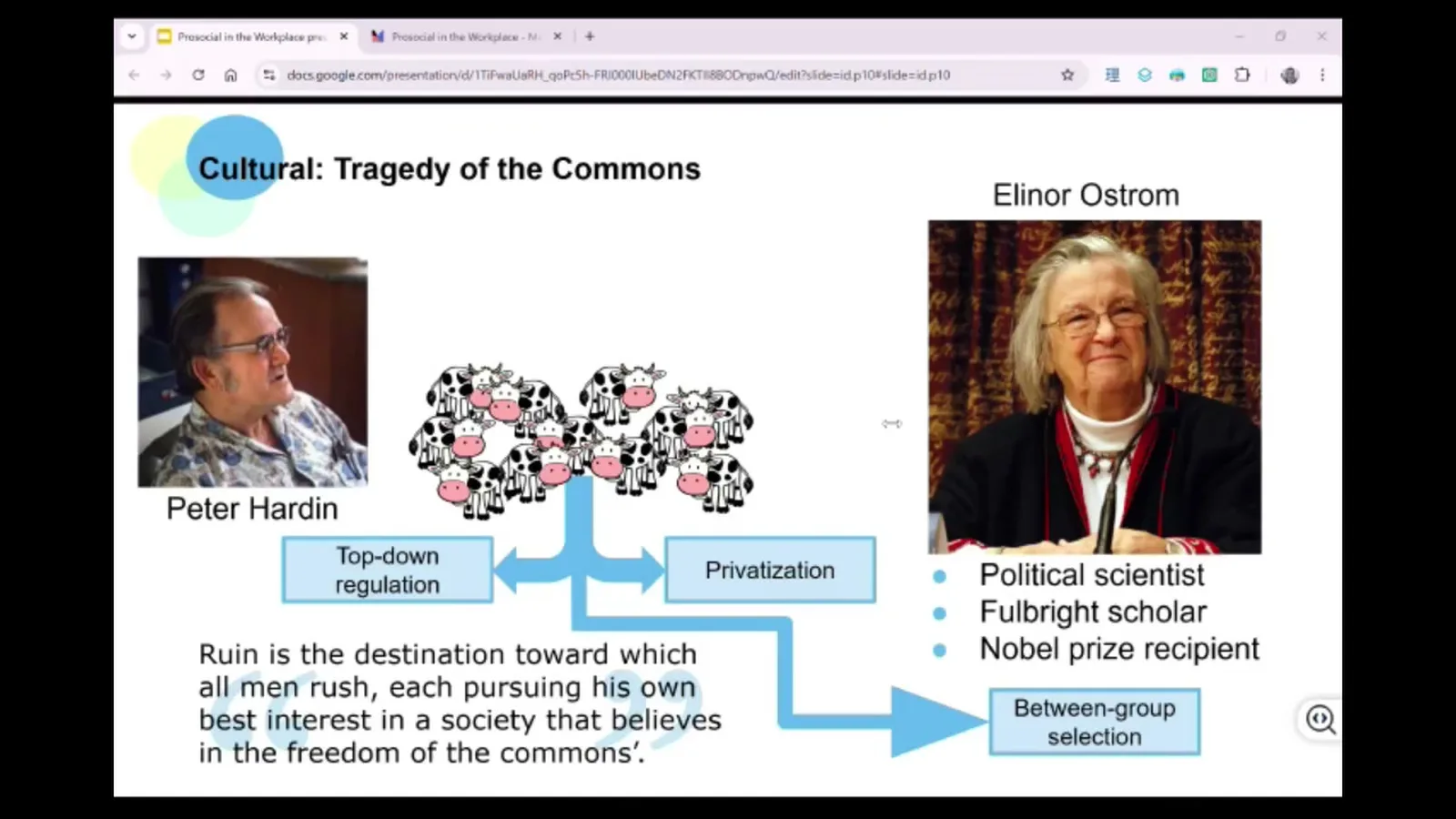
Prosocial in the Workplace
Jason StaufferThe Behaviorist Bookclub
Frames ACT's six core processes (acceptance, defusion, present-moment attention, self-as-context, values, committed action) as the individual-level…
- 1 CEU
ABA Beyond Autism
Nicole ParksThe Behaviorist Bookclub
Framed as a clinical ABA protocol centered on values-driven living and psychological flexibility rather than symptom elimination; Parks calls value…
- 1 CEU
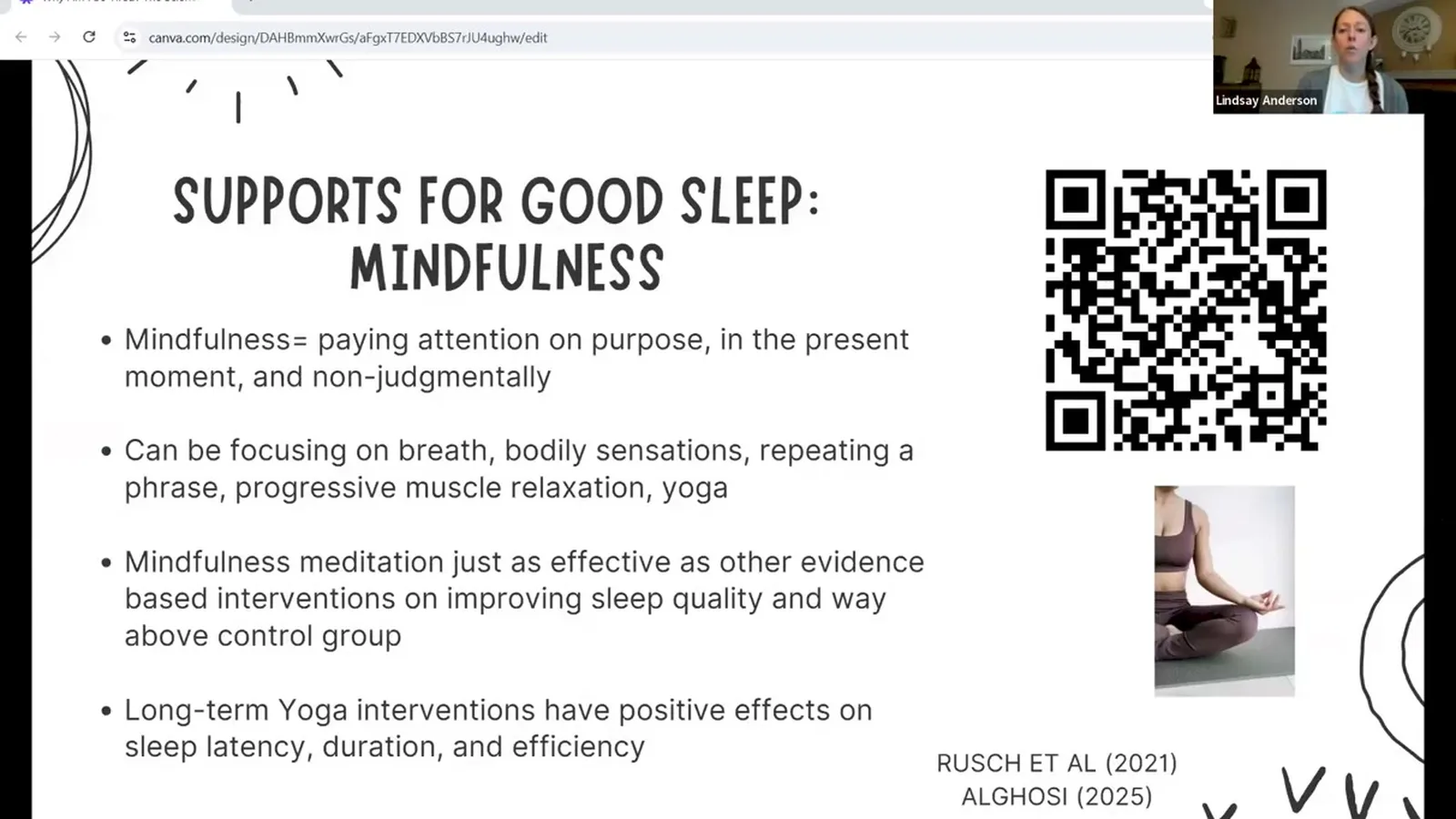
Why Am I So Tired? The Science of Sleep for BCBAs
Lindsay AndersonThe Behaviorist Bookclub
Applies ACT techniques, defusion from unhelpful thoughts and values-based committed action, to BCBAs' own guilt-driven thoughts about resting, and again as an…
- 3.50 Supervision CEUs
Supervision Articles Deep Dive
Matt HarringtonThe Behaviorist Bookclub
At the supervisor level of the compassionate-care framework, Harrington highlights ACT and contextual behavior science as the tool for handling supervisees'…
- 3.50 Ethics CEUs
Analyzing Assent and Taking Data
Matt HarringtonThe Behaviorist Bookclub
Referenced as a peer-group framework that taught him it's okay to pause and reset mid-conversation when a client's response doesn't go where expected, rather…
- 1 CEU
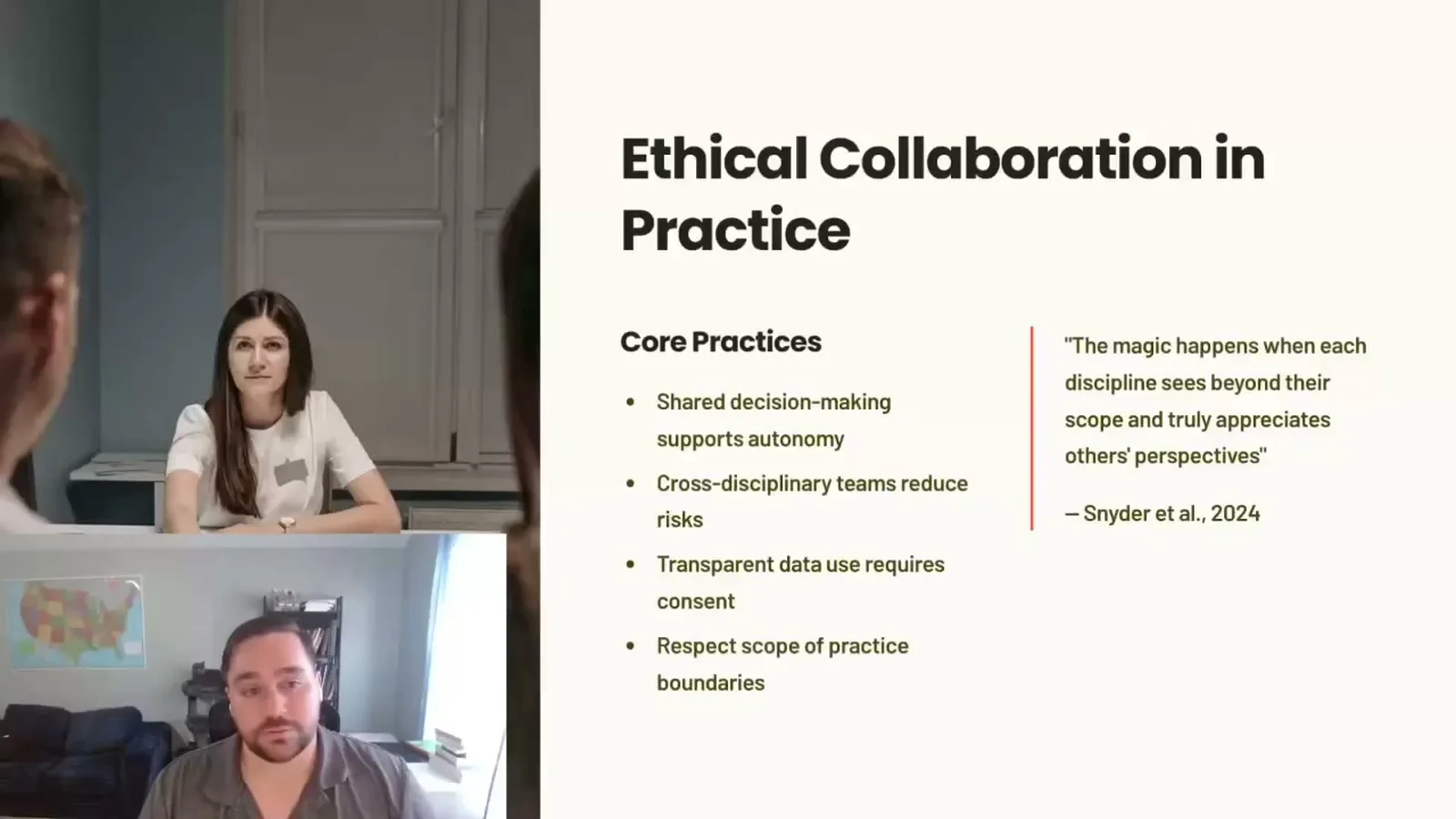
New Year, New Care Collab Goals
Matt HarringtonThe Behaviorist Bookclub
Mentioned as a tool BCBAs can bring to bear with more verbally sophisticated teen clients when collaborating with mental health providers.
- 1 CEU
PDA: What it is and What it isn't
B. Kuereine GrayThe Behaviorist Bookclub
B flags ACT, via a colleague's bootcamp, as a complementary tool she personally uses for emotional regulation and plans to explore further as an intervention…
- 1 Ethics CEU
Scaling Influence- Coaches
Mellanie PageThe Behaviorist Bookclub
Mentioned in response to an audience question as a strong fit for mental-health-style coaching, with a note that an upcoming paid summit session covers…
- 1.50 CEUs
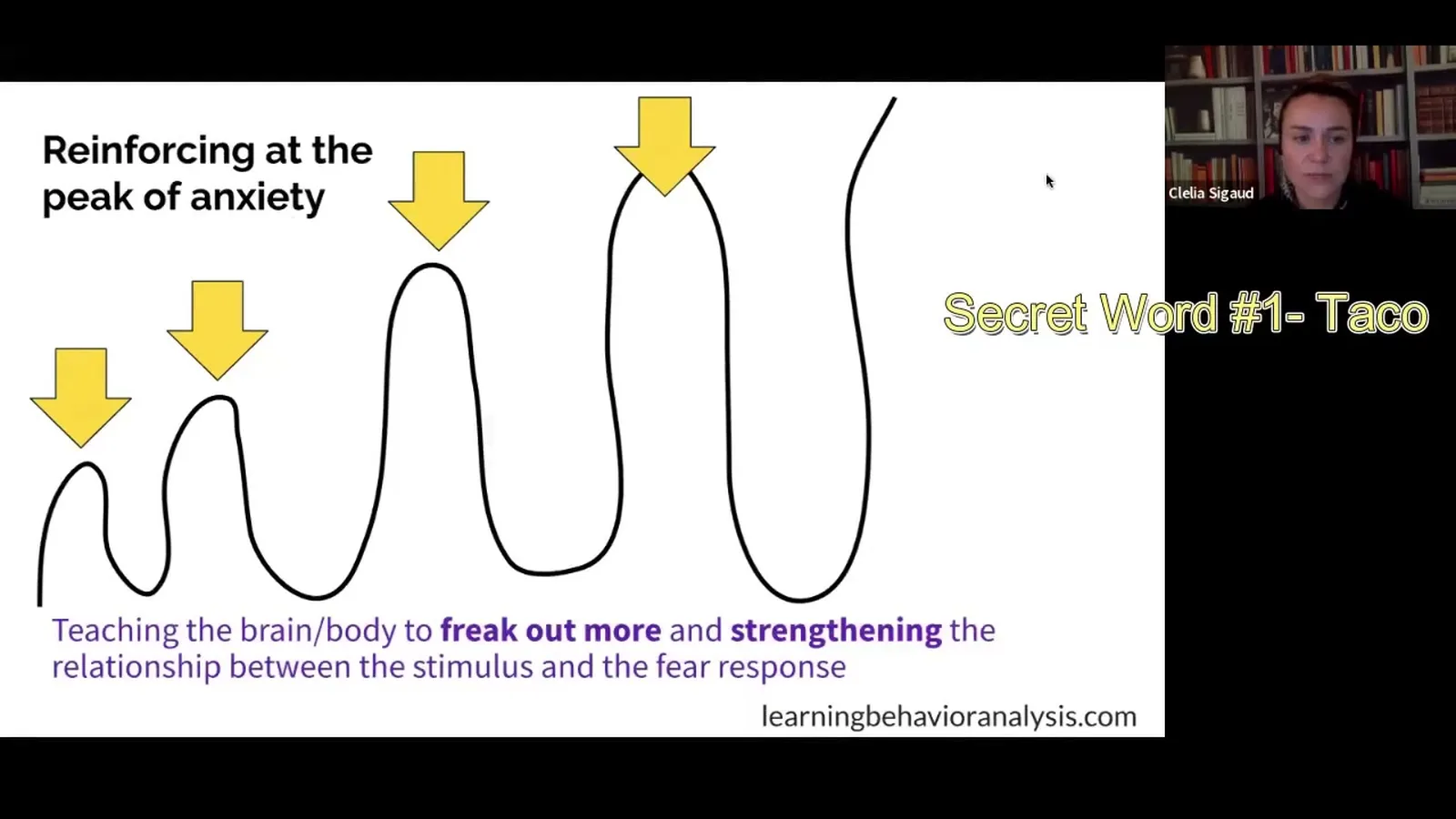
Hey, Chillax Man! Understanding the Logic of Anxiety
Dr. Clelia SigaudThe Behaviorist Bookclub
Referenced via Dr. Tom Sabo's guidance that ACT-based methods have a role in anxious-avoidance work but shouldn't be reached for before exhausting standard…



On this page · 8 sections▾
Acceptance and commitment therapy is a way to help people act on what matters. It does not try to erase hard thoughts or bad feelings. Instead, it teaches people to make room for those feelings. Then they take action toward the things they care about. The short name is ACT, said like the word "act."
Here is a key point for behavior analysts. In clinical work the "T" means therapy. But therapy sits outside most BCBA scope of practice, which is the list of work we are allowed to do. So many behavior analysts use the same tools and call it acceptance and commitment training instead. This matters for BCBAs, RBTs, and parents. The training version keeps the helpful parts while staying inside safe, legal ABA boundaries.
It stays inside your ABA scope#
Dr. Tom Szabo makes a simple case. ACT is not a new set of goals. It is one more tool you can pick up. You use it only when plain contingency work is not enough. Contingency work means changing behavior with rewards and consequences.
ACT is simply a strategy. It's a lure inside of your box of lures. You choose it when you need to use it, not when you don't. From the talk — Dr. Tom Szabo
Szabo also reminds us that ACT points back to our roots. It is about doing, not just talking. The goals are still real ABA goals. They are behaviors you can see, count, and track. There are no special "ACT goals" floating outside of that.
Why the name changes to "training"#
Tom Sabo explains the name swap in clear terms. Therapy is a clinical service. Behavior analysts, safety consultants, and coaches usually do not provide therapy. So they run the same methods under a new label.
Applied behavior analysts, safety consultants, coaches typically do not. We can, in our point of view, make use of ACT in a different iteration that we refer to as acceptance and commitment training. From the talk — Tom Sabo
Sabo also notes that ACT has grown up inside the field. It moved from a fringe idea to a lasting toolkit. He ties it to the BACB fifth edition task list, the official skills BCBAs must know. In his view, the training version fits that list well.
The six core processes#
Different experts zoom in on the how. Jason Stauffer breaks ACT into six moving parts. They are acceptance, defusion, present-moment attention, self-as-context, values, and committed action. Defusion means stepping back from a thought so it holds less power. Together these parts build one big skill.
That skill is psychological flexibility. In plain words, it is the ability to stay open and keep acting on your values. Stauffer sums the whole model up in one calm line. He says the goal is being present, feeling your feelings, and still doing what counts. For a group and workplace angle on these six processes, watch Prosocial in the Workplace.
Values come first#
 Advertisement
Nicole Parks frames ACT as a values-driven approach. The point is not to delete pain or wipe out worry. The point is to live in line with what you care about, even when it hurts.
instead of focusing on symptom reduction or trying to eliminate negative emotions, act teaches clients to accept their internal experiences and move forward in a way that aligns with their personal values. From the talk — Nicole Parks
Parks calls value identification the most important step of all. She also says the approach reaches past the clinic. It can help with teens, with adults, and even in business coaching. Mellanie Page agrees there is real demand for ACT-style coaching work.
A tool you reach for last, not first#
ACT is powerful, but timing matters. Matt points to Dr. Tom Sabo's rule of thumb. Do not jump to acceptance and committed action too early. First run your standard functional assessment, which finds why a behavior happens. Then plan your normal intervention from there.
Only when those steps fall short should ACT enter the picture. This keeps the work honest and simple. You do not add fancy tools when basic ones still work. This fits well with more verbal clients, like language-able teens who can talk through hard feelings.
BCBAs can use it on themselves#
Many speakers use ACT on their own stress first. Lindsay Anderson applies it to guilt about rest. Many BCBAs feel they should always be helping clients. Defusion gives them a way to loosen that thought.
Um, diffusing from these thoughts might look like I notice I'm having the thought that if I'm not, if I'm resting, I'm not helping my clients. From the talk — Lindsay Anderson
B. Kuereine Gray shares a similar story. She took many ACT bootcamps over the years. This is the one set of skills she still uses today, for her own calm and for clients. Matt Harrington adds a supervision angle. He teaches supervisees these skills so they can later pass them on. Modeling acceptance and defusion helps trainees handle their own fears.
What the research says#
The research base for ACT is deep and still growing. One paper argues ACT clearly belongs inside behavior analysis. It brings relational frame theory along with it, which studies how we link ideas through language (Dixon, M. R., & Hayes, S. C. (2022). On the Disruptive Effects of Behavior Analysis on Behavior Analysis: The High Cost of Keeping Out Acceptance and Commitment Therapy and Training. Behavior Analysis in Practice, 18(1), 22-28. https://doi.org/10.1007/s40617-022-00742-4).
Behavior analysts can also use ACT on themselves. One tool is the Mindful Action Plan, or MAP. It turns the six ACT parts into a simple checklist for daily life. The plan was built to help analysts act during stressful, anxious times (Moran, D. J., & Ming, S. (2020). The Mindful Action Plan: Using the MAP to Apply Acceptance and Commitment Therapy to Productivity and Self-Compassion for Behavior Analysts. Behavior Analysis in Practice, 15(1), 330-338. https://doi.org/10.1007/s40617-020-00441-y).
ACT has also been tested next to other treatments. In one randomized trial in Iran, adults with OCD were already on a stable dose of medication. Adding ACT lowered symptom severity more than medication alone at follow-up. It also cut psychological inflexibility, which is the opposite of that flexible, open state. A separate transdiagnostic trial compared ACT with two other therapies for anxiety and depression. All three lowered symptoms after treatment, and activation appeared to drive much of the lasting change.
FAQ#
What is the difference between ACT and ABA? ABA is the broad science of changing behavior. ACT is one strategy that lives inside that science. ACT focuses on private thoughts and feelings using values and acceptance. You still measure real, observable goals, just like any ABA program.
Is acceptance and commitment therapy evidence-based? Yes. ACT has grown over four decades of research. Studies support it for anxiety, depression, OCD, and stress. Behavior analysts also use it on their own well-being. Just remember to reach for it after your standard assessment and plan.
Can RBTs or parents use ACT ideas at home? The core ideas are simple enough to share. A parent can help a child name a feeling instead of fighting it. Then they guide the child toward a valued action anyway. RBTs should always work under a BCBA's plan and supervision.
 Advertisement
Keep learning
Earn free BCBA CEUs on openceu
Browse on-demand recordings from verified ACE providers and earn CEUs across autism, ABA, and behavior analysis. Detailed certificate, delivered the moment you finish.
Keep going with a free learning path
Supervision, Done Right
Four supervision CEUs that build on each other. What reflective supervision is, how to build a supervision system, how to assess supervisee competence instead of counting hours, and how supervision affects provider outcomes. The BACB asks supervisors for three supervision CEUs per cycle. This covers it.