Procedural Fidelity in ABA: Measure It, Don't Assume It
Procedural fidelity is how closely a plan is carried out as written. See why BCBAs track it, how to measure it, and where experts disagree.
Key takeaway
Procedural fidelity is how closely a behavior plan is carried out the way it was written. You may also hear it called procedural integrity or treatment fidelity.

Treatment Integrity Is Not a Checkbox: Building Meaningful Fidelity Systems
Free learning path on this topic
Supervision, Done Right
Four supervision CEUs that build on each other. What reflective supervision is, how to build a supervision system, how to assess supervisee competence instead of counting hours, and how supervision affects provider outcomes. The BACB asks supervisors for three supervision CEUs per cycle. This covers it.
Experts who cover this
9 recordings on openceu cover procedural fidelity.
- Featured talk1 Supervision CEU
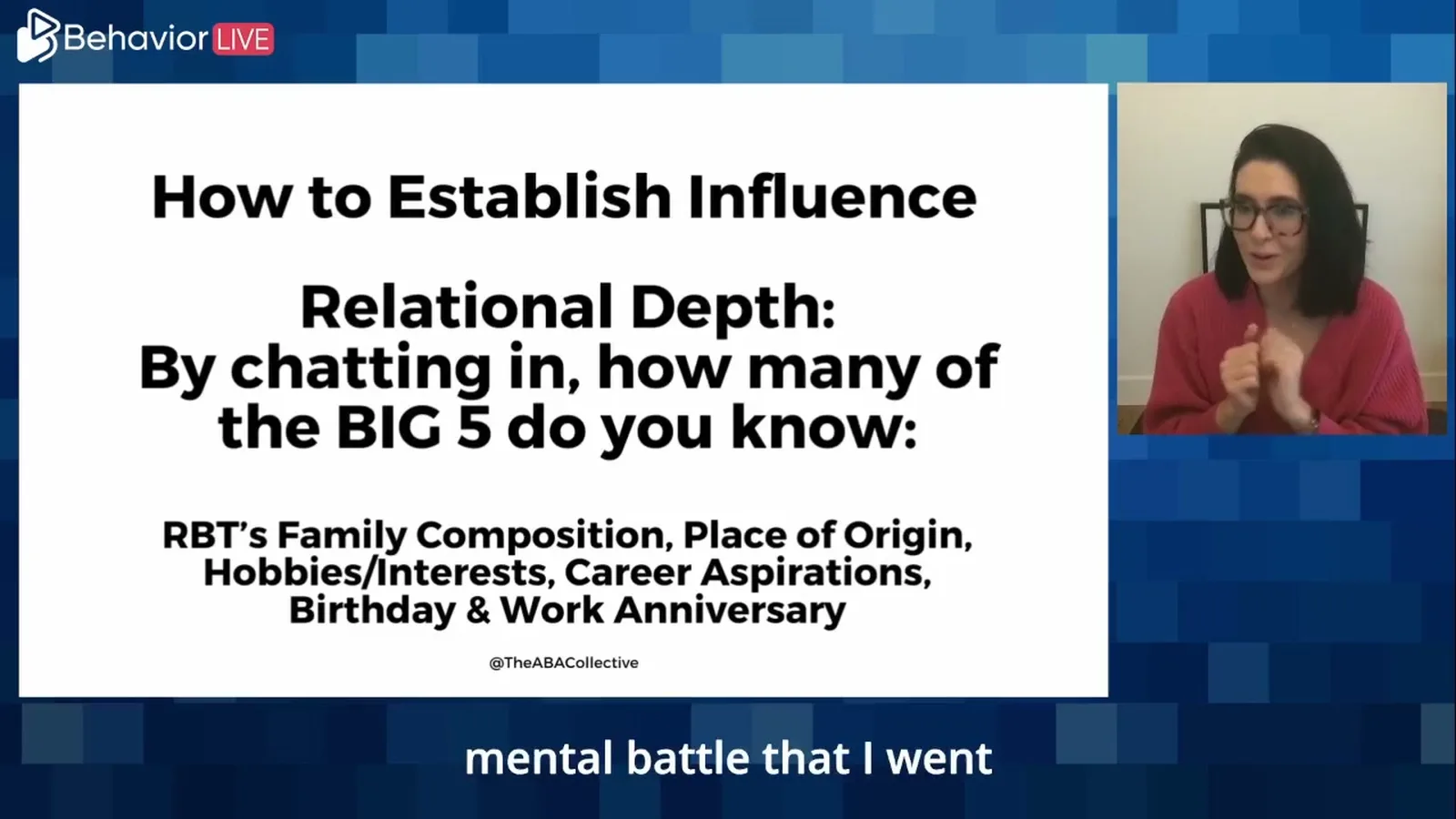
Treatment Integrity Is Not a Checkbox: Building Meaningful Fidelity Systems
Dr. Jessica OsosCopper Consulting Group
The central topic of the talk: procedural fidelity is defined as the extent to which an intervention is implemented as designed, and the talk builds the…
- 3.50 Supervision CEUs
Supervision Articles Deep Dive
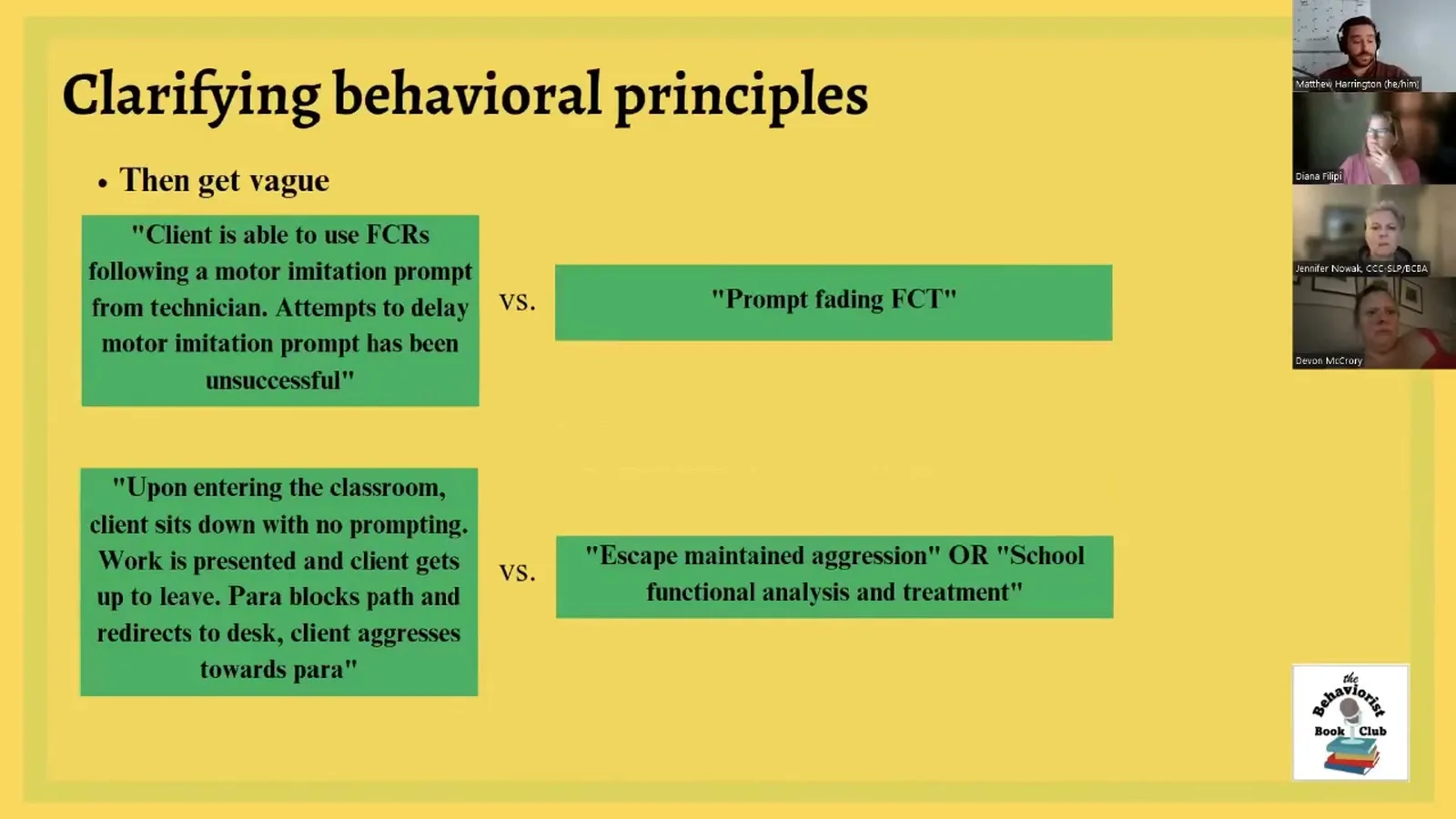
Matt HarringtonThe Behaviorist Bookclub
Across two full episodes, Harrington argues procedural fidelity is universally agreed to matter but rarely tracked with real data: a survey of 140 BCBAs found…
- 1 Supervision CEU
Reflective Supervision and Client Outcomes
B. Kuereine GrayThe Behaviorist Bookclub
Cites Snowden, Liggett & Taylor (2017), finding reflective supervision improved quality and fidelity of intervention and adherence to evidence-based practice…
- 1 Supervision CEU
Teaching RBTs to Think Clinically: Training In-the-Moment Decision Making
Dr. Jessica Osos & Tauren KeelsCopper Consulting Group
Discusses how overly rigid checklist-based fidelity training breaks down because treatment plans can't anticipate every scenario; it limits generalization, can…
- 1 CEU
New Year, New Care Collab Goals
Matt HarringtonThe Behaviorist Bookclub
Recommended as the key data BCBAs can bring to OT partnerships: tracking how consistently caregivers implement OT homework (not just whether they did it) to…
- 1 Supervision CEU
Toward an Evidence-based Supervision Model: Training Students in Independent Fieldwork
Dr. Allison Bowhers-PeutinWillow Mentorship & Consulting, LLC
Treatment fidelity of the supervisor trainings themselves was checked in a sample of sessions in both experiments, with high agreement (96% and 100%…
- 1 Supervision CEU
Building a Supervision System That Actually Works
Lauren DonovanThe Behaviorist Bookclub
Discussed briefly as a built-in component of the therapist observation form and something a supervisor checks for during direct observation.
- 1 Supervision CEU
Dunder Mifflin’s Guide to BCBA Supervision: Lessons from The Office
Mellanie PageThe Behaviorist Bookclub
Named as a core, measurable thing supervisors should track and give regular feedback on, tied to monthly integrity checks comparing how closely an RBT follows…
- 1 CEU
Research to practice - extending past the pages
Matt HarringtonThe Behaviorist Bookclub
Named as a second parsimonious check before assuming a deeper clinical issue is present, and cited as a reason data or graphs may look poor even with a sound…



On this page · 15 sections▾
Procedural fidelity is how closely a behavior plan is carried out the way it was written. You may also hear it called procedural integrity or treatment fidelity.
It matters because a plan only works if people actually follow it. If a client stops making progress, the plan may be fine. The problem may be that no one ran it as designed. Fidelity data tell you which one is true. Without that data, a BCBA (Board Certified Behavior Analyst) is guessing. The experts below explain why fidelity is so often skipped, what it costs clients, and how to build it into daily work.
What procedural fidelity means#
Dr. Jessica Osos gives the plainest definition. She built a full talk around the idea that fidelity is an active clinical system, not paperwork.
at its simplest, it's the extent to which an intervention is implemented as it was designed.
From the talk — Dr. Jessica Osos
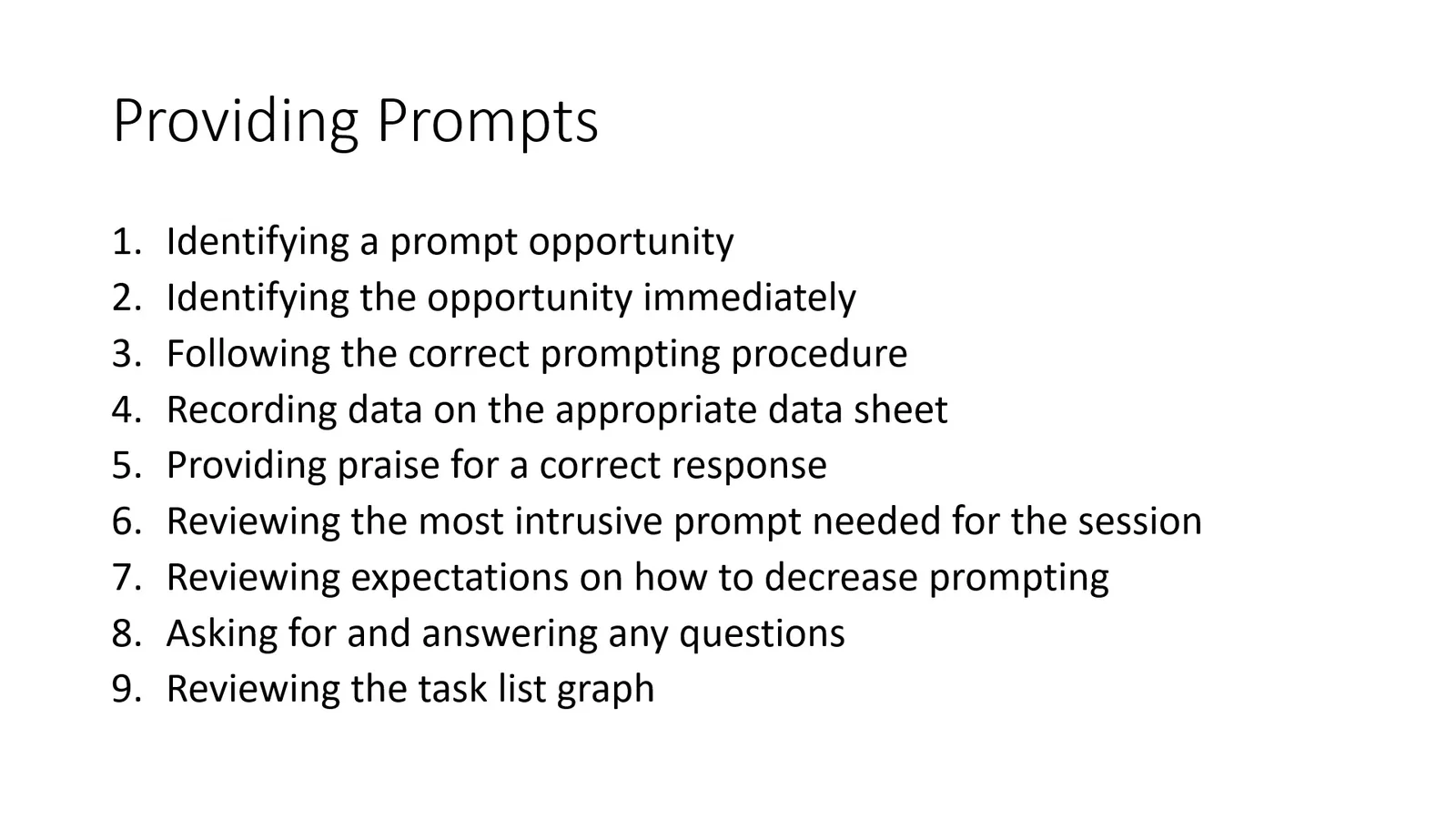
Osos traces the idea back to Gresham in 1989. She notes that Vollmer and colleagues carried it forward. Her example is simple. Say your plan tells staff to give a prompt on every trial. A prompt is a hint or cue that helps the learner respond. Fidelity data show how often that prompt really happened on every trial.
So fidelity is not about whether staff are "good." It is about one question. Did the steps on paper match the steps in the room? That question can be asked about any procedure. It fits discrete trial teaching (a highly structured, trial-by-trial format), naturalistic teaching, caregiver homework, and even staff training. Osos says most people first hear the term in coursework. She adds that it is often missed once clinicians move into real practice.
Three reasons fidelity matters#
Osos lays out three reasons fidelity deserves real attention. The first is internal validity. That term means being able to say your treatment caused the change you saw. When a client's behavior changes, fidelity data let you say the intervention caused it. Without those data, something else could explain the change.
The second reason is data-based decisions. Every choice to keep, change, or drop a program rests on the graph. If the plan was not run as written, the graph is describing something else. The third reason is ethics. Behavior analysts have a duty to deliver the treatment they promised.
Matt Harrington makes the same point by comparing research to clinical work. He notes that some research journals now reject studies that lack integrity data.
if you don't have procedural integrity data saying that this data corresponded to what you wrote, then how do we know that what you wrote was the actual thing that was done?
From the talk — Matt Harrington
His answer is blunt. We don't know. There could be many other causes, which researchers call confounds. Yet he says clinicians are rarely asked for integrity data at all. He has never seen insurance require it.
The gap between belief and data#
Harrington spent two full episodes of his supervision article series on this topic. He reviewed a survey of practicing BCBAs. His main finding is that everyone agrees fidelity matters. The survey proves that. What surprised him was how rarely it gets measured.
90% provided feedback consistently. Almost all of it was in-the-moment vocal feedback. But only 20% used graphs to track their feedback.
From the talk — Matt Harrington
In the same survey, 94% of BCBAs said they observe staff weekly or monthly. So supervisors are watching. They see an error, point it out, correct it, and move on. Harrington admits this is how he did it for most of his career. He still does it. He says it works well because it needs no prep. You see a problem and you fix it.
The catch is that nothing gets recorded. There is no trend line. No one can tell if the same error comes back next week. Harrington guesses that the average BCBA's plan is followed correctly about 60% of the time at most. He frames that as a bet, not a measured figure. He also stresses a basic link.
Supervision delivered feedback is critical for maintaining treatment integrity.
From the talk — Matt Harrington
Feedback keeps fidelity up. But feedback that is never graphed cannot show whether it is working.
Check fidelity before you change the plan#
When a program stalls, many clinicians rewrite it. Matthew Harrington says to stop first and check the obvious. In his talk on solving clinical problems with research, he names three common culprits. First, the plan may not be function-based. That means it may target the wrong reason for the behavior. Second, it may not carry over between home, school, and clinic. Third, fidelity may be missing.
The fidelity of the intervention is almost always the primary reason why interventions aren't consistent with the way we currently run ABA with our three tier model.
From the talk — Matthew Harrington
The three-tier model means a BCBA writes the plan, and technicians and caregivers run most of it. That spreads the plan across many hands. Each hand can drift.
In another talk on turning research into practice, Harrington ties this to parsimony. Parsimony means ruling out simple explanations before complex ones. He points out that a supervisor may see only 20% to 30% of sessions. What happens in the other 70% is hard to know.
If you have no data integrity, your graph will never look beautiful. If there's no fidelity.
From the talk — Matt Harrington
His advice is to check data accuracy and fidelity early. Doing so saves weeks of problem solving later. No new intervention will fix a plan that is not being run.
When poor fidelity causes harm#
Low fidelity does not just slow progress. Dr. Shane Spiker argues it can create crises. In his talk on crisis management, he walks through where clinicians go wrong. In assessment, they miss variables or assume ones that are not true. In treatment, the most common problem is poor fidelity.
He says staff, caregivers, and other stakeholders who do not follow the plan end up causing more problems. They may trigger the very behavior the plan was meant to reduce.
people with poor treatment fidelity will re-traumatize. They will cause problems or your treatment itself could re-traumatize.
From the talk — Dr. Shane Spiker
Spiker's framing raises the stakes. Other speakers treat fidelity mainly as a data problem. He treats it as a safety problem. A plan run halfway may evoke problem behavior that did not need to happen. For clients with trauma histories, that can do real damage. This is one reason fidelity belongs in treatment planning, not only in quality audits. If a plan is too hard to run well, it may be the wrong plan for that team.
Fidelity at home: caregivers and therapy homework#
Fidelity is not only about technicians. Matt Harrington applies it to care collaboration with other providers. His example is occupational therapy, or OT. Occupational therapists often assign homework for families. Harrington says ABA can add a lot by tracking whether that homework gets done, and how well.
If we're doing something 50% of the time and there's no impact on behavior, that makes sense. If we're doing something 100% of the time and there's no impact, then we might have an intervention mismatch.
From the talk — Matt Harrington
This is the core value of fidelity data. They split two very different problems. One is a dosage problem, where the plan is not happening often enough. The other is a mismatch, where the plan is happening but does not fit the client. Each problem needs a different fix.
I really like fidelity tracking for OTs. If there was one thing that I would recommend, it is helping the caregiver self-track fidelity to OT interventions.
From the talk — Matt Harrington
He says this lets the OT make decisions based on data, not on a story they were told. Research is also testing new ways to help caregivers. One study found that an artificial intelligence platform raised fidelity for new technicians. It also helped most caregivers who used it (Yagafarova et al., 2025).
Make the measuring stick visible#
 Advertisement
Mellanie Page approaches fidelity as a supervision skill. In her talk on BCBA supervision, she asked supervisors what they measure and give feedback on. The audience named fidelity, SOAP notes (a standard format for writing up session notes), and active engagement. They also named IOA, or interobserver agreement, where two people score the same session to check data accuracy. She agreed with all of them.
Monthly integrity checks on learner plans and give them feedback on how closely they're following the plan.
From the talk — Mellanie Page
Page calls this key to technicians doing their jobs well. Her main addition is about transparency. She suggests handing staff the same checklist you use to score them. She describes it as your rubric and your measuring stick.
When staff can see the checklist, they know exactly what is expected. They can study it before anyone observes them. That makes feedback less of a surprise. It also brings attention to gaps between where they are and where they need to be.
Page stresses that anything you track should be as discrete and objective as possible. Vague goals are hard to shape. Clear, countable steps are easy to shape. A fidelity checklist turns "run the program well" into steps a technician can see and practice.
Build fidelity into every observation#
Lauren Donovan focuses on making supervision efficient. Supervisors are busy, and fidelity checks can feel like one more task. Her fix is to fold them into tools you already use.
It has procedural integrity. Built-in IOA data.
From the talk — Lauren Donovan
She is describing her therapist observation form. It holds procedural integrity items, IOA, and follow-ups from behavior skills training in one place. Behavior skills training, or BST, is a teaching method that uses instruction, modeling, practice, and feedback.
Donovan also suggests a routine. Spend two minutes reviewing graphs before you walk in. Pick the programs where the technician seems to struggle. Observe those programs and check integrity. Then make program changes or add training during that same visit.
You check for integrity.
From the talk — Lauren Donovan
When fidelity is low, Donovan urges supervisors to look for the reason. She notes that people do not want to do badly at their jobs. The question is whether it is a skill deficit or a performance deficit. She points to a tool called the Performance Diagnostic Checklist. It is a structured set of questions for figuring out why performance is falling short.
How to measure fidelity well#
Osos gives the most detailed method. She says most clinicians are trained in fidelity and believe in it. Yet they collect it on too few sessions for the data to be reliable.
Direct observation with component level checklists is going to be the recommended approach.
From the talk — Dr. Jessica Osos
A component-level checklist breaks a procedure into its separate steps. Each step gets scored on its own. That shows exactly which step is breaking down. Osos pairs this with a repeatable six-step process. She says it makes individualized measurement doable for everyday clinics. She also points clinicians to ready-made templates published by Morris and colleagues in 2024.
Osos names the biggest barriers as time, systems, and expectations. Her key point is that these are organizational problems. That means leaders have the power to change them. She calls it a solvable problem.
Her clinic gives new RBTs (Registered Behavior Technicians) the fidelity checklist from the first day of training. That way the first fidelity check is not a surprise. Staff know what is expected long before they are measured.
Procedural fidelity is not. A compliance checkbox. It's how we protect our clients and our own conclusions and our own services.
From the talk — Dr. Jessica Osos
Fidelity of the training itself#
Fidelity applies to supervisors, too. Dr. Allison Bowhers-Peutin studied a model for training BCBA supervisors. Supervisors learned three skills: goal setting, giving feedback, and giving prompts. The team used BST workshops. If a supervisor scored below 67% of steps correct, they got a one-on-one booster session.
The research team also measured whether the trainings were delivered as designed.
Treatment fidelity was collected in 33% of supervisor training. With an average agreement of 96%.
From the talk — Dr. Allison Bowhers-Peutin
In a second experiment, the team raised the bar.
And treatment fidelity was conducted in 50% of the trainings with 100% agreement.
From the talk — Dr. Allison Bowhers-Peutin
These numbers matter for a reason clinicians often miss. If a staff training fails, you need to know why. Maybe the method does not work. Or maybe the trainer skipped steps. Fidelity data on the training rule out the second answer. Bowhers-Peutin's work shows the same logic applies at every level. It covers the client's program, the technician's training, and the supervisor's training.
Reflective supervision and fidelity#
B. Kuereine Gray looks at fidelity through the lens of reflective supervision. Reflective supervision is a style where supervisor and supervisee think through cases together. It goes beyond task checklists and admin updates. Gray opened her talk by naming what she wanted to focus on: how reflective supervision impacts treatment fidelity, service quality, and implementation.
She draws from infant and early childhood mental health, where this style is common. In her talk, she mentions a 2017 paper by Snowden, Liggett, and Taylor. She says it compared reflective supervision with administrative supervision or none. Reflective supervision came out linked to better quality, fidelity, and closer adherence to evidence-based practice, in her account. Treat that as Gray's summary of the paper, not an independently confirmed finding.
Gray's angle adds something the checklist speakers do not. She suggests that how supervisors talk with staff shapes fidelity. It is not only about what gets scored. A technician who understands the reasons behind a plan may follow it more faithfully.
When fidelity checklists break down#
Dr. Jessica Osos and Tauren Keels co-presented a talk on teaching RBTs to think clinically. They raise a real limit of checklist-based training. Plans are written for a perfect world. They assume stable conditions. But no plan can predict every learner response.
when we train in a way that is very focused on. Only following the programs that are written.
From the talk — Dr. Jessica Osos and Tauren Keels
They say rigid training limits how well technician skills generalize. Technicians may fail to reinforce good behavior that is not listed in the plan. They may freeze when something unexpected happens.
Their case example is an RBT named Jordan. He is running naturalistic teaching (NET), which uses the learner's natural interests to create learning chances. His checklist says to follow the learner's lead and reinforce appropriate responses.
a very typical kind of fidelity checklist procedural integrity checklist item for naturalistic teaching
From the talk — Dr. Jessica Osos and Tauren Keels
Then the learner disengages completely. The checklist cannot help Jordan tell whether it is a motivation issue, a skill deficit, or something in the setting. The speakers note it is easy for a BCBA to judge from the back of the room. It is harder in the moment.
Where experts disagree: how strict should fidelity be?#
The speakers agree that fidelity matters. The tension is about how rigid it should be, and what a checklist can really capture.
On one side, Osos recommends direct observation with component-level checklists. Page wants staff to see and study the rubric. Donovan builds integrity items into every observation form. Spiker warns that drifting from the plan can re-traumatize clients. For these speakers, closer adherence to the written steps is the goal.
On the other side, the RBT talk by Osos and Keels pushes back on training that only teaches "follow the plan." They argue a checklist can make a technician freeze when the session goes off script. They want technicians who can make sound choices in the moment.
It is worth noting that Osos appears on both sides. That suggests the two views are not truly opposed. The checklist tells you whether core steps happened. Clinical judgment covers the gaps no plan can foresee. The open question is where one ends and the other begins.
Research adds its own nuance. Precision Teaching is a method that uses frequent, timed practice and charted data to guide teaching decisions. One study found that learners still performed acceptably when teachers skipped some of those decisions in the short term (Diffley et al., 2025). The authors call for more research. So not every step may matter equally for every procedure. Knowing which steps are critical is still unsettled.
Harrington adds a related split. He says in-the-moment vocal feedback is the most effective way to change staff behavior fast. Yet he also argues that without graphs, no one can track whether fidelity holds. Both points come from the same speaker, and both are true.
What the research says#
The research base on procedural fidelity is growing fast. Several recent studies look at what fidelity errors do and how to prevent them.
Fidelity errors weaken treatment. In a lab study, participants experienced differential reinforcement of alternative behavior (DRA) at 100% fidelity and at 50% fidelity. DRA reinforces a better behavior in place of a problem one. More problem responding occurred at 50% fidelity, across both experimental designs tested (Abuin, Catalano, & Jones, 2026).
Some error types hurt more than others. A study on skills that were already mastered found that consequence-based errors lowered correct responding for about half of participants. Reinforcing errors was the more harmful type (Jones, Brand, Bensemann, Heinicke, Penrod, & Burlison, 2026).
Fidelity may drop when no one is watching. Prior research found fidelity can be much lower when a supervisor is not present. Video self-monitoring, where staff watch and score their own sessions, raised fidelity and kept it high. That held during both covert and open observations (Paden & Carroll, 2024).
Staff can be trained to spot errors. RBTs who received BST learned to identify both correct and incorrect steps of discrete trial training. Fluency-based practice may have helped them keep that skill over time (Katechis, Ruiz, Schnell-Peskin, & Livanis, 2026).
FAQ#
What is the difference between procedural fidelity and treatment integrity?
They mean the same thing in everyday practice. Both describe how closely a plan is carried out as designed. Procedural integrity and treatment fidelity are also common names. Dr. Jessica Osos defines it as the extent to which an intervention is implemented as it was designed. Speakers in this field use the terms interchangeably.
How often should a BCBA collect procedural fidelity data?
There is no single rule. Osos warns that most clinicians collect it on too few sessions to be reliable. Mellanie Page suggests monthly integrity checks on learner plans as a baseline. Research teams often score a set share of sessions. Dr. Allison Bowhers-Peutin's studies checked 33% and 50% of trainings. The key is to collect it often enough to see a trend, and to graph it.
What should I do if a client isn't progressing?
Check fidelity before rewriting the plan. Matthew Harrington suggests asking three questions first: is the plan function-based, does it carry across settings, and is it being run as written? If fidelity is low, fix that first. If fidelity is high and there is still no change, you may have an intervention mismatch that needs a new approach.
To go deeper, watch Supervision Articles Deep Dive and Teaching RBTs to Think Clinically: Training In-the-Moment Decision Making.
 Advertisement
Turn this topic into a CEU
You just studied this. Now get credit for it.
Watch Treatment Integrity Is Not a Checkbox: Building Meaningful Fidelity Systems with Dr. Jessica Osos and earn 1 free BCBA CEU. Detailed certificate, delivered the moment you finish.
Keep going with a free learning path
Supervision, Done Right
Four supervision CEUs that build on each other. What reflective supervision is, how to build a supervision system, how to assess supervisee competence instead of counting hours, and how supervision affects provider outcomes. The BACB asks supervisors for three supervision CEUs per cycle. This covers it.