Who Actually Abuses People With IDD: What the Data Shows BCBAs
Caregivers, peers, and family are the most common abusers of clients with IDD, not strangers. Here is what the perpetrator data means for your sessions, from a BCBA-led CEU.
Key takeaway
In a 2021 study by Hartrow, Elias, and Davis, 44 percent of people who sexually abused adults with intellectual and developmental disabilities (IDD) had a paid care provider relationship with the person they hurt. One in three were family members or acquaintances.
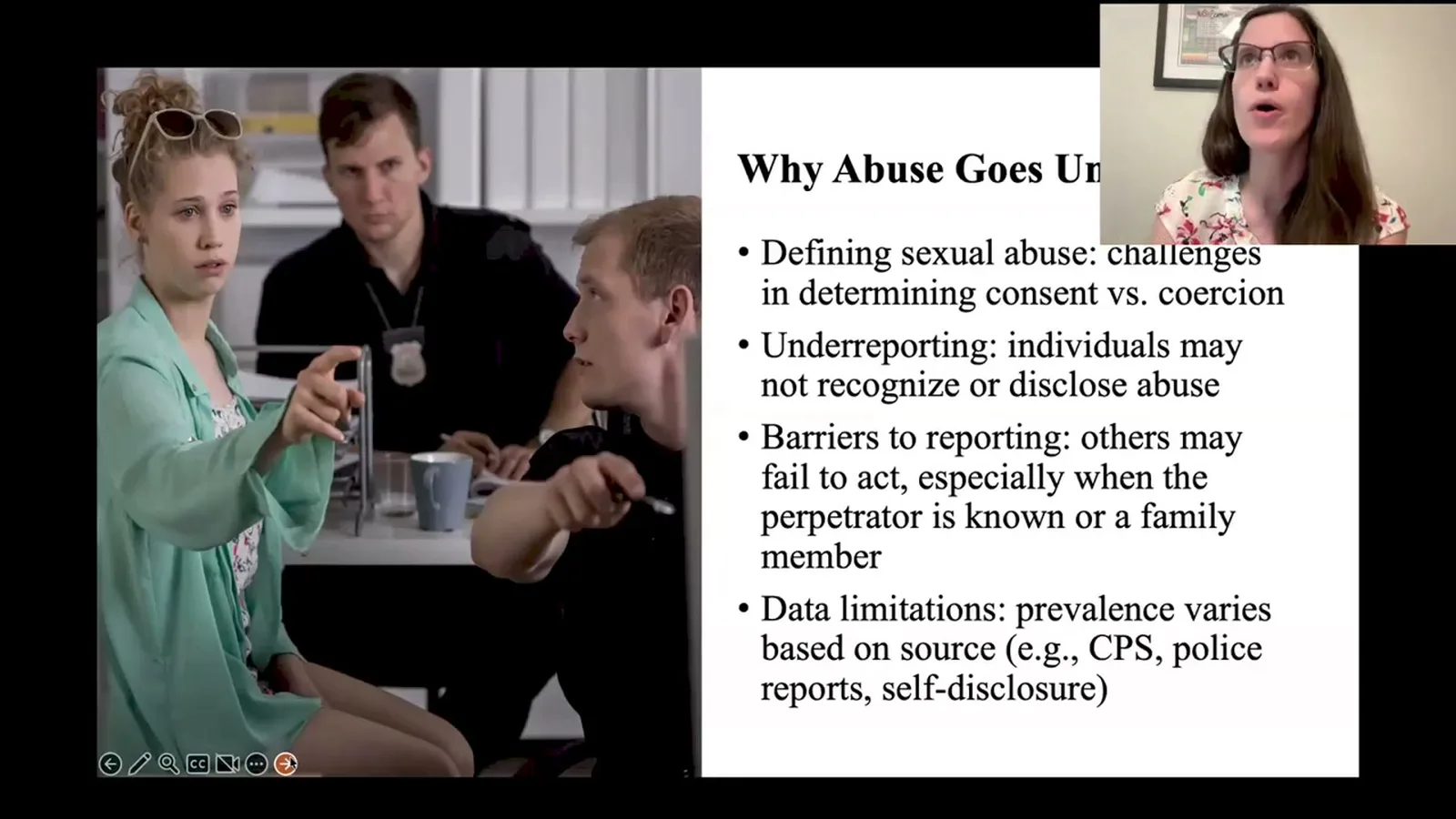
An Examination of Abuse Prevention
Free learning path on this topic
Your 4 Ethics CEUs, Done
Four ethics CEUs in three courses, all free. Start with Matt Harrington's assent and data course, then ethical guardrails in behavior reduction, then cultural considerations in clinical practice. Every course carries ethics credit, so this path covers the BACB requirement with nothing to buy.
On this page · 8 sections▾
In a 2021 study by Hartrow, Elias, and Davis, 44 percent of people who sexually abused adults with intellectual and developmental disabilities (IDD) had a paid care provider relationship with the person they hurt. One in three were family members or acquaintances. Strangers were on the list. They were not at the top.
That data should change how a Board Certified Behavior Analyst (BCBA) thinks about safety goals. If you have spent a career teaching stranger danger, role playing the man in the van, drilling "say no, go, tell" with a hypothetical attacker the client has never met, you have been preparing your client for the rarest version of the risk. The common version is sitting across from them at breakfast.
This page walks through the six perpetrator categories Tricia Lund named in her CEU with Carolyn Broner, and what each category means for the safety plans BCBAs write. The full talk goes deeper into the data and into solutions.
The six categories Lund pulled from the research are: peers with disabilities, relatives, non-relatives the victim knows, direct support staff, partners, professionals who work with the client, and strangers. We will take them in the order that matters most for the average BCBA caseload, not in the order they appear on the slide.
Strangers are on the list, just not at the top#
Strangers are real. They are also the smallest slice of the data. The picture most safety curricula draw is a person the client has never met, in a public place, using a lure. That picture is not wrong. It is just rare compared to everything else on the list.
When stranger danger is the entire safety program, two things happen. First, the client gets very good at responding to a scenario that is not very likely. Second, the client may be less likely to flag risky behavior from someone they know, because the trained signal for "danger" is "I have never seen this person before." A caregiver, peer, or relative does not trip that signal. They are familiar. They have been around for months or years. They feel safe.
So strangers stay on your safety plan. They just stop being the only thing on it.
Peers with disabilities: the category most BCBAs skip#
This is the category most people will not bring up on their own. Lund names it directly.
We sometimes have a tendency to assume that individuals with disabilities are always the victim and never the perpetrator. And the reality is it's going to be a little bit more complex than that. From the talk — Lund and Broner
A peer with a disability can be a roommate in a group home, a classmate in a life skills classroom, a regular at the same day hab. They share space. They share routines. Staff often assume the relationship is safe because both people have IDD. That assumption is the problem.
Lund tells the story of a client who was sexually abused by a peer at school and did not report it. He did not report it because he thought that was what friends did. He did not have a working definition of friendship that excluded what was happening to him. He had a working definition of sexual abuse that required a scary stranger, and his peer was not scary, and was not a stranger.
For your sessions, this means two things. Your safety teaching has to include peers as a possible category of harm, in plain language, without framing every peer interaction as dangerous. And the client needs a clear, repeatable description of what friendship and intimacy actually look like, so they can tell when something does not match.
Direct support staff and caregivers#
This is the largest single category in the Hartrow, Elias, and Davis numbers. The 44 percent stat is care provider relationships. Lund is honest about it.
Oftentimes, and it's sad but it's a reality, the people who are hired to support and care for and protect people with disabilities may be the ones who are perpetrating this abuse. From the talk — Lund and Broner
Direct support staff are the people who help with personal care, who drive to appointments, who sit with the client during the longest hours of the day. They are also, in many adult settings, the people the client has the least ability to refuse. If the staff person is the one who showers them, or transfers them, or controls the schedule, then "say no and leave the room" is not a real option.
This is why behavior skills training built around "say no, get away, tell someone" can fall apart in the highest-risk relationship. The client cannot get away. The person they would normally tell may be the abuser, or may be on shift with the abuser. The client needs a plan that does not depend on physical escape.
For BCBAs, that means safety goals tied to staff risk need to include: reporting paths that bypass the immediate staff person, a trusted outside person the client can name and contact, and explicit teaching that staff are not exempt from the rules about touch and privacy that the client already knows.
Family, acquaintances, and the 1-in-3 stat#
One in three perpetrators were family members or acquaintances. Family means parents, siblings, extended family, step-family. Acquaintances means people in the client's orbit who are not paid: a neighbor, a parent's friend, a person from church, a regular at the same store.
This category is the hardest to plan around because it cuts against the instinct that family is safe. Most of the time, family is. Some of the time, it is not. The data does not support telling clients to be afraid of family. It does support teaching clients that the same rules about private parts, privacy, and consent apply to everyone in their life, including the people they love.
The reporting layer matters here too. If the abuser is a parent, then "tell mom or dad" is not a path. The client needs more than one trusted adult on the list, and at least one of them needs to be outside the home. School staff, a behavior analyst, an aunt who lives in another state, a case manager. The list should not be one name long.
Intimate partner violence in clients who date#
Adults with IDD date. They have boyfriends, girlfriends, and spouses. Intimate partner violence is common in those relationships, and it is easy to miss because the assumption underneath it is that anything that happens in a relationship is consensual.
Lund flags both edges of this in the talk. Two clients in a real relationship can have their consensual behavior labeled as abuse by staff who are uncomfortable with the relationship existing at all. And two clients in a real relationship can have actual abuse missed by staff who assume the relationship explains the behavior away. Either error hurts the client.
For BCBAs, the safety work here is not about preventing the relationship. It is about teaching the client what a healthy relationship looks and feels like, so the client has a baseline to compare against. That includes: I am allowed to say no, my partner is allowed to say no, I can spend time with other people, I can leave. None of that is built into a stranger danger curriculum.
What this changes about your safety goals#
The perpetrator data does not invalidate the safety teaching most BCBAs already do. It widens it.
A safety plan that matches the actual risk landscape covers more than one perpetrator category. It teaches the client to recognize unsafe behavior from people they know and trust, not just from people they do not know. It builds a reporting plan with more than one trusted adult, and at least one path that does not run through the home or the program. It uses role play with people the client already has in their life: staff, peers, partners, family. And it accepts that some clients cannot physically leave the situation, which means the plan needs steps that work from inside the room.
There's no known profile that predicts abuse. Predators can have any title, any role. From the talk — Lund and Broner
That is the line to hold onto. A safety plan that depends on the client being able to spot a "type" of person is a safety plan that will miss the most common version of the risk.
Frequently asked questions#
What percentage of abusers of people with IDD are caregivers?
In the Hartrow, Elias, and Davis 2021 study Lund cites, 44 percent of perpetrators had an actual care provider relationship with their victim. That is the largest single category in the data and includes both paid direct support staff and other care roles.
Can a peer with a disability be an abuser?
Yes. Lund includes peers with disabilities as one of the six perpetrator categories the research identifies. The talk makes the point that BCBAs often assume people with IDD are only ever victims, which leaves the peer-perpetrator scenario out of safety planning even though it shows up in real caseloads.
Is partner violence common in adults with IDD?
Lund describes a high rate of partner abuse in adults with disabilities who are in dating or married relationships. It is easy to miss because staff assume consent inside a relationship, and easy to mislabel when two clients in a healthy consensual relationship get flagged as abusive by uncomfortable staff. Both errors come from not teaching the client what a healthy relationship actually looks like.
Watch the full talk#
Tricia Lund and Carolyn Broner spend the rest of this CEU on what to do about the data: where behavior skills training holds up, where it does not, and how sex education functions as abuse prevention for adults with IDD. If this perpetrator breakdown changed how you think about a current client, the rest of the session will probably change a goal or two on the plan.
Watch the full CEU on openceu.com
Turn this topic into a CEU
You just studied this. Now get credit for it.
Watch An Examination of Abuse Prevention with Tricia Lund & Carolyn Broner and earn 1 free BCBA CEU. Detailed certificate, delivered the moment you finish.
Keep going with a free learning path
Your 4 Ethics CEUs, Done
Four ethics CEUs in three courses, all free. Start with Matt Harrington's assent and data course, then ethical guardrails in behavior reduction, then cultural considerations in clinical practice. Every course carries ethics credit, so this path covers the BACB requirement with nothing to buy.