Single-Session ISCA: A Faster Functional Analysis
What the single-session ISCA is, how it packs a full analysis into one session, and why it fits telehealth and busy clinical work.
Key takeaway
The single-session ISCA is a fast way to find out why a behavior happens. ISCA stands for interview-informed synthesized contingency analysis. It is a type of functional analysis, which is a test of what drives a behavior.
12 days of PFA & SBT
Experts who cover this
The recording behind this guide covers single-session isca.
- Featured talk3 CEUs
12 days of PFA & SBT
Matt HarringtonThe Behaviorist Bookclub
Jessel 2019's method of extracting a full ISCA's worth of information from one test condition by alternating reinforcer-present and reinforcer-absent intervals…
On this page · 8 sections▾
The single-session ISCA is a fast way to find out why a behavior happens. ISCA stands for interview-informed synthesized contingency analysis. It is a type of functional analysis, which is a test of what drives a behavior.
The usual version takes several sessions. The single-session ISCA squeezes that work into one. It does this by turning a reinforcer on and off within the same session. This page explains how it works and why clinicians find it so useful.
What makes it a single session#
A normal functional analysis compares different test conditions across many sessions. The single-session ISCA changes that. It runs the test by switching a reinforcer on and off inside one session. Dr. Joshua Jessel explains the plain reason for the name.
we call this approach the single session ISCA for obvious reasons. It's an ISCA that requires only a single session to conduct. From the talk — Dr. Joshua Jessel
The trick is in the timing. You give the reinforcer, then you remove it, then you give it again. A reinforcer is anything that makes a behavior more likely. By watching behavior rise and fall, you see the effect clearly, all in one sitting.
How the analysis works#
The heart of the method is comparing two kinds of intervals. In one, the reinforcer is present. In the other, it is absent. You look at how behavior differs between them. Matt Harrington describes the logic.
they conducted multiple ISCA and then analyzing the differentiation between a reinforced absent interval and present interval... to develop a treatment package based on a single session ISCA. From the talk — Matt Harrington
Differentiation just means a clear difference. If problem behavior drops when the reinforcer is present, you have your answer. That contrast tells you what maintains the behavior. From there, you can build a treatment plan.
Strong control in less time#
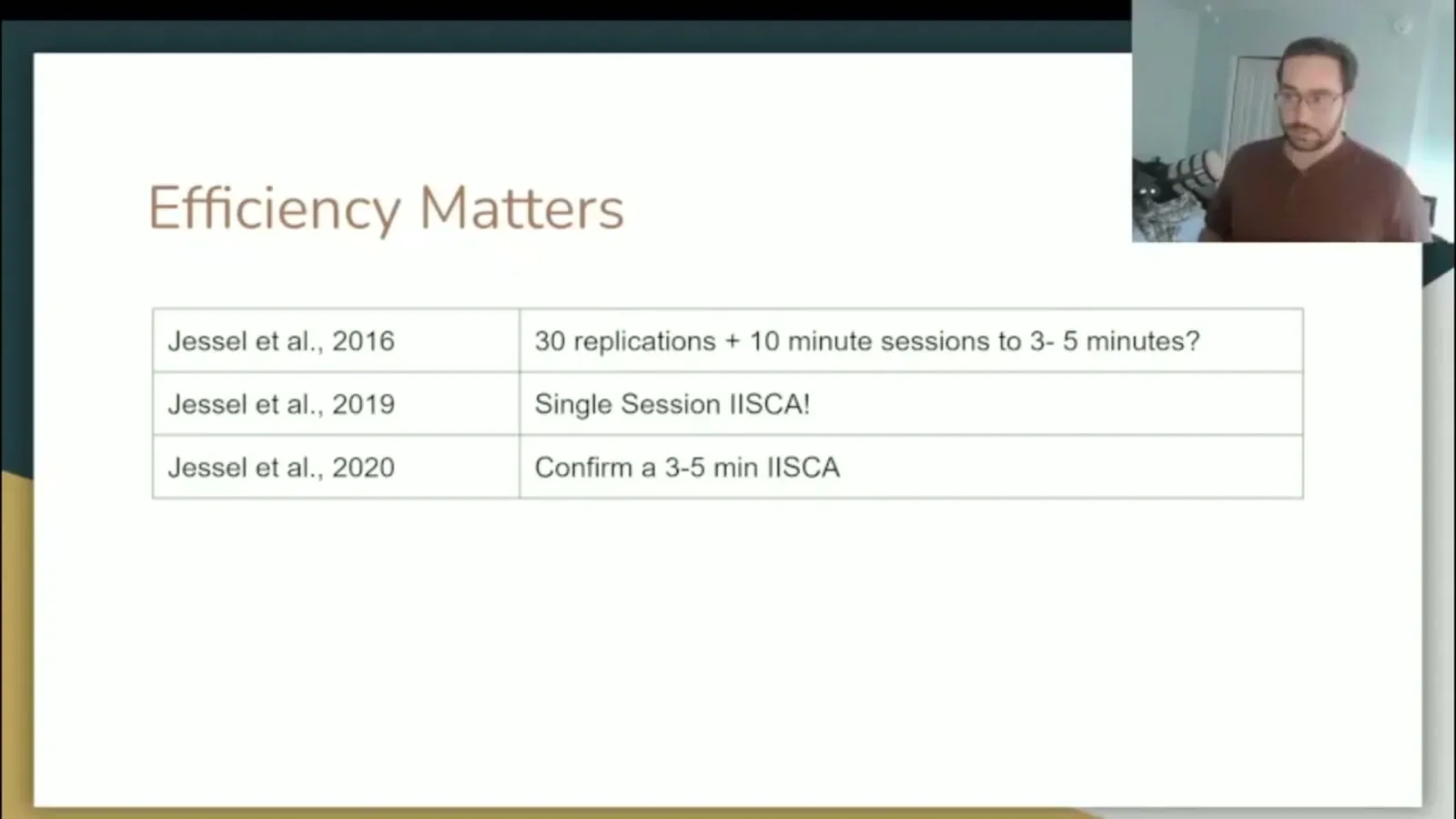
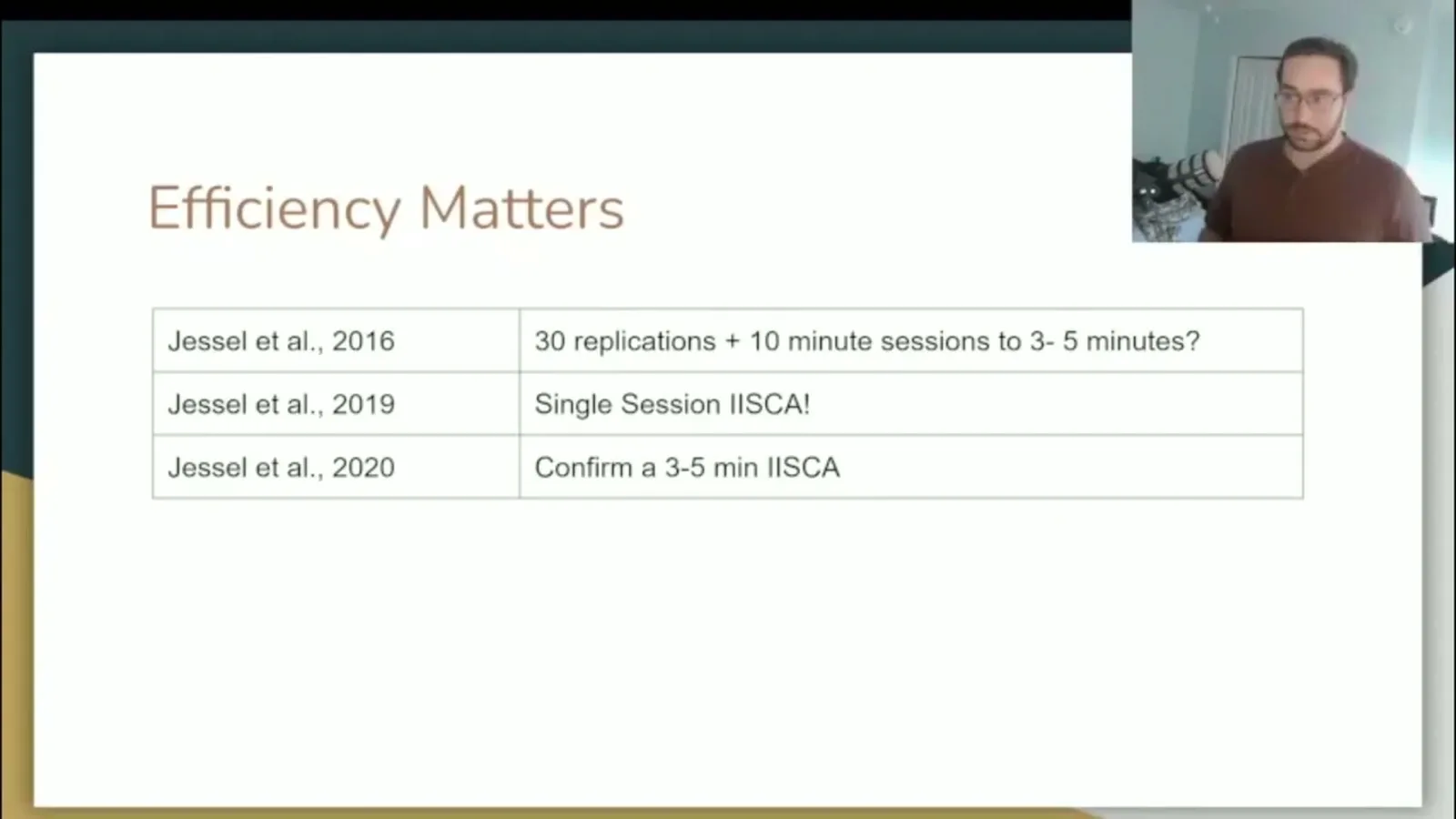
A fair worry is whether a faster test still works. Jessel presents data on this question. The control stays strong even when sessions are very short. He notes it holds at just three to five minutes.
This is a big deal for busy clinicians. You do not have to choose between speed and quality. A short, well-run session can still give clear results. That makes the assessment far easier to fit into a real schedule.
Where it shines in practice#
 Advertisement
The single-session ISCA is not just a research idea. Harrington uses it as a routine part of his work. He points to how strong the payoff is.
the value of a single session ISCA or a single session assessment in general is just so strong in clinical work. From the talk — Matt Harrington
He also blends it with a latency-based approach. Latency means how long it takes for a behavior to start. This keeps sessions short and safe while still gathering good data.
in my work personally I use a lot of single session or latency based ISCA's, you know, that take maybe ten minutes total to get multiple different replications. From the talk — Matt Harrington
Ten minutes for several replications is remarkable. Replication means repeating the test to be sure. More replications in less time means stronger, faster answers.
A good fit for telehealth#
Short, simple assessments travel well. That makes the single-session ISCA a natural fit for telehealth. You can coach a caregiver through it over video. Harrington highlights this use often in his own practice.
Telehealth needs methods that are quick and clear. A parent cannot run a long, complex test at home. But they can follow a short routine of turning a reinforcer on and off. This opens good assessment to families who cannot come to a clinic.
The main challenge#
The method is fast, but it is not effortless. The hard part is the analysis itself. Reading behavior second by second takes skill. Jessel is honest about this limit.
The problem is that data analysis during the single session ISCA might be quite difficult for clinicians and we understand that. It requires within session analyses of problem behavior on the order of seconds. From the talk — Dr. Joshua Jessel
Watching changes on the order of seconds is demanding. It can be tough without software to help. So the trade is clear. You save session time but you need sharp real-time analysis. Practice and good tools make this easier.
Fitting it into a real caseload#
The single-session ISCA earns its keep by saving time. Most clinicians carry heavy caseloads. A test that takes one short session is easier to schedule. That means more clients can get a real analysis.
Speed also lowers the strain on the client and family. A long series of sessions can be tiring and hard to arrange. One short session asks much less of everyone. This can make families more willing to take part.
There is a safety benefit too. Shorter tests mean less time in a condition that may trigger problem behavior. Pairing the method with a latency-based approach helps here. You measure how long until the behavior starts, then step in. That keeps exposure brief while still giving useful data.
The trade-off is the skill it demands from the clinician. You have to read behavior quickly and score it well. New users should practice with support and good data tools. With reps, the real-time analysis gets much easier to manage.
It also pairs well with the rest of a treatment plan. A fast, clear result lets you start treatment sooner. You spend less time in assessment and more time helping. For many families, that quicker path to a plan is the biggest win.
FAQ#
What does ISCA stand for? ISCA stands for interview-informed synthesized contingency analysis. It is a type of functional analysis that starts with a caregiver interview. That interview shapes a test of what keeps a behavior going.
How is a single-session ISCA different from a standard one? A standard ISCA compares conditions across several sessions. The single-session version does the whole test in one session. It works by turning the reinforcer on and off within that single session and watching how behavior changes.
Is a single-session ISCA reliable in such a short time? Data suggest strong control holds even in short sessions of a few minutes. The main challenge is the analysis, not the speed. Reading behavior second by second is hard, so clinicians benefit from practice and software support.
Dr. Joshua Jessel presents the data behind this approach. Watch Redefining the Boundaries of Efficiency during a Functional Analysis of Problem Behavior - Applied 2022.
 Advertisement
Turn this topic into a CEU
You just studied this. Now get credit for it.
Watch 12 days of PFA & SBT with Matt Harrington and earn 3 free BCBA CEUs. Detailed certificate, delivered the moment you finish.