Developmental vs Chronological Age in ABA: Why It Wrecks Goals
Why teaching a 12-year-old nursery rhymes is the wrong move and how to pick a target that respects both ages, from a BCBA-led CEU.
Key takeaway
The clinical decision you make in the next ten minutes shapes the next six months of that kid's life.
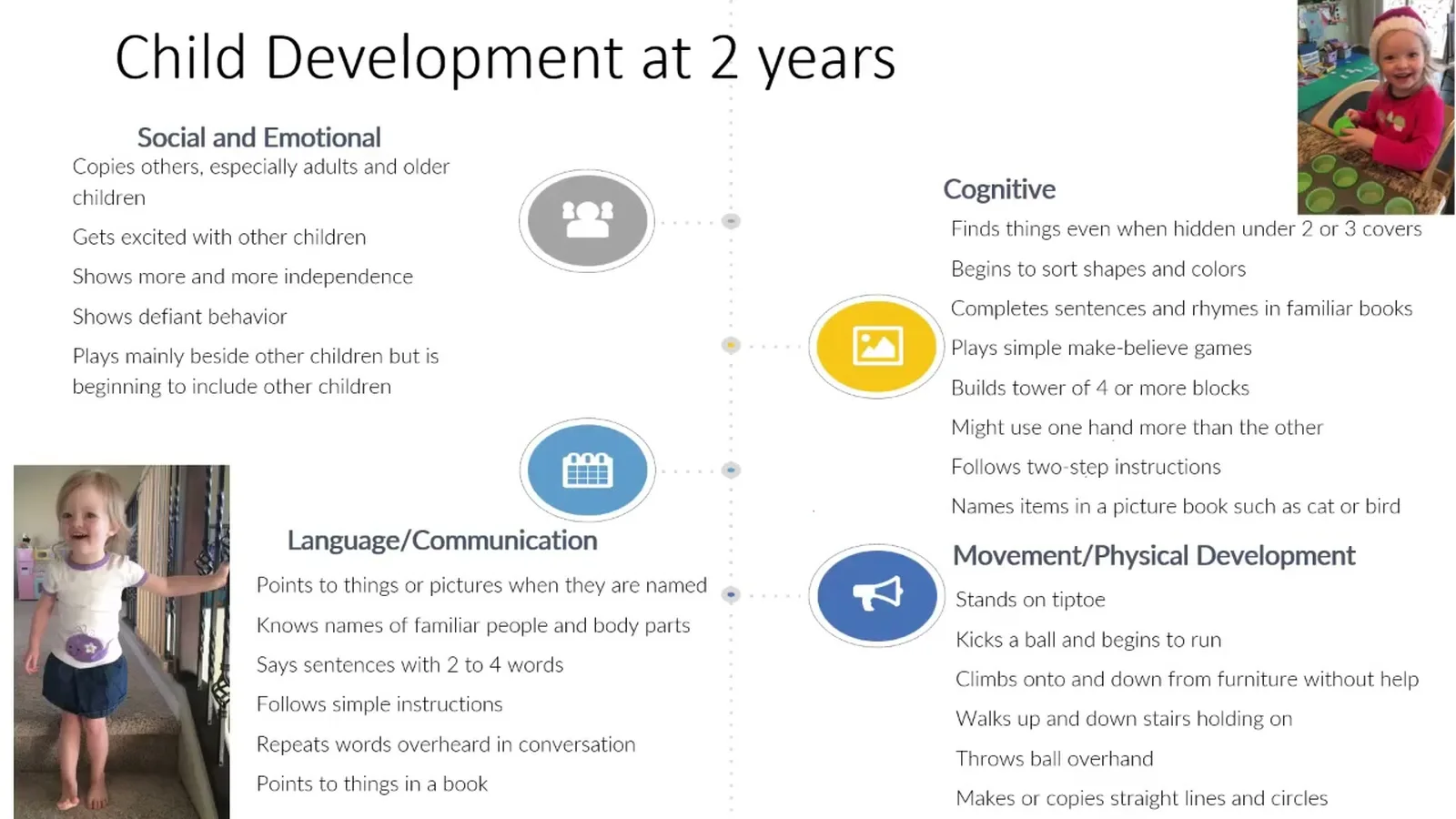
Child Development for Behavior Analysts
On this page · 8 sections▾
The clinical decision you make in the next ten minutes shapes the next six months of that kid's life. A BCBA (board certified behavior analyst) sits down with a fresh VB-MAPP score for a 12-year-old and starts teaching nursery rhymes, because the grid has a blank box and the kid technically scored at that level. That goal will not help him. It will fill paper. In another case, a 10-year-old in after-school care was given a "name community helpers" goal because he missed that item on the assessment. The same kid could not brush his own teeth or wash his hands. The clinician picked the wrong target, not because the clinician was lazy, but because something pulled them toward filling in the grid. That pull has a name. It is funder pressure. You started this period at 80 points on the VB-MAPP. You want to report 120 next quarter. So you shade in the next box, even when the box does not match the child you are working with. This page is about how to stop doing that, and what to pick instead.
The Nursery Rhymes Problem: Why a 12-Year-Old on the VB-MAPP Is a Red Flag#
The VB-MAPP was built to assess skills from birth to four years. When you pull it out for a 12-year-old, you are saying one of two things. You believe his developmental age is under four. Or you do not have a better tool on the shelf. Both are common. Neither is a reason to teach the kid "Twinkle Twinkle." Developmental age tells you where the brain is. Chronological age tells you where life is. Life keeps moving. The 12-year-old will be 13 next year. He will be 18 in six. He will need to wait in a doctor's office, ride in a car without bolting, use a public bathroom, hand a cashier money. None of those are on the VB-MAPP.
I then see folks fall into the trap of teaching a 12 year old nursery rhymes because they quote, can't do it on the VB map and they want to fill that in. From the talk — Kristen Byra
If you pull the VB-MAPP for a kid over five and the rest of the room would raise an eyebrow, that is the signal. Use it as a data point, not a curriculum. The work is to choose targets that match the kid's developmental level and his real life at the same time. That is the actual job.
Two Ages, Two Jobs: What Each One Actually Tells You#
Developmental age and chronological age each have a job. Developmental age tells you what skills are likely possible right now, and what skills are still out of reach. It also tells you the order skills usually come in. You do not teach a kid to read before he can sit with a book. You do not teach a kid to write his name before he can hold a crayon. Sequence matters.
Chronological age tells you what the kid actually has to do in his life today. A four-year-old needs to play next to other kids. A nine-year-old needs to wait in a school line. A 14-year-old needs to keep himself safe in a hallway. Chronological age is also what protects you from the nursery-rhyme trap. If a target would look strange written on the chart of a typically developing kid the same age, it should at least give you pause.
You need both. Developmental age picks the rung on the ladder. Chronological age picks the ladder. A goal that ignores one or the other is the goal you will be rewriting in six months.
In order to ensure a child's curriculum is age appropriate and well-balanced, it's important to administer assessments that address skills in all areas of human functioning from infancy through the child's chronological age. From the talk — Kristen Byra
The Community Helpers Story: When the Goal Was Three Years Off#
Here is the case. Ten-year-old client. Full-time public school. Limited-focus ABA in the home after school. The assessment found that he could not identify community helpers. The clinician wrote that as a goal. Standard move. Box was empty. Box got a target.
The same assessment also showed the kid could not brush his own teeth or wash his hands without help. Those did not become goals. The community helpers item did.
Sit with that for a second. A 10-year-old in 2026 has a finite amount of after-school ABA time before insurance titrates him down or cuts him off. You get a few hours a day, a few days a week. That is your runway. You picked "name the firefighter" instead of "wash your hands before lunch." One of those keeps him out of the dentist's chair and out of a stomach bug at school. The other gets shaded into the grid.
This is the question that should sit on top of every treatment plan. If I only have six months with this kid, what target survives? If the answer is not the goal you wrote, you wrote the wrong goal.
Why BCBAs Shade In the Grid (and Why Funders Are Not the Reason You Should)#
The honest answer is funder pressure. You write a progress report. You show a higher VB-MAPP score this quarter than last. That number gets read by someone who is deciding whether to keep paying. So you pick the next empty box, run a discrete trial set on it, and report a higher number. The number went up. The kid did not necessarily get more functional.
Just because there's a hole in the grid, I see a lot of practitioners just fall into the trap of wanting to color it in. From the talk — Kristen Byra
Two things are true at the same time. Funders want to see progress. And the BCBA standards say goals have to be functional, age-respectful, and in the client's interest. When those collide, the standards win. They are the floor. They are also a defense. "We are working on hand-washing because that is functional, age-appropriate, and a caregiver priority" is a stronger sentence in a clinical review than "we mastered four nursery rhymes." Pick goals you can defend in a sentence. Then write the report to show the gain on those goals.
If your only progress metric is grid points, change the metric. Track the count of functional goals mastered. Track caregiver report. Track whether the kid did the thing in his actual life, not in the session. Those land harder with reviewers than a higher percentile.
The Replacement Rule: Pivotal Responses Over Empty Boxes#
The rule is short. Pick the pivotal response. A pivotal response is a skill that pays for itself. Mastering it opens the door to other skills without you teaching each one by hand. Hand-washing is pivotal. Once it is in the kid's repertoire, it travels to bathroom routines, eating routines, sick days at school, swim lessons, sleepovers. Naming community helpers does not travel. It sits in the binder where you taught it.
Priority should be given to key skills, behavioral costs, pivotal responses that will remain functional for the child across their settings and over their lifetime. From the talk — Kristen Byra
Three questions get you to a pivotal target almost every time.
- Will this skill matter at home, at school, and in the community? If the answer is one out of three, it is not pivotal.
- Will the kid still need this skill in five years? In ten? If it ages out fast, it is not pivotal.
- Does mastering this open the door to other skills? If yes, you have a pivotal response. If no, you have a worksheet.
The other rule is that you do not have time to teach every gap. You will not. Stop trying.
A 10-Minute Audit You Can Run on Every Plan in Your Caseload#
This is the part you can do Monday. Open a treatment plan. Set a timer.
Minute one. Find every goal in the plan. List them on a sheet of paper.
Minutes two and three. For each goal, write the kid's chronological age and the developmental age the goal targets. If a goal targets a developmental age more than three years under the chronological age, circle it in red.
Minutes four and five. For each red-circled goal, answer one question. Is there a same-developmental-level target that is also age-respectful for a kid this old? If yes, write it next to the goal. Hand-washing for the 10-year-old who got community helpers. Bathroom independence for the 12-year-old who got nursery rhymes. Waiting in line for the seven-year-old who got matching colors for the fourth quarter in a row.
Minutes six and seven. Find the caregiver priorities section of the plan. Re-read what the parent said matters. Cross-check each goal against that list. Any goal that does not show up on the caregiver list and does not pass the pivotal test gets flagged for removal at the next plan update.
Minutes eight and nine. Look at the assessment. Identify which goals were chosen because of the empty-box pull. They are usually the smallest, most decontextualized targets. Mark them.
Minute ten. Write one sentence at the top of the plan. "This kid is 10 and his next six months will be spent learning to wash his hands, eat with a spoon, and ride in the car safely, because those are the skills he will use every day for the rest of his life." If you can write that sentence and mean it, you are picking the right targets. If you cannot, the plan needs another pass.
Run that audit on three plans this week. The third one will already feel faster. By plan ten, you will catch the empty-box pull before you write the goal.
Frequently asked questions#
Is it ever okay to use the VB-MAPP on a 12-year-old?
Yes, in narrow cases. If you suspect the kid's developmental age is genuinely under four, the VB-MAPP can give you a snapshot of where the verbal repertoire sits. The mistake is treating the score as the curriculum. The VB-MAPP can tell you what is missing at a very early developmental level. It cannot tell you whether teaching that missing skill is age-respectful or functional for a 12-year-old. Use it as one data point. Pair it with the Vineland (which runs zero to 90 and gives you an age-equivalent score) and a caregiver interview. Pick goals from the overlap, not from the empty boxes.
How do I explain developmental age to a parent without offending them?
Lead with what the kid does, not what the kid is behind on. Try this. "Your son is 10, and his skills in some areas look more like a four-year-old's right now. That tells me where to start teaching, not what to expect long-term. We are going to pick skills that work for a 10-year-old's life, taught at the level he can actually learn them. So instead of teaching things a preschooler would do for fun, we are going to teach hand-washing, eating with a fork, and waiting safely in the car. Those are 10-year-old skills, taught one step at a time." Most parents are not offended by the word "developmental." They are offended when the goal does not match the kid they live with.
What assessment should I switch to when chronological age outgrows the VB-MAPP?
Look at the AFLS (Assessment of Functional Living Skills) and the Vineland (VABS). The AFLS is built for the targets you actually need on an older caseload, which include home, community, school, and self-management. The Vineland gives you an age-equivalent across communication, daily living, socialization, and motor, and runs from zero to 90 years old. Most insurance reviewers know it. For older clients, you will usually run a Vineland for the reimbursement story and an AFLS for the actual curriculum.
Watch the full talk#
The full 60-minute CEU with Kristen Byra walks through the typical developmental milestones from nine months to five years, the assessment landscape (VB-MAPP, AFLS, Vineland), the funder pressure pattern, and the mastery-criteria piece this page only touches. It is the longer version of the case examples that make the rule stick. Watch the full talk →
Turn this topic into a CEU
You just studied this. Now get credit for it.
Watch Child Development for Behavior Analysts with Kristen Byra and earn 1 free BCBA CEU. Detailed certificate, delivered the moment you finish.