ABC Data: How to Record What Happens Around Behavior
ABC data records what came before a behavior, the behavior itself, and what came after. Learn how BCBAs and RBTs collect and use it in practice.
Key takeaway
ABC data is a written record of what happened right before a behavior, the behavior itself, and what happened right after. The "A" stands for antecedent, which means the event that came first.
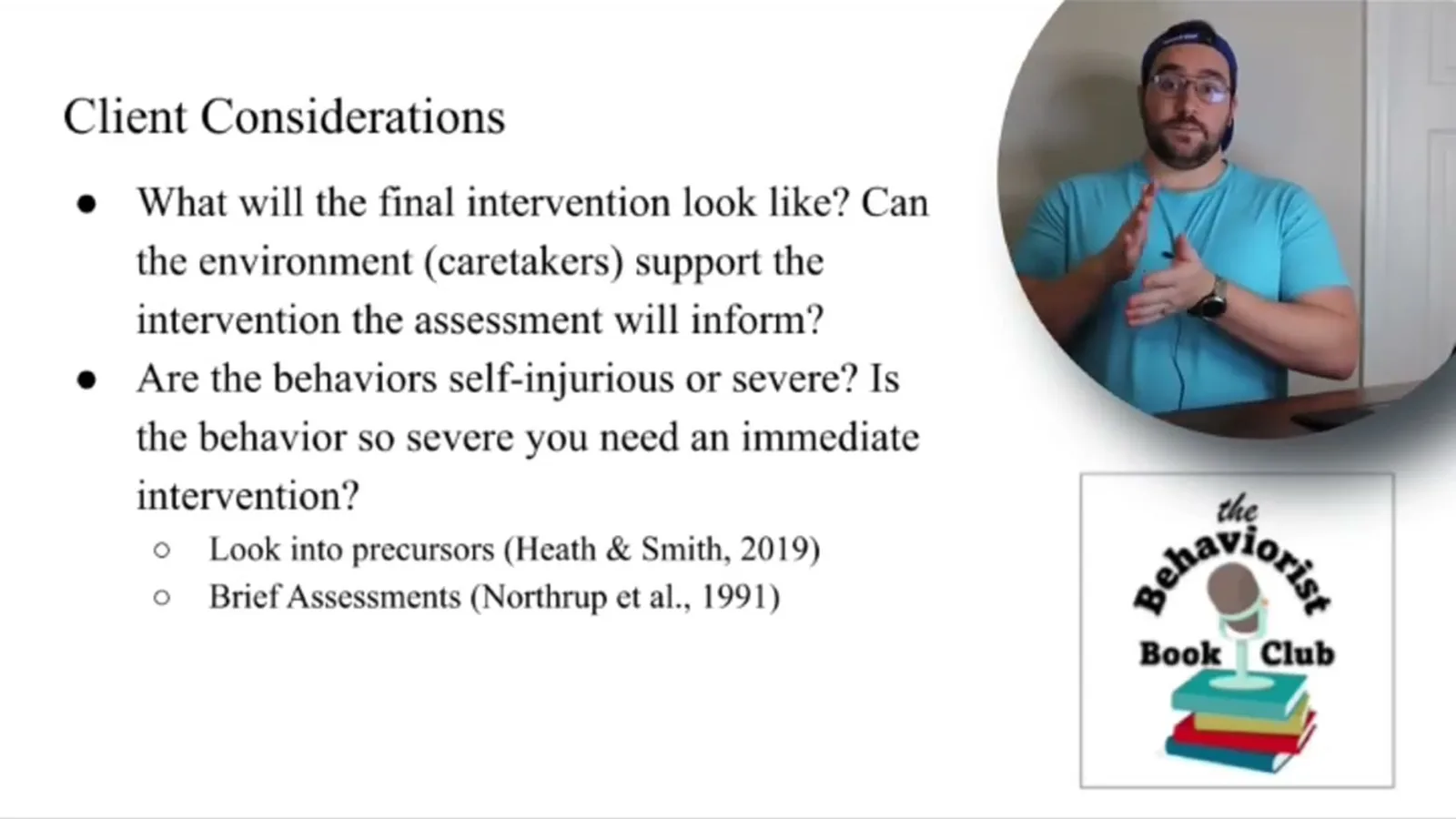
Confessions of a New Behavior Analyst in Functional Analysis
Free learning path on this topic
Child Development for Behavior Analysts
Typical development for behavior analysts. Kristen Byra's overview, then Kelly Brzak's deep dives on ages 2 to 5, 6 to 8, and 9 to 11, with milestones, common problem behaviors, and programming tips for each band.
Experts who cover this
3 recordings on openceu cover ABC data (antecedent-behavior-consequence data collection).
- Featured talk2.50 CEUs
Confessions of a New Behavior Analyst in Functional Analysis
Matt HarringtonThe Behaviorist Bookclub
Recommends extending standard ABC data collection beyond the target behavior to also capture appropriate behaviors and their consequences, borrowing from…
- 1 CEU
Collaboration and Building Rapport: Starting a Strong Foundation With Caregivers and Stakeholders in the Home
Eric SoltysikThe Behaviorist Bookclub
Recommended as a way to visually show caregivers why a behavior is occurring (e.g., linking tantrums to a grandparent's visit or a GI issue) rather than just…
- 1 Supervision CEU
Delegating with Confidence: Training and Supervising RBTs to Support Assessments
Dr. Jessica OsosCopper Consulting Group
Direct observation data collection (ABC data, frequency/duration/latency measures) is listed as core RBT-appropriate work under 97152, provided the BCBA has…
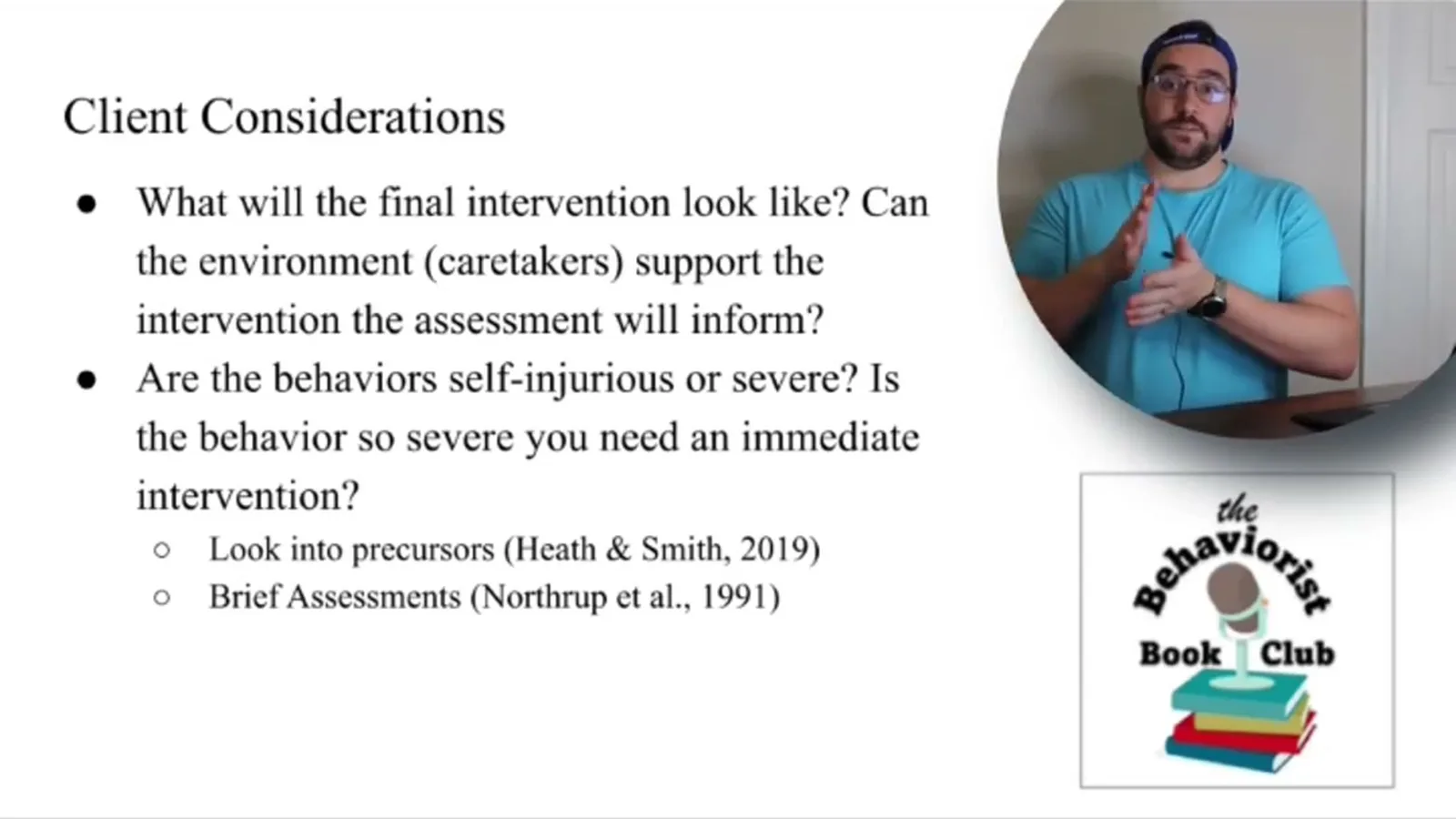


On this page · 7 sections▾
ABC data is a written record of what happened right before a behavior, the behavior itself, and what happened right after. The "A" stands for antecedent, which means the event that came first. The "B" is the behavior. The "C" is the consequence, which means whatever followed the behavior.
Clinicians use these notes to guess why a behavior keeps happening. The method grows out of the three-term contingency, the basic A-B-C idea in behavior analysis. This page sticks to the practical side. It covers how ABC data gets written down, who writes it, and how teams put it to use.
How an ABC record reads in practice#
An ABC entry is short. It names one moment, one behavior, and one result. Matt Harrington calls ABC analyses the "bread and butter" of the field. He notes they show up on the RBT task list. An RBT is a registered behavior technician, the person who often works one on one with a client. Any working behavior analyst should be fluent in this skill.
Harrington gives a classroom example. The target behavior is a child flipping a desk. A target behavior is the specific behavior the team wants to change.
let's look at this table the behavior we're looking at is flipping the desk that's a challenging behavior and an abc might read the teacher passed out the test the child flipped the desk and then the consequence was the child got escaped from the desk or the test the test was removed
From the talk — Matt Harrington
In that row, the test is the antecedent. Flipping the desk is the behavior. Losing the test is the consequence. "Escape" here means the child got out of a task they did not want. One row like this is easy to write. The harder question is what that single row leaves out.
Record the good behavior, too#
Harrington pushes clinicians past the standard ABC. He calls the one-row desk example "a very linear way of thinking." His advice is to take ABC data on appropriate behavior as well as challenging behavior. Appropriate behavior means the helpful or expected actions you want to see more of.
He borrows this idea from nonlinear contingency analysis. That approach looks at the results of every relevant behavior, not only the problem one. So he expands the desk example into more rows. In one row, the teacher reads a test question. The client follows the instruction and gets praise. In another row, a behavior tech hands over a worksheet. The client asks for a break and gets both escape and attention.
Laid side by side, these rows tell a richer story. Harrington points out a "synthesized reinforcer" in the break row. That means two rewards, escape and attention, arrive together. He also flags who hands out the test as an antecedent worth noting. Setting events matter too. A setting event is a background condition that makes a behavior more or less likely. Looking at all of this together gives a much clearer view of why the target behavior occurs.
Turning fuzzy notes into numbers#
ABC notes are useful, but they are loose. Harrington calls them "a little fuzzy and subjective." Two observers might write the same moment in two different ways. A pile of narrative notes can also be hard to sum up.
His next step is contingency data. In particular, he points to conditional probability. Conditional probability is a plain idea in practice. It asks how often a behavior happened when a certain consequence followed. You count the times instead of just describing them.
Harrington is clear that this is not the final word on the topic. He calls it "a good start" and something to consider. The point is that ABC notes and number-based data can work together. The ABC rows show what kinds of events surround a behavior. Conditional probability then puts a number on how often those events line up. That number helps a clinician test a hunch instead of just trusting a story. For a newer analyst, this pairing can turn a stack of notes into a clearer picture.
Who collects ABC data, and who designs it#
Dr. Jessica Osos looks at ABC data from the supervision side. She places it under direct observation data collection. That is work an RBT can do while billing for assessment support. In the recording, Osos calls it "the 5-2 code." That appears to be shorthand for CPT 97152, the code covering technician-assisted assessment. During those sessions, the RBT should take data on behavior.
She lists the kinds of data an RBT might collect.
Whether that's ABC data, continuous measurement procedures, things like frequency, duration, latency measures.
From the talk — Dr. Jessica Osos
Frequency is how often a behavior happens. Duration is how long it lasts. Latency is how long it takes to start after a cue. Osos then stresses one rule for these other measures.
they should know for outside of ABC recording, if they're doing frequency, duration, or latency. To be defined, like what is the operational definition of that behavior
From the talk — Dr. Jessica Osos
An operational definition describes a behavior in clear, observable terms. Two people should be able to read it and agree on what counts. Osos also draws a firm line on roles. The RBT gathers the data. The supervisor chooses the assessment, the probes, and which behaviors to target. The supervisor also decides how each behavior gets measured. She calls this the work that "never leaves your desk."
Using ABC data with caregivers#
Eric Soltysik brings ABC data into the home. His focus is building trust with caregivers, the parents and family members who care for the client. He warns against heavy jargon and admits he slips into it himself. The goal is to meet families where they are.
ABC data helps with that. Soltysik suggests using it to show families why a behavior happens, rather than just telling them.
using the data to further explain why what our thought process as if we're able to use ABC data and show visually.
From the talk — Eric Soltysik
He gives concrete examples a family can follow. Maybe a tantrum comes after grandma visits. Maybe the client has a stomach problem that day. Maybe a time change threw off the routine. These are setting events, and the data can point to them. Showing the pattern lets a clinician back up their view with evidence. His talk covers more ways to explain goals to families. Watch Collaboration and Building Rapport: Starting a Strong Foundation With Caregivers and Stakeholders in the Home.
What the research says#
Research backs up a theme from the talks. Collecting good ABC data takes real training. It does not come automatically.
One study looked at narrative ABC data in descriptive assessment (Tereshko, Weiss, Harper, & Ross, 2022). Descriptive assessment means watching behavior in daily life, without changing anything. The authors note that clinicians use it often. They also note that direct training on recording ABC data is limited. Without clear guidance, clinicians may read the results however they see fit.
So this study tested a training package. It targeted three skills. The first was recording narrative ABC data. The second was interpreting that data. The third was picking a treatment that matches the behavior's function.
A second line of work trained general education teachers. These were teachers still in their training programs (Samudre, Allday, & Lane, 2022). The goal was to help them collect accurate ABC data. This matters because teachers often see behavior first, long before a BCBA arrives.
Both studies echo what Osos and Harrington say. ABC data is only as good as the person writing it down.
FAQ#
What does ABC stand for in ABA? ABC stands for antecedent, behavior, and consequence. The antecedent is what happened right before. The behavior is what the person did. The consequence is what happened right after. Each ABC entry records all three for one moment.
Can an RBT collect ABC data? Yes. Dr. Jessica Osos lists ABC data as direct observation work an RBT can do during assessment sessions. The supervising BCBA still designs the assessment. The BCBA picks which behaviors to track and how to measure them.
Is ABC data enough to find the function of a behavior? ABC data gives useful clues, but it can be loose and subjective. Matt Harrington suggests also recording appropriate behavior. He also suggests adding conditional probability, which puts numbers to how often a behavior meets a given consequence.
Turn this topic into a CEU
You just studied this. Now get credit for it.
Watch Confessions of a New Behavior Analyst in Functional Analysis with Matt Harrington and earn 2.5 free BCBA CEUs. Detailed certificate, delivered the moment you finish.
Keep going with a free learning path
Child Development for Behavior Analysts
Typical development for behavior analysts. Kristen Byra's overview, then Kelly Brzak's deep dives on ages 2 to 5, 6 to 8, and 9 to 11, with milestones, common problem behaviors, and programming tips for each band.