Direct vs Indirect Assessment in ABA Explained
Direct assessment measures behavior itself. Indirect assessment asks people about it. Learn how BCBAs use both and why neither stands alone.
Key takeaway
Assessment in ABA comes in two broad types. Direct assessment measures the behavior itself. Indirect assessment asks people about the behavior. Both give you data, but of very different kinds.
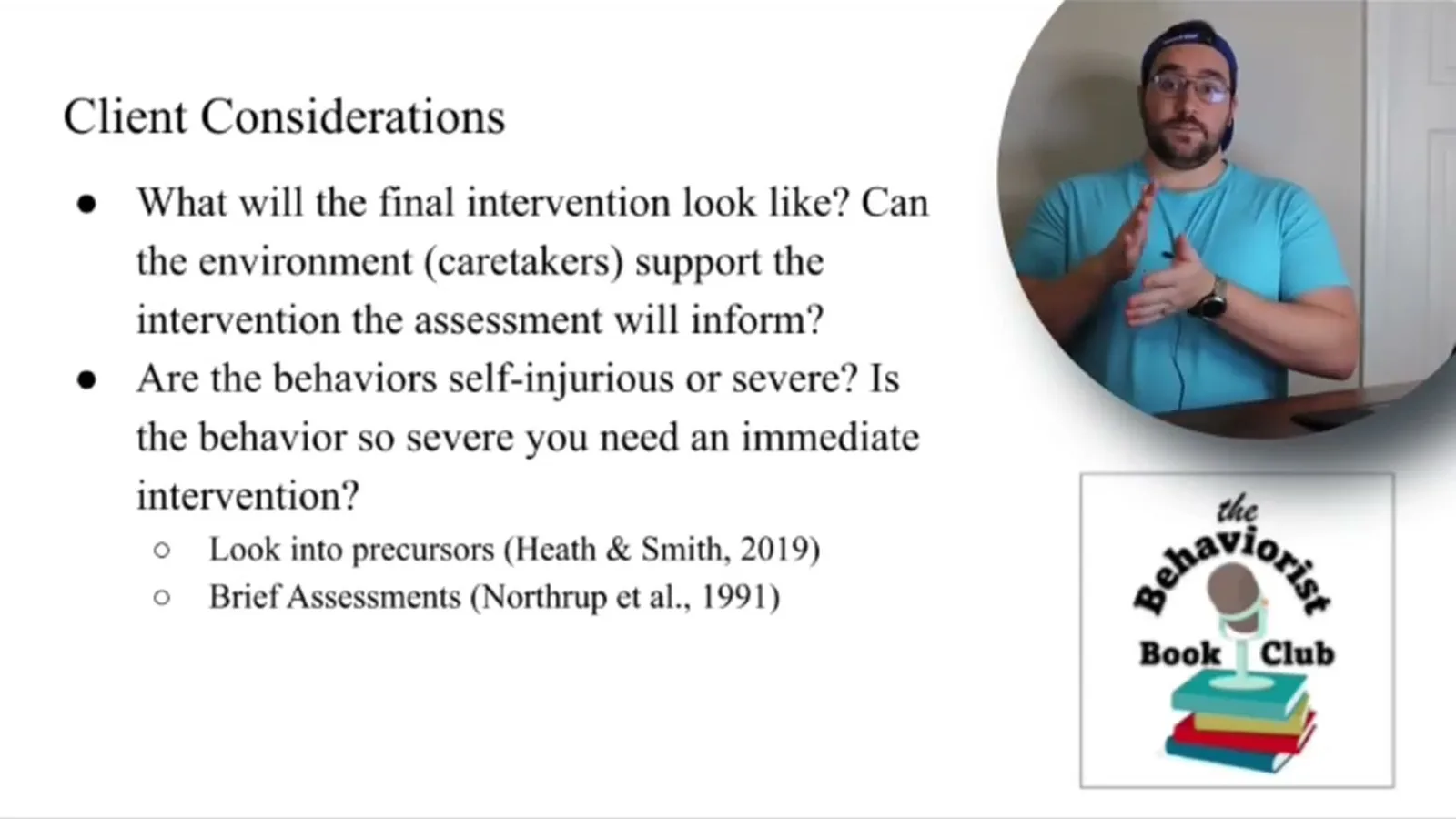
Confessions of a New Behavior Analyst in Functional Analysis
Free learning path on this topic
Child Development for Behavior Analysts
Typical development for behavior analysts. Kristen Byra's overview, then Kelly Brzak's deep dives on ages 2 to 5, 6 to 8, and 9 to 11, with milestones, common problem behaviors, and programming tips for each band.
Experts who cover this
2 recordings on openceu cover direct vs indirect assessment.
- Featured talk2.50 CEUs
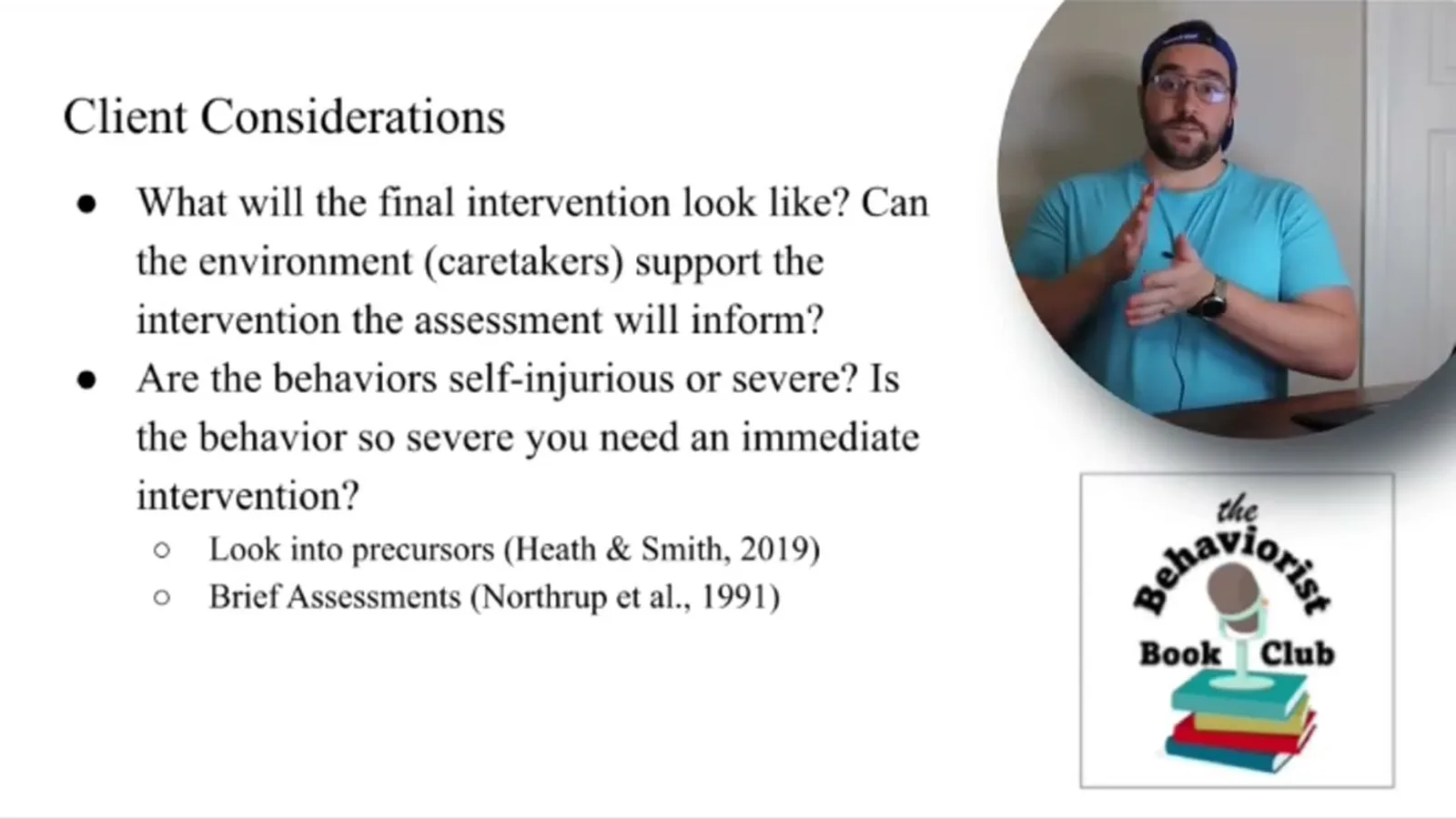
Confessions of a New Behavior Analyst in Functional Analysis
Matt HarringtonThe Behaviorist Bookclub
The speaker's first mistake story: skipping or rushing the caregiver interview wasted a 90-minute FA session, and he argues the indirect assessment builds…
- 1 CEU
genArete: Learner-Centered Skill Assessment
Mark MaladyThe Behaviorist Bookclub
Per CASP/APBA guidelines Mark reviews, direct assessment measures the behavior of interest itself, while indirect assessment relies on interviewing someone who…

On this page · 8 sections▾
Assessment in ABA comes in two broad types. Direct assessment measures the behavior itself. Indirect assessment asks people about the behavior. Both give you data, but of very different kinds.
Knowing the difference keeps your plan honest. BCBAs and RBTs use both types every week. Each one has clear strengths and clear limits. Used together, they build a fuller picture.
What each type means#
The split is simple at its core. Direct means you watch the behavior yourself. Indirect means you gather clues about it from others. Mark Malady draws the line cleanly.
Direct being that you're actually measuring the behavior of interest. Indirect being that you're using some other indicator to do that. From the talk — Mark Malady
That "other indicator" is usually a person's report. You ask someone what they saw. Or you ask the person themselves. As Malady describes it, you typically interview somebody who knows the person, or the person themselves, about the action of interest.
So the two types differ in their source. Direct data come from real events you observe. Indirect data come from memory and opinion. Neither is bad. They just carry different weight.
Direct assessment: measuring the behavior#
Direct assessment puts your eyes on the behavior. You count it, time it, or rate it as it happens. There is no middleman between you and the event. That makes the data more objective.
This objectivity is the big strength. You are not relying on someone's recall. You see the behavior in its real context. You can measure it the same way each time.
Direct methods take more time and effort, though. You have to be present and ready to record. You also have to catch the behavior when it occurs. That trade is often worth it for accuracy.
Indirect assessment: asking about the behavior#
Indirect assessment uses surveys, questionnaires, and interviews. You try to understand behavior you did not see. Joshua Jessel names this plainly.
Indirect assessments are those surveys or questionnaires. You can try to understand behavior without seeing it. From the talk — Dr. Joshua Jessel
The appeal is speed and reach. You can learn about behavior across many settings. You can hear about events that are rare or private. A caregiver often knows patterns you would take weeks to observe.
The catch is bias. People forget, guess, and see things through their own lens. So indirect data point you toward ideas. They do not prove them.
Do not skip the indirect step#
 Advertisement
Because indirect data are imperfect, some clinicians rush past them. Matt Harrington learned why that backfires. He tried to save time and paid for it.
So let's dive in and let's talk about the time I wasted an entire one and a half hour functional analysis session by skipping the indirect assessment. I went to save time and I ended up losing all of it and more. From the talk — Matt Harrington
The indirect step does more than gather facts. It builds trust with the caregiver. It also shapes the test you run next.
This is an absolutely crucial piece of getting a really strong, differentiated, individualized functional analysis. The information you gather here is essential because it builds relationships. It informs the functional analysis conditions. From the talk — Matt Harrington
A functional analysis is a careful test of why a behavior happens. Good interview data help you set up that test right. Skip the interview, and you may test the wrong things. That wastes the whole session.
Mixing open and closed interviews#
Not all interviews look the same. Some are open, letting the person tell their story. Some are closed, with set questions and choices. Harrington blends both based on the caregiver.
I like to combine open and closed-ended interviews. Depending on the caregiver, if I feel like they're giving me a lot, we have that good rapport, I like to just flow with that open-ended interview and then maybe end with a closed-ended interview to kind of finalize some of my hypotheses. From the talk — Matt Harrington
This mix plays to each style's strength. Open questions surface rich, surprising details. Closed questions tighten your guesses at the end. Reading the caregiver tells you which to lean on.
How the two work together#
The smart move is to use both types in order. Start with indirect data to form ideas. Then use direct data to check those ideas. One feeds the other.
Keep in mind that indirect data only correlate loosely with real function. They can be off. So you treat them as hypotheses, not answers. Direct observation and testing settle the question.
The order also saves time in the long run. A short interview narrows your focus fast. Then direct observation confirms or rejects each idea. You spend your effort on the most likely leads.
What the research says#
Research shows indirect tools are useful but limited. One study looked at an open-ended functional assessment interview. It reached decent interrater agreement near 75%, but only about 50% agreement with the functional analysis (Saini, Ubdegrove, Biran, & Duncan, 2019). That matches the caution to treat interviews as leads, not proof.
Some indirect tools can still guide a functional analysis well. One study tested a rating scale to pick demanding tasks. Highly aversive tasks it flagged matched the demand analysis better than milder ones (Wiggins & Roscoe, 2020).
Direct methods add objective measures a survey cannot. One study used momentary time sampling in an ABA center. It gave direct data on staff behavior, client behavior, and the setting, all tied to quality of care (Grauerholz-Fisher, Vollmer, Peters, Perez, & Berard, 2019).
FAQ#
What is the difference between direct and indirect assessment?
Direct assessment measures the behavior itself as it happens. You observe and record real events. Indirect assessment asks people about the behavior through interviews or surveys. Direct data are more objective, while indirect data are faster but more prone to bias.
Is indirect assessment reliable?
Only partly. Indirect tools depend on memory and opinion, so they can be off. Studies show interviews often agree with functional analyses only about half the time. Use them to form ideas, then confirm with direct observation.
Should I always do an indirect assessment first?
Usually, yes. The indirect step builds rapport and shapes your next test. Skipping it can send you into a functional analysis testing the wrong conditions. A short interview first often saves the whole session.
You can go deeper on assessment choices in genArete: Learner-Centered Skill Assessment.
 Advertisement
Turn this topic into a CEU
You just studied this. Now get credit for it.
Watch Confessions of a New Behavior Analyst in Functional Analysis with Matt Harrington and earn 2.5 free BCBA CEUs. Detailed certificate, delivered the moment you finish.
Keep going with a free learning path
Child Development for Behavior Analysts
Typical development for behavior analysts. Kristen Byra's overview, then Kelly Brzak's deep dives on ages 2 to 5, 6 to 8, and 9 to 11, with milestones, common problem behaviors, and programming tips for each band.